经济滞胀

Search documents
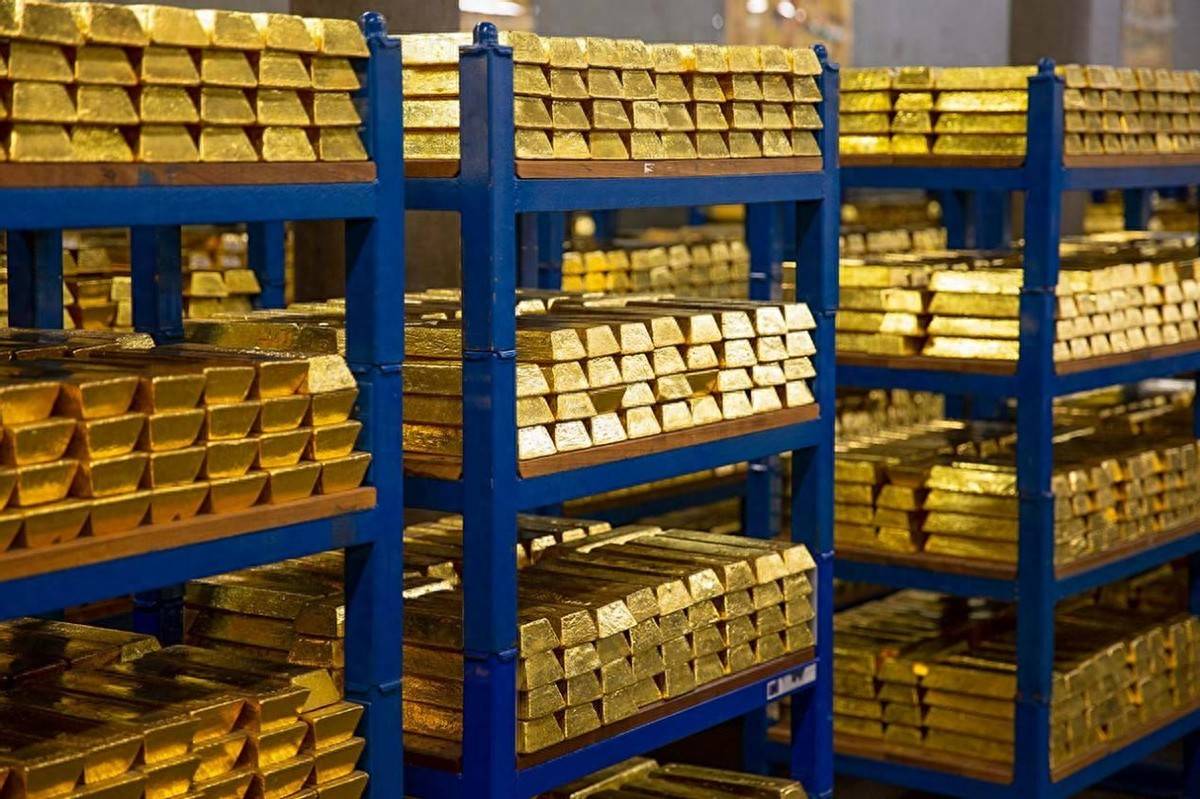
俄罗斯被迫出卖黄金储备,普京的钱袋子终于见底了?
Sou Hu Cai Jing· 2025-12-08 05:57
Group 1 - Russia is facing a fiscal crisis and has begun selling its gold reserves to fill the budget gap, indicating a shift from relying on oil revenues to using gold as a financial lifeline [1][11] - The reduction in gold reserves is significant, with a decrease from 405.7 tons to 173.1 tons, a drop of 57% since the onset of the war in 2022 [3] - The defense budget for 2025 is projected at 13.5 trillion rubles, accounting for 32.5% of total fiscal spending, but actual military expenditures, including industrial subsidies, could reach 16.5 trillion rubles [5][7] Group 2 - Daily military spending exceeds 453 billion rubles, driven by rising salaries, increased arms production and imports, and substantial compensation for casualties [7] - Oil and gas tax revenues have plummeted to 7.5 trillion rubles in 2025, covering only half of military expenses, exacerbated by Western sanctions and frozen overseas assets [9] - The fiscal deficit has surged to 3.7 trillion rubles in the first half of 2025, five times higher than the same period in 2024, highlighting the depth of Russia's financial crisis [11]

2025年中美宏观经济与资产配置展望
Sou Hu Cai Jing· 2025-11-30 03:09
Group 1: US Economic Outlook - The US economy is experiencing short-term "stagflation," with GDP growth expected to slow from 2.8% in 2024 to 1.7% in 2025, and inflation pressures may rebound, with PCE inflation projected to rise to 2.8% in Q3 and 2.9% in Q4 of 2025 [2][24] - The real estate market continues to show signs of stagnation, with high interest rates leading to historically low purchasing power and sales, while many homeowners are reluctant to move due to locked-in low mortgage rates, resulting in tight inventory [2][29] - Corporate earnings growth has been downgraded, particularly in industries sensitive to trade wars and economic cycles, such as industrials, energy, and materials [3] Group 2: Federal Reserve and Monetary Policy - The Federal Reserve is expected to cut interest rates twice between September and December 2025, with a potential further two cuts in 2026, bringing the policy rate down to a range of 3.25%-3.5% [4] - However, due to potential increased influence from the White House on the Federal Reserve, market inflation expectations remain unstable, and rising government debt may keep Treasury yields elevated [5] Group 3: Investment Recommendations - Short-term investment focus should be on sectors such as healthcare, consumer staples, communication services, materials, and industrials [7] - Overall, the US stock market is in the late stages of a bull market, suitable for long-term dollar-cost averaging, with asset allocation recommendations to overweight commodities, standard allocation to stocks and cash, and underweight bonds, while being bearish on the US dollar and bullish on the euro, pound, and emerging market currencies [8] Group 4: China Economic Outlook - China's economy is entering a phase of weak recovery, with Q1 2025 GDP growth peaking at 5.4% but expected to decline to 4.7% in Q4 due to base effects and diminishing policy impacts [9] - The real estate market is stabilizing, with a recovery in second-hand home sales in first-tier cities and gradual inventory digestion, leading to expectations of price stabilization in the second half of 2025 [10] - Deflationary pressures are bottoming out, and corporate profits are expected to rebound, supported by a continuation of accommodative policies, including a potential 10 basis point rate cut in Q4 2025 [11][12] Group 5: Currency and Asset Allocation - The Chinese yuan is expected to appreciate moderately, potentially reaching 7.1 by the end of 2025 and 7.05 by the end of 2026 [15] - Asset allocation recommendations for China include overweighting stocks, standard allocation to commodities and bonds, and underweighting cash [16] - The stock market is entering the second phase of a bull market, with accelerated sector rotation, and short-term optimism is noted for AI hardware and applications, internet, healthcare, chemicals, machinery, and consumer staples [17]

特朗普“驯服”美联储 会否重演1970年代滞胀噩梦?
智通财经网· 2025-11-19 02:36
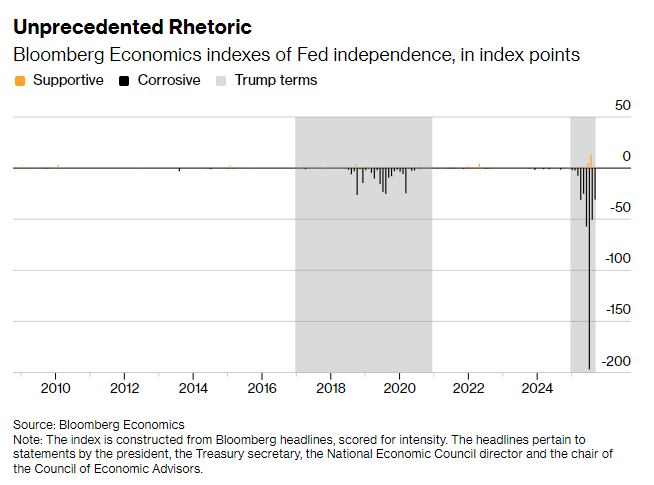
Core Viewpoint - The article discusses President Trump's ongoing attempts to exert political influence over the Federal Reserve, which could undermine its independence and lead to adverse economic consequences in the long term [1][2]. Group 1: Political Influence on the Federal Reserve - Trump has been actively trying to reshape the Federal Reserve by targeting its officials, including attempting to remove Governor Lisa Cook and appointing his economic advisor Stephen Moore to the Federal Open Market Committee (FOMC) [1][3]. - Supporters of Trump view these actions as necessary reforms to address the Fed's failure to meet inflation targets, while critics see it as a blatant power grab to establish a pro-low interest rate majority within the FOMC [1][2]. Group 2: Economic Scenarios and Implications - Analysts have simulated two scenarios regarding the potential impact of political interference on the Federal Reserve's decision-making [4][5]. - In the first scenario, the Fed prioritizes low unemployment over controlling inflation, leading to an additional two rate cuts and a rise in inflation expectations to around 3% [5][8]. - The extreme scenario predicts a drastic reduction in the policy interest rate to 1%, as advocated by Trump, resulting in a significant rise in inflation and a subsequent economic downturn, reminiscent of the 1970s [5][8]. Group 3: Historical Context and Lessons - The article references historical precedents, particularly the actions of President Nixon in the 1970s, where political pressure on the Fed led to rising inflation and economic instability [2][8]. - It highlights the potential long-term costs of undermining the Fed's independence, including threats to the dollar's status as a reserve currency and the risk of stagflation before the 2028 elections [8].
美元流动性风险的可能性、程度及时间
2025-11-19 01:47
Summary of Key Points from Conference Call Records Industry and Company Involved - The discussion primarily revolves around the **U.S. economy**, **AI technology**, and the **global economic order**. It also touches on the **energy sector** and **emerging technologies** in the context of U.S.-China relations. Core Insights and Arguments 1. **AI-Driven Credit Expansion**: AI-driven credit expansion is significant in Q3 2025, increasing pressure on U.S. corporate capital returns, potentially triggering a long-term economic recession, especially when combined with monetary and debt cycles [1][3][7]. 2. **Dollar Strength and Market Uncertainty**: The strong dollar contradicts expectations of credit and debt expansion, indicating market concerns about future uncertainties and large spending needs [1][4]. 3. **Wealth Redistribution**: The global economic order is undergoing a wealth redistribution phase, similar to historical rebalancing periods, which may lead to significant challenges and opportunities over the next few years [1][5][6]. 4. **Stagflation Risks from AI**: The capital-intensive nature of AI may exacerbate stagflation in the U.S. economy, leading to capital excess and demand decline in traditional industries [1][7]. 5. **Gold and Oil Price Sensitivity**: Gold and oil prices are sensitive to global macroeconomic uncertainties, with oil prices indicating existing demand and gold prices affected by a strong dollar and financial environment changes [1][8]. 6. **U.S. Government Debt Issues**: The U.S. government faces long-term debt challenges that could lead to a financial crisis, necessitating technological innovation to maintain competitiveness while increasing fiscal burdens [1][10]. 7. **Potential for AI-Induced Bubble**: The rapid development of AI technology may lead to a new bubble due to high investment expectations and reliance on debt, similar to past technology bubbles [1][11]. 8. **China vs. U.S. in Emerging Technologies**: China leads in the renewable energy sector, while the U.S. relies on traditional energy and high leverage, facing greater systemic risks [2][12]. 9. **Current U.S. Stock Market Trends**: The U.S. stock market is currently in a downward adjustment phase, with significant downward pressure expected due to changing macroeconomic fundamentals [1][13][16]. 10. **Investment Strategies in Complex Markets**: In light of current market complexities, a risk-averse investment strategy is recommended, focusing on reducing exposure to high-risk assets and adjusting portfolios accordingly [1][19]. Other Important but Possibly Overlooked Content - The discussion emphasizes the need for ongoing monitoring and research to adapt strategies to the evolving market environment [1][6]. - The potential for new opportunities arising from the collapse of the old economic order is highlighted, suggesting a proactive approach to capitalize on these changes [1][5][6]. - The impact of U.S. government shutdowns and debt crises on global capital and resource allocation is noted, indicating broader implications for international economic stability [1][14][15].
中金:美联储降息周期中的经济与市场前景
中金点睛· 2025-10-09 23:56
Core Viewpoint - The Federal Reserve's interest rate cut cycle is expected to transition through three phases: "fast-slow-fast," with significant implications for both domestic and international economic operations and asset performance [2][4][6]. Phase Summaries - **Phase 1 (2025Q4)**: Rapid rate cuts are anticipated due to the recent confirmation of rising inflation, with a focus on stabilizing growth over controlling inflation. The Fed may implement 3-4 consecutive rate cuts [2][4]. - **Phase 2 (2026H1)**: The pace of rate cuts is expected to slow as inflation continues to rise, necessitating a balance between growth and inflation risks. The Fed may halt balance sheet reduction to soothe financial markets [4][6]. - **Phase 3 (2026H2)**: Rate cuts may accelerate again, particularly with a potential change in Fed leadership towards a more dovish stance, and the impact of tariffs on inflation may diminish [4][6]. Economic Outlook - The U.S. economy is currently trending towards stagflation (declining growth with rising inflation), with a higher likelihood of stagflation than recession. However, a policy-driven recovery is anticipated at some point [8][10]. - A new market scenario of overheating (rising growth and inflation) could emerge if growth turns upward during inflationary periods [10][12]. Historical Context - An analysis of past Fed rate cut cycles indicates that the average time from the initiation of rate cuts to the growth upturn is approximately 12 months. The current cycle began in September 2024, suggesting a potential growth turning point is near [12][13]. - Key economic indicators follow a specific sequence during recovery phases, with housing data being a leading indicator, while employment data tends to lag behind growth indicators [13][14]. Market Implications - The current macroeconomic environment is conducive to a "loose trading" strategy, particularly in the context of U.S.-China liquidity resonance, which is expected to benefit various asset classes [17][18]. - October is projected to remain a favorable period for liquidity, with a continued focus on equities, particularly in China, as the market is expected to maintain a relatively high risk appetite [23][26]. Asset Allocation Recommendations - The company recommends an overweight position in A-shares, Hong Kong stocks, and gold, while maintaining a standard allocation in U.S. and Chinese bonds. The focus should be on sectors with lower valuations and higher technological content, such as the ChiNext and Hang Seng Tech [23][26]. - Given the anticipated dollar depreciation, various asset classes, including stocks, bonds, gold, and commodities, are expected to perform well [23][26].

美联储重启降息,对全球经济金融格局有何影响?
Sou Hu Cai Jing· 2025-10-08 11:17
Core Insights - The Federal Reserve's decision to cut interest rates by 25 basis points in September 2025, following three cuts in 2024, is primarily a response to a weak labor market, with only 22,000 new jobs added in August 2025 and an unemployment rate of 2.9% [2] - The current economic environment presents a rare combination of weak labor markets and rising inflation, challenging traditional monetary policy frameworks [2][3] - The credibility of statistical data, particularly employment figures, is under scrutiny, with significant downward revisions indicating that 51% of previously reported jobs may not exist [3][4] Group 1 - The traditional monetary policy framework is facing theoretical challenges, as the simultaneous occurrence of labor market weakness and inflation contradicts established economic theories [2] - The U.S. economy is experiencing "stagflation" and stock market bubble risks, with the S&P 500 Shiller P/E ratio reaching 38.4, the second highest historically, raising concerns about potential market corrections if inflation necessitates future rate hikes [3][8] - The decline in the reliability of employment data is undermining the Federal Reserve's decision-making foundation, as the accuracy of labor statistics is increasingly questioned [3][5] Group 2 - Political appointments are threatening the independence of the Federal Reserve, with the appointment of Milan by President Trump symbolizing a significant challenge to the traditional separation of central bank personnel from political influence [5][6] - Internal divisions within the Federal Reserve are weakening the effectiveness of policy communication, as differing views on future monetary policy paths among decision-makers create uncertainty [6][7] - The unpredictability of the Federal Reserve's rate-cutting path is expected to increase, complicating market participants' ability to gauge policy intentions and potentially leading to heightened financial market volatility [7][8] Group 3 - The erosion of the Federal Reserve's independence may lead to a downward spiral, where political interference increases in response to perceived policy failures, further undermining the central bank's authority [7][8] - The credibility of U.S. Treasury securities and the dollar as a global reserve currency may face systemic challenges if confidence in the Federal Reserve's stability and independence diminishes [8]

金条降价,黄金跌价,25年9月28日,各大银行黄金金条最新价格
Sou Hu Cai Jing· 2025-09-28 22:22
Core Insights - The gold price has surged to record levels, driven by optimistic institutional forecasts and macroeconomic factors, indicating potential investment opportunities in the precious metals market [1][26][30]. Domestic Retail Market - Domestic gold retail prices show significant differentiation, with international gold spot prices at $3,761.9 per ounce, approximately ¥859.5 per gram. Major brands like Caibai and Lao Fengxiang set prices at ¥1,058 and ¥1,108 per gram respectively, reflecting competitive pricing strategies [2][3]. - The lowest price recorded was at Sun Gold Store, priced at ¥969 per gram [3]. International Market Dynamics - The international precious metals market experienced volatility on September 28, with gold prices declining to ¥3,311.86 per gram, a decrease of 1.27%. In contrast, platinum and palladium prices saw significant increases, with platinum rising by 3.03% to ¥1,176.76 per gram and palladium soaring by 5.36% to ¥1,065.20 per gram [4]. Bank Paper Precious Metals Pricing - Various banks exhibited differing price trends for paper precious metals. For instance, Industrial and Commercial Bank of China (ICBC) reported a paper gold price of ¥863.71 per gram, up by 0.84%, while China Construction Bank's price fell by 0.51% to ¥862.66 per gram [6][7][8]. Coin Series Pricing - The 2025 Panda gold coin series pricing was detailed, with the complete set priced at ¥52,119. Individual coins ranged from ¥1,170 for a 1-gram coin to ¥480,000 for a 1-kilogram commemorative coin [14][15][22]. Price Outlook and Institutional Predictions - The gold price has seen an unprecedented rise, with a cumulative increase of over 8.5% since September, and a year-to-date increase of 38%, outperforming major global stock indices and bond yields [26]. - Key factors supporting the gold price surge include expectations of Federal Reserve interest rate cuts, concerns over economic stagflation, geopolitical risks, and increased central bank gold purchases [27][28][29]. - Institutions like JPMorgan and Goldman Sachs maintain optimistic forecasts, predicting gold prices could exceed $4,000 per ounce in the near future, with potential spikes to $5,000 per ounce under certain conditions [30].
突然!直线大跳水!超40万人爆仓
Zheng Quan Shi Bao Wang· 2025-09-22 10:48
Group 1: Cryptocurrency Market Overview - The cryptocurrency market experienced a significant drop on September 22, with Bitcoin and Ethereum seeing declines of over 3% and 9% respectively, with Ethereum falling below $4100 [1][2] - Coinglass reported that over $1 billion in cryptocurrency contracts were liquidated within an hour, with 97% of these being long positions, and a total of $1.7 billion liquidated in 24 hours affecting over 407,000 traders [1][2] Group 2: Economic Factors Influencing the Market - Federal Reserve Chairman Jerome Powell indicated that there would be no rapid adjustments to interest rates, leading to a decrease in market enthusiasm for potential rate cuts, which has contributed to the uncertainty in the macroeconomic environment [1][3] - The risk of a U.S. government shutdown has increased, further pressuring the cryptocurrency market [5][6] Group 3: Broader Economic Concerns - The U.S. government is facing a potential shutdown due to the Senate's rejection of a temporary funding bill, which could lead to funding shortages for federal agencies [6] - Ray Dalio highlighted the unsustainable nature of U.S. debt, projecting that the country will need to borrow $2 trillion this year to cover its fiscal deficit, with significant implications for the economy [7]
48:47票,美国投票结果揭晓,特朗普收噩耗,需付351亿巨款?
Sou Hu Cai Jing· 2025-09-21 22:33
Core Insights - The political battle surrounding the Federal Reserve's board nomination has highlighted the limitations of Trump's influence over monetary policy, as evidenced by the narrow 48-47 vote and the resulting modest interest rate cut of 25 basis points instead of the anticipated 50 basis points [3][10][24] - The U.S. economy is facing significant challenges, including a staggering $2 trillion budget deficit and a concerning employment situation, with non-farm payrolls adding only 22,000 jobs in August and an unemployment rate rising to 4.3%, the highest in nearly four years [4][7] - The agricultural sector is under severe strain, with a $35.1 billion shortfall stemming from trade war-related subsidies, and a report indicating that farmers are struggling with unsold soybean inventories of 1.02 billion bushels [8][20][22] Economic Context - The U.S. government's total expenditure for the year is projected at $7 trillion, while revenues are only $5 trillion, leading to a 40% overspend that necessitates borrowing [4] - The inflation rate has risen to 2.9% in August, the highest level since January, indicating a potential economic stagnation combined with rising prices [7][10] Agricultural Sector Challenges - The agricultural crisis, particularly in the soybean market, poses a significant threat to Trump's voter base, as farmers are facing diminishing profits and unsold stock due to trade disruptions [8][20] - The U.S. Department of Agriculture forecasts that soybean inventories will continue to rise, with prices expected to drop to $10.25 per bushel, complicating the subsidy situation for the Trump administration [20] International Relations and Trade Policy - Trump's trade policies have drawn criticism from international allies, with Australia highlighting the disruptive impact of U.S. agricultural subsidies on global markets [22] - The European Union has expressed skepticism about Trump's strategies, viewing them as potentially harmful to their economic interests while increasing dependency on U.S. products [12] Market Reactions - Following the Federal Reserve's decision, market reactions included a rise in the dollar index and U.S. Treasury yields, while gold prices surged past $3,700, indicating a lack of confidence in the Fed's signals [24]
午间定势 | 9月19日A股三大指数早盘涨跌不一
Sou Hu Cai Jing· 2025-09-19 04:56
Group 1 - The A-share market showed mixed performance in the morning session, with the Shanghai Composite Index down 0.03%, the Shenzhen Component Index up 0.32%, and the ChiNext Index up 0.16% [2] - The total trading volume in the Shanghai, Shenzhen, and Beijing markets reached 15,108 billion yuan, a decrease of 2,096 billion yuan compared to the previous day [2] - Over 3,400 stocks in the market experienced declines, indicating a broad-based sell-off [2] Group 2 - Despite the Federal Reserve raising its inflation forecast, the lower interest rate expectations suggest a trend towards gradual monetary easing [2] - The market anticipates a more accommodative Federal Reserve post-2026, which raises concerns about long-term economic stagnation in the U.S. [2] - The structural demand for gold is supported by the ongoing trend of de-dollarization, geopolitical risks, and the need for diversified investment portfolios, leading to a recommendation for buying gold on dips [2]