
就业市场

Search documents
特朗普强势解雇美联储理事,库克强硬回击!美央行独立性面临大考
Sou Hu Cai Jing· 2025-11-05 09:26
8月美国总统特朗普突然抛出消息,说要把美联储理事莉萨·库克赶下台,说她搞了房贷作弊。这一下子 把原本就不安分的美联储又推到风口浪尖。可总统能轻轻松松解雇一名理事?没那么简单。 库克其实是拜登任命的独立理事,本来可以干到2038年,而特朗普这么做,大家都明白他心里盘算着什 么。 他希望美联储放松利率,政策上能听他的,这样他的人将来在里面说话有分量,利率怎么调也由他把 控。 文案|编辑:凤梨 库克的一举一动成了市场和媒体眼里的风向标。她要是真被换下去,后果不只是职位问题,更关系到美 联储还能不能和政治分开,关系着美国老百姓兜里的钱会不会因为政治而被折腾。 处在风暴中心的库克并没有对外讲自己被"解雇"这事,而是直接聊起美国的经济现状。她提到美国的就 业市场已经开始吃紧了,很多黑人失业率又涨了,她盯着这些数据不放。 但说到通胀,她又非常坚定地表示,现在利率够用了,再乱调反而打乱局面。她这一番话不是一头倒向 哪一边,是在给美联储里分歧越来越大的两拨人打个"平手"。 有些人急着降息,觉得物价上涨是短期现象,不降息就怕就业糟糕到底;而另一些人铁了心要抗住,坚 持生活成本高得让人喘不过气,绝不能轻易放水。 库克没就这样认了, ...


美国就业风向标“小非农”今晚公布
Sou Hu Cai Jing· 2025-11-05 08:39
格隆汇11月5日丨美国10月"小非农"ADP就业人数将于今晚21:15公布。官方数据连续缺席之际,该数据 已成为市场稀缺的风向标。若就业市场如预期好转,美联储12月降息前景恐再添疑云。 来源:格隆汇APP ...
国泰君安期货商品研究晨报:贵金属及基本金属-20251104
Guo Tai Jun An Qi Huo· 2025-11-04 01:40
2025年11月04日 国泰君安期货商品研究晨报-贵金属及基本金属 观点与策略 | 黄金:关注美国银行风险 | 2 | | --- | --- | | 白银:震荡反弹 | 2 | | 铜:LME库存减少,限制价格回落 | 4 | | 锌:偏强运行 | 6 | | 铅:海外库存持续减少,支撑价格 | 8 | | 锡:关注宏观影响 | 9 | | 铝:偏强震荡 | 11 | | 氧化铝:下方有支撑 | 11 | | 铸造铝合金:偏强震荡 | 11 | | 镍:冶炼端累库压制,矿端不确定性支撑 | 13 | | 不锈钢:钢价低位窄幅震荡运行 | 13 | 国 泰 君 安 期 货 研 究 所 请务必阅读正文之后的免责条款部分 1 期货研究 商 品 研 究 商 品 研 究 2025 年 11 月 4 日 黄金:关注美国银行风险 白银:震荡反弹 刘雨萱 投资咨询从业资格号:Z0020476 liuyuxuan023982@gtjas.com 【基本面跟踪】 贵金属基本面数据 | | | 昨日收盘价 | 日涨幅 | 昨日夜盘收盘价 | 夜盘涨幅 | | --- | --- | --- | --- | --- | --- | ...
美股分化加剧!美联储官员最新讲话,释放重磅发声
Zheng Quan Shi Bao· 2025-11-04 00:10
Group 1: Federal Reserve Policy Signals - Federal Reserve officials, including Stephen Miran and Lisa Cook, indicate a potential for further interest rate cuts, with Miran suggesting a 50 basis point reduction if economic data aligns with expectations [1][2][3] - Cook supports the recent 25 basis point cut and expresses willingness to consider further reductions, emphasizing a data-dependent approach to future policy decisions [5][6] Group 2: Economic Indicators - The ISM Manufacturing PMI for October is reported at 48.7, below expectations and indicating continued contraction in factory activity for the eighth consecutive month, with 12 manufacturing sectors showing decline [8][9] - The prices paid index dropped to 58, the lowest level since the implementation of tariffs, suggesting easing inflationary pressures [9] Group 3: Stock Market Reactions - Amazon's stock surged nearly 6% after announcing a $38 billion deal with OpenAI for computing power, marking a significant milestone in its cloud computing strategy [11] - Despite the S&P 500 closing slightly up, over 400 stocks declined during the trading session, indicating a divergence in market performance [12][13]

迷雾中的转向:美联储还会降息吗?
Sou Hu Cai Jing· 2025-11-01 12:33
Core Viewpoint - The Federal Reserve is currently hesitant to lower interest rates due to persistent inflation and a resilient economy, despite market expectations for a rate cut in early 2024 [1][2]. Group 1: Obstacles to Rate Cuts - The primary barrier to rate cuts is that inflation has not been fully tamed, with the Consumer Price Index (CPI) significantly down from its peak of 9%, but recent data has repeatedly exceeded expectations, indicating a plateau in the decline [2]. - Core inflation, excluding energy and food, remains sticky, with high housing service costs and service sector inflation supported by wage growth, compelling the Fed to exercise patience [2][3]. - The strong job market and economic growth reduce the urgency for the Fed to cut rates, as the unemployment rate remains low and wage growth is steady, supporting consumer spending and contributing to inflation [2]. Group 2: Drivers for Future Rate Cuts - Despite the challenges, rate cuts are likely on the Fed's policy path, albeit delayed, as maintaining high rates carries its own risks [4]. - The lagging effects of restrictive interest rates may suppress business investment and consumer credit, potentially leading to unnecessary economic downturns or a hard landing in the job market [4]. - The Fed aims to balance its dual mandate of controlling inflation and preventing a spike in unemployment, necessitating a gradual approach to rate cuts once inflation is under control [4][5]. Group 3: Future Outlook - The likelihood of rate cuts in 2023 remains, but the timing and magnitude have been significantly adjusted [6]. - Market expectations for the timing of rate cuts have shifted from early predictions of March or June to September or later, with the focus now on whether any cuts will occur this year [6]. - The anticipated number of rate cuts has decreased from 6-7 to 1-2, with the Fed indicating that any rate reduction will be gradual and data-dependent [6]. - Political pressures in the election year of 2024 may complicate the Fed's decision-making process, despite its efforts to maintain independence [6].
通胀没平、就业拉胯,美联储陷入两难局, 12月降息成猜硬币游戏?
Sou Hu Cai Jing· 2025-11-01 10:20
Core Viewpoint - The Federal Reserve's recent interest rate cut is a response to a weakening job market, creating a dilemma between supporting employment and controlling inflation [1][6][8]. Group 1: Interest Rate Decisions - On October 29, the Federal Reserve cut interest rates by 25 basis points, marking the second cut of the year [3]. - Market speculation suggests a 55% probability of another 25 basis point cut in December, with a 45% chance of no change [4]. Group 2: Employment Market Conditions - The U.S. added only 81,000 non-farm jobs in September, significantly below the mid-year average, with the unemployment rate rising to 4.4%, the highest since 2021 [6][9]. - Major companies, including Amazon and Ford, are implementing significant layoffs, indicating a tightening job market [9]. Group 3: Inflation Concerns - Current inflation stands at approximately 2.9%, still above the Federal Reserve's target of 2%, complicating the decision-making process [8]. - The Federal Reserve faces a classic dilemma: not lowering rates could harm the job market, while aggressive cuts could reignite inflation [8][14]. Group 4: Internal Federal Reserve Dynamics - The recent rate cut decision was not unanimous, with 10 votes in favor and 2 against, reflecting differing views on the economic situation [11]. - There is a division within the Federal Reserve regarding the pace of monetary policy adjustments, with some advocating for more aggressive cuts while others prefer a cautious approach [11]. Group 5: Future Outlook - The Federal Reserve's current strategy appears defensive, aiming to ease market concerns without triggering inflation [14]. - Future decisions will heavily depend on incoming economic data, particularly regarding employment and inflation trends [14][16].
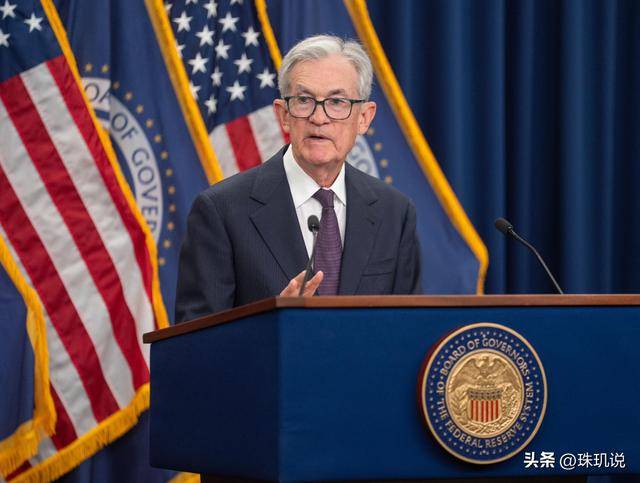
“美联储内部存在严重分歧”
Di Yi Cai Jing Zi Xun· 2025-11-01 03:31
Core Viewpoint - The Federal Reserve's decision to lower interest rates by 25 basis points has created uncertainty regarding future policy directions, particularly with the December rate cut not being a "foregone conclusion" as indicated by Chairman Powell [1][2]. Summary by Sections Federal Reserve Decision - The Federal Reserve's policy-making committee voted 10 to 2 to lower the benchmark interest rate to a range of 3.75%-4.00%, marking the first instance of "dual opposition" since 2019 [2]. - Kansas City Fed President Schmid expressed concerns about the impact of rate cuts on inflation and the labor market, suggesting that current economic growth remains robust [2]. Divergence Among Officials - Several regional Fed presidents, including Dallas Fed President Logan and Cleveland Fed President Hammack, voiced opposition to the rate cut, citing persistent inflation risks and the need for more evidence of economic downturns before further easing [3][4]. - The internal divisions within the Fed regarding the direction of monetary policy have been highlighted, with some officials advocating for maintaining current rates unless significant economic changes occur [4]. Market Expectations - Financial markets have adjusted their expectations for a December rate cut, with the probability dropping to 60% from over 95% earlier in the week, indicating a shift in sentiment [5]. - Analysts from various financial institutions remain divided on the likelihood of a December rate cut, with some economists predicting a pause in rate reductions while others maintain that a cut is still possible depending on forthcoming economic data [6][7]. Economic Outlook - The current economic landscape is characterized by uncertainty due to the government shutdown and lack of official economic data, complicating assessments of the economic situation [6]. - Despite some signs of a slowing job market, consumer spending and income growth remain resilient, suggesting that the risk of recession in the next 12 months is low [6].
12月是否降息?“美联储内部存在严重分歧”
第一财经· 2025-11-01 00:24
Core Viewpoint - The Federal Reserve's decision to lower interest rates by 25 basis points has created uncertainty regarding future policy directions, with Chairman Powell indicating that a December rate cut is "far from a done deal" [3][4][5]. Group 1: Federal Reserve's Decision and Internal Disagreements - The Federal Reserve's policy-making committee voted 10-2 to lower the benchmark interest rate to a range of 3.75%-4.00%, marking the first instance of "dual opposition" since 2019 [5]. - There are significant internal divisions within the Federal Reserve, with some officials expressing caution about further rate cuts due to persistent inflation concerns [6][7]. - Dallas Fed President Logan stated that unless there is clear evidence of a faster-than-expected decline in inflation or a cooling labor market, another rate cut in December is unlikely [7]. Group 2: Economic Outlook and Market Reactions - Financial markets have reduced their expectations for a December rate cut to 60%, down from over 95% earlier in the week, reflecting uncertainty in the economic outlook [10]. - Economists from Deutsche Bank, Montreal Bank, and Goldman Sachs maintain their view that the Fed will cut rates again in December, while Wilmington Trust's chief economist believes employment data will support a rate cut [11]. - Oxford Economics' senior economist noted that the likelihood of a recession in the next 12 months remains low, suggesting that inflation risks will weigh more heavily in the Fed's policy considerations moving forward [12].

地区联储“倒戈”!分歧或进一步显现 美联储12月如何抉择
Di Yi Cai Jing· 2025-10-31 22:52
Core Viewpoint - The Federal Reserve's decision to lower interest rates by 25 basis points has created uncertainty regarding future policy directions, particularly with the December rate cut not being a "foregone conclusion" according to Chairman Powell [1][2]. Summary by Sections Federal Reserve Decision - The Federal Reserve's policy-making committee voted 10-2 to lower the benchmark interest rate to a range of 3.75%-4.00%, marking the first instance of "dual opposition" since 2019 [2]. - Kansas City Fed President Schmid expressed that the current labor market is balanced and any signs of weakness are likely due to structural changes rather than a slowdown in demand [2]. Divergence Among Officials - Several regional Fed presidents, including Dallas Fed President Logan and Cleveland Fed President Hammack, voiced their opposition to the rate cut, citing persistent inflation risks and the need for more evidence of economic downturns before further easing [3][4]. - The internal divisions within the Fed regarding the direction of monetary policy have been highlighted, with some officials advocating for maintaining current rates [4]. Market Expectations - Financial markets have reduced their expectations for a December rate cut to 60%, down from over 95% earlier in the week, indicating a significant shift in sentiment [5]. - The uncertainty surrounding the economic outlook, exacerbated by the government shutdown and lack of official data, has led to a split among Wall Street analysts regarding the likelihood of a rate cut in December [6]. Economic Outlook - Economists from Deutsche Bank, Goldman Sachs, and others maintain that the Fed will likely cut rates in December, while some analysts believe that more data is needed to justify such a move [7][8]. - The overall sentiment suggests that the threshold for further rate cuts may be higher than previously anticipated, with a focus on gathering more evidence before making decisions [7][8].
美国消费行业9月跟踪报告:美国政府停摆,信心指数进一步下滑
Haitong Securities International· 2025-10-31 09:40
Investment Rating - The report maintains a cautious stance on the consumer sector, particularly essential consumer goods, due to ongoing economic pressures and declining consumer confidence [4][58]. Core Insights - Consumer confidence continues to decline, with the University of Michigan Consumer Sentiment Index dropping to 53.6 in October from 55.1 in September, marking the third consecutive month of decline [1][7]. - Inflation appears to be stabilizing, with the Consumer Price Index (CPI) showing a year-on-year increase of 3.0% in September, while core CPI also increased by 3.0% [9][12]. - The labor market shows signs of weakness, with ADP reporting a decrease of 32,000 jobs in September and job openings falling to 7.227 million [13][17]. - The essential consumer goods sector is experiencing mixed performance, with alcohol prices rebounding moderately while food and beverage inflation shows significant divergence across categories [24][28]. Summary by Sections Macroeconomic Overview - Consumer confidence is declining, with the confidence index at 53.6 in October, down from 55.1 in September [1][7]. - Inflation is stabilizing, with September CPI at 3.0% year-on-year and core CPI also at 3.0% [9][12]. - The labor market is weak, with a decrease of 32,000 jobs reported by ADP in September [13][17]. - Credit data shows a decrease in revolving credit by $5.958 billion in August, indicating cautious consumer borrowing [19]. Essential Consumer Goods - Alcohol prices have shown a moderate rebound, driven by strong recovery in spirits prices, while wine prices continue to decline [24][28]. - The food and beverage sector shows significant inflation divergence, with tobacco CPI above 5.0% and dairy CPI remaining weak [28][55]. Stock Market Performance - The discretionary consumer goods sector outperformed, closing up 5.8%, while essential consumer goods closed down 1.4% [57]. - Essential consumer goods ETF saw a net inflow of $670 million, reflecting rising investor confidence [57][35]. Investment Recommendations - The report advises maintaining caution in the consumer sector, focusing on essential consumer goods due to economic uncertainties and declining consumer confidence [4][58].