
智能驾驶

Search documents
新春走基层|新能源浪潮涌入小县城,增长背后亦有“变速”
Hua Xia Shi Bao· 2026-02-22 02:01
Core Insights - The penetration rate of new energy vehicles (NEVs) in China is projected to reach 47.9% by 2025, with December 2025 marking the first month where it surpasses 50%, maintaining its position as the world's largest market for 11 consecutive years [2] - The transition of NEVs from a niche market to a mainstream consumer product is evident, with a significant increase in the variety of models available, including higher-end brands like Tesla and NIO [3][4] - Consumer preferences are shifting towards higher-value vehicles, as evidenced by the increasing presence of models priced above 200,000 yuan in the market [5] Market Dynamics - The growth of NEVs in rural areas, such as Zhuolu County, is accompanied by a structural shift in consumer preferences, moving from low-cost models to more diverse options that include premium brands [3][4] - The rapid expansion of charging infrastructure is supporting the growth of NEVs, with over 20 million charging facilities nationwide by the end of 2025, and a 56.2% year-on-year increase in private charging stations [6] - Despite the growth in infrastructure, charging anxiety persists, with only 28.7% of households having private charging stations, indicating a gap between infrastructure expansion and actual accessibility [6] Consumer Behavior - The demand for plug-in hybrid vehicles (PHEVs) is declining, with their contribution to the NEV market dropping from 69.7% in 2024 to 15.1% in the first three quarters of 2025, reflecting a market adjustment as pure electric vehicles become more affordable [7][8] - The average selling price of A-class gasoline vehicles has fallen below that of PHEVs, leading consumers to reassess the cost-effectiveness of hybrid models compared to traditional gasoline vehicles [8] - The willingness to pay for advanced driving features is low among consumers in rural areas, with a significant portion preferring basic, practical vehicles over those with high-tech features [9][10] Industry Trends - The 2025 NEV catalog includes a record 124 models, but there is a noted decrease in basic practical models designed for everyday use, as manufacturers focus on higher-margin products [10] - The current market environment allows consumers to make more informed choices, leading to a clearer understanding of genuine needs versus artificially stimulated demand [10]

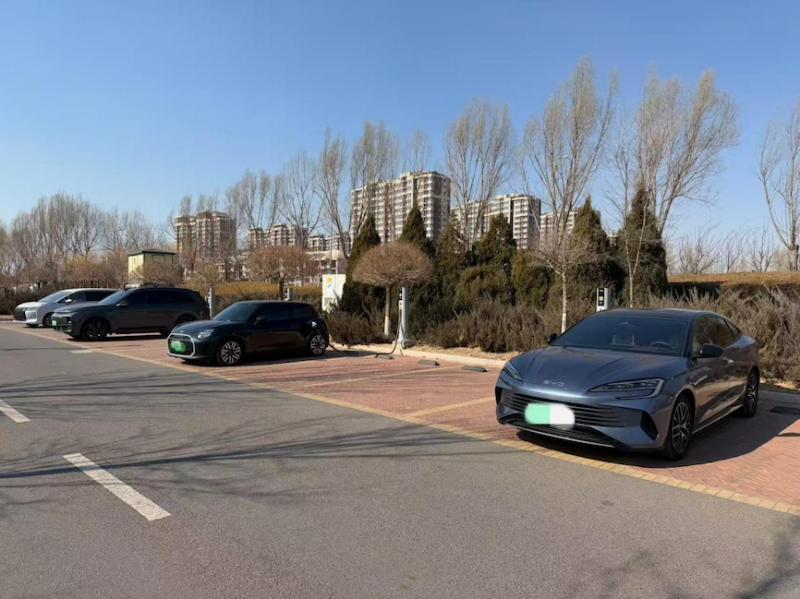
新能源浪潮涌入小县城,增长背后亦有“变速”
Hua Xia Shi Bao· 2026-02-21 01:21
Core Insights - The penetration rate of new energy vehicles (NEVs) in China is projected to reach 47.9% by 2025, with December 2025 marking the first month to exceed 50% [1] - The transition of NEVs from niche products to mainstream consumer goods is evident, with a significant increase in the variety of models available [2][3] - The growth of NEVs is accompanied by a shift in consumer preferences towards higher-value vehicles, indicating a trend of consumption upgrading [3] Group 1: Market Trends - NEVs have become common in urban areas, with a notable increase in their presence compared to two years ago, where they were rare [1] - The sales of NEVs in a specific county reached nearly 400 units in 2025, with over 60% being electric models, reflecting a significant market shift [2] - The variety of NEVs has expanded, with higher-priced models like Tesla and NIO becoming more common alongside budget options [2] Group 2: Consumer Behavior - Consumers are increasingly willing to spend more on vehicles, as seen in the case of a local resident who upgraded her budget to purchase a higher-end model [3] - The demand for vehicles is shifting from merely the cheapest options to those that offer better overall value, as indicated by a survey showing 43.6% of consumers budgeting between 100,000 to 200,000 yuan [3] - The perception of smart driving features is different in rural areas, where consumers prioritize practical utility over advanced technology [8] Group 3: Infrastructure Development - The rapid expansion of charging infrastructure is supporting the growth of NEVs, with over 20 million charging facilities nationwide by the end of 2025 [4] - In the specific county, at least eight charging stations have been established, and the installation process for private charging stations has become more accessible [4] - Despite improvements, charging anxiety persists, with only 28.7% of households having private charging stations, indicating a reliance on public charging networks [5] Group 4: Market Dynamics - The growth of plug-in hybrid vehicles (PHEVs) has slowed significantly, with their contribution to the NEV market dropping from 69.7% in 2024 to 15.1% in the first three quarters of 2025 [6] - The average price of gasoline vehicles has fallen below that of PHEVs, leading consumers to reconsider their choices based on cost-effectiveness [7] - The implementation of trade-in policies shows minimal difference in subsidies between NEVs and gasoline vehicles, influencing consumer preferences towards lower-priced options [8] Group 5: Future Outlook - The increase in NEVs is stabilizing, allowing for a clearer understanding of genuine consumer demand versus artificially stimulated trends [9] - The current market environment may lead to better alignment between consumer needs and available vehicle options, as consumers have more choices than before [10]
“激光雷达第一股”开年大涨!公司刚刚预告实现单季盈利
Sou Hu Cai Jing· 2026-02-20 12:54
Core Viewpoint - SUTENG JUCHUANG (02498.HK), the first listed company in the lidar sector, experienced a significant stock price increase, closing at 37.58 HKD per share, with a market capitalization of 17.745 billion HKD following a positive earnings forecast [1][4]. Financial Performance - The company anticipates achieving its first quarterly profit in Q4 2025, with expected earnings of no less than 60 million CNY, surpassing previous breakeven expectations [4]. - For the fiscal year 2025, the net loss is projected to narrow to no more than 180 million CNY, a substantial improvement from the 482 million CNY loss in 2024 [7]. Sales and Market Position - In Q4 2025, SUTENG JUCHUANG expects to sell 459,600 units of lidar, with 221,200 units (approximately 48%) coming from the robotics sector, establishing dual engines for revenue growth alongside ADAS [7]. - The company achieved a remarkable 11-fold year-on-year increase in lidar sales in the robotics sector, securing the top position in global sales [7][8]. Technological Advancements - The growth is supported by a fully self-developed chip architecture, which enhances reliability, cost-effectiveness, and scalability in product delivery [7]. - The company plans to continue increasing R&D investments to innovate in chip and algorithm technologies, expanding its global customer base and application scenarios [8]. Industry Outlook - The lidar market is expected to expand as the penetration of smart driving and the industrialization of humanoid and service robots accelerate [8]. - SUTENG JUCHUANG's leading position in the robotics sector, combined with stable vehicle-mounted business, enhances future growth certainty [8].
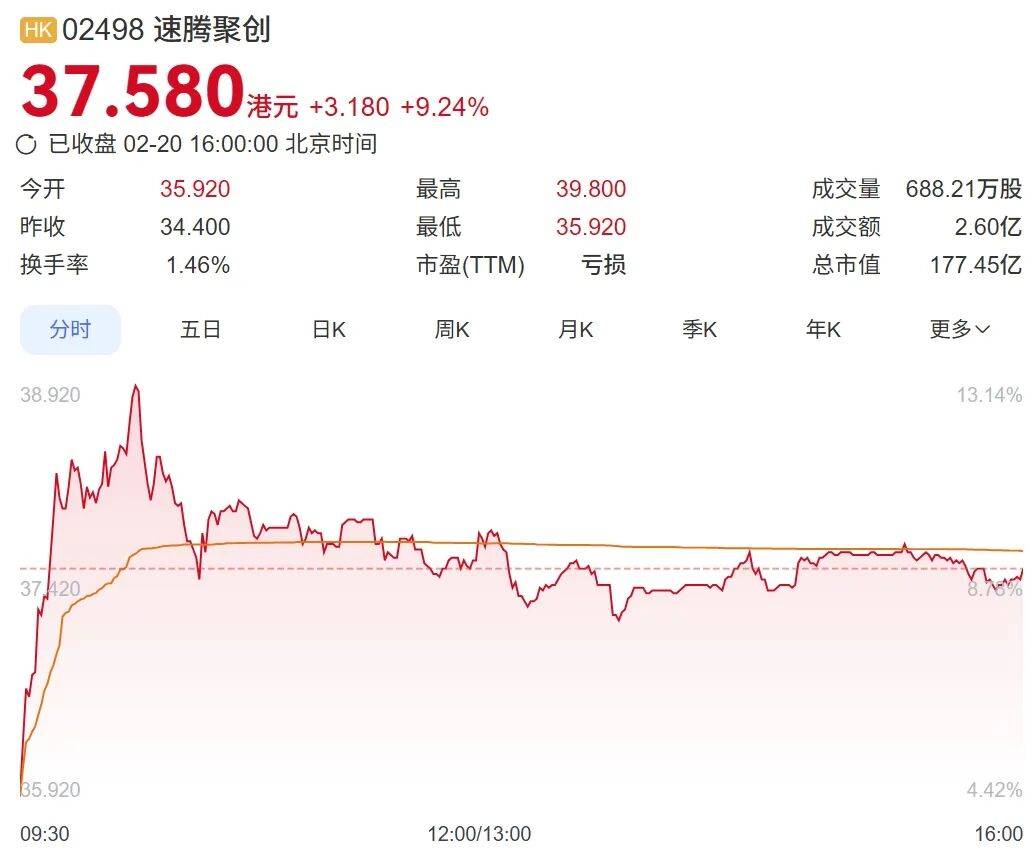
速腾聚创25年Q4盈利超6000万元,股价一度涨超15%
Nan Fang Du Shi Bao· 2026-02-20 09:56
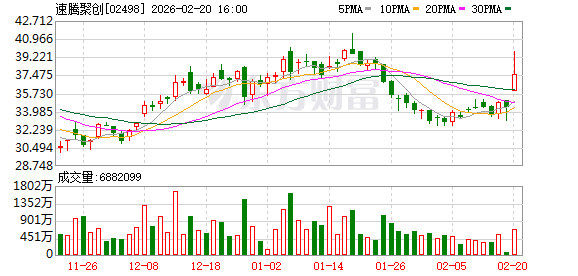
Core Viewpoint - Robosense Technology Co., Ltd. (速腾聚创) is expected to achieve its first quarterly profit in Q4 2025, with a profit of no less than 60 million RMB, marking a significant improvement from previous loss expectations [2][9]. Financial Performance - The company anticipates a substantial reduction in net loss for the fiscal year 2025, projecting it to be no more than 180 million RMB, compared to 481.8 million RMB in 2024 [6][9]. - The expected improvement in net loss is attributed to the continuous growth in LiDAR product sales and fair value gains from financial assets [6][9]. Sales and Market Position - In Q4 2025, the total sales of LiDAR units are projected to reach 459,600, with 221,200 units sold in the robotics sector, accounting for nearly 50% of total sales [10]. - The company has achieved a remarkable increase in sales within the robotics sector, with over 303,000 units sold, representing a year-on-year growth of over 1100%, securing the top position in the global robotics LiDAR market [10]. Technological Advancements - The company has developed a self-researched chip architecture that supports its growth, enabling the launch of high-performance LiDAR products across various applications, including smart vehicles and service robots [10][11]. - The self-developed chip solution has allowed the company to rapidly scale production while improving gross margins [10]. Industry Outlook - The LiDAR industry is expected to continue expanding due to increased penetration of smart driving technologies and the acceleration of humanoid and service robot commercialization [11]. - The company plans to increase R&D investment and deepen innovations in chip and algorithm technologies, aiming to solidify its leading position in the global LiDAR market [11].
豪华汽车行业动态:BBA密集发布2026年战略,产业链个股表现活跃
Xin Lang Cai Jing· 2026-02-19 16:52
Recent Events - The luxury automotive industry is focusing on brand strategy adjustments and product dynamics, with BBA (Benz, BMW, Audi) announcing their 2026 market strategies emphasizing new vehicle launches and localized R&D [1] - On February 13, Benz plans to launch over 15 new and updated models in the Chinese market, including the pure electric GLC SUV and the long-wheelbase GLE SUV, while BMW will introduce over 20 new vehicles, including the new generation iX3, leveraging partnerships with Chinese tech companies to enhance smart driving and cockpit technology [1] - Audi's E5 Sportback won the "2025 Car of the Year" award at the 6th Automotive Wind and Cloud Festival on February 15, highlighting its recognition in design and intelligent driving [1] - On February 19, Benz's former chief designer revealed a concept car paying tribute to the classic racing car "Red Pig," blending retro and modern design elements, showcasing the brand's innovation direction [1] - Pan Shiqi Automotive announced a dividend of $1.4 per share on February 19, with an ex-dividend date of February 25, amid significant stock price fluctuations (a drop of 4.50% from February 13 to 18), reflecting market attention on the dividend event [1] Stock Performance - The luxury car industry-related A-share companies have shown active performance recently, although BBA being foreign brands indirectly influences the sentiment of the A-share automotive sector [1] - On February 19, notable stock price increases were observed within the automotive sector, such as Jingjin Electric-UW (688280.SH) rising by 10.68% in a single day, and Zhejiang Shibao (002703.SZ) hitting the daily limit, with capital focusing on smart driving and component sub-sectors [1] - The dividend event from Pan Shiqi Automotive, as a US-listed dealer, may attract short-term capital flows [1]
“马上开小鹏”首轮幸运车主亲述:顺手一点,竟把小鹏X9“抽”回家
Guang Zhou Ri Bao· 2026-02-18 11:07
Core Viewpoint - The article highlights the excitement surrounding the "马上开小鹏" lottery event, where a lucky winner received a Xiaopeng X9 vehicle valued at 329,800 yuan, showcasing the growing popularity of smart electric vehicles in Guangzhou [1][2]. Group 1: Event Summary - The "马上开小鹏" lottery concluded successfully, with two winners announced shortly after the Guangzhou fireworks event [1]. - The winner, Mr. Huang, expressed disbelief and excitement upon receiving the news of his win, emphasizing the unexpected nature of his participation [1]. - The fireworks event on February 17 was described as "crowded" and "stunning," encouraging others to experience it in person [1]. Group 2: Company and Product Insights - Mr. Huang praised Xiaopeng Motors for its intelligent and practical features, particularly highlighting the X9's super extended range technology, which offers over 1,600 kilometers of comprehensive range [2]. - The article notes a shift in perception of "Guangzhou manufacturing," with Xiaopeng Motors and smart driving becoming new symbols of the city [2]. - Xiaopeng Motors plans to give away five vehicles during the Spring Festival, with a second round of the "马上开小鹏" lottery already in progress, inviting more participants to engage with the brand [2].

兴业证券:2026年值得关注的十大产业趋势
智通财经网· 2026-02-18 03:45
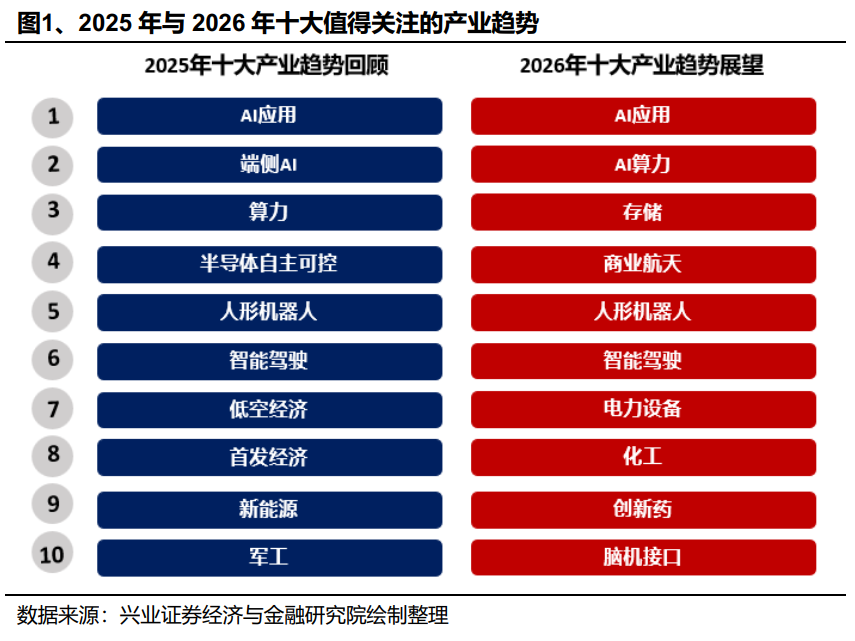
Group 1: AI Applications - The global AI competition is intensifying, with model iterations driving deeper application scenarios, and the focus is on whether significant capital expenditures by tech giants can lead to commercial applications [2][3] - The competitive landscape for AI applications is shifting from dominance by OpenAI to a more multipolar environment, with major players like Google and Meta integrating AI into their ecosystems [3] - In China, AI applications are experiencing a breakthrough, with major tech companies accelerating model iterations and application deployments, leading to a transformation from model landing to scenario monetization [5] Group 2: AI Computing Power - Overseas, major cloud service providers are maintaining high capital expenditures, with a projected increase of 67% in 2026, reflecting a strong demand for AI computing power [7][8] - In China, leading tech companies are increasing capital expenditures and accelerating the iteration of domestic large models, promoting the performance of domestic chips amid tightening supply from foreign sources [9] Group 3: Storage - The demand for storage is entering a new super cycle driven by AI training and inference needs, with AI servers consuming significantly more memory than traditional servers [11][16] - Supply constraints are expected to persist, leading to continued high prices for storage components, as major manufacturers shift production focus to advanced memory types [16] Group 4: Commercial Aerospace - Commercial aerospace is becoming a key battleground in US-China competition, with significant policy support and funding initiatives in both countries to accelerate industry development [19][21] - Domestic companies are achieving breakthroughs in satellite mass production and reusable rocket technologies, transitioning from technical validation to commercialization [22] Group 5: Humanoid Robots - Major overseas companies are ramping up production plans for humanoid robots, benefiting domestic component suppliers, with Tesla aiming for a production capacity of 500,000 units by 2026 [27][30] - Chinese manufacturers are leading in humanoid robot shipments, with significant contracts and production milestones achieved in 2025 [30] Group 6: Intelligent Driving - Domestic policies are expected to facilitate the commercialization of L3 autonomous driving in 2026, with several manufacturers preparing to launch L3 models [32][33] - Tesla's Full Self-Driving (FSD) technology is setting the direction for autonomous driving, with significant advancements in AI capabilities [35] Group 7: Energy Storage - The expansion of AI computing power in North America is driving electricity demand, with domestic power equipment expected to accelerate exports [37][40] - China's "14th Five-Year Plan" includes significant investments in the power grid and energy storage, creating a favorable environment for industry growth [40][43] Group 8: Chemicals - The chemical industry is undergoing a transformation driven by policies aimed at supply-side reform, with a focus on optimizing supply structures and reducing excess capacity [44][47] - New economic sectors are boosting demand for chemical materials, particularly in AI, renewable energy, and robotics, leading to a favorable outlook for new materials [47][48]


景林资产CEO高云程:买入并持有时代最优秀公司
Zhong Guo Ji Jin Bao· 2026-02-18 03:03
(原标题:景林资产CEO高云程:买入并持有时代最优秀公司) 各位《中国基金报》的朋友们,大家新年好,我谨代表景林资产在此祝福大家新春快乐、马到成功。 未来,景林既要坚守基本面投资的原则,也要不断迭代学习观察新的技术和商业模式,不急躁也不停滞,和大家一起迎接新的历史机遇。 在此辞旧迎新之际,祝愿大家新年快乐。 旧岁千功皆铸锦,新年万象再更新。春风满径开祥运,福曜临门纳吉辰。 恭祝大家商祺顺遂,财源广聚,岁安人和。 我们刚刚共同度过了一个难忘的蛇年,地缘政治问题复杂且反复,叠加人工智能新技术带来的科技革命,全球格局正在经历再平衡,中美在竞争 中共存的新时代已经到来。 基于实力来制定规则的新国际秩序时代,中国不可能再是规则的接受方。未来将更多地参与国际规则的协商制定,更多的中国企业成为跨国经营 公司是大势所趋。在这样的宏观背景下,我们观察到国际资金在回流中国资产,这个过程才刚开始。当然,现在这种新平衡和过去的全球化时代 是完全不同的,会明显地出现全球两个体系、两套供应链,这也明显增加了企业的经营成本。 在AI人工智能、新能源、智能驾驶、人型机器人等新经济发展的前沿领域,中美各自都在积极投资,相关公司在这个时代大浪潮 ...
技术破局先行 马年车市换车有道
Xin Lang Cai Jing· 2026-02-16 03:39
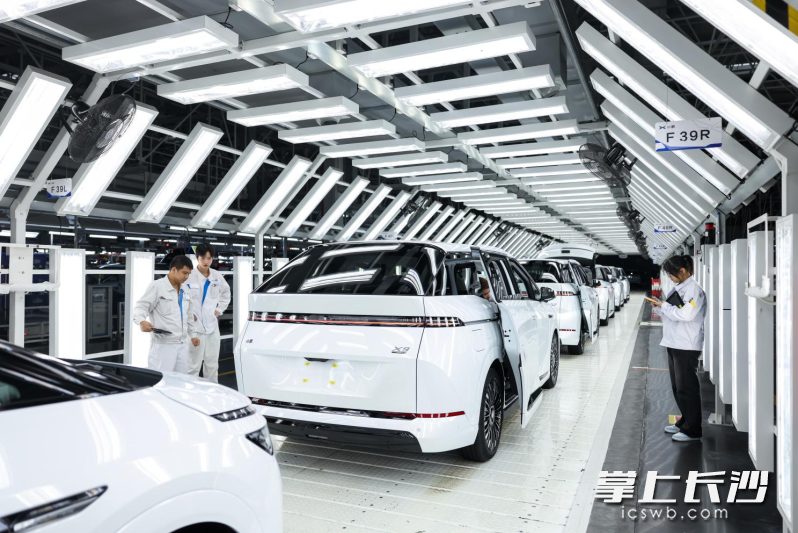
Core Insights - The Chinese automotive market is at a crossroads of inventory competition and technological transition as it enters the Year of the Horse, moving away from price wars to a focus on technology and brand differentiation [1][3] Group 1: Market Dynamics - The automotive industry in China is shifting from low-price competition to a more sophisticated phase characterized by technological, brand, and international competition, driven by a saturated market and rising production costs [3][4] - The China Association of Automobile Manufacturers (CAAM) projects a slight increase of about 1% in domestic car sales by 2026, indicating a new normal of "high base, low growth" [3] - The competition is intensifying as the penetration rate of new energy vehicles surpasses 50%, leading to fierce rivalry among fuel vehicles, new energy vehicles, domestic brands, and joint ventures [3][4] Group 2: Technological Advancements - The Year of the Horse is expected to be pivotal for technological breakthroughs in the automotive sector, particularly in smart driving and solid-state batteries, with domestic brands taking the lead [3][4] - L3 autonomous driving is set to become commercially viable, with companies like Huawei and XPeng making significant advancements in smart driving technology [4][5] - Solid-state battery technology is also progressing, with companies like Dongfeng and Chery achieving breakthroughs in energy density and charging capabilities, indicating a shift towards more efficient battery solutions [5][6] Group 3: Policy Changes and Consumer Guidance - The 2026 vehicle trade-in policy has been revamped to focus on precise upgrades rather than broad incentives, with new subsidy standards and expanded eligibility for older vehicles [6][7] - Consumers are advised to consider trading in older vehicles for new models, especially those with significant depreciation or those seeking enhanced safety and technology features [7][8] - The new policy encourages consumers to make informed decisions rather than following trends, emphasizing the importance of upgrading to safer and more efficient vehicles [7][8]
2026年中国线控制动系统检测装备行业发展历程、产业链图谱、发展背景、市场规模、竞争格局及发展趋势分析:沃镭智能龙头优势明显[图]
Chan Ye Xin Xi Wang· 2026-02-14 01:39
内容概要:线控制动是新能源汽车能量回收、智能驾驶的核心底盘技术基础,更是实现制动域与智驾 域、动力域跨域协同的关键枢纽,下游车企针对线控制动系统的性能、安全及冗余设计,提出了远高于 传统制动系统的严苛要求,且随着高阶智驾的加速普及,进一步拔高了制动系统在动态响应、精准控 制、故障容错等维度的检测标准,直接推动检测装备从"基础性能检测"向"全工况、高精准、多协同"检 测升级,带来检测装备需求量价齐升,据统计,2024年我国线控制动系统检测装备行业市场规模达2.7 亿元,同比增长68.8%。 相关企业:杭州沃镭智能科技股份有限公司、卓越(苏州)自动化设备有限公司、博世汽车部件(苏 州)有限公司、是德科技(中国)有限公司、泰瑞达(上海)有限公司、苏州凌创电子系统有限公司 关键词:线控制动系统检测装备行业发展历程、线控制动系统检测装备行业产业链、线控制动系统检测 装备行业发展背景、线控制动系统检测装备市场规模、线控制动系统检测装备竞争格局、线控制动系统 检测装备发展趋势 一、概述 二、发展历程 相关上市企业:中国汽研(601965)、机器人(300024)、东方中科(002819) 我国线控制动系统检测装备行业的发展 ...

