美国优先

Search documents
签证大棒可以休矣
Ren Min Ri Bao Hai Wai Ban· 2025-11-14 22:03
Core Viewpoint - The United States is using visa restrictions as a tool to exert political and economic pressure on Central American countries that maintain close relations with China, undermining international law and norms [1][2][3][4]. Group 1: U.S. Actions and Reactions - The U.S. Ambassador to Panama stated that U.S. visas are privileges rather than rights, reflecting a condescending attitude [1]. - Panama's President, Laurentino Cortizo, expressed frustration, stating that U.S. actions contradict his desire for good relations with the U.S. [1]. Group 2: International Law and Sovereignty - The U.S. actions are seen as a violation of international law, particularly the principles outlined in the United Nations Charter, which prohibits interference in the internal affairs of sovereign nations [2][3]. - The U.S. is accused of undermining the principle of sovereign equality among nations by using its power to coerce Central American countries [3][4]. Group 3: China-Central America Relations - China's cooperation with Central American countries has been deepening, leading to various development projects that benefit local populations and contribute to regional stability [4]. - The U.S. is perceived as acting against its own interests by attempting to disrupt beneficial relations between China and Central America, which could help alleviate issues like illegal immigration [4]. Group 4: Historical Context - Historical references highlight past U.S. interventions in Panama, suggesting that current actions are part of a long-standing pattern of U.S. dominance and disregard for local sovereignty [5].
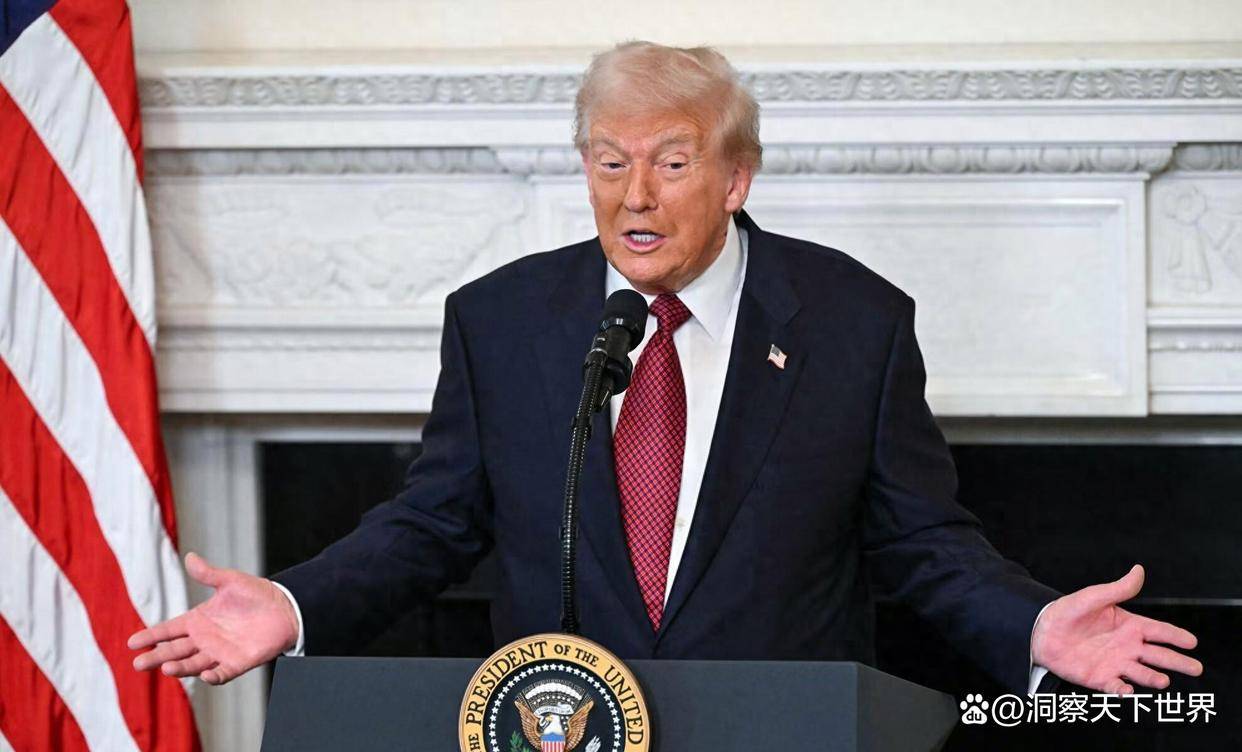
特朗普罕见服软,直言“和中国合作美国才更强”,背后什么算盘?
Sou Hu Cai Jing· 2025-11-13 08:15
哈喽,大家好,我是言叔。最近,特朗普的行为真让人看得目瞪口呆。前一阵子,他在釜山和中国达成协议,夸赞会晤效果很好,说得如同中国和美国的关 系瞬间变得和谐。可是转眼间,他的助手又出来放话说要加征关税,接着他又改口说"和中国合作才能让美国更强大"。他这种变化快得让人有点跟不上节 奏,真是刷新了大家对"反复无常"这个词的认知。 作为全球最受瞩目的政治人物之一,特朗普的一举一动都在左右着国际局势。那为什么他对中国态度这么矛盾呢?是因为他的个性使然,还是美国的局势让 他不得不如此呢? 自从特朗普上台后,他就将"美国优先"四个字根深蒂固地植入了自己的政策之中。2017年,他刚上任不久,就迫不及待地开始使用关税这一武器,目标直指 全球。不管是美国的盟友还是竞争对手,只要他觉得能从中得到好处,就绝不会手下留情。 当时的美国,依靠美元的全球霸主地位和强大的军事力量,在全球产业链中占据着最重要的位置。特朗普认为,只要通过加征关税施压,其他国家就会屈 服,而美国可以轻松地从中获利。事实也证明,这一策略的确奏效,不少中小国家承受不住压力,只好做出妥协,美国因此获得了不少实质性好处。 尝到甜头后,特朗普将目光转向了中国。在他看来,中国 ...

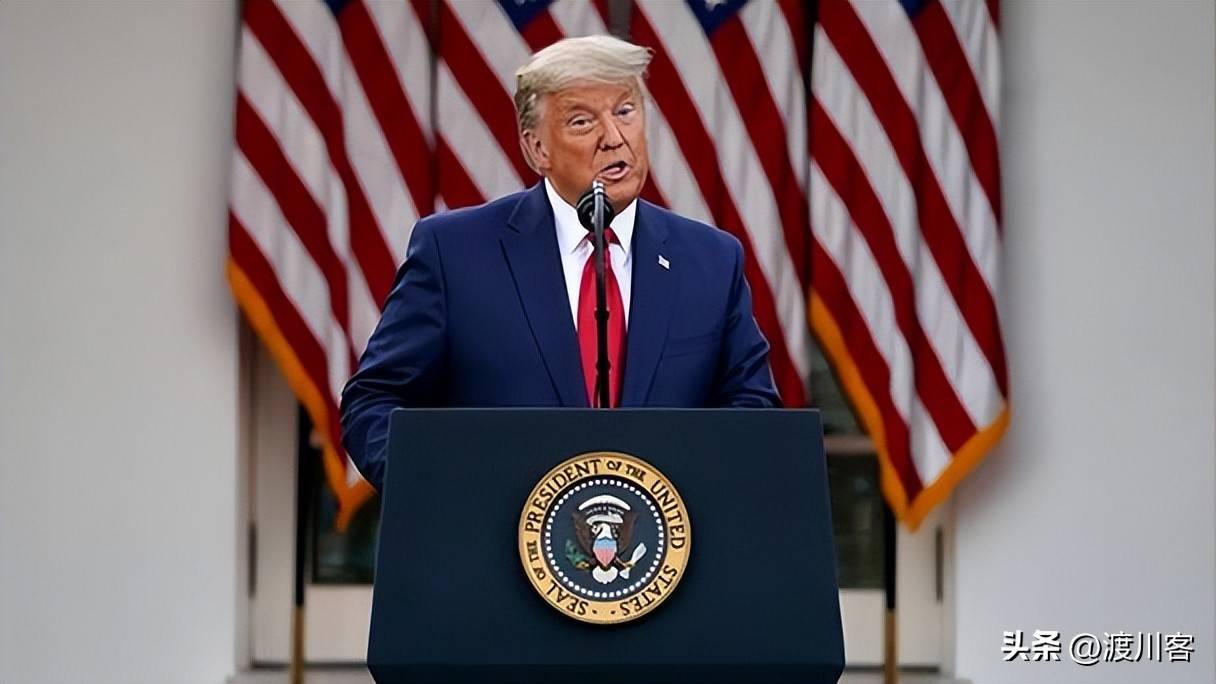
特朗普抵韩前夕,中国接到通知,美国不当老二,接盘国或出现?
Sou Hu Cai Jing· 2025-11-13 07:23
Group 1 - The remarks by U.S. Ambassador Nicholas Burns emphasize that the U.S. must not fall behind China as the world's second superpower, indicating rising tensions in U.S.-China relations [1] - The discussions between the U.S. and China on October 25-26 covered various topics including tariff reductions and export controls, leading to some consensus, which Burns expressed dissatisfaction with [3] - Burns, representing the Democratic Party, aims to push for a more competitive stance against China, despite advocating against tariff wars [6] Group 2 - The competitive pressure on the U.S. from China has increased in various sectors, including rare earth supplies affecting U.S. manufacturing and agricultural exports facing challenges due to reduced orders from China [7] - During Trump's visit to Japan from October 27-29, agreements were made for Japan to import $8 billion worth of U.S. agricultural products, although actual compliance may be limited due to Japan's domestic political and economic constraints [9] - Japan's agricultural cooperative, which holds significant influence over agricultural policy, may resist large imports of U.S. products, potentially leading to domestic price surges and political backlash [10]

芦哲:备战中选,迎接双宽——2026年度展望海外政策
Sou Hu Cai Jing· 2025-11-11 03:40
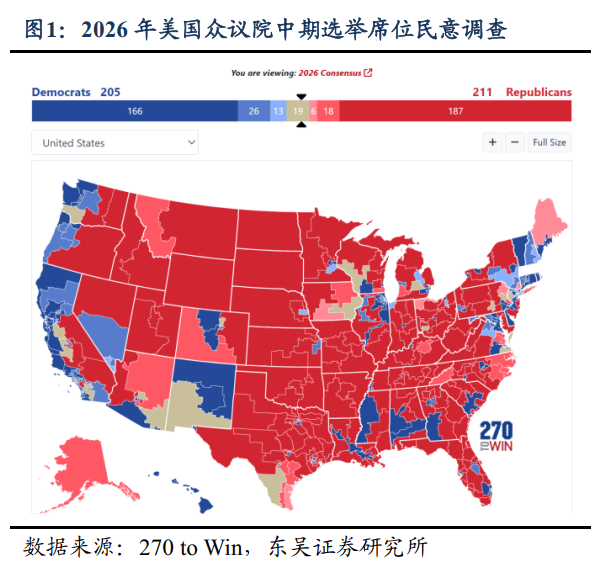
Core Viewpoint - The global market trading focus will shift from Trump's election victory to preparations for the midterm elections, with the outcome of the 2026 midterm elections directly impacting the political landscape for Trump and the Republican Party [2]. Group 1: Midterm Elections - Trump's 2026 Policy Line - The midterm elections are crucial for Trump, as they may represent the last significant electoral battle of his political career, with a high likelihood of increased political resistance if he loses [4][22]. - Historical data shows that the president's party typically loses seats in midterm elections, with an average loss of 25.7 seats in the House and 3.3 seats in the Senate over the last 20 elections [16][20]. - The significance of the midterm elections is heightened for Trump, as a defeat could severely limit his political ambitions during the final years of his presidency [21][22]. Group 2: Trade Policy - Continued Uncertainty and Conflict - Trump's trade policy is expected to remain unpredictable, with potential for renewed tariff conflicts as a means to rally voter support and shift internal political pressures outward [4][33]. - The Supreme Court's upcoming decision on Trump's use of the International Emergency Economic Powers Act (IEEPA) to impose tariffs may lead to alternative legal strategies for implementing tariffs if the ruling is unfavorable [34][38]. - The anticipated increase in tariff revenue could help alleviate fiscal pressures and support Trump's broader economic agenda leading up to the midterm elections [47]. Group 3: Monetary Policy - More Rate Cuts and Lower Credit Quality - The new Federal Reserve chair, expected to take office in May 2026, is likely to implement more aggressive rate cuts than the market anticipates, with projections of at least four rate cuts by the end of next year [5][61]. - Lower interest rates are seen as essential for stimulating economic growth and supporting stock markets, particularly in light of the negative impacts of tariffs [49][51]. - The anticipated shift in monetary policy could lead to a weaker dollar and increased credit challenges, impacting overall market sentiment [48][56]. Group 4: Fiscal Policy - Necessity and Feasibility of Expansion - There is a pressing need for expanded fiscal policies to stimulate demand and counteract the negative effects of tariffs as the midterm elections approach [66][68]. - Increased tariff revenues and reduced fiscal pressure from lower interest rates could provide the necessary funding for expanded fiscal measures without resorting to excessive borrowing [68]. - The experience from the 2018 midterm elections suggests that failure to maintain fiscal expansion could lead to adverse market reactions [68]. Group 5: Foreign Policy - Return to "America First" and Strong Geopolitical Stance - Trump's foreign policy is expected to focus on pragmatic interest exchanges, emphasizing "America First" while managing geopolitical conflicts with limited intervention [69][79]. - Efforts to mediate conflicts such as the Russia-Ukraine situation and the Middle East will continue, with a strong emphasis on leveraging economic and military pressure to achieve peace [70][73]. - The approach to foreign policy will likely involve a mix of negotiation and coercion, potentially increasing geopolitical tensions and impacting market risk appetite [79].
国际关系深度报告:复盘系列:特朗普2.0时期全球经贸体系重构
SINOLINK SECURITIES· 2025-11-10 15:22
Group 1: U.S. Trade Policy and Agreements - The U.S. has implemented a series of tariffs, including a 10% baseline tariff and additional tariffs based on trade deficits, with rates reaching up to 104% for China[14][3] - Since April 2025, the U.S. has engaged in three phases of trade negotiations: exploratory, difficult negotiations, and signing agreements, with significant pressure on trade partners to comply[10][2] - The agreements reached primarily reflect "America First" principles, with countries making concessions on tariffs, investments, and market access[2][1] Group 2: Global Economic Impact - The traditional multilateral trade order is being undermined, leading to a restructured global economic system where trade relations are increasingly determined by national power rather than market forces[2][1] - Economic nationalism and fair trade ideologies are emerging as new narratives in global trade, with countries forming regional alliances to enhance economic resilience[2][1] - Despite U.S. trade pressures, China's economy remains resilient, with a projected increase in foreign trade in the first three quarters of 2025, as other regions fill the gap left by reduced U.S. exports[3][1] Group 3: Risks and Uncertainties - The uncertainty surrounding U.S. tariff policies poses risks, as judicial challenges could lead to significant changes in trade relations[4][1] - The recent U.S.-China economic agreement is merely a framework and does not resolve underlying strategic differences, leaving room for future trade tensions[4][1] - Third-party countries may face pressure to align with U.S. policies, potentially leading to increased tariffs on Chinese products and further complicating China's economic landscape[4][1]
【环时深度】东盟想要“不那么依赖美国的未来”?
Huan Qiu Shi Bao· 2025-11-09 22:50
Core Viewpoint - Southeast Asian countries are increasingly seeking to reduce their dependence on the United States amid rising tariffs and policy uncertainties, while enhancing economic ties with China, the Middle East, and Europe [1][10]. Tariff Policies - The U.S. has faced widespread criticism for its tariff policies affecting Southeast Asian nations, with a recent trade agreement with Malaysia and Cambodia involving the cancellation of tariffs on U.S. goods [2][3]. - The new tariff rates for these countries are capped at 19%, which, while providing limited relief, still poses risks to their economies [5]. - The imposition of tariffs has led to significant economic challenges for countries like Cambodia and Vietnam, which rely heavily on low-cost manufacturing and access to Western markets [5]. U.S. Foreign Aid Reduction - The reduction of U.S. foreign aid has caused dissatisfaction among Southeast Asian nations, particularly in regions affected by conflict, where essential services have been abruptly cut [6]. Economic Significance of Southeast Asia - Southeast Asia, with a population of nearly 700 million and a GDP of approximately $4 trillion, is a crucial market for the U.S., being the fourth-largest export destination [7]. - By 2024, U.S. exports to Southeast Asia are projected to reach nearly $125 billion, reflecting a 16% increase from the previous year [7]. Shift in U.S. Strategy - The U.S. strategy towards Southeast Asia has shifted from a focus on security alliances to a more interconnected partnership model under the Biden administration [8]. - Analysts suggest that the U.S. interest in Southeast Asia is largely driven by competition with China, rather than a genuine commitment to the region [9]. Long-term Adjustments by Southeast Asia - Southeast Asian countries are preparing for a future with reduced reliance on the U.S., exploring trade agreements with Europe and the Middle East, and enhancing regional partnerships [11]. - Recent trade negotiations include agreements between Indonesia and the Gulf Cooperation Council, as well as with the European Union, aimed at reducing tariffs and increasing market access [11].
特朗普十月出两狠招!制裁俄两大石油商还拦碳税,全球格局晃?
Sou Hu Cai Jing· 2025-11-09 12:25
Group 1: Sanctions on Russian Oil - The sanctions imposed by Trump on Russian oil giants Lukoil and Rosneft are significant as they account for nearly half of Russia's oil exports [3][21] - Russia's response indicates that it has become "immune" to Western sanctions, having shifted its export focus to countries like China and India, using local currencies for transactions [6][16] - India's decision to potentially reduce oil purchases from Russia reflects its desire to maintain good trade relations with the U.S., but raises concerns about domestic supply and costs [7][21] Group 2: Impact on Global Shipping and Carbon Tax - Trump's actions at the IMO conference disrupted a carbon tax plan agreed upon by over 60 countries, which aimed to generate $3 trillion for green transformation by 2026 [9][17] - The delay in implementing the carbon tax is expected to reduce green investments by 30% among the top 20 shipping companies, hindering the industry's transition to sustainable practices [12][17] - The EU's intention to implement its own carbon tax in 2026 could lead to conflicts with U.S. policies, complicating transatlantic shipping trade [19][21] Group 3: Broader Implications for International Cooperation - Trump's approach undermines international cooperation, making it more challenging to achieve global consensus on issues like climate change and conflict resolution [19][22] - The sanctions on Russian oil and the halt of the carbon tax could lead to increased oil prices and shipping costs for consumers, ultimately impacting the general public [22]
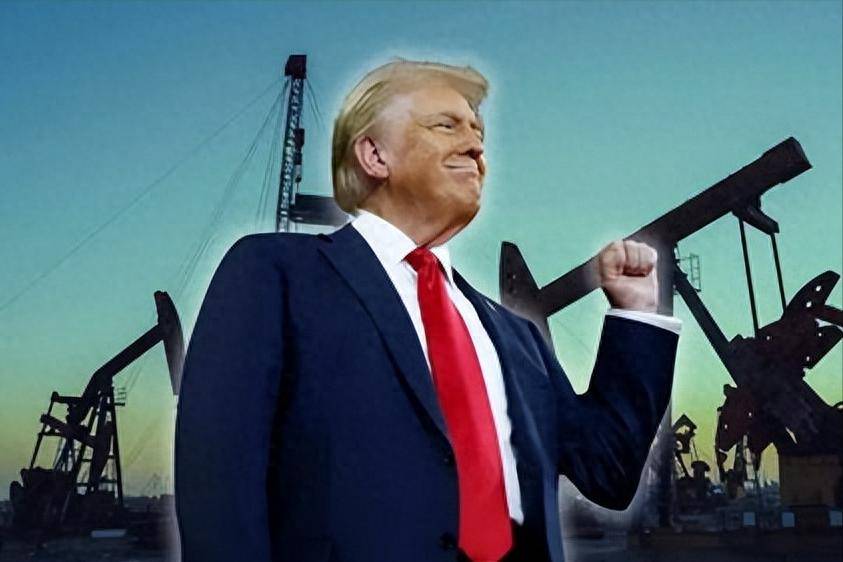
特朗普刚走,中国东盟就签了!菲律宾算盘落空,美国关税大棒失灵
Sou Hu Cai Jing· 2025-11-09 06:30
Core Points - The signing of the new agreement between China and ASEAN is a strategic response to U.S. dollar hegemony and reflects a collective decision by ASEAN countries to strengthen economic ties with China after Trump's visit [1][5][16] Group 1: Agreement Details - The upgraded version of the agreement, known as the "China-ASEAN Free Trade Area 3.0," expands cooperation into new areas such as digital economy, green economy, and supply chain connectivity, marking a significant evolution from previous versions [5][7] - The new "origin rules" in the agreement allow products to be classified as "ASEAN origin" if at least 40% of their value comes from China and ASEAN countries, countering U.S. efforts to decouple supply chains [9][10] Group 2: Political Implications - The timing of the agreement's signing immediately after Trump's departure indicates a strategic move by ASEAN to assert its economic priorities and maintain unity against external pressures, particularly from the U.S. [5][10][16] - The agreement serves to stabilize ASEAN's internal dynamics, especially in light of the Philippines' increasing military cooperation with the U.S. under President Marcos, ensuring that economic cooperation remains the primary focus [10][14]

2026年度展望:备战中选,迎接双宽
Soochow Securities· 2025-11-09 05:56
Group 1: Midterm Election Insights - The 2026 midterm elections are crucial for Trump, as they will determine the political landscape and his ability to implement policies during his final years in office[1] - Historical data shows that the president's party typically loses an average of 25.7 seats in the House and 3.3 seats in the Senate during midterm elections, with a 36.36% chance of maintaining control after a sweep[11][12] - The significance of the 2026 midterms is heightened for Trump, as a loss could amplify political resistance during his remaining term[17] Group 2: Trade Policy Outlook - Trump's trade policy is expected to remain volatile, with potential for renewed tariff conflicts as a political strategy[25] - The U.S. Supreme Court may rule against Trump's use of IEEPA for imposing tariffs, prompting him to seek alternative legal frameworks for tariff implementation[26][29] - Tariff revenues have significantly increased, reaching approximately $174 billion in the first nine months of 2025, nearly tripling from the previous year[37] Group 3: Monetary Policy Expectations - The new Federal Reserve chair, expected to take office in May 2026, is anticipated to implement more aggressive rate cuts, with a total of at least four cuts projected by the end of next year[49][51] - The Fed's actions are likely to exceed market expectations and economic needs, resulting in lower interest rates and deteriorating credit conditions[38] - Trump's push for lower rates is driven by the need to stimulate the economy and alleviate fiscal pressures, especially in light of the projected $3.4 trillion deficit from the "Big Beautiful Plan" over the next decade[39][41]
美国学者揭露:大家都被特朗普耍了,他对中方的态度从来没有变过
Sou Hu Cai Jing· 2025-11-07 19:16
Group 1 - The core viewpoint of the articles revolves around the evolving U.S.-China trade relations, particularly under Trump's administration, highlighting a shift from tariffs to temporary agreements while maintaining a confrontational stance towards China [1][3][4] - The U.S. has seen an increase in average tariffs to 50%, more than double the rates during Biden's presidency, indicating a more aggressive trade policy [3] - Trump's strategy appears chaotic but follows a consistent pattern aimed at countering China's rise, as evidenced by his 2017 National Security Strategy labeling China as a "revisionist power" [4][11] Group 2 - Trump's unpredictability is a key tactic, oscillating between friendly gestures and increased sanctions, which has led to a decline in trust among U.S. allies, particularly Japan [6] - The "America First" policy underpins Trump's actions, including imposing tariffs on allies and leveraging trade negotiations to boost domestic manufacturing [6][11] - Despite the aggressive tariff strategy, the U.S. trade deficit has increased from $760 billion in 2016 to $1.21 trillion in 2024, suggesting that the tariff war has not achieved its intended economic outcomes [6][9] Group 3 - The rise of the "losing out" narrative in the U.S. reflects a shift in perception regarding trade with China, as many believe that previous policies have undermined American manufacturing [8] - Trump's approach contrasts with traditional politicians who often seek long-term strategies, focusing instead on immediate trade victories and leveraging public sentiment against globalization [9][11] - The complexity of global economic structures challenges Trump's simplistic "zero-sum game" assumptions, as countries begin to respond more assertively to U.S. pressure [11]