
稳增长政策

Search documents
上半年业绩稳中承压 信托业加快布局转型创新
Xin Hua Wang· 2025-08-12 06:19
Core Viewpoint - The trust industry is experiencing a slowdown in growth for the first half of 2022, with some companies showing strong performance in their trust business. The focus for the second half remains on transformation and innovation to achieve high-quality development [1][2]. Group 1: Performance Overview - As of now, most trust companies have disclosed their unaudited financial reports for the first half of 2022, showing overall performance under pressure. The total operating income for 56 trust companies reached 57.544 billion yuan, with trust business income at 37.358 billion yuan, a year-on-year decrease of 13.86%. Proprietary business income was 20.187 billion yuan, down 15.21% year-on-year [2][3]. - Notably, Ping An Trust achieved operating income of 11.679 billion yuan, surpassing the 10 billion yuan mark, while Jianxin Trust saw a steady increase with revenue of 6.288 billion yuan, up 16% year-on-year. Other companies like CITIC Trust, Chongqing Trust, Wukuang Trust, Everbright Trust, and Zhongrong Trust also reported revenues exceeding 2 billion yuan [2][3]. - Many trust companies experienced a slowdown in net profit growth, with some reporting negative growth. Jiangsu International Trust was one of the few to achieve net growth in both operating income and net profit, with figures of 1.124 billion yuan and 1.328 billion yuan, respectively, marking increases of 134 million yuan and 128 million yuan year-on-year [2][3]. Group 2: Business Income Analysis - In terms of trust business income, CITIC Trust, Everbright Trust, and Wukuang Trust each reported over 2 billion yuan, but still saw declines compared to the previous year. Jianxin Trust, Yingda Trust, Foreign Trade Trust, and Guotou Taikang Trust achieved positive year-on-year growth, with Jianxin Trust's income at 1.429 billion yuan, up 10.38% year-on-year, and Guotou Taikang Trust showing a remarkable growth of 52.89% [3][4]. - Analysts attribute the narrowing of trust business income to regulatory pressures and a reduction in financing and management trust business scales. Additionally, fluctuations in the capital market have led to impairments in fair value changes, resulting in lackluster performance in proprietary business income [3][4]. Group 3: Strategic Focus on Transformation - Many trust companies are emphasizing "innovation and transformation" in their mid-year meetings, with a focus on standard product trusts and family trusts as key strategic areas for development. Shanghai Trust highlighted the need to align with asset management and wealth management directions [4][5]. - The issuance of standard product trust products saw a significant increase, with 1,031 products issued in July, up 13.07% month-on-month, and a total issuance scale of 73.653 billion yuan, reflecting a 23.39% month-on-month growth. This segment is becoming a major support for the trust market's growth [4][5]. - Family trust business is also gaining traction, with a reported existing scale of approximately 349.481 billion yuan by the end of 2021, and over 10 billion yuan added in June alone, marking a month-on-month growth of over 60% [5][6]. Group 4: Future Outlook - The trust industry is expected to see performance improvements as various "stabilizing growth" policies are implemented and the economy recovers. Trust companies are encouraged to leverage their resource advantages and explore business transformations in line with the latest regulatory classifications [6][7]. - The asset management and wealth management sectors are anticipated to become focal points for future development, although the industry currently lacks a differentiated competitive landscape, necessitating improvements in technology, research capabilities, and talent quality [7][8].
中国宏观周报(2025年8月第1周):天气因素扰动线下活动-20250811
Ping An Securities· 2025-08-11 02:40
Industrial Sector - China's industrial production remains stable, with a recovery in steel and construction material output, showing a week-on-week increase of 3.7%[1] - Daily average pig iron output is higher than the same period last year, indicating a positive trend in steel production[3] - Cement clinker capacity utilization rate has improved, reflecting a rebound in the cement industry[5] Real Estate - New home sales in 30 major cities decreased by 15.9% year-on-year as of August 8, but the decline rate improved by 2.2 percentage points compared to the previous week[1] - The second-hand housing listing price index fell by 0.27% week-on-week as of July 28, indicating a slight downward trend in property prices[20] Domestic Demand - Movie box office revenue continues to perform strongly, with a daily average of CNY 24.143 million, a year-on-year increase of 98.7%[1] - Retail sales of major home appliances grew by 10.5% year-on-year as of August 1, showing robust consumer demand[25] - The number of domestic flights increased by 8.8% year-on-year, reflecting a recovery in travel activity[26] External Demand - Port cargo throughput increased by 6.8% year-on-year as of August 3, indicating a positive trend in external trade[30] - The global manufacturing PMI index was at 49.7% in July, down 0.7 percentage points from June, suggesting a slight contraction in manufacturing activity[1] Price Trends - Black raw material futures prices rebounded, with coking coal futures up by 12.3% and rebar futures up by 0.3%[1] - The South China industrial product index fell by 1.0%, while the black raw material index rose by 2.7%[1]
【广发宏观团队】本轮权益资产定价修复:复盘与展望
郭磊宏观茶座· 2025-08-10 10:42
Group 1 - The core viewpoint of the article is that the recent recovery in equity market pricing is driven by multiple factors, including stable growth policies, lower deposit rates, and increased investment in non-US assets [1][2][3] - Since the implementation of stable growth policies on September 24, 2024, the Shanghai Composite Index and the Wind All A Index have increased by 32.2% and 44.6%, respectively, by August 8, 2025 [1] - The stable growth policies have improved the breadth of economic growth, contributing to increased stability in the stock market, as evidenced by the rising proportion of industries experiencing growth [1][2] - A reduction in deposit rates has led to increased liquidity in the residential sector, with the willingness to invest in stocks rising from 13.3% in Q3 2024 to 17.5% in Q1 2025 [2] - Policies promoting long-term capital inflows into the market have resulted in additional funding, with various financial institutions encouraged to adopt long-term assessments [2][3] - The rise in US credit risk premiums has increased the importance of non-US assets, as global investors seek to diversify their portfolios [3] Group 2 - Since August, expectations for a Federal Reserve rate cut have become a key trading theme in developed markets, with the Nasdaq leading global performance [4][5] - The VIX index has decreased to around 15%, indicating reduced volatility expectations in the US stock market [5] - A-shares have shown a "thick width + reduced volume" market pattern, suggesting that while risk appetite remains high, there is a growing need for fundamental support [8][9] - The overall market breadth has improved, with 79% of stocks in the Wind All A Index surpassing their 240-day moving average [9] - The performance of various sectors has varied, with military, non-ferrous metals, and precious metals showing strong gains, while TMT and dividend sectors performed moderately [10] Group 3 - The US fiscal deficit has expanded significantly, with a reported increase of $109 billion year-on-year, although this figure is adjusted for timing discrepancies [11][12] - The Federal Reserve's dovish stance has gained traction, with calls for rate cuts becoming more prominent among board members [14][15] - Recent policies aimed at supporting new industrialization and optimizing housing purchase policies in Beijing reflect a broader trend of government intervention to stimulate economic growth [31][32][33]


一揽子稳增长措施发力 我国经济总体产出保持扩张
Jin Rong Shi Bao· 2025-08-08 07:59
5月31日,国家统计局发布的数据显示,5月份,制造业采购经理指数(PMI)为49.5%,比上月上 升0.5个百分点;非制造业商务活动指数为50.3%,比上月下降0.1个百分点;综合PMI产出指数为 50.4%,比上月上升0.2个百分点,我国经济总体产出保持扩张。 东方金诚首席宏观分析师王青表示,5月份制造业PMI指数回升主要有两方面因素驱动。一是包括 降息降准在内的一揽子金融政策措施对经济稳定增长形成支撑,二是关税战降温,下半月我国对美国出 口出现比较强劲的反弹。 "5月份,我国制造业经历了上月短暂波动后呈现回稳迹象,但后期走势仍需观察。"文韬具体分析 道,一方面,外部环境依然复杂严峻,外贸回稳仍有不确定性;另一方面,从PMI表现来看,制造业 PMI仍处于50%以下水平,多数分项指标及部分行业仍处于低位。当前政策层面,仍需加码推进各项稳 经济政策措施,加快构建双循环新发展格局和全国统一大市场。 非制造业商务活动指数延续扩张 5月份,非制造业商务活动指数为50.3%,比上月略降0.1个百分点,仍高于临界点,非制造业总体 延续扩张态势。对此,中国物流信息中心分析师武威表示,非制造业商务活动指数今年以来连续5个月 ...

超预期!同比增长7.2%!
Jin Rong Shi Bao· 2025-08-08 07:56
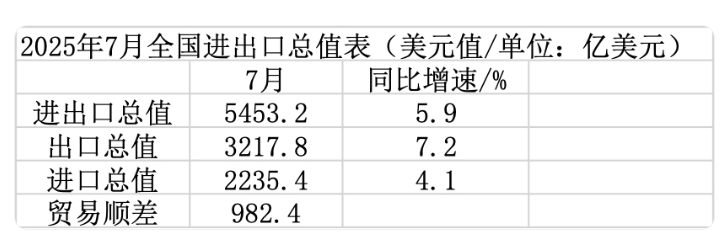
海关总署8月7日发布数据显示,按美元计价,7月份,我国进出口总值5453.2亿美元,其中,出口3217.8 亿美元,同比增长7.2%,环比下降1%;进口2235.4亿美元,同比增长4.1%,环比增长6.2%。 | | 2025年7月全国进出口总值表(美元值/单位:亿美元) | | | --- | --- | --- | | | 7月 | 同比增速/% | | 进出口总值 | 5453. 2 | 5.9 | | 出口总值 | 3217.8 | 7.2 | | 进口总值 | 2235.4 | 4.1 | | 贸易顺差 | 982. 4 | | 数据来源:海关总署 "7月出口同比增速继续加快,好于市场普遍预期。"东方金诚首席宏观分析师王青认为,这主要源于当 月美国关税政策多变,各类"抢出口""转出口"效应进一步升级等原因。当月我国对欧盟、韩国及共 建"一带一路"国家出口增速加快,对东盟出口继续保持两位数高增,这抵消了我国对美出口同比降幅扩 大的影响,带动整体出口增速处于较高水平。 出口具备强大优势和韧性 展望下一阶段外贸形势,刘涛分析称,我国出口自身具备强大优势和韧性,包括外贸出口中美国市场占 比持续降低,我国具备 ...
今年专项债券发行使用呈现三大特点
Zheng Quan Ri Bao· 2025-08-08 07:28
Group 1 - The core viewpoint of the articles highlights that the Chinese government is implementing a proactive fiscal policy by issuing a record-high special bond quota of 3.9 trillion yuan for 2024, which, combined with 100 billion yuan carried over from 2023, totals 4 trillion yuan for local governments [1][2] - The issuance of special bonds is characterized by a scientific grasp of the issuance rhythm, with a focus on supporting major projects and driving investment, particularly in transportation infrastructure [2][3] - The government’s budget expenditure for the first ten months of 2024 reached 70,107 billion yuan, with a significant year-on-year increase of 47.9% in October, indicating a strong correlation with the accelerated deployment of special bond funds [3] Group 2 - The special bonds are directed towards over 30,000 projects, demonstrating their role in promoting local economic and social stability [2] - The government aims to expand the usage scope of special bonds and improve management mechanisms to maintain investment intensity and reduce financing costs, thereby promoting high-quality development [3]
中信证券:期待后续稳增长政策的继续发力
Zheng Quan Shi Bao Wang· 2025-08-08 06:59
(原标题:中信证券:期待后续稳增长政策的继续发力) 证券时报网讯,中信证券认为,2月社融和信贷增速不及预期,没有延续1月的信用恢复态势。2月社融 增速为10.2%,增速较上月滑落0.3个百分点,主要是因为表内贷款较弱。企业中长期贷款同比少增5948 亿,可能部分需求被1月透支,中长贷在企业贷款中的占比进一步降低至41%。居民贷款继续受到地产 销售拖累。本周票据贴现利率降至2%以下,可能表明3月上旬银行完成信贷指标有一定压力,我们期待 后续稳增长政策的继续发力。 ...

外贸动能加速!7月增速6.7%创年内新高 工业机器人出口强势
2 1 Shi Ji Jing Ji Bao Dao· 2025-08-07 14:58
Core Insights - China's goods trade maintained a positive momentum in the first seven months of the year, with a total import and export value of 25.7 trillion yuan, a year-on-year increase of 3.5% [1] - In July alone, the import and export value reached 3.91 trillion yuan, growing by 6.7%, marking the highest growth rate of the year [1] - The increase in imports of key raw materials such as metal ores and crude oil indicates robust domestic production activity and rising demand [1] Trade Performance - General trade accounted for 64% of China's total foreign trade, with a value of 16.44 trillion yuan, growing by 2.1% [2] - Trade with ASEAN countries reached 4.29 trillion yuan, a growth of 9.4%, making ASEAN China's largest trading partner [2] - Trade with countries involved in the Belt and Road Initiative totaled 13.29 trillion yuan, increasing by 5.5%, showcasing a diversified trade partnership [2] Company and Sector Contributions - Private enterprises contributed 14.68 trillion yuan to imports and exports, a growth of 7.4%, representing 57.1% of the total [3] - Foreign-invested enterprises had a total trade value of 7.46 trillion yuan, growing by 2.6%, accounting for 29% of foreign trade [3] Structural Optimization - The export of mechanical and electrical products reached 9.18 trillion yuan, growing by 9.3%, and accounted for 60% of total exports [4] - High-tech product exports exceeded 5 trillion yuan, with significant growth in sectors such as high-end machine tools (23.4%) and industrial robots (62.2%) [4] - Labor-intensive product exports decreased by 0.8%, indicating a shift towards high-value and high-tech industries [5] Future Outlook - The expansion of domestic demand is expected to drive import growth, supported by ongoing economic stabilization policies [5] - Despite uncertainties in the external environment, closer economic ties with Belt and Road countries provide strategic depth for stabilizing external demand [5]

煤炭ETF(515220)午后涨超2%,供需改善或支撑价格修复
Mei Ri Jing Ji Xin Wen· 2025-08-06 06:13
Group 1 - The core viewpoint is that with the gradual recovery of coal prices, supply-side policy expectations are once again catalyzing sector sentiment, potentially leading to a new round of opportunities in the coal sector [1] - It is anticipated that under the resonance of supply and demand expectations, the sector may experience significant upward movement, especially if supply-side policies and growth stabilization policies further overlap [1] - The coal ETF (515220) tracks the China Securities Coal Index (399998), which selects representative companies from the coal industry to reflect market performance and development trends [1] Group 2 - The China Securities Coal Index emphasizes the scale and liquidity of companies, providing insights into the overall supply and demand situation and market dynamics of the coal industry [1] - Investors without stock accounts can consider the Guotai China Securities Coal ETF Link C (008280) and Guotai China Securities Coal ETF Link A (008279) [1]
周周谈:股指行情展望
Chuang Yuan Qi Huo· 2025-08-06 00:11
Report Information - Report Title: Weekly Discussion: Outlook for Stock Index Quotes [1] - Report Date: August 3, 2025 [2] - Analyst: Liu Yihan from Chuangyuan Research [2] Investment Rating - No investment rating for the industry is provided in the report. Core Viewpoints - A-share market is bullish in the medium to long term, and the stock index will fluctuate around 3600 points in the short term, expected to build a platform at this level, and then choose to attack the high point of 3674 points in November last year after a period of shock digestion. The lower limit of the market adjustment is expected to be around 3500 points, and if the adjustment is shallow, it may be around the gap of 3536 points on July 18 [25]. - The strategy is to continue to focus on a balanced allocation of blue - chips and technology growth stocks, with a balanced allocation of SSE 50 and CSI 1000. Technology remains the main line for medium - to long - term allocation [25]. Summary by Directory Market Review - Most global markets experienced significant pullbacks this week, including the A - share market [9]. - In the past 5 trading days, all major A - share indices declined, with the decline of the Hang Seng Index being - 3.47%, and the declines of other indices such as the Wind All - A, SSE Composite Index, and Shenzhen Component Index ranging from - 0.74% to - 1.75% [5]. - Among the Shenwan primary industries in the past 5 trading days, the pharmaceutical and biological industry had a decline of - 0.54%, while the communication and media industries had a rise of 3% [7]. Sino - US Trade Negotiations - The Sino - US tariff negotiation period was extended by 90 days. China did not promise to invest in the US or purchase commodities, and the two sides stood on an equal footing [10][11]. - After the negotiation in Stockholm on July 29, the two sides will continue to promote the extension of the suspended 24% reciprocal tariffs by the US and China's counter - measures. The US aims to confirm the implementation of the agreement reached in London and accelerate the supply of rare - earth magnets from China to US companies [13]. - The US uses its consumer market as a bargaining chip in tariff negotiations. The global market faces a problem of insufficient total demand, and the proportion of US residents' salary income has decreased while the importance of financial assets has increased. If the US capital market has problems, it will affect US consumption and thus tariff negotiations [14]. Fed Interest - Rate Meeting - The Fed maintained the federal funds rate at 4.25 - 4.50% on July 30, but Fed Chairman Powell made a hawkish statement. There is still a high probability of a rate cut in September [16][20]. - The reasons for a possible rate cut are: the US demand - side data has shown a slowdown in economic data, and the financial market will force the Fed to cut rates, such as the need for liquidity supplementation due to the decline of the TGA account and the increase in overnight financing rates caused by the significant decrease in the balance of the overnight reverse - repurchase market [20]. Politburo Meeting - The Politburo meeting in July indicates that subsequent pro - growth policies will continue to be promoted and implemented [26]. - The statement in the Politburo meeting about "enhancing the attractiveness and inclusiveness of the domestic capital market and consolidating the stable and improving momentum of the capital market" is conducive to the recovery of A - share risk appetite [26]. A - Share Market Analysis - The A - share market is affected by multiple factors. During the mid - year report disclosure period, the economy has structural problems, and the recovery is stable but without significant improvement. The external environment is uncertain, and domestic monetary policy is in a wait - and - see state [26]. - The molecular end is neutral, and the denominator end is slightly bullish. The strategy is to balance the allocation of blue - chips and technology growth stocks [24][25].