
量化宽松

Search documents
不只是降息?前纽约联储专家:鲍威尔下周三或宣布450亿美元购债计划
Hua Er Jie Jian Wen· 2025-12-07 03:56
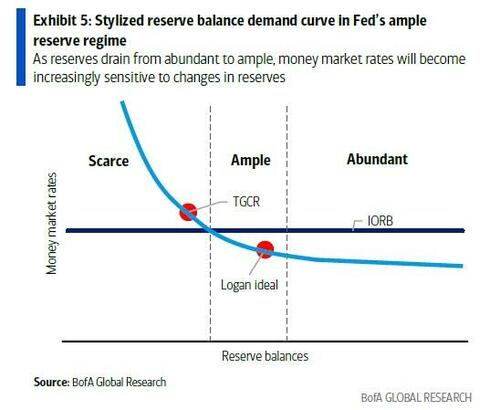
随着下周12月10日美联储议息会议临近,市场不仅仅聚焦于板上钉钉的降息举措,华尔街资深策略师指 出,美联储可能即将宣布一项重大的资产负债表扩张计划。 近日,前纽约联储回购专家、美银利率策略师Mark Cabana预测,除了广泛预期的降息25个基点外,美 联储主席鲍威尔将在下周三宣布每月购买450亿美元国库券(T-bills)的计划,这一购债操作将于2026 年1月正式实施,旨在通过向系统注入流动性,防止回购市场利率进一步飙升。 Cabana在报告中警告称,虽然利率市场对降息反应平淡,但投资者普遍"低估"了美联储在资产负债表方 面的行动力度。他指出,目前的货币市场利率水平表明银行体系的准备金已不再"充裕",美联储必须通 过重启购车据来填补流动性缺口。与此同时,瑞银交易部门也给出了类似的预测,认为美联储将在2026 年初开始每月购买约400亿美元的国库券,以维持短期利率市场的稳定。 这一潜在的政策调整发生在美联储领导层即将更迭的关键时期。随着鲍威尔任期接近尾声,以及市场对 Kevin Hassett可能接任美联储主席的预期升温,下周的会议不仅关乎短期流动性,更将为未来一年的货 币政策路径定调。 前纽约联储专家预测 ...

美联储换帅杀疯了!特朗普硬踢鲍威尔,降息狠人哈西特要上位?
Sou Hu Cai Jing· 2025-12-06 10:16
Group 1 - The article discusses the political maneuvering surrounding the potential replacement of Federal Reserve Chairman Jerome Powell, with Treasury Secretary Mnuchin playing a key role in selecting a new candidate [1][4] - President Trump has openly criticized Powell for not lowering interest rates quickly enough, indicating a desire to replace him, but opposition from Wall Street has delayed this process [4][6] - Mnuchin has been actively seeking candidates for the Fed chair position, with a focus on those who align with his views on monetary policy, particularly a paper he authored criticizing the Fed's quantitative easing measures [6][8] Group 2 - Kevin Hassett, the Chairman of the White House Council of Economic Advisers, has emerged as a leading candidate for the Fed chair position, supported by Trump's advisors [8][9] - Hassett has publicly stated that now is a good time for the Fed to consider cautious interest rate cuts, aligning with Trump's calls for lower rates [9][10] - The market has reacted positively to the prospect of Hassett's appointment, with a significant increase in the probability of a rate cut in December, reaching 71% according to CME data [13] Group 3 - The internal dynamics of the Federal Reserve are currently contentious, with a split among members regarding the timing of interest rate cuts, reflecting broader political pressures from the White House [17][19] - There are currently six voting members in favor of a rate cut, indicating a need for one more vote to achieve a majority, complicating the upcoming policy meeting [19] - The article suggests that the Trump administration's push for a leaner Fed is part of a broader strategy to implement tax cuts for the wealthy, reminiscent of past economic policies that have exacerbated income inequality [21]

有色金属周度报告-20251205
Xin Ji Yuan Qi Huo· 2025-12-05 12:50
1. Report Industry Investment Rating No relevant information provided. 2. Core Viewpoints of the Report - In the short - term, alumina is expected to operate in a weak and volatile manner, and it is recommended to go long on Shanghai aluminum at low prices while being cautious about the ebb of bullish macro - sentiment. In the long - term, Shanghai aluminum will operate with a bullish bias under the quantitative easing environment, and alumina will operate in a weak and volatile manner without large - scale production cuts [58][59]. - For copper, in the short - term, it is treated as a breakthrough market. In the long - term, there is long - term positive support for demand, and it is advisable to take a long - term bullish position [62][63][64]. - Regarding lithium carbonate, in the short - term, it may fluctuate repeatedly at high levels, and attention should be paid to the resumption progress of mines. In the long - term, energy storage provides strong demand support, and it is advisable to make long - term bullish allocations [66][67][68]. 3. Summary According to Relevant Catalogs 3.1 Domestic Main Metal Spot Price Trends - Copper: The futures price of the main contract CU2601 rose from 87430 to 92780, a weekly increase of 5350 (6.12%), and the spot price rose from 87340 to 91180, a weekly increase of 3840 (4.40%) [3]. - Aluminum: The futures price of the main contract AL2602 rose from 21650 to 22400, a weekly increase of 750 (3.46%), and the spot price rose from 21440 to 22010, a weekly increase of 570 (2.66%) [3]. - Zinc: The futures price of the main contract ZN2601 rose from 22425 to 23305, a weekly increase of 880 (3.92%), and the spot price rose from 22370 to 22990, a weekly increase of 620 (2.77%) [3]. - Lead: The futures price of the main contract PB2601 rose from 17090 to 17290, a weekly increase of 200 (1.17%), and the spot price rose from 16975 to 17175, a weekly increase of 200 (1.18%) [3]. - Nickel: The futures price of the main contract NI2601 rose from 117080 to 117790, a weekly increase of 710 (0.61%), and the spot price rose from 119500 to 120050, a weekly increase of 550 (0.46%) [3]. - Alumina: The futures price of the main contract AO2601 fell from 2707 to 2555, a weekly decrease of 152 (-5.62%), and the spot price remained unchanged at 2870 (0.00%) [3]. - Industrial silicon: The futures price of the main contract SI2601 fell from 9130 to 8805, a weekly decrease of 325 (-3.56%), and the spot price remained unchanged at 9600 (0.00%) [3]. - Lithium carbonate: The futures price of the main contract LC2605 fell from 96420 to 92160, a weekly decrease of 4260 (-4.42%), and the spot price rose from 92500 to 94000, a weekly increase of 1500 (1.62%) [3]. - Polysilicon: The futures price of the main contract PS2601 fell from 56425 to 55510, a weekly decrease of 915 (-1.62%), and the spot price remained unchanged at 52300 (0.00%) [3]. 3.2 Copper Inventory and Processing Fees - As of December 5, the SHFE copper inventory was 88,900 tons, a decrease of 9000 tons (-9.19%) from last week; the LME copper inventory was 162,800 tons, an increase of 5600 tons (+3.56%); the COMEX copper inventory was 435,800 tons, an increase of 9800 tons (+2.08%) [14][19]. - As of December 4, the copper concentrate spot TC was -42.7 dollars/ton, with a slight weekly decline, and the RC was -4.27 cents/pound, indicating continued tightness at the mine end [22]. 3.3 Lithium and Aluminum Raw Materials and Supply - As of December 5, the lithium spodumene concentrate (CIF China) index was 1154 dollars/ton, a weekly increase of 4 dollars/ton [24]. - As of December 5, the bauxite port inventory was 27.91 million tons, a decrease of 160,500 tons from last week. As of the end of October, the bauxite inventory of alumina plants was 24.53 million tons, at a historical high [32]. - As of December 5, the weekly operating rate of alumina enterprises was 86.2%, a slight increase, and the weekly output was 1.861 million tons, also increasing. The total alumina inventory was 5.004 million tons, an increase of 62,000 tons from last week [39]. - As of the end of October, China's primary aluminum production was 3.766 million tons, the import volume was 248,400 tons, and the inventory was 618,000 tons. As of the end of November, the operating rate of the electrolytic aluminum industry was 98.21%, remaining at a high level [46]. - As of December 5, the LME aluminum inventory was 530,900 tons, a decrease of 8200 tons from last Friday; the SHFE aluminum inventory was 123,600 tons, an increase of 8400 tons from last Friday; the COMEX aluminum inventory was 1946 tons, a decrease of 3723 tons from last week. The overall inventory of the three major global exchanges showed a de - stocking trend [48][49]. 3.4 Non - ferrous Metal Demand - In October 2025, automobile production and sales were 3.359 million and 3.322 million respectively, a month - on - month increase of 2.5% and 3%, and a year - on - year increase of 12.1% and 8.8%. From January to October 2025, automobile production and sales were 27.692 million and 27.687 million respectively, a year - on - year increase of 13.2% and 12.4% [51]. - In October 2025, new energy vehicle production and sales were 1.772 million and 1.715 million respectively, a year - on - year increase of 21.1% and 20%. From January to October 2025, new energy vehicle production and sales were 13.015 million and 12.943 million respectively, a year - on - year increase of 33.1% and 32.7% [52]. - From January to October, the housing construction area of real estate development enterprises was 6.52939 billion square meters, a year - on - year decrease of 9.4%. Among them, the residential construction area was 4.55253 billion square meters, a decrease of 9.7%. The new housing start area was 490.61 million square meters, a decrease of 19.8%. Among them, the new residential start area was 359.52 million square meters, a decrease of 19.3%. The housing completion area was 348.61 million square meters, a decrease of 16.9%. Among them, the residential completion area was 248.66 million square meters, a decrease of 18.9% [54]. - As of the end of October, the cumulative installed power generation capacity nationwide was 3.75 billion kilowatts, a year - on - year increase of 17.3%. Among them, the installed solar power generation capacity was 1.14 billion kilowatts, a year - on - year increase of 43.8%; the installed wind power capacity was 590 million kilowatts, a year - on - year increase of 21.4%. In October, the newly added photovoltaic installed capacity was 12.6 GW, a month - on - month increase of 30.4% compared with 9.66 GW in September [56]. 3.5 Strategy Recommendations - **Aluminum**: In the short - term, alumina operates weakly and volatilely, and it is recommended to go long on Shanghai aluminum at low prices. In the long - term, Shanghai aluminum operates with a bullish bias, and alumina operates weakly and volatilely without large - scale production cuts [58][59]. - **Copper**: In the short - term, it is treated as a breakthrough market. In the long - term, there is long - term positive support for demand, and it is advisable to take a long - term bullish position [62][63][64]. - **Lithium carbonate**: In the short - term, it may fluctuate repeatedly at high levels, and attention should be paid to the resumption progress of mines. In the long - term, energy storage provides strong demand support, and it is advisable to make long - term bullish allocations [66][67][68].
刚刚!美联储“偷偷”放水?每月2500亿进场,华尔街正交易一场史诗级逼空!
Sou Hu Cai Jing· 2025-12-05 10:08
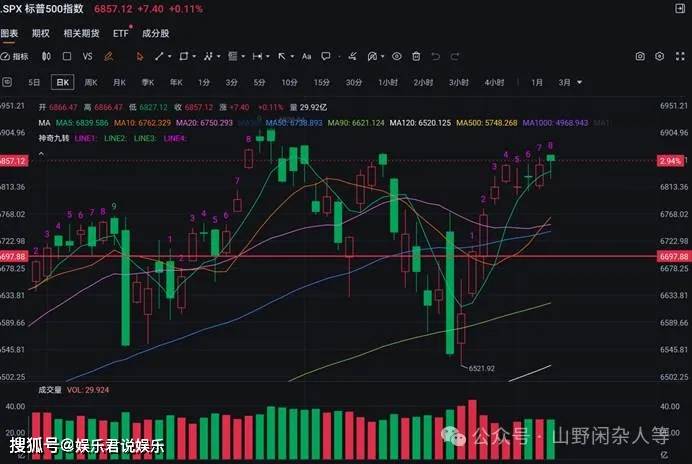
大家好,欢迎回到《美股笔记》!今天是12月4日周四。 今天的市场,透着一股"诡异的祥和"。十年期美债收益率已经悄悄摸到了4.1%上方,这主要是受日本央 行加息预期和地缘因素的影响。按理说,无风险利率涨成这样,美股(尤其是科技股)早就该"吓跪 了"。但结果呢?美股稳得一批! 为什么会出现这种"债熊股牛"的背离?因为华尔街正在交易一个被很多人忽视的、即将在下周落地 的"核弹级"利好。 今天我们就来拆解一下这个支撑美股不跌的"神秘力量",以及Meta、英伟达等关键个股的最新信号。 一、市场情绪稳如泰山,美债收益率上涨别慌 尽管美债收益率这几天持续上窜,但美股三大股指收盘基本持平,市场情绪稳得一批。之所以会出现这 种情况,关键在这两个点:首先是现在十年期美债收益率才4.1%,远没到4.5%或4.7%的压力山大区。 如果短期快速冲刺,美股才会滑跪;当下这个节奏,对美股市场的影响非常有限。其次是地缘政治微 妙,美联储即将降息的同时日央行加息,两国货币政策反向走。在前面的文章中我们也提到日央行加息 容易导致套利交易成本上升,但这不代表美股马上崩溃,相反,宽松的预期给多头强力支撑。 今天初请和续请失业金人数双双低于预期,这说 ...

快讯!美专家称:美国已实质破产,美元似“废纸”
Sou Hu Cai Jing· 2025-12-04 05:38
Core Viewpoint - The article highlights the alarming financial situation of the United States, indicating that the country is heavily indebted, with its national debt surpassing $38 trillion, which exceeds its annual economic output by $11 trillion [3][4][10]. Group 1: National Debt and Interest Payments - The U.S. national debt has exceeded $38 trillion, while the total wealth generated in 2024 is estimated at $27 trillion, indicating a significant debt burden [3][4]. - The annual interest payment on this debt is approximately $1 trillion, which surpasses the U.S. defense budget, highlighting the prioritization of debt servicing over military spending [6]. - The government is resorting to issuing new debt to pay off old debt, a practice that is becoming increasingly unsustainable due to rising interest rates [7][8]. Group 2: Hidden Liabilities - The true debt of the U.S., including "hidden liabilities," may reach an astonishing $230 trillion, which encompasses future commitments to Social Security and Medicare [10][11]. - These hidden debts represent promises made by the government to its citizens without adequate reserves, relying on future tax revenues to fulfill current obligations [11][13]. - The aging population is exacerbating the imbalance between beneficiaries and contributors, with predictions that the Social Security trust fund may be depleted by 2034 [14]. Group 3: Household Debt - Total household debt in the U.S. has risen to $18.6 trillion, a 60% increase over the past decade, with mortgage loans being the largest component [16]. - Student loan debt has reached $1.7 trillion, affecting 44 million Americans, and is often considered a lifelong burden due to its non-dischargeable nature in bankruptcy [16][18]. - Credit card debt has also surpassed $1 trillion, with a significant increase in accounts overdue by more than 90 days, indicating a growing financial strain on households [18]. Group 4: Monetary Policy and Global Implications - The U.S. has relied on quantitative easing (QE) as a means to inject liquidity into the financial system, which has led to concerns about the dilution of the dollar's value [22][24]. - The shift away from the dollar as the world's primary reserve currency is evident, with its share in global reserves declining from over 70% to an estimated 58% by 2025 [26]. - Emerging markets are increasingly pursuing de-dollarization, reflecting a growing distrust in the dollar-dominated financial system [26][28].
每日投行/机构观点梳理(2025-12-03)
Jin Shi Shu Ju· 2025-12-03 13:42
Group 1: Currency and Monetary Policy - Deutsche Bank analysts suggest that if the next Federal Reserve Chair fails to effectively address inflation risks, the US dollar may face downward pressure, particularly if they respond to President Trump's interest rate cut proposals [1] - The expectation of a more accommodative stance from the Federal Reserve could pressure the dollar even before any actual policy changes occur [1] Group 2: European Banking Sector - Morgan Stanley analysts express optimism for European bank stocks, predicting continued growth in a "perfect environment" characterized by economic improvement, stable interest rates, and low unemployment [2] - The Stoxx 600 Bank Index has seen a cumulative increase of 55% this year, significantly outperforming the benchmark index's 13% rise, with several banks expected to double their stock prices by 2025 [2] Group 3: Indian Stock Market - Nomura Securities forecasts a 12% increase in India's Nifty 50 index by the end of 2026, driven by supportive policies and recovering economic momentum [3] Group 4: Global Economic Outlook - BNP Paribas predicts a resilient global economy in 2026, supported by monetary easing, fiscal stimulus, and strong household balance sheets [4] - The bank anticipates US economic growth of 1.9% and Eurozone growth of 1.5% in 2026 [4] Group 5: UK Bond Market - BNP Paribas expects UK government bond yields to remain range-bound in the first half of 2026 before declining in the second half, with a forecast of 4.50% by Q2 and 4.30% by year-end [5] Group 6: Eurozone Inflation - ING economists note that a slight increase in Eurozone inflation does not provide the European Central Bank with a reason to cut rates in December, as inflation remains high and balanced by various factors [6] Group 7: Japanese Bond Market - Bank of America forecasts that Japan's 10-year government bond yield will rise to 2% by the end of 2026 due to wage growth and fiscal expansion [7] Group 8: Gold Market - China International Capital Corporation maintains a bullish outlook on gold, suggesting that the bull market is not over despite recent price increases [8] Group 9: Liquidity in December - China International Capital Corporation indicates that there is likely no liquidity gap in December, with limited risks for the bond market [9] Group 10: Energy Storage Sector - CITIC Securities highlights a significant increase in the certainty of energy storage expansion, driven by strong investment and supportive policies [10] Group 11: Chinese Equity Market - China Postal Securities predicts a "long cycle, structural bull market" for the Chinese equity market in 2026, supported by improving corporate earnings [11]
12月伊始,美联储这个“刹车”动作意味着什么?
Sou Hu Cai Jing· 2025-12-02 03:46
Core Viewpoint - The Federal Reserve's decision to end quantitative tightening (QT) starting December 1 marks a significant policy shift, aiming to address liquidity risks and support the U.S. economy, but does not indicate the start of a new round of quantitative easing (QE) [1][16]. Summary by Sections Quantitative Tightening Background - Quantitative tightening refers to the process where the central bank sells government bonds or stops reinvesting maturing assets to reduce its balance sheet size [2]. - The QT measures were implemented to counteract the effects of aggressive monetary easing during the COVID-19 pandemic, which had led to a significant expansion of the Fed's balance sheet [3]. Economic Context - Following the pandemic, the Fed adopted a dual approach of lowering interest rates to near zero and implementing QE, which resulted in the balance sheet ballooning to nearly $9 trillion, over 30% of the U.S. GDP [4]. - As a consequence of the Fed's expansive policies, inflation surged, peaking above 9% [5]. Current Balance Sheet Status - As of last month, the Fed's balance sheet has been reduced to $6.6 trillion, still $2.5 trillion higher than pre-pandemic levels [6]. Reasons for Ending QT - The decision to halt QT is driven by multiple pressures, including tightening liquidity in the money market and declining bank reserves [9][10]. - The U.S. federal debt has surpassed $38 trillion, and continuing QT could increase government financing costs and exacerbate debt risks [12]. - Economic downturn pressures are also a significant factor influencing the Fed's decision [14][15]. Implications of Ending QT - Ending QT may signal a conclusion to the Fed's tightening policies initiated during the pandemic, but it does not equate to a restart of QE [16]. - Analysts suggest that the Fed is unlikely to face conditions that would necessitate a return to QE in the foreseeable future, as inflation pressures are expected to persist [16]. - The decision to stop QT is seen as a short-term positive for U.S. bank liquidity and may stabilize short-term interest rates, benefiting equity and bond markets [17]. - Globally, this move could provide a boost to stock markets and commodities, alleviating capital outflow pressures in emerging markets [17]. Long-term Risks - There are concerns about potential long-term risks associated with a possible shift to a technical "expansion" of the balance sheet, which could lead to debt monetization and asset bubbles [18][19]. - Emerging markets may face increased volatility and localized debt risks due to cross-border capital flows influenced by U.S. monetary policy changes [20].
Crypto's Slide, Weakness Abroad & QT Ending Move Markets Monday
Youtube· 2025-12-01 14:30
Kevin Hanks live at the CBOE pre-bell playbook. Joining me right now to take a look at the big picture. It's good morning to you.Uh we are starting lower here this morning. We had a lot of action and rally mode that we saw in the last week or so. Now what.>> Good morning, Nicole. You know, I think it's an interesting start to the trading week for the for these reasons. People waking up this morning saying, "Why are the US markets lower to start the week?" Well, part of it is foreign markets were down overni ...

每个国家都负债累累,那么谁是债主?希腊前财长:就是“我们所有人”
Hua Er Jie Jian Wen· 2025-12-01 09:12
Core Viewpoint - The global debt system is complex and fragile, with countries deeply in debt, raising the question of who is lending money when everyone is in debt. The system is at risk of unprecedented collapse due to accumulated risks such as high global debt, rising interest rates, political polarization, and climate change [1][2][18]. Group 1: Global Debt Dynamics - Every major country is in significant debt, with the U.S. debt reaching $38 trillion and Japan's debt at 230% of its GDP. Despite this, the global economy continues to function, leading to the question of who is providing the loans [4][6]. - The largest creditors of the U.S. government are internal entities, including the Federal Reserve and various government trust funds, with approximately $13 trillion owed to itself [6][7]. - Citizens in wealthy countries are both borrowers and lenders, as their savings and pensions are invested in government bonds, making them significant stakeholders in the debt system [5][8]. Group 2: Mechanisms of Debt and Inequality - Quantitative Easing (QE) allows central banks to create money digitally to purchase government bonds, which has led to rising asset prices and increased wealth inequality, benefiting the already wealthy disproportionately [10][12]. - The U.S. is projected to pay $1 trillion in interest in the fiscal year 2025, highlighting the growing burden of debt servicing, which is expected to consume a significant portion of the federal budget [13][14]. Group 3: Risks and Future Outlook - The global debt has reached $111 trillion, accounting for 95% of global GDP, with a notable increase of $8 trillion in just one year. This situation is unsustainable, and adjustments will be necessary, though it is uncertain whether these will be gradual or crisis-driven [9][19]. - The system relies on confidence in government repayment capabilities and the stability of currency value. A loss of confidence could trigger a crisis similar to past financial collapses [17][18]. - The interconnected nature of global debt means that all countries are collectively lending to each other, creating a vast network of obligations that could lead to instability if not managed properly [19][20].

【白银etf持仓量】11月28日白银ETF较上一交易日上涨28.21吨
Jin Tou Wang· 2025-12-01 08:45
Group 1 - The iShares Silver Trust reported a holding of 15,610.54 tons of silver as of November 28, with an increase of 28.21 tons from the previous trading day [1] - On November 28, the spot silver price closed at $56.71 per ounce, marking a 6.12% increase, with intraday prices reaching a high of $56.78 and a low of $53.30 [1] Group 2 - The Federal Reserve has initiated a new round of easing since September, with two consecutive 25 basis point cuts, bringing the federal funds rate to a range of 3.75% to 4% [3] - Market expectations suggest further rate cuts may occur in the December meeting, which has led to increased demand for silver as an inflation hedge [3] - The 10-year U.S. Treasury yield has fallen to around 4%, significantly reducing the opportunity cost of holding non-yielding precious metals [3] - Discussions surrounding debt sustainability, Federal Reserve independence, and potential "financial repression" have heightened the importance of gold and silver as tools to hedge against long-term policy uncertainty and inflation tail risks [3] - The silver market is projected to face a supply gap of approximately 95 million ounces in 2025, marking the fifth consecutive year of supply shortages, with a cumulative gap of nearly 820 million ounces from 2021 to 2025 [3]
