美联储政策

Search documents
白宫国家经济委员会主任哈塞特表示,特朗普可以自由地就美联储政策发表意见。
Sou Hu Cai Jing· 2025-12-15 12:32
白宫国家经济委员会主任哈塞特表示,特朗普可以自由地就美联储政策发表意见。 来源:滚动播报 ...
张良点金:很快破高!
Sou Hu Cai Jing· 2025-12-15 10:50
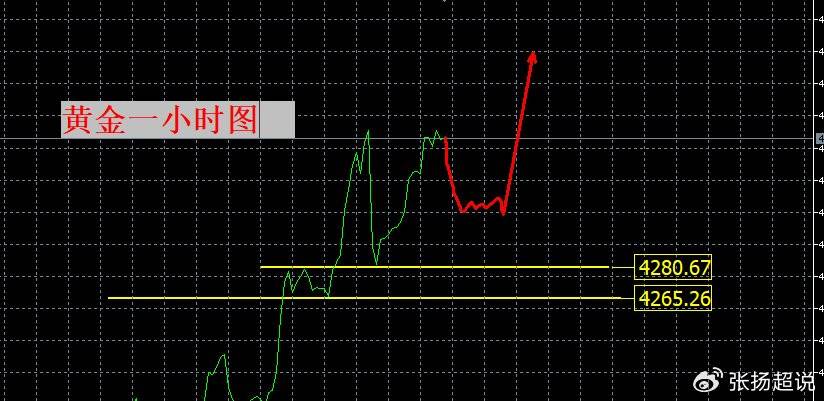
Group 1 - The core viewpoint is that gold is expected to break its historical high soon, with a potential target of 4500 after surpassing 4380 [1] - Historical trends indicate that every time gold reaches a new high, it reshapes market perceptions, suggesting a continued upward trend for gold prices [1] - Recent significant increases in gold ETF holdings and geopolitical tensions are contributing factors to the bullish outlook on gold [1] Group 2 - The Federal Reserve's three interest rate cuts this year and the anticipated appointment of a new chair may lead to a more dovish monetary policy in 2026, further supporting gold prices [1] - A critical support zone for gold in the short term is identified between 4280 and 4265, with a focus on short-term trading opportunities [1] - Historical patterns show that gold typically experiences a price increase at the end of the year, supported by current favorable external factors [1]

美指微跌震荡美联储政策分歧
Jin Tou Wang· 2025-12-15 02:57
Core Viewpoint - The USD index is experiencing a narrow trading range due to uncertainties surrounding the Federal Reserve's policy direction and mixed economic data from the U.S. [1] Group 1: Federal Reserve Policy - The Federal Reserve completed its third rate cut of the year on December 10, lowering the federal funds rate target range by 25 basis points to 3.5%-3.75% [1] - There is significant internal division among Fed officials, with over half of the 19 forecasting members favoring maintaining rates until 2026, while a minority advocates for further easing [1] - Fed Chair Powell's hawkish signals suggest a potential pause in the rate-cutting cycle, but mixed signals from other officials have led to a slight decline in the USD index [1] Group 2: Long-term Dollar Pressure - The long-term depreciation pressure on the USD remains, with challenges from the Fed's easing cycle and increasing fiscal deficits [2] - The current U.S. tariff policy is disrupting global capital flows, further weakening the USD's safe-haven status [2] - While most institutions maintain a bearish outlook on the USD, some express cautious optimism due to the relative resilience of the U.S. economy compared to Europe and Japan [2] Group 3: Technical Analysis - The USD index is currently trading within a range of 98.34 to 98.478, with 98.34 acting as a key support level [3] - A break below this support could lead to further declines, while a successful breach of 98.478 may open up a slight rebound opportunity [3] - Key factors influencing the USD index include U.S. economic data, Fed officials' statements, and U.S. tariff policies [3] Group 4: Medium to Long-term Outlook - The USD index's future largely depends on the Fed's policy independence and the U.S. fiscal situation [4] - If the Fed becomes a political tool and is forced to expand easing, the USD could depreciate more rapidly [4] - The pace of changes in the international monetary system and geopolitical risks will also play significant roles in the USD's valuation [4]
瑞央行利率维稳 低通胀下负利率隐忧
Jin Tou Wang· 2025-12-15 02:27
美联储政策动态间接影响汇价走势。12月10日美联储完成年内第三次降息(25个基点至3.5%-3.75%),但 内部对明年政策路径分歧显著,部分声音倾向维持利率稳定,限制美元跌幅。市场普遍预期美联储明年 将继续宽松,而瑞央行宽松空间相对有限,这种利差预期变化为美元兑瑞郎提供微弱支撑,放缓其下行 节奏。 瑞士经济基本面呈现分化态势。第三季度GDP受制药行业拖累出现收缩,但其他制造业和服务业小幅增 长,叠加美国关税下调利好,经济前景略有改善,瑞央行预计2025年GDP增速略低于1.5%。不过失业 率近期持续小幅上升,叠加低通胀环境,仍对瑞郎构成潜在压力。机构方面,摩根士丹利曾预测,美元 明年大幅走弱背景下,瑞郎有望成为主要受益货币之一。 12月15日,美元兑瑞郎报0.7962,较前一交易日微涨0.0009(涨幅0.0377%),日内最高0.7967、最低 0.7947,今开与昨收均为0.7953,整体呈窄幅震荡。核心驱动力来自瑞士央行维持利率不变的表态、低 通胀下的负利率隐忧,叠加美联储降息后的政策分歧,多空因素交织主导走势。 短期关键催化聚焦美联储后续表态与瑞士通胀数据:若美联储释放更明确宽松信号,美元走弱可能带 ...
大宗商品“表情”各异:原油创新低,铜金为何“分道扬镳”?
Sou Hu Cai Jing· 2025-12-13 03:06
Core Viewpoint - The global commodity market is experiencing divergent trends, with oil prices hitting a low, copper prices facing significant drops, and gold showing mixed signals, reflecting complex global economic dynamics driven by supply-demand fundamentals, industry logic, and monetary policy [1][3][5]. Oil Market - Oil prices have fallen to their lowest level since May, primarily due to an oversupply situation, with market expectations indicating that global oil supply will exceed demand next year [3]. - High production levels in the U.S. and concerns about economic prospects are suppressing demand expectations, creating fundamental pressure on oil prices [3]. - The approaching holiday season is leading to thin trading volumes, which can amplify price volatility in response to market movements, such as declines in U.S. stock markets [3]. Copper Market - Copper prices dropped by 3%, influenced by a significant decline in U.S. tech stocks, which are seen as a proxy for future demand [3]. - The market has redefined copper as the "AI metal," essential for AI data center construction and grid upgrades, making its pricing sensitive to shifts in tech stock performance [3]. - The recent price drop is viewed as a correction of previous rapid gains, but the long-term narrative surrounding global green transition and electrification remains strong [4]. Gold Market - Gold's price movements are closely tied to market perceptions of Federal Reserve policy, with recent hawkish comments from Fed officials dampening expectations for rapid rate cuts [3]. - Although gold is supported by safe-haven demand, the momentum for significant price increases has weakened, leading to a narrowing of its price gains [3]. - The core rationale for holding gold should focus on hedging against currency credit risks and extreme uncertainties rather than chasing short-term rate cut benefits [4]. Investment Strategy - For oil, the current oversupply situation suggests that it is better suited as an indicator of global demand and economic cycles rather than a long-term investment, with high short-term trading risks [4]. - For copper, the recent adjustment may provide a better entry point for investors who believe in its long-term value, emphasizing the need to distinguish between "bubble" and "value" [4]. - For gold, the current market conditions suggest a phase of high volatility, where maintaining positions for observation is preferable to aggressive buying [4].

聚焦美联储2026年政策,中信证券李翀:预计上半年温和宽松,下半年随换届分化
Sou Hu Cai Jing· 2025-12-12 07:07
随着美联储12月利率决议公布,2025年美联储已累计完成3次降息,总幅度达75个基点,联邦基金利率 目标区间降至3.5%至3.75%区间。在此背景下,2026年美联储政策路径成为全球市场关注的焦点。 李翀认为,2026年下半年政策分化的关键变量在于换届。鲍威尔任期结束后,美联储主席将迎来更替, 当前候选人中,美联储理事沃勒与白宫经济委员会主席哈赛特是最可能的两大备选,二者立场差异将主 导后续政策路径。若沃勒当选,其较强的独立性与对经济预测模型的依赖度,将使政策更贴合经济基本 面。若2026年上半年降息后,美国财政扩张对经济形成支撑、就业市场企稳,2026年6月后大概率暂停 降息。若哈赛特当选,市场对其"偏向白宫诉求"的预期较强,叠加其过往对美联储独立性的争议,即便 就业市场企稳,也可能响应持续宽松诉求,2026年下半年或再降息50个基点。 整体而言,李翀认为,2026年美联储政策的"前稳后分"特征明确,上半年温和宽松概率较大,下半年需 重点跟踪换届后新主席的政策倾向,这将成为全球资产定价的关键变量。 日前,中信证券海外宏观联席首席分析师李翀在接受中国证券报·中证金牛座记者专访时表示,从当前 经济趋势与政策环境 ...

宏观看客:长期美债收益率可能挺高 但还没到诱人水平
Xin Lang Cai Jing· 2025-12-11 18:43
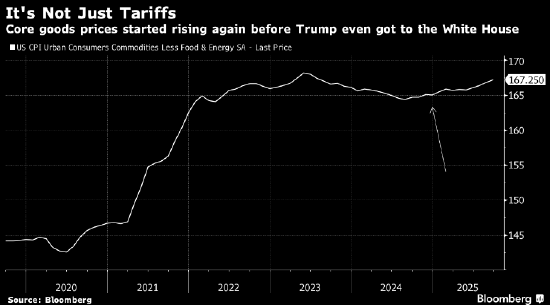
Core Viewpoint - The financial markets tend to interpret Federal Reserve policy decisions in a way that favors risk assets, reflecting a human tendency to believe in opportunities for significant profit [1][12] Group 1: Federal Reserve Policy and Market Reactions - The bond market is currently caught between the pressures of a steepening yield curve and the pursuit of yield, with the former expected to prevail [1] - The Federal Reserve's statements can be interpreted differently based on perspective, with recent economic forecasts appearing more hawkish compared to the previous year [12] - Powell's comments suggest that the Fed may wait for data to guide future policy actions as the policy rate approaches the upper end of the neutral rate range [12] Group 2: Inflation and Economic Indicators - Powell's assertion that current inflation is primarily a result of one-time tariff impacts is questioned, as core commodity prices began rising well before the tariffs were implemented [3][13] - Service inflation continues to decline, but high rents in Manhattan present a contrasting reality, indicating potential complacency from the Fed regarding inflation [5][15] - The long-term effects of tariffs on prices may manifest gradually over the coming quarters or years, rather than being a one-time event [5][15] Group 3: Long-term Bonds and Investment Considerations - The current yield on long-term bonds at 4.78% is attractive, especially as it aligns with investment-grade corporate bond yields [15] - Long-term bonds are relatively cheap compared to other securities in the credit market, but they are not cheap when compared to cash and cash equivalents [17] - Historical data suggests that the current yield levels of long-term bonds may not be as appealing as they seem, indicating caution for investors considering long-term bonds as a value trade [21][22]
每日机构分析:12月11日
Sou Hu Cai Jing· 2025-12-11 12:13
Group 1 - The Federal Reserve has reduced interest rates by 25 basis points, acknowledging a cooling labor market, but internal divisions are evident, with a more hawkish stance than market expectations for 2026 [2][3] - The Philippine economy is weakening, with expectations of two additional rate cuts of 25 basis points each, bringing the policy rate down to 4.00% by the end of 2026 [2] - The Swiss National Bank is expected to maintain its interest rate at 0%, with a trade agreement easing pressure for rate cuts, while inflation is anticipated to rise moderately [2][3] Group 2 - Morgan Stanley predicts only a 25 basis point rate cut from the Federal Reserve in 2026, significantly lower than the market's expectation of 50 basis points, depending on labor market trends [3] - Allianz Investment Management highlights that the current Federal Reserve chair, Powell, may have executed his last rate cut, with significant progress made in combating inflation, but challenges remain for the next chair [3] - Apollo's CEO states that the U.S. economy does not require further rate cuts, citing structural factors that may elevate long-term inflation risks [3]
TMGM外汇:黄金触及周内高点,为何仍守在4200美元关口?
Sou Hu Cai Jing· 2025-12-11 07:37
随着市场风险情绪回升,资金流出避险资产,转向其他领域,这成为黄金价格回落的关键因素。 本周四早些时候,黄金价格触及了周内的高点,但在进入欧洲交易时段前成功守住了4200美元的关键关口。 黄金依然保持着看跌的基调,面临着美元小幅反弹的压力。美元在美联储(Fed)议息会议后的跌势暂缓,并从10月24日以来的低点小幅反弹,成为金价下 行的主要压力。 美元有所回升,美联储鸽派的政策前景可能抑制美元升值空间,为黄金提供支撑。市场的不确定性依然较高,继续为黄金带来避险需求。 XAU/USD的空头应保持谨慎,当前金价受到支撑,但仍可能面临更深的调整。 在本周的美联储议息会议中,联储宣布将借款成本下调25个基点,并预计2026年只会有一次降息。美联储主席鲍威尔在会后的讲话中强调,美国劳动力市场 存在下行风险,央行希望避免过度紧缩影响就业创造,这促使市场重新评估未来降息的可能性。 鲍威尔的鸽派言论令美元指数创下10月24日以来的新低,同时推动黄金价格攀升。 市场对美联储未来政策的解读偏向宽松,但鲍威尔未透露具体降息时间表,且未来降息的道路预计更加艰难。美联储决策中有鹰派委员反对,进一步加剧了 市场对美联储未来政策的不确定性,为 ...