利差

Search documents
高市早苗“再出狂言”!
Sou Hu Cai Jing· 2025-12-02 05:17
Group 1 - The Bank of Japan's Governor Ueda has strongly hinted at an interest rate hike in December, leading to a significant drop in the Nikkei index by nearly 1000 points and a continuation of volatility in the US stock market [1] - The trend of rising long-term interest rates has spread from Japan to the US, Germany, and other countries, affecting various markets including cryptocurrencies, with Bitcoin's price dropping from over $90,000 to approximately $84,000 [1] - The Japanese yen appreciated against the US dollar, moving from the 156 yen range to the 154 yen range, as market expectations shifted due to the anticipated interest rate hike by the Bank of Japan and potential rate cuts by the Federal Reserve [1] Group 2 - Despite Japan's challenges with a weak yen and inflation, the government has been advocating for "active fiscal policy," while the Bank of Japan has maintained low interest rates, raising questions about the consistency between these policies [2] - Prime Minister Kishi's remarks at an international investment conference, referencing a popular anime, aimed to encourage investment in Japan, but could be misinterpreted given the current economic context [2]
避险博弈瑞郎震荡待破
Jin Tou Wang· 2025-11-25 02:59
Core Viewpoint - The USD/CHF exchange rate remains stable with slight fluctuations, influenced by market risk appetite and central bank policies [1] Group 1: Market Dynamics - On November 24, the USD/CHF opened at 0.8081 and closed at 0.8082, with a trading range of 0.8075 to 0.8090 [1] - The Nasdaq Composite Index rose by 2.69% on the same day, increasing market risk appetite and suppressing the safe-haven demand for the Swiss Franc [1] - As of November 25, the USD/CHF rate showed a slight increase to 0.8083, reflecting mixed market factors including geopolitical tensions in the Middle East [1] Group 2: Economic Indicators - The 10-year government bond yields for the US and Switzerland are 4.035% and 1.25% respectively, providing a yield differential that supports the USD [1] - Switzerland's trade surplus expanded to 3.2 billion CHF in October, indicating economic resilience that offers implicit support for the Swiss Franc [1] Group 3: Technical Analysis - The USD/CHF is expected to trade within a range of 0.8079 to 0.8087, with support at 0.8075 and resistance at 0.8090 [2] - Current technical indicators show a neutral stance, with RSI at 47 and MACD near the zero line, indicating balanced buying and selling momentum [2] - A break below 0.8075 could lead to a test of the 0.8070 support level, while a move above 0.8090 may target 0.8095 to 0.8100 [2]
地方政府债限额、发行节奏及利差有何特征?
Hua Yuan Zheng Quan· 2025-11-20 09:08
1. Report Industry Investment Rating - Not provided in the given content 2. Report's Core Viewpoints - The issuance rhythm of local government bonds has shifted from being concentrated in the second and third quarters to a more balanced distribution throughout the year. Since 2019, especially after 2020, the issuance scale in the first and fourth quarters has significantly increased due to policies emphasizing "front - loaded efforts" and "balanced issuance" [2]. - The issuance scale of local government bonds is constrained by the issuance quota. The estimated early - batch quota for 2026 is about 3.12 trillion yuan, calculated based on the 2025 local debt new quota and the proportion of pre - allocated new quotas in previous years [2]. - The gap in local government debt quota scale between different regions has widened. Developed regions have more high - quality projects that can generate stable cash flows, enabling them to issue more special bonds, while less - developed regions lack such projects [2]. - The issuance of refinancing bonds has been significantly advanced, and the peak issuance of new bonds has shifted from the second quarter to the third quarter [2]. - The pricing logic of local bonds has changed from "seasonal supply - demand dominance" to "asset shortage and policy expectation drive". After the approval of the 6 - trillion debt replacement quota in 2024, the spread of general bonds generally narrowed, while that of special bonds widened [2][3]. - There is a structural differentiation in local bond spreads, and the risk premium of special bonds has gradually emerged [3]. 3. Summaries According to Related Catalogs 3.1 Local Government Bond Issuance Rhythm - From 2015 - 2018, the issuance of local government bonds was highly concentrated in the second and third quarters. After 2019, especially after 2020, the issuance in the first and fourth quarters increased significantly [2]. - From 2022 - 2024, the proportion of refinancing bond issuance completed in the first quarter increased year - by - year, and the issuance peak of new bonds shifted from the second quarter to the third quarter [2]. 3.2 Local Government Bond Issuance Quota - The issuance scale of local government bonds is restricted by the issuance quota. The estimated early - batch quota for 2026 is about 3.12 trillion yuan, based on the 2025 new quota of 520 billion yuan and the 60% pre - allocation ratio in recent years [2]. - From 2016 - 2024, the special debt quota of Guangdong, Shandong, Jiangsu, Zhejiang, and Henan increased significantly, and the general debt quota of Hunan, Guizhou, Sichuan, Inner Mongolia, and Xinjiang increased more. The gap in debt quota scale between different regions widened [2]. 3.3 Local Bond Pricing Logic - From 2022 - 2023, the pricing logic of the local bond market was "seasonal supply - demand dominance", with clear seasonal fluctuations in spreads. In 2024 Q4, it changed to "asset shortage and policy expectation drive", with the fourth - quarter spread not rising but falling and regional spreads converging [2][3]. - After the approval of the 6 - trillion debt replacement quota in 2024, the spread of general bonds generally narrowed, while that of special bonds widened. The spread of special bonds in economically developed provinces with large issuance scales increased less, while that in regions with high debt pressure increased significantly [3]. 3.4 Local Bond Spread Differentiation - From 2024 Q3 to 2025 Q1, the spread between general bonds and special bonds showed a structural change. In 2024 Q4, the spread of special bonds widened, and this trend continued in 2025 Q1 [3].
存单周报(1020-1026):月末扰动增多,存单或延续偏高震荡-20251026
Huachuang Securities· 2025-10-26 11:41
Report Information - Report Title: [Bond Weekly Report] Certificate of Deposit Weekly Report (1020 - 1026): More Disturbances at the Month - End, CDs May Continue to Fluctuate at a Relatively High Level [1] - Report Date: October 26, 2025 - Research Institution: Huachuang Securities Research Institute - Analysts: Zhou Guannan, Song Qi Industry Investment Rating - Not provided in the report Core Viewpoints - Tax payments and new - share subscriptions on the Beijing Stock Exchange may increase capital disturbances. As the transition period of the "interest rate adjustment safeguard clause" approaches the end of November and the maturity scale of CDs is relatively large, CD issuance may still be in demand and remain in a high - level oscillation state in the short term. From a pricing perspective, CDs may continue to fluctuate at a relatively high level, with the weighted issuance rate of 1 - year national and joint - stock bank CDs fluctuating around 1.65 - 1.7%, and the price increase pressure above 1.7% being controllable, allowing for opportunistic layout [2][50] Summary by Directory Supply: Net Financing Increases, and the Term Structure Lengthens - This week (October 20 - 26), the CD issuance scale was 96.324 billion yuan, and the net financing was 34.535 billion yuan (compared to 22.27 billion yuan from October 13 - 19). In terms of supply structure, the issuance proportion of state - owned banks increased from 14% to 19%, and that of joint - stock banks increased from 36% to 43%. In terms of terms, the issuance proportion of 1 - year CDs increased from 19% to 28%, and the weighted issuance term of CDs rose to 7.08 months (previously 6.07 months). Next week (October 27 - November 2), the maturity scale will increase to 56.431 billion yuan, a week - on - week decrease of 5.28 billion yuan [2][5] Demand: Wealth Management and Other Product Categories Are the Main Secondary - Market Allocation Forces, and the Primary - Market Subscription Rate Rises - In the secondary - market allocation, wealth management and other product categories are the main forces, with weekly net purchases of 52.116 billion yuan and 58.277 billion yuan respectively. The net sales of city commercial banks decreased from 102.508 billion yuan to 91.151 billion yuan. In the primary - market issuance, the overall market subscription rate (15DMA) rose to around 87%. By institution, the subscription rate of city commercial banks increased from 84% to 85%, that of joint - stock banks increased from 83% to 86%, and that of state - owned banks decreased from 85% to 84% [2][15] Valuation: CDs See a Slight Price Increase in the Primary Market and Slight Yield Fluctuations in the Secondary Market - In the primary - market pricing, the weighted issuance rate of 1 - year national and joint - stock bank CDs is around 1.68%. Specifically, the 1 - month variety decreased by 1bp compared to last week, the 6 - month and 9 - month varieties remained unchanged, the 1 - year variety increased by 1bp, and the 3 - month variety increased by 2bp. In terms of term spreads, the 1Y - 3M term spread of joint - stock banks decreased by 1bp, at the 18% historical quantile. In terms of credit spreads, the spread between 1 - year city commercial banks and joint - stock banks widened from 7.76BP to 10.35BP, at around the 14% quantile, and the spread between rural commercial banks and joint - stock banks narrowed from 8.27BP to 6.31BP, close to the 9% quantile. In the secondary - market yields, the yields of AAA - rated CDs fluctuated slightly. The 1 - month variety decreased by 1bp compared to last week, the 3 - month, 6 - month, and 9 - month varieties remained unchanged, and the 1 - year variety increased by 1bp, reaching the 8% historical quantile since 2019. The 1Y - 3M term spread of AAA - rated CDs rose to the 20% historical quantile [2][21][31] Comparison: The Spread between Medium - and Short - Term Notes and CDs Continues to Narrow - In terms of asset comparison, the spread between medium - and short - term notes and CDs continued to narrow. Specifically, the spread between the 1 - year AAA - rated CD yield and the 15DMA of DR007 widened from 18.44BP to 23.33BP; the spread with the 15DMA of R007 widened from 9.99BP to 16.68BP; the 1 - year Treasury yield increased by 2.82bp, and the spread between CDs and Treasuries narrowed from 22.29BP to 20.34BP, with the quantile dropping to around 2%; the spread between CDs and China Development Bank bonds narrowed from 4.13BP to 3.30BP, with the quantile dropping to 0%; in addition, the spread between AAA - rated medium - and short - term notes and CDs narrowed from 5.91BP to 3.02BP, with the quantile dropping to 9% [2][38]
阳光保险(06963.HK):兼具NBV成长性、业绩稳定性、利差表现改善三重特征
Ge Long Hui· 2025-09-24 03:53
Group 1 - The company is expected to achieve a year-on-year increase of 45.8% in net profit attributable to shareholders, reaching 5.449 billion yuan in 2024, with a steady profit performance in the first half of 2025, showing a year-on-year growth of 7.8% to 3.389 billion yuan [1] - The company has a high dividend payout ratio of 40.1% in 2024, ranking first among listed insurance companies, with a calculated dividend yield of 5.4%, placing it second in the industry [1] - The company emphasizes shareholder returns, with an anticipated increase in focus on per-share dividend growth in the upcoming period, highlighting its high dividend characteristics [1] Group 2 - The company has shown strong resilience and growth in its individual insurance business, with a year-on-year increase in new business value (NBV) of 44.2% and 43.3% for 2023 and 2024, respectively, and a 47.3% increase in the first half of 2025, reaching 4.008 billion yuan [2] - The bancassurance channel remains a traditional advantage for the company, benefiting significantly from the "reporting and operation integration," with channel NBV growth of 6.4 percentage points and 7.2 percentage points in 2024 and the first half of 2025, respectively [2] - The contribution of the bancassurance channel to total NBV is significantly higher than that of other listed insurance companies, with a total NBV of 2.868 billion yuan and 2.452 billion yuan in 2024 and the first half of 2025, respectively [2] Group 3 - The company has seen a significant decline in liability costs, with a year-on-year decrease in NBV to effective business value ratio of 80 basis points and 11 basis points, reaching 2.91% and 2.85% in 2024, respectively [3] - The net investment yield and the difference between NBV and effective business value yield are expected to improve, with year-on-year increases of 100 basis points and 31 basis points, respectively [3] - The company is focused on asset-liability matching and controlling liability costs, launching dividend-type products with predetermined rates of 1.75% and 1.5% in the second quarter of 2025 to support stable operations [3] Group 4 - The company has increased its equity allocation in the secondary market, with a rise of 1.28 percentage points to 15.1% as of June, and a stock allocation level that continues to improve, reaching 14.1% [4] - The proportion of FVOCI stocks has increased by 1.4 percentage points to 70.38%, significantly higher than that of peers [4] - The company’s Contractual Service Margin (CSM) has shown steady growth, with a year-on-year increase of 12.6% to 50.9 billion yuan, maintaining a stable amortization speed [4]
申万宏源:维持阳光保险“买入”评级 目标价5.35港元
Zhi Tong Cai Jing· 2025-09-24 01:59
Core Viewpoint - The report from Shenwan Hongyuan indicates that Sunshine Insurance (06963) is expected to achieve a net profit attributable to shareholders of 5.734 billion, 6.056 billion, and 6.788 billion yuan for the years 2025-2027, reflecting year-on-year growth of 5.2%, 5.6%, and 12.1% respectively, with a revised company valuation of 57.3 billion yuan and a target price of 5.35 HKD per share, maintaining a "Buy" rating [1] Group 1 - The company is projected to have a stable profit growth with a balanced asset-liability performance, and a dividend yield that ranks among the top in the industry. The net profit attributable to shareholders is expected to increase by 45.8% year-on-year to 5.449 billion yuan in 2024, with a 7.8% year-on-year increase to 3.389 billion yuan in the first half of 2025 [2] - The company emphasizes shareholder returns, with a dividend payout ratio expected to reach 40.1% in 2024, the highest among listed insurance companies, and a calculated dividend yield of 5.4% as of September 22, ranking second in the industry [2] Group 2 - The company has shown strong resilience and growth in its individual insurance performance, with a year-on-year increase in new business value (NBV) of 44.2% and 43.3% for 2023 and 2024 respectively, and a 47.3% increase to 4.008 billion yuan in the first half of 2025, leading the industry [3] - The bancassurance channel remains a traditional strength for the company, benefiting significantly from the "reporting and operation integration," with channel NBV growth of 43.6% and 53.0% for 2024 and the first half of 2025, contributing 60% of the total NBV [3] Group 3 - The company has seen a significant decline in liability costs, with a high proportion of new liabilities, and is expected to optimize the cost of existing liabilities. The NBV to effective business value ratio is projected to be 12.79% in 2024, ranking third among listed insurance companies [4] - The net investment yield and the difference between NBV and VIF yield are expected to improve, with year-on-year increases of 100 basis points and 31 basis points respectively, indicating a favorable trend in interest margins [4] - The company has increased its equity allocation in the secondary market, with a stock allocation ratio of 15.1% as of June, and a significant portion of FVOCI stocks exceeding 70%, indicating a stable performance compared to peers [4]

特朗普大获全胜!美联储终于降息,海外巨资将疯狂抄底中国资产?
Sou Hu Cai Jing· 2025-09-21 07:13
Group 1 - The Federal Reserve's interest rate cut is seen as a significant move that could initiate a broader easing cycle, impacting global economies due to the dollar's role as a primary currency [1][3] - The backdrop for this rate cut includes a sharp decline in U.S. employment rates, with revisions showing a 90% downward adjustment in non-farm payroll data for May and June, leading to a high unemployment rate not seen in four years [3] - The market's initial reaction to the rate cut was a decline in gold and stock prices, while the dollar remained stable, indicating that the positive effects of the rate cut were already priced in by investors [4][5] Group 2 - The interest rate differential between the U.S. and China may lead to capital outflows from China as the U.S. enters a rate-cutting cycle, but this could also provide breathing room for the Chinese economy [7] - Predictions suggest that the Chinese yuan may appreciate against the dollar, with forecasts indicating a potential "break 7" level by year-end, attracting foreign investment into Chinese assets [7] - The real estate market in China could benefit from a potential domestic rate cut, which would lower mortgage costs and make housing more accessible, although demand has weakened compared to previous years [8] Group 3 - The rise in gold prices is driven by factors beyond just the Fed's rate cuts, including geopolitical tensions and economic instability, suggesting that future gold price movements will depend on global conflict resolution and U.S. economic performance [10] - The overall sentiment from the Fed's rate cut is positive, indicating a potential for long-term investment opportunities in emerging markets, including A-shares, despite the current high U.S. benchmark interest rates [8][10]


如何理解保险行业
2025-09-07 16:19
Summary of Key Points from the Conference Call Industry Overview - The insurance industry is divided into life insurance and property insurance, each with distinct business models and financial metrics [1][12]. Core Insights and Arguments - **Life Insurance Profitability**: Life insurance companies derive profits from three main sources: mortality difference (死差), expense difference (费差), and interest difference (利差). Effective management of expected payouts and expenses can yield additional profits, but the cost of liabilities varies significantly among companies due to hidden components [1][3][4]. - **Property Insurance Simplicity**: Property insurance premium calculation is straightforward, equating to expected payouts plus additional fees. Companies with strong underwriting capabilities can achieve profitability before investments, making their business model more attractive to investors [1][5]. - **Valuation of Life Insurance Companies**: Evaluating life insurance companies requires the concept of policy value, which estimates future costs and revenues, incorporating assumptions about payouts, expenses, and investments to assess policy profitability [1][6]. - **Embedded Value vs. Accounting Value**: The embedded value system focuses on shareholder returns using DCF methods to discount future profits to net assets, while the accounting system emphasizes reported profits through accounting assumptions [1][7]. - **Valuation Drivers**: Key drivers for life insurance company valuations include the growth and realizability of policy profitability. New business value reflects growth expectations, and the high proportion of interest difference makes the sector sensitive to market fluctuations [1][11]. Important but Overlooked Content - **Core Competitiveness**: The core competitiveness of insurance institutions lies in the linkage between assets and liabilities, necessitating an analysis of their feedback relationship. Companies with high short-term asset yield elasticity also face higher liability costs [1][15][16]. - **Liability Characteristics**: Life insurance liabilities often have long durations (over 20 years) and include hidden costs. The management of these liabilities is crucial to avoid risks associated with high-interest liabilities [1][17]. - **Asset Allocation Considerations**: When allocating assets for life insurance companies, three factors must be considered: cash flow matching, cost-benefit matching, and duration matching. Balancing these factors is essential to mitigate risks associated with interest rate changes [1][18]. - **Key Elements of Successful Insurance Companies**: Successful insurance companies are characterized by long-term strategic vision from shareholders, capable management, and strong corporate governance, which collectively drive positive operational outcomes [1][19].
寿险公司加快布局中端医疗险市场
Zhong Guo Jing Ji Wang· 2025-08-22 03:07
Core Insights - The insurance industry is witnessing a shift towards mid-end medical insurance as life insurance companies increase their engagement in this market due to declining preset interest rates and the need for diversified revenue sources [1][2][3] Group 1: Market Dynamics - Mid-end medical insurance is becoming a key focus for life insurance companies as it serves as a critical entry point for health ecosystem development [1][6] - The recent reduction in preset interest rates has led to a decline in the attractiveness of traditional life insurance products, prompting companies to explore mid-end medical insurance as a viable alternative [2][3] - Life insurance companies are expected to accelerate their entry into the mid-end medical insurance market, driven by both market demand and regulatory changes [3][4] Group 2: Product Development - Companies like Zhongyi Life have already begun developing mid-end medical insurance products in response to market needs and regulatory reforms [3] - The design of mid-end medical insurance must effectively complement social insurance, filling coverage gaps while avoiding overlaps in responsibilities [4] - The introduction of guaranteed renewal clauses in mid-end medical insurance products addresses customer concerns regarding long-term coverage and enhances customer trust [5] Group 3: Competitive Landscape - Life insurance companies are leveraging their customer base and product combinations to enhance cross-selling opportunities in mid-end medical insurance [9] - The operational capabilities of property insurance companies give them an edge in managing short-term medical insurance, while life insurance companies focus on long-term products [7][8] - The integration of health management and value-added services is crucial for mid-end medical insurance, and life insurance companies are well-positioned to build a comprehensive "insurance + health management" ecosystem [9]
看基本面耽误赚钱
Hu Xiu· 2025-08-21 02:01
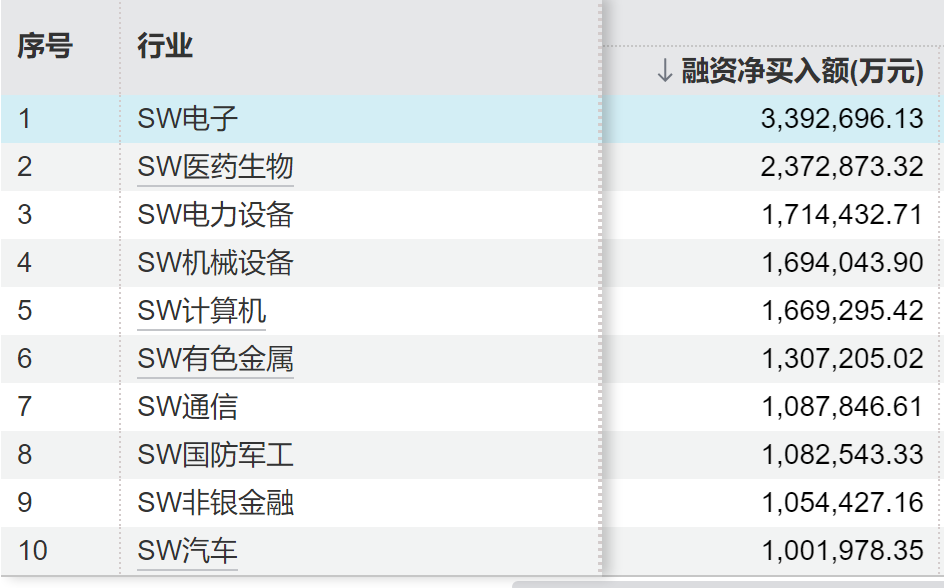
Group 1 - The article suggests that analyzing fundamentals may hinder investment opportunities, advocating for a more aggressive approach in the current market [1] - Despite a significant drop in the market last Thursday, a strong rebound occurred on Friday, indicating volatility and potential for recovery [2] - Brokerage firms are characterized as the "riders" of a bull market, attracting retail investors due to their straightforward business model [3] Group 2 - The A-share investment structure is primarily driven by high dividend stocks, favored by institutional investors and insurance funds [5][6] - High-risk preference funds, such as margin trading and speculative capital, are more involved in sectors like technology, themes, and pharmaceuticals [7] - Margin trading has surpassed 2 trillion, with TMT, pharmaceuticals, and military industries being the main sectors for leveraged buying [8] Group 3 - The financing net buying amounts for various industries indicate strong interest in electronics, pharmaceuticals, and power equipment, with significant figures in millions [9] - Retail investors prefer brokerage stocks during bull markets due to their simplicity compared to complex sectors like technology and pharmaceuticals [9] Group 4 - The bond market is experiencing challenges, with the yield spread between 30-year and 10-year government bonds reaching a 24-year high, indicating potential instability [13] - The divergence between SHIBOR rates and government bond yields suggests a lack of quality assets in banks, leading to lower funding costs [18] - The upcoming reduction in government bond issuance may further complicate the credit environment for banks [19]