汽车高端化

Search documents
汽车及汽车零部件行业研究:汽车行业2026 年投资策略:智能提速、格局再塑与全球化持续
SINOLINK SECURITIES· 2025-12-31 09:10
Investment Rating - The report maintains a positive outlook on the automotive industry, particularly focusing on globalization, intelligence, and high-end market opportunities [5]. Core Insights - The automotive industry is experiencing intensified competition in the domestic market while witnessing significant growth in new energy vehicle (NEV) exports [2][3]. - The overall vehicle sales are projected to remain stable in 2026, with a notable increase in NEV sales driven by favorable policies and consumer demand [4][5]. - The report emphasizes the importance of high-end vehicles and intelligent driving technologies as key growth areas for automotive companies [5][14]. Summary by Sections 1. 2025 Review: Intensified Domestic Competition, High Growth in NEV Exports - Total vehicle sales in China for January to November 2025 reached 20.45 million units, a year-on-year increase of 2.0% in retail and 11.2% in wholesale [2]. - Domestic sales showed slight growth, heavily influenced by policy changes, while exports surged, particularly in the NEV segment, which saw a 19% increase year-on-year [2][19]. - The NEV penetration rate reached 40.8% in exports, with significant contributions from plug-in hybrid vehicles [19]. 2. 2026 Outlook: Stability Expected, Acceleration in Globalization and Intelligence - Retail sales of passenger vehicles are expected to reach 22.03 million units in 2026, with NEVs projected to grow by 12% year-on-year [3][4]. - The high-end vehicle segment is anticipated to perform better due to a shift in consumer preferences and the increasing market share of domestic brands [4]. - NEV exports are expected to reach 6.73 million units, with a 34% increase in NEV exports alone, driven by improved product quality and market maturity [4]. 3. Investment Strategy: Favorable Opportunities in Globalization, Intelligence, and High-End Markets - The report highlights the potential for automotive companies that excel in international markets, high-end product offerings, and advanced intelligent driving technologies [5][13]. - Companies like BYD, Geely, and Li Auto are identified as key players likely to benefit from these trends due to their strong export capabilities and innovative products [5][13]. - The report also emphasizes the importance of the AI driving sector, predicting that leading companies will leverage their technological advancements to gain competitive advantages [14][15].



21对话|魏建军回应魏牌人事更迭:我们都有高估能力的幻觉
2 1 Shi Ji Jing Ji Bao Dao· 2025-12-29 11:23
Core Viewpoint - Wey brand has undergone significant leadership changes, with the latest CEO appointment reflecting the challenges of establishing a high-end automotive brand in China. The brand's journey since its inception in 2016 has been marked by struggles to define its market position and operational efficiency [1][5]. Group 1: Leadership Changes and Strategy - Wey brand has seen its tenth CEO in eight years, indicating a high turnover rate in leadership roles, which is uncommon in the industry [1][2]. - The new CEO, Zhao Yongpo, aims to leverage his experience from the Haval brand to enhance the operational efficiency of Wey [1][3]. - The brand's high-end positioning remains unchanged, focusing on the "large six-seat SUV" segment and investing heavily in direct sales channels [2][3]. Group 2: Sales Performance and Financials - Wey brand's sales reached 89,000 units in the first eleven months of the year, marking a 93.34% year-on-year increase, significantly outpacing other brands like Tank and Haval [2]. - Despite revenue growth, Great Wall Motors reported a decline in net profit, with sales expenses rising to 7.95 billion yuan, a 55.6% increase from the previous year [2][4]. - The company's revenue for the first three quarters was 153.58 billion yuan, up 7.96% year-on-year, while net profit fell by 16.97% to 8.64 billion yuan [2]. Group 3: Brand Positioning and Market Challenges - The CEO emphasized that establishing a luxury brand requires clear value recognition among consumers, which is currently lacking in the Chinese automotive market [3][12]. - Great Wall Motors has the highest average selling price among traditional Chinese automakers, exceeding 180,000 yuan in international markets and 200,000 yuan domestically [3][14]. - The brand's strategy includes a focus on product differentiation and value creation, rather than merely positioning as a high-end brand [12][14]. Group 4: Future Outlook and Goals - Great Wall Motors has set ambitious targets for 2026, aiming for sales of at least 1.8 million units and a net profit of no less than 10 billion yuan [4]. - The company is investing heavily in direct sales, with at least 2 billion yuan allocated to this initiative, reflecting a commitment to enhancing customer engagement and brand loyalty [2][7]. - The upcoming launch of the new Blue Mountain model, featuring advanced AI capabilities, is part of the brand's strategy to improve its technological offerings and market competitiveness [3][15].
零跑曹力谈高端化:不是要冲豪华车的价格,依旧会坚持成本定价,强化价值感
Xin Lang Cai Jing· 2025-12-29 02:04
Core Viewpoint - Leapmotor is focusing on high-end positioning without significantly increasing prices, aiming to provide value comparable to luxury vehicles priced at around 1 million yuan while maintaining a cost-effective pricing strategy for its D series, which is set between 250,000 to 300,000 yuan [1][1][1] Group 1: High-End Strategy - Leapmotor's Senior Vice President, Cao Li, emphasized that the D series will not aim for luxury car pricing but will maintain a cost-based pricing strategy to enhance perceived value, targeting a price range of 250,000 to 300,000 yuan while ensuring quality and value comparable to vehicles priced at 1 million yuan [1][1][1] - Leapmotor's COO, Xu Jun, stated that the company will return to user experience, defining luxury as the experience itself, which will necessitate new requirements for channels and dealers [1][1][1] Group 2: Dealer and Channel Strategy - The company plans to implement a tiered recognition system for dealers, ensuring that only those meeting specific standards will provide services for the D series, thereby enhancing the overall customer experience [1][1][1]
汽车行业 2026 年度投资策略报告:不必悲观,结构存机会-20251227
Guohai Securities· 2025-12-27 13:27
Core Insights - The report maintains a "Recommended" rating for the automotive industry, emphasizing that there are opportunities despite potential challenges in 2026 [1][2] - The automotive sector showed a 20% increase over the past 12 months, outperforming the Shanghai and Shenzhen 300 index, which increased by 16.8% [3] Group 1: Industry Overview - The automotive industry is expected to experience a strong performance in commercial vehicles while passenger vehicles may face challenges in 2026 [4] - The report highlights that the passenger vehicle market in 2025 was supported by trade-in policies, leading to stable performance, but anticipates pressure on total volume in 2026 [4] - The heavy truck segment is projected to see positive growth in 2026, driven by domestic demand recovery and increased exports [4] Group 2: Opportunities in Passenger Vehicles - The report identifies a significant opportunity in the high-end passenger vehicle market, particularly for models priced above 300,000 yuan, which is expected to continue to grow [4][5] - Domestic brands are anticipated to make substantial advancements in the high-end market with new models launching in 2026 [5] Group 3: Heavy Truck Market Insights - The heavy truck market is expected to benefit from a recovery in domestic demand and a favorable export environment, with wholesale volumes projected to grow positively in 2026 [4][5] - The report notes that the penetration rate of electric heavy trucks may stabilize in 2026 after significant increases in 2025, which could positively impact profitability [5] Group 4: Smart Driving and Technology - The report discusses the acceleration of high-level autonomous driving technology penetrating lower-priced models, which is expected to drive volume growth in 2026 [5] - The introduction of new AI-driven cockpit technologies is anticipated to enhance the value of smart cabins, creating additional investment opportunities in related components [5] Group 5: Robotics Sector - The report indicates that the humanoid robotics sector is entering a new phase, with significant growth potential for leading manufacturers and their supply chains [5] - The collaboration between domestic and international manufacturers is expected to enhance production capabilities and technological advancements in humanoid robots [5] Group 6: Investment Recommendations - The report recommends several companies for investment, including Jianghuai Automobile, Top Group, and BYD, highlighting their potential in the evolving automotive landscape [6][9] - Specific recommendations for heavy truck manufacturers include China National Heavy Duty Truck Group and Weichai Power, which are expected to benefit from industry growth [6][9]




卢放:中国汽车近五年的巨变远大于前二十年|我们的四分之一世纪
经济观察报· 2025-12-27 05:04
Core Viewpoint - The current moment presents a unique opportunity for the rise of Chinese automotive brands, as articulated by Lu Fang, Chairman of Lantu Automotive, who reflects on the challenges faced when establishing the brand in 2019 and emphasizes the importance of taking risks to seize opportunities [1][3]. Group 1: Brand Development and Market Position - Lantu Automotive aims to integrate Chinese culture and stories into its brand narrative, distinguishing itself in a competitive market by launching new models that embody this vision [2][3]. - The Chinese automotive market has seen a significant shift, with domestic brands transitioning from followers to leaders, capturing a market share of 69.4% by October 2025, up from 44.4% in 2021 [23]. - The sales of new energy vehicles in China surged from 352 million units in 2021 to nearly 1,287 million units by 2024, indicating a rapid increase in market penetration from 13.4% to 40.9% [22][23]. Group 2: Strategic Insights and Future Directions - Lu Fang believes that technology is no longer a barrier for Chinese brands but rather a tool for competitive advantage, while cultural elements can provide unique differentiation [24]. - Lantu has developed a comprehensive technological framework, including platforms for new energy vehicles, intelligent connectivity, and autonomous driving, which are essential for adapting to market changes [20]. - The company emphasizes the importance of direct sales channels to foster a closer relationship with customers, aiming to create a feedback loop that enhances brand loyalty and user engagement [26].

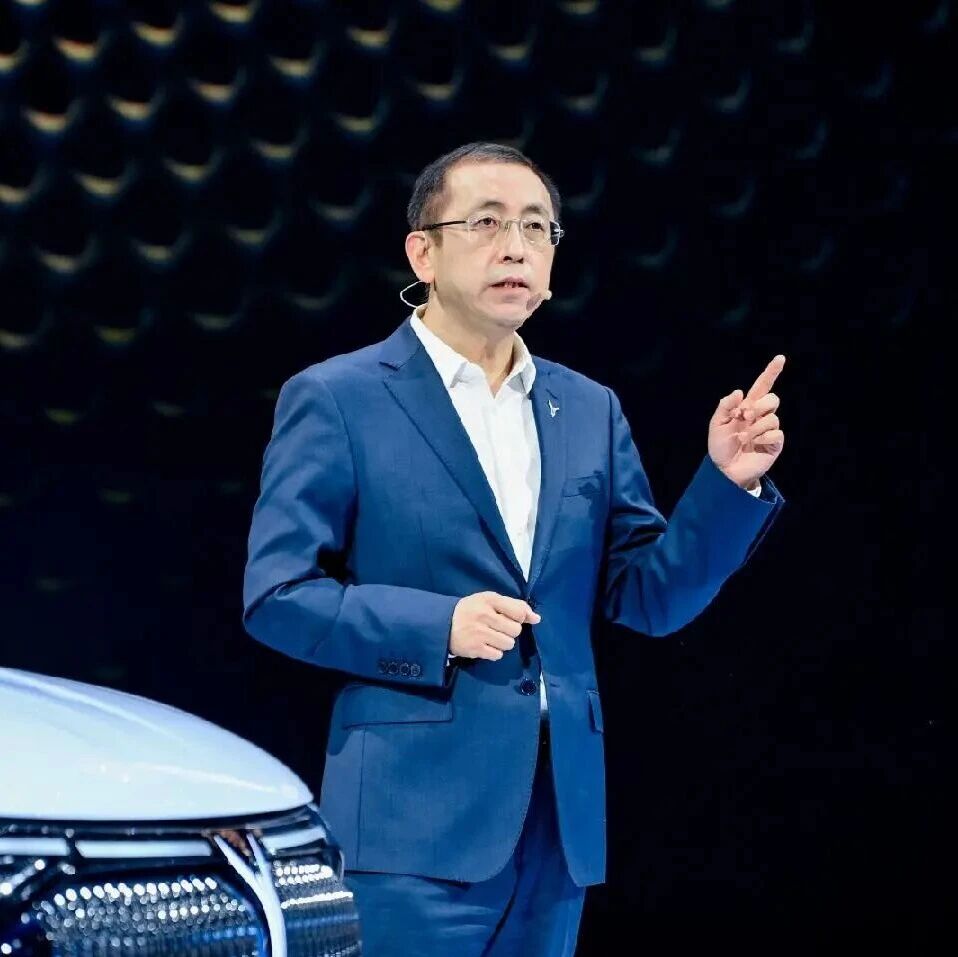
“投入不设上限”成空谈! 昊铂销量崩盘,广汽高端梦碎 | 次世代车研所
Xin Lang Cai Jing· 2025-12-25 01:15
Core Viewpoint - GAC Group's high-end brand Haobo is struggling to meet sales targets, leading to its merger with Aion, indicating a setback in its ambition to become a leading high-end brand in China [2][5][10]. Sales Performance - Haobo's cumulative sales for 2024 are projected at 17,300 units, achieving only 34.6% of its target of 50,000 units [5][8]. - Monthly sales have remained around 1,000 units, with some months reporting zero sales for the Haobo SSR supercar [2][8]. - In the first eleven months of this year, Haobo's total sales reached 13,800 units, which is lower than the monthly sales of mainstream new energy vehicle brands [8]. Strategic Changes - GAC Group announced the formation of the Haobo-Aion Business Unit, merging the two brands for unified operations, with a complete channel integration planned by March 31, 2026 [5][10]. - The merger is seen as a strategic retreat to consolidate resources and reduce costs, as Haobo's performance did not meet expectations [6][10]. Market Challenges - The high-end market is facing intense competition, particularly in the 100,000 to 200,000 yuan segment, where Aion's main models are being directly challenged by competitors like BYD and XPeng [10]. - Haobo lacks distinct technological advantages and a direct sales network, leading consumers to perceive it as a premium version of Aion rather than a standalone high-end brand [10][12]. Brand Image Issues - Haobo has faced multiple marketing crises, including public criticism from sponsored athletes and negative publicity from product experiences, which have damaged its brand image [12][14]. - The brand has also resorted to significant price reductions on several models, indicating struggles to maintain its premium positioning [14][15]. Future Prospects - GAC Group is prioritizing the new high-end smart electric vehicle brand "Qijing," developed in collaboration with Huawei, which is expected to launch two new models in mid-2024 [17][19]. - The success of Qijing may determine GAC's ability to establish a foothold in the high-end market, raising questions about Haobo's future role [19].

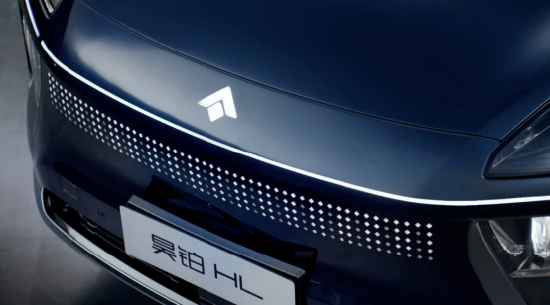
「投入不设上限」成空谈!昊铂销量崩盘,广汽高端梦碎
Xin Lang Ke Ji· 2025-12-25 00:41
Core Viewpoint - The GAC Group's high-end brand, Haobo, is struggling and has been merged with Aion, indicating a shift in focus towards the new brand, Qijing, which is expected to receive more resources and attention [2][5][16]. Group 1: Sales Performance - Haobo's sales performance has been disappointing, with a cumulative sales target of 50,000 units for 2024 only achieving 34% completion, translating to 17,300 units [2][7]. - Monthly sales for Haobo have been around 1,000 units, with some months reporting zero sales for specific models like the Haobo SSR [1][8]. - The recent launch of the Haobo GT Lite version saw a price reduction of 25,000 yuan within two months, indicating weak market demand [1][15]. Group 2: Strategic Changes - GAC Group has decided to merge Haobo with Aion into the same business unit, which is seen as a strategic retreat to consolidate resources and reduce costs [2][7]. - The merger aims to streamline operations and improve efficiency by integrating channels and resources between the two brands, with a complete integration planned by March 31, 2026 [2][9]. - The decision to merge is also influenced by the need to stop losses and refocus on core competencies, as Haobo's independent operations have not yielded the expected results [7][9]. Group 3: Market Positioning - Haobo is positioned as a high-end brand but struggles to differentiate itself in the competitive market, particularly against established players like BYD and XPeng [7][11]. - The brand's identity is perceived as fragmented, with a significant price gap between its high-end models and more affordable offerings, leading to consumer confusion [11][12]. - The launch of Qijing, a new high-end smart electric vehicle brand in collaboration with Huawei, suggests a strategic pivot for GAC Group towards a more competitive high-end market segment [15][16].
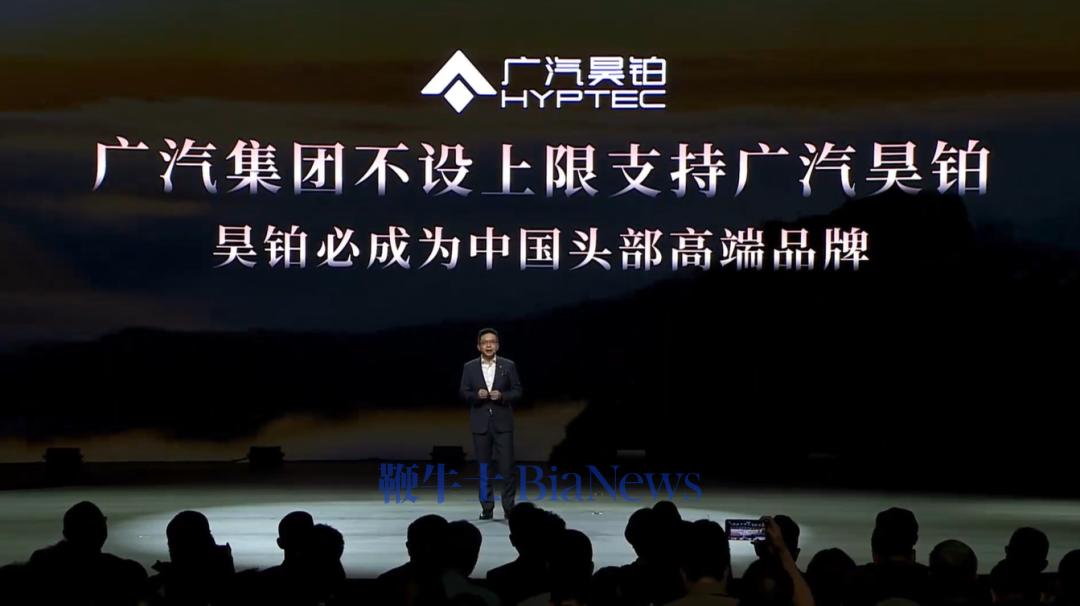
比亚迪方程豹,终于露出了“獠牙”
Xin Lang Cai Jing· 2025-12-22 02:23
Core Insights - The rise of the Equation Leopard brand has put pressure on established players in the off-road vehicle market, such as Great Wall Tank and Beijing Off-road [1] - Equation Leopard has achieved significant sales growth, particularly with its mid-range models, while its high-end strategy still faces challenges [1] Group 1: Sales Performance - Equation Leopard has become the fourth top-selling new force brand, with a record monthly sales of 37,405 units in November 2025, marking a 20.5% month-on-month increase and a 339% year-on-year surge [2] - The brand's main models include the Leopard series (Leopard 5 and Leopard 8) and the Titanium series (Titan 3 and Titan 7), with Titan 7 contributing over 64% of the brand's sales in November [2][3] - The Titan 7 model has achieved impressive sales, with over 50,000 units delivered within 80 days of its launch, and it has consistently surpassed 20,000 monthly sales [2] Group 2: Competitive Positioning - The Titan 7 is priced competitively between 179,800 to 219,800 yuan, making it an attractive option compared to competitors like Haval H9 and Tank 400, which are priced higher [5][6] - The vehicle's design and features, including DM-i super hybrid technology and advanced driving assistance, enhance its appeal and value proposition [6][10] - The brand's strategy of offering high value at lower prices has positioned it as a disruptive force in the market, challenging established brands [6][10] Group 3: Market Strategy and Future Outlook - Equation Leopard aims to penetrate the mid-range "light off-road" market, with a focus on models priced between 150,000 to 200,000 yuan [13] - The brand's sales structure indicates that growth is primarily driven by mid-range models, with high-end models contributing less than 40% to total sales [14] - Despite the current reliance on lower-priced models, Equation Leopard has the potential to build a recognized brand value and pursue a high-end strategy supported by BYD's technological resources [14]
展望汽车行业的“总量”和“内卷”
2025-12-22 01:45
Summary of Automotive Industry Conference Call Industry Overview - The Chinese automotive market has reached a near eight-year high in sales, with future sales expected to fluctuate between 22 million and 23 million units, driven by increased policy support [1][2] - The demand for vehicle replacement has become the core driver of automotive sales, with the replacement cycle for new energy vehicles (NEVs) shortened to four to five years, significantly less than the seven to eight years for traditional fuel vehicles [1][2] Key Insights - **Sales Trends**: The overall automotive sales trend indicates a stable future, with 2024 sales projected at 23.3 million units, maintaining a high level compared to the past eight years. The government has shown a commitment to stabilizing the market through strong stimulus policies [2] - **Policy Impact**: The introduction of policies such as tax exemptions for fuel vehicles and trade-in incentives has reinforced the importance of the automotive sector, making it unlikely for sales to drop below 21 million units [2] - **Competition Dynamics**: The competition in the mid-low price segment is intense, but new regulations prohibiting loss-making sales are expected to stabilize the market and encourage companies to focus on cost control and profitability [3][4] Market Segmentation - **High-End Market**: The high-end market's core issue lies in building comprehensive product barriers, which include not only battery technology and intelligent driving but also design, interior quality, and overall driving experience [5][9] - **Price Segmentation**: The market for vehicles priced above 400,000 yuan faces less competitive pressure compared to those around 300,000 yuan, as consumers in the higher segment prioritize product experience over brand symbolism [6][8] Future Outlook - **High-End NEV Market**: The high-end electric vehicle market is expected to expand significantly, with more new models priced above 400,000 yuan anticipated in the coming years. The improvement in the reputation of domestic electric vehicles will further accelerate market growth [8] - **Mid-High-End Market Barriers**: The mid-high-end automotive market's barriers are primarily based on comprehensive product strength, including technology, design, and smart configurations. Successful models must excel in multiple areas to compete effectively [9][10] Investment Recommendations - Recommended automotive brands include Geely, Great Wall, and Jianghuai, which have shown significant progress in enhancing their luxury brand image and expanding into overseas markets. Attention is also drawn to Lantu Automotive, especially if Dongfeng Group successfully lists on the Hong Kong stock exchange [11]
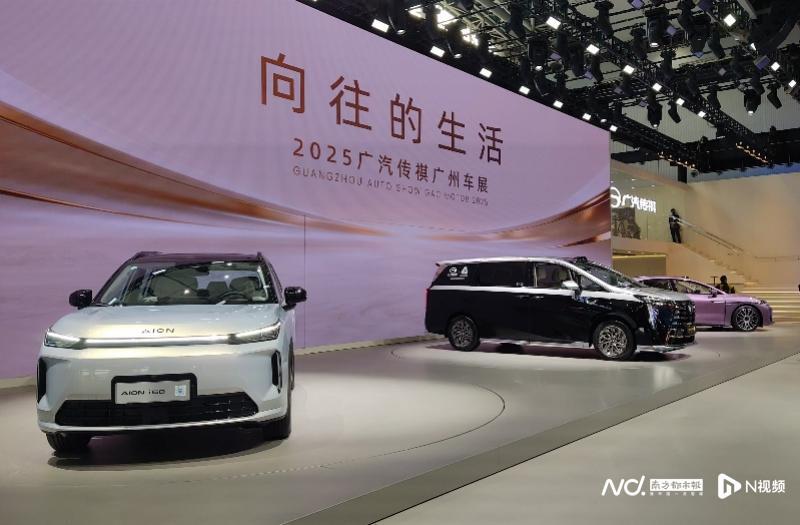
广汽集团11月销量近18万辆,环比增长5.2%
Nan Fang Du Shi Bao· 2025-12-07 08:20
Core Viewpoint - GAC Group has shown significant growth in both domestic and international markets, with a focus on smart and high-end vehicle development, alongside a newly appointed management team to drive its internationalization strategy [1][3][4]. Group 1: Sales Performance - In November, GAC Group's vehicle sales reached 179,700 units, representing a month-on-month increase of 5.2% [1]. - From January to November, GAC's self-owned brand overseas sales increased by 39% year-on-year [7]. - GAC Toyota's electric model, the Platinum Smart 3X, achieved a monthly sales figure of 10,010 units, marking two consecutive months of sales exceeding 10,000 units [5]. Group 2: Management and Strategy - GAC Group has appointed a new management team led by General Manager He Xianqing, responsible for key areas such as product management, R&D, manufacturing, marketing, internationalization, and strategic development [3]. - Chen Jiacai, an external talent with extensive experience in overseas business, will oversee GAC's international operations, contributing to the "ONE GAC 2.0" strategy [3]. Group 3: Product Development and Innovation - GAC continues to enhance its smart and high-end vehicle offerings, with significant sales increases in key models [4]. - GAC's Aion brand has launched its first dual-power model, the Aion i60, which received over 10,000 orders within two weeks of its release [4]. - GAC's Haobo brand has made strides in smart technology, obtaining an L3-level autonomous driving testing license, becoming the first company in China to receive such approval for speeds up to 120 km/h [4]. Group 4: Market Expansion - GAC has entered the Australian and Argentine markets in November and is advancing localization efforts in Europe, partnering with Magna for production in Austria [7]. - The AION V has commenced production at Magna's Graz facility, with plans to expand cooperation into more European markets [7].