
消费分层

Search documents
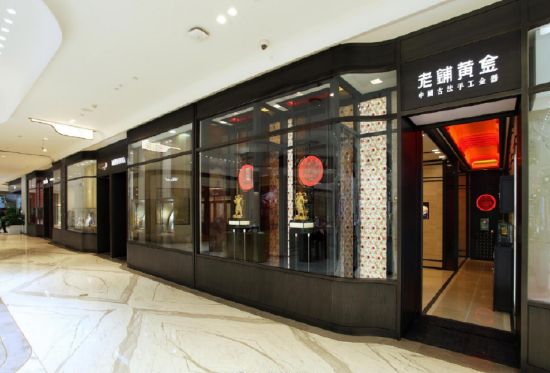
老铺黄金“逆势”涨价最多28%,消费者直呼“受不了”
Xin Lang Cai Jing· 2025-10-30 10:39
Core Viewpoint - The article discusses the recent developments of Laopu Gold, including its significant price increases, stock issuance plans, and the impact of fluctuating gold prices on its business operations and consumer behavior [2][5][12]. Group 1: Stock Issuance and Financial Strategy - Laopu Gold plans to raise HKD 27 billion through the issuance of H-shares, with 70% of the funds allocated for gold reserves, reflecting an increased focus on stockpiling compared to previous fundraising efforts [2][8]. - The company has recently completed a financing round in May, with approximately HKD 1 million remaining from the previous fundraising, indicating rapid utilization of funds [7][8]. - Laopu Gold's financial strategy includes using 10% of the raised funds for store expansion and optimization, while 20% is designated for working capital and general corporate purposes [8]. Group 2: Price Increases and Consumer Reaction - Laopu Gold has announced its third price increase of the year, with product price hikes ranging from 18% to over 28%, significantly higher than previous increases of 5%-13% [5][12]. - Consumer feedback indicates that the recent price hikes have led to a noticeable decline in store traffic and inquiries, as many consumers express discomfort with the rapid price increases [5][12]. - The company's pricing strategy appears to be a response to rising international gold prices, which have increased by approximately 60% this year, while Laopu Gold's price increase has been around 50% [5][9]. Group 3: Inventory and Profitability Concerns - Laopu Gold's inventory balance has surged from CNY 4.1 billion in 2024 to CNY 8.7 billion in the first half of this year, indicating aggressive stockpiling to support growth [8][9]. - The company's gross margin has declined from 42% in 2024 to 38% in the first half of this year due to rising sales costs associated with high inventory replenishment prices [9][10]. - Laopu Gold's short-term borrowings have more than doubled, increasing from CNY 1.37 billion at the end of 2023 to CNY 3.18 billion in mid-2024, raising concerns about liquidity and financial stability [9][10]. Group 4: Market Positioning and Future Outlook - The company's pricing strategy reflects a shift towards a brand positioning that emphasizes cultural identity and value retention rather than direct correlation with gold prices [12][13]. - Analysts suggest that Laopu Gold's approach to pricing and inventory management may indicate a strategic bet on future gold price increases, despite the risks associated with current market volatility [12][14]. - The potential for continued sales growth hinges on consumer perceptions of gold as a valuable asset, with some analysts predicting that if gold prices rise significantly, Laopu Gold's performance could improve dramatically [12][14].

欧莱雅Q3业绩再次低于预期
Xin Lang Cai Jing· 2025-10-22 13:41
Core Viewpoint - L'Oréal is transitioning from a growth myth back to operational reality, reflecting a slowdown in the global beauty market, with two consecutive quarters of underperformance against expectations [1] Financial Performance - In Q3, L'Oréal reported sales of €10.33 billion, a 0.5% year-on-year increase, reversing a 1.3% decline in the previous quarter, but still below analyst expectations of €10.44 billion [1] - Same-store sales grew by 4.2%, an improvement from 2.4% in Q2, yet it marked the second consecutive quarter below market expectations of 4.85% [2] Market Reactions - Following the earnings report, L'Oréal's stock initially rose by 2% but quickly fell, with intraday losses reaching up to 6% [3] - Investor concerns are rising regarding the quality of L'Oréal's growth, indicating that the recovery is uneven [4] Regional Performance - North Asia emerged as a significant highlight, with Q3 same-store sales achieving a 4.7% growth, significantly surpassing analyst expectations of 3.2%, following a decline of over 11% in Q2 [5] - The Chinese market recorded moderate single-digit growth, marking the first positive growth in Q3 over two years, driven by a recovery in the high-end skincare market [6] - In contrast, North America experienced a notable slowdown, with Q3 sales down 4.3% and same-store sales only increasing by 1.4%, far below the expected 4.4% [7] Business Segment Performance - The mass cosmetics division saw a sales increase of 0.4%, with same-store sales growing by 3.8%, slightly above the previous quarter's performance [9] - The high-end cosmetics division experienced a 1.5% decline, but the drop was more than halved compared to Q2, indicating signs of recovery in high-end consumption [10] - The professional hair products division reported a same-store sales growth of 5.1%, while the skin science and beauty segment remained the fastest-growing, with sales up 6.1% and same-store sales growth of 9.3% [11] Market Outlook - Despite the recovery signals in North Asia, market reactions suggest that L'Oréal's revival has not met confidence expectations [12] - Analysts view Q3 performance as a signal of recovery from recession rather than a transition to prosperity, highlighting structural fatigue in the global cosmetics giant [14]

三全食品:创新产品丰富矩阵,提升品质增强市场竞争力
Xin Lang Cai Jing· 2025-10-13 09:41
Core Viewpoint - The company is responding to the trend of consumption upgrading by innovating and enhancing product quality while maintaining competitive pricing in its product offerings [1] Group 1: Product Strategy - The company is launching high-priced dumpling products as part of its strategy to innovate and diversify its product matrix in response to changing consumer preferences [1] - The introduction of the "Jin Duo" series of dumplings focuses on value for money, while the "Duo Duo" series and "Golden Ratio Steamed and Fried Dumplings" have undergone comprehensive quality upgrades [1] - The company aims to continuously explore new consumption trends and innovate products to meet diverse consumer demands, thereby enhancing market competitiveness [1]

大润发公布“超省+润发甄选”双品牌矩阵战略 瞄准分层消费
Huan Qiu Wang· 2025-10-13 04:17
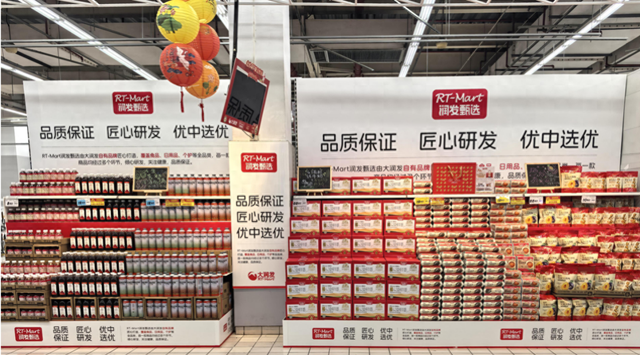
Core Insights - Dazhonghua has launched a "Private Brand Festival" across nearly 500 stores and online platforms, focusing on two core brands: "Chao Sheng" and "Runfa Selection," aimed at addressing the current trend of consumer segmentation with a strategy of "low price without low quality, high price without high coldness" [1][3] Group 1: Brand Strategy - The "Chao Sheng" series emphasizes extreme cost performance by directly connecting with factories and reducing intermediaries, offering high-repurchase rate products like 11.8 yuan/bag shredded pork jerky and 4.9 yuan/package of fresh-keeping film, directly competing with e-commerce prices [1][3] - The "Runfa Selection" series focuses on quality upgrades, introducing over 20 regional products such as organic milk from Inner Mongolia and rice from Panjin, aiming to meet consumer demands for "quality-price ratio" across health, flavor, and certification dimensions [3] Group 2: Future Plans - Dazhonghua plans to continue its 1+1 dual brand strategy, with "Chao Sheng" focusing on price competitiveness and maintaining product quality at or above national standards, while "Runfa Selection" targets consumers' needs for high quality at market prices, emphasizing health trends, local flavors, and authoritative certifications [3] - By September 2025, the two brands aim to launch nearly 500 SKUs covering over 50 categories, including snacks, beverages, grains, condiments, and household cleaning products [3] Group 3: Strategic Adjustments - Since acquiring Gaoxin Retail from Alibaba Group in February 2025, the company has been undergoing strategic adjustments, with plans to transform hypermarkets into community lifestyle centers [4]
谁在杀死大品牌经销商?
Sou Hu Cai Jing· 2025-09-26 00:42
Core Insights - The article highlights the decline of channel dominance by major brands in the fast-moving consumer goods (FMCG) sector, as evidenced by the inability of Inner Mongolia dairy companies to recruit new distributors in Shanghai despite significant market share losses [1][7][24] - The report indicates a 37% increase in the distributor attrition rate for leading FMCG brands since 2020, with the beverage sector facing the most severe challenges [1][6] - The shift in consumer behavior towards price sensitivity and the rise of small brands is reshaping the distribution landscape, leading to a re-evaluation of the role of distributors [6][9][12] Industry Dynamics - The era of channel dominance by major brands, characterized by a "direct + deep distribution" model, has led to the marginalization of smaller brands, forcing them into lower-tier markets [2][4] - Major brands have historically treated distributors as mere execution tools, which has contributed to their current vulnerabilities [3][4][14] - The transition from a "stockpiling" strategy to a "neglected" approach reflects the changing consumer preferences and the need for brands to adapt to a more competitive environment [6][24] Distributor Evolution - Small brands are leveraging strategies such as profit sharing and operational flexibility to redefine channel value, offering higher margins (25%-40%) compared to major brands (8%-15%) [9][10][12] - The concept of "coexistence" is emerging, where small brands prioritize long-term loyalty and investment from distributors over short-term gains [12][18] - Major brands are facing a dilemma regarding the necessity of distributors in the digital age, prompting a reevaluation of their roles and contributions [16][17] Future Collaboration Models - The future relationship between brands and distributors is expected to shift from a "management and control" model to one of "empowerment and coexistence" [18][19] - Successful brands are beginning to integrate distributors into their value networks, as seen with companies like Nongfu Spring and Coca-Cola, which focus on core competencies while allowing distributors to thrive [21][22] - The article concludes that brands that respect and collaborate with their distributors will be better positioned to navigate market challenges and sustain growth [24]

饿了么入淘,高德再创业,盒马何以成“剩子”?
3 6 Ke· 2025-09-12 10:03
Core Insights - Hema is shifting its strategy from a broad market approach to a more focused one, aiming to optimize its operations and improve profitability [1][4][8] - The company has faced challenges in recent years, including leadership changes and a pause in its IPO plans, but is now showing signs of recovery with projected GMV exceeding 75 billion yuan for FY2025 [3][5] - Hema's new core business models will be Hema Fresh and the newly rebranded Super Hema, which will focus on hard discount retail [2][9] Group 1: Business Strategy and Changes - Hema has closed its last X membership store and plans to cease its neighborhood business by October 4, 2023, reallocating user demand to Hema Fresh and Super Hema [1] - The company is transitioning from a broad exploration of various retail formats to a concentrated effort on two main business lines, reflecting a need for clarity in its market positioning [2][4] - The previous strategy of rapid expansion and diverse offerings led to operational inefficiencies and unmet growth targets, prompting a reevaluation of its business model [6][8] Group 2: Market Context and Competition - Hema's challenges are set against a backdrop of intense competition in the retail sector, particularly in the realm of instant retail and food delivery, where it must prove its value proposition [3][14] - The hard discount model, which emphasizes low margins and high turnover, is becoming increasingly relevant, with competitors like Meituan and JD also entering this space [10][14] - Hema's ability to adapt to this competitive landscape will depend on its operational efficiency and the strength of its supply chain [14][15] Group 3: Future Outlook - Hema aims to open nearly 100 new stores and expand into over 50 new cities in the upcoming fiscal year, indicating a commitment to growth despite recent setbacks [8][16] - The company is also integrating its services with Alibaba's broader e-commerce strategy, positioning itself as a key player in the instant retail supply chain [15][16] - The success of Super Hema will hinge on its ability to establish a strong brand presence and consumer trust in a market that is increasingly price-sensitive [11][13]


盒马会员店谢幕:消费分层时代下的零售战略反思
Hu Xiu· 2025-09-04 03:24
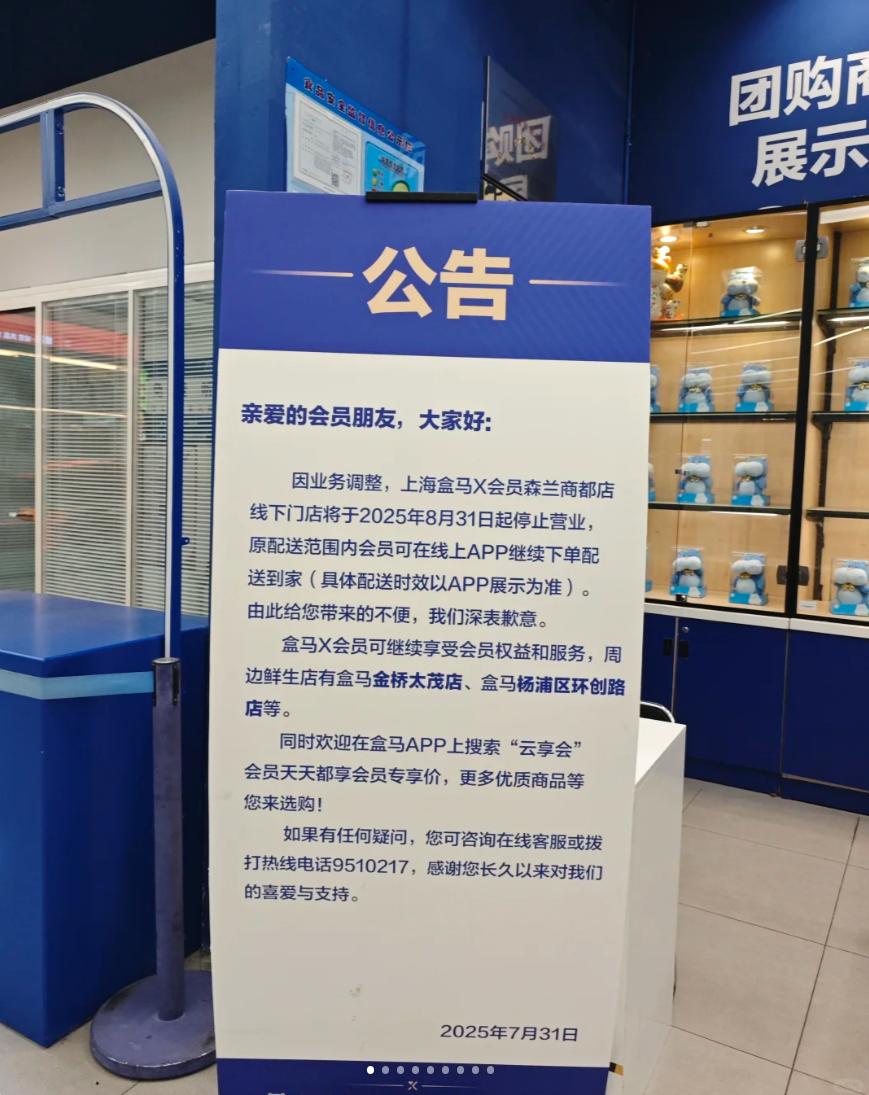
Core Insights - The decision to shut down all Hema X membership stores represents not only a business contraction but also a strategic correction [1] - In the increasingly clear landscape of "consumer stratification," Hema's attempt to cover multiple consumer segments with a single value proposition reflects a misunderstanding of the consumer market and its own core competitiveness [1] - The lessons learned from Hema's experience are valuable for other retail companies [1]
盒马放弃做山姆学徒,离山姆却越来越近了
3 6 Ke· 2025-08-19 12:07
Group 1 - The core point of the article is the strategic shift of Hema, which has decided to abandon its Hema X membership stores in favor of more profitable models like Hema Fresh and Hema NB, planning to open nearly 100 new Hema Fresh stores in over 50 new cities by FY2026 [1][5][7] - Hema X membership stores, once seen as a promising growth avenue, generated approximately 3 billion yuan in annual revenue at their peak but faced operational challenges and frequent management changes, leading to their closure [1][2][5] - The competitive landscape shows that Hema is positioned to potentially surpass current second-place retailer RT-Mart in sales by 2025, as both RT-Mart and Yonghui are undergoing transformation challenges [5][7][10] Group 2 - Hema's strategy has narrowed down to two main formats: Hema Fresh and Hema NB, targeting both high-end and community markets, which reflects a response to the increasingly segmented consumer demand in China [10][13] - The company has experienced significant growth in member numbers due to collaborations with Alibaba, such as the integration of Hema with Taobao's 88VIP program, which has led to a doubling of membership [16][19] - However, Hema faces risks related to operational management, service capabilities, and product innovation, which are critical for maintaining competitive advantage in the rapidly expanding retail market [16][19][20]
天风证券:A股破新高后资金加速进场 关注科技、消费和红利三条主线
智通财经网· 2025-08-17 23:56
Core Viewpoint - The report from Tianfeng Securities indicates that after the market reached new highs, there is an accelerated entry of sidelined funds, emphasizing a cautious and steady approach to investment [1][3]. Investment Themes - Investment themes can be categorized into three main directions: 1) Breakthroughs in Deepseek and leadership in open-source technology AI+ 2) Valuation recovery in consumer stocks and gradual recovery in consumer segmentation 3) Continued rise of undervalued dividends [1][3]. Market Dynamics - The report analyzes the logic behind the A-share market's volume increase and new highs, noting that weak returns in the real economy may lead private sector asset allocation to shift towards financial assets. Historical patterns show that during previous bull markets, non-bank deposits significantly increased when real estate and economic returns were weak [1][2]. Consumer Sector Insights - The core factor for investment in the consumer sector is valuation. Given the current low valuations, declining interest rates, and policy catalysts, the consumer recovery cycle is expected to gain momentum. Being overly pessimistic about future consumer performance may be excessively conservative [1][3]. International Context - The report highlights international developments, including the U.S. core CPI growth exceeding expectations, with July's core CPI year-on-year at 3.1%, up from a previous 2.9% [2].

A股策略周思考:稳住出口,提振物价
Tianfeng Securities· 2025-08-10 09:42
Domestic Economic Indicators - In July, the core CPI showed zero growth year-on-year, while the PPI remained unchanged, leading to a narrowing of the PPI-CPI gap from -3.7% in June to -3.6% in July [7][8][10] - The July CPI increased by 0.4% month-on-month, reversing the previous month's decline of -0.1%, while the PPI decreased by -0.2% month-on-month, improving slightly from -0.4% [7][10] - July exports (in USD) rose by 7.2% year-on-year, exceeding expectations, while imports increased by 4.1%, also surpassing forecasts [17][21] Industry Configuration Recommendations - The report emphasizes the importance of the "赛点 2.0" third phase, indicating that the market is experiencing overheating and increased volatility, necessitating a cautious approach [46] - Investment themes are categorized into three main directions: 1) Technological advancements in AI, 2) Recovery in consumer stock valuations, and 3) Continued rise of undervalued dividends [46] - The report suggests that the performance of the consumer sector is closely tied to valuation, with a potential recovery cycle supported by low valuations, declining interest rates, and policy catalysts [46]