产品创新

Search documents
瑞幸咖啡20251117
2025-11-18 01:15
Summary of Luckin Coffee's Q3 2025 Earnings Call Company Overview - **Company**: Luckin Coffee - **Quarter**: Q3 2025 - **Revenue**: RMB 15.3 billion, a 50% year-over-year increase [2][3][14] Key Financial Performance - **Same-store sales growth**: 14.4% in self-operated stores [2][3] - **Operating profit**: Approximately RMB 1.8 billion, with a margin of 11.6% [21] - **Customer metrics**: Over 110 million average monthly transacting customers, with 42 million new customers acquired [2][9] Store Expansion and Market Presence - **Total store count**: 29,214 stores in China, including 18,809 self-operated and 10,287 partnership stores [5][6] - **International expansion**: 118 stores globally, with notable growth in Singapore and early-stage operations in the US [7] Product Innovation - **New product launches**: Nearly 30 new beverages and snacks, including the 'Nestea Drink from Origin' campaign [8] - **Sales performance**: The Little Butler series surpassed 200 million cups sold [8] Customer Engagement Strategies - **Marketing campaigns**: Collaborations with popular IPs, resulting in significant customer acquisition and engagement [9] - **Cumulative transaction customer base**: Surpassed 420 million [9] Sustainability Initiatives - **Corporate social responsibility**: Launched the 'Philosophy Campus Health Initiative' and sponsored the Angel Journey project [10] Challenges and Industry Dynamics - **Delivery platform subsidies**: Contributed to revenue growth but negatively impacted margins due to high fulfillment costs [23] - **International green coffee bean prices**: Remained high, posing challenges for the industry and impacting future margins [12][24] Strategic Focus for Future Growth - **Long-term development**: Emphasis on product and brand innovation, operational excellence, and expanding store networks [18][25] - **Balancing growth and profitability**: Focus on maintaining high-quality stores while navigating external pressures [24][26] Cash Flow and Financial Health - **Net operating cash inflow**: Approximately RMB 2.1 billion for Q3 2025 [22] - **Cash reserves**: RMB 9.3 billion, up from RMB 5.9 billion at the end of 2024 [22] Relisting Plans - **US exchange relisting**: No specific timeline for relisting on a major US exchange, with a focus on business development and market share expansion [27]

瑞幸Q3总净收入近153亿,净增3008家门店:要紧抓咖啡市场的时代红利
Xin Lang Cai Jing· 2025-11-17 15:32
Core Insights - The current strategic focus of the company is on business growth and market share expansion, as highlighted by the strong financial performance in Q3 2025 [2][10] - The company reported a total net revenue of 15.287 billion RMB in Q3 2025, representing a year-on-year growth of 50.2% [2][3] - The company achieved a GAAP operating profit of 1.777 billion RMB with an operating profit margin of 11.6% [2][3] Financial Performance - Total net revenue for Q3 2025 was 15.287 billion RMB, up from 10.181 billion RMB in Q3 2024, marking a 50.2% increase [3] - Same-store sales growth for self-operated stores in Q3 2025 was 14.4% [3] - The average monthly transaction customer count reached over 112 million, a 40.6% increase from 79.85 million in Q3 2024 [3][4] Customer Metrics - The company added over 42 million new transaction customers in Q3 2025, with a cumulative transaction customer count exceeding 420 million [4] - The monthly average transaction customer count surpassed 100 million for the first time, marking a significant milestone [4] Store Expansion - The company maintained a leading store opening pace, with a net increase of 2,979 stores in China, bringing the total to 29,096 stores [6] - The number of self-operated stores reached 18,809, while franchise stores exceeded 10,287 [6] - Internationally, the company added 29 stores, bringing the total to 118, with a focus on Singapore and the U.S. markets [7] Market Strategy - The company is focused on expanding its store network in high-tier cities while also penetrating lower-tier markets [4][6] - The CEO emphasized the importance of product innovation and brand value enhancement to meet diverse customer needs and support long-term growth [4][9] Industry Context - The coffee market in China is still in its early stages, with significant growth potential as consumer demand continues to rise [10] - The company is adapting to market changes, including the impact of reduced subsidies from delivery platforms, while maintaining a focus on long-term development [8][9] - The CEO noted that the coffee business will gradually return to a self-pickup model as the primary consumption method, despite the current reliance on delivery services [9]


瑞幸咖啡Q3营收猛增50%,利润却降了!开店狂潮仍在继续
Sou Hu Cai Jing· 2025-11-17 14:13
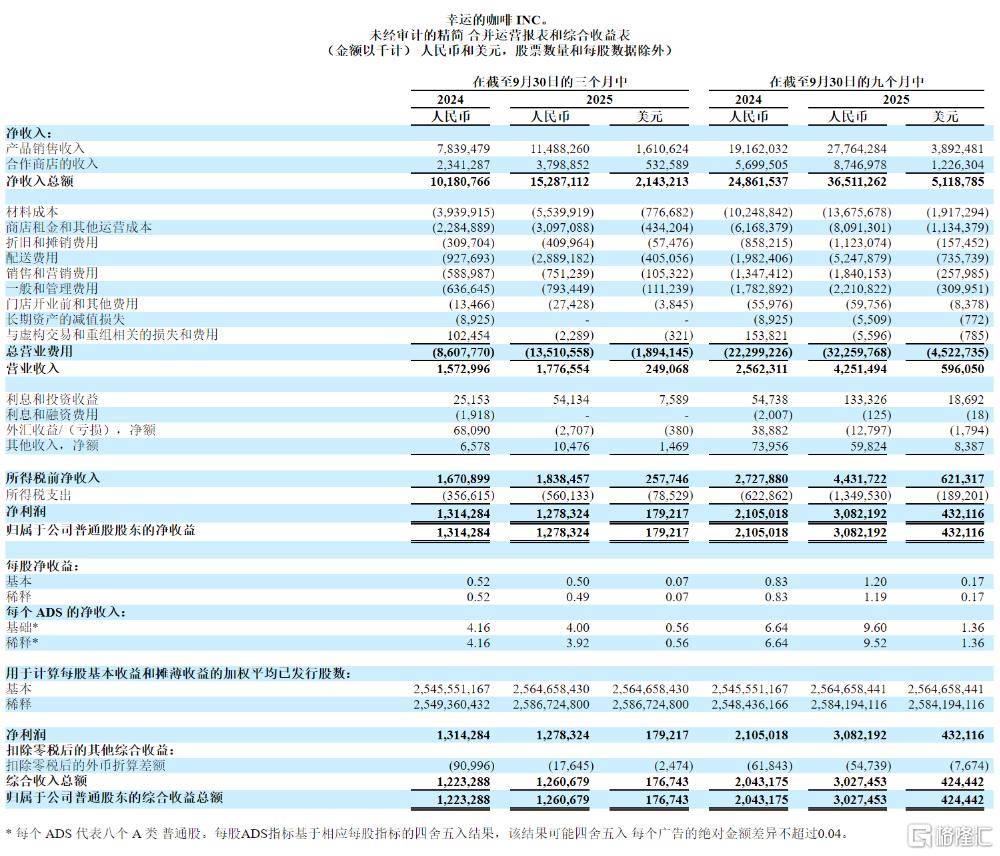
Core Insights - The company reported a net revenue of 15.29 billion RMB for Q3 2025, representing a year-on-year growth of 50.2%, while net profit decreased by 1.9% to 1.28 billion RMB [1][2] - Adjusted earnings per ADS for Q3 2025 were 4.4 RMB, with GAAP operating profit at 1.777 billion RMB, up 12.9%, and Non-GAAP operating profit at 1.926 billion RMB, up 15.2% [1][2] Financial Performance - Total revenue for Q3 2025 was 15.29 billion RMB, with product sales contributing 11.49 billion RMB and partner store revenue at 3.80 billion RMB [2] - Total operating expenses for Q3 2025 reached 13.51 billion RMB, a 57.0% increase year-on-year, driven by business expansion [4] - The company reported a gross profit of 1.78 billion RMB for Q3 2025, with a gross margin decline from 15.5% to 11.6% [1][4] Store Operations - Self-operated store revenue for Q3 2025 was 11.08 billion RMB, a 47.7% increase, with same-store sales growth at 14.4% [4] - The total number of stores reached 29,214 by the end of Q3 2025, with 18,882 self-operated and 10,332 partner stores, marking an 11.5% increase from Q2 2025 [4] - The company opened 3,008 new stores in Q3 2025, including 2,979 in China [4] Customer Metrics - The company added over 42 million new transaction customers in Q3 2025, with a monthly average customer count of 112 million, a 40.6% year-on-year increase [4] - Cumulative transaction customers surpassed 420 million by the end of Q3 2025 [4] Management Commentary - The CEO emphasized the company's scale-oriented strategy, highlighting strong revenue growth and double-digit same-store sales increases [5] - The company aims to continue product innovation and enhance brand value to sustain long-term growth [5]
瑞幸咖啡公布2025年第三季度财报,总净收入152.87亿元
Xin Lang Cai Jing· 2025-11-17 13:17
Core Insights - Luckin Coffee reported a total net revenue of 15.287 billion yuan for Q3 2025, representing a year-on-year growth of 50.2% [1] - The company achieved a GAAP operating profit of 1.777 billion yuan, with an operating profit margin of 11.6% [1] - The average monthly transacting customer count reached 112 million, with a total of over 420 million cumulative transacting customers by the end of Q3 [1] Financial Performance - Self-operated store revenue was 11.08 billion yuan, up 47.7% year-on-year, with an operating profit of 1.941 billion yuan, reflecting a 10.2% increase [1] - Same-store sales growth rate improved to 14.4% [1] - The total GMV for Q3 was approximately 17.32 billion yuan [1] Store Expansion - Luckin Coffee opened a net of 3,008 new stores in Q3, bringing the total number of stores to 29,214 [1] - In the Chinese market, 2,979 new stores were added, totaling 29,096 stores, including 18,809 self-operated and 10,287 partner stores [1] - Internationally, the company added 29 new stores, reaching a total of 118, including 68 self-operated stores in Singapore and 5 in the U.S. [1] Customer Growth - The company added over 42 million new transacting customers in Q3, with a year-on-year growth of 40.6% in average monthly transacting customers [1] - Cumulative transacting customers surpassed 420 million by the end of Q3 [1] Strategic Focus - The CEO emphasized a core strategy focused on scale growth, product innovation, and brand value enhancement as key drivers for sustainable long-term growth [2]
新荣耀5周年,CEO李健发文:感谢用户、团队与伙伴
Sou Hu Cai Jing· 2025-11-17 08:15
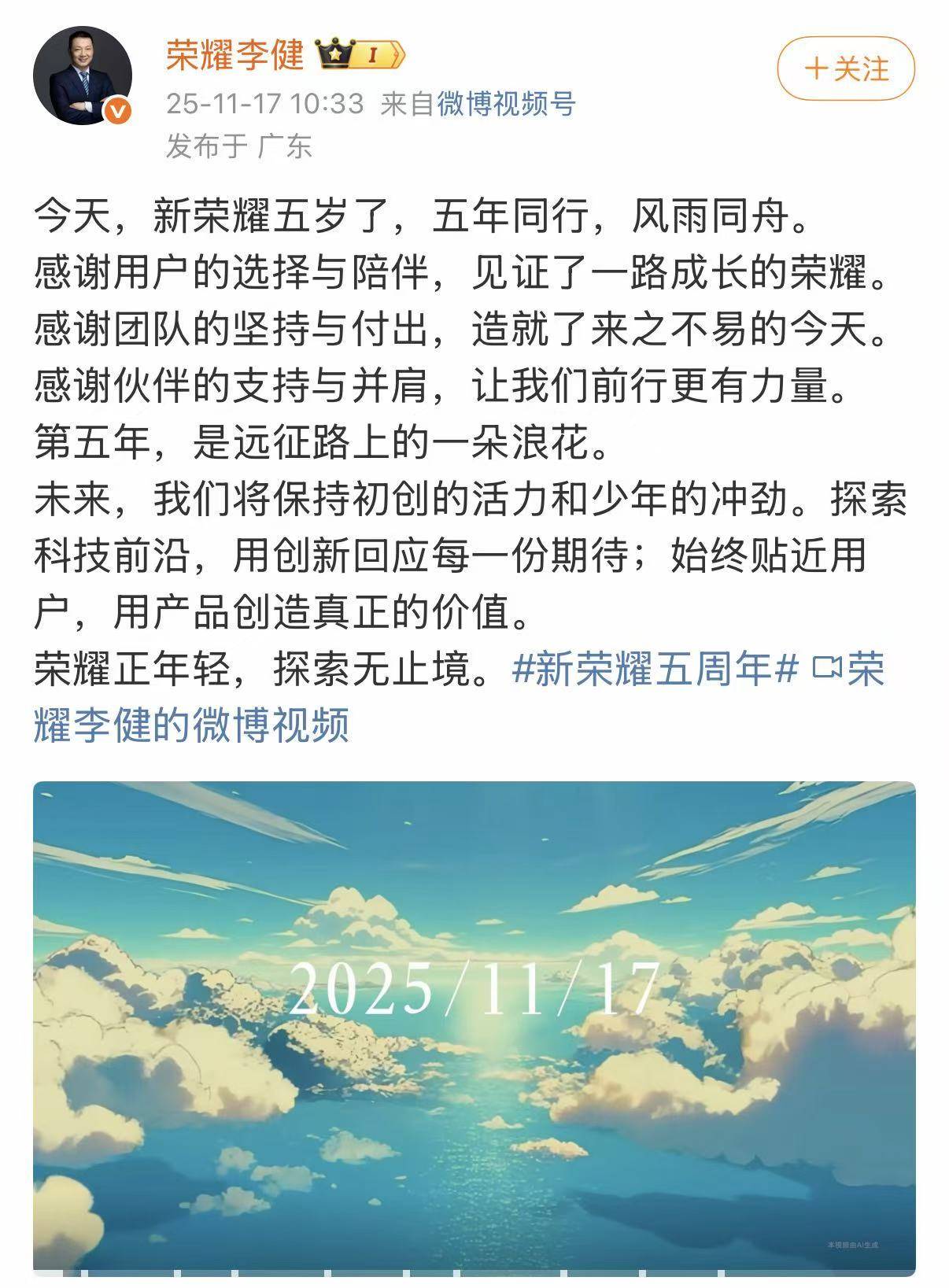
. 4 本视频曲A - DR I I F 8 图 今日,荣耀CEO李健发文庆祝新荣耀5周年,并对用户、团队、伙伴表示感谢: "第五年,是远征路上的一朵浪花。未来,我们将保持初创的活力和少年的冲劲。探索科技前沿,用创新回应每一份期待;始终贴近用户,用产品创造真正 的价值"。 ...
IDC:三季度中国平板电脑市场出货量为849万台 同比增长10.9%
智通财经网· 2025-11-17 05:52
Core Insights - The Chinese tablet market saw a shipment volume of 8.49 million units in Q3 2025, representing a year-on-year growth of 10.9% [1] - The consumer market experienced a year-on-year growth of 12.3%, while the commercial market faced a decline of 4.2% [1] Market Performance - Huawei maintained the top position in the market with a share of 32.1%, despite a decrease of 4.6% from the previous year [4] - Apple ranked second with a market share of 24.2%, down 2.1% year-on-year, but showed stable growth in shipments [4][5] - Xiaomi held the third position with a market share of 10.7%, launching new products to enhance its market presence [4][5] - Lenovo's market share rose to 10.5%, with significant growth in both consumer and commercial segments [4][6] - Honor ranked fifth with a market share of 8.1%, continuing to see double-digit year-on-year growth [4][6] Product Innovations and Strategies - Huawei's product iteration in the consumer market, including the MatePad Mini, has strengthened its position as a productivity tool [4][5] - Apple benefited from back-to-school promotions and price reductions on e-commerce platforms, with the iPad Air and iPad Pro series seeing increased shipment proportions [5] - Xiaomi's new product launches, including the Pad 8 Pro and Redmi Pad 2, aimed at expanding its market from mid-range to entry-level segments [5][6] - Lenovo's Y700 series and new releases in the mainstream segment contributed to its growth in both consumer and commercial markets [6] - Honor's introduction of the MagicPad 3 and GT 2 Pro targeted the young consumer demographic while enhancing its competitive edge in the education sector [6] Market Outlook - The growth rate of the Chinese tablet market is expected to slow down towards the end of the year due to the diminishing effects of the "national subsidy" policy [7] - Future growth will depend on product innovation and ecosystem development as market dynamics change [7]




奶皮子糖葫芦缘何“破圈”
Zheng Quan Ri Bao Zhi Sheng· 2025-11-16 17:09
Core Insights - The rapid rise of the milk skin candied hawthorn reflects a successful "breakthrough" in the market, driven by product innovation, consumer upgrade, and effective social media marketing [1][2]. Product Innovation - The milk skin candied hawthorn combines traditional candied hawthorn with innovative milk skin, breaking the monotony of traditional flavors and appealing to the adventurous tastes of younger consumers [1][2]. - The product has evolved from basic offerings to high-end varieties, such as grape and yogurt-filled options, catering to both mass and mid-to-high-end markets, thus enhancing its value proposition from a street snack to a scene-based delicacy [2]. Social Media Impact - The product's visual appeal and shareability on social media platforms have significantly contributed to its popularity, with the hashtag "milk skin candied hawthorn" achieving over 1.08 billion views on Douyin [2]. - The viral marketing strategy, characterized by a chain of influencer promotion and consumer sharing, has amplified the product's reach and established it as a trendy item in the market [2]. Market Potential - The success of the milk skin candied hawthorn underscores the growth potential in the consumer sector, highlighting the importance of cultural relevance, consumer insight, and efficient product innovation in creating popular items [3].
达利食品二代接班
Bei Jing Shang Bao· 2025-11-16 15:52
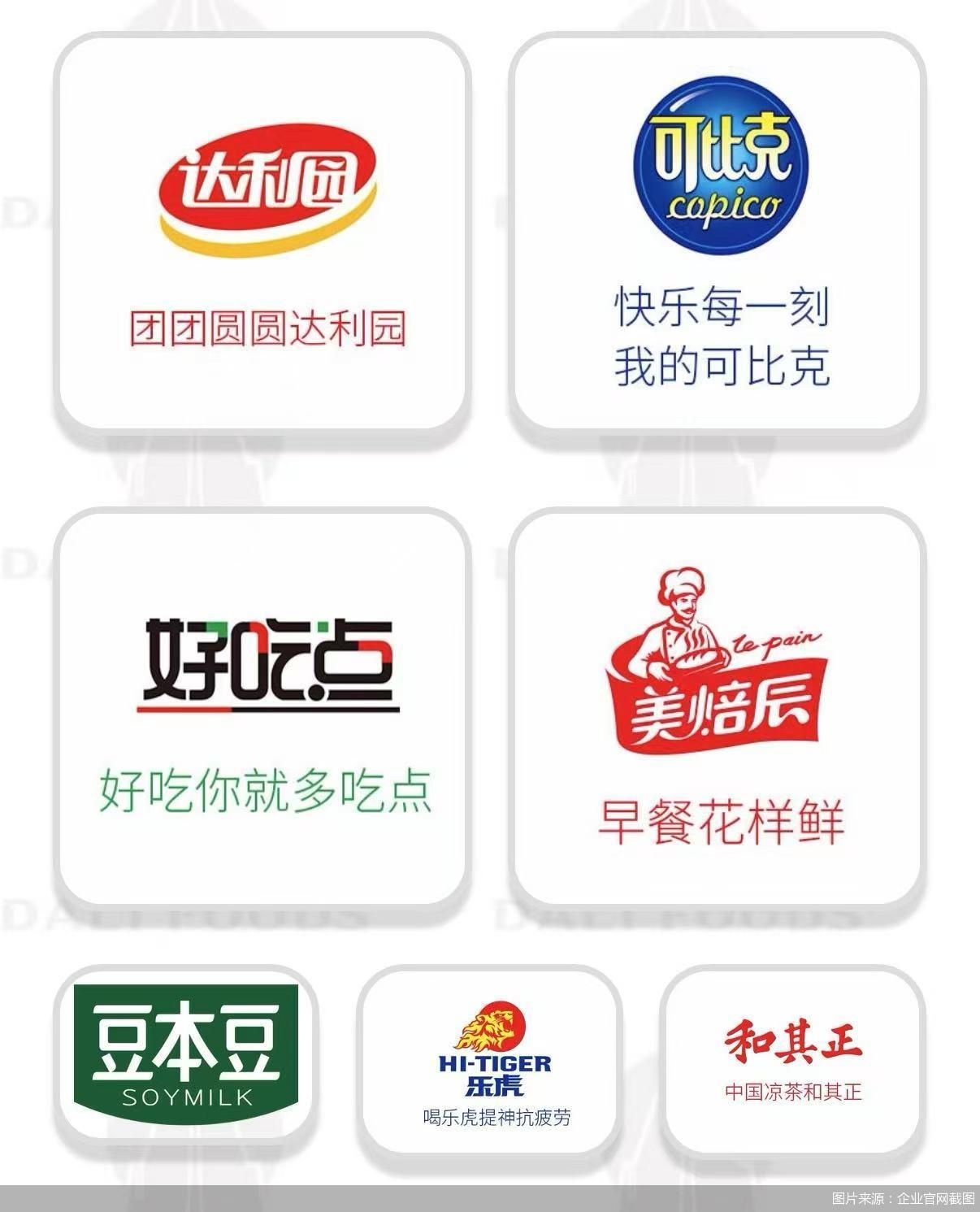
Core Viewpoint - Dali Foods Group has officially transitioned leadership to Xu Yangyang, daughter of founder Xu Shihui, marking a significant generational change after 36 years of operation [1] Company Background - Dali Foods was founded in 1989 by Xu Shihui in Quanzhou, Fujian, initially as Huian Meili Food Factory [3] - The company became a leading player in the domestic food and beverage industry by imitating successful products and adopting a low-price strategy to reach a broader consumer base [3] Leadership Transition - Xu Yangyang has 17 years of experience within Dali Foods, having held various key positions and participated in significant company developments [3] - She led the company to a successful IPO on the Hong Kong Stock Exchange in 2015, which was the largest IPO in the global consumer goods sector that year [3] - In 2023, Xu Yangyang was tasked with executing a global expansion strategy, focusing on Southeast Asia with production bases in Indonesia, Thailand, Vietnam, and Saudi Arabia [3] Financial Performance - Dali Foods experienced a decline in revenue after reaching a peak of 22.294 billion yuan in 2021, with projected revenues of 19.957 billion yuan in 2022, 18.86 billion yuan in 2023, and 18.07 billion yuan in 2024 [4] - The company has faced challenges with its stock price and trading volume, leading to its delisting from the Hong Kong Stock Exchange on September 1, 2023 [4] Product Innovation and Market Challenges - Xu Yangyang has introduced innovative brands such as "Dou Ben Dou" and "Mei Bei Chen," which were seen as potential turning points for the company [4] - However, the revenue growth for these brands has slowed significantly, with the family consumption segment growing only 1.9% to 3.705 billion yuan in 2022, compared to a 22.7% growth in 2021 [4] - The snack food segment saw a 9.2% decline in revenue to 9.03 billion yuan, while the ready-to-drink beverage segment experienced a 22.3% drop to 5.123 billion yuan [4] New Product Launches - Dali Foods has followed industry trends by launching new health-oriented products, including "Chao Ye" sugar-free tea and "Yi Ji Shui" wellness water [5] - Despite these efforts, the new products have not yet demonstrated significant market success, with sales of these items remaining below 1,000 units in the past 30 days [5] Strategic Insights - Industry analysts suggest that Xu Yangyang's leadership comes at a critical juncture for Dali Foods, as the company needs to better understand and meet the core demands of new-generation consumers [6] - Experts recommend that Dali Foods should shift its strategy to enhance R&D investment, develop unique core products, strengthen brand identity, and optimize market positioning to cater to diverse consumer needs [6]

底部复苏系列跟踪:(餐饮供应链、液态奶、啤酒)经销商系列电话会
2025-11-16 15:36
Summary of Conference Call Notes Industry Overview - The conference call discusses the dairy products, seasoning, and frozen food industries, focusing on the performance of major companies like Yili and Mengniu, as well as market trends and challenges faced by various brands. Key Points on Dairy Products - The overall dairy market is expected to stabilize in 2025, with Yili outperforming Mengniu. Mengniu's ambient liquid milk has seen a significant decline, but product innovation and channel optimization may lead to growth [1][4]. - Dairy product terminal prices are gradually stabilizing from the second half of 2024, while upstream raw milk prices continue to decline, resulting in a decrease in net profits for distributors, with about one-third currently operating at a loss [1][17]. - The demand for liquid milk is declining, primarily due to reduced gifting and everyday consumption, particularly among low-income consumers [10][18]. - Mengniu's ambient liquid milk sales have declined by approximately 14% to 15% year-on-year, while Yili's decline is around 3% [5][12]. - The dairy industry is experiencing a cyclical downturn, but a rebound is expected in 2026, particularly for high-end products [9][19]. Key Points on Seasoning Market - The seasoning market is overall sluggish in 2025, with many brands failing to meet growth targets. The hot pot base market share is declining, while compound seasoning's share is increasing, but total sales are still in negative growth [1][22]. - Yihai International's hot pot base has declined due to overall industry downturn and competition from private label products, necessitating product innovation and expansion into B-end business [1][23]. - The online and offline price chaos has impacted the market, with a 10% decrease in offline prices compared to 2024 [25][26]. Key Points on Frozen Food Market - The frozen food market has shown signs of recovery in 2025, particularly in October, driven by the sales of hot pot balls. C-end growth is outperforming B-end growth [3][49]. - The overall sales of frozen food have increased by approximately 3% from January to October 2025, with significant growth in products like dumplings and wontons [37][50]. - The sales recovery in the fourth quarter is attributed to inventory clearance and promotional activities [38][39]. Additional Insights - The restaurant industry is witnessing a closure trend, particularly among large stores in shopping malls, but there is potential for recovery in 2026, which may boost hot pot base sales [1][33]. - The performance of brands like Tianwei is hindered by weak channel price control and uneven regional development, resulting in negative growth [30][31]. - The competitive landscape is shifting, with smaller brands struggling to survive due to financial pressures and market competition [56]. Conclusion - The dairy, seasoning, and frozen food industries are navigating a challenging environment with varying performance across different segments. While there are signs of stabilization and potential growth in certain areas, companies must focus on innovation, channel management, and adapting to changing consumer behaviors to capitalize on future opportunities.


许阳阳接任总裁,达利食品下一步怎么走
Bei Jing Shang Bao· 2025-11-16 12:09
Core Viewpoint - Dali Food Group has officially transitioned leadership to Xu Yangyang, daughter of founder Xu Shihui, marking a significant generational change after 36 years of operation [1] Group 1: Company Background - Dali Food was founded in 1989 by Xu Shihui in Quanzhou, Fujian, initially as Huian Meili Food Factory [3] - The company became a leading player in the domestic food and beverage industry by imitating successful products and adopting a low-price strategy to reach a broader consumer base [3] - Xu Yangyang has 17 years of experience within Dali Food, having held various key positions and contributing to significant company milestones [3] Group 2: Leadership Transition - Xu Yangyang, born in 1983 and a graduate of Xiamen University, returned to China in 2008 after studying in the UK and started from grassroots positions [3] - Under her leadership, Dali Food successfully completed its IPO on the Hong Kong Stock Exchange in 2015, achieving the largest IPO in the global consumer goods sector that year [3] - In 2017, she identified the potential in the plant-based market, launching the "Dou Ben Dou" soy milk brand and repositioning Dali Food towards innovation and industry leadership [3] Group 3: Current Challenges - Dali Food has faced declining revenues since reaching a peak of 22.294 billion yuan in 2021, with projected revenues of 19.957 billion yuan in 2022, 18.86 billion yuan in 2023, and 18.07 billion yuan in 2024 [4] - The company delisted from the Hong Kong Stock Exchange on September 1, 2023, due to low stock prices and trading volumes that did not reflect its true value [4] - Despite launching innovative products like "Dou Ben Dou" and "Mei Bei Chen," revenue growth in the family consumption segment has slowed significantly, with a 1.9% increase to 3.705 billion yuan in 2022 compared to a 22.7% growth in 2021 [4] Group 4: Strategic Outlook - Dali Food is pursuing a health-oriented strategy, introducing new products such as "Chao Ye" sugar-free tea and "Ni Ji Shui" wellness water, but these have yet to achieve significant sales [5] - Analysts suggest that Xu Yangyang's leadership comes at a critical juncture, as the company needs to better understand and meet the core demands of younger consumers [5] - Experts recommend that Dali Food should shift its strategy to enhance R&D investment, develop unique core products, strengthen brand identity, and optimize market positioning to cater to diverse consumer needs [5]