
反内卷

Search documents
从“内卷”到“提质”!光伏ETF华夏(515370)近五日净流入超3500万元
Mei Ri Jing Ji Xin Wen· 2026-02-12 02:44
Core Viewpoint - The photovoltaic (PV) industry is undergoing a transformation and adjustment period in 2026, characterized by overcapacity leading to supply-demand imbalance, accelerated technological iteration, and a shift towards diversification and specialization, presenting short-term challenges but long-term positive prospects [1] Industry Summary - In 2025, domestic PV installations reached a record high, but global installation growth is expected to slow down in 2026. The industry is moving towards high-quality development, with a price turning point in the PV supply chain and new technologies still commanding a premium [1][1] Company Summary - The Huaxia Photovoltaic ETF (515370) saw a slight increase of 0.09%, with significant gains in holdings such as Jinkai New Energy, which hit the daily limit, and Keda Technology, which rose over 6%. The ETF has experienced a net inflow of over 35 million yuan in the past five days [1][1] - The Huaxia Photovoltaic ETF and its linked funds (012885/012886) track the CSI Photovoltaic Industry Index, covering upstream, midstream, and downstream companies in the PV industry, including silicon wafers, polysilicon, battery cells, cables, PV glass, battery modules, inverters, PV brackets, and PV power plants, providing a comprehensive reflection of the overall performance of the PV industry [1][1]
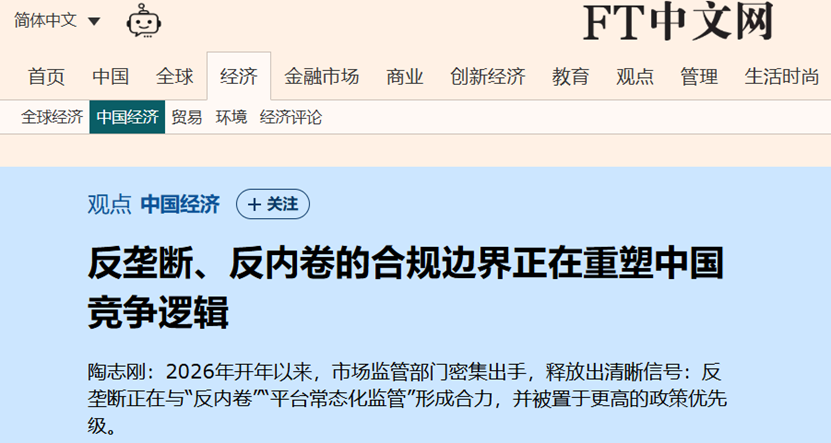
反垄断措施密集出台,《金融时报》发文称正重塑中国竞争逻辑
Huan Qiu Wang· 2026-02-12 01:01
Group 1 - The State Council's Anti-Monopoly and Anti-Unfair Competition Committee has issued guidelines for the public utility sector to prevent and curb monopolistic behaviors in water, electricity, gas, and heating services, aiming to maintain fair market competition and protect consumer and public interests [1] - The upcoming national market supervision work meeting in 2025 has prioritized "strengthening anti-monopoly and anti-unfair competition" as a key task, indicating that anti-monopoly efforts are now a crucial part of China's competitive order adjustment [1] Group 2 - In 2026, market regulatory authorities have intensified anti-monopoly enforcement actions targeting food delivery platforms, the polysilicon industry alliance, and online travel platforms, signaling a clear message that anti-monopoly is being integrated with "anti-involution" and "platform normalization regulation" at a higher policy priority [3] - The primary goal of anti-monopoly measures is to prevent monopolistic behaviors from causing systemic harm to consumers and suppliers, as monopolies can raise prices for consumers and lower earnings for upstream suppliers [3] - Unlike the reliance on judicial litigation in Europe and the U.S., China's anti-monopoly approach is primarily administrative, characterized by high efficiency, short cycles, and quick corrections, allowing early intervention to prevent long-term damage to consumers and suppliers [3]

1月物价走势保持平稳 核心CPI温和上涨态势不变
Xin Lang Cai Jing· 2026-02-11 20:52
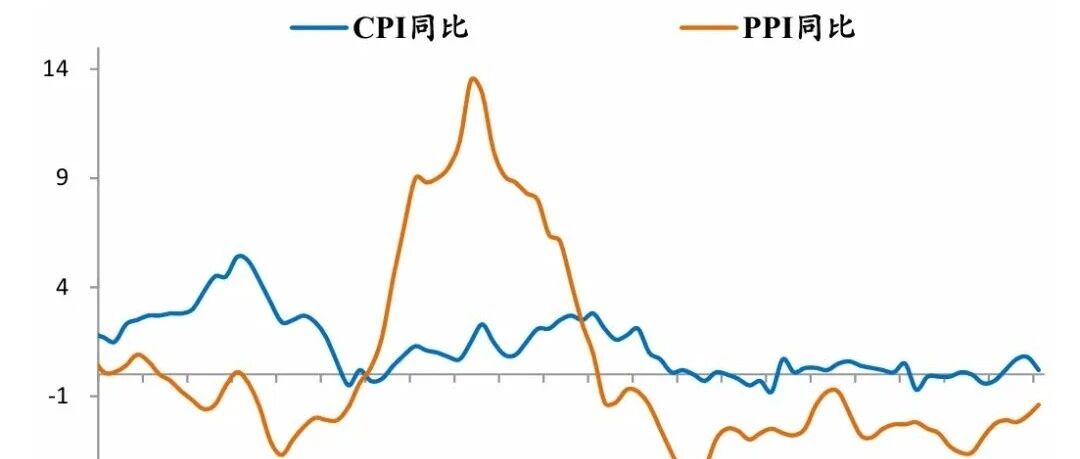
Group 1 - In January, the Consumer Price Index (CPI) increased by 0.2% year-on-year and month-on-month, primarily influenced by the Spring Festival's timing, leading to a high comparison base from the previous year [1] - The Producer Price Index (PPI) decreased by 1.4% year-on-year, but the decline narrowed by 0.5 percentage points compared to the previous month, while it increased by 0.4% month-on-month, marking the fourth consecutive month of growth [1][3] - Energy prices fell by 5.0% year-on-year, contributing approximately 0.34 percentage points to the CPI decline, with gasoline prices down 11.4% [1] Group 2 - Core CPI showed a mild increase, with a month-on-month rise of 0.3%, the highest in six months, indicating a continuous recovery in consumer demand [1] - Prices for air tickets and travel agency services rose by 5.7% and 2.0% respectively, while prices for household services, hairdressing, and entertainment tickets increased between 0.4% and 2.8% [2] - Excluding energy, industrial consumer goods prices rose by 2.6% year-on-year, with significant increases in gold jewelry prices (77.4%) and household goods [2] Group 3 - The PPI's month-on-month increase of 0.4% reflects positive changes driven by the ongoing construction of a unified national market and increased demand in certain industries [3] - Prices in the raw materials and processing industries rose by 0.7% and 0.5% month-on-month, with year-on-year declines narrowing by 0.6 and 1.2 percentage points respectively [3] - The trend of "anti-involution" is expected to continue influencing the prices of basic raw materials and industrial products in the future [3]
沪深成交不足2万亿元 周期板块轮动上行
Shang Hai Zheng Quan Bao· 2026-02-11 17:49
Group 1 - The A-share market continued to show a sideways trend, with traditional cyclical sectors like oil and petrochemicals rising, while technology sectors such as semiconductors and AI applications experienced a pullback, leading to a divergence in major index performances [1] - The Shanghai Composite Index closed at 4131.99 points, up 0.09%, while the Shenzhen Component Index fell 0.35% to 14160.93 points, and the ChiNext Index dropped 1.08% to 3284.74 points, with total trading volume in both markets reaching 198.43 billion yuan, marking the first time this year it fell below 200 billion yuan [1] Group 2 - The chemical sector showed significant activity, with the basic chemical index rising by 1.40% and accumulating over 13% gains since the beginning of the year. Notable stocks included Baichuan Co., which achieved a four-day consecutive rise, and several others that hit the daily limit [2] - Baichuan Co. reported a cumulative increase of 107% since the beginning of the year, responding to institutional inquiries about the price trend of TMP (Trimethylolpropane), which rose from 8000 yuan/ton at the end of 2025 to 15000 yuan/ton currently, driven by strong demand and supply tightness due to production adjustments [2] Group 3 - According to a report from Zhongyin Securities, the chemical industry is expected to accelerate the elimination of outdated capacity under stricter energy consumption, carbon emission, and safety standards, transitioning from scale expansion to high-quality growth during the 14th Five-Year Plan period [3] - The demand for chemical products is anticipated to maintain good growth, supported by the implementation of domestic demand expansion policies and the rapid development of downstream industries such as new energy, AI, semiconductors, and humanoid robots [3] Group 4 - Recent market trends indicate a rapid rotation among leading sectors, with value styles outperforming growth styles. Some institutions predict a potential style shift after the Spring Festival, suggesting a focus on technology growth sectors with price elasticity [4] - Historical data from 2010 to 2025 shows a high probability of style switching around the Spring Festival, typically favoring value and large-cap stocks before the holiday and shifting towards growth and small-cap stocks afterward [4]
降息降准可期,物价乍暖还寒
泽平宏观· 2026-02-11 16:07
Core Viewpoint - The article discusses the marginal improvement in domestic prices as of January 2025, driven by input factors and anti-involution policies, while still remaining at low levels. It anticipates the potential for expanding domestic demand and monetary easing measures [1][9]. Group 1: CPI Analysis - In January, the CPI increased by 0.2% year-on-year, a decrease of 0.6 percentage points from the previous month, influenced by last year's high base and weak domestic demand [5][10]. - Food prices fell by 0.7% year-on-year, with pork prices down 13.7%, indicating a significant decline in demand [5][10]. - Core CPI rose by 0.8% year-on-year, but this was a decrease of 0.4 percentage points from the previous month, reflecting weak service price growth [12]. Group 2: PPI Analysis - The PPI decreased by 1.4% year-on-year in January, but the decline was less severe than in December, indicating a narrowing of the drop [6][21]. - Input factors have led to price increases in upstream industries, particularly in non-ferrous metals, while downstream sectors remain weak due to insufficient demand [21][24]. - The PPI is expected to recover more significantly, driven by anti-involution policies and geopolitical factors affecting commodity prices [8][21]. Group 3: Future Outlook - The article forecasts a moderate recovery in prices, supported by policies such as the "old-for-new" consumption incentive, adjustments in pig production capacity, and international gold price trends [8][9]. - The central bank's monetary policy is expected to remain accommodative, with potential for interest rate cuts and reserve requirement ratio reductions to stimulate demand [27][30]. - The overall economic environment is characterized by a strong supply but weak demand, necessitating continued efforts to stabilize market expectations and enhance domestic momentum [30][31]. Group 4: Pig Cycle Analysis - The pig price in January showed a year-on-year decline of 13.7%, but the rate of decline has narrowed, indicating a potential bottoming out of the cycle [16][17]. - The current pig cycle is still in a downward trend, with production capacity adjustments beginning but not yet sufficient to drive a significant price recovery [16][17]. - The industry is experiencing increased concentration, which may lead to reduced price volatility in future cycles compared to traditional patterns [18]. Group 5: Monetary Policy Insights - The central bank's Q4 report emphasizes the need for a flexible and effective monetary policy, with a focus on using tools like interest rate cuts to support economic recovery [27][30]. - There is a notable increase in household deposits moving towards wealth management products, indicating a shift in investment preferences that could impact bank liquidity [29][35]. - Loan interest rates continue to decline, with the weighted average rate at 3.15%, reflecting ongoing efforts to lower financing costs for the economy [29][36]. Group 6: Exchange Rate Dynamics - The RMB has strengthened, reaching a midpoint of 6.91 against the USD, creating a favorable environment for capital inflows and policy flexibility [38]. - The anticipated easing of US monetary policy may further enhance China's economic positioning and open up additional policy space [38].
再再推大化工-双登共振系列
2026-02-11 15:40
Summary of Key Points from the Conference Call Industry Overview - The chemical industry is benefiting from capital inflows and carbon emission policies, with a potential reshaping of valuation systems for leading companies [1] - The 2026 carbon peak assessment will accelerate industry consolidation, enhancing profitability for leading firms and creating investment opportunities for licensed companies [1] Key Insights and Arguments - The potassium fertilizer market is stable with limited price correction potential; the government's ability to control prices is relatively weak, and import companies are less affected by policies [1][6] - Imported methanol is performing strongly in the domestic market, with prices following market trends and leading companies' quotes; companies like Baofeng and Hualu have strong competitive advantages and solid growth expectations [1][7][8] - The refrigerant industry shows clear upward price trends and optimistic valuation sentiment, suggesting it is a sector worth monitoring [1][9] - Wanhua Chemical is a benchmark in the chemical sector, with a projected net profit of approximately 16 billion in 2026, corresponding to a valuation of about 17 times its current market value [1][10] Cash Flow and Valuation Changes - Recent capital flows are increasingly directed towards cyclical sectors, including non-ferrous metals and chemicals, leading to a change in overall cash flow structures [3] - The rubber industry is experiencing short-term supply tightness, but long-term supply issues are manageable; demand is supported by the growth of all-steel tires [3][11] Impact of Carbon Emission Policies - The 2026 carbon peak assessment year will have multiple impacts on high-energy-consuming industries, including the exit of outdated capacities and the steepening of cost curves, which will widen the profitability gap between leading and lagging companies [5] Market Dynamics for Specific Products - The organic silicon market is expected to see price increases due to the exit of overseas capacities and support from carbon policies, with companies like Dongyue and Xin'an showing good elasticity [3][12] - The titanium dioxide and PVC industries are at cyclical bottoms, with potential for improvement in supply-demand relationships, although many companies are currently facing profitability pressures [13][18] Future Capacity and Demand Trends - Future capacity additions in the PVC industry are limited, indicating that capital expenditures are nearing the end of the cycle [15] - The demand for titanium dioxide is expected to stabilize, with exports potentially recovering after the removal of anti-dumping duties by India [17] Industry Outlook - The spandex industry is showing significant improvement in fundamentals, with leading companies like Huafeng Chemical and Xinjiang Chemical Fiber expected to benefit from cost advantages and price increases [19]
2026年1月CPI、PPI传递新信号
Jing Ji Guan Cha Wang· 2026-02-11 14:15
Group 1: CPI Analysis - In January 2026, the Consumer Price Index (CPI) increased by 0.2% month-on-month and year-on-year, with the core CPI (excluding food and energy) rising by 0.8% year-on-year, indicating a gradual recovery in consumer demand [1][2] - The core CPI's month-on-month increase of 0.3% in January marked a six-month high, supported by improved consumer demand and the effects of consumption promotion policies [2] - The demand for services, particularly in tourism and entertainment, has shown significant recovery, contributing to the upward pressure on prices as the Spring Festival approaches [2] Group 2: PPI Analysis - The Producer Price Index (PPI) rose by 0.4% month-on-month in January 2026, marking the fourth consecutive month of increase, while the year-on-year decline narrowed to 1.4% [1][5] - Key contributors to the PPI increase include rising prices in non-ferrous metals and certain industries influenced by investment promotion policies, such as cement and chemical manufacturing [5][6] - The overall industrial product prices remain low due to excess supply, particularly in the real estate sector, which has led to reduced demand for commodities like steel and coal [6] Group 3: Future Projections - Analysts expect the CPI growth rate to face slight pressure in the second quarter but to gradually rise in the third quarter, with an annual growth forecast of 0.6% [3][4] - The PPI is projected to turn positive after April 2026, with an expected annual growth rate of 0.5%, driven by stable oil prices and strong demand for non-ferrous metals [7]
A股近十年节后首日6涨4跌
第一财经· 2026-02-11 12:45
Core Viewpoint - The article discusses the investment strategy of holding stocks versus holding cash during the upcoming long Chinese New Year holiday, with a prevailing sentiment among institutions favoring "holding stocks" due to expectations of a spring market rally post-holiday [3][10]. Market Performance - A-shares are currently in a state of consolidation, with the Shanghai Composite Index and Shenzhen Component Index showing slight increases of 2.89% and 2.43% respectively from February 3 to February 11 [5]. - On February 11, the Shanghai Composite Index rose by 0.09% to close at 4131.99 points, while the Shenzhen Component Index fell by 0.35% to 14160.93 points [6]. Historical Trends - Over the past decade, the Shanghai Composite Index has experienced 6 increases and 4 decreases on the first trading day after the Spring Festival, with notable declines in 2017 and 2020 [7]. - The average increase for the Wind All A-shares index in the first 10 trading days after the Spring Festival from 2017 to 2025 is 3.3%, compared to an average decline of 1.3% in the 10 trading days before the holiday [8]. Investment Strategies - The strategy of holding stocks during the holiday is supported by several analysts, citing factors such as a potential recovery in market sentiment and government policies aimed at boosting domestic demand [10][11]. - Analysts suggest that the technology sector, particularly TMT (Technology, Media, and Telecommunications), tends to perform better post-holiday, with a high success rate in the first 5 and 10 trading days after the Spring Festival [8][13]. Sector Focus - Key sectors to watch include materials such as non-ferrous metals, basic chemicals, and construction materials, as well as technology fields like semiconductors and artificial intelligence, which are aligned with the "14th Five-Year Plan" [12].

黑色金属日报-20260211
Guo Tou Qi Huo· 2026-02-11 12:23
| | | | SDIC FUTURES | 操作评级 | 2026年02月11日 | | --- | --- | --- | | 螺纹 | ☆☆☆ | 曹颖 首席分析师 | | 热卷 | ☆☆☆ | F3003925 Z0012043 | | 铁矿 | な女女 | 何建辉 高级分析师 | | 焦炭 | ★☆☆ | F0242190 Z0000586 | | 焦煤 | ★☆☆ | | | 證硅 | ★☆★ | 韩惊 高级分析师 | | 硅铁 | ★☆★ | F03086835 Z0016553 | | | | 李啸尘 高级分析师 | | | | F3054140 Z0016022 | | | | 010-58747784 | | | | gtaxinstitute@essence.com.cn | 【钢材】 今日盘面震荡为主。随着春节临近,螺纹表需加速下滑,产量同步回落,库存继续累积。热卷需求有所回落,产量短期趋稳, 库存小幅累积。钢厂利润欠佳,下游承接能力不足,高炉复产放缓,铁水产量趋稳。从下游行业看,地产投资降幅继续扩大, 基建、制造业投资增速持续回落,内需整体依然偏弱,钢材出口维持高位。持续调整后盘面稍 ...
春节持股VS持币抉择:近十年节后首日6涨4跌,机构建议持股过节
Di Yi Cai Jing· 2026-02-11 12:02
Core Viewpoint - The strategy of "holding light positions during the holiday" is considered a prudent and historically reasonable approach in the current A-share market context, balancing the risks of market fluctuations before the holiday and the opportunities for participation in the post-holiday spring rally [1][8]. Market Performance Analysis - Over the past decade, the A-share market has shown mixed performance on the first trading day after the Spring Festival, with the Shanghai Composite Index rising 6 times and falling 4 times [2][3]. - The Shanghai Composite Index experienced a 2.89% increase from February 3 to February 11, while the Shenzhen Component Index rose by 2.43% during the same period [2]. - The A-share market is currently in a state of consolidation, with the four major indices showing varied performance on February 11, 2023 [2]. Historical Data Insights - Historical data indicates that the average increase for the Wind All A index in the 10 trading days following the Spring Festival is 3.3%, while the average decline in the 10 trading days before is -1.3% [4]. - The TMT sector has shown a high success rate in the post-holiday period, with a 100% success rate in the first 10 trading days after the Spring Festival [4][9]. Fund Flow and Market Sentiment - Historical trends suggest that market activity tends to contract before the holiday due to uncertainties and cash withdrawal demands, while funds typically flow back into the market post-holiday, indicating a recovery in risk appetite [5]. - Analysts suggest that the current market conditions, including government policies focusing on domestic demand and the potential for improved economic outlook, support a "hold positions" strategy during the holiday [6]. Sector Recommendations - Analysts recommend focusing on sectors that are expected to benefit from policy shifts and economic recovery, such as materials, financials, and technology, particularly in light of the upcoming political and economic events [8]. - The strategy includes maintaining positions in cyclical industries and sectors with improving profitability, such as non-ferrous metals, basic chemicals, and construction materials [8].