
股债跷跷板效应

Search documents
股债跷跷板效应显现,30年期国债收益率升破2%,30年国债ETF近期资金持续流入
Zheng Quan Zhi Xing· 2025-08-19 03:21
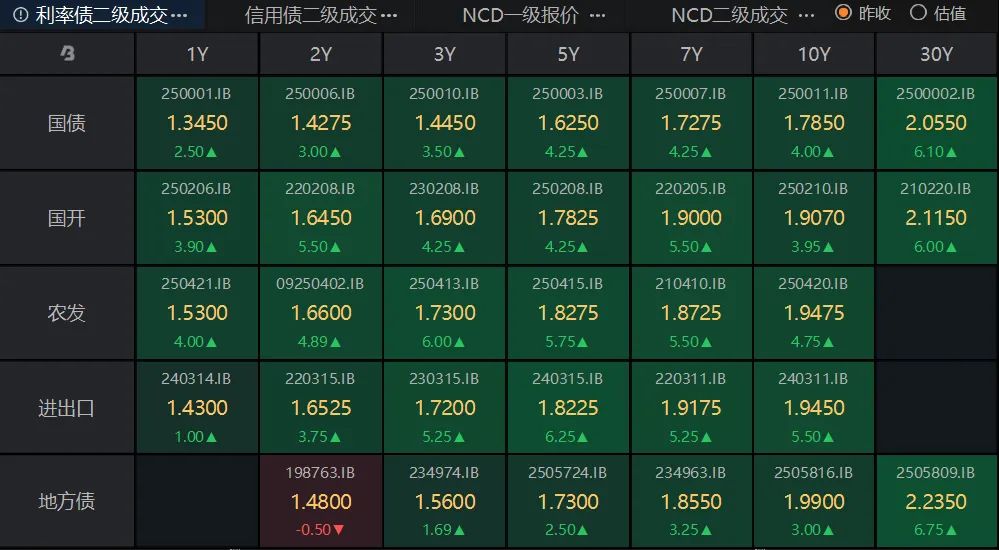
Group 1 - The bond market is experiencing a rally, with the 30-year government bond ETF rising by 0.25% and the 30-year futures contract increasing by 0.13% as of 10:05 AM [1] - The central bank conducted a reverse repurchase operation of 580.3 billion yuan with a stable interest rate of 1.40%, while yields on major government bonds have generally increased [1] - The 10-year government bond yield rose by 4.25 basis points to 1.7875%, and the 30-year bond yield increased by 6.15 basis points to 2.0555% [1] Group 2 - The bond market faced a significant decline due to the stock-bond "teeter-totter" effect, with the 10-year and 30-year bond yields rising by up to 5 basis points and 6 basis points, respectively [2] - Long-term bond yields are increasing, with the 10-year and 30-year bonds closing at 1.79% and 2.06% [2] - Despite the market adjustment, there has been a continuous inflow of funds into the bond market, with the 30-year government bond ETF's scale reaching 26.478 billion yuan, a net increase of approximately 1 billion yuan [2] Group 3 - Future bond market performance will depend on economic fundamentals, with expectations of a gradual decoupling from stock market trends [3] - Supporting factors for the bond market include ongoing accommodative monetary policy, potential resumption of government bond purchases by the central bank if yields exceed 1.8%, and a decline in bank funding costs [3] - The 30-year government bond ETF is highlighted as a flexible cash management tool and duration adjustment instrument, suitable for both short-term trading and long-term allocation strategies [3]


风险偏好提升 债市大幅回调
Qi Huo Ri Bao· 2025-08-19 00:55
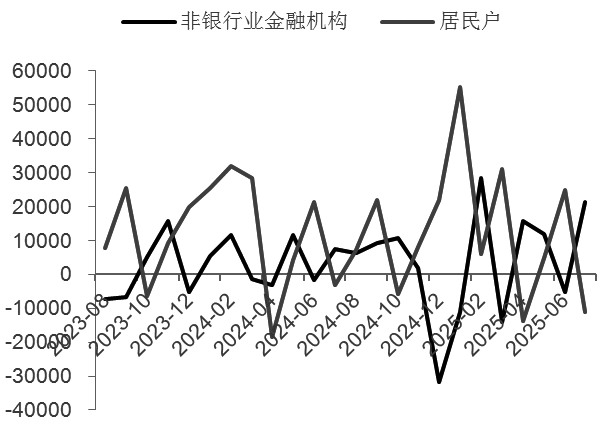
8月以来,债券市场经历大幅调整,收益率曲线呈现熊陡特征。与今年一季度债市曲线结构整体上移有 所不同,目前债市调整多是由预期而非资金面变动引发。短端债券走势较为平稳,而长债尤其是超长债 调整幅度较大,30年期期债屡创新低。 债市大幅下跌的原因,我们认为主要有两点: 一是,"反内卷"政策成为市场主线,对债市存在供给收敛、物价回升、风险偏好提升三大利空效应。政 策托底预期升温,市场表现出"强预期"的特征。同时,7月以来股市及商品市场持续上行,股市屡次突 破关键整数点位,市场呈现明显的股债"跷跷板"效应,债市资金分流压力加大。从最新公布的存款数据 可以看出,7月居民端存款减少1.13万亿元,非银存款激增2.16万亿元,居民存款搬家现象明显。 首先,7月的PMI、通胀、金融及经济数据已出炉,表现弱于预期。其中,对债市影响较大的信贷数据7 月呈现负增长,除季节性因素之外,6—7月新增信贷仍同比少增2000亿元。从月内票据利率一度接近零 这一表现看,银行冲量特征明显。 其次,从政策端看,央行日前发布的《2025年第二季度中国货币政策执行报告》(以下简称《报告》) 显示,上半年货币政策逆周期调节效果较为明显,金融总量平稳增长 ...
8.18债市午盘10年国债收益率破1.75%,利率债崩跌,市场紧急预警
Sou Hu Cai Jing· 2025-08-19 00:23
Group 1 - The bond market is experiencing a significant downturn, with the 10-year government bond yield surpassing 1.75% and approaching 1.8%, while the 30-year yield has reached 2.0375%, a four-month high [2] - The decline in the bond market is attributed to a peculiar mismatch of funds, exacerbated by a liquidity crunch due to corporate tax payments, which has outpaced the central bank's liquidity injections [2][4] - Despite the turmoil in the bond market, the stock market is thriving, with the Shanghai Composite Index breaking 3700 points, indicating a classic "stock-bond seesaw" effect where funds are flowing into equities while leaving bonds vulnerable [4][6] Group 2 - There is a silent battle among institutions in the bond market, with banks and insurance companies quietly accumulating long-term government bonds, while funds and brokerages are urgently selling off [6] - In just one week, funds have net sold 621 billion in interest rate bonds, leading to a reduction in the duration of medium- and long-term pure bond funds to 5.2 years, a three-week low [6] - The breach of the 1.75% threshold has shifted focus to the 1.8% psychological level, with a notable increase in volatility and trading activity as market participants engage in a tug-of-war [6][8]

债市回调!机构称长期配置仍有性价比
Guo Ji Jin Rong Bao· 2025-08-18 14:13
股债"跷跷板"效应明显。 8月18日,A股三大指数延续强势表现,沪指创十年新高。与此同时,国债期货跌幅持续扩大。截至下午收盘,国债期货全线下跌,30年期主 力合约跌1.33%,10年期主力合约跌0.29%,5年期主力合约跌0.21%,2年期主力合约跌0.04%。 在刘有华看来,债市调整的特征为各期限和品种的债券收益率均上行,中长端调整幅度较大,收益率曲线呈"熊陡"走势。从后续的情况来看, 短期内权益市场的持续走强对债市仍有负面影响,可能会导致债市继续震荡调整。然而,从中长期来看,由于经济下行风险仍然存在,宏观 政策和货币政策都有一定的宽松预期,因此债市的调整幅度可能会相对有限。 "本轮债市的调整与基本面背离。"徐晨曦认为,从7月经济数据来看,投资、消费增速双双放缓,大幅低于预期;工业生产亦放缓;房地产销 售、新开工同比仍在下降。货币信贷数据显示,企业和居民信贷需求双弱,社融主要靠政府发债支撑。整体来看,经济下行压力较为明显, 动能偏弱,基本面实际上利于债市,但在股市强烈的赚钱效应下,债市对基本面的反应钝化。调整至今,短端利率上行幅度较小,长端利率 上行幅度较大,而超长端由于此前交易较为拥挤,上行幅度最大。 鉴 ...
公募基金中报开始披露:有债基营业支出降了利润却大跌
Mei Ri Jing Ji Xin Wen· 2025-08-18 13:43
Core Insights - The mid-year reports from Guoyuan Securities reveal significant declines in profits for fixed-income funds, particularly bond funds, despite reduced operating expenses [1][2][3] - The overall market sentiment has shifted towards equities, leading to substantial redemptions from bond funds as investors seek better returns [3][5] Fund Performance - Guoyuan Yuan Ying Six-Month Open Bond Fund reported a profit of 4.09 million yuan in the first half of the year, down from 40.07 million yuan in the same period last year, despite a decrease in total operating expenses from 4.45 million yuan to 3.89 million yuan [2] - The fund's fair value changes were negative at -19.11 million yuan, contrasting with a positive change of 20.44 million yuan in the previous year [2] - Guoyuan Yuan Ying 30-Day Holding Bond Fund also experienced a profit drop from 8.95 million yuan to 2.65 million yuan, despite lower operating expenses [2] Investor Behavior - A high proportion of individual investors are redeeming their shares in fixed-income funds, with Guoyuan Yuan Ying Six-Month Open Bond Fund having 96.30% of its holdings from individual investors, who redeemed 34 million shares against 54.95 million shares purchased [4] - Guoyuan Yuan Ying 30-Day Holding Bond Fund also saw significant redemptions, with individual investors holding 82.72% of A shares and 98.25% of C shares, leading to substantial outflows [4] - The Guoyuan Yuan Zeng Li Money Market Fund reported a 97.36% individual investor holding, with total redemptions exceeding total subscriptions [4] Market Outlook - The bond market is expected to remain in a state of fluctuation, with fund managers suggesting that investors should seize opportunities arising from market events [3][6] - The performance of the stock market is becoming a key factor in determining bond market pricing, with potential stabilization dependent on improvements in liquidity [6]

债市情绪面周报(8月第2周):股市十年新高之际,债市情绪如何?-20250818
Huaan Securities· 2025-08-18 12:36
Report Summary 1. Report Industry Investment Rating The provided report does not mention the industry investment rating. 2. Core Viewpoints - **Hua'an Securities' View**: Amid the market style shift, there are still short - term long - trading opportunities in the bond market. Although the bond market has faced a style shift due to the strong performance of the stock and commodity markets, investors can still find long - trading opportunities such as taking advantage of the steeper curve and wider spreads, paying attention to the increased willingness of allocation investors to buy bonds when funds are loose, considering the possible short - covering of certain 30 - year Treasury bonds, and seizing the entry opportunity after the bond market correction. [2] - **Seller's View**: Only 30% of fixed - income sellers are bullish on the bond market, over 60% hold a neutral attitude, and the sentiment remains the same as last week. [3] - **Buyer's View**: The overall view of fixed - income buyers is neutral, and the sentiment index has declined. Over 80% of buyers hold a neutral view. [3] 3. Summary by Directory 3.1 Seller and Buyer Market - **Seller Market Sentiment Index and Interest - rate Bonds**: The weighted sentiment index this week is 0.21, up from last week, and the unweighted index is 0.26, unchanged from last week. 32% of institutions are bullish, 61% are neutral, and 6% are bearish. [11] - **Buyer Market Sentiment Index and Interest - rate Bonds**: The weighted sentiment index this week is 0.05, down 0.07 from last week, and the unweighted index is 0.06, down 0.097 from last week. 13% of institutions are bullish, 81% are neutral, and 6% are bearish. [12] - **Credit Bonds**: The market focuses on the "stock - bond seesaw" and "stable wealth - management scale". Due to the continuous rise of the equity market suppressing the bond market, it is recommended to shorten the duration. The wealth - management scale is stable, and the short - term liability pressure is controllable. [16] - **Convertible Bonds**: Institutions generally hold a neutral - to - bullish view this week. 77% of institutions are bullish, and 23% are neutral. [19] 3.2 Treasury Bond Futures Tracking - **Futures Trading**: As of August 15, the prices of TS/TF/T/TL Treasury bond futures contracts decreased compared to last Friday, the trading volume increased, the open interest decreased, and the trading - to - open - interest ratio increased. [24][25] - **Cash Bond Trading**: On August 15, the turnover rates of 30Y Treasury bonds, interest - rate bonds, and 10Y China Development Bank bonds all increased compared to last week. [32] - **Basis Trading**: Except for the TS contract, the basis of other main contracts narrowed. The net basis of TS/T/TL main contracts widened, and the IRR of main contracts generally increased. [44][45][47] - **Inter - period and Inter - variety Spreads**: The inter - period spreads of main contracts generally widened, and the inter - variety spreads showed mixed trends. [58][59]
周观:债市对基本面的“脱敏”性(2025年第32期)
Soochow Securities· 2025-08-18 12:01
1. Report Industry Investment Rating No relevant content provided. 2. Core Views of the Report - Despite the weak domestic fundamentals in July, the stock and bond markets deviated from the fundamentals. The stock market reflected the expectations of the fundamentals, while the bond market anticipated the reality. The central bank maintained a supportive attitude towards liquidity through continuous over - subscription of repurchase agreements, which made it difficult for bond yields to rise. It is recommended to allocate 10 - year treasury bonds when the yield reaches 1.75% [21]. - Overseas, the long - end of US Treasury bonds remained in a wide - range oscillation of 4.0 - 4.5%. The Fed may cut interest rates by 25 - 50bp in the remaining time of 2025, which could support the high valuation of US stocks and reshape the valuation of global risk assets. It is advisable to be bullish on the short - end of US Treasury bonds and gold [22][24]. 3. Summary According to the Directory 3.1 One - Week Views 3.1.1 Why the Bond Market Showed "Desensitization" - From August 11 - 15, 2025, the yield of the 10 - year treasury bond active bond rose 5.4bp from 1.691% to 1.745%. The bond market showed "desensitization" to the worse - than - expected July data such as financial data [16][17]. 3.1.2 Future Trend of US Treasury Bond Yields - Last week, the long - end of US Treasury bonds oscillated between 4.0 - 4.5%, and the term spread narrowed marginally. The US economic data in July and August showed mixed signals. The CPI data increased the expectation of interest rate cuts, while the PPI inflation accelerated. The consumer confidence index declined, and the unemployment benefit data was better than expected. The US Treasury Secretary predicted a possible 50bp interest rate cut in September, and the market's expectation of a 25bp interest rate cut in September reached 92.1% [22][25][35]. 3.2 Domestic and Overseas Data Aggregation 3.2.1 Liquidity Tracking - In the open - market operations from August 11 - 15, 2025, the total net investment was - 4149 billion yuan. The money - market interest rates generally increased slightly this week compared with last week [39][42]. 3.2.2 Domestic and Overseas Macroeconomic Data Tracking - The total commercial housing transaction area declined comprehensively. Steel prices showed mixed trends, and LME non - ferrous metal futures official prices also had mixed movements [57][59][61]. 3.3 One - Week Review of Local Government Bonds 3.3.1 Primary Market Issuance Overview - This week, 26 local government bonds were issued in the primary market, with a total issuance amount of 914.32 billion yuan, a repayment amount of 1051.68 billion yuan, and a net financing amount of - 137.36 billion yuan. Six provinces and cities issued local government bonds, with Sichuan, Qingdao, and Liaoning ranking in the top three in terms of issuance volume [68][71]. 3.3.2 Secondary Market Overview - This week, the outstanding amount of local government bonds was 52.63 trillion yuan, the trading volume was 3411.79 billion yuan, and the turnover rate was 0.65%. The yields of local government bonds across all maturities increased [87][94]. 3.3.3 This Month's Local Government Bond Issuance Plan No specific content provided other than the source. 3.4 One - Week Review of the Credit Bond Market 3.4.1 Primary Market Issuance Overview - This week, 350 credit bonds were issued in the primary market, with a total issuance amount of 2598.96 billion yuan, a total repayment amount of 2764.12 billion yuan, and a net financing amount of - 165.16 billion yuan, a decrease compared with last week [96]. 3.4.2 Issuance Interest Rates - The issuance interest rate of short - term financing bonds was 1.7348%, down 45.24bp; that of medium - term notes was 2.1890%, up 3.98bp; and that of corporate bonds was 2.0730%, down 3.47bp [109]. 3.4.3 Secondary Market Transaction Overview - This week, the total trading volume of credit bonds was 5369.15 billion yuan [111]. 3.4.4 Maturity Yields - The maturity yields of national development bonds, short - term financing bonds, medium - term notes, corporate bonds, and urban investment bonds all increased across the board this week [110][112][114]. 3.4.5 Credit Spreads - The credit spreads of short - term financing bonds and medium - term notes generally narrowed, those of corporate bonds narrowed across the board, and those of urban investment bonds showed a differentiated trend [120][125][126]. 3.4.6 Grade Spreads - The grade spreads of short - term financing bonds and medium - term notes generally narrowed, those of corporate bonds generally narrowed, and those of urban investment bonds generally widened [129][131][134]. 3.4.7 Trading Activity - This week, the top five most actively traded bonds in each bond type were listed, and the industrial sector had the largest weekly trading volume of bonds [137]. 3.4.8 Issuer Rating Changes - Only the issuer Shenzhen Investment Holdings Co., Ltd. had its rating upgraded, and there were no bonds with downgraded ratings or outlooks this week [139].

股债冰火两重天,银行热推含权产品近1个月年化收益率超6%
2 1 Shi Ji Jing Ji Bao Dao· 2025-08-18 11:03
Core Viewpoint - The recent performance of the stock market has been strong, surpassing 3700 points, while the bond market has shown increased volatility, indicating a clear stock-bond seesaw effect. Investors are shifting their focus towards the stock market, benefiting certain "fixed income + equity" products, which have shown impressive returns due to the stock market's rise [2][7]. Group 1: Product Performance - The "Yangguang Jin Zengli Le Xiang Ri Kai 1 Hao" product has recently achieved an annualized return of 6.39% over the past month, benefiting from the stock market's upward trend [7]. - The product's equity investment ratio was reported at 4.65% as of June 30, indicating a low exposure to equities, which helps in controlling risk [7][25]. - In the first half of the year, this product outperformed many of its peers, with an average net value growth rate of 1.43%, translating to an annualized return of 2.86% [9][23]. Group 2: Risk and Return Metrics - The product received a score of 73 for performance and 90 for risk control, ranking 29th out of 968 similar products, indicating strong risk management and performance metrics [9][11]. - The product's maximum drawdown since inception was only 0.25%, showcasing its risk control capabilities [17]. - The product's Sharpe ratio stands at 6.40, reflecting a favorable risk-return profile [17]. Group 3: Investment Strategy - The product primarily invests in fixed income assets (80%-100%), with a maximum equity investment of 20%, and a focus on low-volatility preferred stocks and dividend strategies [13][25]. - The use of derivatives, such as government bond futures, is employed for risk hedging, indicating a proactive approach to managing market risks [21][22]. - The product is designed for investors with a moderate risk tolerance seeking slightly higher returns, with a minimum holding period of 30 days [25].


债市突发大跌!30年期国债期货跌超1%
Zheng Quan Shi Bao Wang· 2025-08-18 10:51
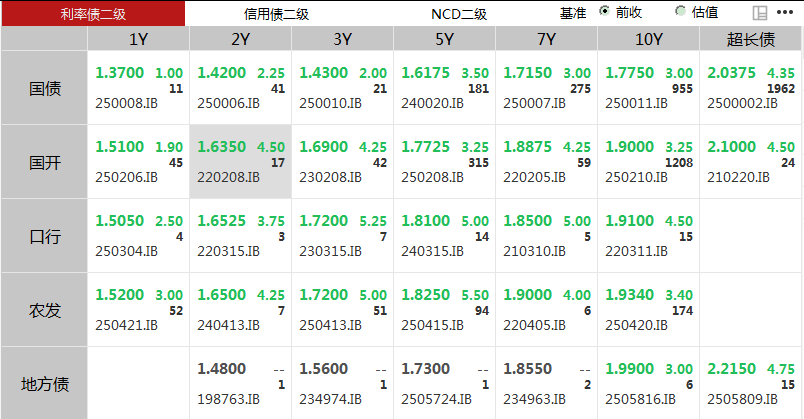
曾经备受债市追捧的30年期国债期货,随着近期权益市场持续强势走高,热度呈现出持续下降趋势。 8月18日,30年期国债期货主力合约大跌超1%,创今年4月初以来新低。10年期国债期货、5年期国债期货、2年期 国债期货等均出现不同程度下跌。 对于当前的债市,业内认为,"反内卷"主线下的股市强势表现压制债市情绪,叠加机构赎回等行为,构成债市短 期风险点。不过,债市仍存在支撑因素,趋势性逆转的概率还不高。 30年期国债期货跌超1% 近期,股债"跷跷板"效应愈发明显。在基本面和资金面并无明显变化的情况下,债市近期出现接连调整走势,市 场关注焦点转向权益市场与商品市场。 8月18日,30年期、10年期、5年期、2年期国债期货均出现下跌。其中30年期国债期货的跌幅超过1%。截至收 盘,30年期国债期货主力合约跌1.33%,10年期国债期货主力合约跌0.29%,5年期国债期货主力合约跌0.21%,2年 期国债期货主力合约跌0.04%。 银行间主要利率债收益率快速上行。截至发稿,30年期国债活跃券的到期收益率上行4.35个基点,报2.0375%,重 返2%关口;10年期国债活跃券的到期收益率上行3个基点,报1.775%;5年期国 ...
信用债ETF双周报(20250804-20250815):科创债ETF增速放缓,可转债ETF资金持续净流入-20250818
Hengtai Securities· 2025-08-18 10:37
1. Report Industry Investment Rating No information provided in the report. 2. Core Viewpoints of the Report - The convertible bond index led the market, while the sci - tech innovation bond index and the benchmark market - making credit bond index declined this period, with negative stage returns. Convertible bond - related ETFs led the gains, sci - tech innovation bond ETFs/benchmark market - making credit bond ETFs had negative current - period yields, and short - term financing ETFs had positive current - period returns [1]. - The scale of Convertible Bond ETF (511380.SH) exceeded 5 billion yuan, and the scale growth rate of sci - tech innovation bond - related ETFs slowed down. The benchmark market - making credit bond ETF still ranked first in terms of scale [1]. - The primary - market issuance of bond index sample bonds was differentiated. Short - term financing had the largest issuance volume and scale, and the coupon rates of bond index sample bonds were relatively low, with concentrated issuance terms [1]. - In the secondary market, convertible bond - related index component bonds had the largest trading volume, and the component bonds of the Shanghai Urban Investment Bond Index were traded at a discount. The credit spreads of the Shanghai Urban Investment Bond Index and the China Securities Short - Term Financing Index were relatively high but less than 40bp [1]. - In the past two weeks, the cancellation of bond issuance amounted to 1.745 billion yuan, and the Ministry of Finance and the State Taxation Administration issued an announcement on the VAT policy for the interest income of bonds such as treasury bonds [1]. - It is recommended to pay attention to Convertible Bond ETF (511380.SH) and China Securities Short - Term Financing (511360.SH) [1]. 3. Summaries According to Related Catalogs Market Conditions - **Bond Index Market Conditions**: The convertible bond index led the market. The Shanghai Investment - Grade Convertible Bond and Exchangeable Bond Index and the China Securities Convertible Bond and Exchangeable Bond Index had significant gains in the past two weeks, outperforming most pure - bond indexes. Affected by the bond market fluctuations and the stock - bond seesaw effect, the sci - tech innovation bond index and the benchmark market - making credit bond index declined. The China Securities Financial Bond Index and the Shanghai 10 - year Local Government Bond Index had the largest declines, while the Shanghai Urban Investment Bond Index, the China Securities Short - Term Financing Index, and the 0 - 4 - year Local Government Bond Index had positive stage returns due to their short durations [6]. - **Bond ETF Market Conditions**: Convertible bond - related ETFs led the gains, sci - tech innovation bond ETFs/benchmark market - making credit bond ETFs had negative current - period yields, and short - term financing ETFs had positive current - period returns [8]. - **Bond ETF Unit Net Value**: The unit net value performance of bond ETFs was differentiated. Convertible bond - related ETFs showed an upward - fluctuating trend in 2025, breaking through 13 yuan in the past two weeks. Sci - tech innovation bond - related ETFs had a downward - fluctuating net value after listing, with all net values falling below 100 yuan as of August 15, 2025. The short - term financing ETFs had a stable and rising unit net value, exceeding 112.2 yuan as of August 15, 2025 [12]. - **Bond ETF Fund Flows**: Convertible bond - related ETFs/short - term financing ETFs had continuous net inflows of funds, and local government bond - related ETFs were actively traded. The scale of Convertible Bond ETF (511380.SH) and Shanghai Convertible Bond ETF (511180.SH) increased by a total of 7.759 billion yuan in the past two weeks. The short - term financing ETF (511360.SH) had a subscription scale of 5.802 billion yuan in the past two weeks [25]. Credit Bond ETF Overview The scale of Convertible Bond ETF (511380.SH) exceeded 5 billion yuan, and the scale growth rate of sci - tech innovation bond - related ETFs slowed down. The benchmark market - making credit bond ETF still ranked first in terms of scale. The annualized yields of Convertible Bond ETF (511380.SH) and Shanghai Convertible Bond ETF (511180.SH) were 26.57% and 19.25% respectively. Among pure - bond ETFs, Credit Bond ETF Dacheng (159395.SZ) had the highest annualized yield of 2.25%. Nine sci - tech innovation bond - related ETF products had negative annualized yields after listing in July [30]. Primary Market - **Primary Issuance of Important Bond Index Sample Bonds**: The primary - market issuance of bond index sample bonds was differentiated. Short - term financing had the largest issuance volume and scale, convertible bond - related indexes had the smallest issuance scale, and the coupon rates of bond index sample bonds were relatively low. The issuance terms of bond index sample bonds were concentrated, with the weighted issuance term of China Securities Short - Term Financing sample bonds being 0.61 years and that of the Shanghai 10 - year Local Government Bond Index sample bonds being 9.18 years [33]. - **Primary Issuance of Important Bond Index Sample Bonds Since This Year**: The issuance of sci - tech innovation bond - related indexes and the Shanghai 10 - year Local Government Bond Index sample bonds accelerated in June and July. In early August, the issuance rates of most sample bonds increased, and the issuance terms of sci - tech innovation bond - related index sample bonds shortened [35]. Secondary Market - **Trading of Important Bond Index Component Bonds**: Convertible bond - related index component bonds had the largest trading volume, and the component bonds of the Shanghai Urban Investment Bond Index were traded at a discount. The trading volumes of the 0 - 4 - year Local Government Bond, Shanghai 5 - year Local Government Bond, and 5 - year Local Government Bond were less than 200 million yuan, with poor liquidity [40]. - **Spreads of Important Credit Bond Indexes**: The credit spreads of the Shanghai Urban Investment Bond Index and the China Securities Short - Term Financing Index were relatively high but less than 40bp. The yields of the Shanghai AAA Sci - tech Innovation Bond Index, Shenzhen AAA Sci - tech Innovation Bond Index, AAA Sci - tech Innovation Bond Index, Shanghai Urban Investment Bond Index, China Securities Short - Term Financing Index, and Shanghai Market - Making Corporate Bond Index all increased in the past two weeks [43]. Credit Events and Market News - **Deferred/Cancelled Bond Issuance**: The cancelled issuance amount in the past two weeks was 1.745 billion yuan. Due to large market interest - rate fluctuations in the past two weeks, 15 bonds were cancelled for issuance, with a planned issuance amount of 1.745 billion yuan [48]. - **Market News**: Since August 8, 2025, the VAT on the interest income of newly issued treasury bonds, local government bonds, and financial bonds (including those issued after August 8, 2025) has been restored. The interest income of treasury bonds, local government bonds, and financial bonds issued before this date (including the part issued after August 8, 2025) will continue to be exempt from VAT until the bonds mature [50]. Investment Recommendations The sentiment in the bond market was weak. Although the CPI increased by 0.4% month - on - month, the fundamentals still favored the bond market. The central bank's open - market operations maintained a net withdrawal in the past two weeks, the capital market was slightly tight, and bond valuation yields increased. It is recommended to pay attention to Convertible Bond ETF (511380.SH) and China Securities Short - Term Financing (511360.SH) [51].