量化宽松

Search documents
美联储现惊天逆转!“印钞机”即将重启?
Jin Shi Shu Ju· 2025-10-31 08:24
Core Viewpoint - The Federal Reserve is expected to begin expanding its balance sheet again early next year, which may alleviate investor concerns regarding the significant borrowing needs of the U.S. economy [1] Group 1: Federal Reserve Actions - The Federal Reserve officially ended its three-year quantitative tightening program, with Chairman Powell indicating that the central bank may soon become a major buyer of U.S. Treasury bonds again [1] - Analysts predict that the Fed will start purchasing enough Treasury bonds to expand its balance sheet in the first quarter of next year, likely in January or by March at the latest [1] - Monthly net purchases of $35 billion in Treasury bonds are anticipated, which could lead to a monthly expansion of approximately $20 billion in the Fed's $6.6 trillion balance sheet [1] Group 2: Market Reactions - Market anxiety has eased as expectations grow that the Fed will end quantitative tightening, alongside signs of potential improvement in budget deficits [1] - The yield on the 10-year U.S. Treasury bond has decreased significantly from a peak of 4.8% in January to below 4.1%, driven by increasing expectations of Fed rate cuts [2] - The additional yield of 10-year U.S. Treasuries over interest rate swaps has halved since April, indicating that worst-case concerns about sovereign debt supply may have been exaggerated [2] Group 3: Yield Curve Dynamics - The easing of borrowing tensions is reflected in the flattening of the government bond yield curve, with the extra yield on 30-year Treasuries over 2-year bonds dropping from 1.3% in September to 1% [3] - Efforts by policymakers in the U.S., U.K., and Japan to shorten government bond issuance terms have also alleviated concerns about an oversupply of long-term government debt [3] Group 4: Broader Economic Context - The end of quantitative tightening by the Fed is seen as a response to signs of stress in short-term financing markets, reflecting banks' desire to hold more reserves [3] - The current situation does not indicate a return to aggressive quantitative easing, which involves purchasing large amounts of government debt to inject liquidity into the financial system [3] - Despite recent positive developments, concerns about the sustainability of U.S. fiscal deficits remain, with expectations that the debt-to-GDP ratio may exceed that of Italy later in the decade [4]
美联储降息25个基点,沪指失守4000点,黄金股多数下跌
Nan Fang Du Shi Bao· 2025-10-30 11:51
Group 1: Federal Reserve Actions - The Federal Reserve announced a 25 basis point rate cut, bringing the federal funds rate target range to 3.75% to 4.00%, marking the fifth rate cut since September 2024 [2] - The Fed will complete its balance sheet reduction on December 1, indicating a pause in quantitative tightening, with mortgage-backed securities' principal being reinvested in short-term Treasury bonds [2] - Analysts suggest that the end of the balance sheet reduction is a strategic move to prevent market volatility amid tightening liquidity in the U.S. money market [2] Group 2: Market Reactions and Predictions - A-shares experienced a collective decline, with the Shanghai Composite Index down 0.73% to 3986.90, and the Shenzhen Component down 1.16% to 13532.13, with a total trading volume of 246.43 billion yuan [1] - Energy metals, steel, quantum technology, and battery sectors saw gains, while precious metals and photolithography sectors faced declines [1] - Market expectations indicate a high probability of another rate cut in December, with estimates dropping from over 90% to 60%-70% following the Fed's recent meeting [3] Group 3: U.S.-China Economic Relations - The meeting between Chinese President Xi Jinping and U.S. President Trump resulted in several agreements, including the cancellation of the "fentanyl tariff" and a one-year suspension of reciprocal tariffs on Chinese goods [6][7] - Both sides agreed to extend certain tariff exclusions and suspend the implementation of specific export controls and investigations for one year [7] - Experts believe that a successful resolution of U.S.-China trade negotiations would positively impact global capital markets and economic growth [8]
如果美国偷偷印两万亿美元,然后拿到其他国家买东西,结果会怎样
Sou Hu Cai Jing· 2025-10-30 10:04
Core Viewpoint - The article discusses the implications of the U.S. Federal Reserve potentially injecting an additional $2 trillion into the economy, highlighting both short-term benefits and long-term risks associated with inflation and the erosion of confidence in the U.S. dollar as the dominant global currency [1][3][15]. Economic Impact - The injection of $2 trillion could temporarily reduce the U.S. trade deficit by increasing imports, allowing American consumers access to cheaper goods [1]. - In the first half of 2025, U.S. import levels are expected to rise slightly due to supply chain adjustments, with the import price index showing a modest increase compared to the previous year [1]. - However, this influx of money may lead to higher prices domestically, as importers pass on costs to consumers, potentially increasing the price of imported goods by up to 10% [5]. Inflation Concerns - Historical data indicates that previous quantitative easing measures led to a peak U.S. Consumer Price Index (CPI) of 9% between 2020 and 2022, with current inflation around 3% [3]. - The additional $2 trillion could dilute the purchasing power of the dollar, exacerbating inflationary pressures as prices rise across various sectors [3][11]. Global Currency Dynamics - The article notes a growing trend among BRICS nations to reduce reliance on the U.S. dollar, with over 50% of energy trade between China and Russia now conducted in local currencies [7]. - The potential for increased dollar printing may lead to a loss of confidence in the dollar, prompting countries to reconsider their holdings of U.S. Treasury bonds [7][15]. Debt and Economic Growth - The U.S. national debt is projected to increase significantly, with interest payments expected to rise from $4 trillion over the past decade to $14 trillion in the next ten years [7]. - The article warns that continued monetary expansion could trigger a sovereign debt crisis, leading to either economic stagnation or a sudden collapse [11]. Market Reactions - The confidence in U.S. Treasury bonds is already wavering, with potential increases in bond yields and a corresponding impact on stock markets [13]. - Higher borrowing costs could lead to reduced corporate investment and an increase in unemployment rates, projected to rise above 5% [13]. Conclusion - The article concludes that while the $2 trillion injection may provide short-term relief, it also brings a host of challenges, including inflation, reduced confidence in the dollar, and potential economic instability [17].


黄金,3900美元守不住!
Sou Hu Cai Jing· 2025-10-30 04:22
Core Insights - The recent fluctuations in the gold market have led to significant buying activity, with some investors entering at high prices and facing potential losses [1][4] - The market has experienced a strong upward trend from August to October, but the current situation indicates a period of adjustment rather than a continuation of the bullish trend [3][7] - The Federal Reserve's recent interest rate decisions have influenced market sentiment, with a shift from dovish to hawkish stances impacting investor behavior [4] Market Trends - The gold price surged to $3,500 earlier this year, but subsequently dropped to $3,100, indicating a volatile market environment [2][7] - The current price range for gold is between $3,960 and $3,970, with critical support levels identified at $3,890 to $3,900 [7] - The market sentiment remains optimistic among many investors, which may suggest that the adjustment phase is not yet complete [7] Investor Behavior - Many retail investors are driven by fear of missing out (FOMO), leading them to buy at high prices despite the risks [3][4] - The psychological factors influencing investor decisions include the desire to avoid losses from missed opportunities and the pressure from seeing others profit [3] - The market is characterized by a learning curve, where investors either adapt and improve or continue to ignore risks [5]
Fed halts bond sales as Bank of England faces pressure to do the same
Yahoo Finance· 2025-10-29 20:44
Group 1 - The Federal Reserve has decided to halt its bond-selling program and has cut its Federal Funds Rate from 4.25% to 4% due to concerns over the weakening jobs market in the US [1][2] - The Federal Open Market Committee (FOMC) announced it would stop its balance sheet run-off, indicating elevated uncertainty about the economic outlook and increased downside risks to employment [2] - The Bank of England is under pressure to follow the Fed's lead in halting its active selling of UK bonds, which has been criticized for increasing government borrowing costs [3][6] Group 2 - During the pandemic, central banks engaged in quantitative easing by purchasing large amounts of bonds to support financial markets, which has now shifted to quantitative tightening [4] - The Fed's balance sheet has decreased from nearly $9 trillion in 2022 to approximately $6.6 trillion today as it allows bond purchases to run off [5] - The Bank of England's roadmap for slowing its bond sales program may be influenced by the Fed's recent decision, potentially leading to a halt in its bond sales by 2026 [6][7]
The Fed Is Ending Quantitative Tightening
Barrons· 2025-10-29 18:04
Core Points - The Federal Reserve has decided to end its quantitative tightening (QT) strategy, which involves reducing its balance sheet [1][2] - The conclusion of QT will take effect on December 1, with a commitment to support maximum employment and achieve a 2% inflation target [2] Summary by Sections - **Quantitative Tightening Details** - The Fed has been allowing assets to mature since June 2022, reversing the significant increase in its balance sheet during the COVID-19 pandemic [2] - Monthly, the Fed has permitted up to $5 billion in Treasuries and up to $35 billion in mortgage-backed securities to mature without reinvestment [2] - Over the recent months, the Fed has allowed more than $2 trillion in bonds to mature, effectively pulling money out of the financial system [2]
帮主郑重:黄金大跌慌不慌?复盘百年5次暴跌,告诉你现在该抄底还是跑路
Sou Hu Cai Jing· 2025-10-29 16:28
最近后台好多朋友找我,说打开行情软件一看黄金绿油油的,心里直打鼓:这是之前的牛市要塌了,还是人家故意"倒车"给咱上车机会啊?其实咱不用慌, 今天帮主就借着美银证券那篇研报,跟大伙唠唠历史上黄金牛市都是怎么收场的,看完你就明白现在该咋判断了。 这里帮主得跟大伙亮个观点:美银说的一个判断特别关键——只要美国没改成"正统的经济政策",没回到那种保守的财政路子上,或者美联储没真的转 成"鹰派"(就是使劲加息),那支撑黄金价格的"底子"就还在。 所以落到咱们投资者身上,策略就很明确了:别盯着短期那点涨跌慌神。要是这会儿金价短期往下调,那更可能是个"战略性买入机会",不是说牛市彻底反 转了。毕竟做投资这么多年,我一直跟大伙说"看长线、抓核心",黄金这事儿,核心逻辑没破,短期的波动反而可能是给咱捡筹码的机会。 你要是手里还拿着黄金,或者正琢磨要不要入手,也不用纠结,记住咱今天唠的这几条——看美国政策会不会变、看美联储会不会转鹰,顺着这俩方向盯, 心里就有谱了。 咱先回溯过去这百年,黄金一共经历过5次比较大的牛市,每回结束的原因都挺有代表性。最早1970年那波,是石油危机闹的,地缘政治一紧张,大家都抱 着黄金避险,可后来局势 ...

印钞机引擎预热:美联储放弃紧缩,为下一场资产泡沫铺路?
Hua Er Jie Jian Wen· 2025-10-29 13:02
Core Insights - The Federal Reserve is signaling a potential early end to its quantitative tightening (QT) policy, with Chairman Powell indicating that the reduction of the balance sheet may stop when reserves are slightly above what is deemed sufficient [1][2] - Analysts suggest a clear policy roadmap: interest rate cuts are currently happening, followed by the cessation of QT, and potentially a new round of quantitative easing (QE) starting in early 2026 [1][2] Economic Pressures - The U.S. job market is showing signs of distress, with companies announcing 946,426 layoffs this year, a 55% increase compared to the same period in 2024, marking the highest level since 2020 [2] - The housing market is under significant pressure, with searches for "mortgage assistance" reaching their highest level since the 2008 financial crisis, and current mortgage rates at approximately 6.3%, more than double the 3% rates locked in by many homeowners during 2020-2021 [2] Balance Sheet Status - The Federal Reserve's balance sheet remains far from normal levels, currently at $6.6 trillion, down only $2.2 trillion since the start of QT in June 2022, which is only a 27% reduction from pre-pandemic levels of about $4 trillion [3][6] - Powell's comments suggest a new "normal" for the balance sheet, which is 60% higher than pre-pandemic levels, indicating a shift in expectations for future monetary policy [6] QE Implications - The potential restart of QE from a high balance sheet level of $6.6 trillion, rather than a more normalized $4 trillion, could lead to double-digit inflation, as the system is still saturated with liquidity from the pandemic [7] - Investors may need to prepare for high inflation and new asset price volatility as the Fed's monetary expansion resumes [7]
美联储即将退出“疫情救市模式”,9万亿缩表工程如何软着陆?
美股研究社· 2025-10-29 10:34
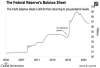
Core Viewpoint - The Federal Reserve is set to conclude its quantitative tightening program, marking the end of large-scale financial market interventions initiated in March 2020 due to the COVID-19 pandemic. The Fed aims for the market to operate independently while returning to traditional interest rate tools to stimulate or cool the economy [5][6]. Summary by Sections Quantitative Easing and Tightening - To counter the economic impact of the pandemic, the Federal Reserve implemented quantitative easing, purchasing trillions of dollars in securities to maintain low long-term interest rates, which expanded its balance sheet to nearly $9 trillion. Since 2022, the Fed has reversed these measures through quantitative tightening, reducing its balance sheet by $2.2 trillion [6]. Bank Reserves and Economic Signals - The Fed intends to reduce bank reserves from "ample" to "adequate," but determining the end point for quantitative tightening remains challenging. Currently, bank reserves account for about 10% of nominal GDP. The Fed is cautious to avoid a repeat of the 2007-2009 financial crisis, where a significant drop in bank reserves led to market volatility [7]. Market Reactions and Future Expectations - Experts suggest that the end of quantitative tightening may be interpreted by the market as a sign of the Fed's intention to boost the economy. Some traders might view this as another economic stimulus measure [7][8]. Concerns Over Liquidity - There are warnings that the current state of the money market indicates the Fed may be repeating past mistakes of excessive liquidity withdrawal. Some analysts argue that the Fed has allowed too much reserve to dissipate and should resume purchasing Treasury securities to replenish market liquidity [8]. Future Monetary Policy - The Fed has indicated that it does not currently see the need to increase its securities purchases, with predictions that it will not expand its balance sheet before the end of 2026. However, it will monitor year-end financing costs closely to respond to market pressures if necessary [8][9]. Caution in Future Interventions - The Fed's experience with previous rounds of bond purchases has made it more cautious about using quantitative easing as a monetary policy tool. Critics argue that such interventions leave a significant footprint in financial markets. The Fed is unlikely to face a situation requiring a return to quantitative easing in the foreseeable future, as current economic conditions are more likely to present inflationary pressures rather than deflationary ones [9].

FOMC会议前瞻:美联储将降息,但鲍威尔会结束缩表吗?
Sou Hu Cai Jing· 2025-10-29 09:35
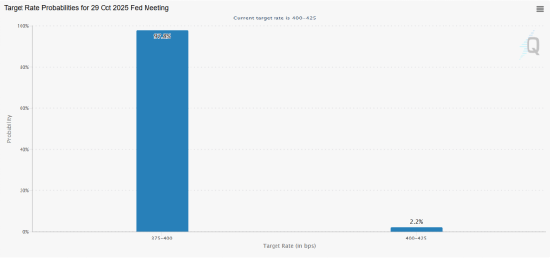
Core Points - The Federal Open Market Committee (FOMC) is expected to conclude its meeting on October 29, 2025, with a press conference by Chairman Powell at 2:30 PM ET [1] - Traders and economists are highly confident that the Federal Reserve will lower interest rates to a range of 3.75-4.00%, with a 98% probability of a 25 basis point cut [1][3] - The focus will shift to the Fed's monetary policy statement and Powell's press conference to gauge potential market changes following the expected rate cut [3] Interest Rate Expectations - The market anticipates a gradual decline in U.S. interest rates, with a 95% confidence level for another 25 basis point cut in December [3] - The FOMC's path for the remainder of the year appears set unless unexpected circumstances arise [3] - The expected rate cut may not significantly support the economy due to challenges from immigration and AI replacing human labor [3][4] Quantitative Tightening (QT) - A key point of interest in the upcoming FOMC meeting is whether the Fed will announce an end to its QT program, which involves allowing certain debt holdings to mature and reducing the balance sheet [5] - Ending QT could be perceived as a stimulus to the economy, potentially boosting risk-sensitive assets like equities and high-yield currencies while negatively impacting bonds and the dollar [6] Economic Commentary - Fed officials express caution regarding further rate cuts, indicating limited space for additional easing unless there is a deliberate shift towards inappropriate loosening [8] - Concerns about inflation and inflation expectations are highlighted by various Fed officials, suggesting a careful approach to policy adjustments [8] Currency Market Analysis - The USD/JPY currency pair is seen as a pure reflection of U.S. economic trends, with recent price action indicating a potential downward movement towards the 150.00 support level [9] - Any unexpected actions from the FOMC or the Bank of Japan could invalidate current technical strategies [9]