悦己消费

Search documents
上海:支持开发原创IP 推动数字娱乐等领域IP与生产制造联动
news flash· 2025-05-21 12:12
Core Viewpoint - The Shanghai Municipal Government is implementing a special action plan to boost consumption, focusing on the development of original intellectual property (IP) and promoting the integration of digital entertainment IP with manufacturing sectors [1] Group 1: Support for Original IP Development - The government supports the development of original IP to enhance consumer experiences and drive economic growth [1] - There is an emphasis on linking traditional cultural elements, such as classical gardens and unique districts, with contemporary IP like national trend animation and cultural heritage [1] Group 2: Promotion of Themed Cultural Projects - The initiative encourages the creation of themed cultural tourism shows that incorporate unique local IP [1] - Support is provided for the development of health and wellness industries, interest courses, stress relief activities, and pet companionship services [1] Group 3: Enhancement of Night Economy - The plan aims to improve the quality of the night economy by creating distinctive nighttime consumption areas and themed markets [1] - There is a strong push for the development of "night school economy" to attract consumers during evening hours [1] Group 4: Encouragement of Niche and Original Brands - The government is promoting the establishment of niche brands and original designer brands to diversify the market [1] - The initiative also encourages the healthy development of the "two-dimensional economy," which is related to anime and related cultural products [1]
英大证券晨会纪要-20250521
British Securities· 2025-05-21 03:01
Core Views - The report indicates that the recent 10 basis points reduction in the Loan Prime Rate (LPR) is expected to stimulate consumption and economic recovery, which is favorable for the A-share market [3][9][11] - The market is experiencing a collective rise, driven by consumer policies and the anticipation of the 618 shopping festival, particularly benefiting sectors like beauty care and retail chains [3][9][10] A-share Market Analysis - On May 20, the LPR was lowered for the first time this year, with both the 1-year and 5-year LPR down by 10 basis points, alongside a reduction in deposit rates by major banks, signaling further liquidity easing [3][9][11] - The market showed collective gains on Tuesday, with significant activity in beauty care and retail sectors, reflecting a positive response to consumption policies [3][9][10] - Despite the overall market rise, there is a divergence in high-priced stocks, indicating potential volatility and a continuation of a fluctuating market pattern [4][10] Sector Performance - The beauty care sector saw substantial gains, driven by ongoing government support for consumption upgrades and increasing consumer demand for beauty products [7][9] - Consumer stocks remain active, with food and beverage sectors continuing to perform well, suggesting that domestic consumption will be a key driver for economic recovery in 2025 [7][9] - The cultural media sector is also on the rise, with advancements in AI technology benefiting downstream applications in gaming and media, indicating a positive outlook for these industries [8][9] Investment Strategy - The report advises caution against blindly chasing high-performing stocks and suggests gradually reducing positions in stocks that have seen significant gains [4][5] - It emphasizes focusing on high-quality stocks with stable performance and reasonable valuations, particularly in sectors like technology growth and consumer recovery [4][10] - The report highlights the potential for mergers and acquisitions as a theme for investment, recommending early positioning in stocks with restructuring expectations [4][10]
期指:上涨后短线或重回震荡
Guo Tai Jun An Qi Huo· 2025-05-21 02:22
金 融 期 货 研 究 | | | 毛磊 | | | 投资咨询从业资格号:Z0011222 | | maolei@gtht.com | | | --- | --- | --- | --- | --- | --- | --- | --- | --- | | | 【期指期现数据跟踪】 | | | | | | | | | 期指数据 | | | | | | | | | | | 收盘价 | 涨跌幅% | 差 基 | 成交额-亿 | 成交量 | 变 动 | 持仓量 | 变 动 | | 沪深300 | 3898.17 | ↑0.54 | | 2016.4 | | | | | | IF2506 | 3865.4 | ↑0.63 | -32.77 | 608.4 | 52572 | ↑3690 | 150105 | ↑666 | | IF2507 | 3825.6 | ↑0.66 | -72.57 | 24.9 | 2176 | ↓308 | 2719 | ↑323 | | IF2509 | 3795 | ↑0.62 | -103.17 | 151.1 | 13301 | ↓855 | 69475 | ↑761 | | IF2 ...
钛媒体科股早知道:这类经济作为“悦己消费”的典型,如今正迈向高质量发展阶段
Tai Mei Ti A P P· 2025-05-21 00:13
Group 1: Intelligent Robotics and Healthcare - The collaboration between Huawei, Zhiyuan Robotics, and Zhongjian Technology focuses on humanoid robots for healthcare, leveraging computing power, large model platforms, data collection, and application scenarios [2] - The aging population presents unprecedented opportunities for the intelligent healthcare robot industry, which is becoming a crucial force in implementing the Healthy China strategy [2] - According to Founder Securities, the healthcare robot industry is entering a period of technological integration and scene implementation, providing smarter and more efficient solutions for elderly care [2] Group 2: AI Agent Market Growth - Microsoft is developing a new service called "Tenant Copilot" to assist tenants in creating AI agents that can interact and work like humans, with an announcement expected at the upcoming developer conference [3] - The global AI Agent market is projected to grow from $5.1 billion in 2024 to $47.1 billion by 2030, with a compound annual growth rate (CAGR) of 44.8% [3] - Major companies like Microsoft, Google, Salesforce, and others are actively promoting the commercialization of AI agents, indicating a broad market potential [3] Group 3: Low-altitude Economy - The first customized low-altitude sightseeing route in Shanghai has been launched, showcasing the potential of the low-altitude economy [3] - The low-altitude economy is gaining traction with government policies and financial support, including special bonds and investment funds, facilitating its industrialization [4][5] - Technological advancements in eVTOL certification and AI drones are enabling breakthroughs in various applications, supporting the large-scale operation of the low-altitude economy [5] Group 4: Pet Economy - The pet economy is evolving towards high-quality development, with consumer demand shifting from basic food to premium services [6] - The urban pet consumption market is expected to exceed 404.2 billion yuan by 2027, with a CAGR of 12.6% from 2015 to 2027 [6] - The pet industry in China is experiencing significant growth, with a focus on professionalization and diversification, indicating a vast market potential [6]


看老铺黄金、菜百股份、曼卡龙如何逆势增长
Sou Hu Cai Jing· 2025-05-18 13:25
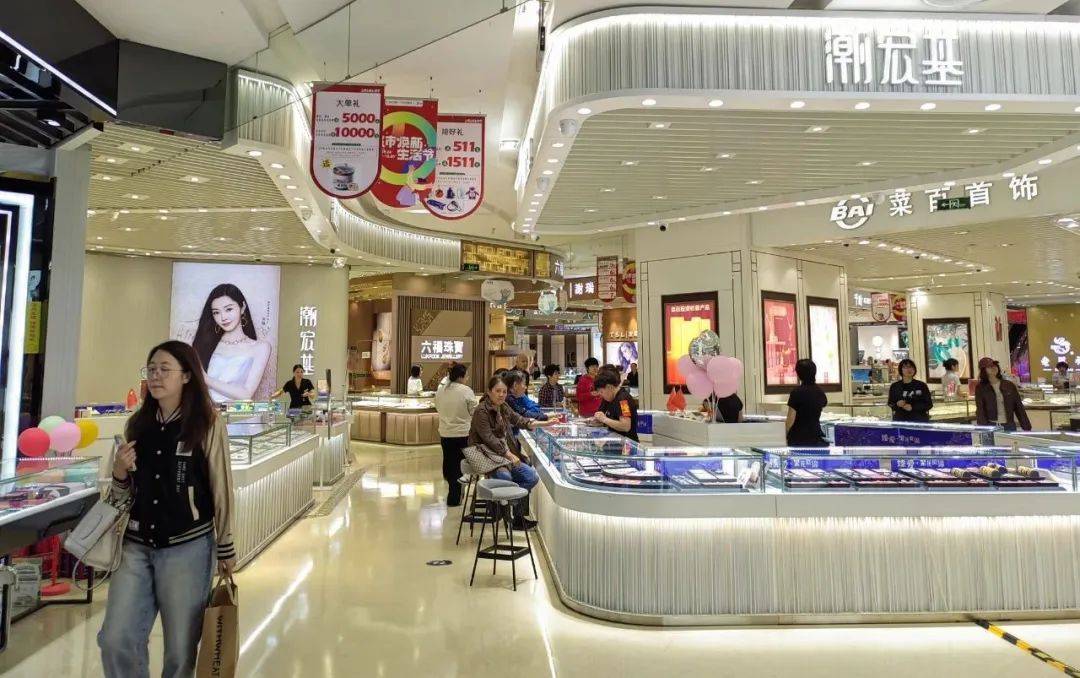
Industry Overview - In 2024, international gold prices continue to rise, while consumer demand is suppressed, leading to significant challenges for the gold and jewelry industry. More than half of the listed companies in this sector reported declines in revenue and net profit, with major brands like Chow Tai Fook and Chow Sang Sang also experiencing store closures [1][3] - According to the China Gold Association, gold consumption in China for the first quarter of this year was approximately 290 tons, a year-on-year decrease of 5.96%. Gold jewelry consumption was about 135 tons, down 26.85% year-on-year, indicating a dual pressure from high costs and weak terminal sales [1] Company Performance - Despite the overall industry pressure, three companies—Lao Pu Gold, Caibai Co., and Mankalon—have achieved growth through differentiated strategic positioning and precise market demand capture [3] - Lao Pu Gold has successfully transitioned gold from an investment product to a luxury item by combining traditional culture, craftsmanship, and modern design. In 2024, its revenue from gold products reached 9.787 billion yuan, accounting for 99.9% of total revenue, with a significant gross profit increase of 162.9% to 3.501 billion yuan [5] - Caibai Co. has seen a 45.28% year-on-year increase in revenue from precious metal investment products, reaching 12.906 billion yuan, which constitutes 63.8% of total revenue. The company has also enhanced product value through cultural IP, with cultural product sales growing by 40.87% [8] - Mankalon's online revenue reached 1.293 billion yuan in 2024, accounting for 54.83% of total revenue, with a year-on-year growth of 40.76%. The company has adopted a fast-fashion model, focusing on lightweight and affordable designs that appeal to the younger generation [9] Market Trends - The consumption attributes of gold and jewelry are undergoing a fundamental shift, moving from traditional wedding and value preservation needs to self-consumption, cultural consumption, and investment preservation. This shift allows companies to target specific market segments effectively [10] - The integration of channels and digital capabilities is becoming a key competitive advantage. While Lao Pu Gold focuses on offline sales, it achieved significant online sales during major shopping events, indicating the importance of both online and offline channels [10][11] - Companies are also upgrading their supply chain and organizational capabilities to ensure product innovation and operational efficiency. Lao Pu Gold relies on a strong R&D team, while Mankalon utilizes a flexible supply chain for rapid product iteration [11] Future Directions - The gold and jewelry industry is expected to face increased differentiation by 2025. Companies should focus on enhancing brand value by shifting from selling material to selling culture, integrating products with narratives that resonate with younger consumers [12] - Building a comprehensive channel ecosystem is essential, transforming offline stores into experience centers while leveraging online platforms for customer engagement and sales growth [12] - Companies need to balance investment and consumer demand by dynamically adjusting product structures, promoting investment products during price increases, and exploring value-added services to enhance customer loyalty [12][13]


中国男人消费不如狗的时代,一去不复返了?
商业洞察· 2025-05-17 09:25
Core Viewpoint - The article discusses the shift in male consumer behavior from spending primarily on relationships to focusing on self-consumption, indicating the rise of a new economic trend termed "He Economy" [3][15][34]. Group 1: Changing Male Consumer Behavior - In recent years, male consumers have begun to prioritize self-spending over relationship-oriented purchases, marking a significant shift in consumption patterns [3][15]. - The percentage of men choosing not to give gifts during traditional romantic holidays has increased, with over 30% opting out during the 2024 520 festival [15]. - The average age of first marriage for men in China has surpassed 30, reflecting a declining willingness to marry among younger generations [15][42]. Group 2: Economic Impact and Market Trends - The male consumer market is projected to exceed 6 trillion yuan by 2025, with a compound annual growth rate of nearly 10% [20]. - Male online shopping expenditure has reached an average of 10,025 yuan per year, surpassing that of female consumers [15]. - The success of products and services targeting male interests, such as gaming and fitness, indicates a growing market for male-oriented consumption [17][21]. Group 3: Emerging Consumption Categories - Categories such as technology products, fitness equipment, and skincare for men are experiencing significant growth, with male consumers increasingly willing to invest in these areas [17][25]. - The rise of "He Economy" is prompting brands to rethink their marketing strategies to better cater to male consumers' interests and lifestyles [34]. - The popularity of products like the game "Black Myth: Wukong," which sold over 29 million copies, highlights the increasing engagement of male consumers in entertainment and gaming [21]. Group 4: Cultural Shifts and Future Outlook - The article draws parallels between current trends in China and historical shifts in Japan, where male consumers began to prioritize personal interests over traditional relationship spending [36][41]. - The concept of "lonely consumption" is emerging, where men focus on self-satisfaction and personal enjoyment rather than societal expectations [35][44]. - As the market transitions from an incremental to a stock-based economy, the untapped male consumer segment presents new opportunities for brands willing to adapt [46].

投资大家谈 | 景顺长城科技军团5月观点
点拾投资· 2025-05-16 04:28
Core Viewpoint - The article emphasizes the potential investment opportunities in China's technology sector, particularly in AI, domestic demand, and self-sufficiency, amidst ongoing geopolitical tensions and economic uncertainties [2][3][4]. Group 1: Investment Opportunities in Technology - The rise of China's technology industry has become a focal point in global capital markets, with significant advancements in AI boosting market confidence [2]. - The AI sector is expected to see substantial growth, with TSMC projecting a doubling of AI revenue by 2025 and a compound annual growth rate (CAGR) exceeding 45% from 2024 to 2029 [4]. - Companies involved in AI applications and related technologies are identified as having clear investment opportunities, particularly those focusing on supply chain security and domestic alternatives [5][6]. Group 2: Economic Policy and Market Dynamics - Strong policy support for consumption and high-quality development is anticipated, with a focus on stimulating domestic demand [3]. - The current A-share market is viewed as undervalued, suggesting that structural opportunities exist, particularly in sectors aligned with new productive forces [3]. - The article highlights the importance of monitoring policy responses to economic changes, indicating that strategic decisions by policymakers will be crucial for market direction [2]. Group 3: Specific Sectors of Interest - The automotive sector is highlighted for its rapid growth, with domestic brands increasing market share from 38% in 2015 to 61% in 2024, and exports rising significantly [16]. - The article notes that the semiconductor, advanced materials, and high-end equipment industries have reduced their reliance on foreign markets, indicating strong domestic growth potential [8]. - Investment opportunities are also identified in the healthcare sector, driven by an aging population and the increasing demand for innovative medical solutions [13]. Group 4: Market Resilience and Future Outlook - Despite uncertainties from U.S.-China trade tensions, China's economic resilience is noted to be stronger than during previous trade conflicts, with a shift towards high-end industries [18]. - The article suggests that the current market downturn presents favorable investment opportunities in high-quality companies within core industries [8]. - The focus on AI applications and infrastructure is expected to drive significant advancements and investment returns in the coming years [12].

24&25Q1消费板块综述:新消费方向崛起
Xinda Securities· 2025-05-16 02:30
Investment Rating - The investment rating for the light industry manufacturing sector is "Positive" [2] Core Insights - Overall consumer demand remains weak, but there are opportunities in specific segments where product and channel transformations can enhance market share, and brand recognition or performance recovery is expected [8] - The pet food segment shows high potential with strong consumer education barriers, brand loyalty, and significant single product effects [8] - The baby care market is fragmented, with strong brands rapidly increasing market share through cost-effectiveness and popular products, heavily relying on online sales [8] - Domestic second-tier brands in sanitary napkins and toothpaste are gaining market share, utilizing platforms like Douyin for marketing and channel empowerment [8] - The trend of innovative products and brand rejuvenation in the trendy toy sector is accelerating, with companies like Pop Mart and Blokus experiencing rapid revenue growth [8] Summary by Sections 1) Product & Channel Transformation - Baiya Co. reported a significant increase in revenue and is expected to see a gradual improvement in its profitability model [9] - Dengkang Oral Care's revenue growth exceeded expectations, with a sustainable improvement in profitability [9] - Runben Co. experienced strong revenue growth driven by new product launches, particularly in the sunscreen category [9] - Zhongchong Co. is successfully transforming its brand, with expectations of over 40% growth in its flagship product [9] - Companies in the trendy toy sector are well-positioned to benefit from consumer trends and new product launches [9] 2) High Competitive Barriers - Guibao Pet's revenue and profit growth exceeded expectations, driven by strong brand performance and successful high-end product launches [10] - The overall industry remains vibrant, with companies optimizing their product and channel structures [10] 3) Performance Recovery Expected - Chenguang Co. has underperformed due to a weak consumer environment, but recovery is anticipated if market conditions improve [10] - The company is focusing on enhancing its IP product strategy, which is expected to contribute to new growth points [10]




24、25Q1消费板块综述:新消费方向崛起
Xinda Securities· 2025-05-16 01:35
Investment Rating - The investment rating for the light industry manufacturing sector is "Positive" [2] Core Insights - Overall consumer demand remains weak, but there are opportunities in specific segments where product and channel transformations can enhance market share, and brand recognition or performance recovery is expected [2][8] - The pet food sector shows high potential with strong consumer education barriers, brand loyalty, and significant single product effects [2][8] - The baby care market is fragmented, with leading brands rapidly increasing market share through cost-effectiveness and popular products, heavily relying on online sales [2][8] - Domestic second-tier brands in sanitary napkins and toothpaste are gaining market share, utilizing platforms like Douyin for traffic generation and empowering other platforms and offline markets [2][8] - The trend of innovative products and brand rejuvenation in the trendy toy sector is accelerating, with companies like Pop Mart and Blokus experiencing rapid revenue growth [2][8] Summary by Sections 1) Product & Channel Transformation - Baiya Co. reported a significant revenue increase of 39% in Q4 2024 and 30% in Q1 2025, with a strong performance in e-commerce and a positive outlook for its probiotic series [3][9] - Dengkang Oral Care also showed robust growth, with a 39% increase in Q4 2024 and 19% in Q1 2025, benefiting from an optimized product structure and strong online sales [3][9] - Runben Co. experienced a 34% revenue increase in Q4 2024 and 44% in Q1 2025, driven by the rapid launch of new products [4][9] - The trendy toy sector, represented by companies like Blokus and Pop Mart, saw revenue growth of 156% and 278% respectively, indicating a strong market presence [4][9] 2) High Competitive Barriers - Guibao Pet's revenue and profit exceeded expectations, driven by strong growth in its proprietary brand and successful high-end product launches [10] - The overall industry remains buoyant, with companies optimizing product and channel structures, leading to sustained revenue growth and improved profitability [10] 3) Performance Recovery Expected - Chenguang Co. reported lower-than-expected performance due to a weak consumer environment, but recovery is anticipated if market conditions improve [10] - The company is focusing on enhancing its IP product strategy, which is expected to contribute to new growth points [10]



「男人消费不如狗」的时代,一去不复返了?
36氪· 2025-05-14 14:26
Core Viewpoint - The article discusses the emerging male consumer market, highlighting a shift from traditional spending on relationships to self-focused consumption, termed "self-indulgent consumption" or "he economy" [4][5][18]. Group 1: Changing Consumption Patterns - In recent years, male consumers have shifted their spending focus from relationship-based purchases to self-oriented ones, indicating a new consumption mindset [5][18]. - Data from iMedia shows that in 2024, over 30% of men chose not to give gifts during traditional romantic holidays, marking a significant change in consumer behavior [18]. - The average age of first marriage for men is projected to exceed 30 by 2025, reflecting a decline in marriage intentions among younger generations [19]. Group 2: Growth of Male Consumer Market - The male consumer market is expected to surpass 6 trillion yuan by 2025, with a compound annual growth rate of nearly 10% [23]. - Men are increasingly spending on interests such as sports, gaming, and technology, becoming a significant new consumer force [20][22]. - The success of the game "Black Myth: Wukong," which sold over 29 million copies and generated 9 billion yuan in revenue, underscores the rise of male interest-driven consumption [27]. Group 3: Brand Adaptation and Market Opportunities - Brands are beginning to recognize the importance of understanding male consumer interests and lifestyles to tap into the "he economy" [42][43]. - The rise of "lonely consumption" reflects a broader trend where men prioritize personal enjoyment and self-care over traditional relationship-based spending [44][51]. - The popularity of products targeting single men, such as the "one-person meal" series by NetEase, indicates a growing market for tailored offerings [51][53]. Group 4: Implications for Future Consumption - As the market transitions from an incremental growth phase to a more mature stage, the male consumer segment presents a new blue ocean opportunity for brands [56]. - Companies must adapt their marketing strategies and product offerings to align with the evolving preferences of male consumers, focusing on self-expression and personal interests [56][57].