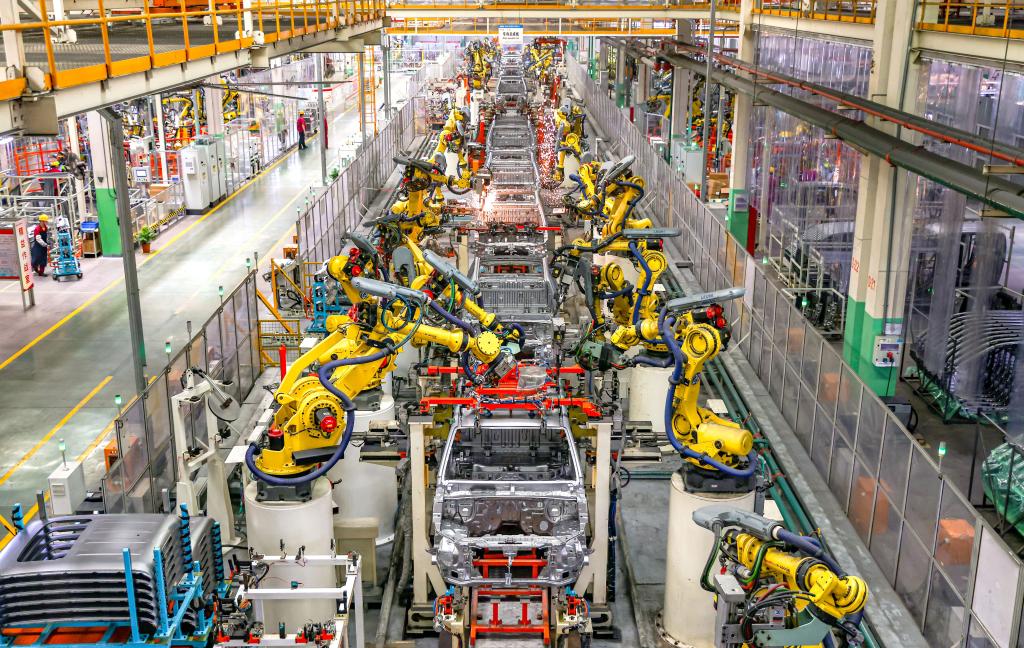
绿色转型

Search documents
专访申万宏源赵伟:向“改革”要红利,这些动作可重点关注
Nan Fang Du Shi Bao· 2026-01-22 04:50
Group 1 - The core viewpoint of the article emphasizes that 2026 marks the beginning of China's "14th Five-Year Plan," which will accelerate reforms and development, focusing on areas such as the construction of a unified market, social welfare reforms, and green transformation [2][5] - The article highlights that the "14th Five-Year Plan" aims to optimize traditional industries while fostering emerging and future industries, with a focus on strategic sectors like new energy, new materials, and aerospace [6][7] - It discusses the shift in focus from the proportion of primary, secondary, and tertiary industries to prioritizing technological innovation and R&D investment, indicating a transition from labor-intensive industries to high-tech sectors [7][8] Group 2 - The article outlines the need for supply-demand adaptation in industrial structure adjustments, emphasizing the "anti-involution" policy to address the oversupply in manufacturing [8] - It mentions the proposal for "moderately advanced new infrastructure construction," which includes the development of information communication networks and major technological infrastructure, reflecting the rapid expansion of new infrastructure's scope [9][10] - The article details the financial and regulatory support for new infrastructure, including increased policy financial tools and optimized central budget investments to enhance the effectiveness of fiscal support [11]

无人矿卡部署总量已达4000台 “智慧矿山”商业效益初显
Zhong Guo Jing Ying Bao· 2026-01-22 03:34
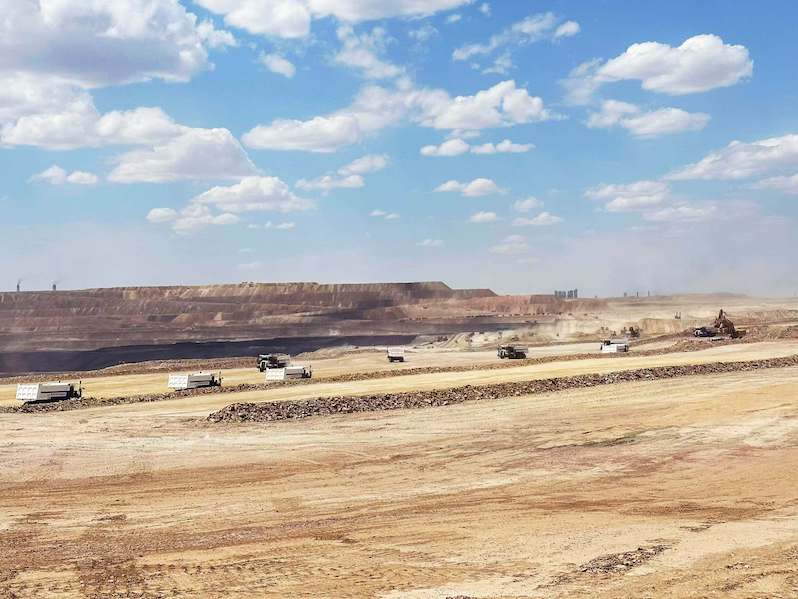
Core Insights - The article highlights the rapid advancement and increasing adoption of autonomous mining trucks in China's open-pit mining sector, emphasizing their efficiency and safety benefits [2][4][6]. Industry Growth and Trends - The number of autonomous mining trucks in China's open-pit coal mines is projected to grow from 88 units in 2020 to over 4,000 units by 2025, marking 2025 as the year of large-scale application for autonomous mining technology [2][8]. - The penetration rate of autonomous mining technology is expected to further increase in 2026 and beyond, with a focus on original design, electrification, and full automation [12][13]. Efficiency and Safety Improvements - Autonomous mining technology addresses significant industry challenges, such as high operational costs, safety risks, and low productivity, by enabling stable operations in extreme environments [4][5]. - Compared to manual driving, autonomous systems can operate continuously, overcoming human physiological limits and significantly reducing the risk of accidents [5][7]. Technological Advancements - The autonomous mining trucks have achieved operational efficiency comparable to manual driving, with a long-term goal of reaching 120% efficiency of manual operations [7][9]. - The technology has been validated in various extreme conditions, including high altitudes and severe weather, showcasing its adaptability [5][6]. Business Model Evolution - The industry is transitioning from a heavy asset model to a lighter asset service model, with companies focusing on providing autonomous driving technology and services rather than owning the vehicles [9][10]. - The shift to a "driverless as a service" model is redefining operational efficiency and resilience in mining transportation [9][10]. Green Transition - The integration of autonomous driving with electrification is driving the mining industry towards a greener transformation, aligning with national goals for sustainable development [12][13]. - The use of electric autonomous trucks is expected to significantly reduce carbon emissions, with one company reporting a reduction of nearly 11,000 tons of carbon [13]. International Expansion - Chinese autonomous mining technology is expanding into international markets, particularly Australia, where local partnerships are being formed to meet stringent operational standards [14][15]. - The strategy includes collaboration with both international and domestic manufacturers to enhance the global competitiveness of China's high-end equipment manufacturing [15].
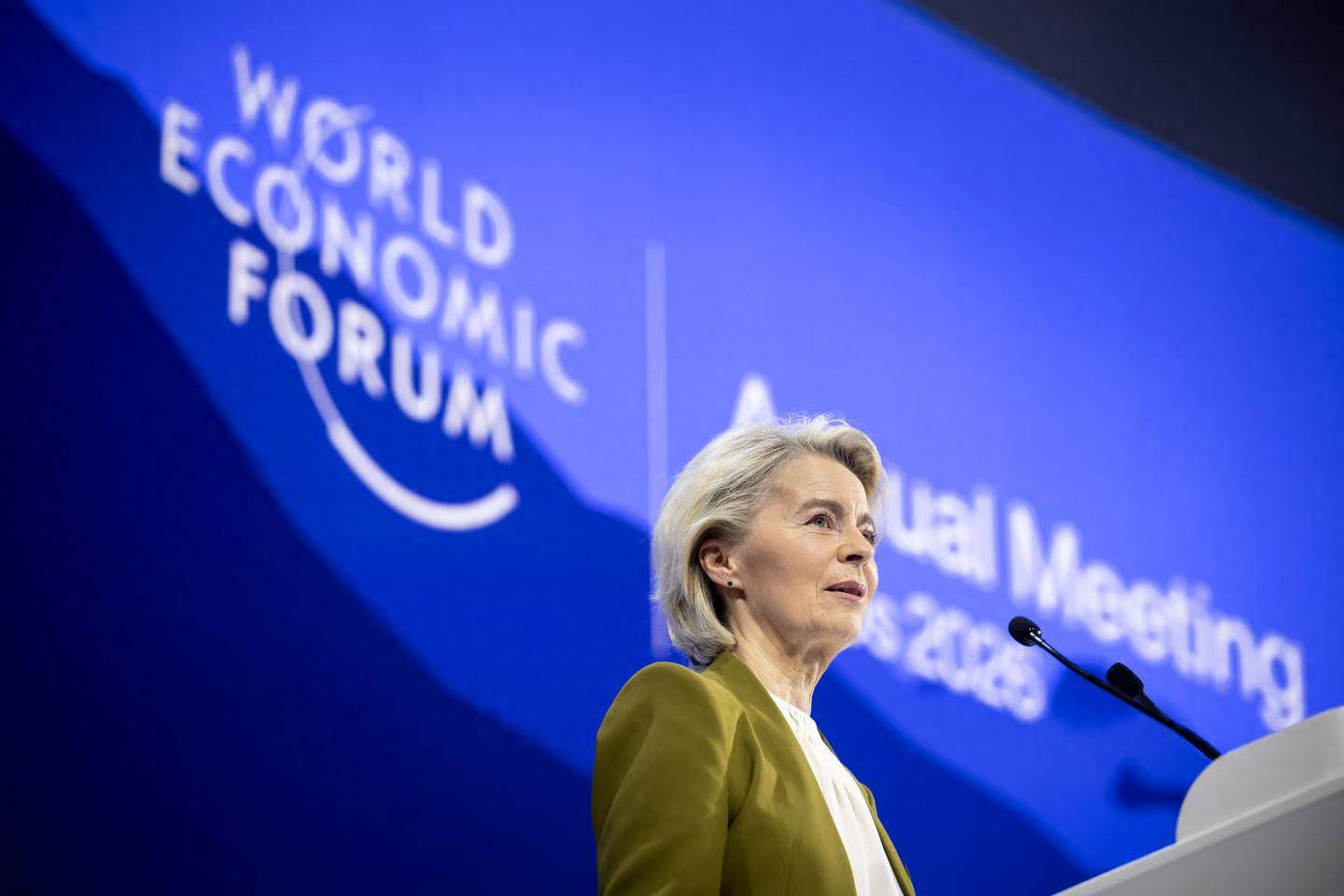
炸锅!冯德莱恩宣言:旧秩序已死,欧洲从此不再听从美国指挥!
Sou Hu Cai Jing· 2026-01-22 01:51
Core Viewpoint - The European Union (EU) is asserting its sovereignty and independence in response to U.S. tariffs and demands regarding Greenland, signaling a shift in transatlantic relations and a move towards strategic autonomy [1][3][5]. Group 1: EU's Response to U.S. Actions - EU President Ursula von der Leyen emphasized that Greenland's sovereignty is non-negotiable and criticized the U.S. for using tariffs to pressure allies into selling territory [1][3]. - The EU plans to invest in Greenland's infrastructure to strengthen economic ties and reduce reliance on the U.S. [3][5]. - A proposed "Arctic Security Group" involving the UK, Canada, Norway, and Iceland aims to enhance regional security without U.S. involvement [3][5]. Group 2: Internal EU Dynamics - There are differing opinions within the EU, with France advocating for immediate retaliatory tariffs against U.S. products, while Nordic countries prefer negotiation [3][5]. - A summit is scheduled for January 22 to decide on the EU's response strategy [3]. Group 3: Strategic Initiatives - The EU is looking to expand trade agreements with countries in South America, India, Indonesia, and Mexico to diversify its economic partnerships [5]. - A new plan focusing on decarbonization and competitiveness aims to lower energy costs in Europe, making it less attractive for companies to relocate to the U.S. [5]. - Increased defense spending and military collaboration are planned, with a focus on developing indigenous capabilities in response to perceived U.S. neglect [5][7]. Group 4: Market Reactions - Following von der Leyen's speech, European stock indices remained stable, indicating market anticipation for the upcoming summit and further developments [7].
越秀资本双轮驱动年赚34亿增50% 投资收益26亿拟10亿增持北京控股
Chang Jiang Shang Bao· 2026-01-22 00:06
Core Viewpoint - Under the dual drive of investment and new energy businesses, Guangzhou State-owned Assets' diversified financial platform, Yuexiu Capital, is expected to achieve significant profit growth in 2025, with net profit projected to increase by 50% to 60% year-on-year [1][4]. Group 1: Financial Performance - Yuexiu Capital forecasts a net profit attributable to shareholders of 3.441 billion to 3.67 billion yuan for 2025, representing a year-on-year growth of 50% to 60% [1][4]. - The company's net profit after deducting non-recurring gains and losses is expected to be between 1.745 billion and 1.974 billion yuan, reflecting a growth of 20% to 35% [1][4]. - A one-time gain of approximately 2.588 billion yuan is anticipated due to a change in accounting treatment for certain equity assets [1][7]. Group 2: Business Strategy and Operations - Yuexiu Capital has a diversified financial service system with a core industry structure of "financing leasing, non-performing asset management, investment management + strategic investment in CITIC Securities" [3]. - The company is focusing on core regions and key sectors, with 53% of new investments in Guangdong Province and the Yangtze River Delta region, and 63% in green, inclusive, and technology sectors in the first half of 2025 [3]. - The new energy business has become a key driver of performance growth, with a total installed capacity of 15.34 GW in household distributed photovoltaic systems, benefiting hundreds of thousands of rural households [3]. Group 3: Investment Activities - Yuexiu Capital plans to use up to 1 billion yuan of its own funds to further increase its stake in Beijing Enterprises Holdings, currently holding 55.913 million shares, or 4.44% of the total [2][7]. - The company is also reducing its stake in CITIC Securities, planning to sell up to 1% of its shares, which represents a strategic move to realize investment gains [6]. - The recent leadership change, with Li Feng becoming the new chairman, may influence future strategic directions and investment decisions [8].

中金 • 部院联合 | “反内卷”的绿色含义
中金点睛· 2026-01-21 23:36
点击小程序查看报告原文 Abstract 摘要 "十五五"是我国碳达峰攻坚关键期,但近年来全国碳排放增速不降反升,能源结构清洁化和产业结构去重化两大转型面临挑战。随着碳达峰与"反内卷"都 已成为重要政策目标,"反内卷"对绿色转型的潜在影响尚未被市场充分探讨,我们认为未来"反内卷"与绿色转型有望协同。 "内卷式"竞争长期来看可能不利于绿色转型。 能源结构清洁化层面,内卷虽然在短期内能更快地压低清洁能源价格,但从长期来看反而会延缓其成本下 降趋势,因为利润下滑会削弱企业的研发投入能力,竞争烈度和创新绩效之间存在倒U型关系。产业结构去重化层面,内卷加剧产能利用率低和供需失衡 等,低效投资、以量补价等行为也可导致碳排放上升,特别是对于高碳产业来讲。 "反内卷"对绿色转型意味着什么? 能源结构清洁化的关键是降低绿色溢价,在"反内卷"成功这一理想情景下,即各行业实现盈亏平衡、价格回归合理水 平、低效投资得到有效控制的假设下,我们估计 绿色溢价会从"反内卷"前的-21%下降8-11个百分点。 具体来说,煤价回升至合理水平会提高煤电度电成 本约16%,而光伏度电成本在"仅不低于成本销售"这一政策情景时上涨约4%,在"不低于成 ...

140万亿背后,经济增长的N个密码 五年连破4个10万亿级台阶
2 1 Shi Ji Jing Ji Bao Dao· 2026-01-21 23:15
Core Insights - China's economy is projected to exceed 140 trillion yuan by 2025, marking a significant milestone in its economic development trajectory [1] - The "14th Five-Year Plan" period has seen China achieve substantial progress across various sectors, indicating a robust economic performance [1] Economic Growth - The economy has successfully crossed four 10 trillion yuan thresholds in five years, demonstrating a steady growth pattern [1] - The advancements in multiple fields reflect a stronger economic foundation and increased momentum [1] Innovation and Technology - China has maintained its position as the world leader in the number of top 100 global technology innovation clusters for three consecutive years [1] - Significant breakthroughs in innovative development have been achieved during this period [1] Market and Regulatory Environment - The country has made strides in reform and opening up, with deepened efforts in building a unified national market [1] - Continuous optimization of the business environment and enhancement of the quality of institutional openness have been noted [1] Green Transition - China has established the largest and fastest-growing renewable energy system globally, showcasing a new face of green transformation [1] - The country has built the most complete new energy industrial chain in the world [1] Social Development - Improvements in people's livelihoods have been significant, with the largest education, healthcare, and social security systems globally being reinforced [1]
韩国经济处于结构转型关键阶段(经济透视)
Ren Min Wang· 2026-01-21 22:38
Core Viewpoint - The International Monetary Fund and the Organisation for Economic Co-operation and Development predict that South Korea's economy is expected to achieve moderate recovery by 2026, driven by a rebound in semiconductor and high-end manufacturing exports, with a focus on emerging sectors like artificial intelligence, advanced semiconductors, and green technology [1] Group 1: Economic Transition - South Korea is undergoing a structural transformation, moving beyond traditional industries such as automotive, telecommunications, and shipbuilding, which are now in a mature phase, to high-value sectors like AI, advanced semiconductors, biomedicine, and future mobility [1] - The government is implementing a combination of policies, including tax incentives, regulatory easing, and enhanced R&D support, to systematically promote the development of emerging industries [1] Group 2: Digital and Green Transformation - Digitalization and green transformation are identified as two core pillars of South Korea's economic strategy, with a focus on addressing global climate challenges and enhancing technological competitiveness [2] - The government is collaborating with enterprises to build large AI data centers and promote the integration of AI technology into manufacturing and services, aiming for revolutionary improvements in productivity and cost structures [2] - In the digital transformation aspect, South Korea is leveraging its advanced ICT infrastructure and a mature public-private collaboration mechanism, exemplified by the "K-Cloud" project, which aims to promote domestic cloud platforms [3] - For green transformation, South Korea is constructing a "hydrogen economy ecosystem," focusing on hydrogen production, storage, transportation, and applications, including the promotion of hydrogen fuel cell vehicles and the development of low-cost clean hydrogen production technologies [3] Group 3: Regional Cooperation - Strengthening regional cooperation is crucial, as China and South Korea are significant trade partners with deeply integrated supply chains, with China being South Korea's largest trading partner for 21 consecutive years [4] - The future of South Korea-China economic relations is expected to focus on "manufacturing innovation" and "service collaboration," promoting policy communication and industrial alignment for mutual benefits [4]
浙江丽水“十五五”时期将聚焦“发展进阶提质增效”
Xin Lang Cai Jing· 2026-01-21 16:27
Core Viewpoint - During the "14th Five-Year Plan" period, Lishui, Zhejiang, has implemented the "Eight-Eight Strategy" and achieved an average annual economic growth rate exceeding 6.5%, significantly improving its economic contribution to the province and enhancing its overall strength from a national mid-lower tier to a mid-upper tier [1] Economic Growth and Income - Lishui's economic growth has resulted in its urban and rural residents' income ranking in the top 10% among over 300 prefecture-level cities in China by 2024, with farmers' income growth leading Zhejiang province for 16 consecutive years [1] - All nine counties (cities, districts) in Lishui have surpassed the national average income level, marking a solid step towards common prosperity in the old revolutionary areas [1] Ecological Quality and Innovation - Lishui has maintained the highest ecological quality index in Zhejiang for 21 consecutive years and has been recognized as a national ecological civilization demonstration zone [1] - The city focuses on modern ecological economy, driving industrial development through innovation and technology [1][2] Industrial Development Strategy - Lishui is integrating into Zhejiang's "415X" advanced manufacturing cluster and aims to establish two trillion-level and three 500-billion-level advanced manufacturing clusters by the end of the "15th Five-Year Plan" [2] - The city is enhancing its innovation capabilities by aligning innovation chains with industrial chains, establishing research institutes, and implementing targeted policies to support key industries [2][3] Corporate Innovation and AI Integration - Lishui has launched a plan to double the number of national high-tech enterprises, currently exceeding 1,000, by enhancing platforms for innovation and collaboration between academia and industry [3] - The city is embracing the AI era, focusing on key sectors such as industry, healthcare, and transportation, to develop distinctive "AI+" scenarios [3] Development Goals - The core goal for Lishui's "15th Five-Year Plan" is to achieve high-quality development, aiming for major economic indicators to exceed the national average by 2030 [4] - The strategy emphasizes practical, localized development approaches to enhance productivity and maintain economic growth within the top tier of Zhejiang province [4] Future Vision - Lishui envisions becoming a global benchmark for green development and a vibrant city, showcasing its unique ecological and economic strengths [5]
圣泉集团,签约橡胶“黄埔军校”,剑指又一百亿大市场!
DT新材料· 2026-01-21 16:05
Core Viewpoint - The collaboration between Shanquan Group and Qingdao University of Science and Technology aims to establish a joint laboratory for bio-based rubber chemicals, focusing on the development of high-value bio-based materials from agricultural waste, particularly lignin, to meet the growing demand for sustainable rubber additives in the industry [3][5][12]. Company Developments - Shanquan Group, a leading company in the bio-based materials sector with over 10 billion RMB in revenue, is investing over 2 billion RMB in a lignin refining project in Daqing, which will produce high-value products including lignin for rubber chemicals [5][12]. - Qingdao University of Science and Technology, known as the "Huangpu Military Academy of China's Rubber Industry," will contribute its expertise in polymer science to this collaboration, enhancing the research and development of bio-based rubber additives [7][8]. Industry Insights - The rubber additives market in China is projected to reach a production volume of 1.5879 million tons and a market value of 31.6 billion RMB in 2024, with China accounting for 78% of the global production [10]. - The bio-based rubber additives, particularly those derived from lignin, are expected to tap into a market worth over 30 billion RMB, with the potential to grow to over 37 billion RMB by 2029 [12][14]. Technological Focus - The collaboration will focus on four key areas: molecular design to optimize lignin's compatibility with rubber, green synthesis processes to reduce environmental impact, ensuring high performance of bio-based additives, and application technology tailored for specific rubber products [16][18]. - The project aims to create a complete technology chain from raw material processing to rubber chemical production, positioning Shanquan Group to leverage its raw material advantages and establish a significant presence in the bio-based rubber chemicals market [18].

增长目标顺利实现 创新生发新鲜动能——海外人士热议全年经济数据背后的中国信心
Xin Hua She· 2026-01-21 13:58
新华社北京1月21日电 特稿丨增长目标顺利实现 创新生发新鲜动能——海外人士热议全年经济数据背后的中国信心 新华社记者闫洁 "国内生产总值(GDP)首次跃上140万亿元新台阶,比上年增长5%""货物贸易进出口总值首破45万亿元""制造业增加值连续16年稳居世界首位, 服务业增加值占GDP比重提高到57.7%"……2025年,中国经济有效应对各种风险挑战,顶压前行、向新向优发展,交出一份来之不易的成绩单, 既展现行稳致远的韧性和活力,更彰显破浪前行的信心和底气。 海外人士认为,透过这份含金量更高、韧性更强的发展答卷,可以洞察中国经济运行的态势之稳、以创新驱动高质量发展的活力之劲、以开放助 力全球共同发展的步履之坚。展望"十五五",中国经济长期向好的支撑条件和基本趋势不会变,优势将更加彰显,继续成为世界经济增长的"稳定 锚"和共享发展机遇的"引力场"。 底盘稳——经济稳定运行展现强大韧性 2025年的中国经济,"稳"是突出特点。 面对外部环境急剧变化,国内困难挑战增多的复杂严峻形势,中国实施更加积极有为的宏观政策,不仅有效化解外部环境变化的不利影响,更在 风浪中稳住了发展的底盘、巩固了发展的根基。 2025年5月 ...