通胀

Search documents
华尔街怎么看1月CPI?通胀担忧暂歇,今年三次降息几率升至五成
Hua Er Jie Jian Wen· 2026-02-13 19:18
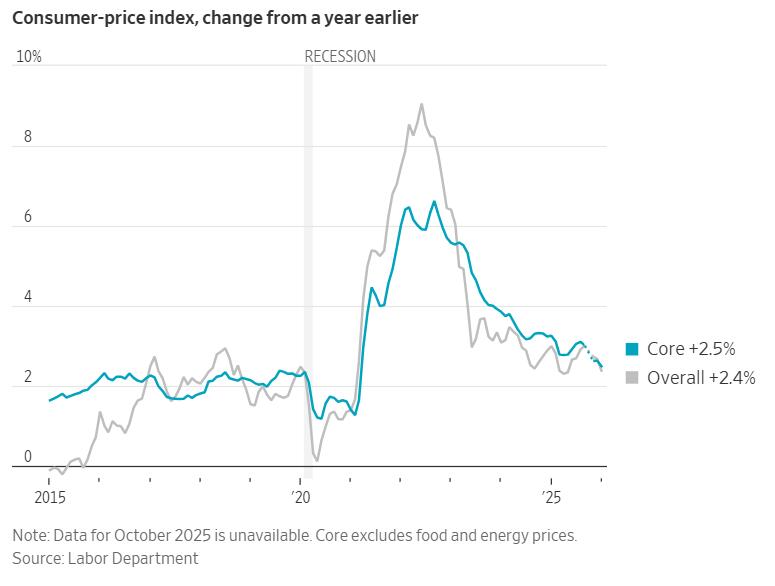
Core Insights - The U.S. inflation data showed a mild increase, with the core CPI year-on-year growth falling to its lowest level in nearly five years, indicating a continued easing of price pressures. This unexpected inflation cooling has boosted market expectations for interest rate cuts by the Federal Reserve this year, with traders raising the probability of three rate cuts to 50% [1][3]. Inflation Data Summary - The U.S. Bureau of Labor Statistics reported that the January CPI increased by 2.4% year-on-year, the lowest growth rate since May of the previous year, down from 2.7% in December and below the market expectation of 2.5%. The core CPI rose by 2.5% year-on-year, marking the lowest growth since March 2021 [1][3]. - The January CPI increased by only 0.2% month-on-month, the smallest increase since July of the previous year, and below the expected 0.3%. The overall energy index fell by 1.5%, with gasoline prices dropping by 3.2% [4][6]. - The core CPI increased by 0.3% month-on-month, matching expectations but higher than December's 0.2%. The super core CPI, excluding housing, rose by 0.56% month-on-month, the largest increase since January of the previous year, but the year-on-year growth slowed to 2.67%, the lowest since March 2021 [4][6]. Market Reactions - Following the CPI data release, U.S. stock futures rose, U.S. Treasury prices increased, and the dollar fell. The two-year Treasury yield dropped by 6 basis points to 3.40%, the lowest level in nearly two months [3][8]. - Traders adjusted their expectations for the total rate cut this year from 58 basis points to 63 basis points, indicating a 50% chance of three rate cuts by the end of the year. The probability of a rate cut in April is estimated at 30%, while the probability for June exceeds 80% [3][8]. Economic Analysis - Analysts noted that the lower overall price increases are a positive signal for the economy, despite some categories still showing inflationary pressures. The latest annual data benefited from the base effect of high inflation data from January 2025 dropping out of the calculation [7][9]. - The trend of easing inflation is expected to continue, with strong deflationary forces observed in categories such as automobiles, food, and energy. Overall, it is anticipated that deflationary pressures will dominate in the coming months [7][9]. Future Outlook - Analysts from various financial institutions expressed that the path for the Federal Reserve to normalize interest rates appears clearer, with expectations for two rate cuts this year, the next likely in June [7][9]. - The market is pricing in a lower terminal rate, with expectations that CPI will peak mid-year and then decline, aligning with predictions for the Fed to begin cutting rates around June or July [8][9].

午盘:美股震荡走高 道指上涨230点
Xin Lang Cai Jing· 2026-02-13 17:08
Market Overview - The Dow Jones Industrial Average rose by 230.75 points, an increase of 0.47%, closing at 49,682.73 points; the Nasdaq gained 85.93 points, up 0.38%, at 22,683.08 points; and the S&P 500 increased by 38.10 points, a rise of 0.56%, ending at 6,870.86 points [3][10] - The market is weighing the impact of artificial intelligence on various sectors, including logistics, real estate, and software [1][8] Company Performance - Applied Materials saw its stock price surge by 8.8% due to strong earnings and an encouraging outlook [3][10] - Airbnb's stock rose by 54.3%, reflecting investor optimism regarding the company's guidance [3][10] - Pinterest's stock plummeted by 17.8% after reporting fourth-quarter results that fell short of expectations and providing a weak outlook [3][10] Sector Analysis - Concerns about the disruptive effects of artificial intelligence have spread across multiple sectors, particularly real estate, trucking, and software, leading to a nearly 1.6% drop in the S&P 500 and approximately 2% decline in the Nasdaq on the previous day [3][10] - The "Tech Seven" giants all experienced declines, with Cisco Systems dropping 12% due to disappointing guidance, and Apple falling 5%, marking its largest single-day drop since April 2025 [3][10] Analyst Insights - Brian Levitt, a strategist at Invesco, noted that while there is a frenzy around AI, the market is becoming more discerning in identifying winners and losers, suggesting that the overall market remains robust despite some significant declines [3][10] - UBS strategists indicated that the full impact of AI on various industries and stocks is still to be observed, but they believe it validates the monetization potential of AI, making it a key component of investment portfolios [3][10] Software Sector Commentary - Dan Ives, a global technology research head at Wedbush Securities, stated that while some software stocks may suffer due to the rise of AI, not all should be dismissed, highlighting Salesforce and ServiceNow as potential core players in the AI revolution [4][11] - Ives criticized Wall Street for misjudging the widespread effects of AI across the tech sector, suggesting a significant disconnect in how the industry is perceived [5][11] Economic Data - The U.S. Consumer Price Index (CPI) for January rose by 2.4% year-over-year, a decrease of 0.3 percentage points from the previous month, marking the lowest inflation rate since April 2025 [6][13] - Core CPI, excluding food and energy, increased by 2.5%, aligning with economists' expectations [6][13] - The overall CPI rose by 0.2% month-over-month, while core CPI increased by 0.3%, both below market expectations [6][13]

今夜!美股震荡,比特币大涨,黄金白银上涨
Zhong Guo Ji Jin Bao· 2026-02-13 16:19
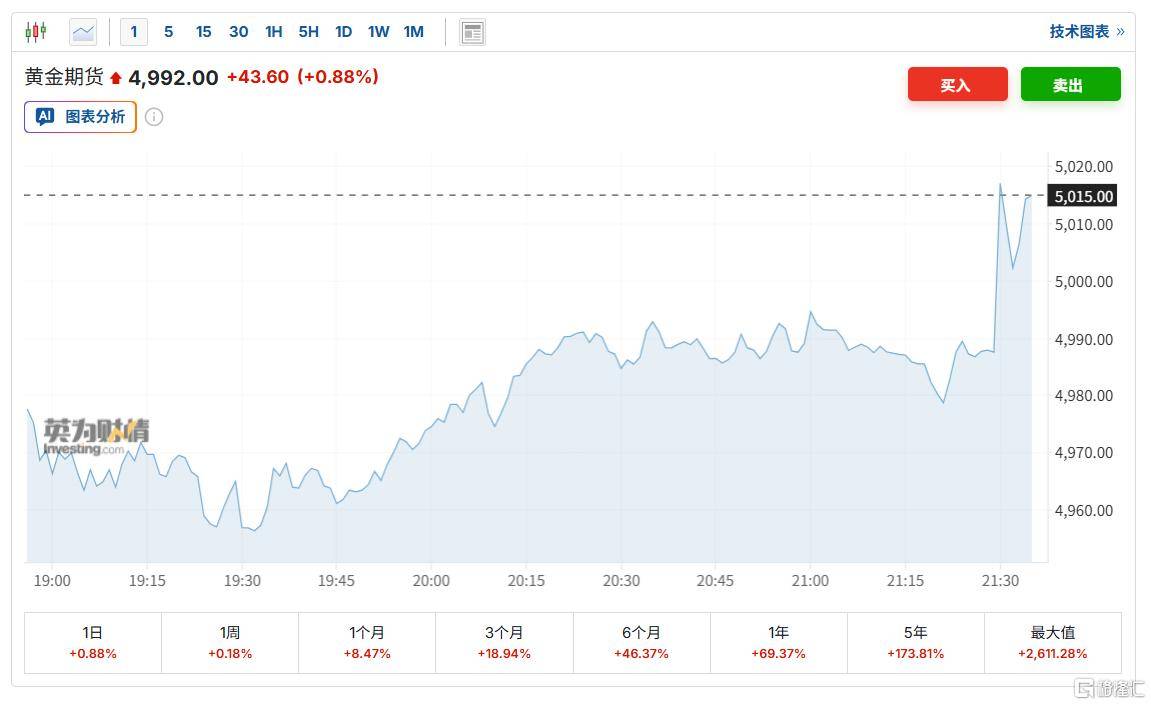
Market Overview - The U.S. stock market showed mixed performance with the Dow Jones up by 0.13%, Nasdaq up by 0.01%, and S&P 500 up by 0.21% [2][3] - The U.S. Consumer Price Index (CPI) for January increased by 0.2% month-over-month and 2.4% year-over-year, slightly below market expectations [3] Cryptocurrency Market - Coinbase's stock price rebounded by 15% to around $162 after a significant drop, following the release of its quarterly earnings report [4] - Coinbase reported a 20% decline in Q4 revenue to $1.8 billion, exceeding expectations, primarily due to decreased trading activity from falling token prices [4] - The company recorded a net loss of $667 million when accounting for cryptocurrency holdings and investment impairments [4] - Bitcoin experienced its first increase in five trading days, which typically correlates with Coinbase's stock performance, as Bitcoin represents about 60% of the cryptocurrency market's total value [5] Precious Metals - Gold and silver prices experienced fluctuations but showed an upward trend [7]

机构:通胀持续降温显示关税传导效应微弱
Sou Hu Cai Jing· 2026-02-13 15:56
Core Viewpoint - The report by economist Tani Fukui from MetLife indicates that U.S. inflation has largely remained unaffected by tariffs, with January's CPI at 2.4%, moving closer to the Federal Reserve's 2% inflation target [1] Group 1 - The January CPI of 2.4% follows a December reading of 2.7%, suggesting a positive trend towards the Fed's inflation goal [1] - Fukui describes the inflation report as "very benign," supporting the view that the impact of tariffs on prices will be minimal this year [1] - The majority of goods have shown moderate price increases, indicating stable inflationary pressures [1] Group 2 - Fukui maintains the forecast for three interest rate cuts by the Federal Reserve this year, citing greater concerns about the labor market than inflation [1]
利率降到15.5%!6连降:俄罗斯央行又降息50个基点!背后藏着三个现实压力?
Sou Hu Cai Jing· 2026-02-13 15:35
Group 1 - The core point of the article is that the Russian Central Bank has lowered interest rates for the sixth consecutive time, bringing the benchmark rate down to 15.5%, reflecting the difficult economic situation in Russia [1][3][14] - The continuous rate cuts are a response to the economic slowdown, high inflation, and fiscal pressures faced by Russia, indicating a struggle to stimulate growth [3][14] - The Russian economy has been underperforming, with a projected growth rate of only 1.3% for 2026, highlighting the need for monetary easing to encourage investment and consumption [6][12] Group 2 - The first pressure leading to the rate cuts is the weak economic growth, which necessitates stimulus measures to avoid stagnation [6][8] - The second pressure is the burden of high interest rates on businesses and consumers, which has led to reduced investment and spending [7][8] - The third pressure is that inflation is currently manageable, allowing for the possibility of rate cuts without immediately triggering further inflation [9][12] Group 3 - The impact of the rate cuts on the economy is mixed; while lower financing costs may alleviate debt pressures and stimulate investment, there are risks of currency depreciation and rising living costs [12][14] - The global context is important, as many economies are also entering a rate-cutting phase in response to slowing growth, indicating a broader trend [12][14] - Future expectations suggest that the Russian Central Bank may continue to lower rates, but the room for further cuts is limited due to ongoing inflation and currency risks [13][14]
美国1月CPI通胀降温但风险未消,美联储或延续观望模式
Feng Huang Wang· 2026-02-13 15:24
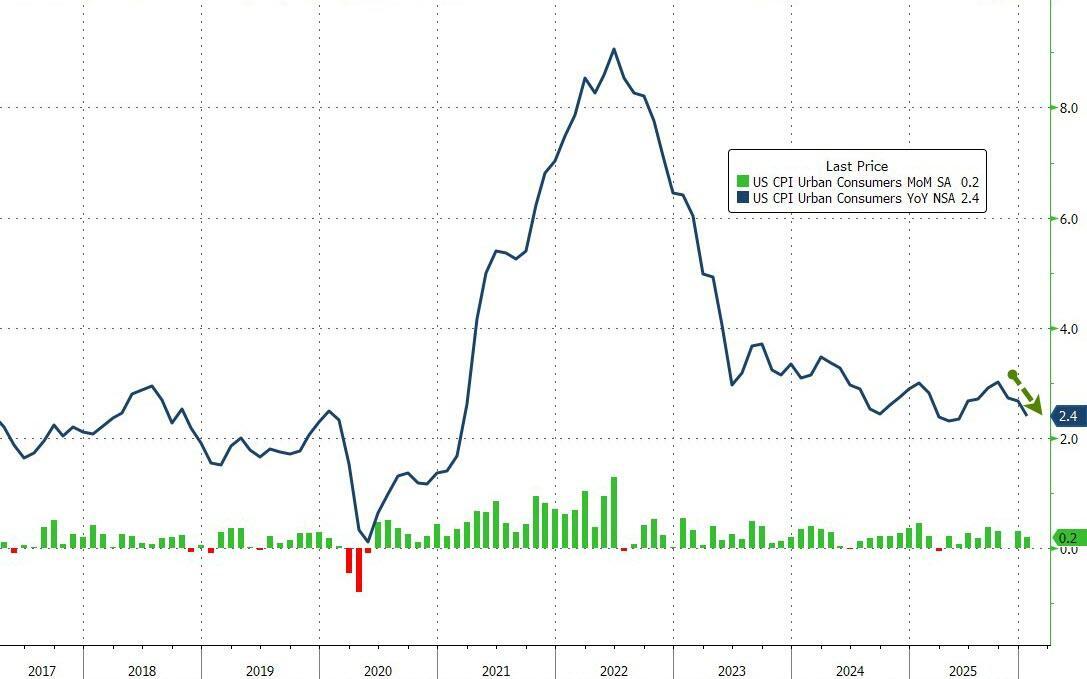
Group 1 - The January consumer price index (CPI) in the U.S. recorded a year-on-year increase of 2.4%, the lowest since May 2025, and below the market expectation of 2.5% [1] - The core CPI, excluding food and energy, rose by 2.5% year-on-year, matching the expected value and marking the lowest since March 2021 [3] - The report indicates that inflation is cooling, but overall consumer prices remain approximately 25% higher than five years ago [3] Group 2 - The significant drop in used car prices by 1.8% month-on-month in January contributed to the core inflation decline [3] - Gasoline prices fell by 3.2% month-on-month and decreased by 7.5% year-on-year, marking the third decline in four months [3] - Grocery prices increased by 0.2% month-on-month, with a year-on-year increase of 2.1% [3] Group 3 - Economists suggest that the inflation data may reflect one-time price increases at the beginning of the year and the cost transmission effects from tariffs imposed by the Trump administration [4] - The trade-weighted U.S. dollar index fell by approximately 7.4% last year, which may contribute to inflationary pressures in the future [4] Group 4 - Despite the cooling inflation, the Federal Reserve faces complex policy decisions, aiming to maintain inflation around 2%, a target that has not been met for about five years [5] - The strong job growth reported prior to the inflation data, with the unemployment rate dropping to 4.3%, adds to the Fed's policy challenges [5] Group 5 - Consumer sentiment regarding high prices remains a primary concern, with inflation issues contributing to dissatisfaction with the Biden administration, potentially aiding Trump's political comeback [6] - Companies like PepsiCo and General Mills have indicated plans to lower some food prices to attract price-sensitive consumers, suggesting a potential softening in demand [6] Group 6 - Current signals from surveys and financial markets indicate that neither consumers nor investors are significantly worried about a sharp rebound in inflation [7]
全球降息潮或近尾声——全球货币转向跟踪第11期
一瑜中的· 2026-02-13 15:00
Global Monetary Policy Shift Tracking - Since the beginning of 2026, among 26 major economies tracked, only one has cut rates (Israel) and one has raised rates (Australia), while the US, Eurozone, and Japan have kept their policy rates unchanged [3][15]. - The Federal Reserve's current rate is maintained at 3.5%-3.75%, with a hawkish tone in the January FOMC meeting, indicating a strong economy and a cautious approach to future rate cuts, with market expectations of 2 rate cuts in 2026 [16][23]. - The European Central Bank (ECB) has also kept rates unchanged, with inflation stabilizing within the target range, leading to expectations that the ECB may not cut rates further in 2026 [17][23]. - The Bank of Japan (BOJ) is in a "quasi-stagflation" state, with expectations of 2 rate hikes in 2026, but faces challenges due to supply shortages and inflationary pressures [18][24]. Global Liquidity Tracking - The Federal Reserve's reserve balance has risen to approximately $2.94 trillion, nearing the desired range of 10%-12% of GDP, indicating a recovery in liquidity [7][34]. - Various liquidity spreads have improved, with the EFFR-IOER spread stable at -1bp and the SOFR-EFFR spread averaging around 2bp, reflecting a slightly tight liquidity environment [8][42]. - The US Treasury market shows stable liquidity, with slight increases in bid-ask spreads for 10Y Treasuries, while credit risk premiums remain low, indicating a stable credit market [10][51][57].

俄罗斯,降息50个基点
证券时报· 2026-02-13 14:54
Core Viewpoint - The Central Bank of Russia has lowered the benchmark interest rate to 15.5%, marking the sixth consecutive rate cut, indicating a shift towards balanced economic growth despite temporary inflation spikes [2]. Group 1: Interest Rate Changes - The Central Bank of Russia has reduced the benchmark interest rate from 16% to 15.5% [2]. - This marks the continuation of a trend where the Central Bank has been lowering rates since June 2025, starting from a historical high of 21% [3]. Group 2: Inflation Expectations - The Central Bank has raised its inflation forecast for 2026 to a range of 4.5% to 5.5%, while expecting inflation to approach 4% in the second half of the year [2]. - The current annual inflation rate stands at 6.3%, with expectations for it to return to target levels by 2027 [2]. Group 3: Labor Market Conditions - The labor market in Russia is showing signs of easing, with the proportion of companies facing labor shortages dropping to the lowest level since mid-2023 [2].

受服务业成本走高影响 美国核心CPI环比增长0.3%
Xin Lang Cai Jing· 2026-02-13 14:18
Core Insights - The core Consumer Price Index (CPI) in the U.S. increased by 0.3% in January compared to December, marking the smallest year-over-year increase since 2021 [1] - The slight rise in inflation is attributed to price increases in airfare, personal care, entertainment, medical services, and communications [1] - Conversely, prices for used cars, trucks, household goods, and auto insurance experienced declines [1]
通胀降温!美国1月核心CPI创近5年新低,今年降息稳了?
Sou Hu Cai Jing· 2026-02-13 14:16
Group 1: Inflation Data - The U.S. Consumer Price Index (CPI) year-on-year for January decreased from 2.7% to 2.4%, marking the lowest level since May 2025, and was below the market expectation of 2.5% [1][5] - The core CPI year-on-year fell from 2.6% to 2.5%, the lowest since March 2021, aligning with market expectations [1][7] - Month-on-month, the CPI rose by 0.2%, lower than December's 0.3% increase and below economists' expectations of 0.3% [5][8] Group 2: Core CPI Insights - The core CPI month-on-month increased by 0.3%, slightly higher than December's 0.2%, representing one of the highest monthly increases since August of the previous year [6] - The core CPI year-on-year growth of 2.5% is a decrease from December's 2.6%, indicating a continued decline in inflationary pressures [7] Group 3: Sector Contributions - In January, the housing index rose by 0.2%, contributing significantly to the overall index increase, while the food index also rose by 0.2% [10] - The energy index, however, decreased by 1.5%, with gasoline prices dropping by 3.2% and electricity prices down by 0.1%, while natural gas prices increased by 1.0% [10][11] Group 4: Economic Context - The labor market remains stable, with non-farm payrolls showing stronger-than-expected job growth and the unemployment rate dropping to 4.3% [17] - Despite the easing inflation, the Federal Reserve may maintain interest rates for a period due to the stable labor market [15][18] - Economists predict that inflation may see a temporary rise later in the year due to the impact of import tariffs and the depreciation of the dollar [16] Group 5: Federal Reserve Outlook - The current economic conditions provide the Federal Reserve with more room to observe before making further rate changes, as inflation is easing while core month-on-month figures show slight increases [20] - Goldman Sachs anticipates two rate cuts from the Federal Reserve this year, with the next cut expected in June [22]