通胀预期

Search documents
国债期货集体收跌,日债持续承压
Hua Tai Qi Huo· 2025-12-05 02:53
FICC日报 | 2025-12-05 国债期货集体收跌,日债持续承压 市场分析 国内政策预期升温。11月14日国务院常务会议,研究深入实施"两重"建设有关工作,部署增强消费品供需适配性进 一步促进消费政策措施。11月24日,国家发展改革委价格司组织召开价格无序竞争成本认定工作座谈会。11月28 日,工信部组织召开动力和储能电池行业制造业企业座谈会,强调认真落实党中央关于综合整治"内卷式"竞争的 决策部署,加快推出针对性政策举措,依法依规治理动力和储能电池产业非理性竞争。数据方面,中国10月出口 (以美元计价)同比下降1.1%,前值增8.3%,进出口数据受工作日天数减少以及节前抢出口影响,前期的"抢出口" 和"抢进口"有待消化,同时10月投资、消费和工业的增速也出现不同程度放缓,国内经济基础有待夯实。中国11 月官方制造业PMI环比回升至49.2,高技术制造业PMI连续10个月位于临界点50以上,受高基数影响非制造业PMI 小幅回落。党的二十届四中全会通过的《中共中央关于制定国民经济和社会发展第十五个五年规划的建议》提出, 构建科学稳健的货币政策体系和覆盖全面的宏观审慎管理体系。中国央行12月5日将开展100 ...
中加基金配置周报|中美领导人通话,俄乌谈判取得进展
Xin Lang Cai Jing· 2025-12-04 09:50
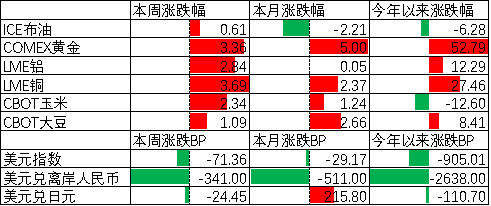
Key Points - The official manufacturing PMI in China for November is reported at 49.2, slightly up from the previous value of 49, while the non-manufacturing business activity index decreased to 49.5, down by 0.6 percentage points from the previous month [1][17] - In the U.S., the PPI for September increased by 0.3% month-on-month, with core PPI rising by 0.1%, indicating a notable acceleration in inflation [1][17] - U.S. retail sales for September grew by 0.2% month-on-month, marking the fourth consecutive month of positive growth but showing a significant slowdown and falling short of market expectations [1][17] - Durable goods orders in the U.S. for September showed an initial month-on-month increase of 0.5%, a significant deceleration from the revised 3% in the previous month, while core capital goods orders rose by 0.9%, exceeding market expectations of 0.3% [1][17] - Chinese President Xi Jinping and U.S. President Trump discussed the stability and positive direction of U.S.-China relations, emphasizing mutual benefits and cooperation [2][18] - Trump announced significant progress in the peace plan for the Russia-Ukraine conflict, with a special envoy set to meet with President Putin to finalize the agreement [3][19] - San Francisco Fed President Daly expressed support for a rate cut in December, citing a greater risk of sudden job market deterioration compared to inflation spikes [3][19] Market Review Futures Market - ICE Brent crude oil rose by 0.61% to $62.32, while COMEX gold increased by 3.36% to $4256.4 [4][22] - The U.S. dollar index fell by 71.36 basis points, with the Chinese yuan appreciating by 341 basis points against the dollar [5][22] Stock Market - The A-share market saw gains, with the ChiNext index rising by 4.54%, the largest increase among major indices, driven by improved risk appetite following the U.S.-China leaders' call [6][23] - The Hang Seng Index increased by 2.53%, and the Hang Seng Tech Index rose by 3.77%, reflecting a recovery in risk appetite [7][24] - U.S. stock markets also rebounded, with the Nasdaq index gaining 4.91%, supported by signs of resolution in the Russia-Ukraine conflict and increased rate cut expectations [8][25] Bond Market - In the bond market, credit bonds saw an upward trend, with 3Y AAA bonds rising by 5 basis points, while long-term bonds increased more than short-term ones [9][27] - U.S. Treasury yields generally declined, with the 20Y yield down by 5 basis points, influenced by Fed officials' support for a rate cut [10][28] Asset Allocation Perspective - The November PMI data indicates a slight recovery in manufacturing, while the service sector shows signs of contraction, suggesting a bottoming-out phase for the Chinese economy [11][29] - The expectation for a rate cut by the Federal Reserve has strengthened, with the probability of a December cut rising from 71% to 86% [11][29]

通胀预期创21年新高 日元贬值风险持续累积
Zhi Tong Cai Jing· 2025-12-04 04:20
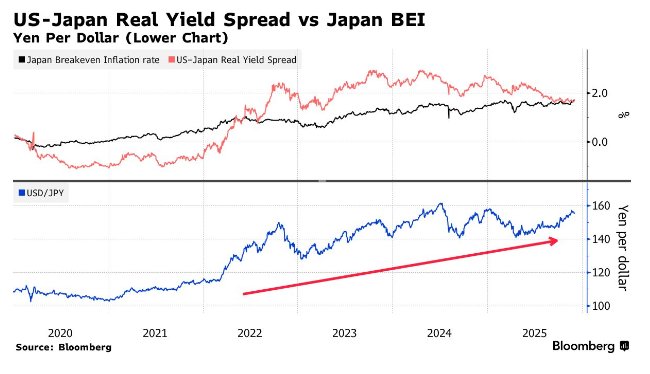
日本央行如果上调政策利率,将推高名义国债收益率,这通常有利于日元。然而,如果消费物价持续大 幅上涨,日元购买力将被侵蚀,此举的提振效果也会大打折扣。本季度日元对美元汇率已下跌超 4.5%,截至发稿,美元兑日元汇率报155.51。 鉴于日本市场对通胀上升的押注,经通胀调整后的国债收益率受到抑制,进而削弱了其对日元的支撑能 力。 衡量市场对未来价格涨幅预期的重要指标——10年期盈亏平衡通胀率——本周飙升至2004年有记录以来 的最高水平。尽管日本央行行长植田和男近日强烈暗示,央行可能在本月晚些时候的会议上收紧货币政 策以抑制通胀,但该指标周一早间触及约1.74%的高位,此后一直维持在1.7%以上。 "随着通胀预期升温,日本央行的加息举措不会带来实际利率的上升,因此难以成为支撑日元的因 素,"SMBC Nikko Securities首席外汇和外国债券策略师Makoto Noji表示。 10年期盈亏平衡通胀率反映的是名义国债收益率与相同期限通胀挂钩债券收益率之间的差值。目前10年 期国债收益率减去该盈亏平衡通胀率后,实际收益率仅约0.2%。植田和男曾表示,当前实际利率处于 低位,即使未来加息,货币政策仍将保持宽松。 ...
开始安插自己人,特朗普欲宣布美联储新主席人选!加速美国衰落?
Sou Hu Cai Jing· 2025-12-04 03:56
Core Viewpoint - Trump regrets his decision to nominate Powell as the Federal Reserve Chairman and plans to announce a new candidate early next year, aiming to reshape market expectations and regain control over monetary policy [1][14]. Group 1: Potential Candidates - Market predictions suggest that Trump's preferred candidate for the Federal Reserve Chairman is Kevin Hassett, the current Director of the National Economic Council [3]. - Hassett's past criticism of Trump's tariff proposals and subsequent alignment with Trump's economic policies demonstrate his adaptability, which has earned him Trump's trust [3]. Group 2: Monetary Policy Implications - Trump's public criticism of Powell has intensified, labeling him as "Mr. Too Late" due to the Fed's cautious approach to interest rate cuts [5]. - Trump believes that lower interest rates are essential for reducing corporate financing costs, encouraging investment, and ultimately leading to economic recovery [5]. - Hassett is expected to align with Trump's low-interest rate policies, potentially accelerating the rate-cutting process [7]. Group 3: Risks of Accelerated Rate Cuts - The Federal Reserve's dual mandate of controlling inflation and promoting employment may be compromised if Hassett accelerates rate cuts, risking inflation and economic stability [8]. - A surge in money supply could lead to rising prices, increased corporate costs, and reduced consumer purchasing power, contradicting Trump's vision of economic revival [8]. Group 4: Independence of the Federal Reserve - Powell's strong stance against political pressure is crucial for maintaining the Fed's independence, which is fundamental to the stability of the U.S. financial system [10]. - If a politically aligned figure like Hassett takes over, it could undermine trust in the Fed's policies, leading to capital outflows and market volatility [10]. Group 5: Broader Economic Implications - Trump's intervention in Fed personnel reflects the broader power dynamics in U.S. political economy, where the balance between political influence and professional independence is critical [12]. - The choice of the next Fed Chairman will not only impact the U.S. economy but also reshape global perceptions of the Fed's independence and influence international capital flows [12][14].
AUS GLOBAL澳洲环球:比特币多头面临收益率挑战
Xin Lang Cai Jing· 2025-12-03 11:35
12月3日,近期,比特币多头寄希望于美联储降息,从而推动债券收益率下行和美元走弱,但市场信号 却显示现实可能与预期不同。AUS GLOBAL澳洲环球认为,尽管市场期待降息来提振风险资产,但债 券市场的表现却表明,多头乐观情绪面临挑战。 责任编辑:陈平 12月3日,近期,比特币多头寄希望于美联储降息,从而推动债券收益率下行和美元走弱,但市场信号 却显示现实可能与预期不同。AUS GLOBAL澳洲环球认为,尽管市场期待降息来提振风险资产,但债 券市场的表现却表明,多头乐观情绪面临挑战。 分析人士指出,国债收益率的"坚挺"主要受持续的财政债务担忧和预计充足的债券供应影响,同时通胀 预期仍然顽固。AUS GLOBAL澳洲环球认为,随着政府债务增加,债券供应量上升,如果投资者需求 未同步增加,收益率可能继续走高,而国债价格可能承压。此外,日本央行可能加息以及日本国债收益 率持续上行,也对全球借贷成本形成向上压力。 美元指数方面,其对降息预期的敏感性正在下降,反映出市场动态的转变。AUS GLOBAL澳洲环球认 为,美国经济相对稳健,也在一定程度上支撑了美元,使其未因宽松政策预期而大幅下跌。今年4月开 始的美元指数下行趋 ...

你问我答(白银):现货吃紧显性化,高空加油再新高
Guo Tou Qi Huo· 2025-12-03 10:45
Report Industry Investment Rating - No relevant content provided Core Viewpoints of the Report - The current silver price trend shows dual - wheel drive characteristics, with the core being the increased instability of the credit currency system and the indication by the gold - silver ratio that the global economy is moving towards re - inflation [1]. - The fundamental aspect of silver is generally strong, but its strength is mainly based on investment and allocation needs rather than consumption - based demand [1]. - New industrial demands, especially the explosive growth of photovoltaic demand for silver, form the base of silver demand, while financial factors are the leading force in the incremental demand for silver [1]. - The gradual repair of the gold - silver ratio is a core feature of each silver bull market, and it also measures market risk preference this year [2]. - The silver bull market is in the middle - to - late stage, but there are still many factors supporting the continued strengthening of silver prices, and the strong price state will last for a long time [2]. Summary by Related Questions 1. Core drivers, sustainability, and fundamental changes of silver price increase - The core drivers are the instability of the credit currency system and the indication of re - inflation by the gold - silver ratio. The fundamental aspect of silver is strong, and the strength comes from investment and allocation needs [1]. 2. Roles of new industrial and financial factors in silver demand - Photovoltaic demand has increased from less than 5% to 20% in the past five years, forming the base of silver demand. Financial factors are the leading force in the incremental demand [1]. 3. Nature of the gold - silver ratio repair - The repair of the gold - silver ratio is a core feature of the silver bull market and measures market risk preference this year. When market risk aversion eases, the gold - silver ratio decreases, often leading to an independent silver market [2]. 4. Stage of the silver bull market - The silver bull market is in the middle - to - late stage in terms of time, but there are many factors supporting the continued rise of silver prices, and the strong price will last for a long time [2].
国际白银回撤未来仍趋上行
Jin Tou Wang· 2025-12-03 06:54
Group 1 - International silver prices experienced a significant drop, with a decline of over 1.00%, currently priced at $58.15 per ounce, indicating a short-term adjustment trend [1] - The largest silver ETF, iShares Silver Trust, saw an increase in holdings by 60.79 tons, bringing the total to 15,863.15 tons [3] - Technical analysis for silver remains positive, with future resistance levels indicating an upward trend, targeting the $59 mark [4] Group 2 - Lawrence Gillum, Chief Fixed Income Strategist at LPL Financial, expressed concerns that the Federal Reserve, under Hassett's leadership, may prioritize economic growth over price stability, potentially leading to uncontrolled inflation expectations [1] - Hassett has publicly stated his inclination towards aggressive rate cuts, suggesting an immediate rate reduction if appointed as Federal Reserve Chair [2] - Predictions from Deutsche Bank indicate that silver prices are expected to rise moderately over the next year, potentially reaching $59 per ounce [3]
韩国11月通胀持稳 房地产持续升温抑制降息预期
Xin Hua Cai Jing· 2025-12-01 23:56
韩国央行已将2024年通胀预期由2.0%上调至2.1%,并将2025年通胀预期调整为2.0%。这一调整表明, 尽管核心通胀略有缓和,但中期价格压力仍被评估为略高于此前判断。 数据显示,推动通胀的主要因素包括食品和非酒精饮料价格同比上涨4.7%、交通成本上升3.2%、餐饮 住宿价格上涨2.9%,以及住房和公用事业成本上涨1.2%。官方指出,韩元贬值推高进口成本,叠加政 府于10月部分取消燃油税补贴,共同导致燃料及相关支出上涨。 分析人士指出,稳定的通胀读数叠加楼市持续过热,使韩国央行在货币政策路径上趋于谨慎。在全球主 要经济体货币政策分化加剧的背景下,韩国若推迟降息时点,可能对跨境资本流动及区域金融市场情绪 产生外溢效应。 与此同时,房地产市场热度不减。据韩国房地产委员会数据,截至11月24日,首尔公寓价格已连续43周 上涨。这一趋势引发韩国央行对金融失衡风险的持续警惕。 韩国11月消费者价格指数(CPI)同比上涨2.4%,与10月涨幅持平,略高于市场此前预期的2.3%中位 值。剔除波动较大的食品和能源价格后,核心CPI同比上涨2.0%,较10月的2.2%有所回落。整体与核心 通胀率目前均维持在韩国央行设定的2 ...
降息预期发酵 白银价格再度攀升
Sou Hu Cai Jing· 2025-12-01 23:40
Group 1: Federal Reserve and Economic Outlook - The expectation for a Federal Reserve interest rate cut in December has significantly increased, boosting precious metal prices [2][5] - The potential nomination of Kevin Hassett as the next Federal Reserve Chair has led to strong market expectations for a dovish stance from the Fed [2] - Recent U.S. economic data has shown mixed results, with a notable increase in job creation but a rise in the unemployment rate, indicating potential economic challenges [3][4] Group 2: Precious Metals Market Dynamics - Silver prices have surged due to a significant drop in inventories at the Shanghai Futures Exchange, reaching a near 10-year low, raising concerns about short-term supply tightness [1][5] - The global decline in silver inventories has led to a noticeable squeeze in the physical market, which may further drive up international silver prices [5][6] - The potential for tariffs on silver imports by the U.S. government could exacerbate supply constraints, contributing to upward pressure on silver prices [6]
面对当前的严冬,股市靠什么走得更远
集思录· 2025-12-01 13:51
Group 1 - The article discusses the current economic challenges and the uncertainty surrounding the stock market's future performance, questioning the foundation of a bull market in terms of capital, earnings, policies, and the overall environment [1][2][10] - It highlights the disconnect between GDP growth and stock market performance, suggesting that the stock market is increasingly reflecting economic conditions, contrary to the belief that it is an independent entity [1][2] - The article mentions the potential for a localized technology bull market, drawing parallels to past market events, and suggests that the recent issues in the real estate sector may signify broader economic challenges [2][6] Group 2 - The current low asset return rates are prompting investors to consider stock investments as the only viable option, given the poor performance of traditional investments like real estate [3][14] - Inflation expectations are identified as a fundamental factor influencing market dynamics, with a suggestion that monetary expansion may be necessary to stimulate economic activity [4][15] - The article notes that while a widespread bull market may be difficult to achieve, sector-specific bull markets are still possible, emphasizing the need for strategic investment decisions rather than a passive approach [16]