
供需紧平衡

Search documents
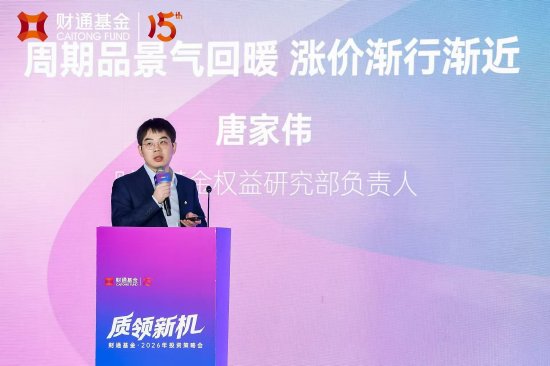
财通基金唐家伟:周期品景气迎“朦胧复苏”,2026年供需紧平衡下涨价渐行渐近
Xin Lang Cai Jing· 2026-01-15 06:55
Core Viewpoint - The current cycle industry is at the bottom of the economic cycle, showing signs of recovery driven by various factors such as overseas interest rate cuts, AI infrastructure, emerging market construction, and domestic fiscal stimulus [1][5]. Group 1: Economic Cycle and Market Dynamics - The supply side is constrained due to low long-term returns and environmental restrictions, while the demand side is expected to improve [1][5]. - The supply-demand balance for cyclical products is anticipated to remain tight, with a price uptrend approaching, driven by a rebound in corporate profits [1][5]. - The cyclical stock market can be divided into three phases: price expectation, price surge, and performance realization [1][5][6]. Group 2: AI and Material Demand - The development of AI is expected to significantly increase the demand for upstream raw materials, particularly copper and aluminum [6]. - AI power system construction is projected to contribute a 0.7% compound annual growth rate to copper demand from 2026 to 2030, while supply growth for copper is expected to be only 1% by 2026 [6]. Group 3: High-Growth Industries - Several high-growth upstream sectors are highlighted, including lithium carbonate driven by unexpected energy storage demand, and organic silicon boosted by new AI applications [2][6]. - Industries such as cement and construction machinery are opening new growth curves through overseas expansion, showcasing strong profitability in international markets [2][6].

炒白银赚近3亿?白银首次涨破90美元,广州一公司卖掉21吨银条!
Sou Hu Cai Jing· 2026-01-14 07:42
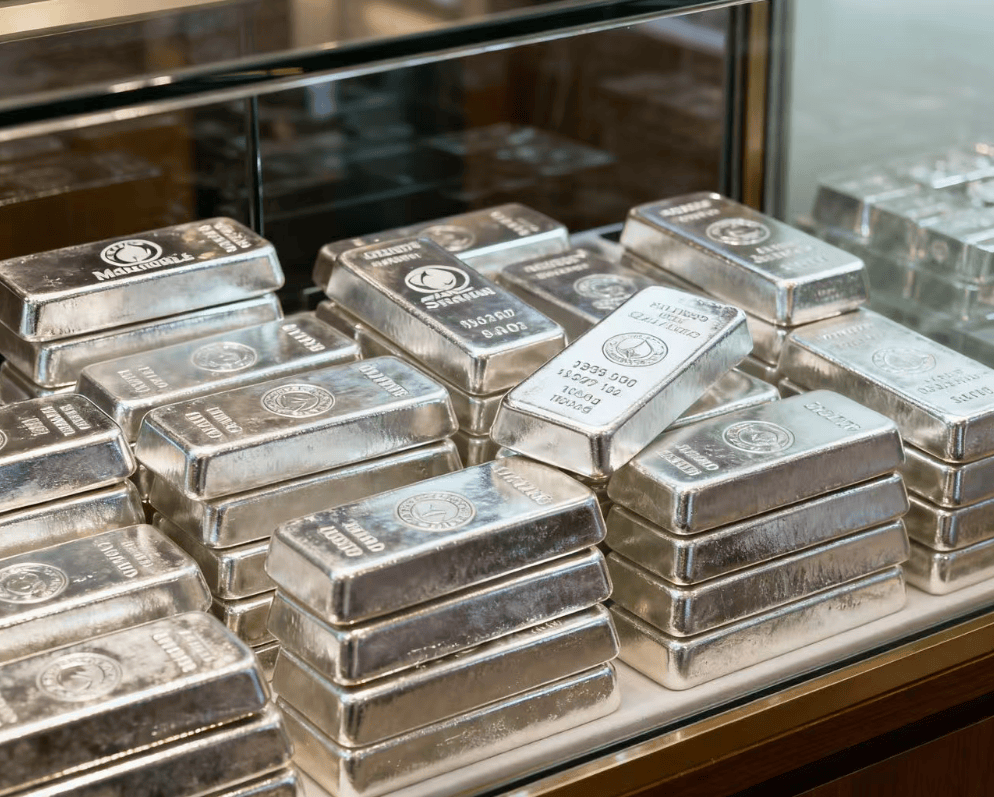
2026年1月14日,贵金属市场再迎历史性时刻,现货白银开盘强势拉升,首次站上90美元/盎司关口,再创历史新高。截至发稿,现货白银报91.13美元/盎 司,日内涨幅达4.85%,2026年开年以来,白银现货、期货价格累计涨幅已达25%左右,涨势远超市场预期。 银价狂飙市值登顶,贵金属板块应声大涨 银价的持续走高推动白银资产市值大幅攀升,1月14日市值数据平台CompaniesMarketCap数据显示,白银总市值首次突破5万亿美元大关,达5.039万亿美 元,超越芯片巨头英伟达的4.523万亿美元,成为全球第二大资产,黄金则以32.162万亿美元市值稳居榜首。 资本市场对银价大涨迅速作出反应,1月14日上午收盘,A股贵金属板块集体走高,其中湖南白银领涨,涨幅达9.53%,山金国际、四川黄金、中金黄金 等标的纷纷跟涨,贵金属投资热情持续升温。 此次银价飙升背后有明确的基本面支撑,1月13日美国劳工部公布2025年12月通胀数据,CPI同比上涨2.7%、核心CPI同比上涨2.6%,数据公布后,市场 对美联储较早降息的预期升温,交易员押注美联储4月降息概率从38%升至42%,成为白银价格走高的直接推手。而这一轮涨势 ...
为什么要配电解铝-26年电解铝年度策略
2026-01-13 01:10
Summary of the Electrolytic Aluminum Industry Conference Call Industry Overview - The electrolytic aluminum industry is facing a production capacity ceiling, with China's capacity capped at 45.4 million tons, expected to reach this limit by 2027. [1] - New production capacity overseas is constrained by power supply issues, making rapid increases in output unlikely in the short term. [1] - Global electrolytic aluminum production is projected to increase by approximately 1.3 million tons in 2026, with a supply growth rate of about 1.7%. [1][7] - Demand is expected to grow at around 2%, benefiting from loose monetary policies. [1] Key Insights and Arguments - The supply-demand balance is expected to remain tight and may lead to shortages, with aluminum prices potentially rising significantly, averaging around 25,000 RMB/ton. [1][8] - The EPS growth for electrolytic aluminum companies is supported by stable raw material prices, with industry valuations likely to rise from 8-10 times to 12-15 times. [1][9] - Systematic investment opportunities exist in the electrolytic aluminum sector, with recommendations for specific stocks such as Yun Aluminum, Shenhuo Co., and Zhongfu Industrial. [1][10] Supply Side Changes - The electrolytic aluminum supply side is facing its first historical capacity ceiling, with production nearing the 45.4 million tons limit established in 2017. [3] - New production capacity in 2026 is expected to be around 500,000 to 600,000 tons, with the likelihood of reaching the ceiling by 2027. [3] - Global new projects are primarily set to release production in the second half of the year, requiring a ramp-up period. [3][6] Overseas Project Developments - Key overseas projects include Adaro and Lichin in Indonesia, and projects by Xinfa and Nanshan Group, with varying completion timelines. [4][5] - The Adaro and Lichin project plans for 1.5 million tons in three phases, while Xinfa's small K Island project is expected to be completed in Q2 this year. [4][5] Demand Projections - Global electrolytic aluminum demand is projected to grow at around 2% in 2026, with domestic demand growth expected between 2.2% and 2.3%, and overseas demand at approximately 1.5%. [7] - The overall demand growth is supported by favorable macroeconomic conditions, including fiscal and monetary policy easing in major economies. [7] Price Impact and Market Outlook - The market is expected to experience a tight balance leading to potential price surges, with aluminum prices anticipated to exceed 25,000 RMB/ton. [8] - The fragile supply-demand balance means that any supply disruptions or unexpected demand increases could trigger explosive price increases. [8] Investment Strategy - The electrolytic aluminum sector presents systematic investment opportunities, with a focus on both pure-play and flexible stocks. [9][10] - Recommended stocks include Tianshan Aluminum for its significant production growth, along with Nanshan Innovation, Hongchuang Holdings, and China Hongqiao. [10]
长江有色:宏观预期资金轮动与供需紧平衡 12日铅价或上涨
Xin Lang Cai Jing· 2026-01-12 03:34
Group 1 - The core viewpoint of the article indicates that the recent strength in lead prices is a result of a combination of macroeconomic expectations, capital flows, and fundamental market conditions [2] - The macroeconomic environment shows a reassessment of policy paths in major economies, which has alleviated pressure on the US dollar and directed capital towards non-ferrous metals and cyclical sectors [2] - The lead market is experiencing a tight balance between rigid supply (due to tight primary mineral supply and slow recovery of recycled lead) and resilient demand (stable traditional sectors and growth in emerging sectors like energy storage) [2] Group 2 - Global lead inventories are at historically low levels, which amplifies price elasticity and supports the strong performance of lead prices [2] - The supply side faces multiple constraints, including low visible inventories, tight primary mineral supply, and slow recovery of recycled lead production, leading to insufficient overall supply elasticity [2] - Demand is showing unexpected resilience, driven by traditional pre-holiday restocking and robust growth in emerging sectors, which provides strong support to traditional consumption [2] Group 3 - The current price increase is not driven by short-term speculation but is supported by a marginal improvement in macro liquidity expectations and a reassessment of the tight supply-demand fundamentals of lead [2] - Given the low inventory levels, constrained supply growth, and structural demand highlights, lead prices are expected to maintain strong resilience in the short term, making it easier for prices to rise than to fall [2]

2026年硫磺涨势延续 荣盛石化产能TOP3迎高景气红利
Quan Jing Wang· 2026-01-12 00:59
Core Viewpoint - The sulfur market is experiencing a strong upward trend in prices due to tightening supply and demand dynamics, with significant price increases reported from major exporting countries in the Middle East [1][2]. Supply and Demand Dynamics - The sulfur supply-demand balance in China for 2026 is expected to be tight, with a structural gap continuing to widen, leading to a "tight balance" as the main theme for the year [2]. - Only two new or expanded sulfur production facilities are planned for 2026, adding a total capacity of 500,000 tons per year, with uneven production schedules [2]. - Downstream demand is projected to grow significantly, with 15 new facilities planned, resulting in an additional sulfur consumption capacity of approximately 3.29 million tons per year [2][3]. Price Trends - The latest sulfur prices from Qatar and the UAE for January 2026 are reported at $517 and $520 per ton, respectively, reflecting increases of $22 and $25 per ton from the previous month [1]. - The domestic sulfur price is expected to rise, with predictions that it could exceed 5,000 yuan per ton and potentially reach 6,000 yuan per ton in optimistic scenarios [5]. Market Structure - The sulfur industry in China is highly concentrated, with major players like Sinopec, PetroChina, and Rongsheng Petrochemical dominating the market, collectively holding over 70% of the total production capacity [4]. - The total sulfur production capacity in China has reached approximately 16.79 million tons, but future capacity expansion is limited due to government policies on crude oil processing [4]. Profitability Outlook - The increase in sulfur prices is expected to significantly enhance profits for leading companies, with estimates suggesting that a price increase of 100 yuan per ton could yield billions in profit for top firms [5]. - Rongsheng Petrochemical, with its substantial production capacity and low-cost structure, is projected to achieve a gross profit of around 3.4 billion yuan from its sulfur business [5].




碳酸锂:供需错配驱动价格强势上行
Xin Lang Cai Jing· 2026-01-02 09:37
Core Viewpoint - The lithium carbonate market is experiencing a strong rise, with prices increasing from 72,000 yuan/ton to over 130,000 yuan/ton, driven by supply bottlenecks and strong demand, alongside expectations of a tight supply-demand balance in the future [3][21]. Group 1: Market Review - The recent price increase began in mid to late October, primarily driven by limited supply growth and a surge in energy storage demand, reinforcing expectations of a tight supply-demand balance by 2026 [4][22]. - The price surged due to strong demand from leading battery manufacturers, with significant inventory reductions observed in October, November, and December [5][23]. - The price accelerated further in December, rising from around 90,000 yuan/ton to above 130,000 yuan/ton, as the expected resumption of the "Jian Ya Wo" mine was delayed [6][24]. Group 2: Fundamental Analysis - Supply constraints are evident, with lithium carbonate production reaching a peak, and the mining sector being the main bottleneck [7][24]. - Domestic mining operations are facing delays in resuming production due to safety permit approvals, while the operating rates of lithium spodumene and other lithium resources are at historical highs [8][25]. - Demand for energy storage is robust, with expectations for 900-1,000 GWh of storage demand by 2026, representing a 60%-70% increase from 2025 [9][26]. - Despite a slowdown in electric vehicle sales growth, battery production remains stable, providing strong support for demand in early 2026 [10][27]. Group 3: Market Outlook and Price Projection - The lithium carbonate market is expected to maintain a tight supply-demand balance or inventory reduction until the second quarter of 2026 [15][32]. - The key issue is the resumption timing of the "Jian Ya Wo" mine; delays could have minimal impact on the supply-demand balance in the first half of the year [16][32]. - Prices are likely to rise, with a target of 150,000 yuan/ton, and if demand remains strong, prices could challenge 200,000 yuan/ton [16][32]. - The current market is trading on a longer-term bullish logic, focusing on buying on dips [16][32]. Group 4: Key Conclusions and Focus Points - The strong price increase in lithium carbonate is driven by supply bottlenecks and surging energy storage demand, with a tight supply-demand balance expected to continue into the first half of 2026 [33][34]. - The trend is bullish, with opportunities to build long positions on price corrections [34][36].
国泰海通|金属新材料:金属行业继续共舞
国泰海通证券研究· 2025-12-29 14:58
Group 1: Precious Metals - Gold prices continue to rise, with COMEX gold surpassing $4500 per ounce, while silver prices surged due to supply shortage expectations, breaking through $79 per ounce [1] - Platinum prices are increasing due to persistent supply-demand gaps, while palladium prices are experiencing steady growth with significant fluctuations [1] - By 2026, factors such as central bank gold purchases, rising gold ETF holdings, and expectations of interest rate cuts by the Federal Reserve, alongside a weakening dollar index, are expected to support gold prices [1] Group 2: Copper - Copper prices on the Shanghai exchange have surpassed 100,000 yuan, reaching a historical high due to supply disruptions and low inventory levels in non-US regions [2] - Labor negotiations at the Mantoverde copper mine in Chile have raised concerns about copper supply for 2026, while the National Development and Reform Commission encourages mergers among major copper smelting enterprises [2] - Market sentiment and changes in futures microstructure will be crucial for future price movements [2] Group 3: Aluminum - Aluminum prices have reached new highs amid a favorable macroeconomic environment, although the short-term outlook shows weakening fundamentals [2] - The operating rate of downstream aluminum processing enterprises has decreased by 0.6 percentage points to 60.8%, influenced by environmental production restrictions and high aluminum prices [2] - The market is expected to experience a tug-of-war between macroeconomic benefits and weak fundamentals, leading to high volatility in aluminum prices [2] Group 4: Energy Metals - Lithium demand is showing signs of weakening, while production is increasing, leading to a decrease in inventory levels [3] - There are uncertainties regarding the resumption of production at key mines in Jiangxi, which could impact market expectations for lithium supply [3] - Cobalt prices remain high due to tight raw material supply, while downstream demand is cautious, with companies extending their operations into integrated cost advantages [3] Group 5: Rare Earths - Light rare earth prices are recovering, while medium and heavy rare earth prices are maintaining a downward trend [4]

华宝期货有色金属周报-20251229
Hua Bao Qi Huo· 2025-12-29 12:34
Report Industry Investment Rating No relevant content provided. Core Viewpoints of the Report - Tin prices are expected to run strongly. The increase in supply from Myanmar has alleviated high - priced tin to some extent, but the ongoing tense situation in the DRC has kept tin prices high and even pushed them to new highs. With the continuous rise of tin prices, the downstream's willingness to take delivery has decreased, and tin inventories at home and abroad have been accumulating recently. In terms of demand, the semiconductor industry maintains growth, while the growth of the domestic automobile and home appliance industries shows a decline in the month - on - month growth rate [14]. - Lithium carbonate is expected to stabilize in a range - bound manner, with strengthened cost support and a tight supply - demand balance dominating the fluctuations. The upstream raw material prices have increased, strengthening the cost support. The supply capacity is being released in an orderly manner, but the demand for cathode materials has slightly decreased, and the inventory pattern remains tight. The industry is facing increasing profit pressure [15]. Summary by Directory 01. Weekly Review of Non - ferrous Metals Market - **Copper**: The closing price of the futures main contract CU2602 on December 26, 2025, was 98,720 yuan, with a weekly increase of 5,540 yuan and a weekly increase rate of 5.95%. The average price of copper in Shanghai Wumaomarket was 97,865 yuan, with a weekly increase of 5,385 yuan and a weekly increase rate of 5.82% [9]. - **Aluminum**: The closing price of the futures main contract AL2602 on December 26, 2025, was 22,405 yuan, with a weekly increase of 220 yuan and a weekly increase rate of 0.99%. The average price of aluminum (A00) in the non - ferrous market was 22,060 yuan, with a weekly increase of 220 yuan and a weekly increase rate of 1.01% [9]. - **Zinc**: The closing price of the futures main contract ZN2602 on December 26, 2025, was 23,170 yuan, with a weekly increase of 105 yuan and a weekly increase rate of 0.46%. The price of zinc ingots (0, Zn99.995, domestic and imported) was 23,120 yuan, with a weekly decrease of 24 yuan and a weekly decrease rate of - 0.10% [9]. - **Tin**: The closing price of the futures main contract SN2602 on December 26, 2025, was 338,550 yuan, with a weekly decrease of 4,490 yuan and a weekly decrease rate of - 1.31%. The average price of tin in Shanghai Wumaomarket was 334,000 yuan, with a weekly decrease of 2,000 yuan and a weekly decrease rate of - 0.60% [9]. - **Nickel**: The closing price of the futures main contract NI2602 on December 26, 2025, was 126,750 yuan, with a weekly increase of 9,570 yuan and a weekly increase rate of 8.17%. The average price of nickel (1) was 130,810 yuan, with a weekly increase of 10,020 yuan and a weekly increase rate of 8.30% [9]. 02. This Week's Forecast of Non - ferrous Metals Market - **Tin**: The supply from Myanmar has increased, but the situation in the DRC has kept tin prices high. The downstream's willingness to take delivery has decreased, and inventories have accumulated. The semiconductor industry maintains growth, while the growth of the domestic automobile and home appliance industries has slowed down. Tin prices are expected to run strongly [14]. - **Lithium carbonate**: - **Market performance**: Last week, the lithium carbonate contract price on the disk was strong, and the price center continued to rise. The main contract LC2605 increased by 17.16% week - on - week, reaching a new high since July 2024. The average price of SMM electric carbon increased by 6.94% week - on - week to 103,400 yuan/ton. There was a divergence between the spot and futures markets, with the spot market weakly fluctuating and the futures premium expanding [15]. - **Supply side**: Upstream raw materials increased slightly month - on - month and significantly year - on - year, strengthening cost support. The overall supply capacity was released in an orderly manner, with production and operating rates increasing by 0.53% month - on - month [15]. - **Demand side**: The production of cathode materials slightly decreased, and inventories continued to decline. Phosphoric acid iron - lithium cells showed strong performance, with a year - on - year production increase of 61.58%, while ternary cells were weak, with a production of 7.1 GWh (a month - on - month decrease of 1.25% and a year - on - year decrease of 4.83%) [15]. - **Inventory**: Social inventories increased slightly, and sample inventories continued to decline but at a slower pace. The overall inventory was still tight [15]. - **Cost and profit**: Mainstream production processes continued to be in a loss state, and the loss differentials expanded. Import and export and delivery arbitrage profits showed different characteristics [15]. 03. Variety Data (Tin, Lithium Carbonate) Tin - **Refined tin production and operating rate**: In the week of December 26, the combined production of refined tin in Yunnan and Jiangxi provinces was 0.338 million tons, a month - on - month increase of 0.002 million tons and a year - on - year increase of 0.0265 million tons. The combined operating rate was 69.75%, a month - on - month increase of 0.41% and a year - on - year increase of 5.47% [20]. - **Tin ingot inventory**: In the week of December 19, the total SHFE tin ingot inventory was 8,095 tons, a month - on - month increase of 704 tons and a year - on - year increase of 1,261 tons. The social inventory of tin ingots in different regions of China was 9,192 tons, a month - on - month increase of 732 tons and a year - on - year increase of 1,387 tons [23]. - **Tin concentrate processing fees**: The processing fees for 40% tin concentrate in Yunnan and 60% tin concentrate in Guangxi, Hunan, and Jiangxi remained flat week - on - week and decreased year - on - year [24]. - **Tin ore import profit and loss**: In the week of December 25, the import profit and loss level of tin ore was 22,313.14 yuan/ton, a week - on - week decrease of 8,852 yuan and a year - on - year increase of 4,232.29 yuan [26]. - **Spot average prices**: The average prices of 40% tin concentrate in Yunnan and 60% tin concentrate in Guangxi, Hunan, and Jiangxi decreased week - on - week and increased year - on - year [30]. Lithium Carbonate - **Key high - frequency data in the industrial chain**: - The closing price of the main contract on December 26, 2025, increased by 17.16% week - on - week and 68.37% year - on - year. - The trading volume of the main contract decreased by 53.85% week - on - week and increased by 363.18% year - on - year. - The position of the main contract decreased by 13.72% week - on - week and increased by 253.34% year - on - year. - The basis of the main contract increased by 33.48% week - on - week and 869.79% year - on - year. - The number of warehouse receipts of lithium carbonate in the Guangzhou Futures Exchange increased by 15.34% week - on - week and decreased by 65.30% year - on - year [32]. - **Supply side**: - **Raw material market**: The prices of various types of lithium ore increased significantly, strengthening cost support [34]. - **Operating rate**: The total weekly operating rate of lithium carbonate increased slightly week - on - week and year - on - year, with significant differences among different production processes [36]. - **Production**: The total weekly production of lithium carbonate increased slightly week - on - week and significantly year - on - year [41]. - **Demand side**: - **Cathode material market**: The overall cathode material market showed a short - term decline in production and continuous inventory reduction [45]. - **Terminal market**: The production of power cells decreased slightly, showing a differentiation between strong phosphoric acid iron - lithium and weak ternary [48]. - **Inventory**: The inventory pattern remained tight, and the inventory structure shifted from the production and consumption ends to the trading end [55]. - **Cost and profit**: - The production of lithium carbonate using purchased lithium spodumene concentrate and lithium mica concentrate was in a loss state, with the loss of lithium spodumene concentrate production expanding and that of lithium mica concentrate production narrowing year - on - year [60]. - The import of lithium carbonate still had a profit, but the profit margin had narrowed. There were significant differences among varieties, and the delivery arbitrage window for lithium carbonate was opened [60][61].
GTC泽汇资本:白银强势后的再平衡
Xin Lang Cai Jing· 2025-12-29 10:28
Core Viewpoint - Silver has experienced a significant price surge, moving from around $29 to nearly $80 by the end of the year, reflecting a concentrated response to long-term supply-demand imbalances [1][2][3] Market Performance - The rise in silver prices was not abrupt but rather a gradual increase supported by multiple corrections and confirmations of support levels, indicating real demand rather than mere speculation [3] - The price fluctuations in April and May laid a solid foundation for the accelerated rally from June to December [3] 2026 Outlook - There is a notable divergence in market expectations for 2026, with some institutions predicting that inventory replenishment and high prices may suppress demand, potentially leading to a price retreat [3][4] - Conversely, analysts emphasize that the long-term growth logic for industrial silver, investment demand, and new energy applications remains unchanged [3][4] - GTC ZEHUI Capital anticipates that silver will likely exhibit "high-level wide fluctuations" in 2026 rather than a simple one-sided increase or rapid reversal [4] Supply and Demand Dynamics - High silver prices may temporarily suppress some demand; however, the strategic attributes of silver are strengthening amid ongoing global industrial upgrades and technological investments [4] - As long as core industrial demand remains resilient, silver is unlikely to revert to previously undervalued pricing levels [4] - Even if silver experiences a phase of adjustment in 2026, its long-term structural value is expected to persist, reflecting a market revaluation of future supply-demand tightness rather than the end of a bubble [4]
供需紧平衡,铜价继续维持高位
Zhong Hang Qi Huo· 2025-12-26 10:03
1. Report Industry Investment Rating No information provided. 2. Core View of the Report In 2026, globally, copper will be in a situation of tight supply and demand, with the tightness in copper ore gradually transferring to electrolytic copper. Demand will maintain a high growth rate, and the market will be in a state of tight supply - demand balance throughout the year. The copper price is expected to remain high, ranging from 80,000 to 110,000 yuan per ton [6]. 3. Summary by Directory 3.1后市研判 (Outlook for the Future) - Overseas, the Fed's December rate - cut has been implemented. Despite the slightly better - than - expected US November non - farm payrolls data, the rising unemployment rate won't change the Fed's loose stance, and the overseas liquidity environment will continue to support risk appetite. Domestically, major meetings have set a clear tone of "stable growth and expanding domestic demand" for 2026, providing support for market sentiment [6]. - On the supply side, the resumption of production at mines such as Indonesia's Grasberg and Chile's El Teniente is slow, new capacity investment is limited, and domestic smelters have a production cut expectation. The growth rate of global electrolytic copper production in 2026 is expected to slow down, and the tightness in copper ore supply is gradually shifting to electrolytic copper supply [6]. - In terms of demand, grid demand is strong, the demand for copper from new - energy vehicles is growing explosively, new - energy vehicles and computing power drive related power supporting facilities as new growth points, home appliance consumption is expected to remain stable, and the impact of real - estate demand is limited [6]. - Regarding inventory, US tariff policies have led to a structural high premium in the COMEX copper market, causing a one - way transfer of global inventory to the US market. US copper inventory is continuously accumulating, while Asian and European markets face a tight spot supply situation, leading to a structural rise in the copper price fluctuation center [6]. 3.2行情回顾 (Market Review) - In 2025, the copper price increased significantly. In Q1, tariff expectations and a falling US dollar index, along with a decline in copper ore processing fees, led to a large - scale transfer of global copper inventory to the COMEX market, with the COMEX copper price leading the rise and the Shanghai copper price reaching a stage high [8][9]. - In Q2, tariff policies caused market panic and a sharp decline in the copper price, but then the price rebounded in a V - shape. After mid - April, as the tariff conflict eased, the copper price gradually strengthened [9]. - In Q3, the copper price fluctuated at a high level. Weak US economic data, the possibility of a recession, and the expectation of a rate cut, along with supply disruptions such as mine shutdowns, led to high - level oscillations [9]. - In Q4, multiple positive factors, including mine production cuts, tariff - induced inventory transfer, and the Fed's rate cut, drove the copper price to a new high [9]. 3.3宏观面 (Macroeconomic Aspect) 3.3.1 Overseas - The Fed cut interest rates three times in 2025, with a cumulative reduction of 75 basis points, and the federal funds rate dropped to 3.5% - 3.75% after the December meeting. The US November non - farm payrolls data was slightly better than expected, but the unemployment rate reached a four - year high, and inflation data showed a further easing of inflation pressure, strengthening the market's expectation of the Fed's dovish stance in 2026 [13]. - The possible replacement of the Fed chair by the Trump administration may lead to a continuation of loose policies. The weakening of the Fed's independence and the trend of "de - globalization" in the US and "de - dollarization" globally may cause the US dollar index to remain weak, supporting the copper price [13]. - Short - term Sino - US trade issues have significantly eased. After the Sino - US economic and trade consultations in October, the two sides reached consensus on multiple issues, and the suspension of some tariffs was extended, enhancing market confidence in the economic growth of both countries [15]. 3.3.2 Domestic - In 2025, domestic economic indicators showed overall stability. From January to November, RMB loans and social financing scale increased, and M2, M1, and other indicators showed certain growth. Industrial added value, service industry production index, and social consumer goods retail sales also had year - on - year growth, but fixed - asset investment declined [18]. - The central bank implemented a moderately loose monetary policy in 2025, including reducing the deposit reserve ratio and policy interest rates. The government issued ultra - long - term special treasury bonds, with part of the funds used for key projects and new policies [18]. - In 2026, the central bank is expected to continue a moderately loose monetary policy, and the government will implement more active fiscal policies. The policy signals of "stable growth" and "expanding domestic demand" will support market sentiment, although specific policy tools are yet to be implemented [21]. 3.4基本面 (Fundamental Aspect) 3.4.1 Supply - **Copper ore**: In 2025, global copper ore supply was severely disrupted by various events, leading to a significant reduction in production expectations. The resumption of production at some mines will be slow, and new large - scale projects are limited. The global copper ore supply faces structural challenges, such as the depletion of high - grade resources and long development cycles. The supply gap in 2026 is expected to widen, and it will turn to a loose state in 2027 [25]. - **Copper concentrate processing fees**: The 2026 copper concentrate long - term processing fee (TC/RC) is 0 dollars/ton and 0 cents/pound, indicating an extremely tight supply of copper concentrate [28]. - **Electrolytic copper**: In November 2025, China's electrolytic copper production increased. However, due to tight raw material supply, poor long - term negotiation conditions in 2026, and industry suggestions to limit production capacity, some smelters may face losses. The CSPT group plans to cut production by more than 10% in 2026, and after considering new capacity, the growth of China's electrolytic copper production in 2026 is expected to be about 3.75% [32]. - **Recycled copper**: Affected by US tariff policies and the "232 investigation," the cost of importing recycled copper from the US has increased significantly. Global competition for recycled copper raw materials is intensifying, and the implementation of Document No. 770 has also impacted the recycled copper industry. The supply of recycled copper is expected to tighten in 2026 [37]. 3.4.2 Demand - **Real estate**: From January to November 2025, real - estate development investment, construction area, new construction area, and completion area all declined, and housing prices generally decreased. The real - estate market is still in a weak stage, but in 2026, it will mainly focus on stability [41]. - **New - energy vehicles**: In November 2025, the production and sales of new - energy vehicles increased year - on - year and month - on - month. From January to November, the production and sales also showed high - speed growth. Although there may be challenges in domestic demand in 2026, such as the reduction of subsidies and the cancellation of purchase tax incentives, the export growth rate may be maintained, and the production of new - energy vehicles will still grow at a relatively high speed [44]. - **Power grid**: The power grid is the largest domestic copper - consuming scenario, accounting for nearly 46% of terminal copper consumption in 2025. As of October 2025, power grid project investment increased year - on - year, and the growth of power generation installed capacity also drove the demand for copper cables. In the "15th Five - Year Plan," the construction of a new power system will bring strong demand for copper, and it is expected that China's power grid investment will maintain a high growth rate of about 8% in 2026, and the global power grid's demand for copper will grow at about 4% [49]. - **Global new installed capacity**: As of November 2025, the cumulative power generation installed capacity increased year - on - year. However, due to the pre - consumption of domestic photovoltaic installed capacity, the growth rate of the annual installed capacity is expected to decline. It is predicted that the global new installed capacity may enter a plateau, but the demand from emerging markets in the Middle East and Latin America may maintain high growth [52]. - **Home appliances**: In 2025, the domestic home - appliance market was affected by factors such as government subsidies and tariff issues. Although the overall demand increased steadily, there was a significant contraction at the end of the year. In 2026, domestic demand will be affected by the continuity of government subsidies, and exports will still be under pressure from tariffs. However, as a major traditional copper - consuming area, it is expected to support the copper price [56]. 3.4.3 Inventory US tariff policies have led to a structural high premium in the COMEX copper market, causing a one - way transfer of global inventory to the US. As of December 25, the COMEX inventory reached a 21 - year high. The global inventory distribution is unbalanced, with the US inventory accumulating and Asian and European markets facing a tight supply situation. The copper price fluctuation center has risen structurally, and the global copper inventory may decline and remain at a low level in 2026 [59].