内循环

Search documents
指望内循环救经济?但现实却非常的现实,老百姓可能拉不动内需了?
Sou Hu Cai Jing· 2025-12-05 21:09
Core Viewpoint - The "internal circulation" strategy aims to boost domestic demand to drive economic growth, but current consumer spending is declining, indicating challenges in achieving this goal [3][10]. Group 1: Economic Context - The concept of "internal circulation" is introduced as a response to external pressures in international trade and supply chains, emphasizing the need for a domestic market-driven economy [3]. - In 2023, the total retail sales of consumer goods in China reached approximately 47.12 trillion yuan, but the growth rate is low, with significant disparities across different sectors [4]. - Essential goods like food and daily necessities are still seeing growth, while non-essential and luxury goods are experiencing slow or negative growth [4][6]. Group 2: Consumer Behavior - Consumers are becoming more rational, reducing unnecessary spending and focusing on basic needs, leading to a passive consumption downgrade [4][6]. - Personal savings have increased significantly in 2023, indicating a tendency to save rather than spend due to uncertainty about future income and expenses [4]. - Young consumers are particularly affected by high living costs, leading them to prioritize saving over spending [6]. Group 3: Structural Challenges - The decline in consumer purchasing power is a significant barrier to the "internal circulation" strategy, as income growth is not keeping pace with rising expenses [7][10]. - Companies are facing difficulties, which may lead to price increases that further suppress consumer spending [7]. - The transition to an internal circulation economy requires breaking existing patterns, which may result in job losses and income reductions, further inhibiting consumption [7][10]. Group 4: Recommendations for Improvement - To effectively stimulate internal circulation, it is essential to increase residents' income, reduce major expenditure pressures, and enhance consumer confidence [10]. - Optimizing consumption structure and developing new consumption areas, such as healthcare and education, could create new demand [10][11]. - The transition to an internal circulation economy is a long-term process that requires collective efforts from consumers, businesses, and the government [11][12].


关税博弈常态化:解析美国贸易政策对A股产业链影响
Guo Ji Jin Rong Bao· 2025-12-04 06:05
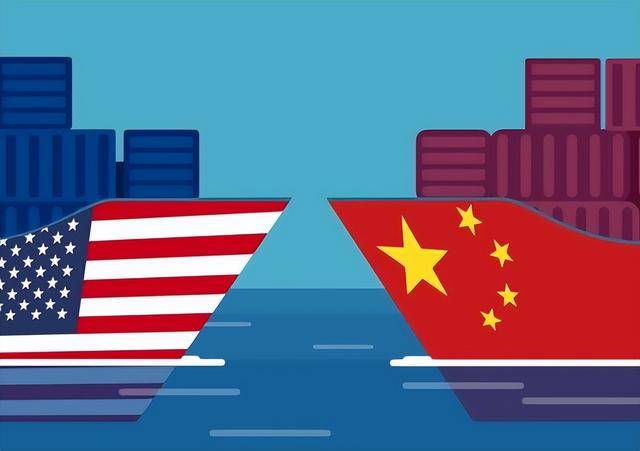
Core Insights - The article discusses the recent phase agreement between China and the U.S. to "pause" certain tariffs, indicating a temporary ceasefire in trade tensions, but warns against viewing this as a resolution to the broader U.S.-China relationship [1] - It highlights a shift in U.S. trade policy from merely correcting trade deficits to a more complex strategy aimed at long-term containment of China's industrial upgrades, influenced by domestic inflation and manufacturing costs [1][4] - The article emphasizes the need for A-share investors to adapt to a new valuation logic that prioritizes "safety and resilience" over "efficiency and growth" in the context of ongoing tariff negotiations [1][8] Macro Mechanism - The U.S. trade policy has evolved into a bipartisan consensus characterized by a systematic approach to competition, moving from a focus on trade deficits to a strategy aimed at containing China's industrial advancements [3] - The recent tariff proposals, including a 34% punitive tariff on China, were initially perceived as a threat to globalization, but the subsequent pause indicates a recognition of the high costs associated with unilateral tariffs [2][4] Industry Impact - The normalization of tariff negotiations is expected to fundamentally reshape the valuation logic of A-share industries, with a shift towards valuing companies based on their ability to withstand external shocks and maintain supply chain resilience [8] - The technology sector is experiencing a revaluation towards "self-sufficiency," as companies seek to mitigate risks associated with U.S. trade policies by increasing domestic production capabilities [9] - Advanced manufacturing is transitioning from a "product export" model to a "capacity export" model, with companies establishing overseas production bases to navigate tariff barriers and geopolitical risks [10] Micro Strategies - Companies are shifting from an "efficiency-first" approach to a "resilience-first" strategy, necessitating increased inventory and diversified supply chains to mitigate risks from trade tensions [13] - There is a growing emphasis on "hardcore" innovation and reducing reliance on U.S. technology, with firms investing in foundational research and development to enhance their competitive edge [14] Long-term Investment Strategy - The article suggests that investors should focus on three categories of assets that are likely to thrive amid ongoing trade tensions: technology leaders achieving domestic breakthroughs, manufacturers with global production capabilities, and consumer brands benefiting from domestic market growth [16]
国信期货2026年投资策略报告:稳经济稳预期,股债双震荡-20251123
Guo Xin Qi Huo· 2025-11-22 23:44
国信期货研究 Page 1 国信期货 2026 年投资策略报告 稳经济稳预期 股债双震荡 金融 2025 年 11 月 23 日 主要结论 1、2025 年,国内经济恢复速度逐渐减慢,房地产拖累幅度有所减小。国内主要 经济消费方面,居民就业不平衡-规模性返乡-居民收入预期降低-消费增速低迷不振 循环。投资方面,房地产持续下滑-地方财政收入减少-项目投资与基础建设缺乏力 度-经济恢复缓慢,经济向新质生产力提升,但是新质生产力产生的就业机构与传统 行业产生的就业结构并不一致,经济恢复发展的同时,传统行业带来的就业冲击无 法通过新质生产力经济发展来消耗。2024 年 9 月中国政策逻辑发生转变,开始大力 度刺激经济的货币财政政策,货币方面,大力度降息、下调存量房贷利率等,财政 政策提出化解地方政府隐性债务。2025 年中国经济政策方向转向新质生产力,通过 经济转型升级的方式,进一步提升经济质量。外部方面,特朗普上台之后对打关税 战,对全球贸易形成阻碍,即便中美暂时缓和,特朗普的关税整体上影响全球贸易。 国际局部国家地缘政治或无法完成和平解决。2026 年国内经济政策将会更加注重内 循环,居民、私人企业资产负债表修复 ...
百胜中国(9987.HK)剑指3万门店,RGM3.0打开“快增长+提效益”扩张周期
Ge Long Hui· 2025-11-19 07:17
Core Viewpoint - Yum China is signaling positive long-term growth amidst a complex environment, with a strategic upgrade to "RGM 3.0" focusing on resilience, growth, and competitive advantage [1][12] Group 1: Strategic Focus - The company emphasizes a dual-driven strategy of "innovation + efficiency" to enhance collaboration among stores, regions, and brands [1] - The RGM strategy has led to high-quality and steady growth since its initiation in 2021, with positive same-store sales and improved profit margins despite market challenges [1] - Management expresses strong confidence in achieving rapid growth and efficiency improvements over the next three years, with ambitious store expansion and sales growth targets [1] Group 2: Financial Goals and Shareholder Returns - Yum China plans to return approximately 100% of free cash flow to shareholders starting in 2027, with expected annual returns between $900 million and over $1 billion from 2027 to 2028 [2] - The company aims for system sales to achieve mid to high single-digit compound growth and operating profit to achieve high single-digit compound growth from 2026 to 2028 [1] Group 3: Brand and Product Expansion - The growth model is based on a "multi-brand, multi-product, multi-module" approach, enhancing user coverage and consumption scenarios [3] - KFC remains the core brand, with significant single product sales exceeding 4 billion yuan annually, supporting new business expansions [3] - The company plans to expand KFC stores to 17,000 by 2028 and achieve over 10 billion yuan in operating profit [3] Group 4: Operational Efficiency and Innovation - Pizza Hut has accelerated growth with a focus on value positioning, achieving a 17% increase in same-store transaction volume for three consecutive quarters [4] - The company is implementing a simplified operational model and product innovations to penetrate deeper into the market [4] - Lavazza Coffee is also expanding rapidly, with plans to reach 1,000 stores and $60 million in retail sales by 2029 [4] Group 5: Supply Chain and Technology - The company’s supply chain, digital technology, and talent development are crucial for supporting business growth and profitability [6][7] - Yum China is transitioning to an AI-driven operational system, enhancing efficiency in various operational aspects [6] - The company is expanding its supplier base and implementing direct procurement strategies to maintain cost advantages [6] Group 6: Market Potential and Industry Outlook - The Chinese restaurant market has significant growth potential, with a current chain penetration rate of about 20%, compared to over 50% in mature markets [12] - The company aims to increase its consumer service coverage from one-third to approximately half by 2028 [12] - The restaurant industry is entering a mild recovery phase, supported by policy incentives and improving consumer sentiment [8][11]
都在指望内循环救经济,但现实却打了脸,老百姓可能已经拉不动内需了
Sou Hu Cai Jing· 2025-11-14 07:07
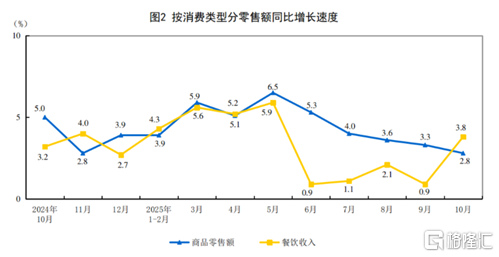
Core Insights - The article highlights a significant decline in consumer spending in China, driven by stagnant income growth, high debt levels, and increasing living costs, leading to a cautious consumer sentiment [1][3][7] Economic Indicators - In the first half of 2025, the total retail sales of consumer goods grew by only 3.2% year-on-year, a decrease of 1.5 percentage points compared to the same period in 2024 [1] - Major consumer sectors such as automobiles and home appliances experienced a slowdown, with automobile sales growing by just 1.8%, down 3.7 percentage points from the previous year, and home appliance sales declining by 2.5%, widening by 1.3 percentage points [1] - The consumer confidence index for Q2 2025 was reported at 95.3, below the neutral line of 100, marking a five-year low [5] Consumer Behavior - A survey indicated that 65% of respondents plan to reduce non-essential spending in the next six months, and 83% intend to postpone large purchases [1] - The actual growth rate of per capita disposable income for urban residents was only 2.8% in the first half of 2025, down from 5.7% in 2019, while the unemployment rate remained around 5.3% [3] Debt and Financial Pressure - The household leverage ratio reached 63.4% in Q1 2025, with some cities reporting debt-to-income ratios exceeding 3:1, indicating significant financial strain on families [3][4] - Rising costs in healthcare and education are further squeezing household budgets, with healthcare spending increasing by 8.6% year-on-year [4] Impact on Industries - The sluggish consumer spending is adversely affecting sectors such as retail, dining, and tourism, with restaurant revenues growing by only 2.5% year-on-year, significantly lower than pre-pandemic levels [7] - The vacancy rate for retail spaces in some second and third-tier cities has reached as high as 30%, indicating a challenging environment for brick-and-mortar businesses [7] Future Outlook - The article suggests that merely calling for increased domestic demand will not suffice; substantial improvements in income levels and distribution are necessary to stimulate consumer spending [8] - Long-term economic adjustments and reforms are essential to enhance consumer confidence and spending capacity, with the potential for improvement as urbanization and income distribution reforms take effect [12]
在绝对的国力面前,美国无论采取什么手段,都必然失败
Sou Hu Cai Jing· 2025-11-12 22:08
Core Viewpoint - The article discusses the unexpected global impact of U.S. tariffs, which were initially aimed at China but ended up affecting many countries, leading to a compromise with China while other nations faced higher tariffs [2][3]. Economic Impact - China's economic dependence on the U.S. has significantly decreased since 2016, with a shift towards the Belt and Road Initiative, making U.S. tariffs less impactful [6]. - The domestic consumption market in China, with a population of 1.4 billion, has become a major economic driver, posing a risk to the U.S. if it continues its hardline stance [6]. Industrial Development - China has upgraded its industrial capabilities, exporting high-tech products that the U.S. cannot easily replace, which has led to self-inflicted damage from U.S. tariffs [8]. - China holds a dominant position in critical sectors like rare earths and renewable energy, increasing U.S. reliance on Chinese exports [8]. Military Strength - China's military capabilities are reportedly on par with or surpassing those of the U.S., particularly in advanced military technologies [11]. - The presence of U.S. military forces in allied countries deters those nations from taking a strong stance against the U.S., while China’s military strength allows it to confront the U.S. more confidently [9][10].

21社论丨需完善“投资于人”的财政保障机制
2 1 Shi Ji Jing Ji Bao Dao· 2025-11-05 23:06
Group 1 - The core idea emphasizes the importance of "investment in people" as a strategic approach to drive economic transformation and enhance human capital, which is crucial for sustainable development in China [1][2][4] - "Investment in people" is seen as a key factor in shifting the global industrial competition from capital-intensive to talent-intensive, highlighting the need for a comprehensive human resource development system [1][2] - The strategy includes reforming education systems to focus on innovation, integrating higher education with research, and aligning vocational education with industry needs to cultivate high-quality talent [2][3] Group 2 - "Investment in people" is also critical for stimulating consumer demand and activating the internal market, as it leads to the creation of new consumption scenarios and products [2][3] - To enhance residents' consumption capacity, a systematic policy approach is required, focusing on employment promotion, income increase, and stabilizing expectations [3] - The need for a long-term mechanism to ensure stable and sustainable investment in public services and social welfare is highlighted, with an emphasis on optimizing fiscal expenditure towards basic needs [4]
中国正全面去美国化!高盛:中国重心发生变化,美国不再重要
Sou Hu Cai Jing· 2025-11-05 16:39
Core Insights - The article discusses the ongoing shift in China's economic focus away from reliance on the U.S. market, as highlighted by Goldman Sachs' analysis of trade dynamics and structural changes in China's economy [2][4][11]. Economic Transition - Goldman Sachs reports that China is systematically reducing its exposure to the U.S. and is instead focusing on broader global markets and domestic innovation [4][6]. - By 2025, China's export growth is expected to slow, but government stimulus and supply chain optimization will help mitigate the impact of U.S. tariffs [4][6]. Export Structure and Trade Partners - China's export structure is evolving, with a higher proportion of high-end manufacturing exports, such as electric vehicles and solar panels, which are in high global demand [7][14]. - The share of exports to emerging markets is increasing, with trade with Belt and Road Initiative countries projected to rise from 32% in 2020 to 47% by 2025 [9][14]. Impact of Decoupling - The decoupling between the U.S. and China is seen as a mutual trend, with both countries pushing for reduced interdependence [11][12]. - Despite U.S. efforts to bring back supply chains, Goldman Sachs indicates that this will be challenging due to China's critical role in global supply chains [11][12]. Future Economic Outlook - Goldman Sachs has adjusted its GDP growth forecasts for China to 4.0% for 2025 and 3.5% for 2026, primarily due to tariff risks, but emphasizes the acceleration of structural transformation towards domestic demand and innovation [12][16]. - The report suggests that while geopolitical tensions and tariffs pose uncertainties, China's strong policy execution can help offset potential economic downturns [16]. Investment Opportunities - The article highlights that Chinese companies are increasingly becoming brand exporters rather than just manufacturers, with significant growth in technology exports, particularly in AI software and consumer electronics [14][16]. - The RCEP agreement has strengthened China's trade network, making ASEAN its largest trading partner, surpassing both the EU and the U.S. [14][16].
万联晨会-20251030
Wanlian Securities· 2025-10-30 05:31
Core Insights - The A-share market saw collective gains on Wednesday, with the Shanghai Composite Index rising by 0.7%, the Shenzhen Component Index by 1.95%, and the ChiNext Index by 2.93%. The total trading volume in the Shanghai and Shenzhen markets reached 22,557.74 billion yuan [2][8] - Key sectors leading the market included power equipment, non-ferrous metals, and non-bank financials, while banks, comprehensive sectors, and food and beverage sectors lagged behind [2][8] - The U.S. stock market showed mixed results, with the Dow Jones Industrial Average down by 0.16%, the S&P 500 unchanged, and the Nasdaq up by 0.55% [2][8] Industry Analysis Capital Market Reform and Long-term Industry Outlook - The ongoing capital market reforms are expected to enhance the long-term fundamentals of the industry. The "15th Five-Year Plan" emphasizes high-quality development, focusing on domestic demand and consumption-driven growth [10][16] - The China Securities Regulatory Commission (CSRC) is implementing measures to protect small investors and optimize the Qualified Foreign Institutional Investor (QFII) system, which is anticipated to benefit the investment banking sector [16][18] - The IPO market is showing signs of recovery, with 78 IPOs raising 77.3 billion yuan in the first three quarters of 2025, marking a year-on-year increase of 13% and 61%, respectively [17][18] Pharmaceutical Industry Focus - The "15th Five-Year Plan" highlights the importance of public health and innovation in the pharmaceutical sector, aiming to improve the healthcare system and promote the development of innovative drugs and medical devices [20][21] - Key initiatives include enhancing the multi-tiered medical insurance system, optimizing drug procurement policies, and promoting the integration of traditional Chinese medicine with modern healthcare practices [21][22] Consumer Goods Sector Performance - The consumer goods sector, particularly in the food industry, is experiencing growth, with companies like Lihai Foods reporting a 14.82% year-on-year increase in revenue for Q3 2025 [27][28] - The company has successfully expanded its product offerings in high-end segments, with significant growth in cream and sauce products, indicating a positive response to its high-end strategy [28][29] Cosmetics Industry Challenges - The cosmetics sector is facing short-term revenue and profit pressures due to product iterations and reduced online traffic, with a reported revenue decline of 7.34% year-on-year for Q1-Q3 2025 [31][32] - Despite these challenges, there is potential for recovery as new products are launched, and the company is focusing on optimizing its product mix to enhance profitability [31][33]
4000点得而复失,后市怎么看?
Xin Lang Ji Jin· 2025-10-29 02:56
Market Overview - The A-share market experienced a low opening but rose to surpass the 4000-point mark on the Shanghai Composite Index, which was last seen on August 18, 2015, marking a gap of 3723 days [1][4] - The index closed at 3988.22 points after a period of fluctuations [1] Market Sentiment - Market sentiment was optimistic, with the 4000-point level seen as a significant psychological barrier that could attract more retail investment [4] - However, there were cautious voices suggesting that after reaching 4000 points, short-term policy adjustments might occur to prevent overheating in the market [4] Fund Managers' Perspectives - Fund managers expressed a consensus that the overall bullish market framework would continue, despite potential short-term corrections due to profit-taking and high valuations in some sectors [5][10] - Key sectors to watch include leading companies in anti-involution industries such as photovoltaics, new energy vehicles, and chemicals, as well as consumer sectors like meat and dairy products [5] Economic Outlook - The macroeconomic environment is characterized by a transition from rapid growth to structural adjustments, with CPI remaining below 1% and PPI showing negative growth in several months [7] - The focus is on domestic circulation, with high-end manufacturing emerging as a structural highlight amid ongoing global trade tensions [7] Investment Strategy - The equity market is viewed as the optimal allocation direction, with a focus on technology growth sectors and a selective approach to undervalued companies [6][8] - The investment strategy emphasizes identifying companies with strong earnings growth and reasonable valuations, aiming for stable operations and enhanced returns [5][8] Future Market Trends - The market is expected to experience continued volatility after briefly surpassing the 4000-point mark, with divergent views on future trends [15] - Long-term optimism is supported by the "15th Five-Year Plan," which aims to optimize China's economic transformation and enhance market dynamics [15]