美元贬值

Search documents
高盛:美元贬值趋势或延续 对冲汇率风险优于减持美元资产
Huan Qiu Wang· 2025-08-03 01:56
Group 1 - The core viewpoint of the report is that the US dollar has depreciated by 10% against developed market currencies since early 2025, with a trade-weighted decline of 8%, and this downward trend is expected to continue [1][3] - Goldman Sachs analysts emphasize that during periods of dollar weakness, the performance of various assets can differ significantly, necessitating a strategy that considers specific driving factors [3] - The report suggests that merely reducing dollar-denominated assets is not the optimal choice; instead, using derivatives or cross-market hedging can help mitigate currency fluctuations while preserving asset return potential [3] Group 2 - The report indicates that if the long-term weakness of the dollar is due to a decline in investor appetite for US assets or a dovish shift in Federal Reserve policy, the direct impact on US stocks and bonds may be limited [3] - Investors are advised to adopt dynamic hedging strategies based on their portfolio structure rather than making aggressive adjustments to dollar asset allocations, aiming to balance risk and return [3] - Current market focus is on the Federal Reserve's policy trajectory and changes in global capital flows to assess the next steps for the dollar [3]


全世界正在担心一件事:美元可能要撑不住了
Sou Hu Cai Jing· 2025-08-02 09:52
Group 1 - The core concern is the potential collapse of the US dollar due to rising inflation and increasing national debt, with the Federal Reserve under pressure to lower interest rates [2][4][6] - The US national debt has reached $36 trillion, with annual interest payments of $1.3 trillion, exceeding military spending [4][6] - There is a significant amount of debt maturing this year, totaling $9.2 trillion, leading to increased borrowing costs [6] Group 2 - The Federal Reserve's independence is questioned, as it is perceived to be influenced by political pressures, particularly from the Trump administration [8][6] - Global markets are reacting by diversifying away from the dollar, with countries like China, Poland, and India increasing their gold reserves [9][11] - International trade is increasingly bypassing the dollar, with the Chinese cross-border payment system (CIPS) processing transactions worth 44 trillion yuan in the first quarter [11] Group 3 - The article suggests that individuals should diversify their assets and consider investing in scarce commodities like gold, copper, and oil to hedge against inflation [11] - It warns against relying on stablecoins, as they are fundamentally tied to the dollar's stability [11] - The current situation is described as a cycle where each crisis leads to solutions that create further crises, undermining the dollar's dominance [11]
如何应对弱美元:是抛售美元资产,还是对冲美元汇率?
Hua Er Jie Jian Wen· 2025-08-02 06:39
Core Insights - The article discusses the ongoing depreciation of the US dollar, which has fallen 8% since early 2025, and predicts that this trend will continue, suggesting that hedging against dollar exchange rate risks is more effective than simply selling dollar-denominated assets [1][4]. Group 1: Dollar Depreciation Trends - Since early 2025, the dollar has depreciated by 10% against developed market currencies and 8% on a trade-weighted basis [1]. - Historical data shows that during periods of dollar weakness, asset performance can vary significantly, with US equities often rising but underperforming compared to overseas markets [2]. Group 2: Macro Drivers of Dollar Movement - Goldman Sachs identifies three main factors influencing dollar trends: "US growth," "US monetary policy," and "non-US/risk premium" [3]. - Concerns about US growth typically lead to simultaneous declines in the dollar and US equities, while dovish Fed policy expectations weaken the dollar and lower US yields [3]. Group 3: Investment Strategies - The report suggests that reducing exposure to US assets may be reasonable if the dollar continues to weaken, with emerging market assets likely to benefit [4]. - The analysis indicates that hedging against currency risks in US equities may be more compelling than reducing allocations to US stocks, as returns after hedging during dollar weakness periods have been comparable to global markets [4].

专家:当前人民币有升值压力而不是贬值压力
Sou Hu Cai Jing· 2025-07-30 23:36
Group 1 - The strong export performance in China has led to a significant trade surplus, but the actual and nominal exchange rates of the RMB are declining, influenced by global uncertainties and geopolitical conflicts [1] - The future outlook suggests a notable depreciation of the US dollar over the next 5 to 10 years, with a marginal decline in its status as a global reserve currency [1] - The undervaluation of the RMB's actual exchange rate is primarily due to insufficient demand, with recommended policy tools including counter-cyclical measures such as lowering policy interest rates and expanding public fiscal spending [1] Group 2 - The RMB is under upward pressure rather than downward pressure, supported by China's strong manufacturing capabilities and better pricing power in exports [2] - The strong fiscal net asset position, current low interest rates, and scarcity of overseas RMB assets create unprecedented opportunities for the internationalization of the RMB [2]
每日机构分析:7月29日
Xin Hua Cai Jing· 2025-07-29 13:48
Group 1: Trade Agreements and Market Impact - The agreement between the US and EU includes a 15% baseline tariff on European imports, while the EU will increase purchases of US energy and technology products, ending months of uncertainty and positively impacting market expectations [1] - Following the trade agreement, the euro to dollar exchange rate fell to a one-month low due to concerns over the potential negative economic impact of the tariffs [3] - The market's focus has shifted from trade tensions to the Federal Reserve's monetary policy, with expectations of a slight rate cut in September [4] Group 2: Federal Reserve and Economic Conditions - The Federal Reserve's decision to lower interest rates hinges on three conditions: signs of weakness in the job market, inflation returning to target levels, and confidence in these assessments [1] - Morgan Stanley predicts that the Federal Reserve is unlikely to cut rates this year, but acknowledges that changes in economic conditions could lead to deviations from expected policy paths [2] - Standard Chartered highlights that the real threat to the dollar comes from the Fed potentially adopting a more dovish stance, rather than the resolution of trade tensions [4] Group 3: Inflation and Economic Forecasts - BMI has revised its inflation forecast for 2025 down from 2.1% to 1.9% due to lower-than-expected inflation data in May [2] - Analysts expect that improvements in the European economy, alongside a slowdown in the US economy, will support the euro against the dollar in the medium term [3]
罗思义:美元低迷就是总统执政失败,特朗普能否打破魔咒?
Sou Hu Cai Jing· 2025-07-29 00:46
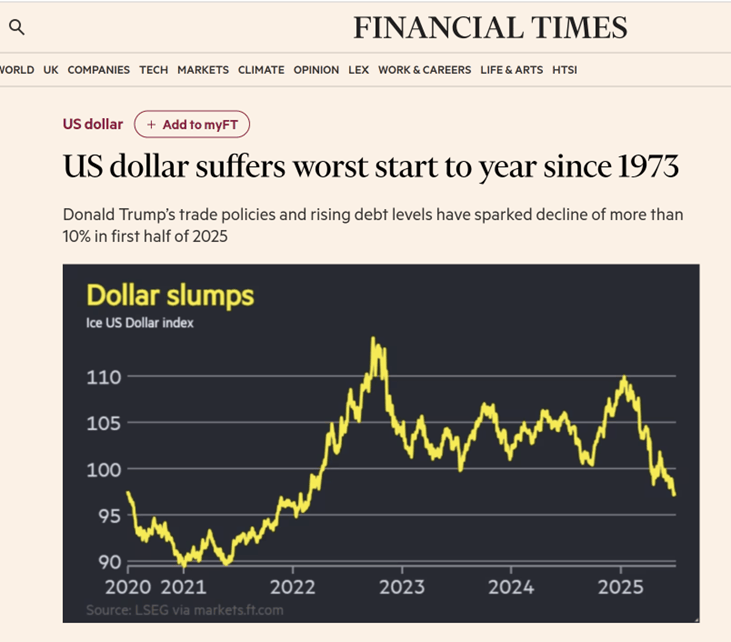
Group 1 - The core argument of the articles is that while Trump's tariff policies have led to some market volatility, the overall impact on the U.S. economy has been limited and within the normal range of economic fluctuations [1][3][4] - Analysts have differing views on the implications of Trump's policies, with some predicting significant economic turmoil while others argue that the changes are part of a normal economic cycle [3][4] - The success of Trump's economic policies hinges more on political factors rather than purely economic ones, as they aim to overturn decades of established trade policies [2][5] Group 2 - The analysis highlights that the S&P 500 index rose by 11.8% from April 1 to July 18, 2025, indicating a recovery and resilience in the market despite initial concerns [4] - The U.S. 10-year Treasury yield decreased from a peak of 4.61% on May 21 to 4.42% by July 18, suggesting a stabilization in the bond market [4] - The articles emphasize that while the tariff policies and a declining dollar may alter trade dynamics, they do not necessarily correlate with a significant downturn in U.S. economic growth [5][13] Group 3 - Trump's administration has seen the dollar experience its fastest decline since 1973, which is viewed as a strategic move to enhance U.S. competitiveness in global markets [6][10] - The combination of tariff measures and dollar depreciation has led to an estimated 25% increase in the average price of imported goods within six months [11][13] - The articles suggest that while the trade geography of the U.S. may change significantly, the overall economic slowdown is driven by different underlying economic forces [13]
全球金融市场波动加大 人民币资产吸引力上升
Zhong Guo Qing Nian Bao· 2025-07-28 23:14
Group 1 - 30% of central banks surveyed plan to increase allocation to RMB assets, indicating a growing interest in diversifying investments into China [1] - The RMB has appreciated by 1.9% against the USD in the first half of the year, with a trading range between 7.15 and 7.35 [1] - Foreign investment in RMB-denominated bonds has exceeded $600 billion, reflecting a stable trend since 2025 [1] Group 2 - The RMB is experiencing structural changes, with a shift in expectations towards appreciation rather than depreciation [2] - The long-term low interest rate environment in China, with 10-year government bond yields below 2%, contrasts with the US yields above 4%, supporting RMB's internationalization [2] Group 3 - The credibility of US Treasury bonds is declining, as evidenced by increased volatility and a 5% drop in the USD index following tariff announcements [3][4] - The shift in trade dynamics due to tariffs may enhance the use of non-USD currencies, including RMB, in international trade settlements [5] Group 4 - The current low allocation of global stock assets to China (1.7%) compared to the US (54%) suggests a potential for systematic correction in the future [6] - China's manufacturing sector continues to lead globally, with a manufacturing value added of over 40.5 trillion yuan, accounting for approximately 30% of global manufacturing [7] Group 5 - The market position of the RMB is improving, with foreign investors increasingly holding RMB-denominated assets, which currently account for about 3%-4% of total market value [8] - Economic stability and the effectiveness of domestic demand policies are expected to further enhance the attractiveness of RMB assets to foreign investors [8] Group 6 - The RMB's exchange rate is expected to remain stable, supported by high-quality economic development and ongoing foreign exchange market resilience [9] - The need for the RMB to maintain appropriate elasticity in its exchange rate is emphasized to mitigate downward pressure [9] Group 7 - Recent measures to facilitate cross-border investment and financing are expected to enhance the attractiveness of RMB assets, with significant reductions in processing times for foreign investment [10] - Allowing for a moderate appreciation of the RMB could help alleviate concerns about currency depreciation among foreign investors, fostering a positive investment environment [10][11]
联合解读反内卷最新进展
2025-07-28 01:42
Summary of Key Points from Conference Call Records Industry Overview - The conference call discusses the "anti-involution" policy in China, aimed at improving the Producer Price Index (PPI) and industrial enterprise profits, thereby enhancing the macroeconomic environment. This policy is expected to benefit from global inflation and the depreciation of the US dollar [1][2][3]. Core Insights and Arguments - **PPI Improvement**: Significant improvement in PPI is anticipated in the first half of next year, with a possibility of turning positive in the second half, which may shift trading strategies from a "barbell" approach to an "inflation" strategy [1][3]. - **Currency Trends**: The US dollar is expected to continue its depreciation, with the Federal Reserve likely to cut interest rates, while Europe and Japan may end their rate cuts or increase rates. The Chinese yuan may strengthen beyond 7 [1][4]. - **Foreign Investment**: If domestic demand in China is boosted and price recovery expectations are clear, foreign capital may significantly enter the A-share market, favoring leading blue-chip stocks, but this would be unfavorable for the bond market [1][4]. - **Market Dynamics**: The anti-involution policy has triggered two waves of market trends, driven by PPI recovery, improved macroeconomic conditions, global inflation, and the interaction of domestic and foreign capital markets [1][5]. - **Policy Differences**: The anti-involution approach differs from previous supply-side reforms by addressing not only production capacity but also corporate behavior, local government actions, and industry self-regulation [1][8]. Important but Overlooked Content - **Debt Market Pressure**: The bond market is facing adjustment pressure due to heightened risk appetite and historically high valuations. Short-term, the bond market may experience a rebound after a sharp decline, but caution is advised against chasing prices during rebounds [1][12][13]. - **Cement Industry Response**: The cement industry is implementing measures such as capacity replacement and staggered production to address the anti-involution challenge, with expectations of an 8%-12% decline in supply this year [3][19]. - **Pork Industry Adjustments**: The pork industry is undergoing supply-side reforms, with major companies like Muyuan actively reducing breeding stock, which is expected to drive up pork prices and impact the Consumer Price Index (CPI) positively [3][25][26]. - **Environmental Regulations**: New environmental standards in the pig farming sector are seen as a means to control production capacity without significant resource consumption, which could also positively affect CPI [27]. Conclusion - The anti-involution policy is a multifaceted approach aimed at stabilizing and improving various sectors of the economy, with significant implications for asset prices, foreign investment, and market dynamics. The bond market, cement industry, and pork sector are particularly highlighted for their responses to these policies.
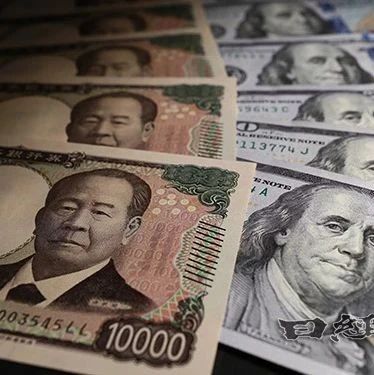
日元与美元在走向“双输”?
日经中文网· 2025-07-24 02:24
Core Viewpoint - The article discusses the potential depreciation of the Japanese yen and the U.S. dollar due to economic concerns, highlighting a shift in market focus from Japan's fiscal issues to the economic outlook of the U.S. [1][4] Group 1: Japanese Yen and U.S. Dollar Dynamics - The recent Japanese Senate election results have led to predictions of significant yen depreciation and further dollar appreciation, yet the forex market remains calm [1][3] - There is a historical correlation between the interest rate differential between Japan and the U.S. and the yen's exchange rate, with a tendency for yen depreciation when the differential widens [3] - Despite the yen weakening to around 149 yen per dollar, market participants predict a stabilization around 140 yen per dollar by year-end, indicating a potential reversal in yen appreciation [3][4] Group 2: Economic Policies and Market Sentiment - Trump's economic policies, including tariffs and tax cuts, may increase domestic inflationary pressures and contribute to concerns about the U.S. economic outlook [4] - Investment funds are shifting from the yen and dollar towards the euro, with the euro seen as a safer option amid signs of recovery in the German economy [4][5] - The Japanese government's recent economic outlook indicates a deterioration for the first time in nearly five years, complicating governance as the ruling party loses majority control [5]
对冲关税冲击!美元贬值成关键变量
第一财经· 2025-07-23 23:47
Core Viewpoint - The weakening of the US dollar has unexpectedly become a growth factor for some companies' earnings, offsetting the impact of trade policy changes under the Trump administration [1][3]. Group 1: Impact of Currency Fluctuations - In January, the US dollar index reached a three-year high of 110, raising concerns among multinational companies about negative impacts on earnings due to currency fluctuations [2]. - Six months later, the depreciation of the dollar has alleviated the impact of tariffs imposed by the Trump administration, which had increased costs and disrupted financial planning for companies [3][4]. - The dollar's decline has increased the value of overseas revenues for US companies, allowing foreign exchange earnings to be converted into more dollars, while also making US goods more competitive for export [4]. Group 2: Company Performance - PepsiCo reported a second-quarter earnings per share (EPS) that exceeded expectations by 4.5%, with approximately 40% of its net income derived from international business, benefiting from the weaker dollar [5]. - Johnson & Johnson's second-quarter revenue increased by 5.8%, with the company adjusting its full-year revenue forecast and highlighting the positive impact of foreign exchange [5][6]. - Other companies such as 3M, Levi's, and Netflix also reported similar positive earnings influenced by currency factors [6]. Group 3: Sector Analysis - According to data from LSEG, over the past 20 years, a 1% depreciation of the dollar has led to an approximate 0.6% increase in the EPS growth rate of the S&P 500 index [9]. - Goldman Sachs identified that sectors such as information technology, materials, energy, communication services, healthcare, and industrials have a higher exposure to overseas markets [10]. Group 4: Market Sentiment and Future Outlook - The weakening dollar may serve as an additional boost to earnings reports, reinforcing the market consensus of robust performance for the current reporting season [7]. - Despite the benefits from currency fluctuations, the overall impact on corporate performance remains limited, with the economic outlook and consumer demand being the key drivers [12].