电动化

Search documents
智能驾驶与电混双擎进阶,一汽丰田全面焕新谋未来
Zhong Guo Qing Nian Bao· 2025-11-20 14:16
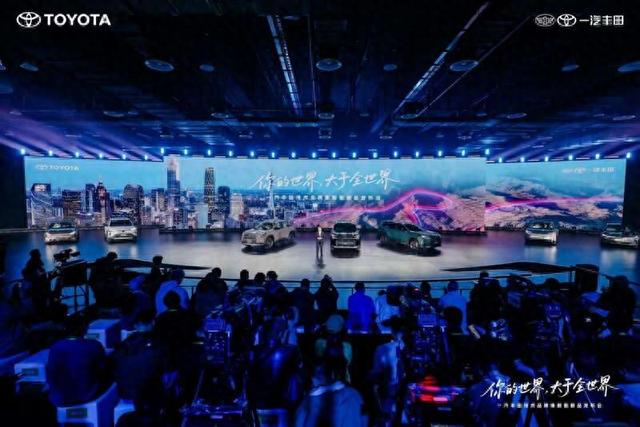
Core Viewpoint - FAW Toyota aims to enhance its competitiveness in the fields of intelligence, electrification, and premium offerings with the launch of the upgraded IT'S TiME 3.0 technology brand and new vehicle models [2][6] Group 1: Technology and Product Launch - FAW Toyota held a product launch event in Guangzhou, introducing the upgraded IT'S TiME 3.0 technology brand along with three new models: the all-new intelligent hybrid Corolla, the new bZ3 electric vehicle, and the all-new RAV4 [2] - The IT'S TiME technology brand has evolved to its 3.0 stage, focusing on smart driving through a dual approach of "in-house development + open collaboration" [3] - The Toyota Pilot intelligent driving assistance system is based on the TSS safety system 4.0, enhancing its ability to predict and respond to complex driving scenarios [3] Group 2: Vehicle Specifications and Features - The all-new RAV4 features significant upgrades in design, intelligence, and power, with a global cumulative sales of over 15 million units [4] - The RAV4 offers two intelligent hybrid versions (2.0L and 2.5L) and a 2.0L gasoline version, achieving a fuel consumption of 3.99 liters per 100 kilometers and a range exceeding 1400 kilometers [5] - The new Corolla hybrid version has an improved wheelbase and body length, with a fuel consumption as low as 4.13 liters per 100 kilometers [5] Group 3: Strategic Direction - FAW Toyota is responding to diverse market demands by adopting multiple technology routes, transitioning from hybrid to pure electric vehicles and from sedans to SUVs [6]

吉利汽车(00175):吉利汽车2025年Q3业绩点评:单车盈利持续提升,极氪+领克业绩改善,业绩符合预期
Changjiang Securities· 2025-11-20 10:15
Investment Rating - The investment rating for Geely Automobile is "Buy" and is maintained [7] Core Views - Geely Automobile reported a revenue of 239.48 billion yuan for the first three quarters of 2025, representing a year-on-year increase of 26.4%. Total sales reached 2.17 million vehicles, up 45.7% year-on-year, with a core net profit attributable to shareholders of 10.62 billion yuan, an increase of 59% year-on-year [2][4] - The new platform has empowered Geely to enter a new product era, with the GEA architecture supporting a new vehicle cycle. The brands Zeekr, Lynk & Co, and Galaxy are all performing well, and the transition to new energy vehicles is progressing smoothly, leading to increased profitability [2][8] - The company’s strong foundation in fuel vehicles and innovative overseas expansion strategies are opening new markets. The intelligent driving strategy is accelerating the enhancement of driving capabilities, indicating significant profit elasticity in the new vehicle cycle [2][8] Summary by Sections Financial Performance - In Q3 2025, Geely achieved a revenue of 89.19 billion yuan, a year-on-year increase of 26.5% and a quarter-on-quarter increase of 14.7%. Total sales for Q3 were 761,000 vehicles, with significant growth in the Galaxy and Lynk & Co brands [8] - The Q3 net profit attributable to shareholders was 3.82 billion yuan, a year-on-year increase of 59.3%, with a single vehicle profit of 5,000 yuan, up 11.8% year-on-year [8] Brand Performance - In Q3, Zeekr and Lynk & Co combined sales reached 140,000 vehicles, with total revenue of 31.56 billion yuan, reflecting a year-on-year increase of 9.1%. However, both brands reported a net loss of 460 million yuan for the quarter [8] Strategic Initiatives - Geely plans to launch 10 new energy models in 2025, with significant focus on electric and intelligent vehicles. The new models will feature advanced driving assistance systems, enhancing the company's competitive edge in the market [8] - The company is focusing on brand strategy, with a strong emphasis on electrification and intelligence, supported by a robust new vehicle cycle [8]

三款新车齐发,一汽丰田技术品牌迈入新阶段
Bei Jing Ri Bao Ke Hu Duan· 2025-11-20 06:22
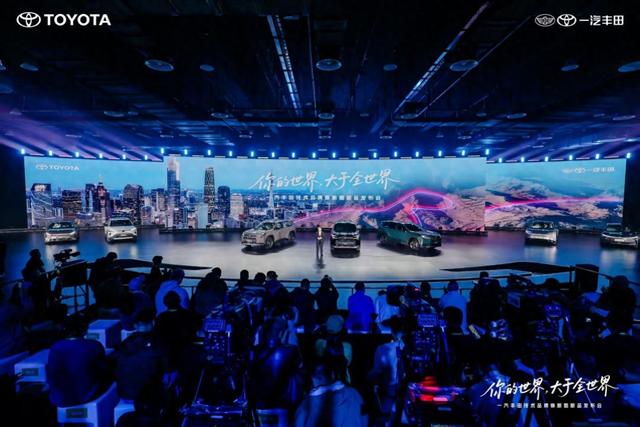
Core Insights - FAW Toyota held a technology brand renewal and new product launch event on November 19, introducing the IT'S TiME 3.0 technology brand and three new models, marking a significant advancement in the areas of intelligence, electrification, and premium offerings [1][8] Group 1: Technology Advancements - The IT'S TiME 3.0 technology framework achieves breakthroughs in intelligent driving, smart space, and hybrid technology [3] - The Toyota Pilot system has been upgraded to version 4.0, integrating self-developed TSS safety systems with extensive driving data to predict complex road risks [3] - The collaboration with Momenta has led to the development of the INP navigation driving assistance system, which includes 33 perception hardware units and 544 TOPS computing power, enabling features like lane change assistance [3] Group 2: New Model Features - The new intelligent hybrid Corolla features a 50mm longer wheelbase, a 470-liter trunk, and a fuel consumption of 4.13 liters per 100 kilometers, with a range of 1000 kilometers on a full tank [5] - The new bZ3 model is highlighted for its design and technology, including a stylish interior with ergonomic seats and a three-screen system, achieving a fuel consumption as low as 3.99 liters per 100 kilometers and a range exceeding 1400 kilometers [5] - The new RAV4 features a "hammerhead shark" hood design and advanced safety configurations, including 24 high-precision sensors and 13 L2-level driving assistance functions [5] Group 3: Strategic Direction - FAW Toyota's "oil-electric co-prosperity" strategy addresses diverse market demands, leveraging the IT'S TiME 3.0 technology brand to achieve dual breakthroughs in intelligence and electrification [8]
半年仅卖713辆 英菲尼迪在华何去何从?
Xi Niu Cai Jing· 2025-11-20 05:12
曾凭借热门综艺《爸爸去哪儿》冠名在中国市场迅速走红的日系豪华品牌英菲尼迪,如今正面临入华以来最严峻的生存考验。2025年前三季度,其在中国市 场累计销量仅千余辆,同比下滑超30%,单月销量甚至不足百辆,经销商网络几近瘫痪,部分门店已转售其他品牌。从2017年巅峰时期的4.84万辆年销,到 如今被主流豪华品牌单款车型周销量碾压,英菲尼迪如今的市场表现令人唏嘘。 回顾英菲尼迪的入华历程,2014年无疑是其高光的开始,年销达3万辆,2017年更是一路攀升。然而,此后其销量便急转直下,2018-2024年连续7年大幅下 滑,2025年下滑态势也一直在持续,上半年销量仅713辆,同比下降超30%,7-9月销量也持续低迷,前三季度整体销量千余辆,市场表现可谓一落千丈。 当然,英菲尼迪也没有停止自救的步伐,根据规划,到2030年其将推出23款电驱化车型(含15款纯电动车),目标实现电动化车型占全球销量超50%。然 而,在如今竞争激烈的汽车市场,英菲尼迪早已错过重新崛起的最佳时机,2030年前,其究竟能否推出符合市场需求的产品,重新赢得消费者青睐,依然是 未知数。对此,GPLP犀牛财经也将继续关注。 英菲尼迪的衰落,离不开中 ...

电池厂遭突袭获白宫道歉,现代汽车称对美投资计划不变
Zhi Tong Cai Jing· 2025-11-19 06:13
穆尼奥斯曾表示,此次突袭将因劳动力短缺导致工厂建设延迟至少两到三个月,这给本就因美国对韩商 品高额关税(贸易谈判持续数月)而遭受重创的现代汽车带来了更严峻的挑战。 现代汽车表示,关税使其第三季度损失约1.8万亿韩元(约合12亿美元)。随着其加大在美国的投资以缓解 关税影响,该公司下调了2025年的利润预期,同时提高了整体收入预测。 这次突袭事件暴露了韩国在美国清洁能源计划中投资的数十亿美元所面临的风险。此次震撼行业的突击 行动中,被拘留者手腕、腰部和脚踝被铐的画面广为流传,同时也加剧了韩国与美国之间的外交摩擦。 穆尼奥斯称,该事件是一个"糟糕的意外",但这丝毫没有削弱现代汽车在美投资的承诺,他补充说这家 汽车制造商将加倍落实其计划。"我们不能仅仅因为发生了一件明显是意外的事情——甚至收到了美国 总统的道歉——就说这将改变我们的计划,"他说。"我们加倍投入。我们希望维持在美国的投资。我们 认为,从中长期来看,情况会好转。但显然,我们需要对供应链以及我们将要生产的产品进行大量调 整。" 现代汽车公司首席执行官何塞.穆尼奥斯表示,尽管其佐治亚州电池工厂因涉嫌使用无证工人遭到突袭 搜查,这家韩国汽车制造商仍将继续推进 ...
第二十届中国经济论坛平行论坛汽车大咖金句集锦
Zhong Guo Qi Che Bao Wang· 2025-11-19 06:03
Core Viewpoint - The forum emphasized the importance of the automotive industry as a pillar of macroeconomic development and discussed strategies for the "14th Five-Year Plan" to enhance China's automotive advantages [1][3]. Group 1: Industry Development - The automotive industry in China has transitioned from "catching up" to "running alongside" global competitors during the "14th Five-Year Plan," particularly in electrification and intelligent networking [9]. - The "15th Five-Year Plan" will focus on broader innovation, including advancements in materials, basic technologies, and smart chassis applications [10]. - The competitive landscape will shift from single product competition to ecosystem competition, necessitating localized and cross-sector collaboration for survival [13]. Group 2: Regional Opportunities - Nansha District is positioned as a hub for advanced manufacturing, particularly in smart connected and new energy vehicles, benefiting from national strategic missions and policy support [16]. - Nansha is recognized as the first area in Guangzhou to pilot intelligent connected vehicle mixed traffic, highlighting its role as a gateway for open cooperation and development [16]. Group 3: Globalization and Cooperation - The international cooperation trend in the automotive industry will become more pronounced during the "15th Five-Year Plan," with a focus on electric vehicle platforms and technology sharing [19]. - The global penetration rate of new energy vehicles still has room for growth, presenting investment opportunities for the Chinese automotive supply chain [19]. - Insurance can enhance the high-quality development of new energy vehicles, optimizing the automotive industry chain and supporting China's global advantage in this sector [24]. Group 4: Future Outlook - By 2025, significant technological advancements and product launches are anticipated, with companies like NIO aiming to play a key role in leading the industry [28].

申万宏源:2026年汽车行业换道拥抱科技浪潮 电动化与AI智能化双重变革
智通财经网· 2025-11-19 03:21
Group 1: Overall Industry Outlook - The automotive industry is entering a new growth phase driven by mid-to-high-end vehicle replacements and overseas expansion, with limited impact from policy changes expected next year [1] - The demand for vehicles is anticipated to recover significantly, particularly in the mid-to-high-end segments, due to changes in consumer habits, capabilities, and product competitiveness compared to eight years ago [1] - The global sales of Chinese smart electric vehicles are expected to approach 10 million units in five years, indicating a strong international market potential [1] Group 2: Automotive Components - Automotive components represent a typical example of China's "high-end manufacturing," characterized by scale effects, cost advantages, and technological superiority [2] - New applications such as robotics and low-altitude economy are becoming essential areas for component manufacturers, with a significant focus on companies like Tesla and Zhiyuan [2] - The globalization strategy is seen as a long-term growth path for leading automotive component companies, particularly with an emphasis on European markets by 2026 [2] Group 3: AI Integration - The automotive industry is undergoing dual transformations of electrification and AI integration, with AI expected to play a crucial role in the physical world [3] - AICar is projected to become a super intelligent entity by integrating four major intelligent systems: driving, cabin, chassis, and power [3] - The future will likely see technology spillover from smart vehicles to robotics, low-altitude economy, and deep-sea technology [3]

深度洞察行业趋势,赋能客户战略布局
QYResearch· 2025-11-19 01:47
Core Insights - The Aerial Work Platform (AWP) industry in China is experiencing unprecedented growth opportunities due to the booming infrastructure construction, expanding warehousing and logistics, industrial manufacturing transformation, and steady progress in commercial real estate [4][11]. Research Framework - A comprehensive research framework was established to ensure scientific and systematic results, focusing on multiple dimensions of data collection and analysis [5]. Company Data Analysis - The analysis included a deep dive into the annual reports and financial disclosures of major listed companies in the AWP sector, examining key financial indicators such as revenue, gross margin, R&D investment intensity, and overseas market sales ratio to map the competitive landscape [6]. Collaboration with Authorities - Collaboration with authoritative organizations like the China Engineering Machinery Industry Association Aerial Work Machinery Branch provided critical data on equipment ownership, new machine sales, and product structure evolution over the past three years, reflecting industry dynamics [7]. Trade Data Analysis - Customs trade data analysis was conducted on core products like self-propelled scissor lifts and boom lifts, exploring China's AWP product export destinations, price trends, and regional market penetration [8]. Industry Interviews - In-depth interviews with industry participants, including rental companies, manufacturers, maintenance service providers, and experts, were conducted to gather insights on market cycles, rental market maturity, product iteration directions, and evolving customer needs [9]. Competitive Landscape - A comprehensive competitive assessment model was developed, identifying key players such as Zhejiang Dingli, XCMG, and others, analyzing their product structure, market channel strategies, and international development approaches [10]. Future Development Trends - The AWP industry is expected to see accelerated electrification, innovation in rental models, potential in overseas markets, and the implementation of intelligent applications over the next five years [11][12]. R&D Hotspots - Current R&D hotspots in the industry include lightweight design optimization, energy-efficient electric drive systems, smart safety systems, and integration of remote diagnostics with IoT [13]. Policy and Regulation Trends - Key regulatory trends include the standardization of special equipment management, stricter operational qualification reviews, and a shift towards low-noise, zero-emission equipment in urban projects [14]. Strategic Recommendations - Strategic recommendations for clients include expanding overseas market presence, advancing electrification transitions, and enhancing customer service systems to build a closed-loop ecosystem [15]. Project Value - The successful delivery of the research report has enabled clients to gain a comprehensive understanding of industry dynamics, accurately forecast future trends, and clarify their market positioning [16].

最后一块电动车新大陆,中国先上岸
汽车商业评论· 2025-11-18 23:08
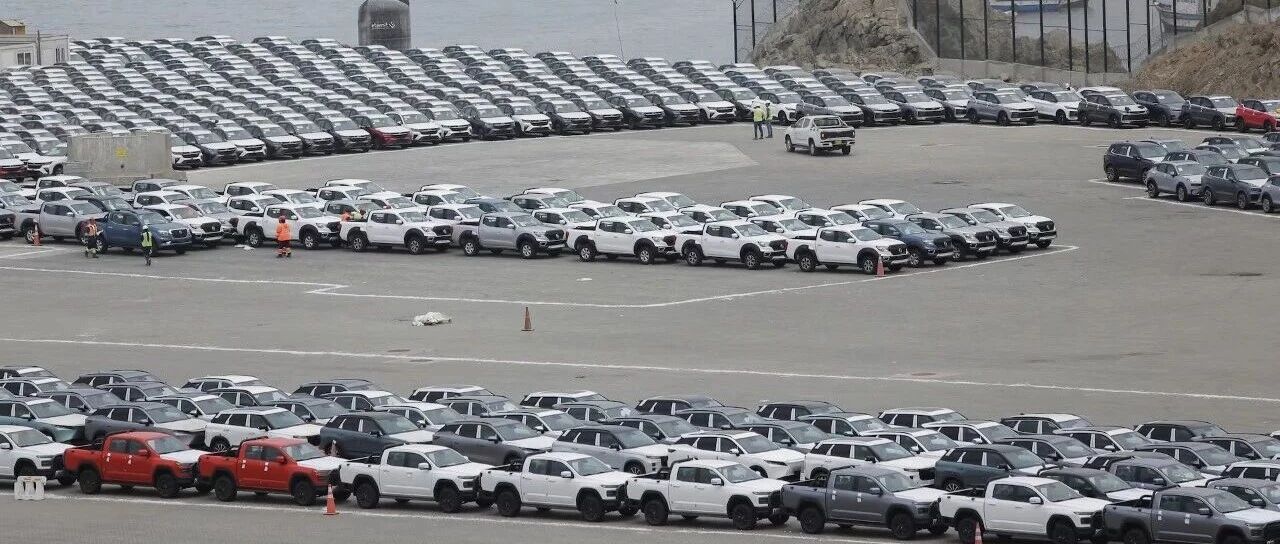
Core Viewpoint - The electric vehicle (EV) market in South America is experiencing rapid growth, with a significant increase in market penetration and a shift in consumer preferences away from traditional fuel vehicles, despite the absence of Tesla as a major player in the region [4][21]. Group 1: Market Growth and Trends - The electric vehicle penetration rate in Latin America has doubled from approximately 2% to 4% in 2024, significantly outpacing the global average [4][5]. - Brazil remains the largest automotive market in Latin America, with EV sales exceeding 125,000 units in 2024, accounting for over 6% of the local passenger car market [7]. - Countries like Uruguay, Costa Rica, and Colombia have seen EV penetration rates surpassing 10% [7]. - Chile recorded a 10.6% share of EVs in new car registrations by September 2025, while Brazil reached 9.4% in August of the same year [7]. Group 2: Consumer Behavior and Cost Structure - The shift in consumer behavior towards EVs is driven by changes in cost structures, with local electric vehicles priced at about 60% of Tesla's models [8]. - Increased awareness of operational cost advantages, such as lower charging and maintenance costs, is influencing consumer decisions [8][9]. - The practicality of EVs as a commuting option is becoming more appealing as purchase and usage costs are clarified [9]. Group 3: Supply Chain and Local Manufacturing - The opening of the Chancay Super Port in Peru has halved the shipping time for vehicles from Asia, facilitating the entry of foreign brands into the South American market [12]. - Brazil's government is reinstating higher import tariffs on EVs, prompting companies to ramp up local manufacturing and import volumes before the tax increase takes effect [13]. - Companies like Great Wall Motors are establishing local factories, indicating a strategic shift towards local production to enhance competitiveness in the region [15]. Group 4: Competitive Landscape - Tesla's market presence in South America is minimal, with the company lacking official import channels in countries like Peru, allowing other brands to fill the void [18]. - Chinese brands, including BYD, are leading in EV sales across several South American countries, while traditional automakers are adapting by introducing hybrid and electric models [19]. - The competitive landscape is evolving, with new entrants leveraging pricing and distribution advantages to challenge established brands [21].

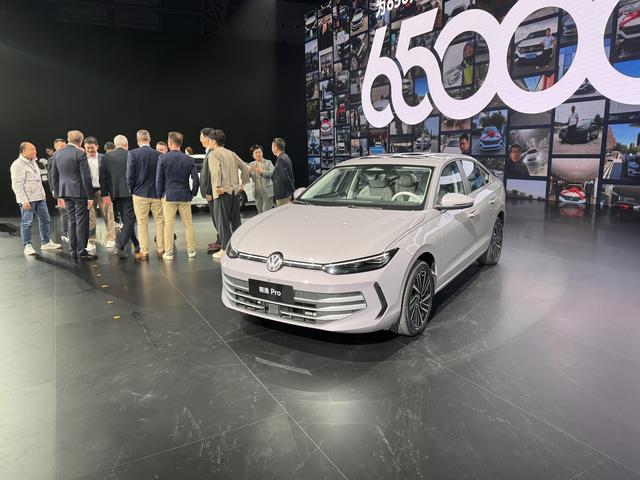
不到9万元起售,上汽大众朗逸Pro以升级捍卫“国民家轿”之名
Guan Cha Zhe Wang· 2025-11-18 02:00
Core Insights - SAIC Volkswagen has officially launched the new Lavida Pro, with a limited-time price range of 88,800 to 112,900 yuan, aiming to strengthen its position in the compact sedan market in China [1][2] Product Features - The Lavida Pro has been upgraded to A+ class dimensions, with a length of 4,720 mm, and features a four-wheel independent suspension for improved ride comfort [2][5] - It is equipped with the Qualcomm 8155 chip and an upgraded MQB-EVO intelligent architecture, enhancing its smart cabin capabilities with integrated Tencent services [7] Market Positioning - The Lavida series has sold over 6.5 million units since its launch in 2008, maintaining a strong presence in the compact sedan market [2] - The introduction of the Lavida Pro reflects SAIC Volkswagen's strategy to compete against rising domestic electric vehicle brands and traditional rivals like Nissan Sylphy and Toyota Corolla [9]