
贸易战

Search documents
Analysts reset gold forecasts as prices hit wall
Yahoo Finance· 2025-10-22 19:12
Core Insights - Gold prices have reached all-time highs in 2025, driven by economic concerns, job losses, and the trade war, with a year-to-date increase of over 50% and a 20% surge since April [1][4] - The performance of gold has significantly outpaced stock market returns, with the S&P 500 and Nasdaq rising 15% and 19% respectively [1] - Gold has also outperformed Treasury bonds, which gained about 8% due to Federal Reserve interest rate cuts [2] Economic Context - The rise in gold prices is supported by fears of a potential reckoning in the U.S. economy, despite GDP growth above 3% in the second and third quarters [4] - Job cuts reported by Challenger, Gray and Christmas totaled 946,426 through September, marking a 55% year-over-year increase [5] - The unemployment rate reached 4.3% in August, the highest since 2021, with private data indicating worsening conditions in September [6][7] Market Dynamics - Recent concerns have emerged regarding the sustainability of gold's rally, particularly after a significant drop of over 6% in a single day, leading to a decline of more than 5% over the past five days [3] - The unique nature of gold as a stored asset makes it susceptible to volatile price movements based on economic expectations [3]
从防御到对峙,我们已做好最坏打算?
Hu Xiu· 2025-10-22 11:35
Group 1 - The article discusses the implications of Trade War 2.0 on the stock market and investments, highlighting the potential for increased volatility and uncertainty in financial markets [1] - It examines China's countermeasures in response to trade tensions, suggesting that these actions are strategic and aimed at protecting national interests [1] - The article questions whether China has the capability to escalate the situation significantly, indicating a complex interplay of power dynamics in international trade [1] Group 2 - The analysis includes potential impacts on specific sectors, noting that industries heavily reliant on exports may face challenges due to tariffs and trade barriers [1] - It also addresses investor sentiment, suggesting that uncertainty may lead to cautious investment strategies and a reevaluation of risk exposure [1] - The article emphasizes the importance of monitoring economic indicators and geopolitical developments to assess future market trends [1]
特朗普没料到,刚给中国“下战书”,加拿大就在背后狠捅自己一刀
Sou Hu Cai Jing· 2025-10-22 07:09
Group 1 - Trump's plan to impose a 100% tariff on all Chinese goods starting November 1 is part of a broader trade war strategy that has escalated since he took office, with previous tariffs increasing from 84% to 125% [4] - The proposed tariffs could create a significant barrier to trade between the US and China, potentially leading to trade stagnation and disruption [4][10] - The immediate reaction in the US stock market was severe, with major indices like the Dow Jones and Nasdaq experiencing significant declines, particularly in the semiconductor sector [6] Group 2 - Canada's economic ties to the US mean that any trade policy changes in the US will have direct repercussions on Canada, which has historically faced challenges during US trade conflicts [7][11] - Canada exports approximately 5 billion Canadian dollars worth of canola to China annually, making it a critical revenue source that is difficult to replace [7] - The potential agreement between China and Australia regarding canola could threaten Canada's market share, prompting Canadian officials to seek to repair trade relations with China [9][12] Group 3 - Canada's foreign policy is shifting towards prioritizing its own interests in relations with China, moving away from a historical pattern of following US actions [10][14] - The Canadian government is attempting to diversify its international strategy by maintaining cooperation with the US while also engaging with other countries [11][12] - This strategic adjustment reflects a broader trend where countries reassess their alliances and trade relationships in light of changing economic pressures [14]


贸易战担忧缓解澳元收复失地
Jin Tou Wang· 2025-10-22 06:02
Group 1 - The Australian dollar (AUD) against the US dollar (USD) has shown a positive trend, rising above 0.6500, with the latest exchange rate at 0.6505, reflecting a 0.28% increase. This rise is attributed to optimistic signals in international trade, particularly regarding a potential trade agreement between the US and China [1] - US President Trump indicated that implementing comprehensive tariffs on China is not sustainable and expressed hope for a high-quality agreement between the two nations. However, he warned of a potential 155% tariff if negotiations fail, making the upcoming US-China trade talks a focal point for the market [1] - The US government shutdown has entered its 22nd day, with the Senate failing to pass a funding bill for the 11th time, indicating a continued legislative deadlock [1] Group 2 - Market attention is shifting towards the US Consumer Price Index (CPI) data set to be released on October 24, with expectations of a 0.4% month-on-month increase and a 3.1% year-on-year rise. Additionally, the Federal Open Market Committee (FOMC) meeting on October 29 is anticipated to result in a 25 basis point rate cut, which may further influence the AUD's performance [2] - Technical analysis indicates that the AUD/USD exchange rate has gained some bullish momentum, supported by the stability of the current support level at 0.6475. However, the negative pressure from trading below the EMA50 continues to limit recovery opportunities in the near term [2] - The AUD/USD has failed to break through the key resistance level of 0.6535, with a lack of new catalysts suggesting a potential for continued volatility in the short term. Analysts have identified support levels at 0.6440 and 0.6415, and resistance levels at 0.6535 and 0.6630, indicating the need for investors to monitor upcoming catalysts [2]
瓶片短纤数据日报-20251022
Guo Mao Qi Huo· 2025-10-22 04:51
Report Industry Investment Rating - Not provided Core Viewpoints - PTA supply side is contracting, with Ningbo Yisheng Petrochemical Phase 4 reducing its load by 50% until the end of the month. PTA processing fees remain low, and industry profits are still constrained by overcapacity due to new device commissions. Polyester downstream load remains above 90%, but high load has not led to significant inventory accumulation. With the end of the peak seasons, there are concerns that textile and clothing demand will be affected by the trade war. PTA's operating rate may decline further, and it is difficult for PTA to have an independent market due to the falling crude oil prices. Bottle chips and short fibers continue to fluctuate with costs [2] Summary by Relevant Catalogs Price and Index Changes - PTA spot price increased from 4315 to 4320, PTA closing price rose from 4384 to 4414 [2] - MEG inner - market price decreased from 4100 to 4075, MEG closing price increased from 4003 to 4004 [2] - 1.4D direct - spun polyester staple fiber price decreased from 6355 to 6340, short - fiber basis increased from 199 to 218 [2] - 11 - 12 spread increased from 4 to 8, polyester staple fiber cash flow increased from 240 to 246 [2] - 1.4D imitation large - chemical fiber price decreased from 5450 to 5400, the spread between 1.4D direct - spun and imitation large - chemical fiber increased from 905 to 940 [2] - East China water bottle chip price decreased from 5602 to 5594, hot - filled polyester bottle chip price decreased from 5602 to 5594 [2] - Carbonated - grade polyester bottle chip price decreased from 5702 to 5694, outer - market water bottle chip price remained at 740 [2] - Bottle chip spot processing fee decreased from 539 to 535, T32S pure polyester yarn price remained at 10280 [2] - T32S pure polyester yarn processing fee increased from 3925 to 3940, polyester - cotton yarn 65/35 45S price remained at 16350 [2] - Cotton 328 price increased from 14480 to 14530, polyester - cotton yarn profit decreased from 1663 to 1654 [2] - Primary three - dimensional hollow (with silicon) price remained at 6920, hollow short - fiber 6 - 15D cash flow increased from 657 to 661 [2] - Primary low - melting - point short - fiber price remained at 7310 [2] Market Conditions - Short fiber: The main futures of polyester staple fiber rose 2 to 6070. The spot market is mainly price negotiation by production factories, with traders' prices fluctuating in a range. Downstream buyers purchase as needed, and market transactions are cautious. The price of 1.56dtex*38mm semi - bright natural white (1.4D) polyester staple fiber in the East China market is 6090 - 6460, in the North China market is 6210 - 6580, and in the Fujian market is 6060 - 6400 [2] - Bottle chips: The mainstream negotiation price of polyester bottle chips in the Jiangsu and Zhejiang markets is 5570 - 5710 yuan/ton, with the average price unchanged from the previous working day. PTA and bottle chip futures fluctuate slightly, most supply - side offers are stable, downstream terminal procurement enthusiasm is average, and market trading atmosphere is light [2] Load and Production and Sales - Direct - spun short - fiber load (weekly) decreased from 93.90% to 94.40%, polyester staple fiber production and sales decreased from 77.00% to 66.00% [3] - Polyester yarn startup rate (weekly) remained at 63.50%, regenerated cotton - type load index (weekly) decreased from 51.50% to 51.00% [3]
聚酯数据日报-20251022
Guo Mao Qi Huo· 2025-10-22 04:51
Report Summary 1) Report Industry Investment Rating - Not provided in the content 2) Core Viewpoints of the Report - PTA supply is shrinking, but its processing fee remains low due to over - capacity from new device production. With the end of the peak season and concerns about trade - war impacts on textile demand, PTA's operating rate may decline further, and it's difficult to have an independent market due to falling crude oil prices [2] - For ethylene glycol, port inventory in East China is low, but domestic device production and expected decline in overseas imports put pressure on prices. With the end of the polyester peak season and a weakening crude oil fundamental, polyester is expected to run weakly [2] 3) Summary by Relevant Catalogs a. Market Data Changes - INE crude oil rose from 435.8 yuan/barrel on Oct 20, 2025, to 437.7 yuan/barrel on Oct 21, 2025, an increase of 1.9 yuan [2] - PTA - SC increased from 1217.0 yuan/ton to 1233.2 yuan/ton, up 16.19 yuan; PTA/SC ratio rose from 1.3843 to 1.3877, an increase of 0.0034 [2] - CFR China PX increased from 783 to 784, and PX - naphtha spread rose from 246 to 247 [2] - PTA main contract futures price rose from 4384 yuan/ton to 4414 yuan/ton, an increase of 30 yuan; PTA spot price increased from 4315 yuan/ton to 4320 yuan/ton, up 5 yuan [2] - PTA spot processing fee rose from 119.6 yuan/ton to 121.8 yuan/ton, an increase of 2.2 yuan; the disk processing fee increased from 188.6 yuan/ton to 215.8 yuan/ton, up 27.2 yuan [2] - MEG main contract futures price rose from 4003 yuan/ton to 4004 yuan/ton, an increase of 1 yuan; MEG - naphtha decreased from - 102.16 yuan/ton to - 102.35 yuan/ton, a decrease of 0.2 yuan [2] - MEG domestic price decreased from 4100 yuan/ton to 4075 yuan/ton, a decrease of 25 yuan [2] b. Industry Chain Operating Rates - PX, PTA, MEG operating rates and polyester load remained unchanged at 84.62%, 76.95%, 65.39%, and 89.38% respectively [2] c. Polyester Product Prices and Cash Flows - POY150D/48F decreased from 6390 yuan/ton to 6340 yuan/ton, a decrease of 50 yuan; POY cash flow decreased from 77 to 31, a decrease of 46 [2] - FDY150D/96F remained unchanged at 6605 yuan/ton; FDY cash flow increased from - 208 to - 204, an increase of 4 [2] - DTY150D/48F decreased from 7740 yuan/ton to 7735 yuan/ton, a decrease of 5 yuan; DTY cash flow decreased from 227 to 226, a decrease of 1 [2] - 1.4D direct - spun polyester staple fiber decreased from 6355 yuan/ton to 6340 yuan/ton, a decrease of 15 yuan; staple fiber cash flow decreased from 392 to 381, a decrease of 11 [2] - Semi - bright chip decreased from 5475 yuan/ton to 5465 yuan/ton, a decrease of 10 yuan; chip cash flow decreased from 62 to 56, a decrease of 6 [2] d. Product Sales Ratios - Long - filament sales ratio increased from 55% to 86%, an increase of 31% [2] - Staple - fiber sales ratio decreased from 68% to 66%, a decrease of 2% [2] - Chip sales ratio increased from 67% to 93%, an increase of 26% [2] e. Device Maintenance - A 2.2 - million - ton PTA device in East China slightly reduced its load, and the recovery time is to be tracked [2]
国泰君安期货商品研究晨报:能源化工-20251022
Guo Tai Jun An Qi Huo· 2025-10-22 01:57
1. Report Industry Investment Ratings - The report does not explicitly provide an overall industry investment rating. Instead, it offers individual ratings for various commodities, including "downside space limited," "rebound in the short - term," "sideways - to - bullish," "sideways in the short - term," "sideways with oil," "weak trend," etc. [2] 2. Core Views of the Report - The report analyzes the fundamentals, market trends, and provides trading suggestions for multiple energy and chemical commodities. It takes into account factors such as supply - demand balance, cost changes, macro - events, and policy impacts. For example, for PX, it suggests that the supply - demand is slightly tight, and factories can consider appropriate hedging; for PTA, it recommends reducing short positions as demand is expected to improve; for rubber, it is expected to be sideways - to - bullish; for synthetic rubber, it is expected to be sideways in the short - term, etc. [12][13][15] 3. Summary by Commodity PX, PTA, MEG - **Fundamentals**: PX prices were stable with some fluctuations, and the开工 rate of Chinese PX factories decreased slightly. PTA futures oscillated, and the spot market had a general negotiation atmosphere. MEG's arrival volume at some ports was announced, and the device load and coal - based start - up rate changed. Polyester's sales volume showed partial surges, and direct - spun polyester staple sales were average. [5][10][11] - **Trend and Suggestions**: PX is in a short - term sideways market, and factories are advised to hedge when PXN rises to $250/ton. PTA is in a sideways market, and short positions should be reduced. MEG short positions should also be reduced. [12][13][14] Rubber - **Fundamentals**: The futures and spot prices of rubber increased, trading volume rose, and positions decreased. The inventory in Qingdao decreased, and overseas raw material prices were firm. [16][18] - **Trend**: Sideways - to - bullish [15] Synthetic Rubber - **Fundamentals**: The futures price of butadiene rubber increased, trading volume rose, and positions decreased. The basis and monthly spread decreased. The prices of butadiene rubber and butadiene in the spot market changed slightly, and the start - up rate remained stable. [19] - **Trend and Reason**: Sideways in the short - term. There is fundamental pressure due to high supply, but the valuation is moderately low, and there are macro - events for support. [21] Asphalt - **Fundamentals**: The futures price of asphalt increased slightly, trading volume and positions changed. The basis decreased, and the monthly spread increased. The wholesale prices of asphalt in different regions decreased, and the refinery start - up and inventory rates increased slightly. [23] - **Trend**: Sideways with oil [22] LLDPE - **Fundamentals**: The futures price of LLDPE decreased slightly, the basis and monthly spread changed. The market price continued to decline weakly, and the terminal replenishment enthusiasm was low. [36] - **Trend and Reason**: Weak trend. Affected by the trade war, the raw material cost support weakened, the supply pressure increased, and the inventory pressure was high. [37] PP - **Fundamentals**: The futures price of PP decreased slightly, the basis and monthly spread changed. The domestic PP market was weakly sorted, and the downstream procurement enthusiasm was not high. [40][41] - **Trend and Reason**: Weak trend. Affected by the trade war, the oil price dropped, and the supply was high. [41] Caustic Soda - **Fundamentals**: The futures price of caustic soda was 2375, the spot price of 32% caustic soda in Shandong was 800, and the basis was 125. The Shandong liquid caustic soda market was generally stable. [44] - **Trend and Reason**: The far - month valuation is suppressed. There is no significant supply pressure in the short - term, but the alumina industry's low - profit pattern may affect the long - term demand. [45] Pulp - **Fundamentals**: The futures price of pulp increased slightly, trading volume rose, and positions decreased. The basis and monthly spread decreased. The domestic and international prices of pulp showed different trends. The market was stable, and the demand improvement was limited. [49][50][51] - **Trend**: Sideways [48] Glass - **Fundamentals**: The futures price of glass decreased, the basis and monthly spread changed. The domestic float glass market price decreased slightly, and the trading atmosphere was general. [53] - **Trend**: Weak trend [53] Methanol - **Fundamentals**: The futures price of methanol increased slightly, trading volume and positions decreased. The basis decreased, and the monthly spread increased. The spot price of methanol in different regions changed, and the market was regionally adjusted. [56][58] - **Trend and Reason**: Sideways with pressure. There is fundamental pressure from high imports and production, but the valuation is moderately low, and there are macro - events for support. [58][59] Urea - **Fundamentals**: The futures price of urea increased slightly, trading volume and positions decreased. The basis and monthly spread changed. The factory and trader prices of urea in different regions changed. The enterprise inventory increased, and the market trading atmosphere was weak. [61][62] - **Trend and Reason**: Sideways in the short - term, weak trend in the medium - term. The export has limited impact on price due to high social inventory, and the domestic demand is weak. [62][63] Styrene - **Fundamentals**: The futures price of styrene decreased, the EB - BZ spread increased, and the profit of non - integrated and integrated production decreased. The market is expected to be in a short - term sideways pattern, and the downstream demand is not optimistic. [64][65] - **Trend**: Short - term negative feedback [64] Soda Ash - **Fundamentals**: The futures price of soda ash decreased, the basis and monthly spread changed. The domestic soda ash market was stable with oscillations, and the production decreased slightly. The downstream demand was stable, and it is expected to be weakly sideways in the short - term. [69] - **Trend**: Weak trend [70] LPG and Propylene - **Fundamentals**: The futures prices of LPG and propylene changed slightly, trading volume and positions changed. The spreads of different regions changed. The start - up rates of PDH, MTBE, and alkylation decreased slightly. [72] - **Trend**: LPG's valuation is being repaired, and there are still macro - risks; propylene is in a short - term low - level sideways pattern. [72] PVC - **Fundamentals**: The futures price of PVC was 4699, the spot price in East China was 4600, the basis was - 99, and the 1 - 5 monthly spread was - 301. The PVC price oscillated weakly, the supply was expected to increase slowly, and the demand was stable. [79] - **Trend and Reason**: Weak trend. Affected by the trade war, the cost decreased, the supply was high, the domestic demand was weak, and the inventory was accumulating. [79] Fuel Oil and Low - Sulfur Fuel Oil - **Fundamentals**: The futures prices of fuel oil and low - sulfur fuel oil changed slightly, trading volume and positions decreased. The spot prices of fuel oil and low - sulfur fuel oil in different regions changed slightly, and the spread between high - sulfur and low - sulfur fuel oil was temporarily stable. [82] - **Trend**: Fuel oil is in a narrow - range sideways pattern with short - term weakness; low - sulfur fuel oil continues to be weaker than high - sulfur fuel oil. [82] Container Shipping Index (European Line) - **Fundamentals**: The futures prices of the container shipping index (European line) increased, trading volume and positions changed. The freight rates of European and US - West routes increased, and the spot freight rates of different carriers were announced. [84] - **Trend**: The reality is better than expected, and it is relatively resistant to decline. [84]
财经观察:海运价格上升,美零售业担忧“年底涨价”
Huan Qiu Shi Bao· 2025-10-21 22:31
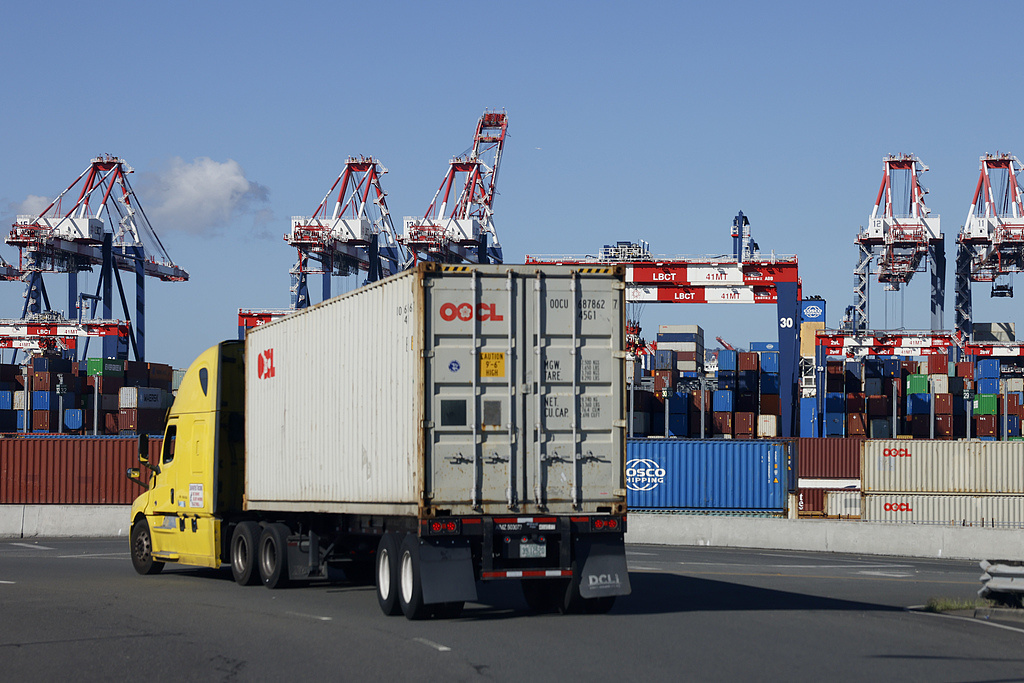
Core Viewpoint - The recent imposition of additional port service fees on Chinese entities by the U.S. has escalated tensions in U.S.-China trade relations, leading to increased shipping costs and potential impacts on U.S. retail prices [1][2]. Group 1: Trade and Shipping Dynamics - U.S. container imports in September fell by 8.4% month-on-month to approximately 2.3 million TEUs, with significant declines in categories such as aluminum products (-43.8%), footwear (-33.9%), and electrical equipment (-31.5%) [2]. - The total import volume from the top ten sources to the U.S. decreased by 9.4% month-on-month, with a notable drop in imports from China [2]. - The shipping costs have surged due to the implementation of new port fees and the threat of additional tariffs, with the Shanghai export container freight index rising by 12.9% week-on-week as of October 17 [2][6]. Group 2: Impact on U.S. Retail and Consumer Prices - The additional port fees imposed on Chinese vessels are expected to increase shipping costs, which will ultimately be passed on to U.S. consumers, particularly affecting prices of textiles and furniture [7][9]. - The National Retail Federation (NRF) predicts that U.S. monthly import volumes may drop below 2 million TEUs in the coming months, marking a new low for the year [6]. - Consumers are already experiencing rising prices and reduced availability of goods, with reports of empty shelves and increased costs for essential items [10]. Group 3: Future Outlook and Market Adjustments - Experts anticipate a decline in shipping industry profits and suggest that shipping companies will adjust capacity to mitigate price fluctuations [5]. - The ongoing trade tensions are prompting a shift in global trade patterns, with a noticeable movement away from trans-Pacific routes towards intra-Asian and Latin American markets [5][9]. - The uncertainty in U.S.-China trade relations is leading to a cautious approach among U.S. retailers as they prepare for the holiday season [6][9].
特朗普已做好失败准备,正悄悄松绑关税政策,想给自己留后路
Sou Hu Cai Jing· 2025-10-21 18:32
Core Points - The Trump administration's tariff policy is facing significant challenges, with the Supreme Court set to hold hearings on tariff overreach and reports of numerous product exemptions from tariffs [1][3] - The initial goal of the tariffs was to revive American manufacturing, but the strategy has backfired, leading to increased costs for consumers and businesses [5][9] - The trade war has not only failed to pressure China but has also resulted in American farmers and consumers suffering from the consequences of the tariffs [7][9] Group 1: Tariff Policy Overview - Trump's tariff policy began on April 2, 2025, with tariffs on multiple countries, particularly increasing rates on China to 145% [3] - The policy was framed as a means to revitalize American manufacturing, but it was criticized as a display of personal power rather than a sound economic strategy [3][5] - The tariffs have led to significant inflationary pressures, with the Federal Reserve warning of long-term impacts and supply chain disruptions [5] Group 2: Economic Impact - Major retailers like Walmart and Home Depot protested against the tariffs, indicating that they would lead to higher prices for consumers [5] - Companies attempted to shift production to countries like Vietnam and Mexico to avoid tariffs, but this resulted in a 37% increase in supply chain costs [5] - The anticipated "manufacturing return" has not materialized, with companies like TSMC facing delays due to a lack of supporting suppliers in the U.S. [5][9] Group 3: International Trade Dynamics - China's response to the tariffs included diversifying its trade partnerships, with ASEAN becoming its largest trading partner, reflecting a shift away from reliance on the U.S. market [7] - The legal foundation of Trump's tariff policy is under scrutiny, with potential implications for previously negotiated trade agreements if the administration loses in court [7][9] - The administration's strategy has evolved to include exemptions for certain goods, indicating a retreat from the original hardline stance [9] Group 4: Conclusion and Future Outlook - The overall outcome of the tariff policy has been detrimental, with significant losses in the stock market and ongoing inflationary pressures [11] - Trump's recent actions, such as proposing tariffs on imported films, highlight the desperation and absurdity of the current trade strategy [11]

X @Yuyue Ⓜ️Ⓜ️T
Yuyue· 2025-10-21 16:59
Market Dynamics - Insider trading activity observed with large positions being taken by individuals connected to political figures [1] - Potential geopolitical implications as trading strategies appear linked to US-China trade relations [1] Risk Assessment - High volatility expected due to the involvement of politically connected individuals and potential for market manipulation [1] - Uncertainty surrounding trade war outcomes could significantly impact market positions [1]