CPI

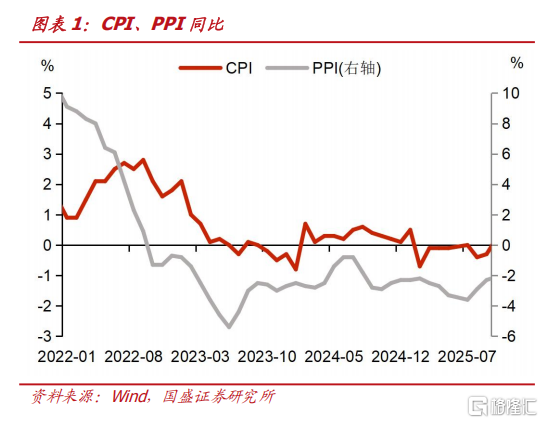
Search documents
10月CPI、PPI均环比上涨
Ge Lin Qi Huo· 2025-11-10 08:25
Report Industry Investment Rating - No relevant information provided Core View of the Report - In October 2025, China's CPI and core CPI both rose 0.2% month-on-month, and PPI rose 0.1% month-on-month, indicating a mild recovery in the inflation level. Due to base effects, the year-on-year CPI data for November is expected to show a significant rebound, while the year-on-year PPI data will remain roughly flat. China's economic activity continues to be in a mild state [5][16][17] Summary According to Relevant Catalogs CPI Analysis Year-on-Year Data - In October, the national consumer price index (CPI) rose 0.2% year-on-year, against a market expectation of a 0.1% decline and a previous decline of 0.3%. From January to October, the average national consumer price decreased 0.1% compared with the same period of the previous year [2][6] - Food prices in October decreased 2.9% year-on-year, with the previous decrease being 4.4%, showing a significant narrowing of the year-on-year decline. Non-food prices rose 0.9% year-on-year, compared with a 0.7% increase in September [2][6] - Core CPI rose 1.2% year-on-year in October, compared with a 1.0% increase in September, and its year-on-year increase has been expanding for the past six months [2][6] - Consumer goods prices decreased 0.2% year-on-year in October, compared with a 0.8% decrease in September. Service prices rose 0.8% year-on-year, compared with a 0.6% increase in September [2][6] Month-on-Month Data - In October, CPI rose 0.2% month-on-month, compared with a 0.1% increase in the previous period. Food prices rose 0.3% month-on-month, rising for three consecutive months, with the previous increase being 0.7%. Non-food prices rose 0.2% month-on-month, compared with a 0.1% decrease in the previous period [3][7] - Consumer goods prices rose 0.2% month-on-month in October, compared with a 0.3% increase in the previous period. Affected by the National Day and Mid-Autumn Festival, service prices rose 0.2% month-on-month in October, compared with a 0.3% decrease in September [3][7] - Core CPI rose 0.2% month-on-month in October, compared with a flat level in September [3][7] Influencing Factors - The rapid rise of the agricultural product wholesale price 200 index in October this year promoted the month-on-month increase of CPI in October. The increase in agricultural product prices in November compared with the same period last year will help drive the year-on-year increase of CPI in November [9] - Domestic refined oil prices were reduced twice in October. The energy price in November is likely to have a downward impact on the month-on-month CPI [9] PPI Analysis Year-on-Year Data - In October, the national industrial producer price index (PPI) decreased 2.1% year-on-year, against a market expectation of a 2.3% decrease and a previous decrease of 2.3%. From January to October, the average PPI decreased 2.7% compared with the same period of the previous year [3][10] - Production material prices decreased 2.4% year-on-year in October, affecting the overall level of industrial producer prices to decrease by about 1.77 percentage points. Among them, mining industry prices decreased 7.8% year-on-year, raw material industry prices decreased 2.5% year-on-year, and processing industry prices decreased 1.9% year-on-year [10] - The year-on-year decline in ex-factory prices was relatively large in industries such as coal mining and washing, oil and gas extraction, chemical fiber manufacturing, etc. The year-on-year increase in ex-factory prices was relatively large in industries such as non-ferrous metal ore mining and dressing, non-ferrous metal smelting and rolling processing [10] Month-on-Month Data - In October, PPI rose 0.1% month-on-month, the first month-on-month positive growth this year, compared with a flat level in the previous period. Production material prices rose 0.1% month-on-month, compared with a flat level in the previous period [3][11] - The month-on-month increase in prices was relatively large in industries such as non-ferrous metal ore mining and dressing, non-ferrous metal smelting and rolling processing, coal mining and washing, etc. The month-on-month decline in prices was relatively large in industries such as oil and gas extraction, ferrous metal smelting and rolling processing, chemical fiber manufacturing, etc. [4][12] - In October, the month-on-month change in consumer goods prices was flat, compared with a 0.2% decrease in the previous period. Among them, food prices decreased 0.1% month-on-month, clothing prices decreased 0.1% month-on-month, general daily necessities prices rose 0.7% month-on-month, and durable consumer goods prices decreased 0.3% month-on-month [13] PMI and Service Industry Index - In October, China's manufacturing purchasing managers' index (PMI) was 49.0%, remaining below the boom-bust line for the seventh consecutive month, compared with 49.8% in the previous period. The new order index in October was 48.8%, compared with 49.7% in the previous period, indicating a decline in manufacturing market demand [5][16][17] - In October, the service industry business activity index was 50.2%, compared with 50.1% in the previous month. The service industry sales price index was 47.7%, compared with 47.2% in the previous period. The service industry new order index was 46.0%, compared with 46.7% in the previous period [5][17]
宏观周报:国内10月CPI同环比变化均录得上涨-20251110
Zhe Shang Qi Huo· 2025-11-10 08:22
1. Report Industry Investment Rating No relevant content was found in the provided report. 2. Core Viewpoints of the Report - In October 2025, China's CPI increased both year - on - year and month - on - month, with the core CPI showing continuous growth. The PPI decline narrowed, indicating some improvement in the domestic economic situation. The implementation of policies to expand domestic demand continued to show results [3][41]. - The US government "shutdown" has a negative impact on the economy, and although the September inflation data slowed down more than expected, it is difficult to change the Fed's interest - rate cut rhythm [45][46]. - In November 2025, the RMB exchange rate showed a stable operation trend, supported by multiple factors, and is expected to maintain a stable tone in the future [54]. 3. Summaries According to Relevant Catalogs 3.1 Economic Situation - **GDP**: In the first three quarters of 2025, China's GDP increased by 5.2% year - on - year, with a growth rate 0.4 percentage points higher than the same period in 2024. The actual GDP growth rate in the third quarter was 4.8%, a 0.4 - percentage - point decrease from the second quarter [17]. - **Industrial Added Value**: In September 2025, the industrial added value of large - scale industries increased by 6.5% year - on - year and 0.64% month - on - month. The high - tech manufacturing industry accelerated its growth, with a cumulative year - on - year increase of 9.6% from January to September [18]. - **Fixed - Asset Investment**: The year - on - year growth rate of fixed - asset investment in the first nine months turned negative, at - 0.7%. In September, fixed - asset investment (excluding rural households) decreased by 7.1% year - on - year. Real estate investment continued to cool down, while the decline in narrow - sense infrastructure investment narrowed [18]. - **Social Retail Consumption**: In September 2025, the total retail sales of social consumer goods increased by 3.0% year - on - year. The growth rate of service retail sales from January to September was 5.2%, an increase of 0.1 percentage points from the previous value [18]. - **Unemployment Rate**: In September 2025, the national urban surveyed unemployment rate was 5.2%, a 0.1 - percentage - point decrease from the previous month [18]. - **Import and Export Data**: In the first three quarters of 2025, China's total goods trade imports and exports were 33.61 trillion yuan, a 4% year - on - year increase. In September, exports and imports in US dollars increased by 8.3% and 7.4% year - on - year respectively, exceeding expectations [7]. 3.2 Financial Situation - **Social Financing Data**: In September 2025, China's new social financing was 3.53 trillion yuan, and the stock of social financing at the end of September was 437.08 trillion yuan, a year - on - year increase of 8.7%. The new RMB loans were 1.29 trillion yuan [35]. - **Credit Data**: In September 2025, credit increased by 129 billion yuan, a year - on - year decrease of 30 billion yuan. The recovery rhythm of credit demand was uneven, and the structure continued to improve [36]. - **Money Supply**: In September 2025, the M2 - M1 scissors gap reached a new low for the year, at 1.2 percentage points, reflecting positive signals such as increased business activity and recovery of personal investment and consumption demand [35]. 3.3 Price - Related - **CPI**: In October 2025, the CPI increased by 0.2% year - on - year and month - on - month. The core CPI increased by 1.2% year - on - year, with the growth rate expanding for the sixth consecutive month. Food and energy prices were still at a low level, but the decline rates narrowed [41]. - **PPI**: In October 2025, the PPI increased by 0.1% month - on - month, the first increase this year, and decreased by 2.1% year - on - year, with the decline rate narrowing for the third consecutive month [41]. 3.4 Overseas Macro - **US Economy**: In September 2025, the US CPI data slowed down more than expected, mainly affected by the decline in rent prices. The US federal government "shutdown" has a negative impact on the economy, and the Fed may still cut interest rates by 25 basis points in October [45][46]. - **Eurozone Economy**: In October 2025, the Eurozone HICP decreased by 0.1% month - on - month, and the core HICP remained unchanged [14]. 3.5 Interest Rates and Exchange Rates - **RMB Exchange Rate**: In November 2025, the RMB exchange rate showed a stable operation trend, supported by factors such as the recovery of the domestic economic fundamentals, improvement of the international balance of payments, and policy guidance. It is expected to maintain a stable tone in the future [54]. - **Interest Rates**: The report also presented data on various interest rates such as DR007, SHIBOR, LPR, and government bond yields [55][56].
10月通胀数据点评:物价超预期的原因和启示
Huachuang Securities· 2025-11-10 07:41
Group 1: Inflation Data Overview - October CPI improved to 0.2% YoY, up from -0.3%, exceeding the expected -0.1%[2] - Core CPI rose to 1.2% YoY, the highest since 2022, while PPI narrowed its YoY decline to -2.1% from -2.3%[2] - CPI increased by 0.2% MoM, driven by seasonal food price increases, while energy prices fell due to oil price impacts[2] Group 2: Factors Influencing CPI and PPI - Food prices unexpectedly rose by 0.3% despite a forecasted decline of 0.4%, contributing approximately 0.13 percentage points to CPI[4] - Gold jewelry prices surged by 10.2%, adding about 0.06 percentage points to CPI; excluding this, core CPI would only show a 0.1% increase[4] - PPI's MoM increase of 0.1% is the first rise this year, influenced by improved supply-demand dynamics in certain industries like coal and photovoltaic[3] Group 3: Economic Implications and Future Outlook - The unexpected improvement in CPI and PPI may elevate next year's tailwind factors, supporting further YoY recovery[6] - Sustained CPI improvement requires policy support, including incentives for consumption and housing market stabilization[6] - PPI's upward momentum needs consolidation to promote broader price increases across industries, with fiscal measures already in place to stabilize raw material prices[6]
解读:2025年10月份CPI由降转涨 PPI降幅收窄
Guo Jia Tong Ji Ju· 2025-11-10 07:31
Group 1: CPI Analysis - The Consumer Price Index (CPI) increased by 0.2% month-on-month and 0.2% year-on-year, with the core CPI (excluding food and energy) rising by 1.2%, marking the highest increase since March 2024 [1][3] - Service prices shifted from a decline of 0.3% to an increase of 0.2%, driven by strong travel demand during the National Day and Mid-Autumn Festival, with hotel accommodation, flight tickets, and tourism prices rising by 8.6%, 4.5%, and 2.5% respectively [2][3] - Food prices increased by 0.3%, contrasting with a seasonal decline of 0.1%, with significant price rises in fresh vegetables, lamb, fresh fruits, and seafood ranging from 0.5% to 4.3% [2][3] Group 2: PPI Analysis - The Producer Price Index (PPI) shifted from flat to an increase of 0.1% month-on-month, marking the first increase of the year, with improvements in supply-demand relationships contributing to price rises in several industries [4][5] - Year-on-year, the PPI decreased by 2.1%, but the decline narrowed by 0.2 percentage points for the third consecutive month, with significant price increases in sectors like photovoltaic equipment manufacturing and coal mining [4][5] - Input factors led to a mixed price trend in domestic non-ferrous metals and oil-related industries, with international metal prices rising and domestic oil and gas extraction prices declining by 2.3% [4][5]
人民财评:两大物价指数改善 宏观经济“体温”回升
Ren Min Wang· 2025-11-10 07:21
Group 1 - The Consumer Price Index (CPI) increased by 0.2% year-on-year and month-on-month in October, while the Producer Price Index (PPI) decreased by 2.1% year-on-year but increased by 0.1% month-on-month, indicating a recovery in the macroeconomic environment [1] - The improvement in CPI and PPI is attributed to effective domestic demand policies and positive changes in supply-demand relationships in certain industries, highlighting the role of policy, structure, and expectations in driving price recovery [1][2] - The rise in CPI reflects a recovery in the consumption market, significantly influenced by the holiday economy during the National Day and Mid-Autumn Festival, which boosted service consumption in travel, accommodation, and tourism [1][2] Group 2 - The core CPI has expanded for six consecutive months, indicating a steady increase in demand for healthcare, home services, and entertainment, reflecting a shift in consumer preferences towards experiential and high-quality products [2] - The positive change in PPI signals a stabilization in the industrial economy, with the month-on-month increase in PPI suggesting a gradual recovery in industrial production demand, which supports CPI stability and enhances corporate production willingness and profitability [2] - The collaborative recovery between upstream and downstream industries strengthens the endogenous growth momentum of the economy, laying a solid foundation for sustained economic improvement [2]
国富期货早间看点-20251110
Guo Fu Qi Huo· 2025-11-10 06:09
Report Industry Investment Rating - No information provided in the content Core Viewpoints - The report presents a comprehensive overview of the futures market, including overnight and spot prices, important fundamental information, macro news, fund flows, and arbitrage tracking. It covers various commodities such as soybeans, palm oil, and crude oil, as well as international and domestic economic and political events that may impact the market. Summary by Relevant Catalogs Overnight行情 - Overnight closing prices and percentage changes are reported for various futures contracts, including palm oil, Brent crude, and soybeans. Currency exchange rates and their percentage changes are also provided [1]. Spot行情 - Spot prices, basis, and basis changes for DCE palm oil, DCE豆油, and DCE豆粕 are presented for different regions [2]. Important Fundamental Information 产区天气 - Rain is expected in central and southern Brazil this week, which is beneficial for soybean crops. In Argentina, soybean sowing is expected to accelerate this month, but long - term weather may turn dry [5]. 国际供需 - Sabah in Malaysia is the biggest beneficiary of the oil palm replanting financing incentive plan, receiving 61 million Malaysian ringgit in grants. The US EPA will decide on small refineries' exemption applications. Brazilian soybean sowing progress and Canadian rapeseed export data are also reported [7][8]. 国内供需 - On November 7, the total trading volume of soybean oil and palm oil decreased. The trading volume of soybean meal increased, and the oil mill's operating rate decreased. China's soybean and edible vegetable oil import data are provided, along with pig - raising profits and agricultural product price indices [11][12]. Macro要闻 国际要闻 - The US Senate failed to pass a motion on a federal employee appropriation bill, and the government "shutdown" persists. US consumer confidence and inflation expectations are reported [15]. 国内要闻 - The US dollar/Chinese yuan exchange rate decreased, and the central bank conducted reverse repurchase operations with a net withdrawal of funds. China's CPI and foreign trade data are reported, and the import qualification of US soybean enterprises is restored [17][18]. 资金流向 - On November 7, 2025, the futures market had a net capital outflow of 1.017 billion yuan, with different flows in commodity, stock index, and bond futures [21]. 套利跟踪 - No specific information provided in the content
2025年10月物价数据点评:一般日用品价格涨幅扩大
Ping An Securities· 2025-11-10 05:49
Group 1: CPI Analysis - In October 2025, the CPI increased by 0.2% year-on-year, reversing a decline of 0.3% from the previous month[2] - The core CPI, excluding food and energy, rose by 1.2%, marking the highest increase since March 2024 and expanding for six consecutive months[6] - The tail effect on CPI was approximately -0.6%, narrowing by 0.3 percentage points from the previous month, indicating reduced drag from previous price declines[6] Group 2: PPI Insights - The PPI decreased by 2.1% year-on-year, but the decline narrowed by 0.2 percentage points compared to the previous month, marking the third consecutive month of narrowing[2][6] - The PPI increased by 0.1% month-on-month, the first increase of the year, driven primarily by rising international non-ferrous metal prices[6] - General daily goods prices saw a significant month-on-month increase of 0.7%, suggesting improved price transmission[6] Group 3: Sector-Specific Trends - Food prices fell by 2.9% year-on-year, contributing approximately 0.54 percentage points to the CPI decline, while energy prices decreased by 2.4%, impacting CPI by about 0.18 percentage points[6] - Travel prices rose by 2.1% year-on-year, with airfares and hotel prices increasing by 8.9% and 2.8%, respectively, significantly contributing to the core CPI[6] - The prices of household appliances and communication tools related to consumption subsidies have decreased from previous highs, while transportation prices have remained stable for three consecutive months[6] Group 4: Risks and Considerations - Risks include the potential ineffectiveness of growth stabilization policies, unexpected severity of overseas economic downturns, and escalation of geopolitical conflicts[5]
【权威解读】2025年10月份CPI由降转涨 PPI降幅收窄
中汽协会数据· 2025-11-10 03:53
Group 1: CPI Analysis - In October, the Consumer Price Index (CPI) increased by 0.2% month-on-month and year-on-year, marking a shift from a decline to an increase [1][3] - The core CPI, excluding food and energy, rose by 1.2% year-on-year, the highest increase since March 2024, indicating a continuous expansion for six consecutive months [3] - Service prices turned from a decline to an increase, with notable rises in accommodation, airfare, and tourism prices due to the National Day and Mid-Autumn Festival [2][3] Group 2: PPI Analysis - The Producer Price Index (PPI) saw a month-on-month increase of 0.1%, marking the first rise of the year, while the year-on-year decline narrowed to 2.1% [1][4] - Improvements in supply-demand relationships led to price increases in several industries, including coal mining and photovoltaic equipment manufacturing [4][5] - The year-on-year decline in PPI has been narrowing for three consecutive months, with significant price increases in sectors like non-ferrous metal smelting and battery manufacturing [6]


2025年10月份CPI由降转涨 PPI降幅收窄
Guo Jia Tong Ji Ju· 2025-11-10 02:06
Group 1: CPI Analysis - In October, the Consumer Price Index (CPI) increased by 0.2% month-on-month and year-on-year, marking a shift from a previous decline [1][3] - Service prices turned from a decline of 0.3% to an increase of 0.2%, contributing approximately 0.07 percentage points to the CPI increase [2] - Food prices rose by 0.3%, with significant increases in fresh vegetables, lamb, fresh fruits, and seafood, ranging from 0.5% to 4.3% [2][3] Group 2: Core CPI Insights - The core CPI, excluding food and energy, rose by 1.2% year-on-year, marking the highest increase since March 2024 [3] - Medical service prices increased by 0.5%, while accommodation and airfare prices surged by 8.6% and 4.5%, respectively [2][3] Group 3: PPI Analysis - The Producer Price Index (PPI) saw a month-on-month increase of 0.1%, the first rise of the year, driven by improved supply-demand relationships in certain industries [4] - Key industries such as coal mining and photovoltaic equipment manufacturing experienced price increases, with coal mining prices rising by 1.6% [4][5] - Year-on-year, the PPI decreased by 2.1%, but the decline was narrower by 0.2 percentage points compared to the previous month [5] Group 4: Industry-Specific Trends - The prices in the coal mining and washing industry saw a reduction in their year-on-year decline due to capacity governance and increased demand [5] - The prices of non-ferrous metal smelting and processing industries increased by 6.8% year-on-year, reflecting a positive trend in the modern industrial system [5]
国盛固收:黄金有色影响较大,物价有待继续观察
Ge Long Hui· 2025-11-10 01:40
Core Insights - October inflation data shows a shift in CPI from decline to increase, with PPI's rate of decline narrowing, significantly influenced by prices of gold and non-ferrous metals [1][4][25] - October CPI increased by 0.2% year-on-year, reversing a 0.3% decline from the previous month, marking the highest value since February of this year [1][6] - PPI's year-on-year decline narrowed by 0.2 percentage points to -2.1%, marking the third consecutive month of narrowing [1][21] CPI Analysis - Food prices showed slight improvement, with a 2.9% decline, but the drop was less severe than the previous month, impacting CPI by approximately 0.54 percentage points [2][14] - Core CPI rose by 1.2% year-on-year, the highest since March 2024, with gold prices being a major driver [2][10] - Domestic gold futures prices increased by 52.8% year-on-year, significantly higher than the previous month's growth rate [2][10] PPI Analysis - PPI for October showed a year-on-year decline of 2.1%, with notable performance in the non-ferrous sector, particularly in mining and metal processing [3][21] - The prices in the non-ferrous mining and metal processing industries increased by 5.3% and 2.4% respectively, the highest among all sectors [3][21] - Life goods PPI decreased by 1.4% year-on-year, with a narrowing decline compared to the previous month [3][21] Market Outlook - The rise in prices is influenced by multiple factors, including the increase in gold prices and extreme weather affecting vegetable prices, leading to an unexpected overall price increase [4][25] - Future price trends remain uncertain, with a potential decline in gold prices in early November and weak terminal demand affecting price transmission from upstream to downstream sectors [4][26] - The bond market is entering a recovery phase, with a recommendation for a barbell strategy to manage risks and capitalize on potential interest rate declines [4][26]