全球化

Search documents
国防军工行业2026年投资策略:“全球化、AI+”,高质量发展兼顾价值与成长
GF SECURITIES· 2025-12-15 14:50
Core Insights - The report emphasizes the importance of "globalization and AI+" in advancing high-quality development in the defense and military industry, highlighting the need for modernization and efficiency improvements in military systems [5][30][34] - The investment strategy focuses on balancing value and growth, with traditional sectors entering an S-curve evolution phase while new demands and replacements coexist [5][30] Section Summaries 1. Current Development Stage from the S-Curve Perspective - The defense and military industry is in a growth phase, with traditional sectors experiencing rapid development during the previous five-year plan, but not yet entering a slowdown [16][26] - The S-curve model indicates that the industry lifecycle includes multiple product lifecycles, with the current focus on extending product lifespans through innovation [23][24] 2. S-Curve Cycle Expansion - Global military trade remains robust, emphasizing the importance of lifecycle management from equipment to services [9][18] - The report anticipates that the demand for large aircraft and low-altitude economic activities will accelerate due to supportive policies [9][28] 3. S-Curve Cycle Evolution - Supply chain reforms are crucial for reducing costs and complexity, enhancing the focus on maintenance and repair services [9][33] - The integration of unmanned systems and intelligent technologies is expected to drive significant advancements in military capabilities [9][51] 4. New Cycle of the S-Curve: Emerging Industries - The report identifies commercial aerospace, AI, controllable nuclear fusion, quantum information, and deep-sea technology as key areas for future growth [9][57][65] - The acceleration of technological advancements and policy support is expected to unlock new market opportunities in these sectors [9][58] 5. Investment Recommendations - The report recommends focusing on companies that align with the evolving S-curve, particularly those involved in supply chain reform, maintenance, and unmanned systems [5][30] - Specific companies highlighted for investment include 航发动力, 中航高科, and 国睿科技, among others, which are positioned to benefit from these trends [6][9]


泡泡玛特:业绩狂飙,资本恐高
3 6 Ke· 2025-12-15 12:33
Core Insights - Apple CEO Tim Cook's visit to China, particularly to the Shanghai THE MONSTERS exhibition, symbolizes the intersection of tech giants and the collectible toy market, highlighting the cultural significance of this event in China's consumer history [1] - Despite impressive financial performance, Pop Mart's stock has seen a nearly 40% decline since its peak in August, indicating a disconnect between strong sales and investor sentiment [1][2] - The company's reliance on the Labubu IP raises concerns about sustainability and future growth, as it accounted for 34.7% of revenue in the first half of 2025, with a staggering growth rate of 668.4% [8][10] Financial Performance - In Q3 2025, Pop Mart reported a revenue growth of 245%-250% year-on-year, with overseas market revenue surging by 365%-370% [1][7] - The company's revenue for the first half of 2025 has already surpassed the total revenue for 2024, indicating robust sales performance [1] Market Dynamics - The collectible toy market has shifted towards lower-priced, instant gratification products post-pandemic, with Pop Mart capitalizing on this trend through its blind box offerings [3][5] - The initial hype around Labubu has begun to wane, with prices for hidden variants on secondary markets halving from their peak, reflecting a potential saturation of demand [1][7] Strategic Direction - Pop Mart aims to transition from a fast-fashion model to a luxury brand, seeking to position itself as a "Louis Vuitton" of the toy industry, with a focus on global expansion and premium branding [11][13] - The company has adopted a strategy of "sufficient scarcity," aiming to balance product availability with brand prestige, moving away from speculative pricing models [21][25] Consumer Behavior - The decline in speculative buying from resellers has led to a more stable consumer base, with Pop Mart focusing on genuine fans rather than speculative investors [20][25] - The company is implementing a product stratification strategy, ensuring that lower-tier products remain accessible while maintaining exclusivity for high-end offerings [23][24]



“打通全国统一大市场堵点卡点”热点问题探析|破局“内卷” 开拓蓝海
Jing Ji Ri Bao· 2025-12-15 03:45
Core Viewpoint - The letter from Huang Ping, Chairman of Guangdong Youkai Technology Co., highlights the detrimental effects of vicious competition in the detergent industry, where low-quality products with less than 5% active ingredient content are capturing market share through low prices, putting quality products at a disadvantage [1] Group 1: Industry Challenges - The phenomenon of "involution" is causing irrational competition across various industries, leading to intensified price wars, shrinking profit margins, reduced innovation investment, and rising quality and safety risks [1][2] - Over 20 national and local industry associations have publicly called for a "counter-involution" approach, addressing issues in sectors such as steel, automotive, photovoltaic, catering, finance, and logistics [2] Group 2: Strategic Shifts - Companies like China Resources Beer have closed 40 factories and reduced over 5 million tons of redundant capacity, emphasizing a shift from "scale supremacy" to focusing on "good enterprises, good products, and good brands" [3] - The construction of a unified national market is essential for efficient market operation and removing barriers to fair competition, which is crucial for high-quality development [2] Group 3: Innovation Focus - Traditional manufacturing must break free from path dependence and scale bottlenecks by leveraging technology and innovation, as highlighted by companies like Weiqiao Chuangye Group, which collaborates with research institutions and utilizes AI for product development [4] - New Hope Group has innovated in the dairy industry by utilizing cold chain logistics and AI to ensure fresh products reach consumers quickly, demonstrating the importance of innovation in meeting consumer demands [4][5] Group 4: Brand Value - In a market with information asymmetry, low-quality products often mislead consumers, necessitating a focus on rebuilding trust in "quality for price" mechanisms to enhance user experience and brand value [6] - The shift in consumer preferences towards personalized and emotionally resonant experiences indicates that businesses must transition from merely providing functional value to creating meaningful connections with users [7] Group 5: Global Expansion - The construction of a unified national market should promote an open market that encourages companies to expand globally, alleviating domestic competition pressures and enhancing competitiveness in international markets [8] - Companies like Jack Technology and Miniso are successfully implementing global strategies that integrate local insights with global aesthetics, demonstrating the potential for Chinese brands to resonate with international consumers [8] Group 6: Future Outlook - The collective sentiment among industry leaders emphasizes that companies must focus on innovation, brand building, and global engagement to escape internal competition and drive China's economy towards high-quality development [9]
【“打通全国统一大市场堵点卡点”热点问题探析⑦】破局“内卷” 开拓蓝海
Jing Ji Ri Bao· 2025-12-14 22:51
Core Viewpoint - The article highlights the detrimental effects of "involution" competition across various industries, leading to price wars, reduced profit margins, and increased quality and safety risks. It emphasizes the need for a unified national market to promote high-quality development in enterprises and industries [1][3][7]. Group 1: Industry Challenges - The washing detergent industry is facing severe competition from low-quality products with less than 5% active ingredient content, which are capturing market share through low pricing, putting quality products at a disadvantage [1]. - "Involution" competition is characterized by irrational competition due to market mechanism failures, where companies resort to price wars instead of leveraging differentiation or technological advantages, resulting in "increased production without increased revenue" [2]. - Various industries, including steel, photovoltaics, automotive, and catering, are experiencing similar challenges due to intense price competition, leading to a consensus among over 20 industry associations to advocate for "anti-involution" measures [3]. Group 2: Solutions and Strategies - To enhance market efficiency, it is essential to eliminate barriers to fair competition, which is a key aspect of building a unified national market. This will help stabilize the commercial ecosystem and address supply-demand imbalances [3]. - Companies are encouraged to abandon the outdated "scale-first" mentality and focus on creating value through quality products and strong brands. For instance, China Resources Beer closed 40 factories and reduced over 5 million tons of redundant capacity to focus on value creation [3]. - Innovation is crucial for traditional manufacturing to break free from path dependence and scale bottlenecks. Companies like Weiqiao Venture Group are collaborating with research institutions and adopting new technologies to transform their business models [4]. Group 3: Brand and Market Positioning - In a market characterized by information asymmetry, low-quality products often mislead consumers, necessitating a shift towards rebuilding trust in "quality for price" mechanisms and enhancing user experience and brand value [5]. - The home appliance industry has maintained a relatively rational approach due to years of system development, with a shift in market power from companies to consumers, who now seek personalized and emotionally resonant experiences [5]. - Companies like Hisense are witnessing a reversal in consumer behavior, with domestic brands gaining recognition for quality, indicating a shift towards "Chinese manufacturing" being associated with technological premium [5]. Group 4: Global Expansion - The construction of a unified national market is not a closed "internal cycle" but an open market that encourages both domestic and international engagement. Companies are urged to expand globally to alleviate domestic competition pressures and enhance competitiveness [6]. - Jack Technology has entered a global leadership phase, establishing production bases tailored to regional markets, while Miniso emphasizes cultural integration in its global strategy, showcasing the importance of local insights in international expansion [6]. Group 5: Future Outlook - Building a unified national market aims to create fairer, more efficient, and more valuable competition. Companies must focus on innovation, brand strength, and global presence to escape internal strife and contribute to China's high-quality economic development [7].


墨西哥国会通过法案,对华加征最高 50% 关税,选边站队美国
Sou Hu Cai Jing· 2025-12-14 17:42
Core Viewpoint - Mexico's recent decision to impose tariffs of up to 50% on Chinese goods is seen as a strategic move to align with the United States amid concerns over Chinese products entering the U.S. market through Mexico [1][3][5]. Group 1: Mexico's Tariff Decision - The Mexican Congress passed the tariff law with a significant majority of 357 votes, indicating a strong political stance against China [3][5]. - This decision is timed with the upcoming review of the US-Mexico-Canada Agreement (USMCA), highlighting Mexico's need to demonstrate loyalty to the U.S. [5][7]. - The tariffs are expected to severely impact Mexico's manufacturing sector, particularly the automotive industry, which relies heavily on Chinese supply chains [7][8]. Group 2: Economic Implications - Over 80% of auto parts used in Mexico are sourced from China, making the tariffs a double-edged sword that could harm local industries [8][11]. - The imposition of tariffs is likely to lead to inflation, affecting everyday consumers as many household appliances and factory components are imported from China [11][19]. - Mexico's government appears to gamble on sacrificing economic flexibility for political security, which may lead to significant economic repercussions [11][23]. Group 3: China's Response Strategy - China has shown a composed response to Mexico's tariffs, indicating that it had anticipated such actions and prepared accordingly [13][15]. - The Chinese government has initiated a trade barrier investigation against Mexico, signaling a proactive approach to protect its interests [15][17]. - Chinese companies are diversifying their supply chains and shifting focus to other markets in Latin America and Southeast Asia to mitigate risks from the tariffs [19][21]. Group 4: Global Trade Dynamics - The situation reflects a broader competition between different development models, with Mexico opting for political certainty at the cost of economic flexibility, while China promotes a stable and cooperative global trade environment [23][25]. - The global trade landscape is shifting towards regionalization and diversification, with China leveraging its robust industrial system to maintain its competitive edge [32][34]. - Historical patterns suggest that attempts to use trade barriers to hinder China's growth are likely to be ineffective, as openness fosters prosperity [40][42].

周观点 | 银河通用筹备赴港上市 关注人形机器人板块【国联民生汽车 崔琰团队】
汽车琰究· 2025-12-14 14:06
Market Performance - The automotive sector in A-shares rose by 0.2% from December 8 to December 14, outperforming the CSI 300 index which fell by 0.4% [1][32] - Among sub-sectors, commercial passenger vehicles, automotive parts, motorcycles, and automotive services increased by 1.5%, 1.1%, 0.3%, and 0.3% respectively, while commercial freight vehicles and passenger vehicles decreased by 0.9% and 4.4% [1][32] Investment Recommendations - Recommended core stocks include Geely Automobile, Xpeng Motors, BYD, Berteli, Top Group, New Spring Co., Hu Guang Co., and Chunfeng Power [2][10][14] - For passenger vehicles, focus on quality autonomous brands accelerating in intelligence and globalization [5][14] - In the parts sector, recommendations include intelligent driving companies like Berteli, Horizon Robotics, and Kobot, as well as companies in the new forces supply chain [5][23] Regulatory Developments - The State Administration for Market Regulation is seeking public opinion on the "Guidelines for Compliance with Pricing Behavior in the Automotive Industry," aimed at standardizing pricing practices and preventing unfair competition [4][11] Robotics Sector - Galaxy General, a humanoid robot unicorn, is preparing for a Hong Kong IPO, with a valuation among the top tier in the industry [3][10] - The focus remains on Tesla's production progress and technological iterations, with significant updates expected from other core manufacturers [3][10][17] Motorcycle Market - The market for large-displacement motorcycles is expanding rapidly, with sales of 250cc and above motorcycles reaching 61,000 units in October 2025, a slight decrease of 0.2% year-on-year but a significant increase of 29.7% year-to-date [24][26] - Recommended companies in this sector include Chunfeng Power and Longxin General [6][26] Truck Market - The heavy truck market saw sales of approximately 100,000 units in November 2025, a year-on-year increase of about 46% [27][28] - The expansion of the old-for-new subsidy policy is expected to stimulate demand for new trucks [27][28] Tire Industry - The tire industry is experiencing a global expansion, with strong demand and low valuations [29][30] - Recommended companies include Sailun Tire and Senqilin, as they are well-positioned to benefit from the ongoing trends in the industry [29][31]


中国在美国定的规则里长大,如今却让美国胆颤,拉夫罗夫说了实话
Sou Hu Cai Jing· 2025-12-14 14:04
Group 1 - The article discusses the rise of China within the framework established by the U.S., highlighting that China has not sought to overthrow the existing international order but has instead thrived within it [3][5] - China's transformation from low-end manufacturing to high-tech and high-value sectors, such as high-speed rail, 5G, and renewable energy, has allowed it to exceed previous industrial capabilities and influence international standards [5][9] - The U.S. faces challenges in attempting to decouple from China, as many American companies are deeply integrated into China's production and consumer markets, making a complete separation economically unfeasible [7][9] Group 2 - The article suggests that the U.S. should reconsider its approach to competition with China, focusing on understanding the essence of development rather than merely attempting to contain China [11] - It emphasizes that the U.S. has historically believed that controlling the rules would ensure its dominance, but the emergence of China has disrupted this belief, as China has excelled within the established rules [3][9] - The narrative indicates that the U.S. must adapt to the reality of China's growth and the changing dynamics of global competition, rather than relying on outdated strategies [11]

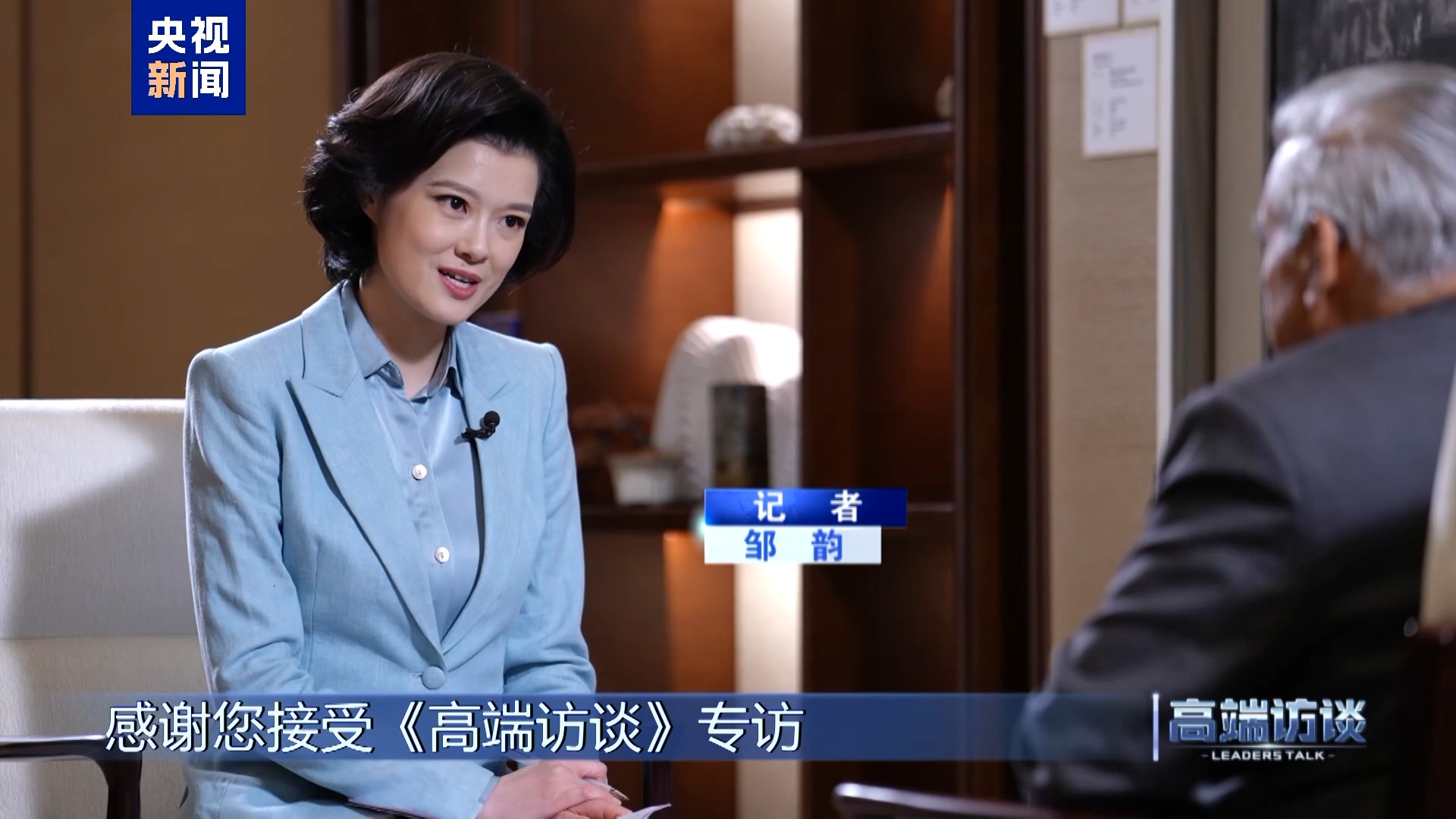
高端访谈丨专访新加坡前常驻联合国代表马凯硕
Yang Shi Xin Wen Ke Hu Duan· 2025-12-13 01:59
他高度评价中国发展的长远眼光:"'十五五'规划聚焦高质量发展,我认为这非常英明。" 他说,与中国"脱钩"就是与世界"脱钩":"我一直主张,对美国而言更明智的做法是停止遏制中国发展,因为中国的发展势不可挡。" 期待中国创新发展惠及世界,他表示:"全世界应当为中国在机器人制造与生产领域引领全球而感到高兴。" 新加坡前常驻联合国代表马凯硕接受《高端访谈》专访,敬请收看。 0:00 邹韵:2025年接近尾声,刚刚结束的中央经济工作会议为明年的经济发展做出了部署,也将为"十五五"规划落实夯实基础。回顾"十四五"时期,我国走过了 极不寻常、极不平凡的发展历程。那么中国经济不断扩大高水平对外开放对国际合作有怎样的推动作用?中国发展新质生产力对世界有何积极意义?带着这 些问题,我们专访了新加坡前常驻联合国代表马凯硕,一同在对话中寻找答案。 邹韵:马凯硕教授,晚上好!感谢您接受《高端访谈》专访。本次采访前,您出席了《世界开放报告2025》的发布会,这是虹桥国际经济论坛和进博会发布 的旗舰报告之一。首先,能否请您和我们分享一下报告中让您印象深刻的一些核心要点? 马凯硕:西方普遍认为世界正走向"逆全球化",因此这份《世界开放报告》 ...
以“连接”之专 中航光电锚定全球高端制造
Zhong Guo Zheng Quan Bao· 2025-12-12 20:24
Core Viewpoint - The article emphasizes the importance of connectors in various high-tech fields and highlights the growth and strategic direction of AVIC Optoelectronics, a leading company in the domestic connector industry, which has shown resilience and innovation in a fluctuating market environment [1][2]. Group 1: Company Growth and Strategy - AVIC Optoelectronics has experienced continuous revenue growth since its listing, with annual revenue increasing from 4.725 billion to 20.69 billion yuan over the past decade [2]. - The company has expanded its product range significantly, now offering over 500 series and more than 350,000 types of products, serving various industries [2][3]. - The focus on "connection" as a core competency allows the company to extend its value proposition beyond components to integrated interconnection solutions for major projects [2][3]. Group 2: Innovation and Future Opportunities - Innovation is a key driver for AVIC Optoelectronics, with a strong emphasis on developing new technologies and products to meet market demands [4]. - The company has successfully developed a deep-sea wet-plug connector, which outperforms imported products and significantly reduces costs [4]. - Future industries such as quantum technology, embodied intelligence, and 6G are expected to create strong demand for interconnection products, prompting the company to actively plan for these emerging fields [5]. Group 3: Global Expansion - AVIC Optoelectronics aims to become a global leader in interconnection solutions, with current overseas revenue accounting for less than 10% of total revenue, indicating substantial growth potential [6]. - The company is transitioning from a "product export" model to a "capacity export" model, establishing subsidiaries in Germany and Vietnam for localized operations [6]. - Future plans include building production bases in North America and other regions to enhance global operational efficiency and responsiveness [6].

荣耀品牌营销总裁离职
Di Yi Cai Jing Zi Xun· 2025-12-12 15:29
Group 1 - The core point of the article is the departure of Guo Rui, a senior executive at Honor, during a critical period for the company's global expansion and AI transformation [2][4] - Guo Rui joined Honor in August 2021 as a founding management team member and has held significant roles in brand marketing and product launches [2] - Honor is currently facing a challenging market landscape, with strong growth in overseas markets but pressure in the domestic market [3] Group 2 - In the overseas market, Honor achieved a 10% market share in the Middle East in Q3 2025, marking a 128% year-on-year growth, making it the fastest-growing smartphone brand in the region [3] - In Europe, Honor's market share was only 4% in Q2 2025, but the shipment volume increased by 42% year-on-year, leading among major manufacturers [3] - Domestically, Honor's market share was 14.4% in Q3 2025, ranking fifth alongside OPPO, with a year-on-year shipment decline of 2.1%, down from a peak of 17.1% in Q1 2024 [3] Group 3 - The departure of Guo Rui raises concerns about how the new management team will maintain brand growth momentum amid intense competition [4] - Guan Haitao, the former Chief Brand Officer of Zeekr, has rejoined Honor to oversee global marketing, indicating a strategic move to strengthen the marketing team [4]