
财政政策

Search documents
渤海证券研究所晨会纪要(2025.12.08)-20251208
BOHAI SECURITIES· 2025-12-08 02:27
Group 1: Macro and Strategy Research - The US economic indicators show a mixed trend, with the ISM manufacturing PMI remaining below the threshold for nine consecutive months, indicating ongoing contraction in the manufacturing sector. The new orders index saw its largest month-on-month decline in six months, reflecting weak demand [3][4] - In contrast, the service sector PMI continues to expand, with the business activity index reaching a three-month high. However, the job market shows concerns, with the ADP employment figures for November indicating the largest decline since March 2023, particularly in professional services and manufacturing [3] - In the Eurozone, the overall CPI growth rate increased in November, driven by rising service inflation, reinforcing market expectations that the European Central Bank will not lower interest rates in the short term [4] Group 2: Domestic Environment - The manufacturing PMI in China improved slightly in November but remains weak, having been below the threshold for eight consecutive months. The non-manufacturing PMI also fell into contraction territory due to the end of holiday effects [4] - The upcoming Central Economic Work Conference in mid-December is expected to set the tone for 2026's monetary and fiscal policies, with a focus on maintaining spending intensity and supporting technological innovation and livelihood sectors [4] - High-frequency data indicates a slight recovery in real estate transactions, while upstream prices for coking coal and coke have risen, and non-ferrous metal prices are showing volatility [4] Group 3: Fixed Income Research - In November, the central bank's liquidity net injection exceeded 300 billion, keeping funding prices low, with DR007 fluctuating around 1.40-1.45%. The interbank certificate of deposit yields have slightly increased due to pressure on bank liabilities [6][7] - The bond market experienced fluctuations, with a decrease in government bond issuance and an increase in local government bond issuance by over 300 billion, primarily due to the launch of special bonds [7] - The outlook for the bond market suggests that while the economic growth target for 2025 is achievable, the market will be influenced by policy expectations and institutional behaviors, with a focus on the upcoming Central Economic Work Conference [8]
对2026经济政策的理性预期
2025-12-08 00:41
Summary of Key Points from Conference Call Industry Overview - The conference call discusses the economic outlook for China in 2026, focusing on growth targets, fiscal policies, infrastructure investment, real estate market trends, and consumer spending challenges. Core Insights and Arguments 1. **Economic Growth Target**: The expected GDP growth target for 2026 is set between 4.8% and 4.9%, with a fiscal deficit rate maintained at 4% [1][3][17] 2. **Infrastructure Investment**: A rebound in infrastructure investment is anticipated in 2026, driven by a slowdown in the decline of special bonds, stable issuance of special treasury bonds, and new projects under the "15th Five-Year Plan" [1][4] 3. **Real Estate Market Recovery**: The drag from the real estate market on the economy is expected to diminish, with sales growth stabilizing and investment as a percentage of GDP nearing the lower limit of developed countries [1][5] 4. **Fixed Asset Investment**: Fixed asset investment is projected to improve in 2026, with real estate investment expected to turn positive as sales and prices stabilize [1][9] 5. **Consumer Spending Challenges**: The consumer sector faces challenges due to insufficient national subsidy funds and potential saturation of certain goods, although non-subsidized goods are showing higher growth rates than subsidized ones [1][10] 6. **Fiscal and Monetary Policy Outlook**: Increased fiscal spending is expected in 2026, with a likelihood of interest rate cuts in the first quarter, supporting a positive economic growth outlook [1][11][17] 7. **Export Stability**: Exports are expected to remain stable, with a projected growth rate of 4.5% to 5% for the current year, despite a slight decline in actual export value next year [1][12] 8. **CPI and PPI Trends**: CPI is under pressure to rise, while PPI's ability to turn positive will depend on policy factors related to anti-involution efforts [1][13][14] Additional Important Insights 1. **Real Estate Policy**: Future real estate policies will focus on inventory reduction and supply optimization, with local governments playing a key role in addressing financing pressures [1][7] 2. **Mortgage Rate Subsidy Feasibility**: The feasibility of mortgage rate subsidy policies is low due to operational difficulties and limited success in other regions [1][8] 3. **Consumer Goods Focus**: There may be a shift in focus towards durable goods like sports equipment and smart wearable devices as subsidy levels for major consumer goods decrease [1][10] 4. **Impact of Economic Policies**: Future economic policies will emphasize capacity reduction and anti-involution, with potential implications for industry organization and competition [1][15][16] This summary encapsulates the key points discussed in the conference call, providing a comprehensive overview of the anticipated economic landscape for 2026 in China.
跨年的经济
Sou Hu Cai Jing· 2025-12-07 14:35
Group 1 - The ongoing debate about whether AI technology is becoming "bubble-like" continues, but investment is gradually penetrating upstream electricity and downstream applications, with increased fiscal budgets in the US, Europe, Japan, and South Korea for the coming year [1] - The Federal Reserve's interest rate cut cycle continues, while inflation expectations remain at historically high levels; the short-term weakness of the US dollar is accompanied by expectations of RMB appreciation [1] - High-frequency data indicates a potential short-term rebound in China's exports [1] Group 2 - The proportion of residents expecting a decline in housing prices has risen to a high level, indicating that the response to real estate risks has entered a new phase [1] - Under strict control of hidden debts, debt reduction and repayment continue, which corresponds to the ongoing weakness in infrastructure investment since the second half of the year [1] - Personal income tax has increased compared to trend values due to standardized tax administration, while cross-year consumption may still face pressure [1] Group 3 - Prices related to "anti-involution" categories have experienced a rebound in the third quarter but have since retreated, with the central tendency remaining higher than before; industrial production indicators are showing a month-on-month slowdown [1] - Vegetable prices have risen above seasonal levels due to weather disturbances, and combined with a low base, the CPI is expected to see a short-term rebound [1] - However, the resonance of pork and oil prices is expected to ease in early next year, leading to a further decline in prices [1] Group 4 - Historical economic "New Year openings" often correspond to prior year-end fiscal spending, with recent fiscal strength and continued pressure on local land transfer income indicating moderate economic growth at the beginning of next year [2] - The effectiveness of subsidy policies in promoting consumption in the service sector remains to be explored, while credit demand remains at historically low levels [2] - The management of liquidity through government bond trading is becoming more diversified, although interest rate tools remain cautious [2]
如何看待本周市场缩量轮动行情?
ZHONGTAI SECURITIES· 2025-12-07 11:37
Group 1 - The report indicates that the A-share market is experiencing a rotation with a focus on sectors such as non-ferrous metals, technology, and non-bank financials, driven by short-term positive events [2][10] - The non-ferrous metals sector saw significant gains, with prices of copper, silver, and tin rising sharply, leading to a weekly increase of 5.35% [2][10] - The semiconductor and domestic computing power sectors also performed well, highlighted by the debut of Moer Thread, which surged 468% on its first day of trading, boosting the valuations of leading companies in the semiconductor chain [2][10] Group 2 - Domestic policy signals are expected to focus on structural optimization and stabilizing growth as the Central Economic Work Conference approaches, with potential fiscal policy adjustments anticipated [3][11] - The report suggests that the fiscal deficit rate may be raised from 4.0% to 4.5%, indicating a more proactive fiscal stance to support growth, especially in the context of limited monetary policy flexibility [3][11] - The upcoming Federal Reserve meeting is highlighted as a key event, with an 86.2% probability of a 25 basis points rate cut, which could stabilize the market in the short term [12][17] Group 3 - The report notes a cautious market sentiment with net inflows and outflows being relatively small, as investors await clearer policy signals [4][13] - ETF funds showed a reversal from previous outflows to small net inflows, particularly in the dividend index ETF, which has seen consistent inflows for a month [4][13] - The report emphasizes that the market is likely to maintain a volatile consolidation pattern in early December, with a focus on potential trading opportunities in small-cap and more elastic consumer sectors [5][17]
聚焦稳增长三大主线 积极财政政策加力护航
Shang Hai Zheng Quan Bao· 2025-12-05 19:08
Group 1: Tax-Free Policy and Consumption - The Ministry of Finance and four other departments announced a notification at the end of October, stating that from November 1, 2025, the tax-free shop policy will be improved, leading to a comprehensive upgrade from products to services and the business environment [1] - The new tax-free shopping policy in Hainan has shown significant results, with customs monitoring tax-free sales amounting to 1.325 billion yuan as of November 17, representing a year-on-year increase of 28.52% [1] - The expansion of tax-free shops and policies like trade-in incentives are expected to inject strong momentum into year-end consumption, focusing on accurately activating demand [1] Group 2: Support for Technological Innovation - Fiscal policy has become an important support for the development of technological innovation, with structural tax reductions and fee cuts being key measures to strengthen the role of enterprises in innovation [2] - In the first eight months of this year, tax reductions, fee cuts, and refunds supporting the manufacturing sector reached 1.2925 trillion yuan [2] - Local governments are actively establishing investment funds to support innovation, with the Jiaxing municipal government planning to set up a 10 billion yuan investment mother fund to create a comprehensive fund matrix [2] Group 3: Investment in People's Livelihood - The central government has allocated 1.16 billion yuan in subsidies for elderly care service consumption to support pilot projects in regions like Liaoning, Zhejiang, and Chongqing [4] - The central government has also provided a 3,600 yuan subsidy for childcare to families, reflecting a strong commitment to improving living standards [4] - In the first ten months of this year, the national general public budget expenditure reached 22.6 trillion yuan, with social security, education, and health expenditures growing faster than the average growth rate of 2% [4] Group 4: Focus on People's Livelihood in Fiscal Policy - The Minister of Finance emphasized the need to combine investment in material goods with investment in people to meet diverse public needs and stimulate domestic demand [5] - The "14th Five-Year Plan" highlights the importance of increasing fiscal spending on people's livelihood, addressing issues in education, healthcare, elderly care, and childcare to enhance residents' happiness and consumption capacity [5]
利率债2026年投资策略—步步为营(PPT)(1)
2025-12-04 04:47
Summary of Key Points from the Conference Call Industry Overview - **Industry**: Fixed Income and Macroeconomic Analysis - **Company**: CITIC Securities Research Department Core Insights Macroeconomic Outlook - **GDP Growth**: Expected to achieve around 4.9% for the year, with nominal GDP growth anticipated to rise, marking the first time since 2022 that nominal GDP growth outpaces real GDP growth [4][39] - **Economic Growth Pattern**: Projected to exhibit a "front low, back high" pattern in 2026 due to base effects and policy timing [4][39] - **Price Improvement**: Price factors are expected to improve, contributing to the rise in nominal GDP [4][39] Policy Combination - **Fiscal Policy**: Anticipated moderate expansion with a deficit rate maintained at 4%. New special bond issuance expected to increase to around 5 trillion [4][44] - **Monetary Policy**: Expected to remain moderately accommodative, with liquidity conditions remaining ample and stable funding rates [4][39][48] Interest Rates - **Interest Rate Trend**: Expected to decline initially before rising, with the 10-year government bond yield projected to fluctuate between 1.6% and 1.9% [4][71] - **Market Dynamics**: The macro policy's moderate expansion and rising nominal GDP are expected to ease the asset supply and demand dynamics [4][71] Risk Factors - **Economic Recovery Risks**: Domestic economic recovery may exceed expectations, alongside potential financial regulatory changes and credit risk exposures [4][74] - **Geopolitical Risks**: Increased risks from US-China trade tensions and global geopolitical instability [4][74] Additional Important Insights Investment Strategy - **Investment Approach**: A step-by-step strategy is recommended, focusing on capturing opportunities in the bond market as conditions evolve [4][68] Credit and Social Financing - **Credit Growth**: Anticipated stabilization in credit and social financing growth, with a gradual increase expected in 2026 [4][47] - **Government Debt Supply**: Expected slight growth in government debt supply compared to 2025, supporting social financing [4][47] Inflation Outlook - **Inflation Trends**: PPI is expected to show a steady upward trend, while CPI is projected to be positive for most months in 2026 [4][35][33] Export Dynamics - **Export Resilience**: China's exports are expected to show resilience due to diversified trade partnerships and demand from emerging markets [4][20] Consumer Spending - **Consumer Recovery**: Consumer spending is expected to continue its weak recovery, supported by policy measures [4][23] Infrastructure Investment - **Infrastructure Growth**: Infrastructure investment is projected to recover marginally in 2026, supported by fiscal policy and special bond issuance [4][26] Real Estate Market - **Real Estate Trends**: The real estate market is expected to continue its weak performance, with inventory levels remaining high [4][32] This summary encapsulates the key points discussed in the conference call, providing a comprehensive overview of the macroeconomic outlook, policy strategies, and potential risks facing the industry.
一声感慨:目前经济,凯恩斯三板斧,效果甚微,亟需法学家上场了
Sou Hu Cai Jing· 2025-12-04 04:43
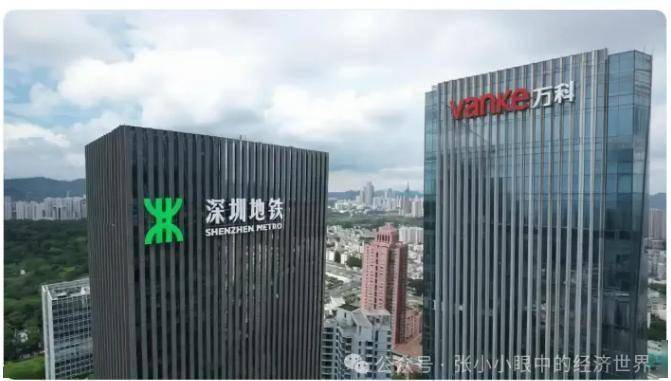
Group 1 - Vanke is perceived as a good company with a commendable founder, Wang Shi, but is currently struggling due to economic pressures and a lack of government support for its debt issues [2][3] - The company's debt has ballooned to nearly 900 billion, and the financial burden of resolving this debt could potentially collapse other high-quality state-owned enterprises [3] - The real estate crisis is likened to a festering sore that triggers various economic and social problems, indicating a systemic risk that could affect multiple stakeholders, including suppliers, workers, and homebuyers [3][4] Group 2 - Economists and financial experts are proposing various strategies to address the economic challenges, but fundamentally, there are only three main tools: monetary policy, fiscal policy, and industrial policy [4][6] - The effectiveness of these traditional economic tools is diminishing, as minor adjustments in interest rates or taxes yield minimal results, leading to a situation where the Chinese economy is increasingly out of control [6] - The interconnectedness of modern economies means that issues in one area can have far-reaching impacts, emphasizing the need for innovative solutions to break through existing institutional barriers [6][8]


中国宏观经济展望
2025-12-04 02:21
Summary of Key Points from the Conference Call Industry Overview - The macroeconomic outlook for China indicates a significant supply-demand imbalance, with strong supply but relatively weak domestic demand. Policy adjustments will focus on increasing quality consumption supply, reducing inefficient investments, promoting consumer welfare, and addressing debt issues, which will impact various industries differently [1][4]. Core Insights and Arguments - **Economic Growth Projections**: China's economy is expected to grow by approximately 5% in 2026, with inflation anticipated to be higher than in 2025. This suggests that nominal growth will outperform this year, positively influencing secondary market investments. Structural opportunities will primarily be found in technology and consumption sectors, driven by both economic and cultural factors [3]. - **Export Performance**: Exports in 2025 exceeded expectations, and growth in 2026 is projected to be at least as high as this year, potentially exceeding 6%. The share of exports to emerging markets is increasing, while direct exports to the U.S. are declining, although overall dependency is rising. Despite falling export prices, corporate profit margins are stabilizing due to technological advancements and cost reductions [5][13]. - **Weak Domestic Demand**: The primary reasons for weak domestic demand are the transformation of the real estate sector and heavy debt burdens, which have adversely affected the income of businesses, governments, and households. This situation is reflected in accounts receivable and payable metrics, indicating potential risks [6]. - **"Anti-Involution" Policy**: This systemic initiative differs from historical capacity reduction measures and will intensify in certain sectors such as glass, chemicals, photovoltaics, non-ferrous metals, and coal in 2026. This indicates that structural opportunities will increasingly manifest in specific industries [7]. - **Economic Policy Trends**: The economic policy for 2026 will continue a trend of moderate acceleration, focusing on increasing quality consumption supply and reducing inefficient supply. This approach has been emphasized since the 2022 strategic planning outline and the 2025 "14th Five-Year Plan" [9][8]. Important but Overlooked Content - **Sectors to Watch**: Key areas for increasing quality consumption supply include yachts, private jets, automobiles, and services in sports and high-end healthcare. Inbound consumption is also significant. Collectively, these sectors represent about 3% of 2024's GDP, with a potential growth of 10%, translating to a 0.3 percentage point increase in GDP [10]. - **Fiscal Policy Measures**: The overall fiscal deficit rate is expected to rise, including a narrow deficit rate of 3%-4% and a broader fiscal support rate. Adjustments in the use of special bonds aim to enhance efficiency, with the 2025 special bond scale at 4.4 trillion yuan, indicating a shift in usage compared to previous years [11]. - **Monetary Policy Expectations**: The monetary policy is expected to remain accommodative in 2026, with interest rate cuts likely and sufficient room for reserve requirement ratio reductions compared to 2025 [12]. - **Investment and Consumption Outlook**: Investment is anticipated to improve slightly next year due to moderate increases and structural adjustments. Consumption levels are expected to remain stable, supported by policies like trade-in programs and increased social welfare spending, alongside enhanced quality consumption supply. Export expectations are optimistic, with a projected growth of 6% or higher, aided by easing U.S.-China trade tensions and advancements in Chinese technology [2][13]. - **Potential Growth Space**: China's potential growth rate exceeds 5%, indicating substantial growth opportunities. With sufficient policy support, higher growth can be achieved. Overall, a combination of supply-side and demand-side measures will allow the economy to reveal more positive aspects, with significant development opportunities across various sectors [14].
2025中国经济回眸丨护航经济运行 激发发展潜能——更加积极有为的宏观政策发力显效
Xin Hua Wang· 2025-12-04 00:28
新华社北京12月3日电 题:护航经济运行 激发发展潜能——更加积极有为的宏观政策发力显效 新华社记者申铖、吴雨 有效的宏观政策、精准的宏观调控,是护航中国经济行稳致远的重要手段。 今年以来,在以习近平同志为核心的党中央坚强领导下,面对复杂形势,我国宏观经济治理不断创新完 善,宏观政策更加积极有为,政策"工具箱"更加丰富给力。 一项项政策因时酝酿、因势推出,一笔笔资金加速落地、惠企利民……政策效能不断转化为澎湃发展动 能,有力巩固和增强中国经济稳中向好态势,为高质量完成全年经济社会发展目标任务提供坚实支撑。 用好用足财政货币政策 保障经济平稳健康发展 从手机、平板等消费品纳入"国补",到育儿补贴发放、免费学前教育逐步推行,再到长江沿线铁路、西 部陆海新通道建设推进……今年以来,一系列发展大事和民生实事都离不开宏观政策的支持。 实施更加积极有为的宏观政策,是在重要节点及时准确研判形势作出的工作部署,是深刻把握高质量发 展要求对复杂形势的主动应对。 10月中旬,1.3万亿元超长期特别国债发行圆满收官。截至目前,相关资金已基本下达。 "今年我国安排1.3万亿元超长期特别国债加力支持'两重''两新',是财政政策更加积极 ...
货币政策支撑经济回升向好 金融支持质效提升
Jing Ji Ri Bao· 2025-12-03 23:49
广义货币(M_2)和社会融资规模增速均保持在较高水平、信贷结构持续优化、贷款利率保持在低位水 平……今年以来,适度宽松的货币政策持续发力,有力支撑经济回升向好。下一步,货币政策将继续发 力,把握好力度和节奏,保持对实体经济的较强支持力度。 金融支持质效提升 "十五五"规划建议提出,实施更加积极的宏观政策,持续稳增长、稳就业、稳预期。今年以来,适度宽 松的货币政策发力显效。金融总量较快增长,10月末社会融资规模存量为437.72万亿元,同比增长 8.5%;前10个月社会融资规模增量累计为30.9万亿元,比上年同期多3.83万亿元。与此同时,货币供应 量保持较快增长,10月末,M_2余额335.13万亿元,同比增长8.2%。10月末,人民币贷款余额270.61万 亿元,同比增长6.5%。 "金融总量合理增长为实体经济提供了有力支撑。"东方金诚首席宏观分析师王青表示。在适度宽松的货 币政策带动下,社会综合融资成本持续下降,为经营主体纾困解难、注入信心。最新数据显示,10月份 企业新发放贷款(本外币)加权平均利率为3.1%,比上年同期低约40个基点;个人住房新发放贷款(本外 币)加权平均利率为3.1%,比上年同期低约 ...