贸易摩擦

Search documents
美媒爆料,特朗普政府动手了,王毅开门见山,送给美国12个字
Sou Hu Cai Jing· 2025-07-22 02:49
Core Viewpoint - The Trump administration is actively reshaping global trade rules by imposing significant tariffs on allies and restricting trade with China, which has led to a notable decline in trade volumes between the U.S. and China [1][3]. Trade Impact - U.S. tariffs have resulted in a 20.8% year-on-year decline in trade between the U.S. and China in the second quarter, reversing the growth seen in the first quarter [3]. - In the first half of the year, the total trade value between China and the U.S. was 2.08 trillion yuan, a decrease of 9.3% compared to the previous year [1]. Trade Recovery Signs - June data showed a recovery in trade, with imports and exports between China and the U.S. exceeding 350 billion yuan, a significant increase from May's figures [3]. - The recovery is attributed to a temporary agreement reached in May, which paused tariff increases for 90 days, leading to increased imports from China as U.S. importers stockpiled goods [3]. China's Trade Resilience - Despite U.S. pressures, China's total goods trade in the first half of the year reached 21.79 trillion yuan, a 2.9% increase year-on-year, with exports growing by 7.2% [3][5]. - China has diversified its trade partnerships, with significant growth in trade with ASEAN (9.6% increase) and Africa (14.4% increase) [5]. U.S. Domestic Policy Disputes - There are increasing divisions within the U.S. regarding tariff policies, with some officials advocating for a more cautious approach to avoid negative economic consequences [5]. - The uncertainty surrounding U.S. trade policy is reflected in the internal conflicts within the Trump administration regarding the Federal Reserve's leadership [5]. Future Trade Negotiations - As the deadline for the tariff pause approaches, there is speculation about the potential for further negotiations between the U.S. and China, with both sides showing a willingness to avoid escalating tensions [8][10]. - China's recent trade agreements and zero-tariff policies for least developed countries are seen as efforts to stabilize its trade amidst external pressures [8].

国泰海通|机械:雅鲁藏布江下游水电工程已获核准,6月挖掘机出口快速增长
国泰海通证券研究· 2025-07-21 12:00
Core Viewpoint - The industry is expected to see continuous improvement in its prosperity due to the gradual implementation of counter-cyclical fiscal policies and a cyclical upswing in the industry, with excavator domestic sales growth likely to continue rising. Although exports face certain trade friction risks, most major engineering machinery manufacturers have limited exposure to the U.S. market, making the risks manageable. Overall, opportunities outweigh risks in 2025 [1]. Group 1: Industry Performance - In June 2025, domestic excavator sales reached 8,136 units, a year-on-year increase of 6.20%, while total excavator sales were 18,804 units, up 13.3% year-on-year. Exports accounted for 10,668 units, reflecting a 19.3% increase [2]. - For the first half of 2025, total excavator sales were 120,520 units, a 16.8% year-on-year increase, with domestic sales at 65,637 units, up 22.9%, and exports at 54,883 units, up 10.2% [2]. - The average monthly working hours for major engineering machinery in June 2025 were 77.2 hours, down 9.11% year-on-year, with excavators averaging 64.2 hours [2]. - The monthly operating rate for major engineering machinery in June 2025 was 56.9%, a decrease of 7.55 percentage points year-on-year, with excavators at 58.2% [2]. Group 2: Trade Risks - Most Chinese engineering machinery manufacturers have limited exposure to the U.S. market, with XCMG's U.S. market revenue accounting for less than 1% of total revenue, and Zoomlion's around 1%. Hengli Hydraulic's export revenue to the U.S. is approximately 5% of total revenue, indicating that overall risks are manageable [3].

欧洲央行调查:企业信心犹存但盈利恶化 贸易摩擦影响显现
news flash· 2025-07-21 08:09
金十数据7月21日讯,欧洲央行周一公布的调查显示,欧元区企业虽对增长前景保持乐观,但盈利普遍 承压,部分归因于贸易紧张局势。尽管期待已久的经济复苏尚未实现,导致欧元区近年增长乏力,但企 业对未来好转的信心使就业水平维持高位。欧洲央行《企业融资渠道季度调查》显示,8%的企业报告 过去三个月营业额增长,23%对下一季度发展持乐观态度。然而企业盈利持续恶化,中小企业受影响面 尤为广泛。"多数企业表示在一定程度上受到贸易摩擦冲击,其中对美出口企业和制造业企业受影响最 深,"欧洲央行补充称。约30%企业担忧供应链延迟或短缺问题,并表示需寻找替代供应商。尽管长期 通胀预期维持不变,企业已将未来一年的价格增长预期从2.9%下调至2.5%。 欧洲央行调查:企业信心犹存但盈利恶化 贸易摩擦影响显现 ...
特朗普关税威胁下欧央行按兵不动,PMI与Ifo指数将揭晓或定调后续政策
智通财经网· 2025-07-21 06:40
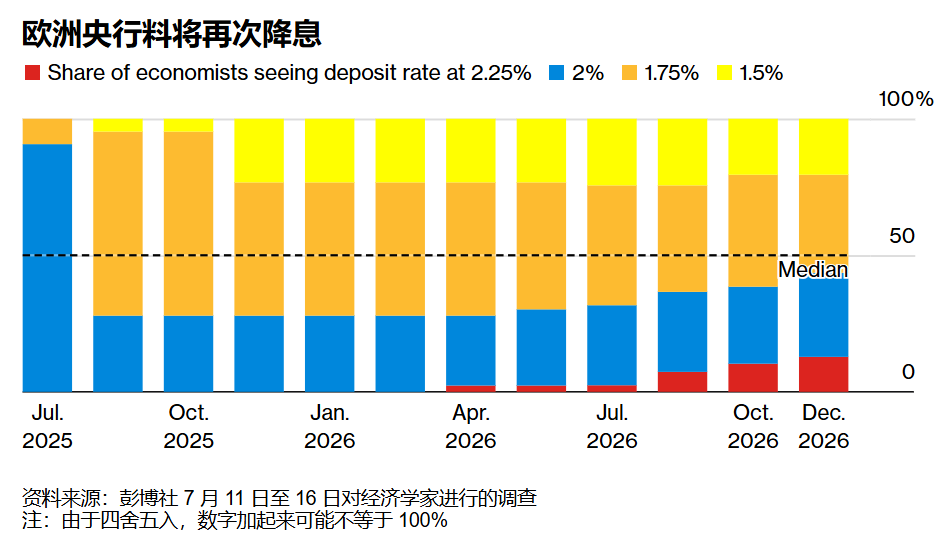
Group 1 - Investors are closely monitoring economic reports this week as they prepare for the European Central Bank's (ECB) interest rate decision meeting on Thursday, which will be crucial for assessing the direction of monetary policy amid trade uncertainties and geopolitical tensions [1] - The data released this week is unlikely to alter the ECB's decision to pause interest rate cuts for the first time in a year, but it will provide clues on whether further cuts are needed, either in September or later [1] - Goldman Sachs' chief economist for Europe, Jari Stein, noted that while the data itself may not decide on rate cuts, signs of economic slowdown would strengthen the case for further easing [4] Group 2 - The quarterly bank lending survey released on Tuesday is particularly significant as it reflects the impact of interest rate adjustments following Trump's tax policy announcement in April [4] - HSBC economist Fabio Balboni believes the survey will reveal how tariffs and geopolitical uncertainties affect policy transmission, with improvements in credit conditions under external pressures reinforcing the notion of "credit easing" [6] - Bloomberg's economic forecast suggests that the ECB is in a wait-and-see mode, with potential rate cuts expected in September and December, while the policy statement after the July 24 meeting is likely to remain consistent with June's, allowing for rate cuts without making commitments [6] Group 3 - There are differing views among ECB council members regarding the economic outlook, with some warning of growth obstacles and low inflation, while others emphasize the resilience of businesses and households [6] - The first quarter's economic performance exceeded expectations, but the ECB's vice president predicts stagnation in growth for the second and third quarters [6] - The key issue is whether public spending in Germany and other parts of Europe can offset the impacts of tariff uncertainties and euro appreciation on competitiveness [9]
加拿大全面反华?正式通知中国:加25%关税,中企必须卷铺盖走人
Sou Hu Cai Jing· 2025-07-20 16:09
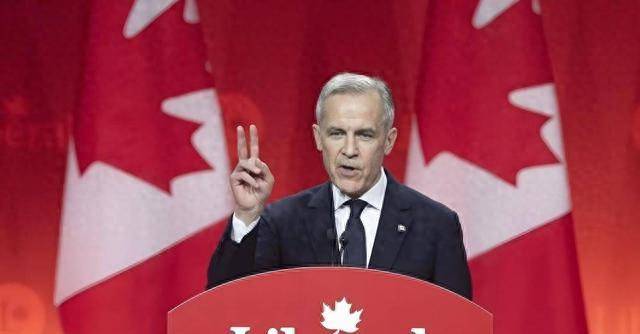
Group 1 - Canada announced a 25% tariff on all imported steel containing Chinese smelting and casting components starting at the end of July, which has drawn strong criticism from China [2][3] - The Canadian government reduced steel import quotas from non-free trade partner countries to half of 2024 levels, imposing a 50% tariff on excess imports, affecting not only direct imports from China but also products processed by Chinese enterprises in Canada [3][5] - The Canadian steel industry is heavily reliant on the U.S. market, with 75% of its exports directed there, leading to significant operational challenges for Canadian companies due to U.S. tariffs [2][6] Group 2 - Chinese enterprises are evaluating exit strategies from Canada due to increased operational costs and reduced competitiveness following the new tariffs, with some already packing equipment to relocate [5][8] - The agricultural sector in Canada is facing severe repercussions, with a 40% drop in pea prices and significant inventory issues for canola, as China retaliates against Canadian agricultural exports [5][8] - The Canadian government is under pressure to balance its economic relationship with the U.S. while managing the fallout from its actions against China, which could lead to a deteriorating investment environment [8][9] Group 3 - The U.S. government is supportive of Canada's actions as it aligns with their strategy to contain Chinese steel exports, while Canada faces internal criticism for not directly confronting U.S. tariffs [6][9] - The long-term implications of the tariffs may lead to a cooling of China-Canada relations, with potential negative impacts on Canadian employment and investment [8][9] - The trade dynamics are complicated by the fact that Canadian companies may seek to relocate to other countries like Mexico or Vietnam, which also face U.S. tariff risks, complicating supply chain adjustments [8][9]
国金高频图鉴 | 美国关税平均税率升至8.9% & 韩国7月半导体出口强劲
雪涛宏观笔记· 2025-07-20 14:14
Core Viewpoint - The article discusses the significant increase in tariffs imposed by the United States on China, reaching 48.2% in 2025, and its implications for global trade dynamics, particularly in the semiconductor and consumer goods sectors [4][6]. Tariff Changes - The average tariff rate for China is projected to rise from 10.9% in 2024 to 48.2% by May 2025, marking a substantial increase of 37.4% [3][4]. - Other countries such as the EU and Japan will also see increases in their respective tariff rates, with the EU's rate expected to rise from 1.2% to 6.7% and Japan's from 1.5% to 14.1% during the same period [3][5]. South Korea's Export Performance - South Korea's exports showed strong performance, with a year-on-year increase of 9.5% in early July, reaching $19.4 billion [9]. - Key export categories for South Korea include semiconductors, precision instruments, and automobiles, indicating resilience despite global trade tensions [9]. Real Estate Market Trends - The real estate market in China is experiencing a downturn, with transaction volumes declining by 12.1% year-on-year as of mid-July, particularly in first and second-tier cities [10]. - Price indices are also adjusting, with major cities like Beijing facing significant downward pressure on prices [10]. Consumer Electronics and Automotive Sales - Despite a decline in absolute sales figures, the consumer electronics sector in China is showing resilience, with a year-on-year sales increase of 34.6% in early July [12]. - The automotive sector also reported a 7% year-on-year growth in retail sales, with the new energy vehicle market seeing a notable increase in penetration rates [12].


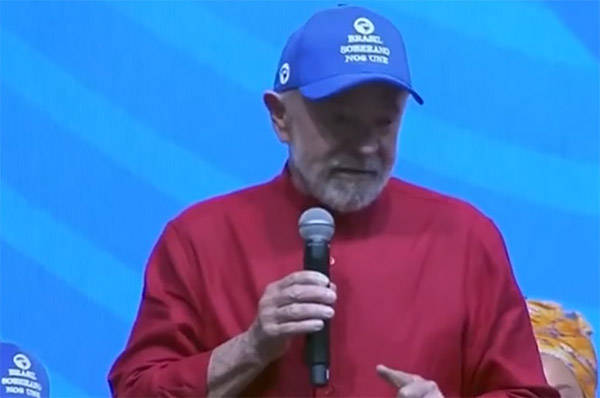
卢拉再次强硬回应特朗普:没有哪个外国人,能对巴西总统发号施令
Sou Hu Cai Jing· 2025-07-19 04:58
Group 1 - Brazilian President Lula criticized the potential 50% tariffs proposed by US President Trump, labeling them as "unacceptable extortion" and baseless accusations against Brazil's trade practices [1][6] - Lula emphasized Brazil's commitment to maintaining open diplomatic relations and trade cooperation not only with the US but with all countries [1] - Brazil plans to enhance regulation and taxation on US tech companies, accusing them of spreading violence and false information under the guise of free speech [3] Group 2 - Lula expressed a willingness to engage in dialogue with Trump, although no consensus on meeting arrangements has been reached between the two countries [3] - Brazilian Vice President Alckmin and Foreign Minister Vieira submitted a document to US Commerce Secretary Raimondo, requesting a response and the initiation of negotiations regarding the tariffs [6] - The Brazilian government formally expressed strong indignation over the proposed 50% tariffs in a letter sent to the US on May 15, reiterating its openness to dialogue [6]

7.18黄金价格回调!国际、国内金价最新行情曝光
Sou Hu Cai Jing· 2025-07-19 04:08
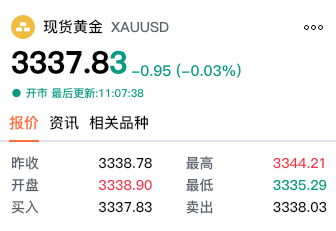
Core Viewpoint - The global precious metals market is experiencing significant volatility driven by geopolitical risks in Washington and the Middle East, as well as escalating trade tensions between the US and Europe [1] Geopolitical Risks - The turmoil in the Middle East, particularly the Houthi attacks on Iraqi oil fields, has led to a daily drop in oil production by 140,000 to 150,000 barrels, impacting the global energy market [4] - The issuance of missile safety alerts by the US Embassy in Israel has heightened risk-averse sentiment among investors [4] Federal Reserve Policy Divergence - Internal disagreements within the Federal Reserve are causing market fluctuations, with hawkish member Kugler opposing rate cuts while dovish member Waller advocates for a 25 basis point cut in July [2][5] - Market expectations for a July rate cut have risen from 28% to 30%, while the probability of a September cut remains at 54% [2] Trade Tensions - The escalation of the US-EU trade war, including a 40% tariff on EU steel starting August 1, has begun to impact the precious metals supply chain [6] - A factory owner in Dongguan reported a 50% drop in orders for 18K gold necklaces destined for the US, resulting in significant inventory losses [6] Market Volatility - A rumor regarding former President Trump's consideration to fire Fed Chair Powell caused gold prices to spike by $50 to a three-week high of $3,377 before dropping back down, illustrating the extreme volatility in the gold market [8] - Gold has experienced nine instances of daily fluctuations exceeding $35 since July [8] Precious Metals Price Movements - Platinum prices have surged to a two-month high of $1,408, driven by miner strikes in South Africa and the booming hydrogen vehicle market, while silver prices have declined due to weak global factory orders [8] - Domestic gold prices in Shanghai opened at 771.2 yuan per gram, slightly down from the previous day, while retail prices for gold jewelry are significantly higher due to additional costs [9] Central Bank Gold Purchases - Central banks globally are increasing their gold reserves, purchasing between 37 to 39 tons monthly, with China's central bank being the most aggressive, raising its reserves to 2,298 tons over the past eight months [9] - Some Nordic pension funds have increased their gold allocations to 14%, indicating a shift towards gold as a hedge against currency devaluation [9]

巨富金业:美联储降息预期与贸易战火如何左右黄金下一步?
Sou Hu Cai Jing· 2025-07-18 08:57
Group 1 - The core viewpoint of the article highlights the fluctuations in gold prices influenced by various economic and geopolitical factors, including U.S. Federal Reserve policies, trade tensions, and rising geopolitical risks [3][5][10] Group 2 - The Federal Reserve's Beige Book indicates a slight recovery in U.S. economic activity, but manufacturing remains weak, with rising raw material costs due to tariffs, leading to increased inflation risks [3][5] - Market expectations for a rate cut in July have decreased from 35% to 23%, which has strengthened the U.S. dollar and put short-term pressure on gold prices [5] Group 3 - The escalation of trade tensions, with the U.S. imposing significant tariffs on imports from Japan, Brazil, and Sri Lanka, is expected to impact global trade dynamics and support gold prices as a safe-haven asset [6] - Historical data suggests that during periods of heightened trade friction, gold prices typically trend upwards, indicating a potential bullish outlook for gold amid current trade uncertainties [6] Group 4 - Geopolitical risks, particularly related to the conflict in Yemen and the Suez Canal crisis, have led to increased demand for gold as a safe-haven investment, with insurance premiums for war risks reaching a 15-year high [7] - Ongoing geopolitical tensions, including the Russia-Ukraine conflict and Middle Eastern issues, contribute to market uncertainty, further driving gold's appeal [7] Group 5 - Technically, gold prices are oscillating between key moving averages, indicating a consolidation phase, with potential for either a short-term pullback or further upward movement depending on price action around critical levels [8] Group 6 - The long-term bullish trend for gold remains intact due to its characteristics of low correlation with traditional financial assets and steady returns, making it attractive to global investors [10] - Future developments to monitor include the Federal Reserve's July meeting minutes, progress in August tariff negotiations, and the evolution of geopolitical situations, all of which will influence gold's trajectory [10]
卢拉再怼特朗普:没有哪个外国人能对巴西总统发号施令
Sou Hu Cai Jing· 2025-07-18 08:05
Group 1 - The core issue revolves around President Trump's threat to impose a 50% tariff on Brazilian goods starting August 1, citing Brazil's current government's actions against former President Bolsonaro as justification [1][3] - Brazilian President Lula firmly rejected Trump's demands, asserting that no foreign entity can dictate terms to Brazil and emphasizing the country's sovereignty [1][3] - Lula expressed disappointment over Trump's letter, criticizing him for acting as if he were a "world emperor" rather than the elected leader of the United States [4] Group 2 - Lula highlighted that Bolsonaro is facing trial for attempting to organize a coup, and if Trump were Brazilian, he would also face legal consequences for similar actions [4] - The Brazilian government has initiated a countermeasure mechanism based on the "Commercial Reciprocity Act," allowing for retaliatory tariffs and other measures to protect national interests [4] - Brazil's Development, Industry, Trade, and Services Ministry, along with the Foreign Ministry, expressed outrage over the proposed tariffs, warning of "very negative" impacts on both economies [5]