内循环

Search documents
X @外汇交易员
外汇交易员· 2025-10-28 08:54
Guiding Principles & Development Themes - The "15th Five-Year Plan" (Fifteenth Five-Year Plan) emphasizes "people-centered" development, prioritizing the people [1] - The plan highlights the combination of an effective market and an active government [1] - The plan shifts focus to "economic construction as the center," re-emphasizing its fundamental role [2] - The plan upgrades domestic demand from a strategic base to a development goal, aiming to build a strong domestic market [2] Economic & Technological Focus - "New productive forces" are a core keyword, emphasizing technological innovation to lead economic transformation [2] - The plan aims for decisive breakthroughs in key core technologies through "unconventional measures" [2] - The plan includes forward-looking layouts for future industries such as quantum technology, brain-computer interfaces, embodied intelligence, 6G mobile communication, hydrogen energy, and nuclear fusion energy [2] - The plan upgrades the artificial intelligence strategy to "Artificial Intelligence + Action" [2] Policy & Systemic Changes - The plan upgrades the protection of the private economy by proposing to "implement the Private Economy Promotion Law" [2] - The plan shifts from "expanding opening-up" to "actively expanding independent opening-up," emphasizing proactive expansion and enhanced autonomy under external pressure [3] - The plan emphasizes "promoting the internationalization of the RMB" and "building an independent and controllable RMB cross-border payment system" [3] - The plan clarifies "appropriately strengthening the central government's responsibilities and increasing the proportion of central government fiscal expenditure" to address local debt risks and strengthen central coordination [4] Social & Security Aspects - In education, the plan aims to build a high-quality education system and explore extending compulsory education and expanding free education [5] - In employment, the plan aims for higher-quality and fuller employment, with residents' income growth "synchronized" with economic growth [5] - The plan aims to improve and implement national unified basic pension insurance, gradually increasing basic pension for urban and rural residents [6] - The plan advocates for positive views on marriage and childbirth, effectively reducing the costs of raising and educating children [6] - The plan adds "more consolidated national security barriers" as an independent goal, emphasizing strengthening security capabilities in emerging fields such as network, data, AI, biology, and ecology [6]
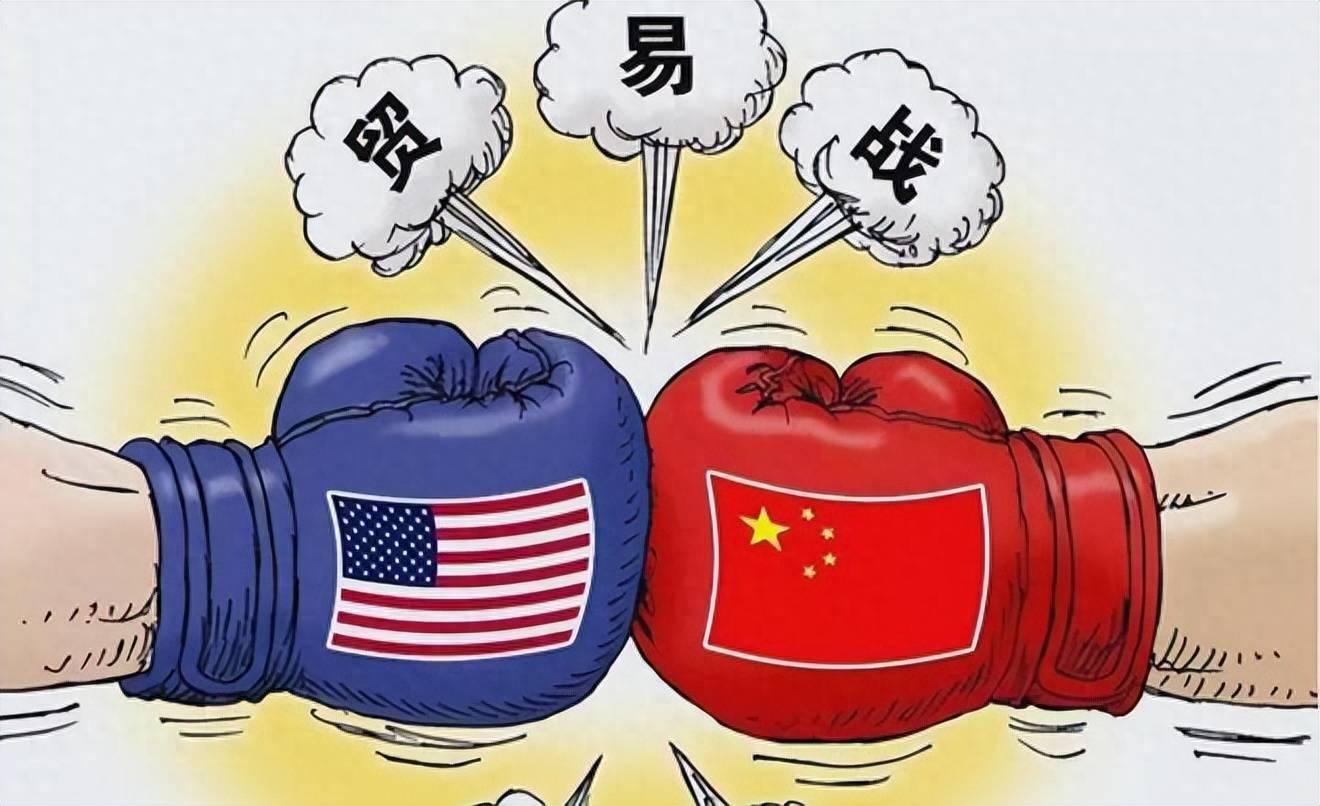
美国人觉得对我们贸易战很成功,市面上没中国制造,生活依然很滋润
Sou Hu Cai Jing· 2025-10-25 20:47
Core Points - The trade war between the US and China, initiated in 2018, has evolved into a complex web affecting global supply chains, consumer behavior, and political rhetoric, with significant implications for both economies [1][2][3] - By 2025, the US has implemented aggressive tariffs on Chinese goods, leading to a dramatic shift in sourcing, with many products now labeled as "Made in Vietnam," "Made in India," or "Made in Mexico," despite their components often originating from China [11][12][16] - The economic impact of these tariffs has resulted in increased costs for American consumers, with estimates suggesting an additional burden of $1,300 per household due to higher prices on imported goods [17][20] Trade Policy and Economic Impact - The trade war began with tariffs of 25% on steel and 10% on aluminum, escalating to a maximum tariff rate of 145% on various goods by 2025 [2][3] - The tariffs have led to a significant decline in Chinese exports to the US, with a reported 90% drop, while countries like Vietnam, Mexico, and India have seen a surge in exports to the US [11][12] - The hidden costs of tariffs are reflected in rising consumer prices, with the average washing machine price increasing from $300 to $350, partly due to tariffs [17] Consumer Behavior and Perception - Despite the increased costs, many American consumers remain unaware of the true origins of the products they purchase, often believing they are supporting national policies by avoiding "Chinese goods" [7][19] - Surveys indicate a split in public opinion regarding the trade war, with a significant portion of the population believing that China benefits more from trade than the US [37][39] Supply Chain Dynamics - The shift in sourcing has resulted in longer and more fragile supply chains, as new suppliers often rely on Chinese components, undermining the intended goal of "decoupling" from China [16][22] - The reliance on Chinese intermediate goods remains high, with countries like Vietnam importing over 70% of their electronic components from China [12][22] Political and Global Implications - The trade war has broader implications beyond economics, representing a struggle for global dominance and the clash of development models between the US and China [40][41] - The political landscape is divided, with differing views on trade fairness and the impact of tariffs on various sectors, complicating the formulation of cohesive trade policies [39][43] Conclusion - The ongoing trade war illustrates that there are no clear winners, only varying degrees of cost distribution among consumers, businesses, and countries involved, highlighting the challenges of navigating a highly interconnected global economy [44][45]

申万宏源策略一周回顾展望(25/10/20-25/10/25):“十五五”规划:优化中国经济转型的实现路径
Shenwan Hongyuan Securities· 2025-10-25 13:43
Group 1 - The "14th Five-Year Plan" optimizes the path for China's economic transformation, enhancing long-term market expectations and making them easier to develop [3][5][8] - Clear recognition of China's advantages includes the "socialist system advantage," "super-large market advantage," "complete industrial system advantage," and "rich talent resource advantage" [3][5][6] - The importance of external circulation for China's economic transformation has been further confirmed, emphasizing a "high-level opening up" strategy [6][7] Group 2 - Internal circulation governance optimization is focused on increasing the resident consumption rate and optimizing resource allocation [7][8] - Future regional industrial layouts may show significant differentiation, allowing for targeted talent strategies and urbanization efforts [8] - The internal governance approach aims to enhance total factor productivity through technological advancements [8] Group 3 - Short-term market judgment remains that technology growth adjustments are nearing completion, with expectations for technology to lead the market in Q4 2025 [9][10] - The structural characteristics of the A-share market in the five-year planning year highlight AI, robotics, and semiconductors as key directions [11][12] - The "14th Five-Year Plan" presents opportunities in emerging industries and future industries, including new energy, quantum technology, and integrated circuits [12]
承前启后、全面发力的“十五五”
2025-10-23 15:20
Summary of Key Points from Conference Call Records Industry or Company Involved - The discussion primarily revolves around China's economic policies, particularly the "Fifteen Five" (十五五) planning period and its implications for various sectors including technology, defense, and consumption. Core Points and Arguments 1. **Shift to Domestic Circulation** The focus of Chinese policy is shifting towards domestic circulation in response to complex international environments, reducing the relative importance of external circulation while enhancing national defense capabilities aimed at the centenary of the military [1][4]. 2. **Economic Growth Projections** The "Fifteen Five" plan sets a target for average GDP growth of 4.73% over the next five years, with an immediate goal of achieving 5% growth in the coming year [3][10]. 3. **Demand-Side Policies** The government is expected to implement demand-side policies through increased fiscal spending and bond issuance to support economic growth, particularly in response to any signs of weakening domestic demand [3][7]. 4. **Technological Innovation as a Key Opportunity** The plan emphasizes technological iteration as a significant opportunity, aiming for comprehensive upgrades in infrastructure and productivity, particularly in energy systems and AI [5][6]. 5. **Balanced Interaction Between Supply and Demand** The interaction between supply-side and demand-side policies is expected to be positive, with both sides working together to drive economic development [7]. 6. **Focus on National Defense and International Influence** The economic strength indicators have expanded from three to five, adding national defense and international influence, reflecting a greater emphasis on defense construction and enhancing China's international standing [13]. 7. **Investment Directions** Key investment areas identified include technology innovation, advanced manufacturing, domestic consumption, green transformation, and military modernization [25][26]. 8. **Market Sentiment and Stock Predictions** The Hong Kong stock market is currently in a transitional phase, with balanced risks in the short term but an optimistic medium-term outlook supported by stable fundamentals and liquidity [2][31]. Other Important but Possibly Overlooked Content 1. **Challenges in Economic Policy** The upcoming economic policies face challenges in achieving the "保 5" (ensure 5% growth) target while preparing for the "Fifteen" planning period [20]. 2. **Consumer Trends** New consumer trends are emerging, with a focus on "new demand leading to new supply," indicating a shift towards innovative consumer products and high-end manufacturing expanding market share overseas [29]. 3. **Real Estate and Population Issues** The plan mentions promoting high-quality development in real estate, though specifics are yet to be clarified. There is also a growing focus on addressing population aging and optimizing population structure [17][18]. 4. **National Security Strategies** The national security section emphasizes enhancing strategic capabilities to defend sovereignty and security interests, aligning with the current geopolitical context [19]. 5. **Investment Strategy Recommendations** Recommendations for investment strategies include diversifying portfolios to balance risks and returns, with a focus on sectors like technology and consumer goods, while being cautious in the bond market [27][30].
A股收评 | 两大变数来袭!双创指数大跌、沪指收跌1.95% 市场近4800股飘绿
智通财经网· 2025-10-17 07:18
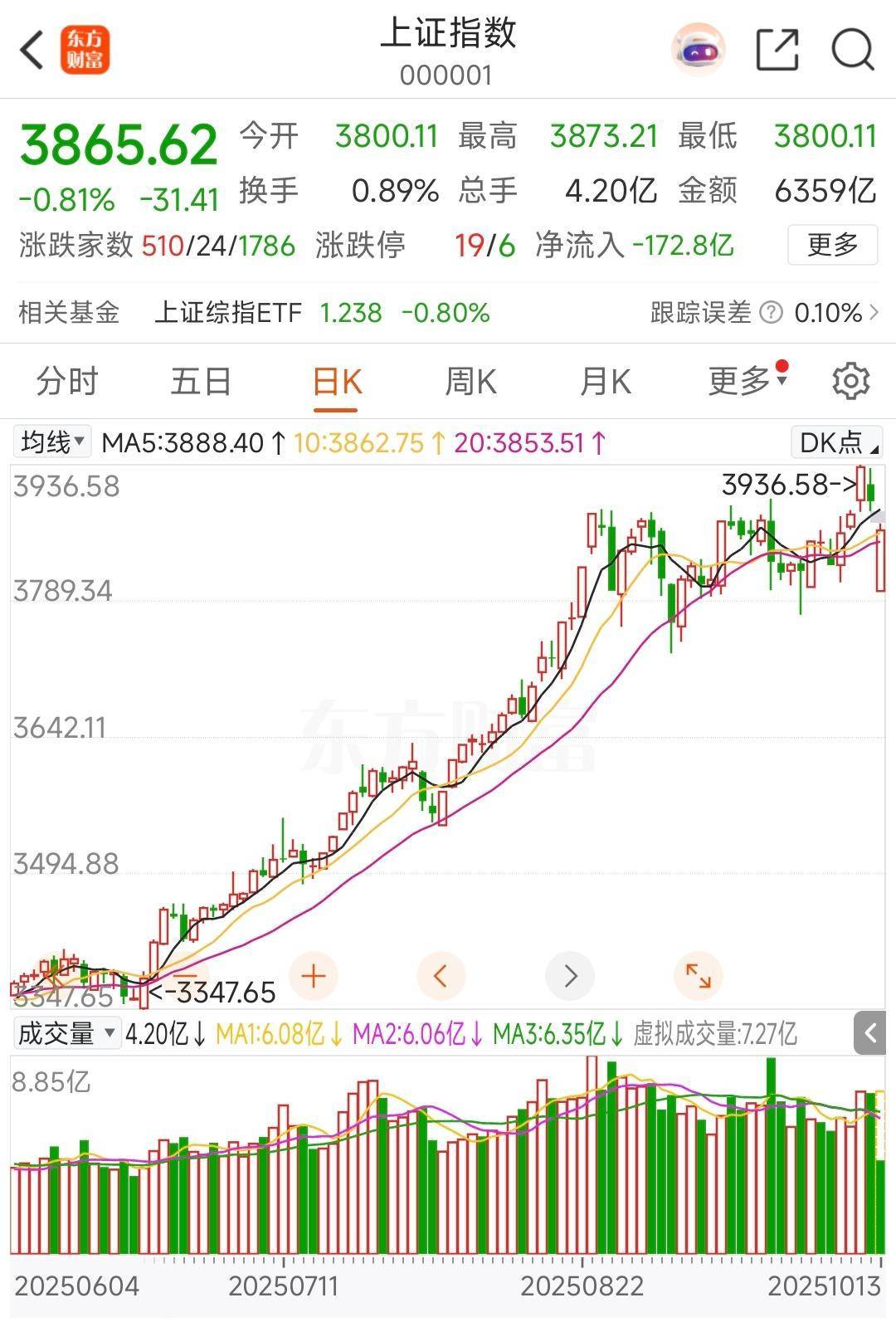
Market Overview - The A-share market experienced a decline on October 17, with nearly 4,800 stocks in the red and a trading volume of 1.94 trillion, an increase of 6.9 billion from the previous trading day [1] - The Shanghai Composite Index fell by 1.95%, the Shenzhen Component Index by 3.04%, the ChiNext Index by 3.36%, and the STAR Market 50 Index by 3.77% [1] - Two main uncertainties affecting the market include the instability of trade relations and the increasing fragility of the U.S. financial system, which may alter global capital market expectations [1] Sector Performance - The technology sector saw significant adjustments, with declines in computing power, semiconductors, and consumer electronics, highlighted by a trading halt for ZTE Corporation [1] - Other sectors such as new energy, automotive supply chains, and military industry also faced notable declines [1] - Conversely, bank stocks showed strength, with Agricultural Bank of China reaching a new high during intraday trading; gas and oil sectors were active, and certain stocks in the port and shipping sector exhibited strength [1] Institutional Insights - **Zhaoshang Securities**: Short-term adjustments are inevitable, but the market retains resilience, with a possibility of new highs post-adjustment. This period may serve as an opportunity for structural optimization [3] - **Debon Securities**: If trading volume does not increase, the index may continue to face range-bound pressure. Value sectors represented by dividends may continue to outperform in the short term [4] - **Dongfang Securities**: Short-term adjustments will not alter the upward trend of the market. Despite a cooling in trading activity, technology stocks remain the main focus, with opportunities for accumulation during dips [5] Coal Sector Activity - The coal sector showed signs of activity, with stocks like Dayou Energy experiencing a surge, supported by reports of strong cold air affecting China and expectations of improved coal prices in the latter half of 2025 [2]
A股午评 | 双创指数均跌逾2% 市场逾4100股飘绿 科技回调、周期股升温
智通财经网· 2025-10-17 03:47
Market Overview - The A-share market experienced a decline with over 4100 stocks in the red, as the Shanghai Composite Index fell by 1.00%, the Shenzhen Component Index by 1.99%, and the ChiNext Index by 2.37% as of the midday close [1] - Dealing with external shocks, the market began to shrink in volume, reflecting a certain level of risk aversion, with value sectors represented by dividends likely to continue outperforming in the short term [1][5] - If the market does not see increased volume, indices may continue to face pressure from range-bound fluctuations [1] Sector Performance Technology Sector - The technology sector saw significant adjustments, with computing power, semiconductors, and consumer electronics leading the declines [1] Coal Sector - The coal sector maintained its strength, with companies like Dayou Energy achieving six gains in five days, and other firms such as Baotailong and Zhengzhou Coal Electric also rising [3] - Reports indicated that the strongest cold air of the year is expected to impact China, which may lead to improved coal prices and profits for coal companies in the fourth quarter [3] Banking Sector - The banking sector showed resilience, with Agricultural Bank of China hitting new highs and the banking index rising for seven consecutive days [1] Pharmaceutical Sector - The innovative drug concept stocks performed well, with Huabang Health hitting the daily limit, alongside other companies like Shenlian Bio and Shutaishen also seeing gains [2] Institutional Insights Short-term Market Adjustments - According to招商证券, short-term adjustments are inevitable, but the market still shows resilience, with the potential for indices to reach new highs post-adjustment [4] - 德邦证券 noted that the market's shrinkage reflects risk aversion, but value sectors may continue to outperform in the short term, with future growth sectors still worth long-term investment [5] Long-term Outlook - 东方证券 suggested that short-term adjustments will not alter the overall upward trend of the market, emphasizing that technology stocks remain the main focus for investors [6][7]
A股开盘速递 | A股集体低开 沪指跌0.11% 培育钻石、存储芯片等板块领跌
智通财经网· 2025-10-17 01:40
Market Overview - The three major A-share indices opened lower, with the Shanghai Composite Index down 0.11% and the ChiNext Index down 0.36% [1] Institutional Insights - **CITIC Securities**: Short-term adjustments are inevitable, but the market remains resilient. There is potential for indices to reach new highs post-adjustment, which may serve as an opportunity for structural optimization. Focus on low-position sectors with marginal improvements, such as military industry, semiconductors, software autonomy, new consumption, and non-ferrous metals [1] - **Debon Securities**: The market is experiencing a cautious sentiment reflected in reduced trading volumes below 2 trillion yuan. The performance of dividend-representative value sectors may continue to dominate in the short term. If trading volumes do not increase, indices may face continued pressure within a range [2] - **Orient Securities**: Short-term adjustments will not alter the upward trend of the market. The technology sector remains the main focus, with opportunities for accumulation during dips [3]
四川大决策投顾 :市场或还有反复 操作宜避高就低
Sou Hu Cai Jing· 2025-10-15 02:38
Market Overview - The U.S. stock market showed mixed results with the Dow Jones up by 0.44%, while the Nasdaq and S&P 500 fell by 0.76% and 0.16% respectively. The Nasdaq China Golden Dragon Index dropped by 1.95% [1] - In the A-share market, major indices experienced declines, with the Shanghai Composite Index down by 0.62%, the Shenzhen Component down by 2.54%, and the ChiNext Index down by 4.26%. Over 3,500 stocks fell, indicating a bearish sentiment [1] - The trading volume in the A-share market reached 2.58 trillion yuan, an increase of 221.5 billion yuan compared to the previous trading day [4] Sector Performance - The diamond cultivation sector saw significant inflows due to new export controls on synthetic diamond products announced by the Ministry of Commerce and the General Administration of Customs, highlighting the material's importance in semiconductor applications [1] - High dividend sectors such as banking, insurance, and coal mining showed positive performance, while semiconductor equipment and related sectors faced significant outflows [5][8] Investment Strategy - The market is expected to experience fluctuations, with a recommendation to focus on undervalued high-dividend assets and sectors benefiting from domestic consumption recovery [6][9] - The recent market adjustments are viewed as technical corrections rather than a shift in the overall bullish trend, with a focus on maintaining positions above 3,800 points in the Shanghai Composite Index [7] - Investors are advised to reduce positions gradually during any rebounds to manage risk effectively [7] Technical Analysis - The Shanghai Composite Index is currently in a strong oscillating pattern, having tested the 20-day moving average support, while the ChiNext Index has shown weakness, failing to break above its 20-day moving average [11]
三大股指大幅低开 黄金坑机会来了?
Sou Hu Cai Jing· 2025-10-13 11:05
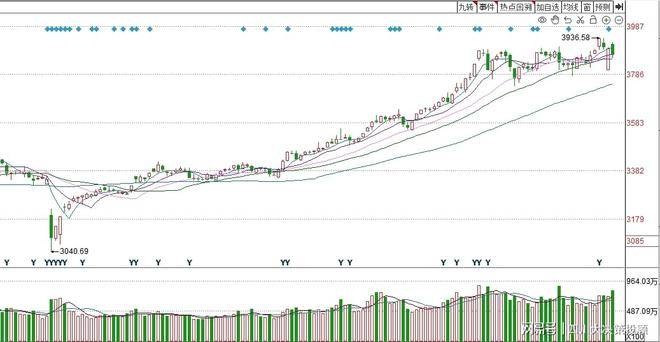
Market Overview - The three major stock indices opened significantly lower, with the ChiNext Index dropping over 4% due to concerns over U.S.-China trade tensions and the U.S. government shutdown [1] - Last week, U.S. stocks experienced a sharp decline, particularly in technology stocks, raising fears among investors about a potential repeat of the April 7 market crash in A-shares [1] Historical Context - On April 7, A-shares faced extreme volatility, with the Shanghai Composite Index plunging 7.34% and the ChiNext Index falling 12.5%, primarily triggered by U.S. tariff policies escalating the global trade war [2] - Current market analysts believe that the impact of trade tensions on A-shares is less severe than in April, citing a decrease in the degree of expectation shock and the establishment of market stabilization policies [2] Market Sentiment and Predictions - Analysts from Galaxy Securities suggest that while short-term volatility may increase due to external uncertainties and profit-taking pressures, the core factors driving the current market trend remain unchanged, with liquidity expected to continue improving [2] - The current market dynamics indicate that the short-term drop is largely a result of heightened global risk aversion, but the long-term outlook for A-shares remains positive, especially with the "14th Five-Year Plan" in focus [2] Investment Opportunities - According to Guotai Junan Securities, the current external shocks present a good opportunity to increase investments in the Chinese market, as the boundaries of trade risks are clearer now compared to April [2] - Analysts from招商证券 believe that despite the inevitability of short-term adjustments, the market shows resilience, and there is a significant possibility for indices to reach new highs post-adjustment, suggesting that this could be an opportunity to optimize investment structures [3] - Recommended sectors for investment include military, semiconductor, software autonomy, new consumption, and non-ferrous metals, focusing on areas with relatively low positions and marginal improvements [3]
中美经贸上完全脱钩,我们还能继续繁荣吗?美元地位能动摇吗?
Sou Hu Cai Jing· 2025-10-13 10:20
Group 1: Trade Dynamics - The total value of goods imported by the U.S. from China in the first six months of this year was approximately $13.2 billion, while exports to China were about $11.4 billion, showing a significant decline compared to the same period last year [2] - The trade volume between China and the U.S. for the first seven months was $337.2 billion, a year-on-year decrease of 12%, indicating a reduction in trade scale due to escalating tensions [2] - China's exports to the U.S. are projected to drop from nearly $440 billion in 2024 to $177.4 billion in the first five months of this year, reflecting a year-on-year decline of 9.7% [2] Group 2: Economic Impact and Adaptation - Concerns are rising about the potential collapse of foreign trade enterprises in the Yangtze River Delta and Pearl River Delta, which heavily rely on exports to the U.S., particularly in electronics, machinery, and textiles [4] - In response to declining exports, China has shifted focus to emerging markets, with exports to the EU and Southeast Asia increasing significantly, demonstrating the effectiveness of diversifying export destinations [4] - The Chinese government is implementing stimulus policies to boost domestic demand, including infrastructure investments and promotional activities to enhance consumer spending [5] Group 3: Foreign Investment and Supply Chain Adjustments - A survey indicated that only 48% of U.S. companies plan to invest in China this year, down from 80% last year, suggesting a withdrawal of foreign capital [5] - Chinese companies are adapting by adjusting supply chains, sourcing materials from countries like Vietnam and India, or establishing local production facilities [5] - The International Monetary Fund (IMF) anticipates that despite the challenges posed by U.S.-China tensions, China is expected to maintain stable growth, with total trade projected to exceed 6.5 trillion by 2025 [5] Group 4: Currency and Financial Implications - The U.S. dollar's status as a global reserve currency, currently at 62%, is being challenged by high tariffs and potential shifts in trade dynamics [7] - Research indicates that if average tariffs in the U.S. rise to 26%, the dollar's position as a key currency could weaken, leading to a reduction in U.S. Treasury bond purchases by China [7] - The trend of de-dollarization is gaining momentum, with countries exploring alternatives to the dollar for trade, as evidenced by recent contracts being negotiated in euros or renminbi [7][9]