
美元降息

Search documents
[8月13日]指数估值数据(A股港股继续上涨,回到4.5星;美元降息,对A股港股有利吗)
银行螺丝钉· 2025-08-13 12:44
Core Viewpoint - The A-share and Hong Kong stock markets are experiencing strong upward momentum, with significant increases in various indices, particularly in growth-oriented sectors, while value stocks remain relatively subdued [1][3][6][8]. Market Performance - A-shares and Hong Kong stocks continue to rise, with the overall market returning to a rating of 4.5 stars [2]. - Major indices, including the CSI All Share Index, have surpassed their highest points from October 1 of the previous year [3]. - Both large-cap and small-cap stocks are on the rise, with small-cap stocks showing slightly higher gains [4][5]. - Growth style indices, such as the ChiNext, have seen substantial increases, while value style indices have lagged behind [6][7][8]. Economic Indicators - Recent U.S. economic data, including a lower-than-expected non-farm employment increase of 73,000 jobs in July, suggests potential signs of economic recession [16][17][20]. - The U.S. Consumer Price Index (CPI) for July rose by 2.7% year-on-year, which is below market expectations [21][22]. - The postponement of a 24% tariff between China and the U.S. for 90 days may help lower inflation rates [23][24]. - These economic indicators have increased the likelihood of a Federal Reserve interest rate cut in September [25]. Investment Implications - A decrease in interest rates is expected to positively impact asset prices, particularly benefiting bonds directly and stocks indirectly due to increased liquidity and lower funding costs [26][29]. - Non-dollar assets are likely to benefit even more during a U.S. interest rate cut cycle, as the dollar typically depreciates against other currencies [30][31]. - Historical trends indicate that the last bull market in Hong Kong stocks occurred during the 2020-2021 U.S. interest rate cut cycle [33]. - The current valuation levels of A-shares and Hong Kong stocks are significantly higher than during the last rate cut cycle, which may reduce the extent of future benefits from rate cuts [38]. Interest Rate Context - Historically, the average yield on 10-year U.S. Treasury bonds has been between 2-3%, with recent rates hovering just above 4% [40][43]. - Interest rate fluctuations are a short- to medium-term factor affecting market dynamics, providing opportunities for buying low and selling high, but having less impact on long-term investment returns [45][48]. Additional Features - A new feature in the "Today’s Star" app allows users to access real-time ETF valuation data and identify undervalued ETFs [49][50].


沪指创近4年新高,AI服务器、光模块、PCB板块暴涨!美元降息大周期下,哪些赛道有机会?
Mei Ri Jing Ji Xin Wen· 2025-08-13 09:57
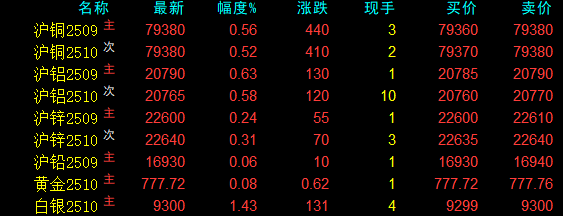
Market Overview - The Shanghai Composite Index broke through the high point from October 8 last year, reaching a nearly four-year high with a closing price of 3683.46 points, up 0.48% [1] - The total trading volume in the Shanghai and Shenzhen markets was 2.15 trillion yuan, an increase of 269.4 billion yuan compared to the previous trading day, marking a return to above 2 trillion yuan after 114 trading days [1] Economic Indicators - The U.S. Labor Statistics Bureau reported that the July CPI data indicated relatively mild inflation pressures, alleviating concerns about a sharp rise in inflation due to tariffs [1] - The market perceives that despite a slight rebound in core inflation, the overall mild CPI data has removed a significant obstacle for the Federal Reserve to lower interest rates [1] - Traders have significantly increased their expectations for a rate cut by the Federal Reserve in September, with the probability now at 95% [1] Commodity Market - Following the news, the U.S. dollar index fell, leading to an increase in futures prices for metals such as copper, aluminum, zinc, gold, and silver on the Shanghai Futures Exchange [2] Futures Trading Competition - The "Economic Grain Cup - National Futures Simulation Championship" has attracted participants who are bullish on non-ferrous metal futures, with the competition ongoing and offering cash rewards for positive returns [3][4] - The competition features a simulated trading environment with a starting capital of 1 million yuan, allowing participants to practice trading without financial risk [3][4] - Participants can benefit from various educational resources, including trading teaching sessions and market analysis, enhancing their trading skills [4][6] Investment Insights - Experts in the competition suggest that the current downtrend of the U.S. dollar index is favorable for stimulating the prices of precious and non-ferrous metals [4] - There is a belief among participants that the Shanghai Composite Index may face resistance around the 3700 and 4000 points, with a potential bull market if it breaks through the 4000-point barrier [8][10] - The artificial intelligence sector is identified as a significant investment theme, with opportunities in related sub-sectors that are still undervalued [10]
PMI走弱,需求侧等待新政策 | 投研报告
Zhong Guo Neng Yuan Wang· 2025-08-04 03:37
Group 1 - The national high-standard cement market price is 339.7 yuan/ton, down 1.0 yuan/ton from last week and down 42.5 yuan/ton from the same period in 2024 [1][3] - The average cement inventory of sample enterprises is 66.2%, down 0.2 percentage points from last week and down 0.9 percentage points from the same period in 2024 [3] - The average cement shipment rate is 44.7%, up 1.7 percentage points from last week but down 2.0 percentage points from the same period in 2024 [3] Group 2 - The construction materials sector (SW) decreased by 2.31% this week, while the Shanghai and Shenzhen 300 and Wind All A indices decreased by 1.75% and 1.09%, respectively [2] - The average price of float glass is 1295.3 yuan/ton, up 56.7 yuan/ton from last week but down 175.7 yuan/ton from the same period in 2024 [3] - The domestic non-alkali roving market price is stable, with mainstream transaction prices ranging from 3200 to 3700 yuan/ton, down 0.64% from last week [3] Group 3 - The real estate industry has shown signs of recovery, with the added value of the real estate sector turning positive, indicating a clearing in the supply chain [4][5] - The cement and glass industries are recommended for investment due to their potential benefits from demand recovery and industry consolidation [5][6] - The glass fiber market is expected to see growth in high-end products due to technological advancements and increased demand in sectors like wind power and new energy vehicles [7][8] Group 4 - The construction materials sector is experiencing a supply-side contraction, which is expected to improve the short-term supply-demand balance [9] - The government is expected to continue promoting domestic demand and consumption, which will positively impact the home improvement and building materials market [10][11] - Companies with strong growth intentions and those benefiting from national subsidy policies are recommended for investment [11]
荷兰国际:周四的非农数据或为美指提供支撑
news flash· 2025-06-30 12:54
Core Viewpoint - The upcoming U.S. economic data, particularly the non-farm payroll report, may provide short-term support for the dollar index, limiting its decline amid concerns over interest rate cuts [1] Economic Data Impact - The dollar index (DXY) fell to a three-year low due to worries about interest rate cuts [1] - Francesco Pesole from ING suggests that the non-farm employment report could indicate a gradual slowdown in job growth, but not enough to significantly increase bets on a rate cut in July [1] - There is an expectation that inflation may rise in the coming months, which could further support the dollar [1]

美国袭击伊朗,美元和美债都得救了?7月美元降息概率上升
Sou Hu Cai Jing· 2025-06-29 08:45
Group 1 - The U.S. military action against Iran's nuclear facilities is perceived as a response to domestic economic challenges, particularly the difficulty in selling government bonds and the pressure on the dollar [1][8][41] - The Trump administration's "America First" policy has led to trade restrictions and tariffs, causing uncertainty among global investment institutions, which typically prefer stable markets [5][6][10] - Following the attack on Iran, the yield on U.S. ten-year bonds decreased, indicating a temporary restoration of confidence in government bonds, although the underlying issues of excessive spending and debt remain unresolved [12][14][41] Group 2 - The potential for rising oil prices due to geopolitical tensions in the Middle East could lead to increased inflationary pressures in the U.S., complicating the Federal Reserve's decision on interest rate cuts [24][39] - The Federal Reserve faces a dilemma: while there are reasons to lower interest rates to stimulate the economy, rising oil prices could reignite inflation, making it cautious about any rate cuts [27][31][39] - The outcome of the U.S. actions in Iran and the subsequent oil market reactions will significantly influence the Federal Reserve's monetary policy decisions in July [37][41]

特朗普的高端局!美元和美债都得救了?7月美元降息有概率大增
Sou Hu Cai Jing· 2025-06-26 23:42
Core Viewpoint - The Federal Reserve faces intense pressure regarding interest rate decisions, with significant implications for U.S. debt and economic stability, as political and financial dynamics intertwine [1][3][10] Group 1: Federal Reserve and Interest Rates - Federal Reserve Chairman Jerome Powell indicated a willingness to lower interest rates if inflation is under control, leading to a surge in market expectations for a July rate cut from 18.6% to 77.3% [1] - Internal divisions within the Federal Reserve are evident, with some members advocating for immediate rate cuts, reflecting a shift in sentiment amid political pressures [3][8] - The Fed's dot plot reveals a split among committee members, with some predicting no rate cuts until 2025, while others foresee at least two cuts, highlighting uncertainty in monetary policy direction [8] Group 2: U.S. Debt and Economic Implications - The U.S. national debt has reached $36.2 trillion, with interest payments projected to exceed military spending and rise to $952 billion by 2025, indicating a growing fiscal burden [1][3] - A report warns that the U.S. debt exhibits characteristics of a "Ponzi scheme," with debt-to-GDP ratio at 123%, significantly above the 60% international warning threshold [6] - The potential for a debt crisis in 2025 is underscored by the need to refinance $9.3 trillion in maturing debt, which constitutes one-third of total public debt [3][6] Group 3: Market Reactions and Economic Indicators - Following Powell's comments, the S&P 500 index rose by 1.11%, while U.S. Treasury yields fell, indicating a strong market reaction to the prospect of rate cuts [4] - Economic indicators present a mixed picture, with a healthy unemployment rate of 4.2% contrasted by rising initial jobless claims and a significant drop in consumer confidence [6][8] - The impact of tariffs under Trump's policies is projected to increase inflation, with potential long-term economic consequences [6][8] Group 4: Global Economic Context - The trend of de-dollarization is accelerating, with central banks globally reducing their dollar reserves, leading to a 57.4% share of dollar reserves, the lowest in 30 years [6] - The shift towards gold as a reserve asset is evident, with countries like Poland, China, and Turkey increasing their gold holdings, reflecting a loss of confidence in the dollar [6][10] - The Federal Reserve's decisions are seen as critical in determining the future of the dollar's dominance in the global financial system [10]

不是924,但牛还在!
格隆汇APP· 2025-06-26 11:07
Core Viewpoint - The current market situation is not a repeat of the 9/24 rally, but the bull market is still ongoing and even improving [2][3]. Market Conditions - The market has experienced significant growth, with the Shanghai Composite Index surpassing 3,400 points and trading volume exceeding 1.5 trillion [3]. - The previous market conditions before 9/24 were characterized by low trading volumes and a declining index, which created a scenario for a strong rebound [3]. Positive Factors - **Fundamentals**: The domestic macroeconomic environment is showing signs of recovery after several years of adjustment, with major international banks like Morgan Stanley and Deutsche Bank becoming more optimistic about China's economic growth [4]. - **Liquidity**: The expectation of a shift to a rate-cutting cycle in the U.S. is anticipated to positively impact global capital markets, enhancing risk appetite [5]. - **Industry Trends**: Opportunities arising from trade tensions, such as advancements in self-sufficiency in semiconductors and new energy sectors, are expected to drive growth despite broader market fluctuations [6]. Investment Strategy - Investors should focus on selecting the right sectors to capitalize on ongoing market trends rather than relying on rapid market gains [6].

A股意外跳水!6月20日,分歧释放后的新周期即将来临?
Sou Hu Cai Jing· 2025-06-19 17:42
Group 1 - The Federal Reserve is unlikely to easily abandon its fight against inflation, facing a dilemma of either economic recession or stagflation [1] - ADP employment data indicates a poor job market, suggesting that the Fed may have to lower interest rates if inflation continues to cool [1] - The market predicts that the dollar may experience four interest rate cuts this year, with the probability of a cut in June approaching zero [1] Group 2 - A-shares experienced a significant drop, largely influenced by the decline in Hong Kong stocks, with both the Shanghai Composite and ChiNext indices showing a typical bearish trend [3] - The Hang Seng Index and Hang Seng Tech Index both fell over 2%, highlighting the strong correlation between A-shares and Hong Kong stocks [3] Group 3 - The market opened lower and continued to decline throughout the day, breaking below the 30-day moving average, indicating a downward trend after a period of consolidation [5] - The next key support levels to watch for potential buying opportunities are between 3316 and 3324 points [5] Group 4 - The ChiNext and Shenzhen Composite indices fell over 1%, with more than 4600 stocks declining across the two markets [7] - The total trading volume in the Shanghai and Shenzhen markets increased to 1.25 trillion, indicating heightened selling pressure and a preference for risk aversion among investors [7] - Despite the short-term bearish trend, the mid-term weekly and monthly structures remain stable, suggesting a potential new cycle may emerge after the current divergence [7]
金价疯狂幕后
虎嗅APP· 2025-03-14 09:47
Core Viewpoint - The article discusses the patterns of gold price fluctuations, emphasizing that while gold can outperform inflation in the long term, its price is subject to significant volatility, which can lead to substantial losses if investment timing is poor [2][4]. Group 1: Historical Context of Gold Prices - In January 1980, the average gold price was $755 per ounce, followed by a 20-year bear market, with the price dropping to $280 per ounce by December 1999, a decline of 63% [3]. - In November 2011, the average gold price reached $1,771 per ounce, but a subsequent four-year bear market saw it fall to $1,062 per ounce by December 2015, a decrease of 40% [4]. - Historical examples illustrate that gold has experienced significant fluctuations in value over centuries, such as during the Song Dynasty in China, where gold's value relative to copper coins varied dramatically [4]. Group 2: Gold's Scarcity and Utility - Gold's scarcity is not a concern, as it is formed through extreme cosmic events, making its natural formation on Earth virtually impossible [5]. - The article outlines gold's historical role as a payment and wealth storage medium, highlighting its characteristics that make it preferable over other materials for wealth preservation [7]. - In modern times, gold primarily serves as a means of wealth storage, with 2024 gold consumption in China projected at 985 tons, primarily for jewelry and investment purposes [8]. Group 3: Short-term and Long-term Price Trends - Short-term gold price trends are influenced by three main factors: a declining US dollar index, lower interest rates, and heightened international tensions, all of which tend to drive gold prices up [17][19][22]. - Long-term trends indicate that gold prices rise when the risks associated with the currency system increase, particularly when the status of strong currencies is undermined [24]. - Historical analysis reveals three significant bull markets in gold since the end of the gold standard, each driven by factors that weakened the status of dominant currencies [25][27][30]. Group 4: Current Bull Market Dynamics - The current bull market in gold, which began in 2019, is primarily driven by concerns over the rapid growth of US debt, with the fiscal deficit rate surpassing 4% in 2019 and reaching 15.7% in 2020 [34]. - Additionally, the rise of China as a global power poses a challenge to the US dollar, contributing to the ongoing bullish sentiment in gold [36]. - The article concludes that gold remains an essential asset for wealth storage and risk diversification in the face of currency system uncertainties [14].

认知套利
猫笔刀· 2024-09-18 14:17
昨晚文章里关于股票回购的部分做几个补充说明。 上市公司回购股票后主要有2个用途,1个是注销股份,这样剩余所有股东的权益都提升了,是最佳选择;1个是把回购的股份当作股权激励发给员工,这 种回头还是会砸回到二级市场,从提振股价的角度出发和注销股份完全没法比。 美股回购大都是第一种,比如苹果公司10年前一共263亿股,经过这些年的回购、注销、回购、注销,现在还剩152亿股,42%的股份被注销了。这是一个 普通人难以理解的天文数字,我举个通俗一点的例子,被注销的股份换算成市值的话大概相当于a股全部市值的1/4。 还有读者始终无法理解为什么分红有利于大股东,而回购有利于小股东。我也不分析逻辑了,咱们就讲最基本的行为路径,你们这么多年来,在a股分到 的股票红利有特意从账户里取出来过吗?每次就那几百几千的,根本感觉不出来,99.99%的散户都是融到本金里继续炒。所以分给散户的红利,最后又 都流回了股市。 但是分给大股东的钱就多了,一次几千万几个亿,他们直接提款离场,不会再买到股票里的。这一点在a股,无论是民企老板,还是国资机构都一样,分 到钱都是出金,几乎从不反哺股价。 所以分红的结果就是大部分钱离开了股市,小部分钱留在了 ...