以旧换新

Search documents
从家电到农机 “以旧换新”点燃国庆中秋假期消费热潮
Yang Shi Xin Wen· 2025-10-02 01:34
Group 1 - The government has allocated 69 billion yuan for the fourth batch of subsidies to support the "old for new" consumption policy, which has been distributed to various regions before the National Day and Mid-Autumn Festival holidays [1] - The implementation of the "old for new" policy has significantly boosted consumer activity during the holiday, with some stores reporting a doubling of foot traffic compared to regular weekends [2] - In Anhui, over 80% of energy-efficient appliances sold during the holiday were part of the "old for new" program, indicating a shift towards smarter and greener products [2] Group 2 - In Jiangsu, the "old for new" policy was directly implemented at popular consumer markets, allowing consumers to save significant amounts on their purchases, with one customer saving 12,000 yuan on a total purchase of 60,000 yuan [3] - Various regions have combined national subsidies with local incentives, resulting in comprehensive consumer benefits, such as in Hubei where total discounts for a new energy vehicle can reach nearly 30,000 yuan [4] - The agricultural machinery market has also seen increased sales, with one dealer reporting a 30% rise in sales due to the "old for new" policy [6] Group 3 - The "old for new" initiative has effectively activated the consumption potential of the elderly demographic, with targeted promotions and subsidies for age-appropriate products [7] - In Shandong, subsidies for elderly-friendly products have led to a 40% increase in inquiries at a senior economic center [7] - The national budget for "old for new" subsidies has reached 300 billion yuan, with over 330 million people applying for these subsidies, driving sales exceeding 2 trillion yuan from January to August [8]
再报!4.5亿元!5.9%!
Sou Hu Cai Jing· 2025-10-01 23:40
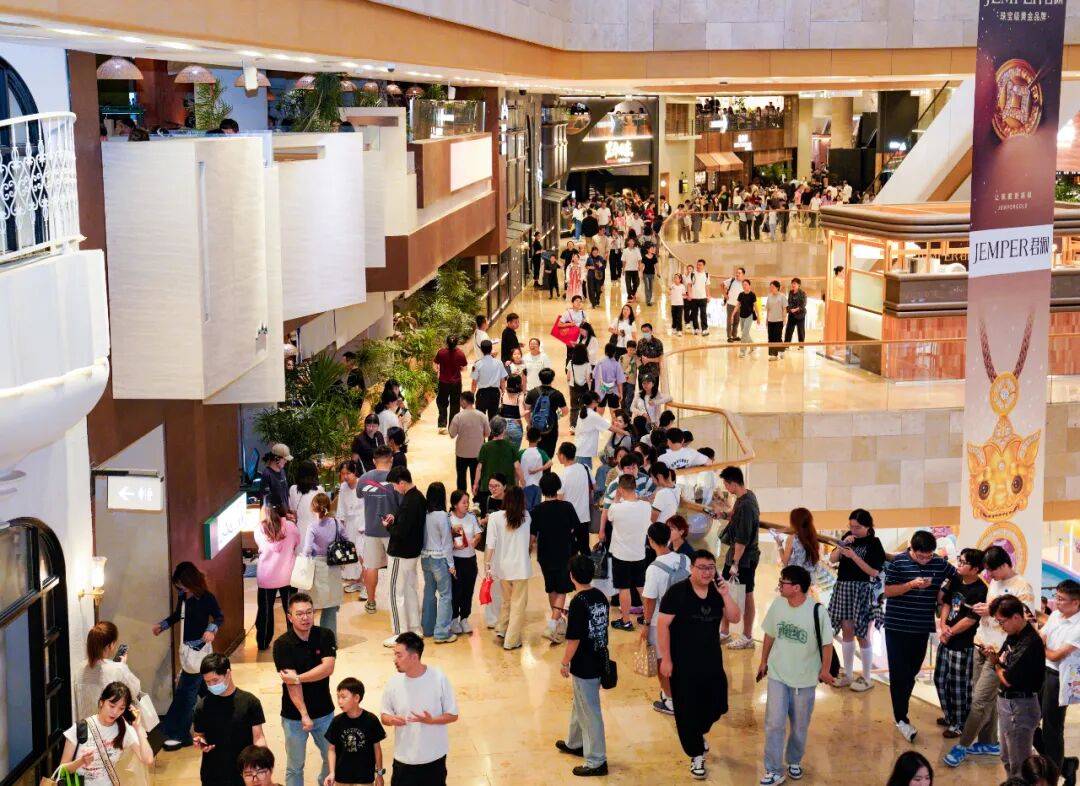
Core Insights - The city has organized a series of promotional activities to stimulate consumption during the National Day and Mid-Autumn Festival holidays, resulting in a sales revenue of 450 million yuan, a year-on-year increase of 5.9% [1][4]. Group 1: Consumption Promotion Activities - The city has implemented a vehicle trade-in policy, offering up to 8,000 yuan in subsidies for new car purchases, alongside various promotional events in the automotive and home appliance sectors [4]. - The "Su New Consumption" auto exhibition commenced on October 1, featuring over 60 car brands and covering 70,000 square meters, catering to diverse consumer needs [4]. - Various promotional activities, such as the "Happy Shopping" event by Suning and the "Autumn Super Home Appliance Expo" by JD, have been launched to invigorate the home appliance market [4]. Group 2: Thematic Activities - The city has initiated the "Four Seasons Appointment: Golden Autumn Trend Season" series of promotional activities, focusing on shopping, leisure tourism, and food experiences [7]. - A 10 million yuan digital RMB movie ticket subsidy was launched on October 1 to encourage movie attendance during the holiday period [7]. - The Qinhuai District has themed its activities around "Sweet Economy," integrating various consumer sectors such as jewelry, weddings, and dining to enhance the local shopping experience [7]. Group 3: Cultural and Recreational Integration - The city has launched a series of cultural performances and outdoor activities, creating an integrated consumption experience that combines dining, entertainment, and shopping [10]. - The "2025 Nanjing International Beer Festival" opened on September 30, featuring food, music, and family activities, enhancing the festive atmosphere [12]. - Various districts have organized themed events, such as dragon dances and music festivals, to celebrate the holidays and attract consumers [12]. Group 4: Supply and Pricing Stability - The city has ensured sufficient supply of essential goods during the holiday season, with a daily average vegetable supply of 3,040 tons and a total pork supply of 365.6 tons, reflecting an 18.6% increase year-on-year [14]. - The average wholesale price of vegetables was 7.32 yuan per kilogram, while the average wholesale price of pork was 12.8 yuan per kilogram, showing stability compared to pre-holiday prices and a decrease from the previous year [14].

推行房票安置,湖南宁乡出台楼市新政
Sou Hu Cai Jing· 2025-10-01 05:45
Core Viewpoint - The joint measures announced by six departments in Ningxiang City aim to promote stable, healthy, and high-quality development of the real estate market, aligning with national and provincial policies to stimulate market vitality through various initiatives. Group 1: Housing Fund Support - The policy enhances housing fund support for first-time homebuyers of new commercial housing, allowing eligible individuals under 35 years with a full-time bachelor's degree to apply for a loan up to 1.5 times the current maximum limit, independent of their housing fund account balance [1]. Group 2: Housing Consumption Subsidies - From October 1, 2025, to December 30, 2025, individuals purchasing new residential, commercial, or office properties will receive a housing consumption subsidy equal to 50% of their actual paid deed tax, contingent on completing the contract signing and tax payment within the specified period [2]. Group 3: Encouragement of "Old for New" Program - Households selling their existing homes between October 1, 2025, and July 13, 2026, and purchasing new homes within the same timeframe will receive a subsidy of 1% of the new home's total transaction price, capped at 30,000 yuan per unit [3]. Group 4: Land Use and Development Policies - The policy allows for the deferral of urban infrastructure fees for new real estate projects under certain conditions, and it enables the repurposing of undeveloped non-residential land for residential use, provided it meets public service and infrastructure requirements [3][4]. Group 5: Promotional Activities - The initiative includes promotional activities such as housing fairs and group purchasing options to reduce costs for specific demographics, including recent graduates and introduced talents, thereby enhancing the affordability of housing [4]. Group 6: Construction Quality and Land Supply - The measures emphasize the construction of high-quality residential projects with a focus on safety, comfort, and sustainability, while also adjusting land supply policies to facilitate easier access to land for developers [5].
数读厨卫电器半年报|火星人销售费用率高达47.9%亿田智能毛利率骤降近30%经营性现金流转负
Xin Lang Cai Jing· 2025-09-30 10:42
Core Viewpoint - The domestic home appliance market shows resilience in growth during the first half of 2025, supported by the "trade-in" policy, with significant increases in retail sales of kitchen appliances [1] Group 1: Market Performance - In the first half of 2025, retail sales of range hoods and gas stoves increased by 11.8% and 10.1% year-on-year, respectively [1] - A total of 9 listed kitchen and bathroom appliance companies reported a combined revenue of 15.063 billion yuan, a decrease of 7.9% compared to the same period in 2024 [1] - Among kitchen appliance companies, total revenue was 8.299 billion yuan, with a net profit of 804 million yuan, representing declines of 13.2% and 35.9% year-on-year, respectively [1] Group 2: Company Performance - Boss Electric ranked first in revenue with 4.608 billion yuan, 1.12 times that of the second-ranked Wanhe Electric, and over 1.8 billion yuan higher than third-ranked Vatti [1] - The operating costs of kitchen appliances generally decreased, with Wanhe Electric being the only company to see a 15.5% increase in operating costs, exceeding its revenue growth [1] - Operating costs for kitchen appliances remained between 50%-60% of revenue, while Yitian Smart's operating cost ratio reached 85.9%, with a significant drop in gross margin [1] Group 3: Efficiency and Expenses - Companies like Yitian Smart, Shuaifeng Electric, Zhejiang Meida, and Aopu Technology reduced their sales, management, and R&D expenses during the reporting period [1] - Boss Electric had the highest sales expenses at 1.249 billion yuan, being the only company with a significant sales expense scale [1] - Yitian Smart had the highest management expense ratio at 17.6%, followed closely by Shuaifeng Electric at 17.5% [1] Group 4: R&D and Profitability - R&D expense ratios for kitchen appliance companies generally ranged from 3%-5%, with Marsman having a notably high R&D expense ratio of 12.2% [1] - Boss Electric led in net profit with 712 million yuan, nearly double that of the second-ranked Wanhe Electric [1] - Aopu Technology managed to increase its net profit by 7.8% despite a 4.9% decrease in revenue, attributed to effective cost control [1] Group 5: Cash Flow and Inventory Management - Companies like Zhejiang Meida, Marsman, and Yitian Smart experienced a negative shift in operating cash flow, with over half of the companies seeing a year-on-year decline in cash flow [1] - Boss Electric had an accounts receivable turnover period of approximately 70 days, while Zhejiang Meida's was only 5 days, indicating faster capital recovery [1] - Shuaifeng Electric's inventory turnover days increased by 26.7% to approximately 174 days, with a significant portion of its inventory being finished goods [1]

帮主郑重:690亿特别国债砸向以旧换新,这不是“撒钱”,是中长线的稳信号
Sou Hu Cai Jing· 2025-09-30 10:20
Core Insights - The issuance of 690 billion yuan in special government bonds is aimed at promoting the "old-for-new" consumption policy, which is expected to stabilize consumer expectations and invigorate the market [1][3] - The total central funding for the year has reached 300 billion yuan, indicating a significant commitment to supporting consumer spending [3] Industry Impact - The "old-for-new" initiative is not just a temporary measure; it is designed to strengthen the entire consumption market by providing subsidies that encourage consumers to replace old products with new ones [3] - This policy is expected to benefit the entire supply chain, from upstream manufacturers of home appliances and automotive parts to downstream retailers and service providers, thereby revitalizing the industry [3] Regulatory Measures - The National Development and Reform Commission (NDRC) has emphasized strict measures against fraudulent claims for subsidies, ensuring that product quality and pricing are monitored [3] - This regulatory oversight is crucial for maintaining the integrity of the policy and ensuring that only legitimate businesses that focus on quality and service will benefit, which aligns with long-term investment strategies [3] Investment Strategy - The focus should be on identifying reliable companies within the "old-for-new" consumption chain, as these are likely to be the most stable investment opportunities in the long run [3] - The current policy environment, characterized by substantial financial backing and regulatory support, is seen as a more reliable signal for investment compared to short-term market fluctuations [3]
纺织服饰:始祖鸟/萨洛蒙8月线上同比翻倍——25W39周观点-20250928
Huafu Securities· 2025-09-28 07:02
Investment Rating - The industry rating is "Outperform the Market" [8] Core Viewpoints - The report highlights that the outdoor apparel brands Arc'teryx and Salomon saw a doubling of online sales on Tmall in August compared to the previous year [2][12] - The report indicates a divergence in performance among major e-commerce platforms for sports apparel, with Tmall showing a significant improvement in August, while JD.com and Douyin experienced declines [3][12] - The report suggests that the domestic demand is expected to recover due to policy support, with specific investment recommendations across various sectors including home appliances and sportswear [5][19][20] Summary by Sections Sales Performance - In August, Tmall, JD.com, and Douyin reported year-on-year growth rates of +13%, -11%, and +1% respectively for sports apparel, with Tmall showing a notable improvement compared to Q2 [3][12] - Outdoor apparel on Tmall and Douyin continued to show high growth trends, with Tmall reporting a +50% increase, while JD.com saw a -20% decline [3][12] Brand Performance - Among sports brands, Lululemon and Adidas showed improved growth rates on Tmall in August, while brands like Fila, Xtep, and Li Ning maintained a growth trend [14] - High-end outdoor brands such as Kailas, Salomon, and Arc'teryx experienced significant sales growth on Tmall, with increases of 247%, 141%, and 115% respectively [14] Investment Recommendations - The report recommends focusing on several sectors for potential investment, including: 1. Home appliances benefiting from trade-in programs, with specific companies like Midea Group and Haier Smart Home highlighted [5][19] 2. The pet industry, which is expected to remain resilient against economic cycles, with companies like Guibao Pet and Zhongchong Co. suggested [5][19] 3. Small appliances and branded apparel, which may see demand recovery from a low base, with recommendations for leading companies in these sectors [5][19] 4. Electric two-wheelers, which are expected to improve in domestic sales, with companies like Ninebot and Yadea highlighted [5][20] Market Trends - The report notes that the home appliance sector experienced a decline of -0.8% this week, with specific segments like white goods and small appliances also showing negative trends [4][21] - The textile and apparel sector saw a decline of -2.59% this week, with cotton prices and other raw material prices also reflecting downward trends [4][24]
绿源集团控股(02451.HK):产品与渠道共振 25H1业绩高增
Ge Long Hui· 2025-09-27 12:36
Core Viewpoint - The company reported a significant increase in revenue and net profit for the first half of 2025, driven by product upgrades and improved channel efficiency [1][2]. Financial Performance - In H1 2025, the company achieved revenue of 3.096 billion yuan, a year-on-year increase of 22.2%, and a net profit of 110 million yuan, up 66.9% year-on-year. Excluding share-based payment impacts, the net profit reached 141 million yuan, reflecting a 114% increase year-on-year [1]. - The gross margin improved to 13.56%, an increase of 1.65 percentage points year-on-year, while the net profit margin rose to 3.56%, up 0.97 percentage points year-on-year [2]. Product Performance - Revenue from electric bicycles reached 1.997 billion yuan in H1 2025, a 29.2% increase year-on-year, accounting for 64.5% of total revenue [1]. - Electric scooters generated revenue of 354 million yuan, up 2.6% year-on-year, with a revenue share of 11.4% [1]. - Battery sales amounted to 597 million yuan, reflecting a 16.5% increase year-on-year, representing 19.3% of total revenue [1]. - Revenue from electric two-wheeler components was 107 million yuan, a 2.8% increase year-on-year, contributing 3.5% to total revenue [1]. Growth Strategies - The company is focusing on the high-end electric assist bicycle market, with plans to launch the LYVA brand and open self-operated stores [3]. - A new ecosystem combining battery swapping, leasing, and aftermarket modifications is being developed to create additional growth avenues [3]. - The company has introduced over 20 new models in H1 2025 and expanded its retail presence to over 14,000 stores [2]. Future Projections - Revenue forecasts for 2025-2027 are 6.063 billion yuan, 6.916 billion yuan, and 7.642 billion yuan, respectively, with net profits projected at 151 million yuan, 192 million yuan, and 217 million yuan [3].
重磅发布!国庆享国补 十一来苏宁玩大的!
Sou Hu Cai Jing· 2025-09-24 12:54
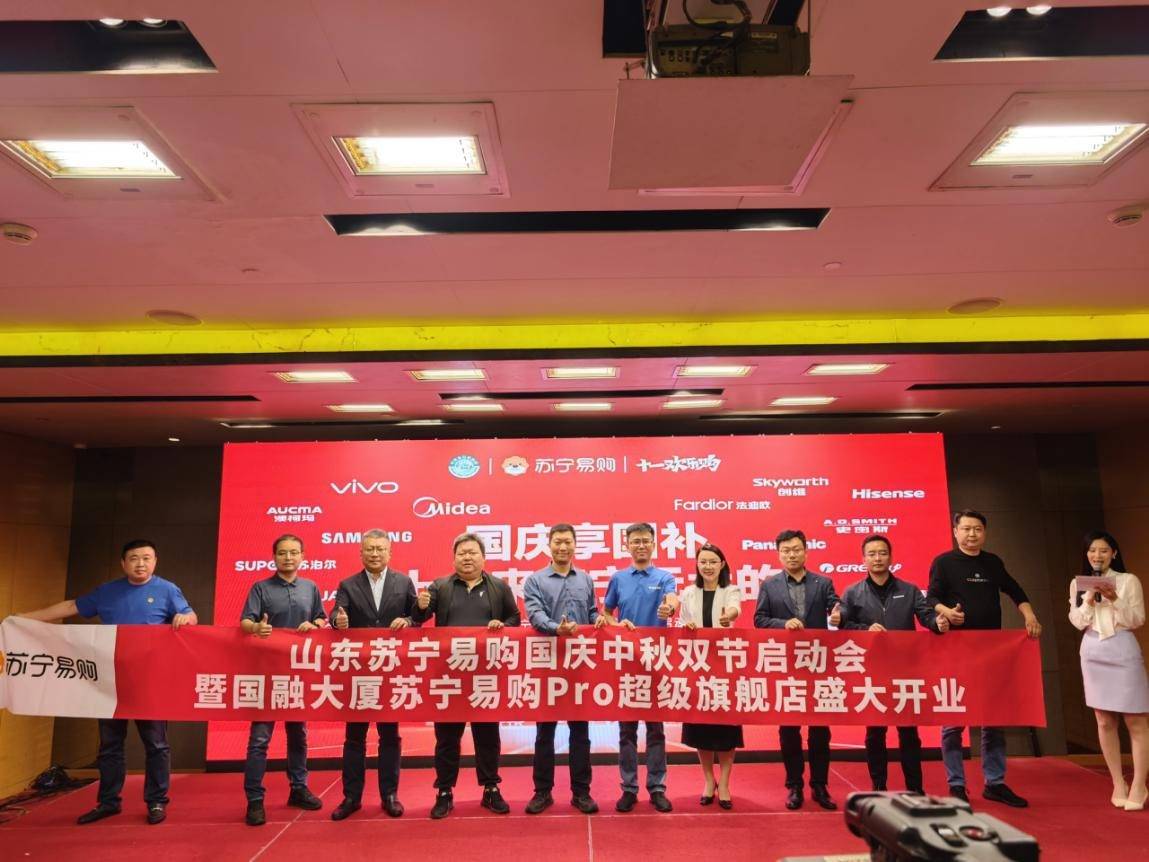
Core Viewpoint - The launch of the "National Holiday Enjoy National Subsidy" campaign by Suning in Shandong aims to reshape the home appliance retail landscape and enhance market coverage and service capabilities during the peak consumption season of "Golden September and Silver October" [3][4]. Group 1: Campaign Launch and Store Openings - Suning officially starts the National Holiday subsidy season on September 26, with the grand opening of the first Suning Pro Super Flagship Store in Jinan and the first Suning Home store in Jining [1][4]. - The event was attended by key figures from the Shandong Home Appliance Industry Association and local government, highlighting the significance of the new store openings [1][3]. Group 2: Subsidy and Promotions - Suning offers substantial subsidies, with up to 50% off through various channels including national, factory, and bank subsidies, along with promotional gifts for purchases over certain amounts [4][11]. - Specific promotions include discounts on popular appliances such as a 12 kg washing machine for 999 yuan and a new energy-efficient air conditioner for 1599 yuan [4][11]. Group 3: Store Features and Consumer Experience - The Suning Pro store features over 10,000 square meters of smart living experience space, including unique areas for social interaction and family activities, targeting younger consumers [8][9]. - The Jining Suning Home store focuses on self-selected quality products and offers interactive experiences like free clothing care and food baking [9][12]. Group 4: Strategic Development - Suning's strategy in Shandong is to deepen its market presence from core cities to regional economic centers, creating a multi-layered and comprehensive network [11]. - The company emphasizes the integration of online and offline services to provide consumers with complete home appliance and home decoration solutions [11][12].

1-8月,济南限额以上单位消费品零售额1319.2亿元
Qi Lu Wan Bao Wang· 2025-09-24 09:58
Core Insights - Jinan's consumer goods market has shown steady performance in the first eight months of the year, with retail sales reaching 131.92 billion yuan, a year-on-year increase of 2.1% [1] Group 1: Online Consumption - Online consumption has gained momentum, with retail sales through public networks increasing by 21.2% year-on-year, contributing an additional 4.8 percentage points to the overall retail sales growth [1] - The proportion of online retail sales in total retail sales rose from 23.2% last year to 26.7% [1] Group 2: Basic Consumer Goods - Retail sales of staple food products increased by 5.8%, beverages by 18.9%, and daily necessities by 8.4%, collectively accounting for 13.3% of total retail sales and contributing 0.9 percentage points to growth [3] Group 3: New Energy Vehicles - The new energy vehicle market remains robust, with retail sales increasing by 12.8% year-on-year, contributing 1.4 percentage points to overall retail sales growth [3] - New energy vehicles accounted for 41.1% of total automotive retail sales, up 3.6 percentage points from the previous year [3] Group 4: Trade-in Programs - Trade-in related products have seen significant growth, with retail sales of communication equipment rising by 34.7% and cultural office supplies by 32.5%, contributing 1.8 and 0.5 percentage points to overall retail sales growth, respectively [3]
老百姓不消费,政府“反内卷”再给力也白搭!稳物价还差关键一步
Sou Hu Cai Jing· 2025-09-23 12:39
Group 1 - The government has implemented measures against "involution" to address vicious competition in industries such as coal and photovoltaics, leading to a narrowing of industrial product price declines and signs of core price recovery [1][5][7] - "Involution" refers to companies engaging in price wars to gain market share, resulting in reduced profits and lower product quality, which ultimately suppresses prices [3][5] - The reduction in price declines is evident in various sectors, including coal processing and steel, where prices have stabilized, and even in the new energy sector, where price drops have slowed [5][10] Group 2 - The approach to "involution" is distinct from past supply-side adjustments, focusing on a broader range of industries and employing more flexible methods rather than simply cutting production capacity [9][10] - The government has introduced regulations to prevent low-price dumping and has created a blacklist for companies engaging in vicious competition, aiming to stabilize the market [12][14] - The strategy not only addresses existing competition issues but also encourages innovation and quality improvement among companies, shifting the focus from price competition to technological and brand superiority [14][16] Group 3 - Despite improvements on the supply side, achieving the 2% inflation target requires addressing demand-side issues, as consumer spending remains low and investment willingness from companies is weak [16][18] - The current economic environment shows a disparity between production recovery and consumer spending, leading to an oversupply situation [18][24] - To stimulate demand, policies should encourage consumer spending, particularly in services, and support employment initiatives for young people to increase disposable income [19][21][24]