
统一大市场

Search documents
打通堵点 释放财政政策长期效应
Jing Ji Ri Bao· 2025-07-20 22:15
Group 1 - The macroeconomic policy in China has effectively supported stable economic growth despite external uncertainties [1][2] - Fiscal revenue has shown a narrowing decline in tax revenue, while non-tax revenue has decreased, indicating a more rational fiscal structure [1] - National general public budget expenditure has maintained rapid growth, focusing on improving people's livelihoods and investing in technology and green sectors [1] Group 2 - Demand-side investments have improved, with significant growth in major project investments, up 6.5% year-on-year in the first five months [2] - Local government debt risks have been significantly mitigated, with hidden debt expected to drop from 14.3 trillion yuan to 2.3 trillion yuan by 2028 [2] - Personal income tax revenue increased by 8.2% and value-added tax revenue by 2.4% in the first five months, reflecting rising household incomes [2] Group 3 - Technological innovation has been a key driver of development, with significant tax revenue growth in sectors like equipment manufacturing and information technology [3] - The capital market has shown increased activity, with securities transaction stamp duty rising by 52.4% year-on-year [3] - Long-term policy effects need to address challenges such as insufficient domestic demand and competitive pressures [3] Group 4 - Emphasis on combining investments in physical and human capital to enhance overall economic resilience [4] - A focus on improving investment efficiency and encouraging private investment to support industrial transformation [4] - The need for a dynamic balance between supply and demand to enhance the quality and allocation of production factors [4]
张瑜:不只是当下,不急在当下——反内卷理解&旬度纪要No117
一瑜中的· 2025-07-17 04:59
Core Viewpoint - The article discusses the understanding of Supply-Side Reform 3.0, emphasizing its integration with domestic demand expansion and the differences from previous reforms in 2015 and 2016 [2][3][5]. Top-Level Design - The core deployment of the current economic strategy is to combine the implementation of the domestic demand expansion strategy with deepening supply-side structural reforms [3]. - A new framework called "BBT" has been introduced, focusing on three aspects: supplementing shortages, transformation, and improvement [3][4]. - Industries are categorized based on supply-demand matching: supplementing shortages, improving efficiency, and transformation for future needs [4]. Historical Comparison - The external environment differs significantly from 2015-2016, with higher contributions from exports and greater external pressures [6]. - The current reform focuses on midstream manufacturing with a more complex range of industries compared to the previous focus on state-owned enterprises and fewer product categories [6]. - The goals of the current reform emphasize long-term industrial upgrading rather than immediate economic recovery [6]. - The methods of implementation have shifted from administrative to market-oriented and legal frameworks, which may result in slower effects [7]. - The duration of the current reform is expected to be longer, potentially lasting 1-3 years, as it relies on market and institutional changes [7]. Three Stages of Reform - The current supply-side reform may progress through three stages: controlling new projects, promoting industry mergers and restructuring, and potentially implementing mandatory capacity reduction measures if necessary [9]. - The process is not urgent and will adapt to the specific conditions of different industries, with some like the photovoltaic sector possibly moving faster [9]. Historical Review of Previous Reforms - The article identifies five similarities between the supply-side reforms of 1998 and 2015, including similar reform backgrounds and common industry focus [11][12]. - The approach to reform has been consistent, involving setting targets, monitoring progress, strict enforcement, and maintaining employment [13][14]. - The effectiveness of past reforms shows long-term improvements in industry profitability, although short-term impacts varied [16]. Current Assessment of Supply-Side Pressure - A quantitative assessment of supply-side pressures indicates that the current industrial pressure index has not yet reached the levels seen in 2015, suggesting a slower approach to capacity reduction [18]. - The photovoltaic industry currently exhibits the highest pressure index, indicating it may be prioritized in the reform process [18].


宏观策略专题报告:波澜渐起
Zhao Shang Qi Huo· 2025-07-17 01:09
1. Report Industry Investment Rating No relevant content provided. 2. Core Viewpoints of the Report - The report maintains a bullish stance on stocks and commodities in the long - term, driven by global fiscal support for the economy and the shift in monetary policy. In the short - term, it is necessary to focus on the marginal effect of fiscal policy in the third quarter, the Politburo meeting at the end of July, and whether the US will rally other countries against China. [73] - There is a trend of asset spillover, including US assets flowing to non - US and alternative assets, and Chinese fixed - income assets flowing to low - volatility stocks (banks and neutral stocks). The "asset shortage" has shifted towards a better match between liquidity and assets, and stocks and commodities tend to move in tandem. [73] 3. Summary by Directory 3.1. Fiscal Dominance in the Kondratieff Winter - Fiscal policy determines the economic performance differences among global countries in the past few years due to high leverage ratios in the household and corporate sectors. All countries are expanding fiscal spending. [13] - China's exports have been strong, as shown by the economic formula \(Y = C + I + G+(X - M)=C + S+T\), and \(M - X=(I - S)+(G - T)\). [13] - Fiscal spending shows a "front - loaded high, back - loaded low" pattern this year. The remaining quota in the second half of 2024 was close to 8 trillion, while in 2025 it is only close to 6 trillion. Local government bond net financing has been high, reaching 4.6 trillion, with replacement bond issuance exceeding 1.8 trillion and a nearly 90% issuance progress. In the third quarter, special bond issuance is expected to be 2 trillion, lower than 2.56 trillion in 2024 and close to 1.98 trillion in 2023. [16] - The 300 - billion - yuan ultra - long - term special treasury bond is used to stimulate consumption. It has various subsidy policies for home appliances, new energy vehicles, and other fields, with different subsidy standards for different regions. Some localities have faced issues such as running out of funds, and future adjustments will shift from "universal" to "precise" regulation. [17] 3.2. Why Involution? Why Anti - Involution? - Involution refers to the serious deviation of production factor prices. The current supply - side reform emphasizes "quality improvement" rather than "quantity reduction" and is aimed at long - term high - quality development, which is different from the previous one. [47] - In June, the year - on - year CPI increased by 0.1%, and the PPI decreased by 3.6%, with the PPI - CPI gap continuing to widen. Fiscal policy has addressed the "quantity" issue, and there is no intention to use monetary policy to solve the "price" problem. [51] - Most industries show "quantity increase" but "price decrease." The real estate market has shifted from "price - for - quantity" to a situation of both quantity and price decline. [52][53] - The trade war has compressed profits and costs in an economy that relies on foreign trade. Coal and electricity prices have decreased to benefit downstream industries. [57][59] - There are signs of active inventory replenishment in industrial enterprises, but inventory cycle prediction should not be dogmatic. The commodity index leads the PPI by two months and seems to have bottomed out, and the PMI also shows signs of improvement. [65][66][68] 3.3. Some Conclusions on Major Asset Classes - **Stocks**: The dumbbell strategy is still applicable. Although the market is bullish, it is not recommended to chase high prices at present, especially for small - and micro - cap stocks. [84] - **Commodities**: - The bullish sentiment in the current round may last until the end of this month or early next month. There are many opportunities in different sectors, but no comprehensive ones. Volatility will increase after the release of global liquidity. [85][88] - Precious metals are worth long - term allocation to hedge against currency credit risks, but they need an "asset shortage" scenario to continue rising. [87] - Base metals such as copper, aluminum, zinc, and tin have supply disruptions and long - term supply shortages, with positive demand prospects driven by technological trends. However, they lack short - term drivers. New - energy metals like lithium carbonate and industrial silicon are in a supply - demand surplus, and it is recommended to use range - trading strategies. [87] - The black metal sector is in an overall supply - demand surplus, and it is advisable to observe supply disruptions and demand verification. Iron ore is a good long - position after a decline, while coal and soda ash are suitable for short - positions after an increase. [87] - In the energy and chemical sector, attention should be paid to the impact of raw materials on the overall valuation. With excess supply of oil and coal and a shortage of gas, the profit of downstream chemical products is difficult to expand under the current situation of low demand and ongoing large - scale capacity expansion. [87]
A股“反内卷”主题行情火了 机构布局路线图调研
2 1 Shi Ji Jing Ji Bao Dao· 2025-07-16 01:54
Core Viewpoint - The "anti-involution" theme has gained significant attention in the A-share market, with sectors such as steel, photovoltaic, and building materials experiencing substantial growth in recent weeks [1][2][6]. Market Performance - Over the past 18 trading days (from June 20 to July 15), the steel, building materials, and power equipment sectors have all seen increases exceeding 8% [1]. - The photovoltaic equipment index has risen by 15.55% during the same period [4]. - Specific sector performances include: components up 20.35%, glass and fiberglass up 20.21%, photovoltaic equipment up 15.55%, and ordinary steel up 12.75% [5]. Policy Influence - The "anti-involution" theme is driven by recent policy discussions, particularly the emphasis on reducing low-price competition and promoting the orderly exit of outdated production capacity [2][6]. - The central government's focus on building a unified national market and addressing key challenges has catalyzed this market trend [2]. Industry Focus - Key industries benefiting from the "anti-involution" theme include traditional sectors like steel and cement, as well as emerging industries such as photovoltaics and electric vehicles [6][7]. - The current "anti-involution" policies are primarily concentrated on four major sectors: photovoltaics, e-commerce, automobiles, and steel [7]. Investment Opportunities - Investment institutions are increasingly allocating resources to sectors involved in the "anti-involution" theme, particularly those with historically low valuations and significant recovery potential [8][9]. - Analysts suggest focusing on industries with low valuations and potential for improved competitive dynamics, such as upstream photovoltaic, real estate, and livestock sectors [9][10]. Future Outlook - The "anti-involution" market is expected to unfold in three phases: the current expectation phase driven by policy, a subsequent phase of rising resource prices, and finally a phase where high prices stabilize [1][11]. - The market may not follow a straightforward three-phase pattern, as past experiences suggest that price reactions could occur earlier and more concentrated in leading stocks [11].
股市必读:博思软件(300525)7月9日董秘有最新回复
Sou Hu Cai Jing· 2025-07-09 22:04
Core Viewpoint - The company is focused on enhancing its internal value and maintaining high-quality development despite recent stock performance challenges, emphasizing the alignment of employee and shareholder interests through stock incentive plans [2][3]. Group 1: Stock Performance and Market Response - As of July 9, 2025, the stock price of the company is 14.14 yuan, reflecting a decrease of 0.42% with a turnover rate of 1.98% and a trading volume of 122,800 shares, amounting to a transaction value of 174 million yuan [1]. - The company acknowledges that short-term stock price fluctuations are influenced by various factors, including policy and market environments, and reassures that there are no current risks of delisting [2]. Group 2: Business Development and Innovations - The company has independently developed the "LeXiang Smart Tax Enterprise Management Platform V2.0," which aims to enhance tax management efficiency for enterprises [3]. - The company is actively exploring B2B markets, particularly in enterprise procurement and intelligent tax management, with ongoing updates to be disclosed in official announcements [4]. - The company is engaged in blockchain technology applications across multiple sectors, including digital invoicing, and has processed billions of credible data entries, enhancing the efficiency of fiscal document management [5]. Group 3: Government Procurement and Insurance Services - The company's digital procurement services align with national policies promoting a unified market, leveraging modern technologies to enhance procurement processes for government and enterprises [6][7]. - The company has established significant partnerships in the commercial insurance sector, processing millions of transactions annually and collaborating with nearly 70 insurance companies [8]. Group 4: Market Activity - On July 9, the company experienced a net inflow of 149,500 yuan from institutional investors, while retail investors contributed a net inflow of 434,700 yuan, contrasting with a net outflow of 584,200 yuan from speculative funds [9].

高盛谈“反内卷”:钢铁、水泥业利润有望改善
Hua Er Jie Jian Wen· 2025-07-07 01:55
Core Insights - The recent meeting of the Central Financial Committee on July 1 has signaled a shift in policy towards developing a "unified market" and addressing excessive competition leading to price declines [1][5] - Goldman Sachs anticipates that the steel industry will accelerate its 50 million ton production cut plan, with a projected 6% year-on-year decline in output for the second half of the year, leading to improved profit margins [1][2] - The cement industry is expected to see a significant reduction in excess capacity, with 22-27% of surplus capacity likely to be eliminated, resulting in a potential increase in average gross profit to 80 yuan per ton or higher [4] Steel Industry - Goldman Sachs estimates a 70% probability of executing the steel production cut plan, which could lead to a 12% reduction in crude steel output in the second half of 2025 compared to the first half [2][3] - The implied price difference in rebar futures suggests that steel profit margins could expand by nearly 200 yuan per ton [3] Cement Industry - The unauthorized excess clinker capacity is estimated to exceed 400 million tons, accounting for about 18% of the total industry capacity, with an additional 277-377 million tons facing exit pressure [4] - The potential closure of unauthorized and high-energy-consuming capacity could raise the industry's capacity utilization rate from 50% to 70% [4] Policy Direction - The recent policy shift indicates a move from short-term measures against "involution" to a more fundamental capacity exit mechanism, which is expected to lead to sustainable profit improvements in related industries [5]


财信证券晨会纪要-20250703
Caixin Securities· 2025-07-03 05:56
Market Overview - The A-share market is experiencing a volume contraction with the overall market indices showing slight declines, particularly the ChiNext Index and the Sci-Tech 50 Index, which fell by 1.13% and 1.22% respectively [7][9] - The total market capitalization of the Shanghai Composite Index is 6715.52 billion, with a price-to-earnings (PE) ratio of 12.37 and a price-to-book (PB) ratio of 1.28 [3] Industry Dynamics - The Chinese logistics industry experienced a slight increase in the logistics prosperity index, reaching 50.8% in June, indicating a continued expansion in business volume [16][17] - The engineering machinery export market showed a divergence in performance, with Africa leading in growth at 49.52%, while exports to Europe and North America faced declines of 12.30% and 10.42% respectively [28][29] - In July 2025, China's battery production is projected to increase by 37% year-on-year, with a total output of 138 GWh across various battery types [30] - The top three companies in global energy storage cell shipments for the first half of 2025 are CATL, EVE Energy, and BYD, with market shares of 30.7%, 13.2%, and 10.7% respectively [32][33] - The first customs support measures for the cosmetics industry were implemented in Shanghai, aimed at enhancing the quality and scale of domestic cosmetics brands [35] Company Updates - Woge Optoelectronics announced the results of its stock option incentive plan, with 724,100 shares exercised, representing 53.66% of the total options available [40][41] - Nanjing Julong released its second stock incentive plan, aiming to bind core personnel with 785,000 shares allocated [43][44] - Bull Group has repurchased shares worth 2.47 billion, accounting for 0.27% of its total share capital [45][46] - Kid King projected a net profit of 119.64 million to 159.52 million for the first half of 2025, reflecting a year-on-year increase of 50% to 100% [47][48] - Water Sheep Group reported progress on its share repurchase plan, having bought back 8,097,150 shares, which is 2.08% of its total share capital [50][51]
0702:马首富欲立新党,小非农数据崩了!
Sou Hu Cai Jing· 2025-07-02 15:08
Group 1 - Musk criticized Trump's "Big and Beautiful" tax and spending bill, suggesting that if passed, it would lead to the formation of a new political party called "American Party" [4] - Trump's interview indicated that Musk's discontent stems from the bill's proposal to eliminate tax credits for electric vehicle consumers, impacting Tesla's interests [6] - A survey revealed that 49% of Americans oppose the bill, while only 29% support it, indicating significant public dissent [9] Group 2 - In June, U.S. private sector employment unexpectedly fell by 33,000, marking the first negative growth since March 2023, with the service sector experiencing its largest decline since the pandemic [13] - Following the employment data, traders increased bets on at least two rate cuts by the Federal Reserve before the end of 2025, with expectations for the upcoming non-farm payroll report [15] - UBS forecasts a modest increase of 100,000 in non-farm payrolls for June, while Citigroup predicts an increase of only 85,000, with concerns about a potential rise in the unemployment rate [15]
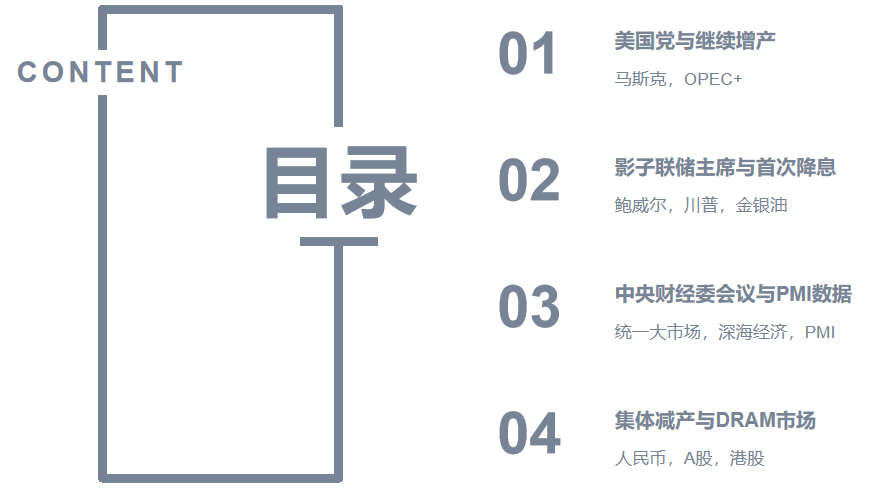
铜冠金源期货商品日报-20250702
Tong Guan Jin Yuan Qi Huo· 2025-07-02 03:59
Report Industry Investment Rating No relevant content provided. Core Viewpoints - The market is influenced by a combination of domestic and international factors, with geopolitical risks, trade policies, and economic data all playing significant roles. Different commodities show various trends due to their unique supply - demand fundamentals and macro - economic environments [2][3]. - For most commodities, short - term price movements are characterized by oscillations, affected by both positive and negative factors. Some commodities may experience short - term price increases or decreases based on specific events and data [4][6]. Summary by Category Macro - Overseas: The US Senate passed the "Big Beautiful Act" with a narrow margin, and it awaits final approval in the House. Trump may reach a trade agreement with India but is skeptical about Japan, hinting at a potential increase in tariffs on Japanese imports to 30% - 35% from 24%. The US job openings in May reached a new high since November last year, and Powell suggested a "wait - and - see" approach [2]. - Domestic: President Xi Jinping chaired a meeting of the Central Financial and Economic Affairs Commission, emphasizing the promotion of a unified market and the development of the marine economy. The Caixin Manufacturing PMI in June rebounded to 50.4, returning to the expansion range. Stocks and bonds both rose, but the A - share market lacked a clear main line [3]. Precious Metals - International precious metal futures prices rose. COMEX gold futures rose 1.28% to $3349.90 per ounce, and COMEX silver futures rose 0.20% to $36.25 per ounce. Trade concerns, potential Fed rate cuts, and Middle - East geopolitical risks drove safe - haven funds into the precious metals market. However, the short - term sustainability of the price rebound is uncertain [4][5]. Copper - The price of copper showed an upward trend. The Shanghai copper main contract broke through, and the London copper price approached the $10,000 mark. The US manufacturing was in a downturn with inflation expectations rising. Globally, the shortage of concentrates and low inventory levels, along with expanding application areas, are expected to drive copper prices into a short - term oscillatory upward trend [6][7]. Aluminum - The price of aluminum showed a positive trend. The weakening US dollar index and low warehouse receipts supported the price. However, the market should also pay attention to the impact of the Senate's passage of the "Big and Beautiful" tax and expenditure bill and the upcoming July 9 trade tariff suspension deadline [8][9]. Alumina - Alumina futures showed a preference for oscillatory movement. The warehouse receipt inventory continued to decline, and the spot market had limited supply increments. The short - term price is expected to maintain a preference for oscillatory movement [11]. Zinc - The price of zinc declined slightly. Overseas refineries resumed production, and the supply disturbance weakened. Although downstream buying improved, the short - term fundamentals remained weak, and the price returned to a weakening trend [12][13]. Lead - The price of lead declined slightly. The supply of primary and recycled lead refineries is expected to recover in July, while consumption has not improved significantly. The short - term price is expected to oscillate weakly [14][15]. Tin - The price of tin showed a compensatory movement. The fundamentals were not significantly changed, with low trading volume. The supply and demand were both weak, and the high - price tin faced pressure [16]. Industrial Silicon - The price of industrial silicon faced resistance in its rebound. It was in the off - season with weakening demand. The supply side was generally weak, and the demand side in the photovoltaic industry was also lackluster. The short - term price is expected to enter a weak adjustment phase [17][18]. Lithium Carbonate - The price of lithium carbonate declined. The market sentiment cooled down, and the downstream replenishment ended. Although the cathode production in July may exceed expectations, the supply also increased, and high inventory may drag down the price [19][20]. Nickel - The price of nickel oscillated. The US economic data was mixed, and the cost side showed signs of loosening. The short - term fundamentals had no improvement, and the price oscillated [21][22]. Crude Oil - The price of crude oil oscillated. Geopolitical risks and industry logic were intertwined. Although the geopolitical heat decreased, the conflict was not completely over, and the supply side maintained a high - growth expectation [23]. Steel (Screw and Coil) - The steel futures price rebounded slightly. The market was affected by the news of production restrictions in Tangshan. The supply side's production was stable at a low level, and the demand side was weak due to high - temperature weather. The short - term price is expected to oscillate [24][25]. Iron Ore - The iron ore futures price oscillated and adjusted. The port inventory decreased slightly, but the supply pressure remained due to high overseas shipments. The demand for iron ore had some resilience, but the production of molten iron was expected to decline. The short - term price is expected to oscillate under pressure [26]. Soybean and Rapeseed Meal - The soybean meal and rapeseed meal prices may oscillate. The US soybean crushing volume in May was 6.11 million tons, and the precipitation in the US soybean - producing areas in the next two weeks was normal. The short - term price is expected to oscillate, and attention should be paid to weather changes, Sino - Canadian relations, and Sino - US trade progress [27][28]. Palm Oil - The palm oil price may oscillate. The production of Malaysian palm oil in June slowed down, and the export demand in Indonesia increased in May. The short - term price is expected to oscillate, and attention should be paid to the MPOB report [29][30].
A股开盘速递 | 三大股指涨跌不一 风电设备、港口航运、统一大市场等板块涨幅居前
智通财经网· 2025-07-02 01:44
国泰海通:7月底之前股市仍有上升空间 A股三大股指开盘涨跌不一,沪指涨0.01%,创业板指跌0.36%。盘面上,风电设备、港口航运、统一大 市场等板块涨幅居前。 机构看后市 招商证券:7月指数或突破上行 招商证券认为,展望7月,市场可能会呈现指数突破上行,科技非银等进攻性板块占优的格局。从基本 面的角度来看,财政指数的发力和消费的韧性,使得二季度总需求增速进一步边际改善,使得即将到来 的中报业绩期,在科技、消费、中游制造领域均存在业绩边际改善的可能,半年报披露窗口期成为A股 有利的上行动力。风格方面,从当前景气趋势和产业趋势来看,7月科技风格占优的可能性较大。具体 而言,7月市场风格可能整体偏大盘风格为主,成长价值或相对均衡。 本文转载自腾讯自选股,智通财经编辑:陈雯芳。 国泰海通证券认为,展望后市,随着关键点位突破,股指仍有空间。可淡化指数,重视成长。2025年中 国股市估值逻辑在内不在外,根本动力来自中国产业创新的不断涌现与股市贴现率的系统性降低,推动 增量入市。外部局势的缓和,更强化了内部确定性逻辑的延展。因此,判断7月底之前股市仍有上升空 间。行业方面,金融股的行情还没有结束,短期重点在新技术趋势/新 ...