美联储降息预期

Search documents
黄力晨:不给格陵兰岛就加关税 地缘风险继续推高金价
Sou Hu Cai Jing· 2026-01-20 01:15
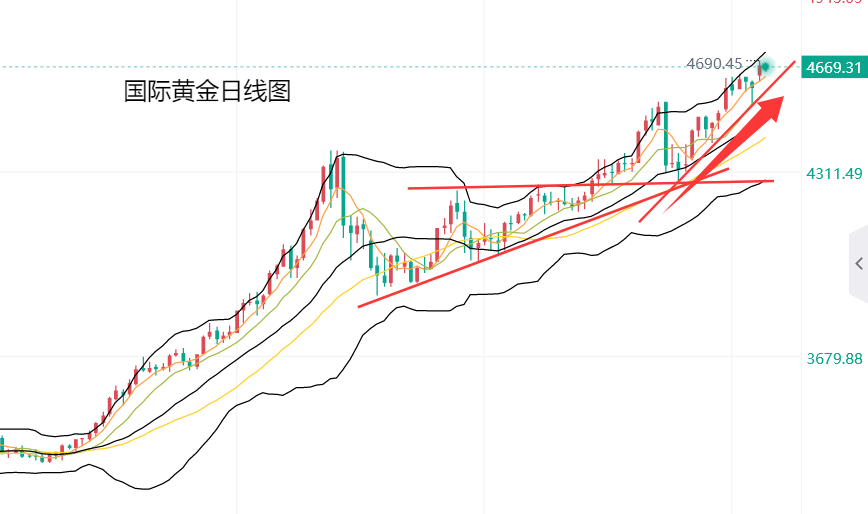
日线图上,上周黄金冲高遇阻后,走势高位震荡调整,本周一金价再创历史新高,短期表现强势。黄金下方支撑,可以关 注周一黄金冲高遇阻后的回落低点4652美元,其次周一黄金跳空高开时的回落低点4618美元,这里也是当前5日均线位置; 黄金上方压力,主要关注周一创造的历史高点4690美元,若向上突破,关注日线布林带上轨位置4730美元附近。5日均线与 MACD指标金叉向上,KDJ指标金叉向上,RSI指标金叉小幅下拐,短期技术面显示多方占优,黄金存在进一步上涨的可 能。 黄金日内参考:美国夺取格陵兰岛,不给就加征关税,市场避险情绪快速升温,对黄金上涨形成重要支撑。操作上建议震 荡思路对待,下方支撑关注4652美元,其次4618美元,上方压力关注4690美元,其次4730美元。 Wolfinance星级分析师黄力晨认为,上周黄金再创历史新高后,我们认为美联储降息预期、地缘紧张局势与央行强劲买盘, 仍对黄金形成重要支撑,此后金价虽然遇阻调整,但回落十分有限,到了本周一,黄金继续上涨,再创历史新高,地缘风 险是推动金价冲高的重要原因。具体来看,美国图谋格陵兰岛的风波在近期持续升级,上周末美国总统特朗普公布了其夺 取格陵兰岛控制 ...

中国期货每日简报-20260120
Zhong Xin Qi Huo· 2026-01-20 00:41
中国期货每日简报 桂晨曦 Gui Chenxi 从业资格号 Qualification No:F3023159 投资咨询号 Consulting No.:Z0013632 CITIC Futures International Service Platform:https://internationalservice.citicsf.com Investment consulting business qualification:CSRC License [2012] No. 669 投资咨询业务资格:证监许可【2012】669 号 中 信 期 货 国 际 化 研 究 | 中 信 期 货 研 究 所 International 中信期货国际化研究 | CITIC Futures International Research 2024 202-6/01/ 10-0920 China Futures Daily Note 摘要 Abstract Macro News: China's GDP Surpassed 140 Trillion Yuan in 2025, Growing by 5.0%。 Futures ...
宏观与大宗商品周报:冠通期货研究报告-20260119
Guan Tong Qi Huo· 2026-01-19 12:06
1. Report Industry Investment Rating - Not provided in the report 2. Core Viewpoints - In the past week, capital markets advanced amidst fluctuations with divergent trends. Geopolitical tensions overseas continued to drive up investors' risk - aversion, pushing gold to a new record high, while the US stock market was desensitized to geopolitical issues and more focused on corporate earnings. Global stock markets generally rose, commodity trends diverged, A - shares fluctuated and diverged, and the BDI index dropped significantly. The US dollar regained strength, and the RMB remained stable and strong [5][10]. - The domestic bond market rebounded, stock indices fluctuated with mixed results, and commodity sectors regained their divergent patterns. The growth - style stocks outperformed value - style stocks. The Wind Commodity Index had a weekly change of 14.29%, with 4 out of 10 commodity sub - indices rising and 6 falling. Precious metals remained strong, non - ferrous metals continued to rise, energy rebounded, and grains had a small increase, while other sectors declined, with agricultural products, black commodities, and chemicals leading the decline [5][16]. - The market expects the Fed to maintain the interest rate at 3.5 - 3.75% with a probability of 95.4% in January, and there is still an expected 1 - 2 times of interest rate cuts in 2026 [6][67]. 3. Summary by Directory Market Overview - Capital markets showed divergent trends. Overseas, geopolitical tensions in the Middle East (Iran) and the US's intention towards Greenland increased investors' risk - aversion, driving up gold prices. The US stock market focused on corporate earnings, with the VIX index rebounding and most risk assets rising. Global stocks generally rose, commodities diverged, A - shares fluctuated, and the BDI index dropped. The US dollar strengthened, and the RMB was stable. Commodity sectors also showed divergence, with precious metals and non - ferrous metals performing well, while black commodities and agricultural products were weak [5][10]. - In the domestic market, the bond market rebounded, stock indices had mixed results, and commodity sectors regained their divergence. Growth - style stocks outperformed value - style stocks. The Wind Commodity Index had a weekly change of 14.29%, with 4 sub - indices rising and 6 falling [5][16]. Large - scale Assets - Overseas, geopolitical tensions led to a rise in gold prices due to increased risk - aversion. The US stock market was less affected by geopolitics and more focused on corporate earnings. Global stocks generally rose, commodities diverged, A - shares fluctuated, and the BDI index dropped. The US dollar strengthened, and the RMB was stable. Commodity sectors had divergent trends, with precious metals and non - ferrous metals strong, and black commodities and agricultural products weak [5][10]. Sector Updates - The domestic bond market rebounded, stock indices had mixed results, and commodity sectors regained their divergence. Growth - style stocks outperformed value - style stocks. The Wind Commodity Index had a weekly change of 14.29%, with 4 sub - indices rising and 6 falling. Precious metals remained strong, non - ferrous metals continued to rise, energy rebounded, and grains had a small increase, while other sectors declined, with agricultural products, black commodities, and chemicals leading the decline [16]. Fund Flows - Last week, the commodity futures market saw a significant overall inflow of funds. The precious metals sector had the most obvious inflow, while the soft commodities sector had the most significant outflow [19]. Variety Performance - In the past week, most domestic major commodity futures declined. The top - rising commodity futures were Shanghai silver, Shanghai tin, and styrene. The top - falling ones were the shipping index, caustic soda, and palladium [22]. Volatility Characteristics - Last week, the volatility of the international CRB Commodity Index stopped falling and rebounded. The volatilities of the domestic Wind Commodity Index and the Nanhua Commodity Index both increased. Most commodity futures sectors saw an increase in volatility, with energy and grains having significant volatility reduction, and non - ferrous metals and soft commodities having notable volatility increases [25]. Data Tracking - Internationally, major commodities had mixed results. The BDI index dropped significantly, the CRB index had a small decline, soybeans rebounded, corn rose sharply, copper fell, oil rose, and gold and silver both increased, with the gold - silver ratio reaching a new low [27][28]. - Domestically, the asphalt production rate rebounded from a low level, real - estate sales remained weak, freight rates diverged, and short - term capital interest rates fluctuated upwards [42]. Macroeconomic Logic - Stock indices fluctuated, corrected, and showed divergence, with little change in valuation. The risk premium ERP was at a one - year low. Growth stocks outperformed value - style stocks [30][31]. - Commodity price indices rose and then fell, and inflation expectations rebounded strongly [34]. - The "fund seesaw" effect between stocks and commodities and the price difference between domestic and international commodities were analyzed. Last week, stocks fluctuated and declined, commodities showed divergence, and the commodity - stock return difference generally increased. The Nanhua Commodity Index and the CRB Commodity Index both fell from high levels, with domestic - priced commodities weakening and international - priced commodities performing strongly, and the price difference between domestic and international commodities changed little [37][40]. - US Treasury yields rebounded across the board, the term structure steepened bearishly, the term spread rebounded from a low level, real interest rates were under pressure, and gold prices rose to a new high [50]. - The US high - frequency "recession indicator" was strong, the Citi Economic Surprise Index rebounded, and the 10Y - 3M spread of US Treasuries widened significantly and then fluctuated within a narrow range [59]. Fed Interest Rate Cut Expectations - The CME's FedWatch tool shows that the probability of the Fed maintaining the interest rate at 3.5 - 3.75% in January remains unchanged at 95.4%, and the probability of a 25bp cut to 3.25 - 3.5% remains at 4.6%. The market expects 1 - 2 times of interest rate cuts in 2026 [6][67]. China's 2025 Import and Export Data - In December 2025, China's exports were $357.8 billion, with a year - on - year growth rate of 6.6% (previous value 5.9%), and imports were $243.6 billion, with a growth rate of 5.7% (previous value 1.9%). The trade surplus was $114.14 billion (previous value $111.68 billion). For the whole year of 2025, exports grew by 5.5% (previous value 5.8%), imports had a growth rate of 0% (previous value 1%), and the trade surplus was $1.19 trillion (previous value $992.6 billion). Exports to ASEAN grew by 13.4%, to Europe by 8.4%, and to Japan by 3.5% year - on - year, while exports to the US dropped significantly, with a year - on - year decline of 20% [68]. China's 2025 Macroeconomic Data - In 2025, China's GDP was 1,401,879 billion yuan, a 5.0% increase compared to the previous year at constant prices. The added value of the primary industry was 933.47 billion yuan (up 3.9%), the secondary industry was 4,996.53 billion yuan (up 4.5%), and the tertiary industry was 8,088.79 billion yuan (up 5.4%). Quarterly GDP growth rates were 5.4% in the first quarter, 5.2% in the second quarter, 4.8% in the third quarter, and 4.5% in the fourth quarter. The fourth - quarter GDP had a 1.2% quarter - on - quarter growth [75]. This Week's Focus - Monday (January 19): China's 2025 full - year GDP growth rate, 2025 full - year GDP total, December social consumer goods retail sales year - on - year, December industrial added value of large - scale industries year - on - year, Eurozone December CPI annual rate final value, Canada December CPI monthly rate, US stock market closed for one day [82]. - Tuesday (January 20): China's one - year loan prime rate as of January 20, Germany's December PPI monthly rate, UK's December unemployment rate, Eurozone's November seasonally - adjusted current account, Eurozone's January ZEW economic sentiment index, EU Commission President von der Leyen's speech at the World Economic Forum Annual Meeting [82]. - Wednesday (January 21): UK's December CPI monthly rate, UK's December retail price index monthly rate, US's November building permit total, US's December pending home sales index monthly rate, IEA's monthly crude oil market report, US President Trump's speech at the World Economic Forum Annual Meeting [82]. - Thursday (January 22): US's API crude oil inventory for the week ending January 16, Australia's December seasonally - adjusted unemployment rate, US's initial jobless claims for the week ending January 17, US's November core PCE price index annual rate, US's November personal spending monthly rate, US's November core PCE price index monthly rate, US's EIA natural gas inventory for the week ending January 16, European Central Bank's December monetary policy meeting minutes, Turkish Central Bank's interest rate decision [82]. - Friday (January 23): US's EIA crude oil inventory for the week ending January 16, Japan's December core CPI annual rate, UK's December seasonally - adjusted retail sales monthly rate, Eurozone's January manufacturing PMI preliminary value, Canada's November retail sales monthly rate, US's January University of Michigan consumer confidence index final value, US's January one - year inflation rate expectation final value, Bank of Japan's interest rate decision and economic outlook report, Bank of Japan Governor Ueda Kazuo's monetary policy press conference [82].
“狂飙”的白银在芝商所宕机:是“阴谋”还是巧合?
Sou Hu Cai Jing· 2026-01-19 10:26
Core Viewpoint - The recent surge in silver prices coincided with an unexpected outage at the CME, leading to speculation about whether silver represents a risk or will continue to command a premium. The key lies in distinguishing between short-term disruptions and long-term trends [1]. Market Status: Why is Silver "Soaring"? - The recent increase in silver prices is driven by a combination of macro-financial conditions and the fundamental supply-demand dynamics [3]. Macroeconomic Drivers: Rate Cut Expectations Dominate Sentiment - Core Factor: The market's rapidly rising expectations for a Federal Reserve rate cut are the primary driver behind the increase in all precious metal prices [4]. - Market Expectations: The CME's "FedWatch" tool indicates that the probability of a 25 basis point rate cut in December has surged from approximately 44% in mid-November to over 87% [4]. - Direct Impact: The expectation of rate cuts leads to a decline in real interest rates, reducing the opportunity cost of holding non-yielding assets like silver, attracting significant capital inflows [4]. Supply-Demand Fundamentals: Historic Shortage and "Short Squeeze" Risk - Unlike gold, silver has strong industrial demand, and the current supply-demand imbalance is pronounced [4]. - Ongoing Shortage: The global silver market has experienced a supply deficit for five consecutive years, with increasing demand from green industries such as photovoltaics and electric vehicles [4]. - Inventory Depletion: Silver inventories at major global exchanges have fallen to multi-year lows, with the Shanghai Futures Exchange's silver inventory at its lowest since 2015 and the LBMA's deliverable inventory significantly reduced from its 2020 peak [5]. - Market Structure: Extremely low inventories have created a tight spot market, leading to soaring lease rates. The futures market shows a clear "backwardation" structure, indicating a typical short squeeze signal, where shorts face significant physical delivery pressure, potentially forcing them to cover positions and further drive up prices [5]. CME Outage: "Conspiracy" or Coincidence? - The CME's data center outage due to cooling system failure for over 10 hours has been linked to the surge in silver prices, with some speculating it was a protective measure for shorts. However, it is more likely a coincidental technical event that amplified short-term volatility [7]. - Event Details: The outage was caused by a failure in the cooling system, leading to server overheating. The CME and its operators have since repaired and restored services [7]. - Market Impact: The outage occurred after the Thanksgiving holiday, when market liquidity was already low. Upon reopening, COMEX silver futures surged approximately 6% within six minutes, primarily due to the release of accumulated orders during the outage and the inability of some hedging positions to operate in time, exacerbating price volatility [7]. - Conclusion: There is no evidence to suggest this was a targeted market intervention; rather, it acted as a catalyst for price fluctuations in an already tense market environment [7]. Risks and Opportunities: Where Will Silver Go? - The future trajectory of silver will depend on whether the driving factors can be sustained and how risks evolve [9]. Long-term Logic Supporting Continued Premium - Monetary Attributes Support: The global high debt and geopolitical cycles, along with major central banks' gold purchases and concerns over fiat currencies, form a solid foundation for a long-term bull market in precious metals [10]. - Industrial Attributes Strengthening: As a critical material for photovoltaics, AI data centers, and electric vehicles, silver's strategic resource status is increasingly prominent, indicating long-term demand growth [10]. - Valuation Recovery Potential: The current gold-silver ratio (gold price/silver price) remains around 85, significantly higher than the historical average of 60-70 over the past decades. Historically, extreme gold-silver ratios tend to revert to the mean through silver's price appreciation [10]. Short-term Risks to Watch - Trading Crowding and Profit-Taking: Silver has nearly doubled in price this year, creating substantial profit-taking potential. The holding structure has shifted from "short-dominated" to "long-dominated," and any shift in sentiment could trigger profit-taking and lead to sharp corrections [11]. - Macroeconomic Expectation Fluctuations: The market has heavily priced in rate cut expectations. If future U.S. inflation or employment data exceeds expectations, it could temper rate cut expectations and negatively impact silver prices [11]. - "Short Squeeze" Easing Risks: The current extreme low inventories and short squeeze conditions cannot persist indefinitely. If inventories show signs of recovery or futures contracts transition smoothly, the price premium driven by delivery pressures may quickly dissipate [11]. Summary - Overall, the current silver market's core contradiction lies in the coexistence of long-term strategic bullish logic and short-term high prices and volatility risks. Long-term trends include expectations of a Federal Reserve rate cut, structural supply deficits in the global silver market, and its irreplaceable industrial demand in emerging industries, all supporting a higher price center for silver. Its valuation advantage relative to gold also indicates potential for further appreciation [12]. Short-term risks include the rapid price increase through "short squeeze" dynamics, which has exhausted many short-term positives, making the market highly sensitive to any changes in macro data, profit-taking, or inventory improvements [12].

避险狂潮,黄金又爆了!
Jin Tou Wang· 2026-01-19 09:42
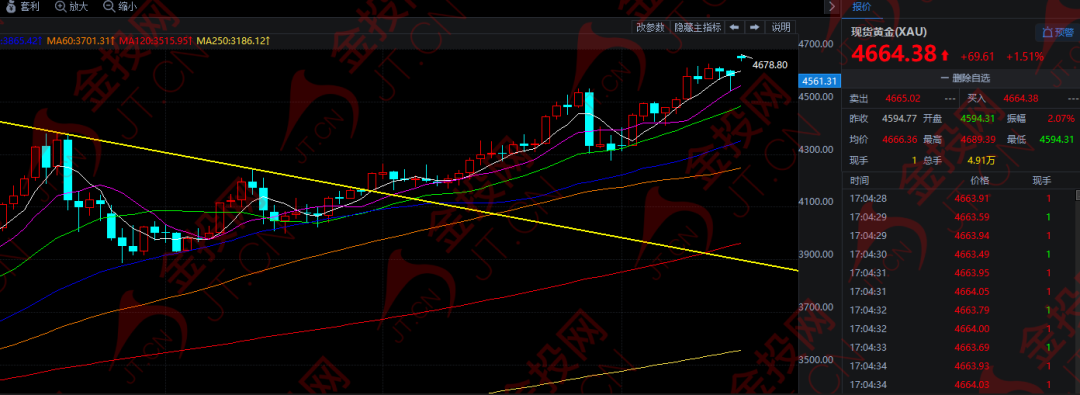
Group 1: Gold and Silver Market - Spot gold prices surged nearly $100, reaching a historical high of $4689.39, currently hovering around $4669 [1] - Spot silver also experienced a significant increase of over 4%, peaking at $94.070, and is currently around $93.430 [1] Group 2: U.S. Stock Market - The three major U.S. stock indices experienced slight declines, with the Dow Jones down 0.17%, S&P 500 down 0.06%, and Nasdaq down 0.06% [2] Group 3: Federal Reserve Leadership - Speculation around the next Federal Reserve Chair has intensified, with potential candidates being Kevin Hassett and Kevin Warsh, while Rick Reeder and Christopher Waller have been ruled out due to loyalty concerns [3] - Current indications suggest that Kevin Warsh is likely to be the final choice for the position [3] Group 4: Tariff Policies - President Trump announced a 10% tariff on imports from Denmark, Norway, Sweden, France, Germany, the UK, the Netherlands, and Finland, effective February 1, with plans to increase it to 25% by June 1 [7] - The EU is considering retaliatory tariffs on $930 billion worth of U.S. goods in response to these tariffs, with potential implementation starting February 6 if no agreement is reached [7] Group 5: Economic Indicators - Investors are focused on the upcoming U.S. Core PCE price index report, which is expected to be a key indicator of inflation trends [8][9] - Morgan Stanley has warned that the PCE index could rebound significantly to 0.46%, which would impact market expectations regarding Federal Reserve rate cuts [10] Group 6: International Relations and Military Movements - European countries, including Norway, Sweden, France, Germany, the UK, the Netherlands, and Finland, have sent troops to Greenland for military exercises, raising tensions with the U.S. [12] - The U.S. military recently conducted an operation in Syria, killing a leader of the Al-Qaeda organization, indicating ongoing military engagement in the region [13]
邦达亚洲:市场的避险情绪升温 黄金高开高走
Xin Lang Cai Jing· 2026-01-19 09:35
Group 1 - The core point of the article is the announcement by U.S. President Trump regarding a 10% tariff on goods exported to the U.S. from Denmark, Norway, Sweden, France, Germany, the UK, the Netherlands, and Finland starting February 1, 2026, with a potential increase to 25% if an agreement to purchase Greenland is not reached by June 1, 2026 [1][6] - The European Union's major member countries condemned the tariff threat as an act of extortion, with France proposing a series of unprecedented economic countermeasures [1][6] - The EU's options include imposing tariffs on U.S. imports valued at €93 billion, which had been suspended for six months since August of the previous year [1][6] Group 2 - Japan's Finance Minister warned that all options, including direct currency intervention, are available to address the recent weakness of the yen, stating that bold actions will be taken if necessary [1][6] - The comments from the Finance Minister boosted the yen, contrasting with the U.S. Treasury Secretary's preference for the Bank of Japan to use policy measures rather than intervene in the foreign exchange market [1][6] - The Finance Minister emphasized that recent market movements do not reflect the fundamentals, indicating a potential for intervention discussions in upcoming meetings [1][6]

张尧浠:黄金支撑因素此消彼长 调整仍都视为多头机会
Xin Lang Cai Jing· 2026-01-19 09:29
1月19日:黄金市场上周:国际黄金再度反弹走强收涨,延续前周多头动力,并刷新历史高点,虽有所 回撤获利了结,但多头仍占据优势,后市仍有望继续走强进一步刷新高点。 具体走势上,金价自周初高开至4516.02美元/盎司,先行录得当周低点4512.88美元,之后反弹走强拉 升,突破之前高点,之后多头动力减弱,并处于高位震荡,于周三录得当周高点4642.63美元,周五一 度回撤,收复当周大部分涨幅至4536.55美元,但最终触底回升,收于4594.07美元,相对于前周收盘价 4509.95美元,周振幅129.75美元,收涨84.12美元,涨幅1.865%。 影响上,周初受到地缘局势加剧,以及特朗普政府对美联储主席鲍威尔展开刑事调查的不确定性加深, 引发了市场对美联储独立性和美元长期前景的担忧。助力金价突破4600美元关口; 之后,虽然一度触及当周高点,但由于芝商所继续调整保证金的影响,加上获利了结。以及美国11月零 售销售和生产者物价指数(PPI)表现强劲,减弱了多头动力,再加上地缘局势缓和,近期稳健的美国 就业数据支撑了美元,并使市场对美联储进一步降息的预期推迟至6月。一度打压金价在周五跳水; 不过,因美联储官员鲍 ...
金源灿:长上影大阳定调多头 黄金本周剑指4650关口
Xin Lang Cai Jing· 2026-01-19 09:24
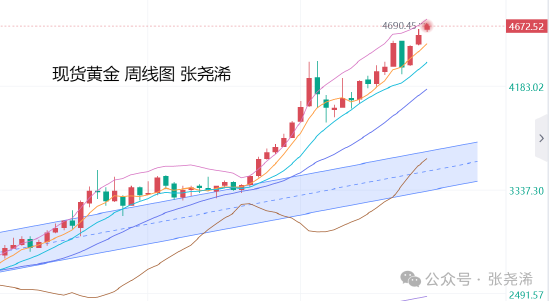
Core Viewpoint - The gold market has maintained a strong upward trend since the beginning of 2026, with last week's performance solidifying the bullish momentum despite short-term resistance [1][5]. Market Performance - Gold opened strong at 4520.9 points, briefly retracing to 4510.6 points before a significant rally, reaching a peak of 4643.8 points, marking a new high for the period [1][5]. - The closing price was 4595.5 points, forming a large bullish candlestick with a long upper shadow, indicating both strong bullish control and short-term resistance above 4640 points [2][6]. Market Dynamics - The candlestick pattern reflects intense competition between bulls and bears, with the bullish entity indicating overall dominance and strong buying interest, while the long upper shadow suggests notable resistance above 4640 points [2][6]. - The high-level pullback is interpreted as a trial and washout action by major players, with volume increasing during the rally and decreasing during the pullback, confirming the bullish trend [2][6]. Macro and Funding Support - The bullish support for gold remains intact, driven by strategic demand from global central banks, which purchased over 1136 tons of gold in 2025, a record high, with China increasing its holdings for 14 consecutive months [2][6]. - Expectations of 2-3 interest rate cuts by the Federal Reserve in 2026 are anticipated to lower the cost of holding gold, alongside persistent high U.S. debt levels and geopolitical risks, enhancing gold's appeal as a safe-haven asset [2][6]. Technical Analysis - The technical outlook suggests a high probability of continued bullish momentum, with gold prices above the 5-day and 10-day moving averages, and the Bollinger Bands opening upwards [3][7]. - Key resistance is identified at 4643.8 points, while the 4590-4580 range serves as critical support, which, if maintained, could provide a solid foundation for further upward movement [3][7]. Trading Strategy - The recommended trading strategy involves focusing on buying opportunities during pullbacks, with suggested entry around 4600 points and a strict stop-loss set below 4590 points to mitigate risks [3][7]. - The first target for upward movement is set at 4630 points, with potential for further gains if the price breaks above this level [3][7].
黄力晨:地缘风险与降息预期 支撑黄金保持高位震荡
Xin Lang Cai Jing· 2026-01-19 09:18
Wolfinance星级分析师认为,上周五美盘盘中,黄金短线意外跳水,主要因特朗普讲话表示,希望让哈 塞特继续留任白宫,而哈塞特的货币政策立场极为鸽派,此前一直被视为下一任美联储主席的主要竞争 者之一,受次影响,市场小幅下调了6月降息的预期,美元短线跳涨,黄金短线跳水,不过之后金价很 快反弹,因市场对美联储年内降息2次依旧抱有较高期望,且近期支撑黄金价格的主要因素,除了美联 储的降息预期外,还包括地缘风险集中发酵,避险情绪升温,吸引避险资金持续涌入黄金市场。 日线图上,黄金在上周冲高遇阻后,走势保持高位震荡。黄金下方支撑,可以关注4580美元附近,上周 四黄金回落这里企稳,上周五黄金在亚欧盘,以及美盘跳水反抽后,一直站稳这里保持震荡走势,若金 价短线再次失守这里,关注前历史高点位置4550美元;黄金上方压力,关注4600美元整数位置,上周五 金价触底反弹后,在这里受到压制,多次向上试探未能取得突破,若取得向上突破,可以继续关注目前 的历史高点位置4642美元。5日均线金叉向上,MACD指标轻微下拐,KDJ与RSI指标金叉下拐,短期技 术面显示黄金上周冲高遇阻后,存在调整需求。 新浪合作大平台期货开户 安全快捷 ...
商品日报(1月19日):贵金属再现强势国内外金价齐创历史新高 情绪降温沪锡连续第二日大幅回调
Xin Lang Cai Jing· 2026-01-19 08:58
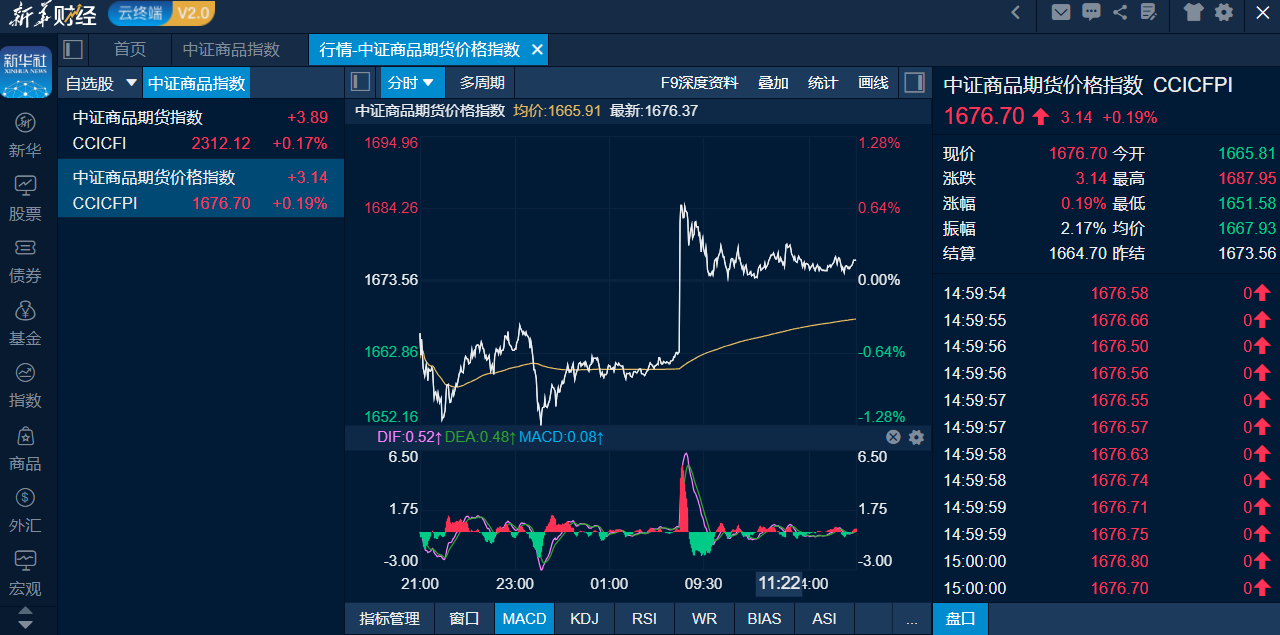
Market Overview - The domestic commodity futures market experienced a weak trend on January 19, with significant differentiation among sectors, resulting in most varieties closing lower. The China Securities Commodity Futures Price Index closed at 1676.70 points, up 3.14 points or 0.19% from the previous trading day, while the China Securities Commodity Futures Index closed at 2312.12 points, up 3.89 points or 0.17% [1]. Precious Metals - The precious metals sector was notably active, with international gold and silver prices reaching historical highs, which boosted domestic gold and silver futures. Shanghai gold hit a new historical high, while Shanghai silver rose nearly 3% by the end of the day [1][3]. Chemical Sector - In the chemical sector, pure benzene and styrene showed strong performance, closing up 3.48% and 1.84% respectively, leading the chemical sector. The strong performance of styrene is attributed to multiple maintenance shutdowns and export factors, which have increased its profitability [4]. Industrial Metals - The industrial metals sector faced widespread pressure, with Shanghai tin leading the decline, falling 5.98% after a significant drop of over 6% the previous Friday. The market sentiment cooled rapidly, leading to a correction in tin prices after reaching historical highs [5]. Other major industrial metals, including copper, aluminum, and zinc, also saw declines ranging from 0.39% to 2.33% [5]. Agricultural Products - The agricultural products sector, particularly rapeseed meal and oil, experienced significant declines, with rapeseed meal dropping 2.37% and rapeseed oil falling 1.50%. Concerns over potential increases in supply due to improved Sino-Canadian relations contributed to this downturn [6]. The overall weak supply-demand dynamics are expected to keep rapeseed meal prices under pressure [6].