
反内卷

Search documents
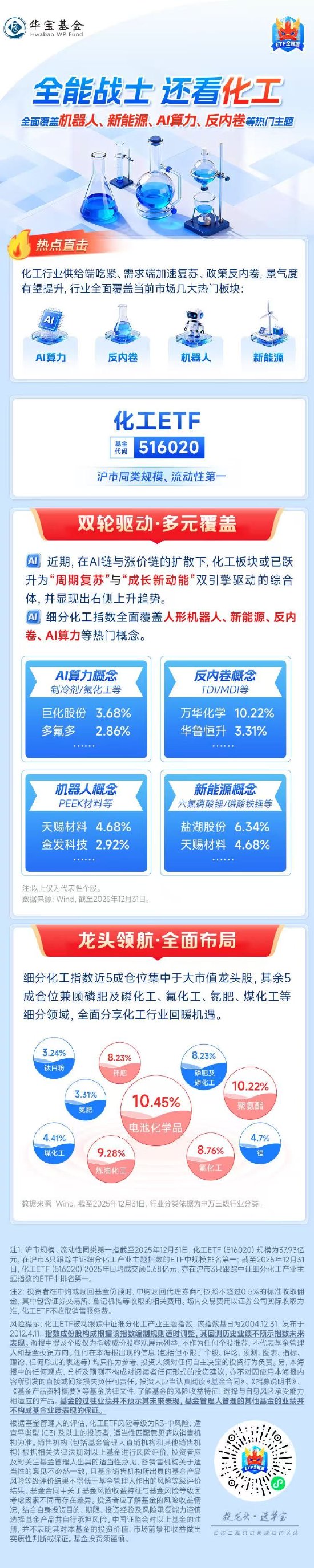
全能战士,还看化工!覆盖机器人、新能源、AI算力、反内卷等主题,关注化工ETF(516020)
Xin Lang Cai Jing· 2026-01-30 08:52
= 宝 大 金 MACD金叉信号形成,这些股涨势不错! 责任编辑:杨赐 t Fire 20 = 20 全面覆盖机器人、新能源、AI算力、反内卷等热门主题 热点直击 化工行业供给端吃紧、需求端加速复苏、政策反内卷,景气度 有望提升, 行业全面覆盖当前市场几大热门板块: AI算厂 新能源 网 内容 化工具工作 官等 516020 代码 沪市同类规模、流动性第一 双轮驱动·多元覆盖 2 近期,在AI链与涨价链的扩散下,化工板块或已跃 升为"周期复苏"与"成长新动能"双引擎驱动的综合 体. 并显现出右侧上升趋势。 图 细分化工指数全面覆盖人形机器人、新能源、反内 卷、AI算力等热门概念。 AI算力概念 反内巷概念 制冷剂/氟化工等 TDI/MDl等 巨化股份 3.68% 万华化学 10.22% 华鲁恒升 3.31% 多氟多 2.86% 机器人概念 新能源概念 PEEK材料等 六氟磷酸锂/磷酸铁锂等 天赐材料 4.68% 盐湖股份 6.34% 天赐材料 4.68% 金发科技 2.92% 注以上仪为代表性个股。 数据来源:Wind. 截至2025年12月31日。 龙头领航·全面布局 细分化工指数近5成仓位集中于大市值龙头 ...


逆风中震荡:债海观潮,大势研判
Guoxin Securities· 2026-01-30 08:28
证券研究报告 | 2026年1月30日 债海观潮,大势研判 逆风中震荡 投资策略 · 固定收益 2026年第二期 证券分析师:董德志 021-60933158 dongdz@guosen.com.cn S0980513100001 证券分析师:赵婧 0755-22940745 zhaojing@guosen.com.cn S0980513080004 证券分析师:李智能 0755-22940456 lizn@guosen.com.cn S0980516060001 证券分析师:田地 0755-81982035 tiandi2@guosen.com.cn S0980524090003 证券分析师:季家辉 021-61761056 jijiahui@guosen.com.cn S0980522010002 证券分析师:陈笑楠 021-60375421 chenxiaonan@guosen.com.cn S0980524080001 请务必阅读正文之后的免责声明及其项下所有内容 摘要 请务必阅读正文之后的免责声明及其项下所有内容 Ø 行情回顾:1月多数债券品种收益率下行;利率债方面,长期限利率债品种收益率下行;信用 ...
中国经济复盘与展望:”反内卷“与结构突围
Guoxin Securities· 2026-01-30 07:51
Economic Growth - In 2025, China's GDP growth is projected to be 5.0%, consistent with 2024, but showing a "high first, low later" trend[4] - The GDP growth rate and price levels exhibit a clear inverse relationship, with prices under pressure when GDP exceeds 5.0% and improving when below 5.0%[10] Structural Changes - The second industry is expected to decline while the third industry is set to rise, creating a structural optimization that alleviates excess supply pressure[17] - The service sector's growth is anticipated to drive employment and income, thus supporting domestic demand[17] Demand Dynamics - Domestic demand remains at a historically low level, with consumption rising and investment weakening, indicating a persistent issue of insufficient domestic demand[23] - Final consumption contributed an average of 2.68% to GDP growth from 2020 to 2025, with 2025 specifically at 2.6%[37] Future Outlook - For 2026, GDP growth is expected to slightly decline to around 4.8%, with a focus on structural optimization under the "anti-involution" framework[38] - Policies will shift towards fostering service sector growth and consumer incentives to counterbalance short-term growth pressures from supply adjustments[40] Inflation Trends - In 2026, China is projected to gradually emerge from deflation, with both PPI and CPI growth rates expected to rise[45] - Investment in high-tech industries is anticipated to significantly outpace overall growth, enhancing efficiency in traditional sectors through innovation[45]
债海观潮,大势研判:逆风中震荡
Guoxin Securities· 2026-01-30 07:32
Group 1 - In January, most bond yields declined, with long-term government bonds seeing a decrease in yields, and all credit bond types also experiencing lower yields, particularly a significant narrowing of the 3-year credit spread [5][19][20] - The default amount in January saw a substantial decrease to 9.93 billion, down from 22.64 billion in the previous month, indicating an improvement in credit quality [28] - The average interest rates for R001 and R007 stabilized around 1.40% and 1.54% respectively, reflecting a return to a more relaxed monetary market after the year-end liquidity crunch [12][93] Group 2 - The U.S. economy is showing signs of stabilization, with January's Markit manufacturing and services PMI at 51.9 and 52.5 respectively, indicating steady expansion [33] - The CPI in the U.S. showed a mild increase of 2.7% year-on-year in December, suggesting stable inflation expectations [38] - Japan's inflation rate significantly decreased, with December CPI at 2.1%, down from 2.9% in the previous month, indicating a cooling economic environment [43] Group 3 - Domestic economic indicators show a recovery trend, with the GDP growth rate for December at 4.7%, a 0.4 percentage point increase from the previous month [5][51] - The high-frequency macro diffusion index from Guosen indicates a strong domestic economic growth momentum in January, outperforming historical averages [79] - The monetary policy is focused on structural adjustments, with a reduction in various structural monetary policy tool rates to support economic growth [104][106] Group 4 - The report highlights a shift in demand-side policies from traditional investments to fostering the service industry and consumer incentives, aiming to counter short-term growth pressures from supply adjustments [5][139] - The anticipated GDP growth for 2026 is projected at 4.8%, with a gradual recovery expected throughout the year [90][139] - The report emphasizes the importance of enhancing support for small and medium-sized enterprises and expanding consumer financing options to stimulate demand [106][139]
国投期货综合晨报-20260130
Guo Tou Qi Huo· 2026-01-30 07:30
(原油) 昨夜油价纷纷冲高,SC一度涨近7%,随后盘中回吐大幅涨幅。美国总统特朗普称正考虑对伊朗发动 新的重大打击,未作出最终决定。伊外交部长阿拉格齐同日表示,伊朗随时准备对侵犯行为作出回 应。市场担忧伊朗对其邻国发起反击或甚至关闭霍尔木兹海峡。欧盟理事会29日发布公报说,决定 对伊朗内政部长伊斯坎德尔。莫梅尼等15名官员和6个实体实施制裁,并已决定将伊朗伊斯兰革命卫 队列为恐怖组织。泽连斯基表示就能源基础设施达成的停火将从29日夜间开始生效。地缘局势走向 扑朔迷离叠加基本面累库压制仍在,警惕油价大幅波动风险。 【责金属】 gtaxinstitute@essence.com.cn 隔夜贵金属剧烈波动,盘中振幅接近10%。市场聚焦地缘局势变化,俄乌方面普京同意部分停火一 周,美伊依然处于焦灼状态,随时可能发动重大打击。此外特朗普即将公布美联储主席人选并呼吁 太幅降息,美国政府面临再度关门风险。短期市场信息繁杂,市场波动风险高,控制仓位谨慎参 与。 (铜) 周四全日铜价剧烈波动,伦铜盘中最大涨幅超过10%,兑现部分海外机构1.4万美元及以上目标位。 铜价由资金与情绪引导,关注今日国内现货与贴水幅度,现货价差已转为 ...
国资重组+“反内卷”双轮驱动,建材ETF(159745)猛吸金
Mei Ri Jing Ji Xin Wen· 2026-01-30 06:53
Core Viewpoint - The construction and building materials industry is undergoing a significant restructuring and value reassessment driven by the deepening "anti-involution" policies, accelerated state-owned enterprise (SOE) restructuring, and improving expectations in the real estate chain [1] Group 1: Policy Environment - The strategic restructuring of SOEs aims to merge similar entities and reduce homogeneous competition among construction SOEs, while the "anti-involution" policy promotes supply-side reforms in traditional building materials, enhancing industry concentration and optimizing competition [3] - The State-owned Assets Supervision and Administration Commission (SASAC) has indicated a strong push for strategic and professional restructuring of SOEs, which is expected to reduce internal competition and enhance overall profitability [3] - The implementation of the "anti-involution" policy has led to significant production capacity adjustments in the cement industry, with over 280 clinker production lines replaced and 150 million tons of outdated capacity withdrawn annually, creating a foundation for industry profitability recovery [3] Group 2: Industry Structure - Traditional building materials leaders are expected to benefit from supply clearing and cost transmission, leading to a recovery in profitability, while new materials serving sectors like renewable energy and AI are experiencing independent growth [4] - In the traditional sector, leading companies in waterproof materials and cement are expected to consolidate their market positions and improve profitability due to their strong pricing power amid rising raw material costs [4] - New materials, such as electronic-grade fiberglass, are positioned for growth driven by demand from consumer electronics, electric vehicles, and AI servers, indicating a clear second growth curve for the industry [4] Group 3: Demand Side - Although long-term population trends may pressure overall construction demand, short-term real estate policies are expected to stabilize demand for building materials, particularly in the consumer segment [5][6] - Recent signals from policy levels have indicated a recovery in the second-hand housing market, which is expected to stabilize demand for construction materials [6] - New demands from urban renewal and major national projects are anticipated to provide additional growth opportunities for the construction materials sector [6] Group 4: Supply Side - Rising prices of upstream raw materials are prompting certain segments of the building materials industry to initiate a price increase cycle, benefiting leading companies with pricing power [7][8] - The transition to green and intelligent production is becoming a new industry standard, raising entry barriers and investment costs, which may favor stronger companies capable of upgrading [8] Group 5: Investment Strategy - The construction materials sector is diverse, and investing through the building materials ETF (159745) allows for efficient exposure to leading companies across the entire industry chain [9][10] - The ETF tracks the CSI All-Share Construction Materials Index, providing balanced exposure to key sub-sectors and benefiting from both traditional sector recovery and new material growth [10] - The current period of industry transformation presents a unique opportunity for investors to capitalize on the shift from disordered expansion to a more optimized and concentrated market structure [10]
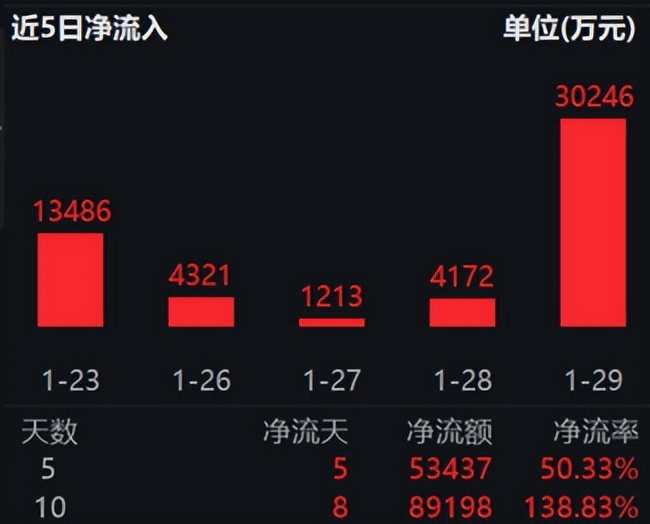
反内卷有望引领化工景气,资金抢筹布局化工ETF国泰(516220),连续10日资金净流入近3亿元
Mei Ri Jing Ji Xin Wen· 2026-01-30 06:16
Group 1 - The core viewpoint is that the Chinese chemical industry is expected to enter a favorable upcycle due to the acceleration of capacity exit in Europe and the implementation of anti-involution measures in China [1] - The anti-involution measures are anticipated to lead to a significant slowdown in global chemical industry capacity expansion, which will enhance the potential dividend yield for Chinese chemical companies [1] - Chinese chemical companies are characterized by strong operating cash flow, which positions them to transition from cash-consuming entities to cash-generating ones as expansion slows [1] Group 2 - The supply-side changes are expected to halt the decline in industry prosperity, with chemical stocks likely to exhibit both high elasticity and high dividend advantages [1] - Globally, leading Chinese chemical companies have established solid cost and efficiency advantages, entering a long-term upward performance phase [1] - Certain supply-constrained sectors are projected to see continued improvement in industry prosperity as demand rebounds, making them worthy of attention [1] Group 3 - The Guotai Chemical ETF (516220) tracks a sub-index of the chemical sector (000813), which includes representative listed companies in chemical products and fibers to reflect the overall performance of fine chemicals and new materials [1]
32岁程序员猝死,涉事公司HR离职,曾因“不希望家属拿家人生命换钱”言论引争议
Hua Xia Shi Bao· 2026-01-30 06:02
Group 1 - The HR involved in the incident with programmer Gao Guanghui has left the company following backlash from comments made during discussions with the family regarding compensation [1][2] - The HR's controversial statement suggested that dying at work would not be regrettable, which sparked significant online debate [1][2] - Gao Guanghui's wife emphasized in a recorded conversation that her husband was overwhelmed by work responsibilities, not by life burdens, indicating a disconnect between work expectations and personal well-being [2] Group 2 - The Human Resources and Social Security Bureau of Huangpu District, Guangzhou, is conducting an investigation into the Gao Guanghui case, with a 60-day timeline for the inquiry [3] - In response to issues like the "996" work culture and excessive overtime, various large companies, including DJI, Haier, and Midea, have implemented measures to combat "involution" and unnecessary overtime [3]

反内卷背景下化工行业有望迎来景气上行周期,化工ETF嘉实(159129)聚焦化工板块投资机遇
Xin Lang Cai Jing· 2026-01-30 05:14
Core Viewpoint - The traditional chemical industry in China is facing a significant transformation due to government policies aimed at curbing blind investments and promoting the orderly exit of outdated capacities, which is expected to lead to a recovery in the industry's profitability and a new growth cycle starting in 2026 [1][2]. Group 1: Industry Overview - The China Chemical Industry Index has seen a decline of 2.55% as of January 30, 2026, with mixed performance among constituent stocks [1]. - The government has introduced the "Stabilizing Growth Work Plan for the Petrochemical and Chemical Industry (2025-2026)" to address severe overcapacity issues caused by disorderly expansion [1]. - Companies are proactively engaging in maintenance and reducing inefficient capacities as part of a self-initiated "anti-involution" strategy [1]. Group 2: Investment Opportunities - Guohai Securities anticipates that the anti-involution measures will lead to a recovery in the chemical industry, potentially slowing down global capacity expansion [1]. - In Q4 2025, public funds have increased their holdings in chemical sector blue-chip stocks, indicating a shift towards bottom-fishing opportunities [1]. - The top ten weighted stocks in the China Chemical Industry Index account for 45.31% of the index, with companies like Wanhua Chemical and Yalake Holdings leading the list [2]. Group 3: Investment Products - Investors can explore opportunities in the chemical sector through the Chemical ETF (159129), which closely tracks the China Chemical Industry Index [2]. - There is also an option for investors to consider the Chemical ETF linked fund (013527) to gain exposure to the chemical sector [3].
日度策略参考-20260130
Guo Mao Qi Huo· 2026-01-30 04:23
1. Report Industry Investment Ratings - **Bullish**: Copper, Aluminum, Palm Oil, Soybean Oil, Canola Oil [1] - **Bearish**: None - **Neutral**: Stock Index, Treasury Bonds, Alumina, Zinc, Non - ferrous Metals, Stainless Steel, Tin, Precious Metals, Platinum - Palladium, Industrial Silicon, Polysilicon, Lithium Carbonate, Rebar, Iron Ore, Other Metals, Soda Ash, Coking Coal, Coke, Cotton, Sugar, Corn, Soybean Meal, Pulp, Crude Oil, Bitumen, Shanghai Rubber, BR Rubber, PTA, Polyester Staple Fiber, Styrene, Methanol, PE, PP, PVC, SS, LPG, Container Shipping on European Routes [1] 2. Core Views of the Report - Before the holiday, the domestic macro - level may be relatively calm, and market performance will be highly related to regulatory trends. The stock index is expected to have limited short - term shock adjustment space and mainly show a shock - strong trend [1]. - Asset shortage and weak economy are beneficial to bond futures, but the central bank has recently warned of interest - rate risks, and attention should be paid to the Bank of Japan's interest - rate decision [1]. - Although the industrial drive is limited, the market risk preference has increased, and the prices of copper and aluminum are rising. The supply of domestic alumina is strong while demand is weak, and the price is expected to fluctuate [1]. - The cost center of zinc fundamentals is stabilizing, and there is room for a supplementary increase in zinc prices. The supply of Indonesian nickel ore is tightening, and short - term nickel prices are running at a high level [1]. - The supply of stainless - steel raw materials is unstable, and the futures are oscillating at a high level. The supply of tin ore in Myanmar has limited incremental supply in the first quarter, and there is upward potential for tin prices [1]. - Due to the tense geopolitical situation in Iran, the prices of precious metals have risen strongly, but short - term fluctuations are severe. The prices of platinum and palladium fluctuate greatly, and it is recommended to allocate platinum at low prices [1]. - The production of industrial silicon in the northwest is increasing while that in the southwest is decreasing. The production of polysilicon and organic silicon in December has decreased [1]. - The new - energy vehicle market is in the off - season, but the energy - storage demand is strong. The price of lithium carbonate has risen significantly [1]. - The expected increase in rebar and iron - ore prices is not strong, and it is recommended to take a wait - and - see approach. The supply and demand of other metals are in a situation of weak reality and strong expectation [1]. - The supply of soda ash is more relaxed in the medium term, and the price is under pressure. The market is pessimistic about the coking - coal 05 contract, and the previous low - buying strategy may need to be changed [1]. - The purchase rhythm of major consumer countries has started, and the price of palm oil is expected to be shock - strong. The fundamentals of domestic soybean oil are strong, and the price is bullish [1]. - The import of Canadian rapeseed is restricted, and the supply contradiction is not significantly alleviated. The cotton market is currently supported but lacks driving force [1]. - The global sugar market is in surplus, and the domestic new - crop supply is increasing. The upward momentum of corn prices before the holiday is insufficient [1]. - The Brazilian soybean supply is sufficient, and it is recommended to be cautious when chasing up the soybean - meal price. The paper - pulp price has fallen, and it is recommended to wait and see [1]. - The price of logs is expected to have limited further decline space and will fluctuate within a certain range. The pig - production capacity needs to be further released [1]. - Due to OPEC+ suspending production increase, tense Middle - East geopolitics, and the US cold wave, the price of crude oil is affected [1]. - Bitumen follows the trend of crude oil, and its profit is relatively high. Shanghai rubber is driven by cost and market sentiment to rise [1]. - The fundamentals of BR rubber are mixed, with short - term wide - range fluctuations and medium - long - term upward expectations. The PTA and polyester staple - fiber markets are affected by the strong PX market [1]. - The price of styrene has rebounded, and the inventory pressure has decreased. The methanol market is affected by the Iranian situation and downstream feedback [1]. - The supply of PE and PP is under pressure, and the PVC market has both positive and negative factors. The SS market fundamentals are weak [1]. - The LPG market is affected by multiple factors, and the price is expected to weaken. The freight rate of container shipping on European routes has peaked and fallen before the holiday [1] 3. Summary by Variety Stock Index - Before the holiday, the domestic macro - level may be relatively calm, and market performance will be highly related to regulatory trends. The short - term shock adjustment space is limited, and it will mainly show a shock - strong trend [1] Treasury Bonds - Asset shortage and weak economy are beneficial to bond futures, but the central bank has recently warned of interest - rate risks. Attention should be paid to the Bank of Japan's interest - rate decision [1] Copper - Although the industrial drive is limited, the market risk preference has increased, and copper prices have risen further [1] Aluminum - Recently, the industrial drive is limited, but the decline of the US dollar index supports the price. Coupled with the tense situation in the Middle East, which causes concerns about the supply side, aluminum prices are running strongly [1] Alumina - The supply of domestic alumina is strong while demand is weak, and the industrial situation is weak. The price is under pressure, but it is currently near the cost line and is expected to fluctuate [1] Zinc - The cost center of zinc fundamentals is stabilizing. Recently, the North American cold wave has increased energy prices, which is unfavorable for the resumption of overseas smelters. There is room for a supplementary increase in zinc prices [1] Non - ferrous Metals - The market risk preference has recovered, which boosts non - ferrous metals. The supply of Indonesian nickel ore is tightening, and short - term nickel prices are running at a high level, still affected by the resonance of the non - ferrous metals sector. In the medium - long term, the high global nickel inventory may still have a suppressing effect [1] Stainless Steel - The supply of raw - material nickel - iron prices has been rising continuously, the spot trading of stainless steel is weak, the speed of social - inventory reduction has slowed down, and the steel mills' production schedule in January has increased. The supply - side disturbances are repeated, and the stainless - steel futures are oscillating at a high level [1] Tin - In the short term, the market sentiment is changeable. Although the approval of explosives in Myanmar is a negative news, the incremental supply of tin ore in Myanmar in the first quarter is still limited. Under the situation of fragile supply and rigid demand, there is upward potential for tin prices [1] Precious Metals - Due to the tense geopolitical situation in Iran, the demand for hedging and the wave of de - dollarization have accelerated, and the prices of precious metals have risen strongly again. However, as the market sentiment has fermented to the extreme, the prices of gold and silver have plunged at a high level, with severe short - term fluctuations. It is recommended to participate with a light position [1] Platinum - Palladium - The macro - drive has weakened, and the liquidity is relatively insufficient, resulting in large price fluctuations of platinum and palladium. In the medium - long term, the supply - demand prospects of platinum and palladium are different. There is still a supply - demand gap for platinum, while palladium tends to have a loose supply. It is recommended to allocate platinum at low prices or focus on the [long platinum, short palladium] arbitrage strategy [1] Industrial Silicon - The production in the northwest is increasing while that in the southwest is decreasing. The production schedules of polysilicon and organic silicon in December have decreased [1] Polysilicon - The new - energy vehicle market is in the off - season, the energy - storage demand is strong, there is a rush for battery exports, and the price has risen significantly [1] Lithium Carbonate - The expected increase is strong, but the spot market is weak, and the sentiment has not been smoothly transmitted to the spot market. The upward momentum is insufficient [1] Rebar - The expected increase is strong, but the spot market is light, and the sentiment transmission to the spot is not smooth. The upward momentum is insufficient. It is recommended to close the long - single position and participate in the cash - and - carry arbitrage [1] Iron Ore - There is sector rotation, but the upward pressure on iron - ore prices is obvious. It is not recommended to chase up at this position [1] Other Metals - There is a situation of weak reality and strong expectation. The current supply and demand continue to be weak, but energy - consumption dual control and anti - involution may have an impact on the supply [1] Soda Ash - It mainly follows the trend of glass. The medium - term supply and demand are more relaxed, and the price is under pressure [1] Coking Coal - The market is pessimistic about the coking - coal 05 contract. After the first - round price increase of coke was shelved on Monday, funds began to anticipate the downstream's active de - stocking after the holiday. The short - position increased, and the price of coking - coal 05 broke through the previous important multi - empty boundary and support levels. The previous low - buying strategy may need to be changed [1] Coke - The logic is the same as that of coking coal [1] Palm Oil - The purchase rhythm of major consumer countries has started, and the production area is expected to reduce production and inventory. Coupled with the possible fermentation of the biodiesel theme, it is expected to be shock - strong [1] Soybean Oil - The fundamentals of domestic soybean oil are strong, and coupled with the rebound of US soybeans and positive news about US biodiesel, it is bullish [1] Canola Oil - Due to the influence of the US, the relationship between China and Canada is still uncertain, the continuous import of Canadian rapeseed is blocked, and the short - term supply contradiction is not significantly alleviated. Positive news about US biodiesel is beneficial to the oil market [1] Cotton - The domestic new - crop harvest is expected to be good, and the purchase price of seed cotton supports the cost of lint. The downstream operation rate is low, but the yarn - mill inventory is not high, and there is a rigid demand for replenishment. Considering the growth of spinning capacity, the demand for cotton in the new - crop market year is relatively resilient. Currently, the cotton market is in a situation of "supported but lack of driving force" [1] Sugar - Globally, there is a sugar surplus, and the domestic new - crop supply has increased. The short - term fundamentals lack continuous driving force. Attention should be paid to the change in the capital side [1] Corn - Before the holiday, the stocking is almost over, the regional price difference is at a low level, and the domestic grain - reserve inventory is sufficient. The funds have taken profit, and the upward momentum of the futures price is insufficient. It is expected to fluctuate and回调 before the holiday [1] Soybean Meal - In February, there is an expectation of rainfall return in the Argentine production area, and the total supply of Brazilian soybeans is sufficient. The expected logistics congestion has postponed the selling pressure of Brazilian premiums. Unilaterally, there are no conditions for a significant trend - like increase. Currently, the domestic soybean - purchasing and crushing profit is at a high level, and from the perspective of crushing profit, the valuation of the soybean - meal futures is relatively high. It is recommended to be cautious when chasing up [1] Pulp - Today, the pulp price has fallen due to the decline of the commodity macro - market, but it has not broken through the oscillation range. The short - term commodity sentiment fluctuates greatly, and it is recommended to wait and see [1] Logs - The spot price of logs has shown a certain sign of bottom - rebounding recently, and the futures price is expected to have limited further decline space. However, the January overseas offer has still slightly decreased, and the spot and futures markets of logs lack upward - driving factors. It is expected to fluctuate in the range of 760 - 790 yuan/m³ [1] Pigs - Recently, the spot price has gradually stabilized. Supported by demand and with the slaughter weight not fully cleared, the production capacity still needs to be further released [1] Crude Oil - OPEC+ has suspended production increase until the end of 2026, the geopolitical situation in the Middle East has heated up, and the cold wave in the US has increased energy demand [1] Bitumen - In the short term, the supply - demand contradiction is not prominent, and it follows the trend of crude oil. The probability of the 14th - Five - Year Plan rush - work demand being falsified is high, and the supply of Ma Rui crude oil is sufficient. The profit of bitumen is relatively high [1] Shanghai Rubber - The raw - material cost has strong support, the sharp rise of synthetic rubber has driven the sector to strengthen, and the overall atmosphere of the commodity market is bullish [1] BR Rubber - The cost - end butadiene still has strong bottom support, and the overseas cracking - device capacity has been cleared, which is beneficial to the long - term domestic butadiene export expectation. Recently, the profit of private cis - butadiene rubber plants has been severely lost, and the expectation of maintenance and production reduction has increased, and the short - term downstream negative feedback has been gradually realized. Fundamentally, butadiene is in the process of inventory reduction, and the high inventory of cis - butadiene rubber is still a potential negative factor. Attention should be paid to the pre - Spring - Festival inventory reduction of cis - butadiene rubber and the performance of butadiene inventory. The short - term futures price is expected to have a wide - range oscillation and a callback, and there is an upward expectation for BR in the medium - long term [1] PTA - The PX market has strongly led the rise of chemical products, and a large amount of funds have flowed into the chemical sector. Driven by the "cycle reversal" narrative, the market has significantly increased the allocation of chemical products. Polyester has led the rise of the entire chemical sector. The domestic PTA production has continued to increase, there is no new PTA production capacity in China, the domestic PTA has maintained a high - operation rate, the domestic demand has declined, and the production reduction of polyester factories has had a limited negative feedback on PTA [1] Polyester Staple Fiber - The PX market has strongly led the rise of chemical products, and a large amount of funds have flowed into the chemical sector. Driven by the "cycle reversal" narrative, the market has significantly increased the allocation of chemical products. Polyester has led the rise of the entire chemical sector. The domestic PTA production has continued to increase, there is no new PTA production capacity in China, the domestic PTA has maintained a high - operation rate, the domestic demand has declined, and the price of polyester staple fiber continues to closely follow the cost fluctuations [1] Styrene - There is news that the styrene plant in the Middle East has shut down. As the supply - demand fundamentals of styrene have improved marginally, the styrene futures price has rebounded rapidly. The Asian styrene market has stabilized, supported by the increase in domestic export opportunities and the rise of domestic prices. The styrene - benzene price difference has widened, and the economy has been slightly repaired. The styrene inventory has decreased, and the overall inventory pressure has been reduced [1] Methanol - Methanol is generally affected by the situation in Iran, and it is expected that the future import will decrease, but the downstream negative feedback is obvious, with both long and short factors intertwined. The downstream MTO leading plant has shut down, and some enterprises have reduced production, but Fude will restart on January 25th. The situation in Iran has eased, but the risk cannot be completely ruled out. Affected by the cold air, the freight in the inland area has increased, and the northwest enterprises have a large pressure to reduce inventory and sell at a reduced price [1] PE - The overseas ethylene glycol price has rebounded after a long - term slump. The reduction of ethylene glycol exports in the Middle East has boosted market confidence. A 1.8 - million - ton ethylene glycol plant in Jiangsu plans to switch the production of a 900,000 - ton EG production line in mid - February due to profit reasons. Driven by this news, the speculative demand in the market has significantly increased [1] PP - There are few maintenance operations, the operation load is relatively high, and the supply pressure is relatively large. The downstream improvement is less than expected. The price has returned to a reasonable range. The geopolitical conflict has intensified, and there is a risk of crude - oil price increase [1] PVC - In 2026, the global new production capacity is relatively small, and the future expectation is relatively optimistic. The fundamentals are poor. The export tax rebate has been cancelled, and there may be a phenomenon of rushing for exports later. The differential electricity price in the northwest region is expected to be implemented, which will force the elimination of PVC production capacity [1] SS - The macro - sentiment has temporarily subsided, and the futures price is expected to react to the fundamentals again. The fundamentals are weak, and the absolute price is at a low level. The factory is facing continuous inventory accumulation, and the spot price may still be reduced [1] LPG - The March CP is expected to decline compared with February, and the futures sentiment will switch between fundamentals and sentiment. The geopolitical conflict in the Middle East has cooled down, and the short - term risk premium has declined. The driving logic of the overseas cold wave is gradually weakening, the futures price is expected to weaken, and the basis is expected to gradually widen. The domestic PDH operation rate has declined, the profit is expected to be seasonally repaired, the global civil - combustion rigid demand is stable, the demand for MTBE