
消费复苏

Search documents
香港零售额改善下的积极信号
HTSC· 2025-07-04 08:58
Investment Rating - The report maintains an "Overweight" rating for the real estate development and real estate services sectors [7]. Core Insights - The retail sales in Hong Kong showed a positive trend with a year-on-year increase of 2.4% in May 2025, marking the first positive growth in 15 months, driven by factors such as improved local consumption and a rebound in tourism [2][3]. - Non-essential consumption has recovered, with a year-on-year growth of 3.5% in May 2025, significantly outpacing essential consumption, which is expected to positively impact commercial real estate [3][4]. - The commercial real estate sector remains at a low level of activity, but the recovery in retail sales is seen as a leading indicator for potential rent stabilization and improvement in occupancy rates [4]. Summary by Sections Retail Sales Performance - In May 2025, Hong Kong's retail sales reached HKD 31.3 billion, with a month-on-month increase of 7% after seasonal adjustments [1][2]. - The improvement in retail sales is attributed to the "May Day" holiday and the positive effects of talent policies implemented in late 2022, which have started to show results in 2023 [2]. Non-Essential Consumption Recovery - Non-essential consumption categories, such as pharmaceuticals and cosmetics, saw significant growth, with increases of 8.7% and 6.9% respectively [3]. - Luxury goods, while still declining by 3.2%, have shown a narrowing of the decline compared to previous months, indicating a potential recovery [3]. Commercial Real Estate Outlook - The commercial real estate sector's rental index remains below the threshold of recovery, but the rebound in retail sales could enhance tenant leasing willingness and reduce vacancy rates [4]. - The Hong Kong government is actively promoting consumption through incentives for the retail and dining sectors, which may further support the recovery of commercial real estate [4]. Investment Recommendations - The report recommends focusing on local developers and commercial operators in Hong Kong, particularly those with high dividend yields and substantial land reserves along the MTR lines [5][9]. - Specific stock recommendations include "Link REIT" (823 HK) with a target price of HKD 50.59 and "MTR Corporation" (66 HK) with a target price of HKD 29.50, both rated as "Buy" and "Overweight" respectively [9][14].
下半年宏观经济运行八大展望:政策加力持续释放内生性发展动能
Di Yi Cai Jing· 2025-07-02 12:42
Group 1: Macroeconomic Policy and Growth - The macroeconomic policy will intensify monetary and fiscal efforts to promote stable economic growth and maintain reasonable price levels in the second half of the year [1] - The external environment is becoming increasingly complex, with weakening global economic growth and rising trade barriers [1] - Domestic demand expansion and technological innovation will be prioritized to effectively respond to external changes [1] Group 2: New Productive Forces - Strategic emerging industries accounted for over 13% of GDP in 2023, expected to exceed 17% by 2025 [2] - The semiconductor industry is projected to reach a market size of over $180 billion by 2025, with a domestic production rate of 50% [2] - The AI sector is rapidly developing, with significant advancements in domestic models and applications across various fields [2] - The photovoltaic industry continues to thrive with ongoing technological innovations and cost reductions [2] - The new energy vehicle market saw production and sales growth of 45.2% and 44% respectively from January to May [2] - The biopharmaceutical industry is expected to grow by approximately 15% year-on-year by mid-2025 [2] Group 3: Consumption Recovery - Social retail sales grew by 5% year-on-year from January to May 2025, an increase from 3.5% at the end of 2024 [4] - Policies like "trade-in" have significantly boosted consumption, while some sectors face structural sales slowdowns [4] - Consumer demand is expected to continue its upward trend in the second half of the year, with a projected annual growth of about 6% in retail sales [5] Group 4: Investment Trends - Fixed asset investment (excluding rural households) grew by 3.7% year-on-year from January to May 2025 [6] - Investment in high-tech manufacturing and infrastructure is expected to maintain a strong growth rate, contributing significantly to overall investment growth [7] - Infrastructure investment is projected to grow by 6% for the year, driven by government funding and local initiatives [8] Group 5: Real Estate Market - The real estate market is in a long-term bottoming phase, with a 10.7% year-on-year decline in real estate development investment from January to May [9] - The market is expected to continue its contraction, with a projected 5% decline in sales area for the year [10] - Government policies are expected to support the market, but challenges remain due to high debt levels among developers [10] Group 6: Export Outlook - China's exports are projected to grow by about 5% in the first half of the year, despite tariff pressures from the U.S. [11] - The export outlook for the second half is complex, with potential scenarios ranging from stable to a decline of up to 7% depending on U.S. tariff policies [12][13] Group 7: Fiscal Policy - The fiscal policy has become more proactive, with significant government bond issuance and an increase in budgetary spending [14] - The fiscal deficit is set at 4.0%, with a focus on expanding investment and stabilizing trade [15] Group 8: Monetary Policy - The monetary policy remains "appropriately loose," with significant liquidity support and interest rate adjustments [16] - The central bank is expected to further lower interest rates and reserve requirements to stimulate economic growth [18] Group 9: Economic Pressures - Despite improvements in economic growth, domestic demand remains weak, with ongoing deflationary pressures [19] - The overall economic environment is expected to face challenges, including high inventory levels and structural overcapacity [20]
知名投资大佬喊话,对茅台大家都害怕什么,信号意义何在?
Sou Hu Cai Jing· 2025-07-01 23:25
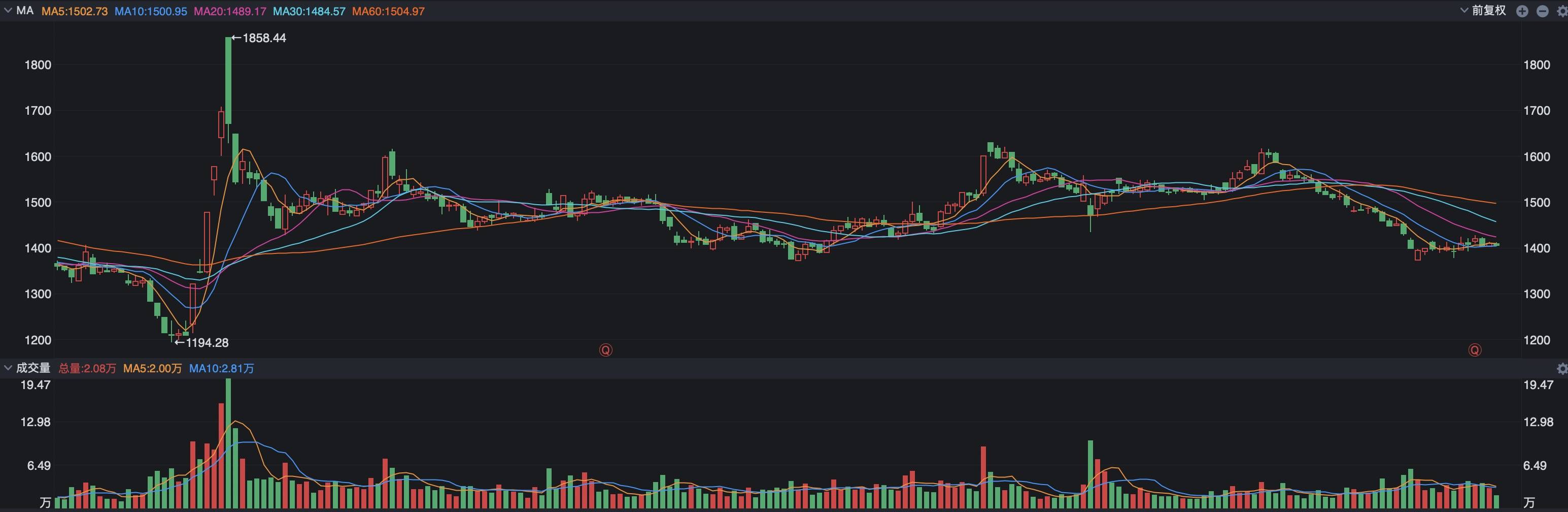
Core Viewpoint - Guizhou Moutai's stock price has been persistently low, hovering around 1400 yuan, and if it fails to hold this level, it may drop to 1300 yuan, which is only 100 yuan away from last year's rally starting point at 924 yuan, indicating that the current decline is beyond expectations [1] Group 1: Market Sentiment - Notable investor Duan Yongping expressed confusion over the market's fear regarding Guizhou Moutai, suggesting that the company's strong resource attributes and competitive moat should alleviate concerns [1] - Online responses to Duan's comments echoed his sentiment, emphasizing that Moutai's uniqueness and scarcity should hold significant value [1] Group 2: Consumer Outlook - The current market sentiment reflects uncertainty about future consumer spending, with a lack of anticipated reasons for market funds to flow back into consumption [3] - A potential rebound in the liquor sector, including Moutai, could occur if consumer confidence improves, particularly if the Consumer Price Index (CPI) shows signs of recovery or if there are new interpretations of alcohol prohibition policies [3] Group 3: Investment Perspective - The downward potential for Moutai appears limited, and while mid-term reversal probabilities may be low, the likelihood of an upward trend in the stock price is gradually increasing [4] - Investors currently holding Moutai or other liquor stocks are advised to remain patient and await a recovery rather than engaging in irrational short-selling [4]


帮主郑重7月金股揭秘:券商力荐这几只,赚钱机会藏在哪儿?
Sou Hu Cai Jing· 2025-07-01 21:01
Core Viewpoint - The article discusses the recent recommendations from brokerages for July's "golden stocks," highlighting the underlying logic and potential investment opportunities for ordinary investors [1][3]. Group 1: Popular Stocks - Kying Network is favored by five brokerages, making it the most recommended stock for the month; Zijin Mining, Huadian Technology, and Muyuan Foods follow closely with four recommendations each [3]. - The selection of these stocks reflects a diverse range of industries, including gaming, mining, PCB manufacturing, and agriculture, indicating a broad interest from brokerages [3]. Group 2: Key Selection Criteria - The first criterion is industry prosperity, with Kying Network benefiting from an increase in game licenses and the release of popular titles, while Huadian Technology sees a surge in demand for PCB boards due to 5G and automotive electronics [3][4]. - The second criterion focuses on policy benefits, particularly in sectors like semiconductors and new energy vehicles, where domestic and global trends favor local companies [4]. - The third criterion emphasizes the importance of a company's competitive advantage or "moat," with Zijin Mining having significant copper reserves and cost control, and Huadian Technology holding over 20% market share in high-end PCBs [4]. Group 3: Stock Selection Methodology - The article suggests a three-step approach for investors to filter the recommended stocks: 1. Monitor changes in institutional holdings, such as Kying Network's increase from 8% to 15% in fund holdings [4]. 2. Assess order fulfillment rates, with Huadian Technology reporting a 40% year-on-year increase in new orders [4]. 3. Evaluate free cash flow rates, as evidenced by Zijin Mining's 35% year-on-year increase in operating cash flow [4]. Group 4: Market Outlook - The market is expected to experience initial fluctuations followed by a potential breakthrough, with short-term funds engaging in high-frequency trading within popular sectors while long-term funds adjust their portfolios [5]. - The article emphasizes the importance of selecting stocks based on industry trends, company quality, and reasonable pricing, particularly focusing on semiconductor localization, new energy exports, and consumer recovery [5].




一方水土一方“集”,烟火气里赶出暑期消费新引擎
Qi Lu Wan Bao Wang· 2025-07-01 14:53
Core Insights - The summer markets in Shandong, including the "Yellow River Market," "Canal Market," and "Marine Market," are revitalizing consumer experiences through immersive activities that blend shopping, entertainment, and local culture [1][2][3] Group 1: Market Dynamics - The three major markets are not uniform but reflect unique regional cultures, with the "Yellow River Market" showcasing local crafts like paper-cutting, the "Canal Market" emphasizing antique trading, and the "Marine Market" highlighting seafood delicacies [2] - These markets serve as platforms for local brands to connect with consumers, enhancing the shopping experience through direct engagement and cultural storytelling [2][3] Group 2: Consumer Engagement - The markets are designed to create a dual experience where consumers not only purchase goods but also engage in the process, transforming shopping into a memorable event [1][2] - The integration of online and offline strategies, including government subsidies and promotional offers, aims to make quality products more accessible and affordable for consumers [2] Group 3: Economic Impact - The vibrant atmosphere of these markets is indicative of consumer recovery and economic resilience, reflecting the genuine enthusiasm of the public for local culture and products [3]
一线私募,最新解盘!聚焦三大主线
天天基金网· 2025-07-01 05:14
Core Viewpoint - The A-share market is experiencing a rise in both volume and price, driven by top private equity firms increasing their positions, with nearly 90% of large private equity firms maintaining over 50% positions [1][3]. Group 1: Market Positioning - The average position of all private equity firms in the stock market reached 74.62% as of June 20, showing a slight increase of 0.37 percentage points from the previous week, indicating a relatively high level for the year [3]. - Large private equity firms have an even more aggressive average position of 79.43%, significantly above the industry average, with 52.99% of these firms in heavy or full positions (over 80%) [3]. - Overall, 88.62% of large private equity firms maintain positions above 50% [3]. Group 2: Fund Performance - Domestic public equity funds also show high stock positions, with an overall position of 92.72% as of June 20, slightly down from the previous week but still at a relatively high level for the year [5]. Group 3: Market Outlook - The market sentiment is improving due to three main factors: decreasing overseas risks, emerging highlights in various industries, and a predominance of bullish capital [7]. - Key upcoming events include the mid-year earnings forecasts and expectations for policy direction in July, which are expected to significantly influence market performance [7]. - The overall valuation of A-shares is not considered high, with the equity risk premium index remaining at a high level since 2016, indicating strong long-term investment value compared to bonds [8]. Group 4: Investment Strategies - Private equity firms are focusing on three main investment themes: technology growth, defensive dividends, and consumer recovery [10]. - Specific sectors of interest include computing infrastructure, gaming exports, and the export industry, with potential for significant gains [10]. - A balanced investment framework is suggested, targeting high-dividend assets in utilities and transportation, technology growth sectors, and consumer recovery areas benefiting from counter-cyclical policies [10].

波司登(03998):营收与净利润创历史新高,派息比率继续提升
Shenwan Hongyuan Securities· 2025-06-29 13:44
Investment Rating - The report maintains a "Buy" rating for the company [1]. Core Insights - The company reported record high revenue and net profit for FY25, with revenue reaching 25.9 billion RMB, a year-on-year increase of 11.6%, and net profit at 3.514 billion RMB, up 14.3% year-on-year. The profit growth rate has exceeded revenue growth for eight consecutive years [6][9]. - The company plans to distribute a final dividend of 0.22 HKD per share, resulting in a total payout ratio of 84.1%, an increase from 81.1% in FY24 [6]. - The down jacket business remains the core revenue source, contributing 83.7% of total revenue, with a year-on-year growth of 11% to 21.67 billion RMB. The main brand revenue increased by 10.1% to 18.48 billion RMB [6]. - The company has seen a significant increase in its OEM business, with revenue growing by 26.4% to 3.37 billion RMB, accounting for 13% of total revenue [6]. - The company continues to optimize its offline store operations while maintaining steady growth in online sales, which reached 7.58 billion RMB, a 9.3% increase year-on-year [6]. Financial Data and Profit Forecast - For FY2025, the company forecasts revenue of 25.902 billion RMB, with a growth rate of 12% for FY2026 and 10% for FY2027 [5]. - The projected net profit for FY2025 is 3.514 billion RMB, with expected growth rates of 11% for FY2026 and 10% for FY2027 [5]. - The company's gross margin is expected to stabilize around 57.3% for FY2025, with a slight decline due to increased costs [5][6]. - The report anticipates a PE ratio of 12 for FY2026, 11 for FY2027, and 10 for FY2028, indicating a positive outlook for the company's valuation [6].
A股策略周思考:上证攻坚新高后,怎么看?
Tianfeng Securities· 2025-06-29 10:45
Market Insights - The small-cap crowding index has decreased from 65% to 62.4%, indicating a significant drop in market congestion, approaching levels seen in April 2025 [1][10] - Previous market adjustments occurred when the trading volume decreased alongside rising small-cap crowding, while the current market shows stable inventory levels [1][10] - The current trading volume has remained relatively low, averaging around 1.2 trillion, without signs of overheating during the recovery phase [1][11] Domestic Industry Analysis - In May, industrial enterprise profits reported a year-on-year decline of 9.10%, with cumulative profits from January to May down to -1.10% from a previous 1.40% [3][20] - The inventory of finished goods for large industrial enterprises stood at 6.65 trillion yuan, with a year-on-year growth of 3.50% [3][20] - The People's Bank of China indicated a need for moderately loose monetary policy to support economic recovery amid challenges like insufficient domestic demand [3][31] International Economic Indicators - The U.S. core PCE index rose by 2.68% year-on-year in May, slightly above expectations, indicating inflationary pressures [4][11] Industry Allocation Recommendations - Investment strategies should focus on three main areas: breakthroughs in AI technology, valuation recovery in consumer stocks, and the rise of undervalued dividends [5][11] - The consumer sector is expected to recover due to low valuations, declining interest rates, and policy catalysts, despite a cautious macro narrative [5][11]
推动服务消费升级!毕马威徐司辞:应把握情绪健康等需求
Nan Fang Du Shi Bao· 2025-06-28 03:23
Core Insights - The event "Intelligent Consumption, Trendsetting Future" highlighted the recovery and structural transformation of the consumer market in China, emphasizing the importance of capital empowerment and policy support [2][3]. Economic Recovery - In 2024, China's economy is expected to recover steadily, with significant growth in per capita disposable income and total retail sales of consumer goods compared to 2023, indicating the resilience and potential of the domestic consumer market [3][5]. Consumer Market Trends - The total retail sales of consumer goods in the first two months of 2025 increased by 4% year-on-year, surpassing the 3.5% growth rate of 2024 by 0.5 percentage points [5]. - The term "consumption" appeared 52% more frequently in government reports compared to the previous year, reflecting heightened governmental focus on consumption [6]. Structural Adjustments - The consumer market is undergoing deep structural adjustments driven by macroeconomic uncertainties, demographic changes, and evolving consumer attitudes, leading to more diversified consumer demands [6]. - Key dimensions of consumer demand include emotional value, health management, environmental sustainability, quality enhancement, and cost-effectiveness [6]. Regional Insights - In Guangdong, the coverage rate of immersive consumption scenarios is 30%, indicating significant development potential, while emerging sectors in service consumption account for 22% [6][10]. IPO Market Activity - In Q1 2025, global IPO activities reached $28.2 billion, with the consumer goods market accounting for 45% of the fundraising, highlighting strong investor interest in this sector [6]. Luxury Goods Market - China, the US, and Japan remain the top three luxury goods markets, collectively accounting for 48% of global luxury consumption, with a total market size of $101.7 billion, $96.4 billion, and $28.3 billion respectively [7]. Cosmetics and Health Trends - The cosmetics market is highly competitive, with domestic brands performing well, particularly eco-friendly skincare products favored by consumers seeking natural ingredients [7]. - The functional food market in China has grown significantly, from under 100 billion yuan in 2013 to nearly 300 billion yuan in 2020, with a compound annual growth rate of 12% [7]. Dining and Tourism Integration - There is a trend of integration between dining and tourism, with consumers increasingly demanding high-quality food, creative dishes, and engaging dining experiences, which is driving new business models and enhancing service consumption [9]. Policy Initiatives in Guangdong - Guangdong's policy framework for promoting high-quality service consumption focuses on four dimensions: expanding basic consumption, enhancing quality in cultural tourism and health services, enabling digital and green scenarios, and deepening financial integration [10]. - The aim is to increase the proportion of service consumption in total retail sales and cultivate competitive service brands nationally [10].

北京市银行业协会:多家银行已完成内部系统调整与定价重检,新发放汽车贷款利率较此前普遍呈现下降趋势
news flash· 2025-06-27 10:59
Core Viewpoint - The implementation of the "Self-Regulatory Agreement for Automotive Consumer Finance Business in Beijing" aims to lower financing costs for consumers and stimulate the automotive consumption market, aligning with national policies to promote consumption [1][2]. Group 1: Financial Services and Consumer Impact - The banking sector in Beijing is actively responding to the self-regulatory agreement by reducing interest rates on personal auto loans and credit card installment products, thereby alleviating the financial burden on consumers [1][2]. - This initiative is expected to enhance consumer confidence and purchasing experience by providing transparent financial services and addressing concerns about predatory lending practices [1][2]. Group 2: Industry Direction and Future Outlook - The self-regulatory action signifies a shift from price competition to service and efficiency competition within the automotive consumer finance sector, promoting a healthier market environment [1][2]. - Banks are adjusting their pricing strategies and improving risk management and operational efficiency to pass on cost savings to consumers, reinforcing the industry's commitment to serving the real economy and enhancing consumer welfare [2].