新旧动能转换

Search documents
从“资产荒”角度看“内卷”的深层原因
李迅雷金融与投资· 2025-07-19 06:51
Group 1 - The article discusses the concept of "anti-involution" and its significance in the context of supply-side structural reforms, emphasizing the need to analyze the root causes of involution to effectively address it [1] - The capital market is experiencing two main trends: a decline in risk appetite and a decrease in risk-free investment returns, leading to an "asset shortage" phenomenon [1][2] - The yield on China's 10-year government bonds dropped to a record low of 1.55% in April, indicating a persistent "asset shortage" that affects both capital markets and the real economy [1] Group 2 - The profit margins of large-scale manufacturing enterprises have been declining, with profit rates falling from 5.35% in 2021 to 4.25% in the first five months of 2024 [2][5] - The revenue generated per 100 yuan of assets for large-scale manufacturing enterprises has decreased from 107 yuan in 2022 to 85.2 yuan in the first five months of 2024 [2][5] - The phenomenon of "involution" in competition is characterized by price wars among enterprises, leading to increased volume without corresponding revenue or profit growth [5] Group 3 - The export price index for China's goods has dropped by 15% from January 2023 to September 2024, indicating a significant decline compared to other emerging economies [8] - The average accounts receivable period for large-scale manufacturing enterprises has increased from 54 days in 2022 to 71.7 days in the first five months of 2024, reflecting financial pressures [11] - The capacity utilization rate for large-scale manufacturing enterprises has decreased from 75.8% in 2022 to 74.2% in the first half of 2024, highlighting the oversupply situation [12] Group 4 - The increase in manufacturing investment has outpaced overall investment growth since 2021, with manufacturing investment growth rates exceeding overall rates by 8.6 to 6 percentage points from 2021 to 2024 [15] - Local governments are incentivized to boost manufacturing investment to meet GDP targets, leading to potential overcapacity in certain sectors [21][23] - The manufacturing sector has seen significant investment in new industries, with production in solar batteries, lithium batteries, and electric vehicles exceeding global demand [26] Group 5 - Consumer spending is closely tied to income expectations, with urban non-private unit average wage growth slowing from 6.7% in 2022 to 2.8% in 2024 [29][30] - The high savings rate in China, at 42.49% in 2023, reflects a preference for low-risk assets over riskier investments, contributing to the "asset shortage" [39][40] - The income distribution disparity, where the top 20% of households account for 45.5% of disposable income, hampers overall consumption growth [35][46] Group 6 - The article draws parallels between the current "anti-involution" movement and the supply-side structural reforms of a decade ago, highlighting the need for a shift in focus from supply-side measures to stimulating consumer demand [56][62] - The current economic environment differs significantly from that of ten years ago, with reduced potential in real estate demand and a more cautious consumer sentiment [57][58] - The strategies for "anti-involution" should include reducing excess capacity, minimizing ineffective investments, and increasing household income to stimulate consumption [62]

青岛市12个省新旧动能转换重大产业攻关项目获得省级激励补助资金2430万元
Zhong Guo Fa Zhan Wang· 2025-07-18 05:44
Group 1 - The core viewpoint of the news is that Qingdao City has received significant funding for major industrial projects aimed at transforming and upgrading its economy, with a total of 24.3 million yuan allocated to 12 projects, representing 18.5% of the total number of projects and 16.2% of the funding in Shandong Province [1] - The projects approved have strong research and market capabilities, with a total of 6 national awards and 33 new products developed, expected to generate over 5 billion yuan in annual output value upon completion [2] - Key projects include the Si Rui Semiconductor Advanced Equipment R&D Center, which has developed a 4.5MeV high-energy ion implanter, breaking international monopolies, and the 12-inch atomic layer deposition equipment, which has received repeat orders from leading global companies [2] Group 2 - Since 2019, Qingdao has increased funding for technology breakthroughs in its "ten strong" industries, with 52 projects receiving a total of 168.3 million yuan in provincial special incentive funding [3] - The new generation information technology, modern marine, and high-end equipment industries received the most funding, with 10, 9, and 7 projects respectively, and the highest funding amounts were for modern marine, new generation information technology, and modern light industry and textiles [3] - The city’s development and reform commission will ensure proper supervision and support for project implementation, addressing challenges related to land, talent, and funding to meet performance targets [3]
兴业证券王涵 | 长钱的问题如何解决?
王涵论宏观· 2025-07-18 02:56
Core Viewpoint - The article emphasizes the need for "long money" in China's economy as it transitions from traditional growth models to new engines like advanced manufacturing, digital economy, and green energy [1][4]. Group 1: Economic Transition - China's economy is undergoing a critical period of transitioning from old to new growth drivers, with traditional sectors like infrastructure and real estate showing diminishing returns [1]. - Strategic emerging industries, characterized by long R&D cycles, rapid technological iterations, and significant capital expenditures, are becoming the new growth engines [1]. Group 2: Long-term Capital Supply - Compared to the U.S., the supply of "long money" from the private sector in China is currently limited, primarily due to the wealth accumulation being heavily reliant on real estate growth over the past two decades [1]. - As of 2022, over 90% of Chinese residents' total assets were accumulated from 2005 to 2022, with 41.9% of this increase attributed to urban housing asset growth [1]. Group 3: Market Support and Valuation - The Central Huijin Investment Company has entered the market to address the "long money" issue, providing support for stock market index funds and enhancing valuation momentum [4]. - The balance of the central bank's loans to financial companies increased significantly from 659.4 billion yuan at the end of March to 1.03 trillion yuan at the end of April, reflecting the market support during global market disruptions [4]. Group 4: Profit Expectations and Economic Confidence - The entry of long-term funds like Central Huijin has alleviated market downside risks, but a substantial improvement in profit expectations is necessary for the stock market to break upward [5]. - Confidence in China's medium to long-term economic growth is crucial, with new urbanization and industrialization processes showing a slowdown in their effects on economic growth [5]. Group 5: Globalization and Long-term Growth - Globalization is expected to enhance China's long-term growth outlook, although its benefits will take time to materialize [5]. - Deepening integration with global markets will allow China's efficient industrial capacity to meet broader global demand, supporting the transition from a "manufacturing giant" to a "manufacturing powerhouse" [5].


高端汽车“绿色”内饰,近四成“原”自淄博
Qi Lu Wan Bao Wang· 2025-07-17 14:34
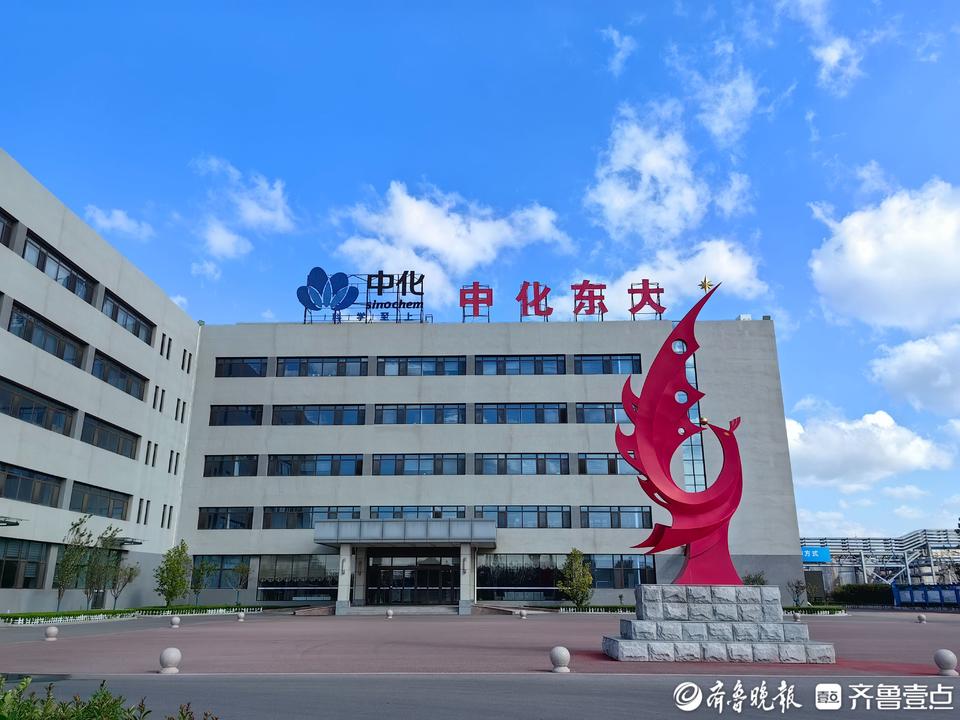
Core Viewpoint - The article highlights the success of Zhonghua Dongda in the high-end environmentally friendly polyether polyol market, achieving a 35% market share in automotive interior materials, driven by proactive strategies and technological advancements [1][9]. Company Overview - Zhonghua Dongda, located in Zibo Hantai, focuses on the research and production of high-end environmentally friendly polyether polyols [1]. - The company has transformed from a traditional chemical manufacturer to a high-performance new materials producer, responding to market demands and regulatory changes [12][14]. Market Position and Strategy - Zhonghua Dongda has captured 35% of the high-end automotive market, with its products widely used in automotive interiors and rail transportation [9]. - The company has proactively developed methods to reduce volatile organic compounds in its products, achieving significant reductions in harmful substances [6][19]. Technological Advancements - The company has invested in R&D, resulting in a decrease in the content of harmful substances from 1 ppm to as low as 0.05 ppm [6]. - Zhonghua Dongda has established a strong patent portfolio with 65 effective patents and has developed innovative products, such as the world's first commercialized solvent-free polyurethane waterproof coating [20][22]. Future Outlook - The company aims to enhance its production capacity to 64,000 tons per year and is expanding its market presence in Southern and Eastern China [20]. - Zhonghua Dongda is committed to continuous innovation and aims to lead in the development of ultra-green and high-performance polyether polyols, contributing to the high-quality development of the polyurethane industry in Zibo [23].
宏观经济宏观季报:内需支撑中国经济稳健前行
Guoxin Securities· 2025-07-17 06:37
Economic Performance - In Q2 2025, China's nominal GDP was approximately 34.2 trillion yuan, with a real GDP growth of 5.2% year-on-year, a slight decrease of 0.2 percentage points from Q1[1] - The contribution of final consumption, capital formation, and net exports to GDP growth was 2.7, 1.3, and 1.2 percentage points respectively, with contribution rates of 52.3%, 24.7%, and 23.0%[1] Sectoral Analysis - The first, second, and third industries' nominal GDP in Q2 were approximately 1.9 trillion, 12.7 trillion, and 19.5 trillion yuan, with year-on-year growth rates of 3.8%, 4.8%, and 5.7% respectively[1] - Industrial value added maintained a high growth rate of 6.2%, while the construction sector experienced a significant decline, impacting the overall growth of the secondary industry[2] Demand Dynamics - Domestic demand showed a "rise in internal and decline in external" pattern, with capital formation's contribution rebounding by 0.8 percentage points to 1.3%[2] - Fixed asset investment and retail sales both saw declines, while industrial output rebounded, indicating a temporary divergence between production and demand[2][3] Future Outlook - For the second half of 2025, GDP growth is projected at 4.9% and 4.8% for Q3 and Q4 respectively, with an annual growth target of approximately 5.1%[3] - The internal demand is expected to recover significantly, supported by the resumption of government subsidies and timely policy interventions[3] Risks - Potential risks include a reduction in policy stimulus and uncertainties in overseas economic policies[4]
资产、风格、行业与黄金深度复盘:谁战胜了“金本位”?
ZHESHANG SECURITIES· 2025-07-16 14:03
Group 1: Core Insights - Gold has emerged as a strong asset since 2018, outperforming most other asset classes due to factors like weakening dollar credit, normalized global geopolitical risks, and rising economic uncertainty [1] - Since 2018, only a few assets, such as certain cryptocurrencies and small-cap stocks, have managed to yield positive returns compared to gold, highlighting the challenges faced by traditional investments [1][14] Group 2: Major Asset Classes - In the equity market, U.S., Indian, and European stocks have underperformed gold, with nominal growth driven by liquidity rather than intrinsic value [2][16] - Fixed income assets, including U.S. and Chinese government bonds, have shown no advantage against gold, with significant declines in returns when priced in gold [2][37][38] - Commodities have generally underperformed gold, with precious metals leading, followed by industrial metals and energy products [2][44] - Virtual assets, particularly cryptocurrencies, have outperformed gold due to their advantages in payment convenience, technological innovation, and limited supply [2][54][55] - Real estate prices in major economies have also lagged behind gold, with the U.S. and India showing relatively smaller declines [2][21] Group 3: Industry Performance - Among primary industries, resource and new economy sectors have performed relatively well, while traditional consumer goods and old economy sectors have struggled against gold [3] - In the past year, financial and technology sectors have outperformed gold, while resource, consumer, and real estate sectors have underperformed [3][4] - Within secondary industries, emerging technologies have outperformed traditional sectors, and financial services have benefited from favorable market conditions [4][5] Group 4: Investment Styles - The micro-cap stock index has significantly outperformed gold since 2018, driven by a natural "contrarian investment mechanism" and liquidity premiums [5] - In the past year, micro-cap and financial styles have outperformed gold, while dividend styles have lagged [5][6] Group 5: Strategy Indices - Small-cap factors have shown strong performance since 2018, with pre-announcement and positive surprise indices performing relatively well [6] - In the past year, small-cap factors have remained strong, while large-cap factors have underperformed gold [6]
专家解读经济半年报:中国经济正穿越周期“分水岭”
Zhong Guo Jing Ying Bao· 2025-07-16 13:43
Core Viewpoint - China's GDP grew by 5.3% year-on-year in the first half of the year, with a 5.2% growth in the second quarter, indicating a stable and positive economic development trend despite external pressures [2][3]. Group 1: Economic Growth and Structure - The rapid growth of high-tech industries and equipment manufacturing has become a significant driver of economic growth, with investments in key areas like new energy equipment and integrated circuits exceeding 20% [2][3]. - The digital economy is expected to account for over 45% of GDP this year, reflecting a shift towards new economic drivers [2]. - Traditional industries are also seeing strong investment in smart upgrades, with a year-on-year growth of 15% [2]. Group 2: Demand Structure and Consumption - Consumption continues to play a crucial role in economic growth, contributing approximately 65%, with service consumption rising to over 55% [3]. - The investment landscape shows a "two-end strong" pattern, with infrastructure investment growing by 5.5% and social welfare investments, such as affordable housing, increasing by 12% [3]. - Manufacturing technology transformation investments are also notable, growing at 18% [3]. Group 3: Macroeconomic Risks and Indicators - Real estate investment's year-on-year decline has narrowed to 3.5%, and local government debt replacement has exceeded expectations [3]. - The Consumer Price Index (CPI) rose to 0.1% in June after four months of decline, indicating a slight recovery in consumer prices [3]. - The Producer Price Index (PPI) shows a reduced negative growth rate, suggesting that supply-demand imbalances are gradually easing [3]. Group 4: Economic Quality and Efficiency - The energy consumption per unit of GDP decreased by 3.2%, and the share of clean energy reached 36% [4]. - The median R&D intensity of listed companies increased to 4.8%, indicating a focus on innovation [4]. - The contribution rate of total factor productivity (TFP) continues to rise, with the profit margin of industrial enterprises reaching 4.97% [4]. Group 5: Future Economic Outlook - The GDP growth target for the year is expected to be around 5%, but challenges remain, including uncertainties in external demand and structural employment issues among youth [5]. - Recommendations for the second half of the year include targeted fiscal policies, such as increasing special bond issuance for critical technologies and enhancing support for specialized enterprises [5]. - Monetary policy should focus on maintaining balance while reducing costs for businesses and supporting credit for specialized and innovative companies [5].
交银国际每日晨报-20250716
BOCOM International· 2025-07-16 09:39
Group 1: Macroeconomic Overview - China's GDP growth for the first half of 2025 is 5.3% year-on-year, with a slight slowdown in Q2 to 5.2% compared to 5.4% in Q1, indicating resilience amid global economic disruptions [3][4] - The contribution from consumption, investment, and net exports improved in Q2, with consumption at 52.3%, investment at 24.7%, and net exports at 23%, showing better internal demand coordination [3] - Industrial production accelerated to 6.8% in June, while consumption growth slowed to 4.8%, reflecting short-term disturbances affecting economic trends [3][4] Group 2: Pharmaceutical Industry Insights - The valuation of Hong Kong's innovative pharmaceutical sector remains attractive, with leading companies' forward price-to-sales ratios aligning with historical averages, despite being slightly higher than comparable US firms [5] - Domestic capital continues to increase holdings in Hong Kong stocks, while foreign investment in innovative pharmaceuticals is at a low point, indicating potential for future growth [5] - The upcoming commercial insurance innovative drug directory is expected to create a more favorable pricing environment, potentially leading to significant growth in premium and payment scales for innovative drugs [7] Group 3: Company-Specific Analysis - Li Ning's Q2 sales growth was below expectations, with a low single-digit increase in retail revenue, indicating a weakening recovery trend compared to Q1 [8][9] - JD's Q2 losses from its food delivery segment are expected to significantly impact overall profits, with a projected 60% year-on-year decline in profits, although retail performance remains stable [10] - Adjustments to Li Ning's revenue forecasts for 2025-2027 reflect a cautious outlook, with expected revenues revised down by 0.3-5.8% to between 29.0-30.95 billion RMB [9]
上半年新旧动能加速切换,内外需平衡改善
BOCOM International· 2025-07-16 06:53
Macroeconomic Overview - In the first half of 2025, China's GDP grew by 5.3% year-on-year, with a slight slowdown in Q2 at 5.2% compared to 5.4% in Q1, indicating a stable economic performance amidst global economic uncertainties [1][9] - The contribution of consumption, investment, and net exports to growth improved in Q2, with consumption at 52.3%, investment at 24.7%, and net exports at 23.0%, highlighting a better balance between internal and external demand [1][2] Industrial Production - The industrial added value for large-scale industries increased by 6.4% year-on-year in the first half of 2025, with June's growth accelerating to 6.8% [2][16] - Manufacturing output grew by 7.0%, with equipment manufacturing and high-tech manufacturing showing significant growth rates of 10.2% and 9.5%, respectively [2][16] - New energy vehicles and industrial robots saw production increases of 36.2% and 35.6%, respectively, reflecting a trend towards high-end and intelligent manufacturing [2][16] Consumer Market - Retail sales of consumer goods increased by 5.0% year-on-year in the first half of 2025, with a notable acceleration in Q2 [3][16] - The "old-for-new" policy positively impacted sales in categories such as home appliances and communication equipment, with growth rates of 30.7% and 24.1%, respectively [3][16] - Service consumption also showed recovery, with service retail sales growing by 5.3% [3][16] Investment Trends - Fixed asset investment grew by 2.8% year-on-year in the first half of 2025, with manufacturing investment increasing by 7.5% [5][16] - Infrastructure investment rose by 4.6%, while private investment saw a decline of 0.6%, although other private investments excluding real estate grew by 5.1% [5][16] - Investment growth volatility is attributed to fluctuating upstream material prices and reduced capacity utilization in traditional sectors [5][16] Real Estate Market - New housing sales in the first half of 2025 decreased by 3.5% in area and 5.5% in value, although the decline rate narrowed compared to the previous year [6][16] - In June, housing prices in major cities showed a downward trend, with new residential prices in first-tier cities decreasing by 0.3% [6][16] - The government is expected to implement stronger measures to stabilize the real estate market, with policies aimed at boosting demand and supporting housing construction [6][16] Foreign Trade - Total goods imports and exports increased by 2.9% year-on-year in the first half of 2025, with exports rising by 7.2% and imports falling by 2.7% [7][16] - The export of mechanical and electrical products grew by 9.5%, accounting for 60.0% of total exports, indicating a diversification of trade partners and resilience in external trade [7][16] - Trade with countries along the "Belt and Road" increased by 4.7%, providing a buffer against fluctuations in traditional markets [7][16] Financial Sector - The total social financing scale increased by 22.83 trillion yuan in the first half of 2025, with June's new social financing reaching 4.2 trillion yuan [8][16] - The M2 money supply grew by 8.3% year-on-year, indicating improved liquidity and funding support for the real economy [8][16] - The structure of credit also showed positive changes, with stable growth in household loans and a rebound in medium to long-term loans for enterprises [8][16]
城市变“型”记①丨“三链”里添加了啥秘方? ——从传统农区驻马店农业向新求变的实践说开去
He Nan Ri Bao· 2025-07-15 23:55
Core Insights - The central urban work conference emphasized the need for cities to transform their development model, focusing on distinctive growth and high-quality development [1] - The transformation of cities is increasingly seen as a key variable in regional competition, with a focus on accelerating the conversion of old and new growth drivers [1] - The report highlights the importance of agricultural cities like Zhumadian in overcoming challenges related to resource dependence and innovation shortfalls to achieve high-quality development [1][3] Agricultural Industry - Zhumadian is recognized for its significant agricultural output, maintaining a grain production of over 16 billion jin, and leading the province in meat and milk production [3] - The city has developed a robust agricultural processing sector, with 1,750 processing enterprises and an output value exceeding 238 billion yuan, positioning it as a key player in Henan's food industry cluster [4] - The local government is actively promoting deep processing of agricultural products to enhance value, with initiatives aimed at increasing the output value of the agricultural processing industry to over 250 billion yuan by 2025 [8] Value Chain and Innovation - The report discusses the need to reshape the value chain in agriculture, highlighting successful examples such as the transformation of wheat into various high-value products [5][6] - Zhumadian is leveraging modern technology and research partnerships to enhance agricultural productivity and innovation, exemplified by the establishment of a fungal research institute [9][10] - The introduction of "academician economy" is seen as a strategy to attract talent and boost local industries, with 32 academicians brought in to support agricultural development [11] Biopharmaceutical Industry - Zhumadian is positioning itself as a hub for biopharmaceuticals, with plans to integrate agricultural processing, livestock, and biomedicine into a cohesive development strategy [12][14] - The city has a rich resource base for traditional Chinese medicine, with over 2,000 varieties of medicinal herbs, supporting its goal to become a major player in the biopharmaceutical sector [14][15] - The local government aims to build a "Chinese Medicine Valley," targeting a modern pharmaceutical industry cluster worth over 100 billion yuan [15] Regional Development - Other cities in Henan, such as Zhoukou and Luohe, are also exploring similar strategies to enhance their agricultural processing capabilities and contribute to the province's economic growth [16] - The report illustrates a broader trend across agricultural provinces in China, where cities are innovating to achieve high-quality development through value chain enhancement and industry integration [16]