地缘政治风险

Search documents
金属行业2月投资策略展望:资金情绪逐步回落,关注节后需求验证
BOHAI SECURITIES· 2026-02-03 08:12
Industry Overview - The report indicates that the steel industry is expected to continue its weak performance in February due to the impact of the Spring Festival holiday, with demand likely to remain subdued and production to contract, leading to slight fluctuations in steel prices [2][17][18] - In the copper sector, production activities on both supply and demand sides are anticipated to be affected by the Spring Festival, resulting in continued inventory accumulation. Attention should be paid to post-holiday demand verification and geopolitical developments [2][32] - The aluminum industry is facing a slight contraction in production, with sufficient supply of bauxite from Guinea. Post-holiday production recovery in alumina and electrolytic aluminum plants may support alumina prices [3][41] - Gold prices are expected to experience increased volatility in the short term, influenced by geopolitical risks and domestic political uncertainties in the U.S. [3][51] Steel Sector - The steel PMI index for January 2026 is reported at 49.9%, indicating continued contraction but a slowdown in the rate of decline, with steel prices showing slight fluctuations [17] - In December 2025, the average daily transaction volume of construction steel was 98,600 tons, down 1.81% month-on-month and 10.95% year-on-year [18] - The total crude steel production for December 2025 was 960.81 million tons, a year-on-year decrease of 4.40% [19] Copper Sector - China's electrolytic copper production in January increased by 0.10% month-on-month and 16.32% year-on-year, with a total production of 1.326 million tons in December 2025 [32][33] - The LME copper inventory rose by 18.69% to 175,000 tons, while SHFE copper inventory increased by 91.81% to 156,900 tons during the same period [33][40] Aluminum Sector - The production of metallurgical-grade alumina in January 2026 decreased by 1.78% month-on-month and 2.6% year-on-year, with total production at 8.011 million tons in December 2025 [41][42] - The domestic electrolytic aluminum production in December 2025 was 3.874 million tons, reflecting a year-on-year increase of 2.87% [42] Precious Metals - Gold prices increased by 13.28% to $4,907.50 per ounce from December 31, 2025, to January 30, 2026, while silver prices rose by 20.10% to $85.25 per ounce during the same period [51][52] Lithium and Cobalt - The price of battery-grade lithium carbonate increased by 32.08% to 158,500 yuan per ton, while the price of battery-grade lithium hydroxide rose by 64.58% to 158,000 yuan per ton [53] - The average price of 1 cobalt decreased by 4.99% to 447,000 yuan per ton during the reporting period [65] Rare Earths - The report notes a recovery in the supply of praseodymium and neodymium oxides, with prices for praseodymium-neodymium oxide increasing by 23.41% to 748,500 yuan per ton [73]





全球流动性重定价,短期警惕市场波动
Hua Tai Qi Huo· 2026-02-03 06:31
Report Industry Investment Rating No relevant information provided. Core View of the Report - The short - term market is volatile due to global liquidity repricing, but the inflation narrative remains unchanged in the long - term [1][2] - Different commodity sectors have different investment opportunities and risk characteristics, and it is recommended to buy precious metals on dips [3][4] Summary by Related Catalogs Market Analysis - Trump announced the nomination of Kevin Warsh as the next Fed Chair on January 30th. After the market priced in the "Review of Fed Independence", silver fell over 30% and gold fell 11% on a single - day, hitting the largest decline since March 1980. On February 2nd, the global commodity market was severely sold off, and major exchanges raised margin requirements [1] - The central government emphasized consumption promotion and price stability at the Central Economic Work Conference on December 11th. The central bank cut the interest rates of various structural monetary policy tools by 0.25 percentage points on January 15th, and the Ministry of Finance issued 5 policy documents on January 20th. Geopolitical tensions globally, and the US Senate passed a $1.2 trillion government spending bill [2] Commodity Analysis - The long - term supply constraint in the non - ferrous sector remains unrelieved. Precious metals have allocation value after the adjustment. OPEC+ plans to keep oil production stable in March, and the US will "sell on behalf" of Venezuelan oil. Trump hopes to cut oil prices to $50 per barrel. The chemical industry's methanol and PTA are relatively resistant to decline. The agricultural sector needs to pay attention to weather and pig diseases. The black sector focuses on domestic policy expectations and low - valuation repair [3] Strategy - For commodities and stock index futures, buy precious metals on dips [4] Important News - The Shanghai Gold Exchange adjusted the margin level and price limit ratio of the silver deferred contract. CME raised the margin rates for gold and silver trading. Trump said negotiations on Greenland were about to reach an agreement. OPEC+ will keep oil production stable in March. The US federal government had a "technical shutdown". Iran and the US are moving towards negotiations [5]
深夜重大!比特币突然崩盘,8万美元说破就破,42万人一夜爆仓!特朗普向伊朗释放复杂信号,你的投资组合正面临三重风暴
Sou Hu Cai Jing· 2026-02-03 05:23
这个周末,当大多数人正准备放松休息时,全球市场却接连传来重磅消息。 最抓人眼球的是比特币的价格,它像坐了失控的过山车,一头跌破8万美元的心 理关口,创下近一年来的新低。 无数投资者的手机被爆仓警报刷屏。 然而,这只是动荡乐章的一个音符。 在地球的另一端,美国总统特朗普正在对伊朗释 放一种"谈谈打打"的复杂信号,而全球最主要的石油生产国集团"欧佩克 "则紧急开会,决定继续踩下增产的刹车。 这三件看似独立的事件,正像三股强劲 的涡流,搅动着从国际政治到普通人口袋里财富的每一个角落。 2026年2月1日,美国总统特朗普在佛罗里达州的海湖庄园发表讲话。 他对着镜头说:"我们希望与伊朗能够达成协议。 "这句话立刻被全球各大媒体捕捉, 视为紧张局势可能缓和的信号。 因为自2025年下半年以来,美国与伊朗在波斯湾地区的对峙不断升级,任何关于"谈判"的字眼都显得极其敏感。 但是,特朗普的"橄榄枝"后面紧跟着的是"大棒"。 在同一个讲话中,他强硬地回应了伊朗最高领袖哈梅内伊的警告,声称:"我们派出了世界上最大、最强 大的舰艇。 如果他们想试试,那我们就会看看他说的是否正确。 "他所指的,是近期被紧急调派至波斯湾海域的"福特"号 ...

商品普跌,聚酯产业链大幅回撤
Hua Tai Qi Huo· 2026-02-03 05:05
1. Report Industry Investment Rating - Not provided in the content 2. Core Viewpoints of the Report - On February 2nd, varieties in the polyester industry chain significantly reduced positions and declined. The PX/PTA/PF/PR/MEG main contracts fell by 4.84%, 4.89%, 3.57%, 4.05%, and 4.63% respectively [1]. - The decline was due to a sharp drop in crude oil prices with the retracement of geopolitical premiums, and a significant drop in precious metals and non - ferrous metals which led to a rapid decline in market risk appetite and the outflow of incremental funds from the chemical sector [1]. - The cost side has recently fluctuated around the Iran situation. The Brent oil price dropped from around $70 per barrel at the end of last month to around $65 - $66 per barrel [1][2]. - In the short term, PX/PTA/PF/PR markets are greatly affected by external funds and are highly volatile. It is recommended to hold light positions and wait and see. In the long term, it is advisable to go long on hedging at low prices [4]. 3. Summary According to Relevant Catalogs Price and Basis - Figures include TA main contract, basis and inter - period spread trends; PX main contract trends, basis and inter - period spread; PTA East China spot basis; short - fiber 1.56D*38mm semi - bright natural white basis [9][10][12] Upstream Profits and Spreads - Figures cover PX processing fee PXN (PX China CFR - naphtha Japan CFR); PTA spot processing fee; South Korean xylene isomerization profit; South Korean STDP selective disproportionation profit [18][22] International Spreads and Import - Export Profits - Figures include toluene US - Asia spread (FOB US Gulf - FOB South Korea); toluene South Korea FOB - Japan naphtha CFR; PTA export profit [24][26] Upstream PX and PTA Start - up - Figures show China's PTA load, South Korea's PTA load, Taiwan's PTA load, China's PX load, and Asia's PX load [27][30][32] Social Inventory and Warehouse Receipts - Figures involve PTA weekly social inventory, PX monthly social inventory, PTA total warehouse receipts + forecast volume, PTA warehouse warehouse receipt inventory, PX warehouse receipt inventory, and PF warehouse receipt inventory [37][40][41] Downstream Polyester Load - Figures include filament production and sales, short - fiber production and sales, polyester load, direct - spun filament load, polyester staple fiber load, polyester bottle - chip load, filament DTY factory inventory days, filament FDY factory inventory days, filament POY factory inventory days, Jiangsu and Zhejiang loom start - up rate, Jiangsu and Zhejiang texturing machine start - up rate, Jiangsu and Zhejiang printing and dyeing start - up rate, filament FDY profit, and filament POY profit [49][51][59] PF Detailed Data - Figures cover 1.4D physical inventory, 1.4D equity inventory, polyester staple fiber load, polyester staple fiber factory equity inventory days, pure polyester yarn start - up rate, pure polyester yarn production profit, recycled cotton - type staple fiber load, raw - recycled spread (1.4D polyester staple - 1.4D imitation large - chemical fiber), polyester - cotton yarn start - up rate, polyester - cotton yarn processing fee, pure polyester yarn factory inventory available days, and polyester - cotton yarn factory inventory available days [71][75][85] PR Fundamental Detailed Data - Figures include polyester bottle - chip load, bottle - chip factory bottle - chip inventory days, bottle - chip spot processing fee, bottle - chip export processing fee, bottle - chip export profit, East China water bottle - chip - recycled 3A - grade white bottle - chip, bottle - chip next - month spread (next month - base month), and bottle - chip next - next - month spread (next - next month - base month) [88][90][95]
综合晨报-20260203
Guo Tou Qi Huo· 2026-02-03 02:46
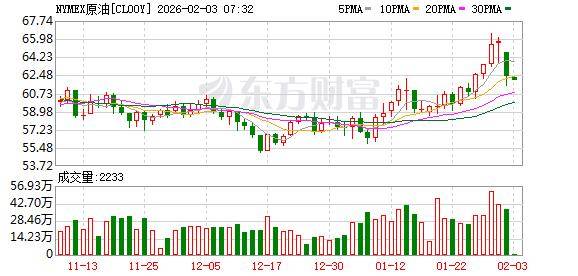
Report Industry Investment Rating No information available in the provided content. Core Viewpoints of the Report - The geopolitical premium in the crude oil market has been significantly reversed, and oil prices are expected to fluctuate frequently in the near future due to the uncertainty of US - Iran negotiations and the strengthening of the US dollar [2]. - Precious metals have entered a consolidation phase, and it is advisable to wait for the volatility to decline [3]. - Copper prices are likely to oscillate at high levels before the spring consumption in the Northern Hemisphere is falsified, but may decline around the Spring Festival [4]. - Aluminum prices are under short - term pressure, and the performance of pre - holiday inventory is worse than in previous years [5]. - The prices of most commodities are influenced by factors such as geopolitical situations, supply - demand relationships, and market sentiment, showing different trends of rise, fall, or oscillation [2 - 47]. Summary by Related Catalogs Energy - **Crude Oil**: The US - Iran situation eases, leading to a sharp reversal of geopolitical premium. Brent and WTI futures fall to $66/barrel and $62/barrel respectively, and SC to 450 yuan/barrel. Oil prices are expected to fluctuate frequently [2]. - **Fuel Oil & Low - Sulfur Fuel Oil**: Affected by the decline in market sentiment, strengthening of the US dollar, and rising expectations of US - Iran peace talks, oil products weaken. High - sulfur fuel oil is relatively stronger than crude oil, and the high - sulfur > low - sulfur pattern may continue [20]. - **Asphalt**: It follows the decline of crude oil but with a limited range. Supply pressure is limited, and consumption improves year - on - year. The search for alternative crude oil supports the near - month futures contract [21]. Metals - **Precious Metals**: Overnight, they showed a weak oscillation. The manufacturing PMI in the US exceeded expectations, and the US dollar continued to rebound. They are in a consolidation phase, and it's advisable to wait and see [3]. - **Base Metals** - **Copper**: The selling pressure is relatively limited. It is supported by the MA40 moving average. It may oscillate at high levels in Q1, but may decline around the Spring Festival [4]. - **Aluminum**: Overnight, it rebounded slightly. The spot premium and discount decreased, and the inventory increased. The price is under short - term pressure [5]. - **Zinc**: After the previous over - rise, the price corrected rapidly. It may enter a sideways consolidation after testing the cost support [7]. - **Lead**: The risk of soft squeeze in the warehouse is reduced. The demand is weak, and the price may be supported at 16,700 yuan/ton [7]. - **Nickel & Stainless Steel**: The price of nickel collapsed. The downstream of stainless steel is cautious in purchasing, and the market sentiment is panicked [8]. - **Tin**: It broke below the MA40 moving average, and may continue to decline to the MA60 [9]. - **Carbonate Lithium**: It hit the daily limit down. The market participation is affected by exchange policies. The price may oscillate at high levels, and the short - term uncertainty is high [10]. - **Ferroalloys** - **Manganese Silicon**: The price corrected. The spot manganese ore price decreased slightly. The supply is in excess, and the price is affected by the "anti - involution" policy [17]. - **Silicon Iron**: The price corrected. The demand has some resilience, and the supply changes little. The price is also affected by the "anti - involution" policy [18]. Chemicals - **Polycrystalline Silicon**: The price fell to around 47,000 yuan/ton. The industry is trying to curb involution, but the demand boost is limited, and the de - stocking is difficult. The futures price will continue to be under pressure [11]. - **Industrial Silicon**: A leading enterprise in Xinjiang plans to cut production by 50% in February. The downstream demand is also weakening. The short - term price will oscillate [12]. - **Urea**: The spot price is stable with a downward trend. The production is increasing, and the demand from the industrial downstream is weakening. It is expected to oscillate within a range [22]. - **Methanol**: The futures price fell. The overseas device operation rate decreased, and the domestic supply increased. The port inventory is high, and the demand is weak [23]. - **Pure Benzene**: The downstream pre - holiday stocking reduced the inventory in East China ports. The supply will increase, and the price may decline after returning to the fundamental trading logic [24]. - **Styrene**: The price is under pressure due to the decline in oil prices. The supply is increasing, and the demand is weakening [25]. - **Polypropylene & Plastic & Propylene**: The decline in oil prices weakens the cost support. The downstream demand is weak, and the market sentiment is bearish [26]. - **PVC & Caustic Soda**: PVC is expected to oscillate strongly due to cost support and export demand. Caustic soda may also oscillate strongly as the cost support strengthens [27]. - **PX & PTA**: Affected by the sharp decline in oil prices, the prices fell. There is a risk of inventory accumulation around the Spring Festival, but there are potential opportunities in the second quarter [28]. - **Ethylene Glycol**: The inventory is increasing, and the price is falling. There is an expectation of improvement in the second quarter, but it is under long - term pressure [29]. - **Short - Fiber & Bottle - Chip**: Short - fiber has a good supply - demand pattern in the short - term but is affected by the decline in raw materials. Bottle - chip has some improvement in processing margin, but the long - term capacity pressure exists [30]. Building Materials - **Glass**: It oscillated strongly at night. There is a risk of inventory accumulation during the Spring Festival, but the current valuation is low, and it may fluctuate with the macro - sentiment [31]. - **20 - Number Rubber & Natural Rubber & Butadiene Rubber**: The price of rubber raw materials in Thailand fell. The supply is decreasing, but the inventory is increasing. The demand is average, and the market sentiment is weak [32]. - **Soda Ash**: It oscillated widely. The inventory is increasing, and the supply is at a high level. It is under long - term supply - demand surplus pressure [33]. Agricultural Products - **Soybeans & Soybean Meal**: The market is weak. Brazilian soybean harvesting is in the early stage, and the yield is expected to be a record high. US soybeans may be further pressured. The domestic soybean crushing volume will decrease in February [34]. - **Soybean Oil & Palm Oil**: The rise of oils is driven by macro - factors. After the macro - risk premium is reversed, they are adjusting rapidly [35]. - **Rapeseed & Rapeseed Oil**: The import of Australian rapeseed will ease the supply pressure in the future. The supply is expected to be looser, and the price is expected to oscillate at the bottom [36]. - **Soybean No.1**: It is affected by the macro - market adjustment. It is necessary to pay attention to the macro - market guidance [37]. - **Corn**: The national grain sales progress is close to 60%. The price is declining, and the trading is dull before the Spring Festival. The futures price may oscillate weakly [38]. - **Pigs**: The spot price is adjusting strongly at the beginning of the month, while the futures price is weak. There is a risk of a second bottom - finding for the pig price in the medium - to - long - term [39]. - **Eggs**: The pre - holiday high of the spot price has passed, and it will be weak after the Spring Festival. There is an upward momentum for the egg price in the first half of 2026. The futures trading strategy is to wait for the low - point and then buy [40]. - **Cotton**: The short - term trend may oscillate. The overall supply and sales are booming, and it is necessary to pay attention to the downstream demand [41]. - **Sugar**: Internationally, the production progress in India and Thailand varies. Domestically, the market focuses on the production volume difference. The short - term price faces pressure [42]. - **Apples**: The futures price oscillates. The pre - holiday inventory is in the peak period, and it is necessary to pay attention to the demand [43]. - **Timber**: The price is at a low level. The supply is decreasing, and the demand is increasing. The low inventory supports the price [44]. - **Pulp**: The price is falling. The downstream demand is weak, and the port inventory is increasing. It is advisable to wait and see [45]. Financial Products - **Stock Index**: A - share indexes declined significantly. The short - term adjustment is mainly due to the release of profit - taking. It is necessary to pay attention to the impact of geopolitical events and market risk - preference changes [46]. - **Treasury Bonds**: The 30 - year treasury bond futures led the rise. The strategy is to continue the box - type oscillation, and pay attention to the curve - steepening and flattening opportunities [47].
2026年原油价格怎么看
2026-02-03 02:05
Summary of Key Points from the Conference Call Industry Overview - The conference call primarily discusses the **oil industry**, focusing on **global oil prices**, **OPEC strategies**, and **U.S. shale oil production** dynamics. Core Insights and Arguments - **Oil Price Fluctuations**: Oil prices were temporarily pushed to $70 due to geopolitical events and cold weather, but the divergence in gold-oil and copper-oil ratios indicates a shift in market drivers. Gold is influenced more by U.S. dollar credit and central bank purchases, while copper benefits from AI and data center demand, unlike oil which has different demand elasticity [1][3][4]. - **U.S. Shale Oil Production Challenges**: U.S. shale oil production faces rising costs ($65-70 per barrel) and limited willingness to increase output due to constrained profit margins. Inventory wells have dropped to a ten-year low, indicating limited future production capacity without high oil prices to support it [5][6]. - **OPEC's Production Strategy**: OPEC plans to increase production after April 2025 to maintain market share, reflecting its flexibility in strategy. However, it prefers to maintain production cuts to support oil prices, with actual production increases being lower than announced [6][8]. - **Geopolitical Risks**: Geopolitical tensions, particularly involving Iran and Venezuela, could lead to short-term spikes in oil prices, potentially reaching $75 to $80 if significant supply disruptions occur. However, such scenarios are considered low probability, and prices are expected to revert to around $60 post-conflict [9][10]. - **Global Oil Demand Trends**: Global oil demand growth is slowing, with a notable divergence from GDP growth rates. Factors such as increased electrification and fuel efficiency are contributing to this trend. EIA forecasts suggest annual oil demand growth will fluctuate around 1 million barrels, supported by China's inventory replenishment starting in 2025 [11][12]. Other Important Insights - **Investment and Capital Expenditure Trends**: There is a significant reduction in the proportion of cash flow allocated for reinvestment, dropping from 70% to below 50%, which limits supply-side pressures even if oil prices remain high [8]. - **Market Dynamics**: The oil market is expected to exhibit a "top and bottom" pattern, with prices fluctuating between $60 and $65 per barrel in the coming years. Above $70, both OPEC and U.S. shale may increase production, while below $60, both will likely cut back to support prices [12].
金银铜-贵金属与铜-在物流逻辑中重寻坐标
2026-02-03 02:05
【金银铜】贵金属与铜:在物流逻辑中重寻坐标 20260202 摘要 贵金属市场现货矛盾阶段性爆发,与工业金属不同,贵金属更多通过边 际流量定价,关注持续净流入资金。黄金需求受投资、实物、央行和工 业需求驱动,前三者是边际流量的关键。 2022 年起央行购金潮由地缘政治风险驱动,中国和俄罗斯等国增加黄 金储备,若发展中国家黄金占比提升至 5%-10%,将带来显著需求增量, 此趋势短期难以反转。 2025 年上半年国内资金推动贵金属行情,出现正溢价;下半年欧美资 金主导,出现负溢价。印度市场购买力扩张,对贵金属及有色金属溢价 接受度高,定价权重迅速提升。 2025 年下半年欧美债务问题引发避险资金流入贵金属,但长端债券稳 定后资金回流,属阶段性现象。看好黄金未来走势,受央行购金和 ETF 流入双轮驱动。 白银市场波动性高,多头情绪集中,高杠杆投机盛行。现货矛盾依然存 在,多头需求未明显衰退。中国和印度等边际市场对白银现货持有意愿 值得关注。 Q&A 贵金属市场在 2025 年 10 月前后的行情和逻辑有何不同? 2025 年 10 月之前,贵金属市场主要围绕降息幅度、次数以及边际流量进行定 价。整体而言,贵金属处 ...
重启雄风!有色ETF华宝盘中猛拉4%!地缘事件扰动,现货黄金重回4800美元
Xin Lang Ji Jin· 2026-02-03 02:01
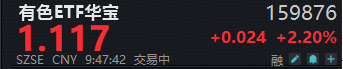
值得关注的是,今日现货黄金开盘反弹,截至发稿,重回4800美元/盎司,日内涨超3%。分析指出,量 化基金去杠杆化、杠杆ETF和趋势跟踪策略头寸调整所引发的强制抛售潮,其主体部分可能已基本释 放。 消息面上,特朗普称正在与伊朗对话。当地时间2月2日,针对伊朗问题,美国总统特朗普表示,美方已 向相关地区调动大型军舰,同时与伊朗保持沟通,"将观察事态如何发展"。 新湖期货认为,黄金价格中长期支撑仍存,指出沃什获提名及由此引发的汇率波动属于短期扰动,中期 市场焦点仍将集中于地缘政治风险升温与特朗普政府政策的高度不确定性;而长期来看,全球债务可持 续性恶化与去美元化趋势的深化,是支撑黄金结构性走强的核心变量。目前,上述中长期逻辑并未发生 根本性逆转。 中信证券指出,在经历2025年的大涨行情后,有色金属价格与股票行情的上涨动能依然充足,供应扰 动、需求局部高景气和囤货行为为金属价格带来强支撑,流动性宽松带来的交易活跃度上升以及地缘冲 突带来的避险情绪升温有望放大金属的价格弹性。看好贵金属、工业金属、电池金属和战略金属板块的 配置价值。 今日(2月3日)揽尽有色金属行业龙头的有色ETF华宝(159876)场内价格盘中涨超 ...


贵金属日评-20260203
Jian Xin Qi Huo· 2026-02-03 00:46
行业 贵金属日评 日期 2026 年 02 月 03 日 宏观金融团队 研究员:何卓乔(宏观贵金属) 021-60635739 hezhuoqiao@ccb.ccbfutures.com 期货从业资格号:F3008762 研究员:黄雯昕(国债集运) 021-60635739 huangwenxin@ccb.ccbfutures.com 期货从业资格号:F3051589 研究员:聂嘉怡(股指) 021-60635735 niejiayi@ccb.ccbfutures.com 期货从业资格号:F03124070 请阅读正文后的声明 每日报告 一、贵金属行情及展望 日内行情: 特朗普提名前美联储理事沃什担任下一届美联储主席,鉴于沃什在过去十五 年持续批判美联储量化宽松政策推高美国通胀压力并主张货币政策要回归平抑价 格波动的本源,市场担忧沃什上台后美联储货币政策框架将转向以偏紧货币流动 性抑制通货膨胀,叠加美联储暂停降息推高美元汇率和美伊谈判削弱地缘政治风 险,隔夜贵金属板块全线大幅调整,2 月 1 日贵金属板块继续惯性下滑,伦敦黄 金最低跌至 4402 美元/盎司而伦敦白银最大跌幅达到 41.4%。我们判断贵金属中 ...
美国、伊朗可能在数日内启动谈判!国际油价大幅跳水
Sou Hu Cai Jing· 2026-02-03 00:05
来源:证券时报 国际油价大幅跳水! 随着地缘政治风险缓和,国际原油期货价格2月2日大幅下挫,WTI原油、布伦特原油盘中跌幅均超过 5%。其中,ICE布油一度跌破66美元/桶。 当天,有伊朗媒体报道称,伊朗与美国在未来几天内可能举行高规格谈判。此外,伊朗总统已下令启动 核谈判。同日,伊朗外交部发言人证实,伊美双方极有可能在未来几天内展开对话。 国际油价暴跌 本周一(2月2日),国际油价大幅下跌,布伦特原油期货一度暴跌超5%并跌破每桶66美元;WTI原油 一度大跌近6%,价格最低下调至每桶61美元附近。 油价还受到大宗商品,尤其是金属遭遇猛烈抛售的压力。2月2日盘中,现货黄金一度下跌近10%,铜价 也曾跌超5%,延续自上周五开始的回落走势。截至记者发稿时,现货黄金跌幅收窄至3%以内,LME铜 跌幅收窄至2%以内。 彭博社指出,此次急跌之前,油价刚刚录得自2022年初以来最大的月度涨幅,当时正值大宗商品整体资 金流入的阶段。与伊朗爆发冲突的风险以及局部供应中断的预期,使得今年开局首月的市场供应意外趋 紧。然而,原油的总体背景仍是供应偏高,尤其是在2026年上半年。 能源咨询公司Energy Aspects量化服务主 ...