国内大循环

Search documents
【申万宏观 | 政策高频】综合整治“内卷式”竞争,维护公平竞争市场秩序
申万宏源宏观· 2025-05-20 03:09
Group 1 - The core viewpoint emphasizes the importance of building a community of shared future between China and Latin America, with initiatives to enhance cooperation and trade [1] - President Xi Jinping proposed five major projects to promote development and revitalization, including inviting 300 political party officials from Latin American countries to China annually for visits [1] - The focus on high-quality development through the Belt and Road Initiative and the import of high-quality products from Latin America is highlighted [1] Group 2 - Premier Li Qiang stressed the need to strengthen the domestic circulation as a strategic move for stable economic growth, aiming for high-quality development [2] - Key areas for enhancing domestic circulation include efficient allocation of resources, deep integration of technological and industrial innovation, and ensuring a dynamic balance between supply and demand [2][3] - The government aims to address critical issues affecting economic circulation, support foreign trade enterprises, stabilize employment, and boost consumption [2][3] Group 3 - The U.S. and China made significant progress in trade talks, with the U.S. canceling 91% of additional tariffs and China reciprocating with similar measures [4] - The agreement includes a temporary suspension of 24% tariffs, indicating a potential easing of trade tensions [4][5] Group 4 - The National Committee of the Chinese People's Political Consultative Conference emphasized the role of technological innovation in driving new productive forces and achieving high-quality development [6] - The goal is to establish China as a technological powerhouse by 2035, focusing on key core technologies and deep integration of technology and industry [7] Group 5 - The State Council issued guidelines for sustainable urban renewal, aiming to optimize urban structures and enhance living quality [8] - Eight main tasks were outlined, including the renovation of old neighborhoods and improving urban infrastructure [9] Group 6 - The establishment of a "National Venture Capital Guidance Fund" aims to support technological innovation and the growth of technology-based enterprises [10][11] - The fund will focus on nurturing strategic emerging industries and facilitating the transformation of major technological achievements into productive forces [11] Group 7 - The State Administration for Market Regulation announced measures to combat "involution" competition and maintain fair market order, including stricter enforcement against unfair competition and price violations [13] - The initiative includes revising laws related to pricing and e-commerce to protect the rights of business entities [13][14]

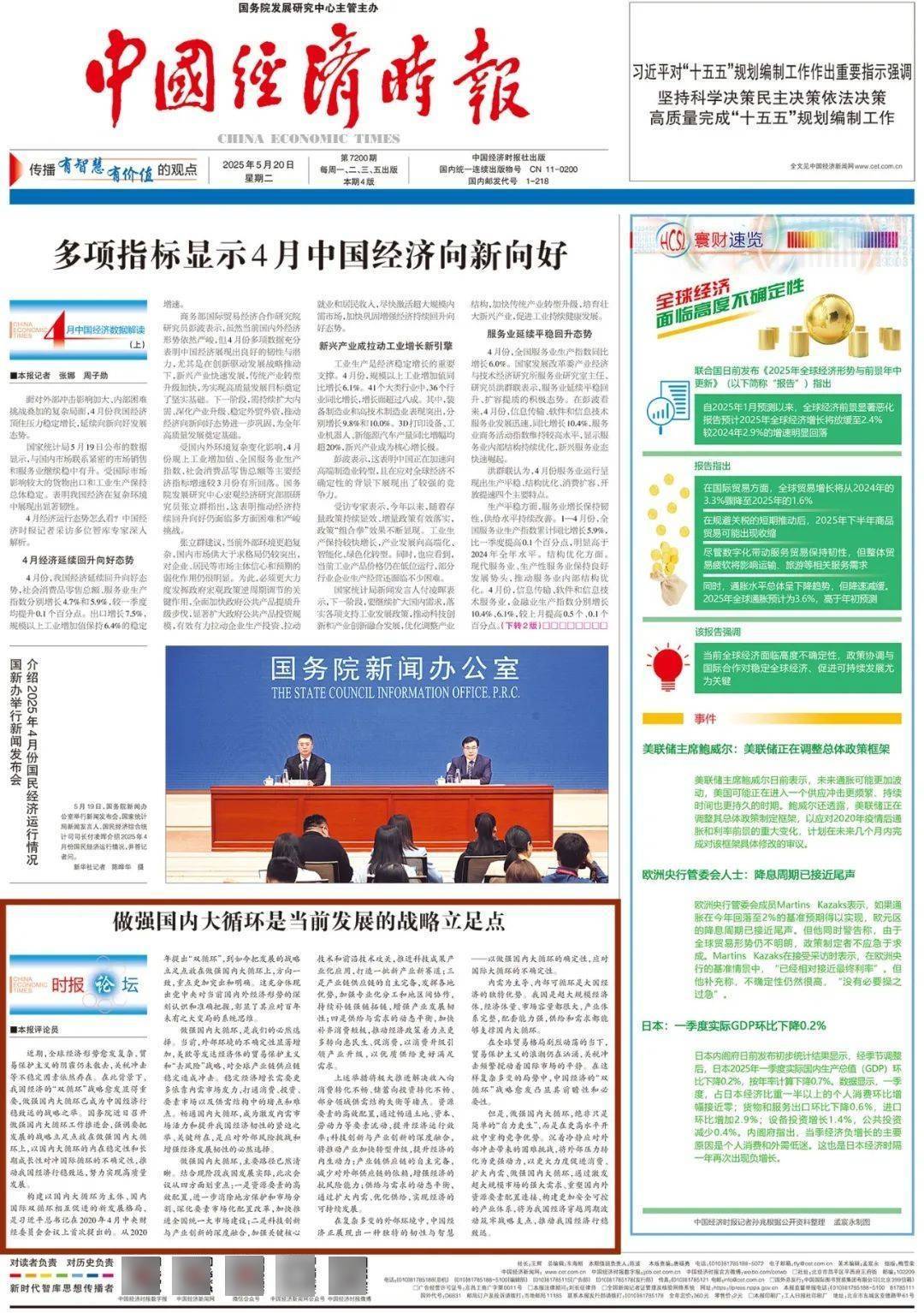
时报论坛丨做强国内大循环是当前发展的战略立足点
Sou Hu Cai Jing· 2025-05-20 02:53
在复杂多变的外部环境中,中国经济正展现出一种独特的韧性与智慧——以做强国内大循环的确定性,应对国际大循环的不确定性。 内需为主导、内部可循环是大国经济的独特优势。我国是超大规模经济体,经济体量、市场容量都很大,产业体系完整,配套能力强,供给和需求都能够 支撑国内大循环。 在全球贸易格局剧烈动荡的当下,贸易保护主义的浪潮仍在汹涌,关税冲击频繁搅动着国际市场的平静。在这样复杂多变的局势中,中国经济的"双循 环"战略愈发凸显其前瞻性和必要性。 ■中国经济时报评论员 近期,全球经济形势愈发复杂,贸易保护主义的阴霾仍未散去,关税冲击等不稳定因素依然存在。在此背景下,我国经济的"双循环"战略愈发显得重要, 做强国内大循环已成为中国经济行稳致远的战略之举。国务院近日召开做强国内大循环工作推进会,强调要把发展的战略立足点放在做强国内大循环上, 以国内大循环的内在稳定性和长期成长性对冲国际循环的不确定性,推动我国经济行稳致远,努力实现高质量发展。 构建以国内大循环为主体、国内国际双循环相互促进的新发展格局,是习近平总书记在2020年4月中央财经委员会会议上首次提出的。从2020年提出"双循 环",到如今把发展的战略立足点放在做 ...
4月国内经济顶住压力稳定增长,提振内需仍是影响经济的关键变量
Bei Ke Cai Jing· 2025-05-20 02:44
Economic Overview - In April, China's economy demonstrated resilience despite external pressures, supported by proactive macroeconomic policies that boosted market demand and corporate production [1][2] - The Central Political Bureau emphasized the need to enhance policies for stabilizing employment and the economy, with timely implementation of new policies based on changing circumstances [1] Industrial Production - Industrial production showed steady growth, with the industrial added value for large enterprises increasing by 6.1% year-on-year in April and 6.4% for the first four months [5][6] - The growth in industrial production is attributed to the effective release of macroeconomic policies and the stimulation of domestic demand through various initiatives [4][6] Consumer Market - Retail sales of consumer goods reached 37,174 billion yuan in April, marking a year-on-year increase of 5.1% and a 4.7% increase for the first four months [7] - The government aims to enhance consumer spending power and improve the consumption environment to further stimulate economic growth [7] Investment Trends - Fixed asset investment (excluding rural households) totaled 147,024 billion yuan in the first four months, with a year-on-year growth of 4.0% and an 8.0% increase when excluding real estate [9][10] - Manufacturing investment is growing rapidly, and there is significant potential for investment in various sectors, including social welfare and infrastructure [8][10]
4月中国经济数据解读(上)丨多项指标显示4月中国经济向新向好
Sou Hu Cai Jing· 2025-05-20 02:13
Economic Overview - In April, China's economy continued to show a recovery trend, with retail sales of consumer goods and the service production index growing by 4.7% and 5.9% respectively, both up by 0.1 percentage points compared to the first quarter [3][4] - Exports increased by 7.5%, while industrial added value maintained a stable growth rate of 6.4% [3][4] - The data indicates that despite external pressures and internal challenges, China's economy demonstrates significant resilience [1][3] Industrial Growth - The industrial production index for April showed a year-on-year growth of 6.1%, with 36 out of 41 major industries experiencing growth, indicating a broad-based recovery [6][24] - Notably, equipment manufacturing and high-tech manufacturing sectors grew by 9.8% and 10.0% respectively, with new industries becoming key growth drivers [6][7] - The production of 3D printing equipment, industrial robots, and new energy vehicles saw year-on-year increases exceeding 20% [6][24] Service Sector Performance - The national service production index rose by 6.0% year-on-year in April, reflecting a stable recovery and expansion in the service sector [8][25] - The information transmission, software, and IT services sectors grew rapidly, with a year-on-year increase of 10.4% [10][25] - The service sector's internal structure is continuously optimizing, with modern and productive service industries maintaining strong growth [10][25] Consumer Spending - In April, the total retail sales of consumer goods reached 37,174 billion yuan, marking a year-on-year growth of 5.1% [12][11] - The increase in consumer spending is attributed to the effectiveness of government policies aimed at boosting consumption and improving consumer confidence [12][11] - Notable growth was observed in travel, communication, and other service-related consumption categories, driven by holiday travel demand [12][11] Investment Trends - From January to April, fixed asset investment grew by 4.0%, with equipment investment rising by 18.2%, contributing significantly to overall investment growth [14][13] - Infrastructure investment (excluding electricity) increased by 5.8%, while manufacturing investment maintained a stable growth rate of 8.8% [14][15] - The "two heavy" and "two new" policies have positively influenced investment stability, particularly in infrastructure and manufacturing sectors [14][15] Export Dynamics - Despite rising tariffs on exports to the U.S., China's exports remained robust, with a total export value of 22,645 billion yuan in April, reflecting a growth of 9.3% [17][16] - The total import value was 15,745 billion yuan, with a growth rate of 0.8%, indicating a potential need for further activation of domestic demand [17][16] - The share of private enterprises in total imports and exports increased to 56.9%, highlighting an improvement in trade structure [17][16] Employment Market - The average urban unemployment rate from January to April was 5.2%, consistent with the previous year, indicating a stable employment situation [19][18] - The employment market is expected to continue improving, supported by economic fundamentals and effective employment policies [19][18] - However, structural challenges and external pressures remain, necessitating attention to skill development and training [19][18]
中国4月经济数据展现韧性
Sou Hu Cai Jing· 2025-05-20 01:20
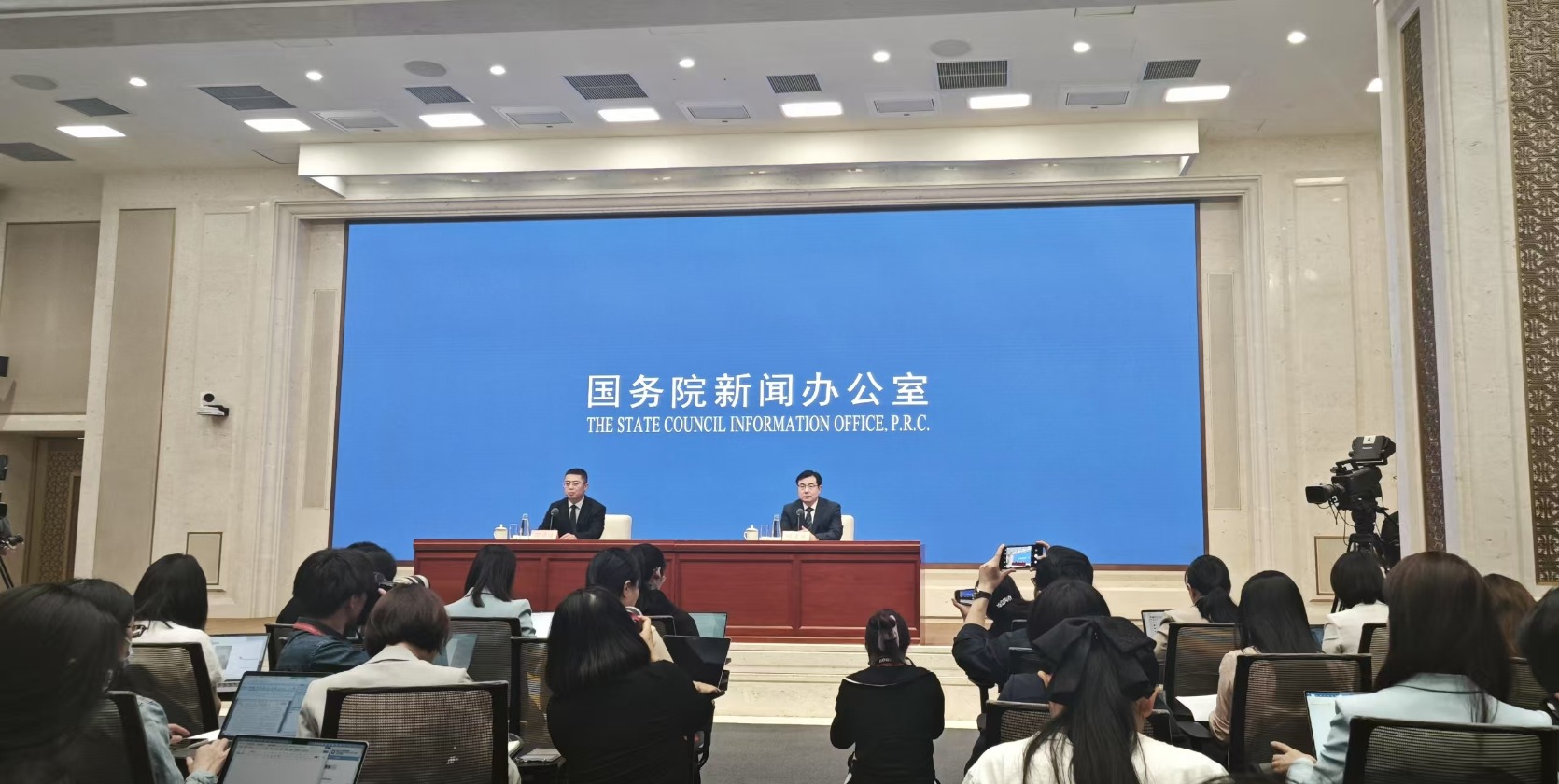
本报记者 倪 浩 国家统计局19日公布多项4月份经济数据,其中,全国规模以上工业增加值同比增长6.1%,全国服 务业生产指数同比增长6%,社会消费品零售总额37174亿元,同比增长5.1%。多项指标平稳甚至超出市场预期。 国家统计局认为,4月,中国宏观政策协同发力,各方面积极应变、主动作为,进一步增强了中国应对各种风险挑 战的信心和底气。 "中国成功避免经济放缓" 国家统计局19日发布的数据显示,作为经济增长压舱石的工业在4月份继续增长,规模 以上工业增加值同比增长6.1%,超出外界普遍预期。 香港《南华早报》认为,在经济数据全面反映美国关税影响 的4月,中国依然保持韧性,工业增加值同比增长6.1%,高于数据提供商万得(Wind)5.21%的调查预测值。这一 数据也同时超出了彭博社和路透社的预测值。彭博社19日报道称,尽管感受到关税的影响,但中国经济在4月保持 韧性。中国4月工业增长的强劲表现进一步证明了,在贸易冲突下,中国成功避免经济放缓。 国家统计局新闻发 言人付凌晖19日在国新办发布会上表示,生产供给较快增长、国内需求稳步扩大、外贸韧性得到彰显、就业形势 总体稳定、新质生产力成长壮大,是中国经济4月表现 ...
【新华解读】4月份主要经济指标走势彰显中国经济之“稳”
Xin Hua Cai Jing· 2025-05-19 23:17
Economic Performance - In April, China's industrial added value increased by 6.1% year-on-year, and retail sales of consumer goods rose by 5.1% year-on-year, indicating stable economic performance despite external pressures [1][3] - Fixed asset investment (excluding rural households) grew by 4.0% year-on-year from January to April, showing a slight decline of 0.2 percentage points compared to the first quarter, but remaining at a relatively high level [3][4] Employment and Prices - The urban unemployment rate in April was 5.1%, a decrease of 0.1 percentage points from the previous month, marking two consecutive months of decline [4] - The core Consumer Price Index (CPI) rose by 0.5% year-on-year in April, maintaining the same growth rate as in March [4] Policy Support - The stability in China's economy is attributed to effective counter-cyclical policies, including an increase in the fiscal deficit ratio and the issuance of special bonds to stimulate consumption and investment [5][6] - Retail sales in categories related to the consumption upgrade policy contributed 1.4 percentage points to the overall growth of retail sales in April [5] Industrial and Trade Resilience - China's industrial base is robust, with the manufacturing sector maintaining its position as the world's largest for 15 consecutive years, which supports economic stability amid external shocks [6][7] - From January to April, exports of electromechanical products increased by 9.5% year-on-year, reflecting the competitiveness of China's upgraded industrial products in international markets [7] Future Outlook - Experts suggest that while the economy shows resilience, the foundation for recovery needs to be solidified due to ongoing uncertainties in the international environment [8][9] - There is a consensus on the need for stronger government macroeconomic policies to stimulate domestic demand and investment, which are crucial for sustaining economic growth [9][10]
外贸多元化 货物进出口额同比增5.6%
Sou Hu Cai Jing· 2025-05-19 18:02
Economic Overview - In April, China's economy demonstrated resilience and stability despite external pressures, continuing a positive development trend [1][4] - The overall economic performance reflects strong domestic circulation and effective macro policies implemented by various regions and departments [1][4] Trade and Foreign Relations - China's goods import and export value in April reached 38,391 billion yuan, a year-on-year increase of 5.6%, with exports growing by 9.3% and imports by 0.8% [13] - From January to April, total goods import and export value increased by 2.4% year-on-year, with exports growing by 7.5% and imports declining by 4.2% [13] - Trade with ASEAN and "Belt and Road" countries showed significant growth, with imports and exports to ASEAN increasing by 9.2% and to "Belt and Road" countries by 3.9% [8] Industrial Growth - The industrial added value for large-scale enterprises in April grew by 6.1% year-on-year, with high-tech manufacturing increasing by 10% [17][10] - Equipment manufacturing saw a notable increase of 9.8%, contributing 55.9% to the overall industrial growth [2][17] Domestic Demand and Consumption - Social retail sales in April reached 37,174 billion yuan, growing by 5.1% year-on-year, driven by the effects of the "old for new" consumption policy [18] - The retail sales of household appliances and related products significantly boosted overall consumption, contributing 1.4 percentage points to the growth of social retail sales [11][18] Employment and Labor Market - The urban unemployment rate in April was 5.1%, a slight decrease from the previous month, indicating overall stability in the employment situation [16] - The average urban unemployment rate from January to April was 5.2%, consistent with the same period last year [16] Investment Trends - Fixed asset investment from January to April reached 147,024 billion yuan, with a year-on-year growth of 4.0%, while infrastructure investment grew by 5.8% [15] - High-tech industries, particularly in information services and aerospace manufacturing, saw substantial investment growth, with increases of 40.6% and 23.9% respectively [15][10] Price Trends - In April, the Consumer Price Index (CPI) decreased by 0.1% year-on-year, with food prices showing mixed trends [20] - The Producer Price Index (PPI) also saw a decline, with industrial producer prices down by 2.7% year-on-year [20]
政策协同发力,中国经济保持较强韧性
2 1 Shi Ji Jing Ji Bao Dao· 2025-05-19 16:39
Group 1 - In April, China's overall export growth slowed to 8.1%, with industrial export delivery value showing a nominal growth of 0.9%, down from 7.7% in March [1] - Manufacturing investment growth for January to April was 8.8%, a decrease of 0.3 percentage points from the first quarter, marking the lowest level of the year [1] - The real estate market showed signs of cooling, with some residents opting to wait, leading to declines in housing prices, sales, construction, and funding sources [1] Group 2 - The service sector demonstrated resilience against external shocks, with domestic travel during the Qingming Festival increasing by 6.3% in terms of visitor numbers and 6.7% in total spending [2] - The service production index in April grew by 6.0%, marking the second-highest monthly growth rate of the year [2] - Infrastructure investment from January to April increased by 5.8%, remaining steady compared to the first quarter, supported by easing local government debt issues and proactive fiscal policies [2] Group 3 - Despite external shocks, China's economic foundation remains stable, with strong resilience and potential, supported by coordinated macro policies [3] - A recent high-level economic meeting between China and the U.S. resulted in significant tariff reductions, with the U.S. canceling 91% of additional tariffs and China reciprocating [3] - Following the announcement, global risk aversion decreased, leading to a drop in gold prices and an increase in stock markets, with major institutions raising their growth forecasts for China's economy [3] Group 4 - Recent financial policies announced by regulatory authorities include a 0.5 percentage point reduction in reserve requirements and a 0.1 percentage point cut in policy interest rates [4] - The government emphasized strengthening domestic circulation to counter uncertainties in international circulation, aiming for enhanced economic resilience [4] - As these policies are implemented, the economic resilience of China is expected to further strengthen [4]
【招银研究|宏观点评】迎风挺立——中国经济数据点评(2025年4月)
招商银行研究· 2025-05-19 09:27
Core Viewpoint - The article discusses the stable growth of China's economy in April, highlighting the resilience of external demand and the transition of new and old growth drivers, despite challenges such as declining real estate investment and low inflation pressures [6][21]. Supply Side: Stable Growth, Slowing Momentum - In April, the industrial added value of large-scale enterprises increased by 6.1% year-on-year, exceeding the market expectation of 5.2%, but down 1.6 percentage points from March [7] - The service production index grew by 6.0% year-on-year, slightly down from March [7] - High-tech industries maintained robust growth, with production increasing by 10.0%, while equipment manufacturing grew by 9.8% [7] Fixed Asset Investment: Slowing Growth, Real Estate Drag - Fixed asset investment grew by 4% year-to-date, slightly down from the previous value [10] - Infrastructure investment increased by 10.9%, while real estate investment saw a decline of 10.3%, worsening by 0.5 percentage points from the previous value [10][11] - Manufacturing investment growth slowed to 8.2%, influenced by tariff impacts and reduced willingness to invest among enterprises [16] Consumption: High Levels with Notable Highlights - Retail sales growth in April was 5.1%, slightly below the market expectation of 5.5% [19] - Significant growth was observed in categories such as communication equipment and home appliances, with increases of 20-30% [19] - The consumption of gold and jewelry surged by 25.3%, driven by high gold prices [19] Outlook: Consolidating Foundations, Maintaining Stability - The article anticipates that tariff negotiations will yield positive outcomes, improving the economic environment and supporting the goal of achieving a 5% growth rate [21] - The article suggests that while external demand remains stable, inflation may continue to be low, and the real estate market may remain weak [21]
专访清华大学田轩:金融市场开放应注重制度建设与风险防范
Nan Fang Du Shi Bao· 2025-05-19 05:52
Group 1: Global Economic Trends - China is effectively countering external uncertainties through institutional openness and the implementation of the "dual circulation" development strategy, aiming to address the bottleneck of insufficient domestic demand and inject new momentum for high-quality economic development [1][3] Group 2: Sino-US Trade Relations and Foreign Investment - Despite challenges posed by the tariff war, China remains an attractive market due to its large market size, stable political environment, rich human capital, and improving institutional openness, which collectively create a strong magnet for foreign investment [3][4] - Chinese companies are encouraged to diversify their markets and reduce reliance on a single market by embracing technological innovation, cost reduction, and expanding their networks [3] Group 3: Outbound Investment - Outbound investment is viewed as a crucial strategy for Chinese companies to enhance their capabilities and achieve global expansion, supported by national policies that encourage enterprises to "go global" [4] Group 4: Bay Area Financial Cooperation - The Greater Bay Area should focus on cross-border financial cooperation, intellectual property protection, and industrial ecosystem development to attract foreign R&D centers, leveraging its geographical and resource advantages [5] Group 5: Domestic Circulation Challenges - Local protectionism and factor barriers are identified as major obstacles to the advancement of domestic circulation, necessitating a unified national approach to facilitate the free flow of key elements such as personnel, capital, and data [6] - The private economy plays a significant role in domestic circulation, contributing over 50% of tax revenue, 60% of GDP, and 70% of technological innovations, highlighting the need for supportive measures to address financing challenges and improve the business environment [6] Group 6: Importance of Technological Innovation - Technological innovation is deemed essential for addressing the issue of insufficient domestic demand, with recommendations to enhance consumer spending through increased income levels, improved income distribution, and more consumption scenarios [7] - A well-developed financial system is crucial for supporting technological innovation, with suggestions to further open capital markets to attract foreign institutional investors and reduce financing costs [7] Group 7: Financial Market Opening - The current environment presents a favorable opportunity for further financial market opening, but it should be approached cautiously to avoid the pitfalls experienced by South American countries due to excessive openness [8] - Emphasis is placed on the importance of institutional development and risk prevention in the process of financial market opening, ensuring orderly progress while enhancing transparency and regulatory oversight [8]