
本地化运营

Search documents
储能 “出海” 新机遇:中国企业的全球订单与本地化战略
Sou Hu Cai Jing· 2025-10-16 09:45
Core Insights - In the first half of 2025, Chinese energy storage companies accelerated their overseas expansion, securing over 160 GWh of new overseas orders, a year-on-year increase of 220.28%, covering more than 50 countries and regions [1][5] - The competitive edge of Chinese energy storage firms lies in their technology, cost control, and deep integration within the supply chain, which has enabled them to optimize costs and enhance product performance [3][4] - Despite rapid growth, challenges such as trade barriers and geopolitical risks pose significant tests to the resilience of Chinese companies in international markets [5][6] Summary by Sections Overseas Expansion - Chinese energy storage companies have secured over 160 GWh of new overseas orders in the first half of 2025, marking a 220.28% increase year-on-year, with the Middle East leading at 37.55 GWh, followed by Australia at 32.31 GWh and Europe at 22.81 GWh [1] Competitive Advantages - The global competitiveness of Chinese energy storage firms is attributed to three main advantages: technology, cost control, and supply chain integration [3] - Technological innovations include solutions like Trina Storage's "Konggang 2 Desert Solution," which reduces equipment failure rates by over 60%, and Huawei's string inverter technology, which boosts energy generation by 5% and maintenance efficiency by 50% [3] - Cost control is achieved through a complete supply chain, with companies like Sungrow reducing system prices to $80-90 per kWh, 22% lower than European competitors [3] Supply Chain Synergy - In the first half of 2025, Sungrow's energy storage system shipments exceeded 40 GWh, with a gross margin increase to 32%, demonstrating the competitive barrier of "full-chain delivery" [4] Challenges in Expansion - Trade barriers, such as a 40.9% comprehensive tax rate on Chinese energy storage products in the U.S., and EU carbon tariffs pose significant challenges [5] - Geopolitical risks and cultural differences also complicate operations, with issues like delayed payments in the Middle East and stringent service requirements in Europe [5] Strategic Adaptation - Leading companies are shifting from "product export" to "localized operations" to navigate these challenges, with local production becoming a key strategy [6] - Companies like Hicharge are establishing local factories in the U.S. and Hungary to meet market demands and benefit from local manufacturing policies [6] - There is a focus on localizing technology and services, with partnerships and long-term service agreements being established to enhance market presence [6] Future Outlook - The journey of Chinese energy storage companies has transitioned from "scale expansion" to "quality competition," with those excelling in technology, supply chain resilience, and cross-cultural operations poised to play a crucial role in global energy transformation [7]


新华网财经观察丨新茶饮的出海密码
Xin Hua Wang· 2025-10-16 03:31
Core Insights - The internationalization trend of Chinese new tea beverage brands is becoming increasingly prominent, with companies like Mixue Group and Bawang Chaji leading the way in overseas expansion [2][9]. Overseas Expansion: Seeking Growth and New Opportunities - New tea beverage brands are rapidly expanding globally, moving from Southeast Asia to regions like Europe, North America, and Oceania [3]. - Mixue Ice City opened its first store in Central Asia in Kazakhstan, achieving over 430,000 RMB in sales in the first month, and has expanded to 12 countries with over 4,700 overseas stores [5]. - Bawang Chaji opened its first U.S. store in Los Angeles, selling over 5,000 cups on the first day, and has expanded to 208 overseas stores by mid-year [7]. Market Potential and Growth Drivers - The Chinese new tea beverage market is projected to reach 354.72 billion RMB in 2024, with a year-on-year growth of 6.4%, indicating stable growth in the coming years [8]. - The overseas market presents new growth opportunities compared to domestic demand, which is a core driver for companies to "go global" [9]. Supply Chain as a Foundation for Success - A stable supply chain is crucial for tea beverage companies expanding overseas, with significant differences in standards between domestic and international markets [12]. - Mixue Group has established a comprehensive supply chain, including self-built factories and a global procurement network, to ensure product quality and freshness [14]. - Bawang Chaji has also focused on localizing its supply chain to meet the specific needs of different markets [15]. Localization Strategies for Market Penetration - Companies face challenges in adapting to different consumer preferences and regulatory environments in overseas markets [16]. - Successful brands conduct thorough market research to develop localized products, such as Mixue Ice City's chocolate ice cream lemon mint water tailored for Malaysian tastes [16]. - Bawang Chaji has implemented local partnership mechanisms and collaborated with local universities to integrate local innovation into product development [19]. Future Trends in Globalization - The expansion of tea beverage brands will be a long-term, phased process, with trends indicating a shift from quantity to quality in market management [22]. - There will be a growing emphasis on health and functionality in product offerings, with concepts like "low sugar" and "organic" gaining traction in international markets [23]. - Building a strong brand presence through content expression and community engagement will become increasingly important in overseas markets [24]. Digital Transformation and Market Opportunities - The integration of digital and intelligent solutions is reshaping the industry, with online ordering and supply chain traceability becoming standard practices [25]. - The global beverage market is expected to see significant growth in ready-to-drink products, particularly in regions like Southeast Asia and North America [26].


频频出手并购海外电商巨头,刘强东正在“远交近攻?”
Sou Hu Cai Jing· 2025-10-10 23:06
Core Insights - JD.com is actively pursuing international expansion, highlighted by its recent negotiations to acquire Argos, a subsidiary of UK retail giant Sainsbury's, which was seen as a significant move in the overseas market [2][4][21] - The acquisition of Argos, valued at approximately £7 billion (around 67.6 billion RMB), would mark the largest overseas acquisition by a Chinese e-commerce company and a strategic entry into the European retail market [4][21] - JD.com's international strategy is driven by stagnating growth in the domestic e-commerce market, where user growth has plateaued and competition has intensified [7][8][21] Company Developments - JD.com has been recognized as the only private enterprise in the top ten of China's 500 largest companies, with its founder Liu Qiangdong frequently in the spotlight for various public appearances [2] - The company has made significant investments in overseas assets, including logistics centers in Australia and Singapore, and has plans to acquire European consumer electronics leader Ceconomy for approximately €2.2 billion [10][21] - Liu Qiangdong has expressed a desire to focus on international business, indicating a shift in leadership responsibilities within the company [5][7] Market Context - The UK retail market is currently facing challenges, including ten consecutive months of weak demand and inflationary pressures, which may impact the feasibility of the acquisition [4][21] - JD.com aims to leverage Argos's established online and offline retail model, which aligns with its own operational strategies, to enhance its presence in the UK market [5][22] - The competitive landscape in Europe includes significant players like Amazon and emerging competitors such as Temu, necessitating a differentiated approach for JD.com to succeed [22][23] Financial Implications - If the acquisition is successful, JD.com could potentially achieve a gross merchandise volume (GMV) of over £5 billion in the European market by 2026, positioning itself as the third-largest e-commerce platform in Europe [23] - The acquisition may initially pressure JD.com's profit margins, as Argos has a low net profit margin of 1.2%, which could further impact JD.com's overall profitability [23] - JD.com has been experiencing a slowdown in revenue growth, with projections indicating that its growth rates will remain below 10% for the next few years, highlighting the urgency of its international expansion strategy [8][21]


餐饮出海不是“降维打击”
Hu Xiu· 2025-10-08 12:23
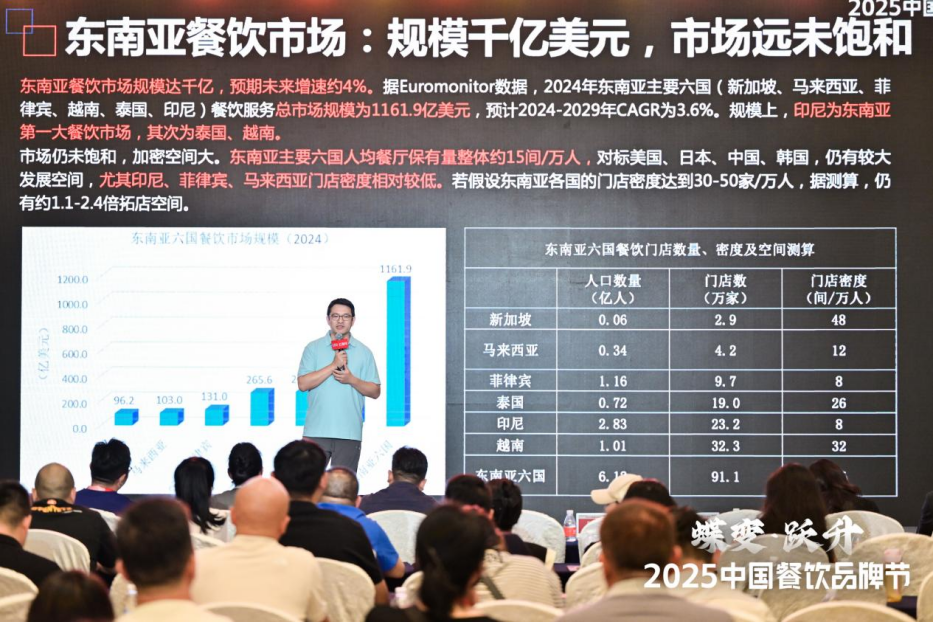
Group 1 - The core viewpoint of the article emphasizes that while there are significant opportunities for Chinese restaurants to expand overseas, particularly in Southeast Asia, they also face substantial challenges, including high trial and operational costs [1] - Southeast Asia has become a testing ground for Chinese restaurant companies, with Indonesia identified as the largest market, followed by Thailand and Vietnam [7][8] - The establishment of 12 industry branches in Indonesia has facilitated better communication and resource sharing among companies, marking a shift from isolated operations to more collaborative efforts [3][4] Group 2 - The Southeast Asian restaurant market is projected to reach a scale of approximately $116.19 billion by 2024, with a compound annual growth rate (CAGR) of 3.6% from 2024 to 2029 [8] - The market remains unsaturated, with an average of about 15 restaurants per 10,000 people across the six major Southeast Asian countries, indicating significant room for expansion [8] - The article highlights that the restaurant chain penetration rate in Southeast Asia is only 27.9%, which is lower than the global average of 35.2%, suggesting a gap in the market for chain development [21][22] Group 3 - The article warns that the "internet celebrity" business model is not sustainable in Southeast Asia, particularly in Singapore, where many restaurants fail due to a lack of long-term strategy [8][10] - It is crucial for companies to adapt to local cultures and consumer preferences, as the diverse market characteristics across different regions in Southeast Asia require tailored approaches [9][12] - Companies are advised to focus on local cuisine rather than solely catering to the Chinese diaspora in Indonesia, as the local population's preferences and purchasing power differ significantly [31][38] Group 4 - Indonesia's young population, with an average age of 29 and a high birth rate, presents a promising consumer market for the future [28] - The article notes that Indonesia's GDP is projected to reach $6.3 trillion by 2050, positioning it as the fourth-largest economy globally, which could enhance its market potential for restaurant businesses [30] - Companies are encouraged to build localized teams and understand the regulatory environment, as operational costs in Indonesia can be 1.5 to 1.8 times higher than in China [39][41]
单日下载4.7万,中国短剧“闯中东”淘金,土豪的钱有多好赚?
3 6 Ke· 2025-09-30 02:24
Core Insights - The short drama market is shifting towards emerging markets like the Middle East due to saturation in North America and intense competition in Southeast Asia, with local consumption habits and demographic advantages driving this trend [1][10] - DramaBite, launched by the leading social company Chizi City, is the first short drama platform in the Arab region, leveraging local experience and resources to explore this new market [1][4] Market Dynamics - The Middle Eastern youth exhibit a strong demand for entertainment content, but face challenges due to cultural and religious constraints, necessitating precise localization in content adaptation [1][4] - DramaBite has achieved approximately 3.46 million downloads in the past year, with peak daily downloads nearing 47,000 and total revenue exceeding $1.6 million, primarily driven by markets in Saudi Arabia, Israel, and the UAE [2][3] Content Strategy - DramaBite's content includes various genres such as urban romance, fantasy, and suspense, featuring both translated foreign dramas and local productions, enhancing cultural resonance with the audience [4][12] - The platform supports multiple languages, including Arabic and English, and adapts its layout for right-to-left reading to cater to local user preferences [5] Monetization and User Engagement - DramaBite employs a subscription model combined with in-app currency for content unlocking, with a subscription price of approximately 89.99 SAR (around 170 RMB) in Saudi Arabia, which aligns with local purchasing power [8] - The platform encourages user growth through a referral system, rewarding users with in-app currency for inviting friends, thus enhancing engagement and expanding the user base [8][10] Advertising and Market Penetration - Advertising has been a significant user acquisition strategy for DramaBite, with increased ad spending noted in November last year and July this year, targeting primarily males aged 25-34 [10][11] - The platform's advertising efforts extend to regions like the US, Malaysia, and Indonesia, with Indonesia showing a notable increase in downloads following targeted campaigns [11] Future Outlook - As local content continues to diversify and user acceptance of short dramas grows, there is potential for significant market penetration in high-value markets like Saudi Arabia and the UAE, indicating a promising future for DramaBite [12]

3万中国人涌入非洲:种菜、做电商,卖期房丨一线
吴晓波频道· 2025-09-20 00:29
Core Viewpoint - Africa is becoming increasingly significant to China's economy, with exports to Africa growing by 25.9% year-on-year, contrasting with a 13.5% decline in exports to the U.S. [3][4] Group 1: Economic Growth in Africa - East Africa is projected to have a real GDP growth rate of 5.3% in 2025 and 6.1% in 2026, leading other regions in Africa [6] - Ethiopia and Rwanda are expected to achieve GDP growth rates of around 7% in 2025, while Kenya, South Sudan, Uganda, and Tanzania are projected to exceed 5% [7] Group 2: Ethiopia's Economic Landscape - Ethiopia, known as the "Roof of Africa," has a population of approximately 120 million and a median age of 19, making it a labor-intensive market [13][19] - The country relies heavily on agriculture, which constitutes 60% of its GDP, leading to high consumer prices that are 3-10 times higher than in China [16] - Despite its rich labor resources, Ethiopia faces high unemployment and a weak industrial base, with most industrial goods imported [19][21] - The Ethiopian government has recently banned the import of fuel vehicles, promoting electric vehicles due to its abundant and cheap electricity [21] Group 3: Kenya's Economic Environment - Kenya, with a population of over 50 million, has a higher GDP per capita compared to Ethiopia and is expected to become East Africa's largest economy by 2025 [29] - The country has a more vibrant commercial atmosphere, with a significant presence of international organizations and a growing tourism sector [29][30] - The real estate market in Nairobi is thriving, with high rental yields and a growing number of Chinese expatriates [31][32] Group 4: Investment Opportunities and Challenges - Both Ethiopia and Kenya face challenges such as reliance on agriculture, weak industrial foundations, and political instability, which may hinder their ability to attract comprehensive supply chains [42][43] - However, Africa presents opportunities for Chinese companies, particularly in labor-intensive industries, as the local market is still developing [43] - The fragmented nature of the African market requires localized operations for successful business ventures [44][46] Group 5: Entrepreneurial Spirit in Africa - Many Chinese entrepreneurs are finding success in Africa by diversifying their business operations beyond their initial ventures [48] - The unique conditions in Africa foster a spirit of innovation and adaptability among entrepreneurs, leading to the establishment of local brands and services [32][39]


对话泰国首家独角兽创始人:从孤儿到30亿美元CEO的逆天改命
3 6 Ke· 2025-09-18 01:44
Group 1 - The core story revolves around the life and entrepreneurial journey of Li Fashun, the founder of Flash Express, highlighting his rise from a challenging childhood to becoming a successful entrepreneur in Thailand's logistics industry [1][2][3] - Flash Express was established in 2017 with the aim of revolutionizing the Thai logistics market by offering free pick-up services and operating 365 days a year, quickly capturing the market share [11][12] - Within four years, Flash Express achieved a valuation of $2.1 billion, delivering 700 million packages annually and employing 100,000 staff, making it Thailand's first unicorn [2][3] Group 2 - The company has expanded its business model beyond logistics to include marketing and financial services, collaborating with Chinese brands to facilitate their entry into the Thai market [3][18] - During the COVID-19 pandemic, Flash Express faced significant operational challenges, including high costs for safety measures and employee absences, leading to a temporary shutdown of a major distribution center [13][15] - After the pandemic, the company rebounded, achieving a revenue of 17 billion Thai Baht in 2021 and doubling its business volume, emphasizing the importance of corporate values and respect for employees [15][16] Group 3 - The company has adopted a unique organizational structure that maximizes cultural strengths, employing Thai nationals in local roles while utilizing Chinese expertise in technology and operations [16][17] - Flash Express has developed a comprehensive ecosystem that includes logistics, warehousing, and financial services across multiple Southeast Asian countries, positioning itself as a key player in the region [21][22] - The founder believes that the next decade will be crucial for Chinese brands expanding into Southeast Asia, aiming to incubate 100 successful brands in the region [18][19]
富邦科技:公司海外业务经营正常
Zheng Quan Ri Bao Wang· 2025-09-17 12:13
Core Viewpoint - Fubon Technology (300387) has confirmed that its overseas business operations are normal and that it has established a global supply chain resilience management mechanism to address potential risks [1] Group 1 - The company aims to enhance its risk resistance capabilities through diversified market strategies and localized operations [1] - Fubon Technology is focused on achieving balanced development between domestic and international businesses [1] - All information will be based on announcements published in legal information disclosure media [1]

AI赋能节省近亿元库存成本——从数智蜕变看四川长虹如何突围
Xin Hua Cai Jing· 2025-09-15 07:31
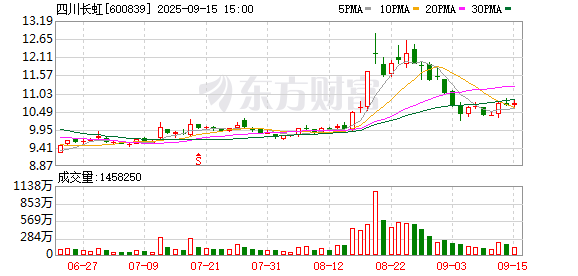
Core Insights - Sichuan Changhong Electric Co., Ltd. is experiencing significant growth, with projected revenue exceeding 100 billion yuan in 2024 and a 10.28% year-on-year increase in revenue for the first half of 2025, alongside a net profit of 5.01 billion yuan, marking a 78.60% increase compared to the previous year [2][4] AI Integration and Manufacturing Upgrades - The company has established an AI application innovation center, integrating AI across the entire production and product development chain, enhancing operational efficiency and product capabilities [3][4] - The "Changhong Yunfan AI Model Platform" has been recognized as the first approved AI model platform in Sichuan, serving as the core technology for the company's AI transformation [3] - AI technology has improved product functionality, with the smart home business generating 25.124 billion yuan in revenue, a growth of over 12%, and the air conditioning segment achieving 11.603 billion yuan, a 35.49% increase [4][6] Smart Manufacturing Achievements - The smart display factory has been recognized as an "Excellent Intelligent Factory" by the Ministry of Industry and Information Technology, utilizing advanced technologies such as industrial robots and 5G [5][6] - The factory can handle 6 million personalized orders annually, with a 145% increase in inventory turnover rate and a cost savings of nearly 100 million yuan compared to the previous year [6] Global Expansion Strategy - Changhong has established a global presence with 17 R&D centers and 22 manufacturing bases, covering over 160 countries and regions [7][8] - The company emphasizes localization in its global strategy, adapting products to meet regional market demands, such as energy-efficient air conditioning units in Southeast Asia [8] - Changhong is leveraging sports partnerships and cultural elements, such as the panda-themed appliances, to enhance brand recognition and consumer engagement [7][8] Future Outlook and Challenges - The company aims to enhance its smart manufacturing capabilities, targeting 80% coverage of advanced intelligent factories, while addressing challenges such as data privacy, cost barriers, and user experience [9][10] - Future initiatives will focus on leveraging industrial internet platforms to empower smart enterprises and improve operational efficiencies [10]

亚马逊《水手星计划》上线:解码中国品牌出海新叙事丨最前线
3 6 Ke· 2025-09-15 02:59
Core Insights - The article discusses the launch of the upgraded "Sailor Star Program" by Amazon Advertising and Amazon Global Store, marking the fifth anniversary of the original "Sailor Program" [1] - The new season focuses on seven themes, including market expansion in Europe, niche market breakthroughs, and global brand building, reflecting the transition of Chinese companies from manufacturing to intelligent and creative production [1] Group 1: Brand Innovation and Strategy - HOVERAir emphasizes differentiation through innovation, creating a "water sports camera" based on user insights and adapting to local regulations in Japan with a lightweight product [1][2] - JisuLife's strategic shift from a multi-category approach to specializing in portable fans has led to significant improvements in product performance, enhancing battery life to two days and changing market perceptions [2] - Emotional resonance is becoming a key competitive advantage for brands, as seen with Heybike's shift from traditional advertising to emotional storytelling and community engagement [3] Group 2: Localization and Market Adaptation - Localized operations are critical for success in international markets, with HOVERAir and JisuLife implementing strategies to overcome cultural barriers through local teams and tailored marketing [3] - The concept of "Glocalization" is emerging as a new paradigm for Chinese brands going global, combining supply chain advantages with localized operational capabilities [3] Group 3: Role of AI in E-commerce - Approximately 45% of cross-border e-commerce companies are utilizing generative AI for product innovation, with 86% of small to medium-sized brands viewing AI as a key driver for marketing success [4] - AI tools are helping companies save time and optimize processes, allowing for a greater focus on market research and product innovation [5]
