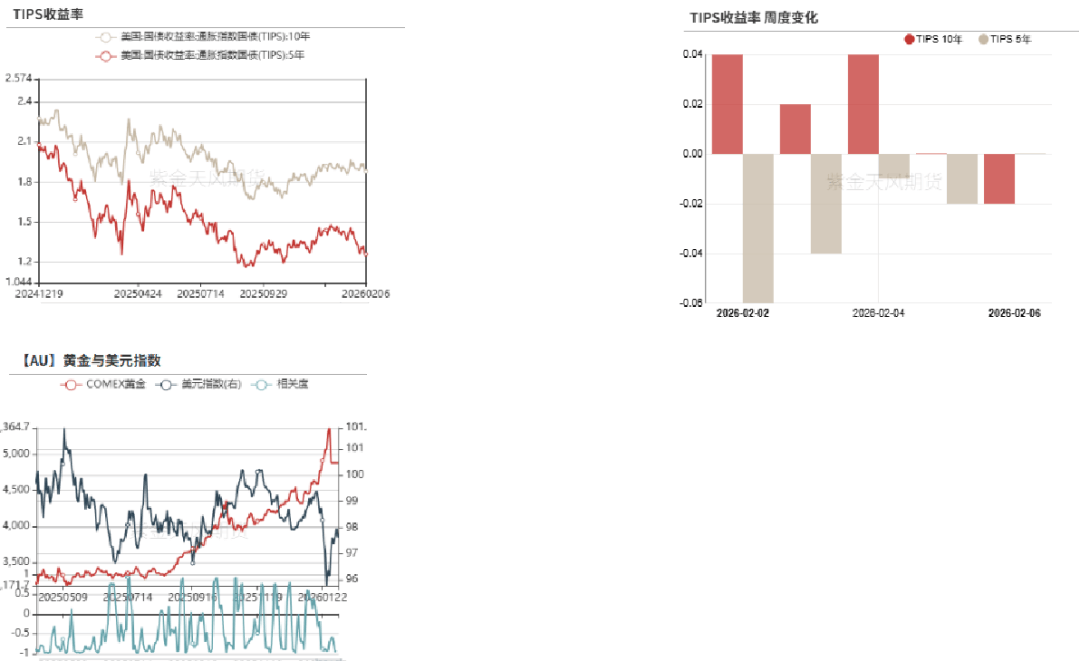
通胀预期

Search documents
21:30,礼貌下跌,真正的赌局在明天
Sou Hu Cai Jing· 2026-02-11 23:47
Group 1 - The core point of the articles is that the market's focus has shifted from employment data to inflation, particularly the upcoming CPI report, which is expected to show a moderate decline [1][2][4] - The strong non-farm payroll data released in January exceeded market expectations, leading to a decrease in the probability of a Fed rate cut in June, with July now seen as the most likely month for the first cut [1][4] - Despite the positive employment data, the market reaction was muted, with only slight movements in stocks and currencies, indicating a departure from traditional market behavior [1][3] Group 2 - Gold's performance suggests that the market's main logic is no longer centered on the Fed, but rather on inflation expectations, as gold prices remained stable despite the strong employment report [2][4] - The market is now in a phase where employment stability is prioritized, and the focus has shifted to monitoring CPI data, which is set to be released soon [2][4] - The market has already adjusted to the idea of delayed rate cuts, with light positioning observed among traders, indicating that the previous logic of "delayed rate cuts" has been reaffirmed rather than changed [3][4]
KG: Brace for Market Fade After Nonfarm Payrolls, Crude's Path to $75
Youtube· 2026-02-11 16:00
Employment Data - The jobs report showed non-farm payrolls at 130,000, significantly higher than the expected 66,000, indicating stronger job growth than anticipated [3][4] - The unemployment rate decreased to 4.3%, better than the expected 4.4%, suggesting a positive trend in the labor market [4][13] - January is typically a volatile month for job reports, and the current data reflects this volatility [3] Methodology and Adjustments - There have been significant adjustments to the birth-death model, which accounts for new businesses and jobs created versus those that are eliminated [5][6] - The updated model indicates a negative print, suggesting more businesses are closing than opening, which may mask underlying weaknesses in certain sectors outside of healthcare [6] Market Reactions - Initial market reactions included a rise in yields and a potential backing away from rate cut expectations, with the market pricing in a 25 basis point cut around July [7][12] - The 10-year Treasury yield has seen fluctuations, moving down after hitting a resistance level of 4.3%, indicating market concerns about job growth and inflation [11][12] Sector Performance - The healthcare sector continues to show strength amidst the overall job market data, contrasting with weaknesses in other sectors [6][13] - Oil prices are influenced by geopolitical risks and expectations regarding OPEC's production levels, with potential bullish movements anticipated in the coming months [16][19]


全球流动性潮汐研究二:美债利率:挑战5%
GUOTAI HAITONG SECURITIES· 2026-02-11 14:17
Group 1: Economic Overview - The U.S. real estate market is viewed as a "watchtower" for the K-shaped economy, where high-income groups support GDP resilience while traditional industries and low-income groups contract[8] - The housing affordability index is currently at a historical low but remains above 100, indicating that median-income households can still afford to purchase homes[12] - The K-shaped economic divergence raises questions about whether it will lead to recession or re-inflation driven by wealthier groups supporting the economy[8] Group 2: Housing Affordability - 60% of the decline in housing affordability can be attributed to high home prices, while 40% is due to elevated interest rates[16] - A significant improvement in housing affordability is expected if mortgage rates drop below 5.6% (currently at 6.1%) or if the price-to-income ratio falls to 3.5 (currently at 3.8)[16] - Median household income growth is projected to remain robust at 4-5% in 2025, outpacing the 1-2% growth in median home prices, which supports a favorable outlook for affordability[17] Group 3: Supply and Demand Dynamics - The U.S. housing market has faced long-term supply shortages since the subprime crisis, with challenges including difficult land acquisition, labor shortages, and regulatory constraints[27] - Existing home supply is constrained due to high interest rates, and the sensitivity of new home prices to supply has decreased over the past decade[27] - The overall housing supply gap is expected to widen, making it difficult to quickly rectify the supply-demand mismatch even if construction capacity improves[27] Group 4: Inflation and Interest Rates - Housing inflation typically leads CPI by about 18 months, but in the current K-shaped economy, inflation expectations are coupled with interest rate cuts rather than tightening, resulting in a weaker dollar[38] - The long-term U.S. Treasury yield is projected to potentially exceed 4.5% and may challenge 5% due to the self-reinforcing cycle of inflation expectations[38] - The market has begun to accept a loss of independence for the Federal Reserve, reflected in the long-end Treasury yields anchoring inflation expectations at 2.4%[38]
金融期权:股指震荡整理为主
Bao Cheng Qi Huo· 2026-02-11 12:11
1. Report Industry Investment Rating - No information provided in the content 2. Core Viewpoints of the Report - Today, all stock indices fluctuated within a narrow range. The total trading volume of the Shanghai, Shenzhen, and Beijing stock markets was 2001.0 billion - 2037.0 billion yuan. Due to the approaching holiday, investors' trading willingness was relatively weak. The inflation data for January showed that CPI continued to grow year - on - year, and the year - on - year decline of PPI narrowed. The repair of inflation expectations promoted the repair of corporate profit expectations, and the macro expectations improved. In the long - term, the positive policy expectations and the continuous net inflow of incremental funds into the stock market remained unchanged, and the core logic for the long - term upward movement of stock indices was relatively solid. Overall, the risk appetite of the stock market was cautious before the holiday, and stock indices mainly fluctuated within a range. For options, the implied volatility of at - the - money options has rebounded recently. Given the relatively solid long - term upward logic of stock indices, the bull spread strategy is maintained [4]. 3. Summary of Each Section 3.1 Option Indicators - **Index Performance**: On February 11, 2026, the 50ETF remained unchanged at 3.105, the SSE 300ETF fell 0.21% to 4.920, the CSI 300 Index fell 0.22% to 4713.82, the CSI 1000 Index fell 0.13% to 8239.51, the SSE 500ETF rose 0.41% to 8.411, the SZSE 500ETF rose 0.24% to 3.338, the ChiNext ETF fell 1.15% to 3.273, the Shenzhen 100ETF fell 0.97% to 3.462, the SSE 50 Index rose 0.03% to 3088.46, the STAR 50ETF fell 1.10% to 1.53, and the E Fund STAR 50ETF fell 0.93% to 1.49 [6]. - **Volume and Open Interest PCR**: The volume and open interest PCR of various options showed different changes compared with the previous trading day. For example, the volume PCR of SSE 50ETF options was 114.09 (previous day: 100.99), and the open interest PCR was 78.18 (previous day: 79.57) [7]. - **Implied Volatility and Historical Volatility**: The implied volatility of at - the - money options and the 30 - day historical volatility of the underlying assets of various options were provided. For instance, the implied volatility of at - the - money SSE 50ETF options in February 2026 was 11.14%, and the 30 - day historical volatility of the underlying asset was 15.06% [8]. 3.2 Related Charts - **SSE 50ETF Options**: Included charts of the SSE 50ETF trend, option volatility, volume PCR, open interest PCR, implied volatility curve, and implied volatility of at - the - money options for different tenors [10][11][12]. - **SSE 300ETF Options**: Included charts of the SSE 300ETF trend, option volatility, volume PCR, open interest PCR, implied volatility curve, and implied volatility of at - the - money options for different tenors [21][22]. - **SZSE 300ETF Options**: Included charts of the SZSE 300ETF trend, option volatility, volume PCR, open interest PCR, implied volatility curve, and implied volatility of at - the - money options for different tenors [24][25]. - **CSI 300 Index Options**: Included charts of the CSI 300 index trend, option volatility, volume PCR, open interest PCR, implied volatility curve, and implied volatility of at - the - money options for different tenors [37][38]. - **CSI 1000 Index Options**: Included charts of the CSI 1000 index trend, option volatility, volume PCR, open interest PCR, implied volatility curve, and implied volatility of at - the - money options for different tenors [43][44]. - **SSE 500ETF Options**: Included charts of the SSE 500ETF trend, option volatility, volume PCR, open interest PCR, implied volatility curve, and implied volatility of at - the - money options for different tenors [58][59]. - **SZSE 500ETF Options**: Included charts of the SZSE 500ETF trend, option volatility, volume PCR, open interest PCR, implied volatility curve, and implied volatility of at - the - money options for different tenors [71][72]. - **ChiNext ETF Options**: Included charts of the ChiNext ETF trend, option volatility, volume PCR, open interest PCR, implied volatility curve, and implied volatility of at - the - money options for different tenors [83][84]. - **Shenzhen 100ETF Options**: Included charts of the Shenzhen 100ETF trend, option volatility, volume PCR, open interest PCR, implied volatility curve, and implied volatility of at - the - money options for different tenors [93][94]. - **SSE 50 Index Options**: Included charts of the SSE 50 index trend, option volatility, volume PCR, open interest PCR, implied volatility curve, and implied volatility of at - the - money options for different tenors [106][107]. - **STAR 50ETF Options**: Included charts of the STAR 50ETF trend, option volatility, volume PCR, open interest PCR, implied volatility curve, and implied volatility of at - the - money options for different tenors [119][120]. - **E Fund STAR 50ETF Options**: Included charts of the E Fund STAR 50ETF trend, option volatility, volume PCR, open interest PCR, implied volatility curve, and implied volatility of at - the - money options for different tenors [127][128].
现货黄金站上5100美元,白银急涨6%,美国即将公布重要数据
21世纪经济报道· 2026-02-11 11:11
Market Overview - Gold and silver prices experienced a sudden surge, with spot gold reaching $5,100 per ounce, marking a 1.54% increase, and spot silver rising by 6% to $85.57 per ounce [1] - The market is closely watching the upcoming U.S. non-farm payroll data, which was delayed due to a government shutdown [2] Economic Data Impact - The delayed non-farm payroll report is expected to influence Federal Reserve interest rate policies, with a weak report potentially leading to a weaker dollar and higher gold prices, while a strong report could strengthen the dollar and pressure gold prices [2] - Current market expectations suggest a median increase of 70,000 jobs for January, slightly above December's 50,000, although some economists predict lower actual numbers [2] Consumer Confidence and Inflation - The preliminary consumer confidence index for February stands at 57.3, showing a slight increase but remaining at historical lows, while inflation expectations for the next year have dropped to 3.5% [3] - The Federal Reserve may have significant policy space, with potential for a prolonged easing cycle, which could support gold prices [3] Banking Sector Update - China’s Bank announced changes to its gold accumulation product, increasing the minimum purchase amount from 950 yuan to 1,200 yuan, effective February 12, 2026 [3]

Vatee万腾平台:印度卢比走强受国内流动性及美元疲软支撑
Sou Hu Cai Jing· 2026-02-11 07:10
Group 1 - The Indian Rupee is supported in the range of 90.70 to 90.80, which is seen as significant following the recent US-India trade agreement [1] - Strong domestic liquidity in India is boosting investor sentiment, with the Reserve Bank of India injecting liquidity and maintaining a surplus of approximately 3 trillion Indian Rupees [1] - The US Dollar index has been declining for four consecutive trading days, trading around 96.70, ahead of the upcoming US employment report [1] Group 2 - Market expectations indicate that the Federal Reserve will maintain current interest rates in March, with the first potential rate cut in June [2] - The US inflation expectations have eased, with the median future inflation expectation dropping to 3.1%, the lowest in six months [2] - A temporary trade framework has been established between the US and India, aimed at reducing tariffs and enhancing bilateral economic cooperation, contributing to a significant appreciation of the Indian Rupee [2] Group 3 - The USD/INR pair has retraced from the nine-day moving average, trading around 90.70, with a neutral to bearish momentum indicated by the RSI [4] - Initial support for the currency pair is near the 50-day exponential moving average at 90.50, with potential for further decline if this level is breached [4] - Resistance is noted at the nine-day moving average around 90.83, with potential upward movement targeting the historical high of 92.51 reached on January 28 [4]

关键词 先后有别
Qi Huo Ri Bao Wang· 2026-02-11 01:36
Core Insights - The article discusses the cyclical nature of commodity price movements in relation to the global macroeconomic cycle, highlighting the distinct phases of "recovery, prosperity, stagflation, and recession" and their corresponding impacts on different commodity sectors [1] Group 1: Economic Phases and Commodity Performance - During the recovery phase, black and non-ferrous metals typically lead price increases driven by improved demand, while agricultural products like grains remain stable [1] - In the prosperity phase, energy and industrial metals lead the price surge, with agricultural products rising due to inflation transmission and increased planting costs [1] - The stagflation phase sees a divergence in commodity performance, with inflation-resistant assets like gold and oil outperforming, while industrial demand weakens [1] - In the recession phase, overall commodity prices decline, with industrial products falling the most, while safe-haven assets like gold and essential agricultural products experience smaller declines [1] Group 2: Sensitivity to Economic Signals - Commodities sensitive to interest rates, such as precious metals and industrial metals like copper, face increased holding costs during rising interest rates, leading to quicker adjustments [2] - Agricultural products and energy, with more rigid demand, are less affected by short-term interest rate fluctuations compared to supply and demand fundamentals [2] Group 3: Internal Mechanisms of Industrial Products - The price dynamics of black metals like steel and coal are closely tied to infrastructure investment and real estate cycles, with a clear transmission path from policy stimulus to steel demand and coal prices [2] - Non-ferrous metals like copper and aluminum are driven by global manufacturing PMI and renewable energy demand, with price movements linked to economic recovery expectations and inventory depletion [2] - Chemical products are strongly correlated with oil prices, with price transmission influenced by oil costs and adjustments in production rates [2] Group 4: Global Supply Chain and Commodity Rotation - The global division of labor has significantly reshaped the paths of commodity rotation, with China as a key demand driver for industrial products, influencing the rotation of black metals and certain chemicals [4] - The development of the renewable energy sector has altered the demand structure for non-ferrous metals like lithium and copper [4] - Supply constraints from resource-producing countries directly impact commodity prices, with geopolitical risks and trade policies exacerbating regional supply-demand mismatches [4]
西太平洋银行:新西兰联储下周议息料按兵不动
Sou Hu Cai Jing· 2026-02-11 00:55
新西兰西 太平洋首席经济学家Kelly Eckhold表示,新西兰联储在下周的政策会议上可能会维持利率不 变,但会承认经济前景正在改善。官方现金利率预计将维持在2.25%,新西兰联储可能会将预期的首次 加息时间提前至12月。Eckhold补充称,至关重要的是,由于持续的产能过剩、金融环境收紧以及食品 和燃料价格通胀下降,新西兰联储的通胀预期将趋向2%,从而削弱了央行迅速恢复加息的必要性。 ...

南非储备银行维持基准利率不变
Shang Wu Bu Wang Zhan· 2026-02-10 16:01
(原标题:南非储备银行维持基准利率不变) 《南非每日商报》1月29日报道称,南非储备银行29日宣布,将基准政策利率维持在6.75%不变。 南非储备银行行长康亚戈(Lesetja Kganyago)表示,当前国内风险上升,全球政治秩序出现不确定 性,同时央行独立性也面临新的挑战。他指出,需重点关注电价上涨以及食品通胀风险,尤其是受口蹄 疫影响的肉类价格。该决定是在货币政策委员会(MPC)2026年首次会议后作出的。 储备银行下调了2026年通胀预期,由3.5%降至3.3%,主要得益于兰特走强和油价假设下调。数据 显示,2025年平均通胀率为3.2%,为2004年以来最低,处于3%通胀目标区间内。储备银行预计通胀已 于去年12月见顶,未来将逐步回落。 储备银行同时指出,若兰特进一步走强、油价下行,通胀可能短暂降至2.3%,为年内提前降息创 造条件;反之,若外部环境恶化,利率可能在短期内维持不变。市场人士认为,储备银行正采取审慎立 场,以巩固新的3%通胀目标。 ...
贵金属:喧嚣后的中场休息: 黄金步入节前“冷静期”
Sou Hu Cai Jing· 2026-02-10 10:51
Group 1 - The core viewpoint of the articles indicates a shift in market expectations towards potential interest rate cuts by the Federal Reserve, driven by weak labor market data and changes in monetary policy outlook [1][3] - The labor market data showed a significant drop in job openings, with December's JOLTS vacancies falling to 6.54 million from 6.93 million in November, marking the lowest level since 2020 [1] - The yield curve has steepened following the nomination of a new Federal Reserve chair, with expectations of a dovish monetary policy stance influencing short-term rates while long-term rates are affected by liquidity concerns [3] Group 2 - Gold prices increased by 1.6% over the week, recovering from previous declines, but the market is expected to take time to rebuild confidence and structure [2] - The upcoming Federal Reserve chair's proposal to shorten the average maturity of the Fed's balance sheet may delay the issuance of long-term bonds, providing limited support for gold prices [2] - Chinese demand for precious metals is a key driver, but may weaken temporarily due to the upcoming Lunar New Year, potentially reducing volatility in the global precious metals market [2] Group 3 - The U.S. Treasury yields across various maturities declined, with the 30-year UST down 2 basis points to 4.85%, and the 10-year UST down 3 basis points to 4.2% [3] - The usage of overnight reverse repurchase agreements (ONRRP) fell to $3.11 billion, a decrease of $7.31 billion from the previous week [3] - The net short positions in 2-year and 10-year UST futures increased, indicating a bearish sentiment among non-commercial investors [3] Group 4 - The U.S. dollar index rose by 0.5% to 97.6, moving in tandem with gold prices, which suggests an increasing correlation between the two [7] - The total holdings of the dollar index decreased, with non-commercial long positions down by 1,335 contracts to 17,000 contracts, while short positions decreased by 4,888 contracts to 17,000 contracts [10] - Offshore dollar liquidity costs have risen, as indicated by the decline in the 3-month Basis Swaps for both the yen and euro [13] Group 5 - The copper-to-gold ratio fell to 2.63, indicating a marginal decline in global demand momentum as copper prices dropped while gold prices rose [16] - The gold-silver ratio increased due to the rise in gold prices and the decline in silver prices, reflecting market dynamics [19] - Gold premiums increased after a price correction, indicating strong domestic buying support [28] Group 6 - COMEX gold inventory decreased by 331,000 ounces to 35.294 million ounces, while silver inventory fell by 1.523 million ounces to 39.0466 million ounces [34] - SPDR gold ETF holdings decreased by 7.44 tons to 1,079.7 tons, remaining near the lower median of the past decade [39] - COMEX gold total positions fell by 78,769 contracts to 489,000 contracts, with a notable increase in short positions, indicating a growing bearish sentiment [39]