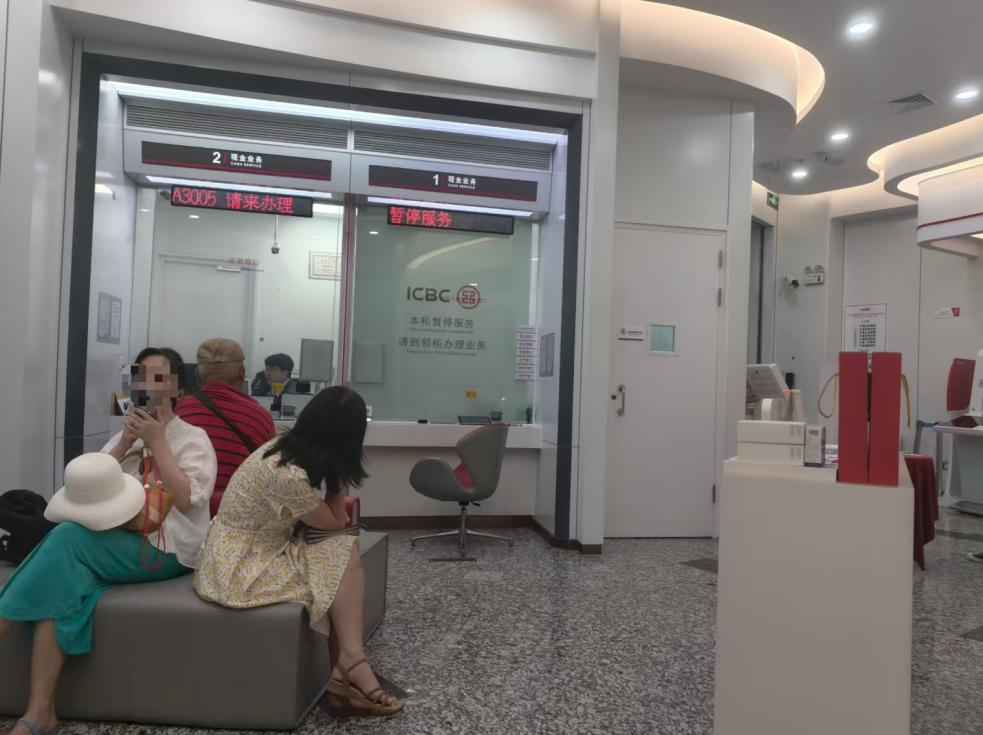
牛市

Search documents
影响牛市最关键的一个信号,来了
Sou Hu Cai Jing· 2025-08-23 00:16
Group 1 - The A-share market has recently shown a strong upward trend, with the Shanghai Composite Index rising by 1.35%, the Shenzhen Composite Index by 2.07%, and the ChiNext Index by 3.36% [3][4] - The current bull market is characterized by a significant psychological and emotional battle, with the sustainability of the bull market relying on macroeconomic fundamentals and policies [4][5] - A key factor influencing the bull market is the potential interest rate decisions by the Federal Reserve, which could significantly impact market volatility [6][7] Group 2 - The liquidity in the market is exceptionally high, contributing to the current bull market, as evidenced by a significant decrease in risk-free interest-bearing products [8][10] - In July, there was a notable decrease in household deposits by 1.11 trillion, while non-bank deposits increased by 2.14 trillion, indicating a shift in where residents are placing their funds [9] - The decline in yields on risk-free products has driven residents to invest more in the stock market, as the availability of products yielding over 2% has diminished [10][11] Group 3 - The government has high expectations for the A-share market, aiming to strengthen it as a key vehicle for resident wealth, with public funds expected to increase their holdings in A-shares significantly over the next few years [11][12] - The market is supported by three layers of investment: state-owned entities acting as stabilizers, public funds and insurance capital entering the market, and a substantial amount of excess household savings seeking higher returns [12][13] - The goal is to achieve a slow and steady bull market, akin to the U.S. market, rather than a volatile one that could lead to a rapid decline [14][15] Group 4 - For the bull market to be sustainable, it requires supportive economic policies and a favorable macroeconomic environment, including potential monetary policy adjustments [16][17] - The ongoing "anti-involution" policies and the need for further monetary stimulus are crucial for improving the economic fundamentals that support the bull market [17] - The relationship between U.S. monetary policy and the Chinese market is critical, as any changes in the Fed's interest rate strategy could influence global market dynamics and the trajectory of the Chinese bull market [18][19]


利好!延长交易时间?8月23日,今日有哪些动向值得关注?
Sou Hu Cai Jing· 2025-08-22 23:08
Group 1 - The proposal for extending trading hours in Hong Kong aims to implement 24-hour trading, which would attract more international capital and benefit the Hong Kong stock market and financing market [1] - The Hong Kong stock market has seen a significant increase, with the index breaking through 3800 points and maintaining a trading volume above 2.5 trillion, indicating a strong upward trend [1] - Retail investors are feeling anxious as the index reaches new highs while they are still recovering losses, highlighting the urgency to capitalize on the current bullish market [1] Group 2 - A-shares have reached a historic milestone, with the market capitalization surpassing 100 trillion yuan, and major indices, including the Shanghai Composite Index, hitting ten-year highs [3] - The ChiNext and Sci-Tech 50 indices have also seen substantial gains, with the Sci-Tech 50 index experiencing a single-day surge of over 8% [3] - Leading technology stocks, such as Cambrian and ZTE, have significantly contributed to this bullish sentiment, with Cambrian's market value exceeding 520 billion yuan [3] Group 3 - The potential for Cambrian's stock price to surpass that of Moutai raises questions about market leadership during bull markets, as historical trends show that each bull market is often led by a core stock [5] - The current market dynamics suggest that Cambrian could become a leading indicator similar to past leaders like Moutai and Ningde Times [5] Group 4 - The Shanghai Composite Index rose by 1.45%, the Shenzhen Component Index by 2.07%, and the ChiNext Index by 3.36%, marking a significant milestone as the Shanghai Composite Index surpassed 3800 points [7] - The technology sector, particularly in chips and AI, has been a major driver of this growth, with numerous stocks within the industry hitting their daily price limits [7] - The trading volume has increased to 2.55 trillion, indicating a healthy market environment with a potential for continued upward momentum [7]

江苏多家上市公司股价创新高
Xin Hua Ri Bao· 2025-08-22 20:22
个股股价不断攀新高,江苏上市公司也不例外。8月22日,来自南京的茂莱光学股价创出上市以来新 高,达到438元/股;来自苏州的罗博特科(300757)股价攀至225.30元/股,纳芯微涨至190.49元/股。连 日来,苏州天脉(301626)股价盘中一度冲向180元/股,思浦瑞股价也突破150元/股。 8月22日,A股市场主要表现为,以半导体、电子化学品、AI芯片、通信设备等科技类板块领涨。江苏 板块领涨个股也是主要集中在电子、半导体、新能源等高成长性行业。 业内人士预测,当前A股市场或正处于牛市中段,上涨空间依然充足。本轮行情中,细分领域领涨的特 点已显现,市场普遍认为在估值、资金、产业等多重因素支撑下,江苏部分上市公司的表现值得继续期 待。 本报讯(记者胡春春)8月22日,上证指数一路"高歌猛进"一举拿下3800点,创十年新高,进一步"坐实"对 A股新一轮牛市预期。当天,全市场超2800只个股上涨,江苏多家上市公司股价创历史新高。 截至收盘,上证指数当日涨幅达1.45%,深证成指涨幅2.07%,创业板指涨幅3.36%,科创50指数涨幅 8.59%。这也是A股连续第8个交易日突破2万亿元,市场活跃度继续展现强 ...
A股3800点野地调研:金融机构的「冰与火之歌」
Hua Er Jie Jian Wen· 2025-08-22 15:11
Market Performance - The A-share market has reached multiple records, with the Shanghai Composite Index surpassing 3800 points for the first time since August 2015, and a total trading volume of 2.58 trillion yuan, marking the eighth consecutive day above 2 trillion yuan [2] - As of August 13, the Shanghai Composite Index closed at 3683.46 points, a new high since December 2021, with trading volume peaking at 2.28 trillion yuan [9][13] Investor Sentiment - The recovery of the market has reignited investor enthusiasm, with 14.56 million new accounts opened in the first seven months of the year, a year-on-year increase of 36.88% [3] - There is a noticeable increase in the number of new accounts and trading volume, indicating a shift of personal savings into the stock market [4][6] Brokerage Activity - Brokerages are experiencing a surge in activity, with many reporting significant increases in new account openings and trading volumes [6][9] - Some brokerages have lowered commission rates to attract new clients, with rates dropping to below 0.1% for new accounts [10] Financial Institutions' Performance - There is a divergence in performance among financial institutions, with brokerage firms thriving while banks and insurance outlets are seeing reduced activity [5][17] - Banks are experiencing a decline in client interest in stock market investments, with many clients still preferring low-risk products [18][19] Insurance Sector Impact - The insurance sector is facing challenges as clients shift their budgets from insurance products to stock investments, particularly in light of declining interest rates for insurance products [22][24] - Insurance agents report difficulties in maintaining sales momentum due to the attractiveness of stock market returns compared to insurance products [27][28]
最近在恐惧中度过
Sou Hu Cai Jing· 2025-08-22 15:07
Core Viewpoint - The current stock market rally is primarily driven by government fiscal expansion rather than improvements in the fundamental economy, leading to concerns about sustainability and potential adjustments in the near future [1][2][4]. Group 1: Market Dynamics - The stock market's rise this year is attributed to significant government intervention, with an estimated 3.5 trillion yuan injected into A-shares and Hong Kong stocks through various channels [2]. - Institutional confidence has increased following government investments, prompting further buying activity, while retail investors are still hesitant to enter the market [2][5]. - The current market sentiment is cautious, with many retail investors recalling past experiences of buying at market peaks and facing losses [4][5]. Group 2: Economic Indicators - Despite the stock market's performance, key economic indicators such as GDP growth and employment have not shown significant improvement compared to last year, leading to skepticism about the market's upward trajectory [1][4]. - The government has increased the fiscal deficit rate from 3% to 4%, with net financing of government bonds reaching 8.9 trillion yuan in the first seven months, indicating a need for careful fiscal management moving forward [8]. Group 3: Future Outlook - The sustainability of the stock market rally is contingent on continued government support and retail investor participation; without these, a market correction may be imminent [6][8]. - The government's focus on investing in projects with future returns suggests a cautious approach to fiscal spending, which could impact market dynamics if not aligned with corporate profitability [7][8].
权重领涨,再上新台阶
Huaan Securities· 2025-08-22 14:40
Market Overview - The market experienced a significant surge on August 22, with the Shanghai Composite Index rising by 1.45%, reaching a new high above 3800 points. The ChiNext Index increased by 3.36%, also hitting a new peak. The total trading volume across all A-shares was 2.58 trillion, maintaining a high level. Most sectors saw gains, particularly electronics (4.82%), communications (3.77%), computers (3.50%), and brokerage firms (3.42%), while banking and energy sectors declined [3][4]. Catalysts for Market Movement - The substantial rise in the ChiNext Index was primarily driven by the bullish market sentiment, with growth in technology sectors and specific event catalysts. The Nvidia H20 chip production halt and continuous upward revisions in performance expectations for computing power significantly contributed to the rally in growth technology stocks. The semiconductor sector saw a notable increase due to expectations of domestic chip replacements following the Nvidia news. The AI industry chain also showed strong performance [4][5]. Internal Drivers of the Bull Market - The current bull market is supported by strong internal drivers, characterized by a steady upward trend since early April. Key factors include heightened attention from decision-makers towards the capital market, improved micro liquidity, and ongoing market hotspots. The focus has shifted from merely stabilizing the market to reinforcing positive momentum, providing a robust safety net for liquidity inflows and active trading. The bull market is further supported by a broad consensus among market participants regarding its continuation [5][6]. Investment Strategy Focus - The report emphasizes the importance of focusing on sectors with the highest growth elasticity. Three main investment lines are suggested: 1. High-elasticity growth technology sectors, including AI, robotics, and military industries, which are expected to perform best in a bullish environment. 2. Sectors with strong performance support or exceeding expectations, such as rare earth permanent magnets, precious metals, engineering machinery, motorcycles, and agricultural chemicals, which are poised for growth due to various geopolitical and economic factors. 3. The real estate sector, which is expected to stabilize under a backdrop of anticipated policy easing, presenting opportunities for valuation recovery [6][9].
这轮牛市,跟历史上哪一轮比较像?|第401期直播回放
银行螺丝钉· 2025-08-22 13:55
Group 1 - The overall A-share market has risen since the beginning of 2024, with growth style performing relatively strong while value style has been weaker [3][4] - From early 2024 to August 21, 2025, the CSI All Share Index saw a maximum increase of 56.98%, while the CSI 300 Value Index had a maximum increase of 45.13%, and the ChiNext Index reached a maximum increase of 82.16% [4] - The current market uptrend is similar to the period from 2013 to 2017 [6] Group 2 - Between 2012 and 2014, A-shares experienced a bear market with a maximum drawdown of 39.24% due to poor fundamentals and declining corporate profits [7] - In the second half of 2014, financial stocks such as securities and insurance surged significantly, with the Securities Industry Total Return Index rising by 206.91% from July 1 to the end of 2014 [9] - In the first half of 2015, small-cap and growth styles saw substantial gains, with the CSI All Share Index rising from over 2000 points to over 8000 points [10][11] Group 3 - The second half of 2015 saw a significant market decline, with valuations quickly dropping to around 4 stars [16] - From 2015 to the end of 2018, the A-share market experienced a maximum drawdown of 55.78%, with small-cap stocks and growth stocks facing even larger declines [20] - The period from 2016 to 2017 saw a recovery in value and consumer stocks, leading to a slow bull market [21] Group 4 - The current market phase resembles the 2015-2016 period, with stimulus policies beginning to take effect and corporate fundamentals starting to recover [35] - If corporate fundamentals continue to improve, there is potential for further market growth, similar to past economic recovery phases [36] - The current market is rated at around 4 stars, indicating it is relatively inexpensive and still offers opportunities for stock asset allocation [37][40] Group 5 - The current bull market differs from the 2014-2015 bull market in that there is stricter control over leveraged investments and the real estate sector remains in a bear market [32][33] - The main drivers of the recent market uptrend have been financial stocks, with the Securities Industry Total Return Index achieving a maximum increase of 80.43% from June 3, 2024, to the end of 2024 [28] - By 2025, small-cap and technology stocks are expected to take over as the main growth drivers, while value and consumer stocks may remain relatively subdued [29]

刘纪鹏:A股今年大概率可上4000点,会有回调,但牛市趋势不会改变
Sou Hu Cai Jing· 2025-08-22 11:45
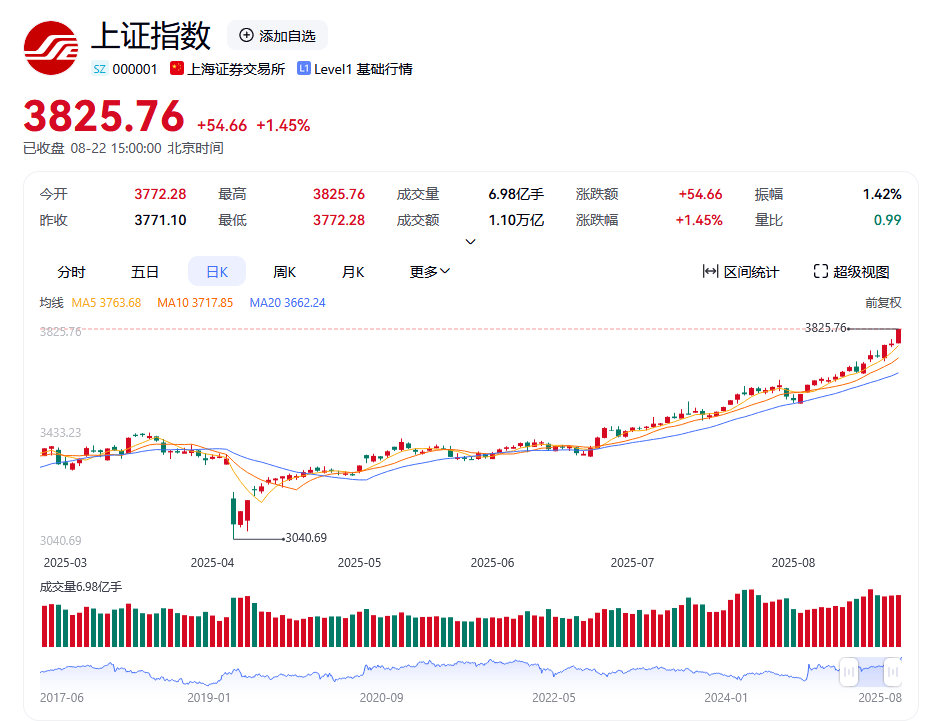
8月22日,A股再度爆发。盘初芯片产业链全线井喷,科创50大涨创近三年半新高,带动两市大涨。午后涨势依旧,沪指更是轻松站上3800点,再破十年高 点。全天两市成交25467亿元,连续8日成交额破2万亿创历史纪录。 一时间,"牛市还能走多远"成为大家关注的话题。针对这一话题,观察者网连线了中国政法大学资本金融研究院院长刘纪鹏教授,请他分析股市近况及未来 走向。 【对话/观察者网 唐晓甫】 观察者网:8月18日,中国股市市值突破百万亿大关,随后您表示股市不应急于求成,希望以慢牛姿态朝着证券化率达到100%的方向行稳致远。从您的角度 看,现在中国股市是"慢牛"吗?我们要如何操作才能让"牛市"走稳走远? 刘纪鹏:现在针对牛市,我们有三种不同的词语进行描述,分别是:慢牛,快牛和疯牛。从定量的角度看,我认为若日均涨幅不超过0.5%,最多不超过 1%,这便属于慢牛范畴。如果超过1%,维持一段时间1%~2%的增速,就是快牛。如果一段时间日均增速超过2%,那就是疯牛。 8月22日,沪指收于3825.76点 如果回顾历史就会发现,我们无论如何都应该避免快牛和疯牛,因为大涨之后必有暴跌。实际上,从现在的点位来看,大盘可能在4000 ...
见证历史!A股站上3800点,这一指数大涨超8%,还能上车吗?
天天基金网· 2025-08-22 11:17
Core Viewpoint - The A-share market has surged, with the Shanghai Composite Index surpassing 3800 points, marking a 10-year high, driven by significant gains in technology sectors such as semiconductors and AI chips [2][5][11]. Group 1: Market Performance - The A-share market experienced a historic trading volume, with a total turnover of 2.5 trillion yuan, marking the eighth consecutive day of turnover exceeding 2 trillion yuan [4]. - The technology sector, particularly stocks related to semiconductors and AI, has seen substantial increases, contributing to the overall market rally [2][5][6]. Group 2: Reasons for Market Surge - Three major positive factors have supported the rise in the technology sector: the release of DeepSeek-V3.1, the introduction of a new 500 billion yuan policy financial tool focusing on digital economy and AI, and concerns over Nvidia's H20 production, which has shifted focus back to domestic alternatives [6][9][10]. - Goldman Sachs has indicated that there is still significant upside potential in the Chinese stock market, particularly for small and mid-cap stocks, as a large amount of "stock funds" remains uninvested [11][12]. Group 3: Investment Strategies - The current market is viewed as being in the mid-stage of a bull market, with ample room for further growth. The ratio of total market capitalization to GDP is at 0.7, indicating potential for growth compared to historical peaks [17][19]. - Investors are advised to adopt a long-term investment strategy, utilizing methods such as regular investment plans to mitigate risks associated with market volatility [21][22]. - A diversified asset allocation strategy is recommended, including aggressive, balanced, and defensive funds to navigate market fluctuations effectively [23][27].

3800点,存款“搬家”,众生相
3 6 Ke· 2025-08-22 10:46
Core Insights - The current market sentiment is bullish, with the Shanghai Composite Index surpassing 3800 points and trading volume reaching 2.55 trillion yuan, igniting investor enthusiasm [1][8] - A significant trend of "residential deposit migration" is observed, where funds are shifting from low-risk savings to higher-yielding investments like stocks and funds, driven by declining deposit rates and the stock market's profitability [1][8] Group 1: Market Dynamics - The recent data from the People's Bank of China indicates a decrease of 1.11 trillion yuan in residential deposits in July 2025, while non-bank deposits increased by 2.14 trillion yuan, highlighting a shift in capital flow [8] - The decline in deposit rates, with major banks offering rates as low as 1.05% for two-year deposits, is prompting residents to seek higher returns through alternative investment channels [8][9] - The stock market has seen a surge in activity, with daily trading volumes exceeding 2 trillion yuan and financing balances surpassing 2 trillion yuan, indicating increased market engagement [8][9] Group 2: Investor Behavior - Interviews with bank wealth managers reveal that clients are hesitant yet eager to invest, with some, like a cautious investor named Wang, starting to allocate small amounts to stocks despite previous negative experiences [2][5] - High-net-worth clients have been moving funds into equities since September 2022, with a notable increase in the sales of equity-based financial products, reflecting a shift in investment strategy [5][6] - The migration of deposits is not uniform across regions, with areas like Shenzhen and Jiangsu seeing more significant outflows compared to regions like Shanxi, where clients remain more conservative [5][6] Group 3: Future Projections - Analysts predict that the current phase of deposit migration is just beginning, with potential for acceleration as market conditions improve [10][11] - Historical patterns suggest that significant deposit migration often occurs in the latter stages of a bull market, with past instances correlating with substantial stock market gains [14][15] - The potential for an influx of approximately 5 trillion to 9 trillion yuan into the market from maturing deposits in 2025 could further stimulate the equity market, although the actual flow will depend on various macroeconomic factors [13][14]