
价值竞争

Search documents
何墨池:穿梭于中西方的价值“摆渡者”|我们的四分之一世纪
Jing Ji Guan Cha Wang· 2026-01-01 02:26
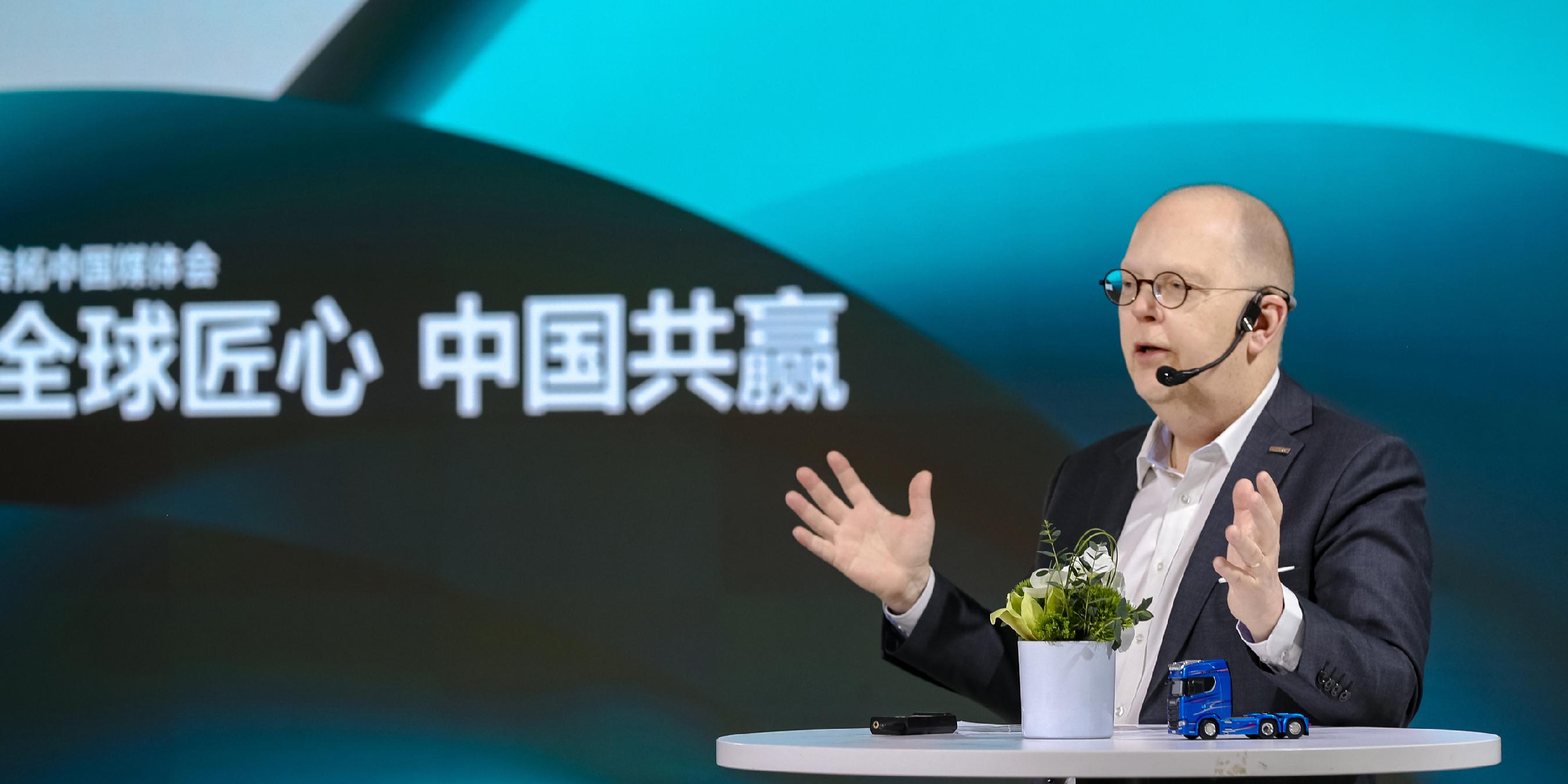
Core Insights - The article highlights the journey of Mats Harborn, a Swedish national, who has significantly contributed to the development of the Chinese automotive industry over the past 40 years, particularly through his role at Scania and later at the Traton Group [2][3][23]. Group 1: Personal Journey and Professional Development - Mats Harborn's initial experiences in China were marked by a mix of disappointment and fascination, leading him to engage deeply with the local culture and business environment [5][6]. - His career began with a focus on understanding China, which evolved into a significant role in facilitating Swedish companies' entry into the Chinese market, particularly with Scania [9][10][19]. - Harborn's transition from a political aspiration to a business leader in China was catalyzed by China's entry into the WTO in 2001, which he viewed as a pivotal moment for the country's economic transformation [20][21]. Group 2: Contributions to the Automotive Industry - Under Harborn's leadership, Scania invested €2 billion to establish a manufacturing base in China, marking it as the largest overseas facility for the company [23][26]. - Scania became the first European commercial vehicle manufacturer to receive a full truck factory production license in China after the country relaxed foreign investment restrictions [26]. - The establishment of the new facility in Rugao is seen as a strategic move to integrate advanced technologies in electrification and autonomous driving, enhancing Scania's global competitiveness [26][29]. Group 3: Observations on China's Economic Evolution - Harborn emphasizes that China has transformed into a nation with significant innovation capabilities, particularly in the automotive sector, moving from mere manufacturing to creating value [27][28]. - He notes the emergence of a middle class in China, which has changed the dynamics of consumer behavior and business interactions [27]. - Harborn advocates for a shift in Chinese companies' focus from price competition to value competition, stressing the importance of understanding customer needs and market dynamics [28][29]. Group 4: Future Outlook and Responsibilities - Harborn believes that the current moment presents an optimal opportunity for foreign investment in China, as the country is at a critical juncture in its modernization efforts [29]. - He envisions a future where Western and Chinese value systems can merge, fostering a more constructive dialogue and collaboration between the two regions [30][31]. - Harborn's ongoing commitment to bridging cultural and business gaps is reflected in his active participation in various roles that promote Sino-European trade relations [30][31].

361度(1361.HK)战略升维,以系统化布局构筑长期价值护城河
Ge Long Hui· 2025-12-31 09:17
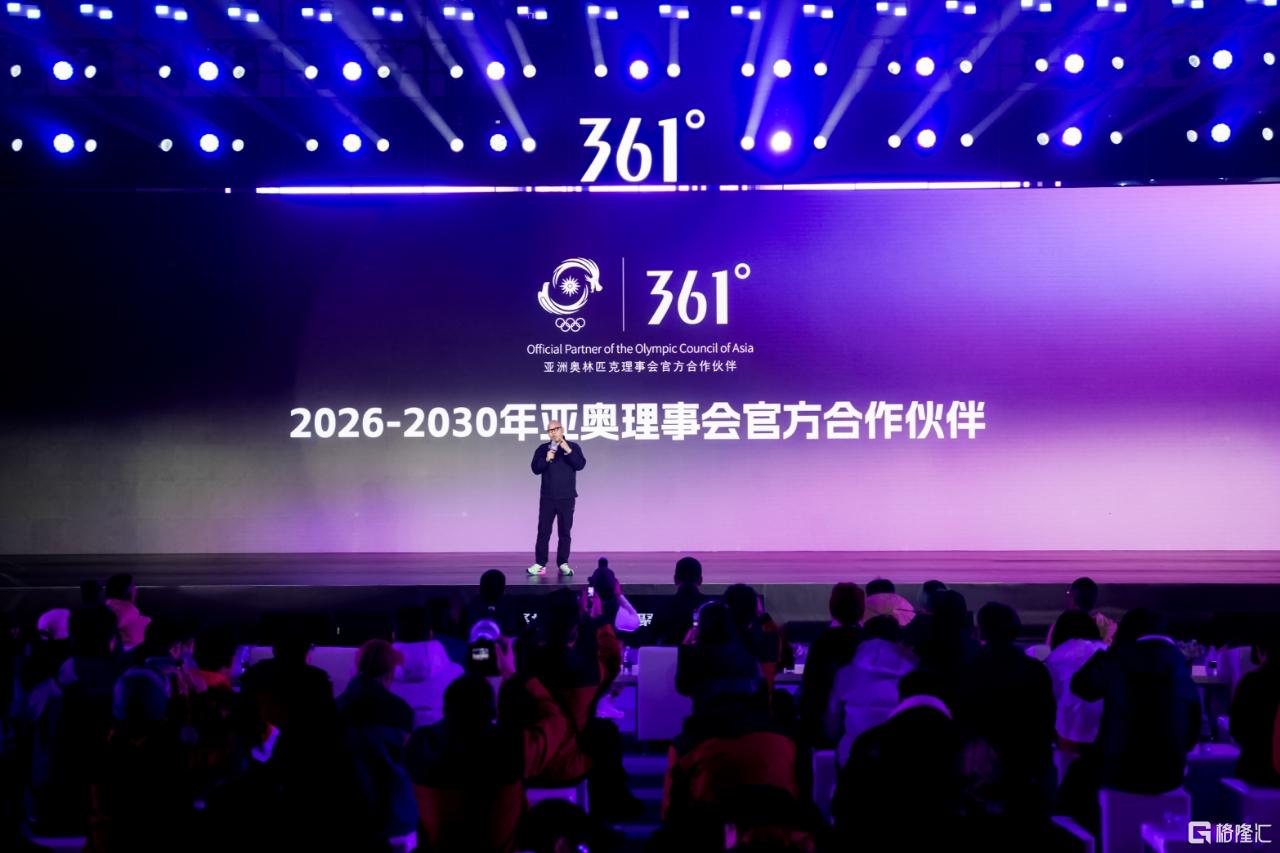
Core Insights - The sports brand market is shifting towards deeper "value competition," with leading brands like 361 Degrees demonstrating this trend through strategic initiatives [1] Group 1: Strategic Partnerships - 361 Degrees has announced a new strategic partnership with the Asian Olympic Council, marking a significant milestone as it becomes the longest-serving Chinese sports brand in collaboration with the council, enhancing its global credibility [2][4] - The partnership aims to deepen collaboration in brand synergy, technological innovation, and event resources, supporting the advancement of Asian sports and exploring new paths for global industry development [4][5] Group 2: Academic Collaboration - The strategic partnership with Tianjin University of Sport represents a "downward rooting" in technology, focusing on integrating top-tier research resources to enhance innovation capabilities [6][7] - A "Sports Technology Innovation Center" will be established to promote the transformation of sports technology achievements and cultivate high-level sports talent, leveraging the university's strong research capabilities [7][9] Group 3: Product Innovations - The recent launch of the Flyrun 5 and Flyrun 5 FUTURE racing shoes showcases 361 Degrees' ability to translate cutting-edge technology into high-performance products, catering to both general and elite runners [10][11] - The Flyrun 5 is designed for general runners with a focus on energy stability and comfort, while the Flyrun 5 FUTURE targets elite runners with advanced materials for enhanced performance [10][11][12] Group 4: Material Collaboration - 361 Degrees has deepened its collaboration with KANLUN Aerospace to innovate running products, leveraging aerospace technology to enhance material performance in terms of lightweight and energy feedback [14][17] - The introduction of a running apparel series featuring "Zero Tension Technology" addresses winter running challenges, showcasing the brand's commitment to comprehensive product solutions [17] Group 5: Overall Strategy - The recent initiatives by 361 Degrees reflect a clear strategic direction towards "systemic competition," advancing "value competition" through comprehensive layouts that create a self-reinforcing value loop [18] - This strategic approach is expected to support the company's steady growth and long-term value release in the competitive sports brand market [19]
锂电行业全年复盘:“反内卷”破局,开启价值竞争新周期!
Zheng Quan Shi Bao Wang· 2025-12-31 08:17
历经两年多的行业洗牌及产能出清,锂电行业在2025年按下"回暖键",迎来向上突围的曙光。 这一年,供给端"反内卷"成效显现,叠加以储能为代表的需求端爆发式增长,锂电产业链供需格局逐步 改善,拉动产品价格、企业盈利水平企稳回升。 在景气度攀升背后,市场竞争逻辑也在悄然转变。当前,锂电行业正加速跳出低价竞争、产能比拼的粗 放模式,转向出海破局、技术迭代、前瞻布局等新路径,迈入以"价值竞争"为内核的高质量发展新阶 段。 01 "反内卷"成效显现 2025年,锂电行业在价格深跌后开启供给侧改革。在政策与产业协同发力下,一场贯穿锂矿开采至终端 应用的全链条"反内卷"行动拉开大幕,成为推动行业复苏的重要力量。 今年7月1日,新矿产资源法实施,锂矿被纳入战略性矿产目录并实行统一审批管理,开采门槛大幅提 高;7月7日,宜春市自然资源局发布《关于编制储量核实报告的通知》,提到8宗锂资源矿权存在出 让、变更、延续登记等越权情况,其中涉及宁德时代(300750)枧下窝矿区。8月9日,枧下窝矿区采矿 许可证到期停产,成为锂电行业"反内卷"的标志性事件。 随后,磷酸铁锂、隔膜、铜箔、六氟磷酸锂等赛道骨干企业纷纷召开座谈会,就价格自律、 ...

2025外卖行业年终盘点:三足鼎立格局固型 模式创新形成突破 大战仅仅行至“中局”
Sou Hu Wang· 2025-12-31 05:09
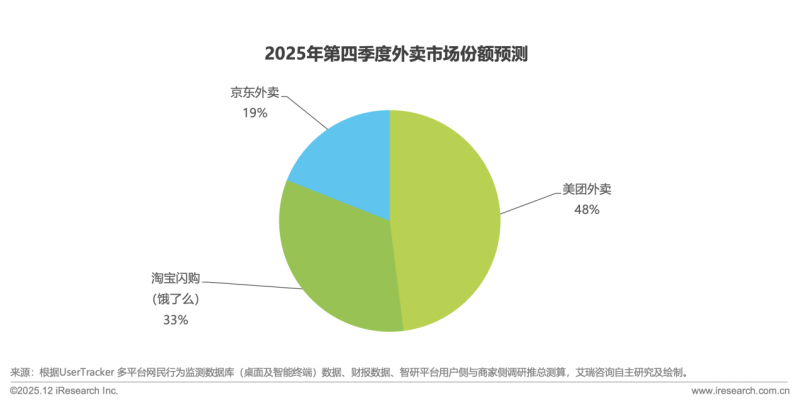
Group 1 - The core event of 2025 is the ongoing food delivery battle, which has transformed consumer habits and significantly influenced the development of the food delivery and instant retail industry [1] - The market structure has shifted from a single-platform dominance to a stable "tripod" of Meituan, Taobao, and JD, marking a fundamental change in the competitive landscape [2][4] - By the end of 2025, the market share distribution is approximately Meituan: Taobao: JD = 48%: 33%: 19%, indicating a balanced and sustainable market structure [2] Group 2 - As subsidies decrease, the competition has shifted from price wars to value-based competition, with consumers focusing more on food quality, delivery timeliness, and safety [5] - Over 45% of users now compare the three platforms before ordering, indicating a shift in decision-making from dependency to demand adaptation [5] - Merchant satisfaction is high across all three platforms, with each platform receiving recognition for its unique strengths in service quality and operational efficiency [7] Group 3 - The year 2025 has seen a rise in social responsibility awareness within the industry, with JD setting a benchmark by signing labor contracts for all full-time delivery personnel [7] - Measures to enhance food safety, such as "ghost delivery" prevention and improved supply chain management, have been implemented by all three platforms [7] - The future competition will focus on supply chain innovation and systemic capabilities rather than just front-end subsidies or marketing [8] Group 4 - The food delivery battle is viewed as a deep restructuring of local life service ecosystems, where the ability to control and integrate supply chains will be crucial for future success [8] - The industry is transitioning from "price competition" to "value creation," marking the beginning of a more mature and higher-quality development phase [8]


中国经济圆桌会丨民营企业负责人:实施更加积极有为的宏观政策将为企业注入“稳定剂”
Xin Hua Wang· 2025-12-30 12:22
新华社北京12月30日电(记者黄垚)中国民间商会副会长、依文集团董事长夏华在新华社30日推出 的"中国经济圆桌会"大型全媒体访谈节目中表示,中央经济工作会议明确明年将实施更加积极有为的宏 观政策,为企业注入了"稳定剂",让民营企业更加坚定信心,敢于长期投资。 夏华说,会议强调"坚持创新驱动""因地制宜发展新质生产力",指明了提升"质"与"效"的路径,引 导企业通过数字化、智能化实现升级,把科技创新作为核心竞争力,坚持走高质量发展之路。 她以自身企业为例介绍说,依文集团打造的数智产业互联网平台连接全球设计师与国内优质供应 链,推动传统制造业向"智造"转变。 "值得关注的是,会议明确深入整治'内卷式'竞争,切中了当前市场痛点。"夏华说,无序的低价内 耗挤占企业用于创新和提升品质的宝贵资源。政策引导将推动市场从"价格战"转向良性的"价值竞争", 让企业从"卷价格"变成"卷品质""卷创新",为坚守长期主义的企业创造公平健康的发展环境。 夏华表示,促进民营经济高质量发展的政策力度在不断加大,将为企业提供更强的支撑和保 障。"我们将在扩大内需、提振消费等政策引领下,继续深耕国潮文化、打造沉浸式消费新场景,用对 产品与文化 ...
2025年商用车行业开启价值竞争新周期
Xin Lang Cai Jing· 2025-12-30 11:09
Group 1 - The commercial vehicle market in China is experiencing moderate growth, with production and sales reaching 3.843 million and 3.87 million units respectively from January to November, representing year-on-year increases of 11.6% and 10.4% [3][5] - Heavy-duty and light-duty trucks are the main contributors to growth, with heavy-duty truck sales increasing by 27.5% year-on-year to 1.042 million units, while light-duty trucks saw a 5.8% increase to 1.824 million units [3][5] - The bus market also shows strong recovery, with production and sales reaching 508,000 and 510,000 units respectively, marking year-on-year growth of 12.8% and 13.2% [4][5] Group 2 - The sales of new energy commercial vehicles reached 750,000 units from January to November, a year-on-year increase of 62.4%, accounting for 25.7% of total commercial vehicle sales [7][27] - The heavy-duty new energy truck segment is growing rapidly, with sales in November reaching approximately 28,000 units, a significant year-on-year increase of 178% [7][27] - The market penetration rate for new energy heavy-duty trucks has surpassed 30%, indicating a shift towards market-driven growth [7][27] Group 3 - The trend towards intelligent technology in commercial vehicles is accelerating, with advancements in smart driving assistance, smart cockpits, and high-level autonomous driving [10][30] - Domestic high-end commercial vehicles are now equipped with smart maintenance features, significantly reducing repair time and operational costs [11][30] - The integration of intelligent technology into operational scenarios is becoming a key competitive advantage for companies in the commercial vehicle sector [12][30] Group 4 - The export of commercial vehicles from China reached 947,000 units from January to November, reflecting a year-on-year increase of 14.6% [14][34] - New energy vehicle exports have shown remarkable growth, with 77,000 units exported, representing a year-on-year increase of 120% [14][34] - Chinese commercial vehicle companies are shifting from simple product exports to a more integrated global strategy, focusing on local production and service networks [15][35] Group 5 - The commercial vehicle industry in China is transitioning from high-speed growth to a phase characterized by stable fluctuations and a focus on quality improvement and structural optimization [17][37] - The competitive landscape is shifting from scale expansion to value competition, emphasizing core technology development, brand value, and service quality [17][37] - Companies are increasingly focusing on the entire lifecycle value of transportation tools and ecosystem integration capabilities [17][37]

“价格战”刹车,新能源车企不再亏本卖车
Xin Jing Bao· 2025-12-30 08:20
Core Narrative - 2025 marks a pivotal year for the global economy and China's industries, transitioning from chasing trends to a focus on deep differentiation and value reconstruction, with significant changes in various sectors such as storage chips, electric vehicles, gold prices, AI, and content consumption [1] Group 1: Automotive Industry Dynamics - The automotive supply chain is experiencing a shift in payment terms, with payment periods reducing from an average of 180 days to closer to the contractually agreed 60 days, alleviating cash flow pressures for suppliers [2][4] - A new consensus is forming within the automotive industry that vehicles do not necessarily need to be sold at lower prices, moving away from a previous mindset of relentless price competition [2][5] - The competition logic in the electric vehicle sector is fundamentally changing, shifting from capital-driven expansion to a focus on technology, quality, and sustainable profitability [3][6] Group 2: Policy and Regulatory Changes - A series of policies implemented in mid-2025, including the revised Anti-Unfair Competition Law and regulations on payment terms, are reshaping the competitive landscape by prohibiting large enterprises from delaying payments [5][9] - The government has intensified efforts to curb irrational competition in the automotive sector, emphasizing the need for a healthy and sustainable industry ecosystem [9][10] Group 3: Market Trends and Consumer Behavior - As the price war subsides, consumer focus is shifting towards product quality, with increased interest in features such as intelligent driving systems and battery safety [3][11] - The automotive industry is moving towards a phase where companies prioritize quality and sustainable growth over mere market share, indicating a significant shift in competitive strategies [12][13] Group 4: Future Outlook - The industry is expected to focus on three main tasks: achieving breakthroughs in core technologies, building a complete intelligent ecosystem, and advancing global expansion [13] - The transition from price competition to value competition is essential for long-term sustainability, requiring both regulatory support and a commitment to innovation from companies [13]
回望2025|“价格战”刹车,新能源车企不再亏本卖车
Bei Ke Cai Jing· 2025-12-30 08:03
Core Narrative - The year 2025 marks a critical point for the global economy and China's industries, transitioning from chasing trends to a more rational examination of underlying changes, including the "super cycle" in storage chips, the global expansion of new energy vehicles, and the rise of AI applications in various sectors [2][3] Industry Changes - The automotive supply chain is experiencing a significant shift, with payment terms improving from an average of 180 days to closer to the contractually agreed 60 days, alleviating cash flow pressures for suppliers [8][12] - A new consensus is forming within the industry that vehicles do not necessarily need to be sold at lower prices, moving away from a previous mindset of relentless price competition [9][10] - The competition logic in the new energy vehicle sector is fundamentally changing, focusing on technology, quality, and sustainable profitability rather than capital-driven expansion [10][22] Policy Impact - A series of policies implemented in mid-2025, including the revised Anti-Unfair Competition Law and regulations on payment terms, are reshaping the market dynamics and encouraging healthier competition [14][25] - The government is actively working to curb irrational competition in the new energy vehicle sector, emphasizing the need for a sustainable industry ecosystem [24][32] Market Behavior - As the market stabilizes, consumer focus is shifting from price to product quality, with increased interest in features like intelligent driving systems and battery safety [10][27] - The end of the price war has allowed dealers to operate with more confidence, focusing on customer service and experience rather than just pricing [28] Future Outlook - The industry is at a turning point, with surviving companies recognizing that future growth cannot rely solely on price competition but must also emphasize quality and innovation [29][30] - Key tasks for the industry moving forward include achieving breakthroughs in core technologies, building a comprehensive intelligent ecosystem, and advancing global strategies [30][31]
“引领者”蜕变 盘点2025中国汽车行业关键词
Zhong Guo Jing Ying Bao· 2025-12-29 17:15
Core Insights - The Chinese automotive industry is undergoing a profound structural transformation in 2025, shifting from price competition to value competition, driven by market forces rather than policies, and evolving from a "follower" to a "leader" on the global stage [1] Group 1: Price Competition - The price war in the automotive sector has cooled down, marking a transition from vicious competition to rational competition, with average industry profit margins at 4.5% and 55% of dealers facing losses [4] - Regulatory measures, including a self-discipline agreement among major car manufacturers and compliance guidelines from the State Administration for Market Regulation, are promoting a market order focused on quality and value [4] Group 2: New Energy Vehicles - In 2025, new energy vehicles (NEVs) achieved a domestic market share of 53.6% from January to November, marking a significant shift to market-driven growth [6] - The consensus of "oil and electricity at the same price" has emerged, with Chinese brands leveraging core technologies to dominate the domestic NEV market [6] Group 3: Intelligent Driving - 2025 is recognized as the year of large-scale popularization of intelligent driving, with L2-level assistance penetration reaching 64% and L3-level models being trialed in designated areas [8][9] - The cost of hardware for intelligent driving has decreased by approximately 50%, facilitating broader access to advanced driving features [9] Group 4: Supply Chain and Payment Terms - A "payment revolution" is underway, with major car manufacturers committing to reduce payment cycles for small suppliers to within 60 days, addressing long-standing issues in the supply chain [10] - This initiative aims to restore credit systems within the supply chain and foster a collaborative ecosystem, moving from a zero-sum game to a win-win situation [10] Group 5: Export Growth - Chinese automotive exports are expected to exceed 6.8 million units in 2025, maintaining the top position globally for the third consecutive year, with NEV exports doubling to 2.315 million units [13] - The export model has evolved from simple product trade to localized industry chain and technology ecosystem output, enhancing China's role as a global technology solution provider [13] Group 6: Charging Infrastructure - By the end of November 2025, the total number of electric vehicle charging facilities in China reached 19.322 million, a 52% increase year-on-year [15] - The introduction of integrated solar-storage-charging stations is transforming NEVs into flexible distributed energy storage units, enhancing the synergy between energy and transportation [15] Group 7: Safety Standards - Safety has become a central theme in the industry, with new regulations addressing issues related to intelligent driving and battery safety, including the strictest global standards for battery thermal runaway [18] - The focus on safety is pushing the industry to prioritize technical upgrades and ensure that safety is a fundamental aspect of development [18] Group 8: Domestic Brands - Chinese automotive brands have achieved a historic milestone, with a market share of 70% in passenger vehicles, becoming a key driver of market growth [20] - These brands are breaking the monopoly of joint ventures in mature markets, reshaping the global automotive competitive landscape [20] Group 9: Industry Consolidation - The automotive market is experiencing a bifurcation, with a significant concentration of resources towards leading companies as weaker brands exit the market [22] - This marks the end of the first round of industry reshuffling, indicating a transition to a more mature and regulated market [22] Group 10: Value Reconstruction - The industry is moving towards high-quality development, shifting focus from scale expansion to technological innovation, global layout, and user experience [24] - The collaboration across the supply chain and the increase in domestic chip production are strengthening the foundation for a self-controlled industry ecosystem [24]
国家再出手整治“内卷式”竞争,重点“新三样”
Xin Lang Cai Jing· 2025-12-27 02:59
Group 1 - The core issue of the "new three types" industries, including electric vehicles, lithium batteries, and photovoltaics, is the need for systematic rectification to address low-price dumping, vicious price wars, and homogenized competition [1][2] - The National Development and Reform Commission emphasizes the importance of regulating order and promoting innovation to enhance industry concentration and create a globally leading technological hub during the 14th Five-Year Plan period [1][2] - The recent Central Economic Work Conference highlighted the need to deeply rectify "involutionary" competition, aligning with the government's policy direction for the "new three types" industries [2] Group 2 - The "new three types" industries are seen as advantageous sectors for China's high-quality foreign trade development, but they face challenges such as disorderly market competition and unstable core advantages [2] - Multiple government departments have issued documents to delineate red lines for the healthy development of the "new three types" industries, including guidelines to combat malicious price competition in the automotive sector [2] - The China Battery Industry Association has issued an initiative against malicious competition in the lithium battery sector, highlighting the severe risks to quality and safety posed by involution [2] Group 3 - The involution phenomenon in the "new three types" industries has severely threatened healthy industry development, with domestic automobile sales reaching 24.783 million units and a new energy penetration rate exceeding 50.3%, yet industry profit margins have dropped to 4.5% from 7.8% in 2017 [3] - The photovoltaic industry is also facing significant challenges, with polysilicon spot prices falling below the cash cost line, leading to disordered competition that harms overall industry interests [3] - In the lithium battery sector, the bidding price for energy storage cells has dropped to 0.26 yuan/Wh, with the average price of lithium iron phosphate cells decreasing by approximately 50% from peak levels, resulting in systematic compression of industry gross margins [3]
