
美联储货币政策转向

Search documents
美联储“鸽”派转向 贵金属价格上行
Qi Huo Ri Bao· 2025-08-26 00:26
Core Viewpoint - The precious metals market, particularly gold and silver, is experiencing a positive trend due to expectations surrounding the Federal Reserve's monetary policy shift, with gold showing reduced sensitivity to these changes while silver remains highly responsive [1][3]. Group 1: Precious Metals Performance - Gold futures saw a slight increase of 0.46%, while silver futures rose by 1.89% [1]. - Analysts indicate that silver's price is significantly influenced by its industrial applications and domestic macroeconomic policies, leading to greater volatility compared to gold [1]. - The strong performance of copper is also contributing positively to silver prices, as both metals often exhibit correlated price movements [1]. Group 2: Silver Demand and Market Sentiment - The solar photovoltaic industry's explosive growth has increased silver demand, with photovoltaic silver paste accounting for over 20% of total silver demand [2]. - The global silver supply-demand gap is projected to exceed 5,000 tons by 2025, driven by demand from electric vehicles and 5G electronics [2]. - The gold-silver ratio has decreased from over 100 to below 90, indicating a relative undervaluation of silver compared to gold, attracting more investment into silver [2]. Group 3: Economic Indicators and Federal Reserve Policy - Upcoming U.S. PCE data is a focal point for the market, with expectations that core PCE year-on-year growth will fall to around 3.0%, aligning with the Fed's "soft landing" scenario [3]. - Recent comments from Fed Chair Powell have shifted market expectations towards a dovish stance, with significant anticipation for rate cuts in September and December 2025 [3][4]. - The market has nearly fully priced in the Fed's expected rate cuts, leading to a cautious outlook on the continued rebound of precious metals [4]. Group 4: Long-term Outlook for Gold and Silver - In the context of ongoing geopolitical instability and the trend of "de-dollarization," central bank gold purchases are expected to support long-term gold price increases [4][5]. - The demand for gold as a safe-haven asset remains strong due to uncertainties in U.S. trade policies and geopolitical tensions, which are likely to benefit gold prices [5]. - The low correlation of gold with other asset classes enhances its appeal for portfolio diversification and risk hedging, sustaining ongoing demand for gold investments [5].
美联储9月降息:一场明确且必要的政策转向
Di Yi Cai Jing· 2025-08-24 12:17
Group 1: Federal Reserve's Policy Direction - The Federal Reserve is likely to announce a rate cut of at least 25 basis points at the upcoming meeting on September 17, reflecting strong market confidence in a shift in monetary policy [1][8] - The dual mandate of the Federal Reserve focuses on maximizing employment and price stability, with current conditions presenting a dilemma of a weakening labor market and rising inflation pressures [2][3] - Powell emphasized that the rising risks in the labor market are a key factor driving the shift towards a more accommodative monetary policy [2][3] Group 2: Labor Market Conditions - The July employment report indicated a significant slowdown, with only 73,000 non-farm jobs added, well below the expected range of 110,000 to 130,000 [3] - The unemployment rate increased slightly from 4.1% to 4.2%, still at historically low levels, but the rising trend in layoffs and unemployment poses a risk to economic stability [3][9] - Powell warned that the risks of rising layoffs and unemployment highlight the urgency for a rate cut to support the labor market [3][9] Group 3: Inflation Trends - The core PCE price index recorded 2.7% in May 2025, still above the 2% target, indicating persistent inflationary pressures despite a significant drop from the 5.5% peak in 2022 [4][5] - The July CPI remained stable at 2.7%, slightly below expectations, while the core CPI rose to 3.1%, suggesting accumulating price pressures [4][5] - The PPI report showed a 0.9% increase in July, the largest monthly rise since March 2022, driven by tariff policies, which could lead to further inflationary pressures [5][6] Group 4: Market Reactions and Future Outlook - Powell's speech significantly boosted market confidence, with the probability of a September rate cut rising from 76% to 89.2%, leading to increases in stock, gold, silver, and cryptocurrency prices [8] - The upcoming August employment and CPI data will be critical in determining the scale of the rate cut, with expectations leaning towards a 25 basis point reduction [8][9] - A 25 basis point cut is expected to support the labor market but may also heighten inflation risks, necessitating careful monitoring of economic indicators [9][10]
美联储政策预期下的黄金波动观察
Sou Hu Cai Jing· 2025-08-14 11:35
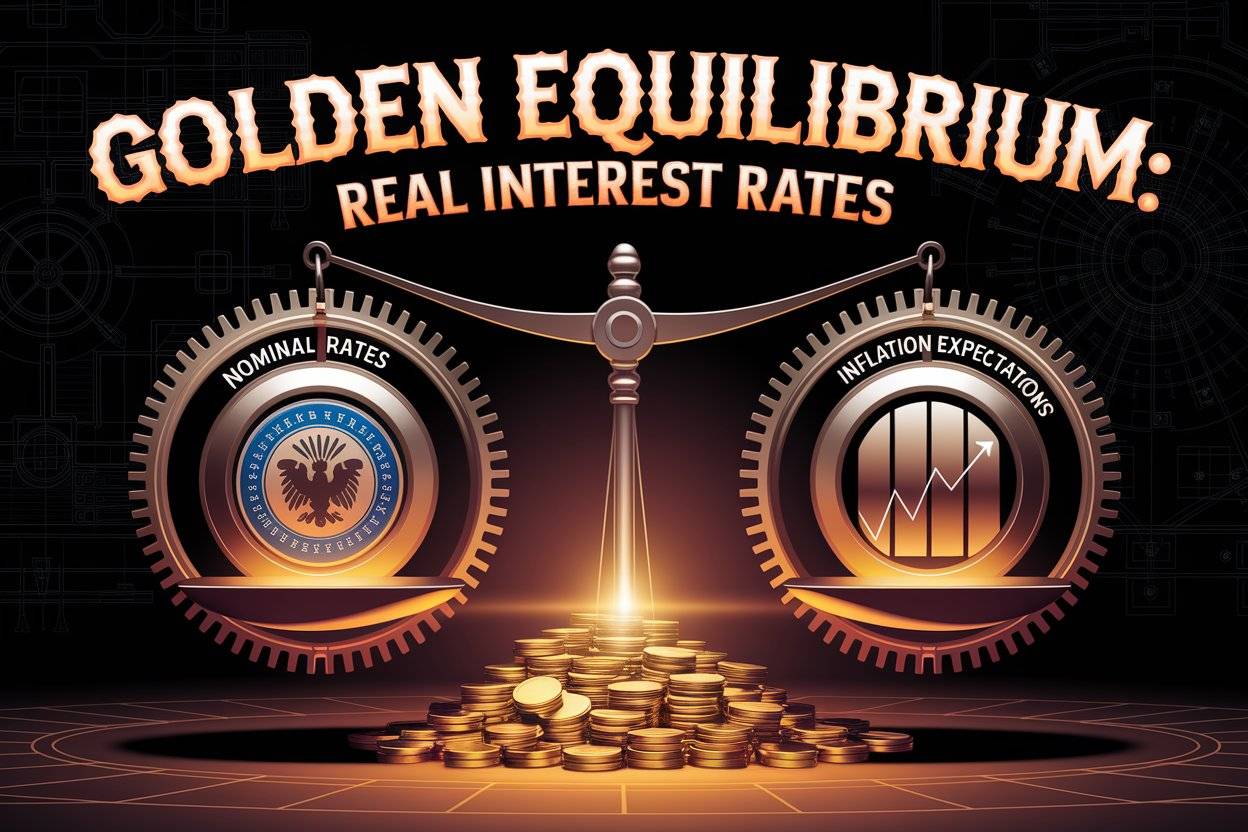
Core Viewpoint - Recent market expectations regarding a shift in the Federal Reserve's monetary policy have increased, drawing investor attention to gold prices after a period of adjustment [1] Group 1: Gold Pricing Dynamics - The core anchor for gold pricing is the real interest rate level, which is the nominal interest rate minus inflation expectations [3] - When the market anticipates the end of the Fed's rate hike cycle and potential rate cuts, downward pressure on nominal rates increases, which could lower real interest rates if inflation does not decline rapidly [3] - A weaker dollar, resulting from reduced interest rate attractiveness, may indirectly benefit gold prices [3] Group 2: Market Sentiment and Technical Analysis - Current gold holding data, such as ETF holdings and futures positions, indicate that market sentiment remains cautious, lacking a consensus bullish outlook [3] - Gold prices need to effectively break through key resistance areas to confirm a momentum shift [3] Group 3: Investment Strategy Considerations - Investors should differentiate between "event-driven trading" and "trend opportunities" when participating in gold based on rate cut expectations [3] - For short-term volatility based on policy signals, close monitoring of economic data and Fed statements is essential, along with strict stop-loss discipline [3] - For medium-term opportunities based on declining real interest rates, attention should be paid to inflation resilience and the long-term trend of the dollar [3] Group 4: Risk Management and Market Volatility - During periods of policy transition, fluctuating market expectations may exacerbate volatility [5] - Investors are advised to maintain patience and focus on the relationship between real interest rate changes and gold price movements, rather than solely betting on the timing of policy shifts [5] - Balancing portfolio allocation and strict risk management remain foundational strategies to navigate uncertainty [5]

国泰海通|策略:风偏回升权益涨,油价大跌英镑强
国泰海通证券研究· 2025-08-12 14:20
Core Viewpoint - The article discusses the recent shift in global risk appetite driven by expectations of a change in the Federal Reserve's monetary policy, leading to a rebound in major stock indices and significant movements in commodities and currencies [1][2]. Group 1: Market Performance - Major stock indices globally experienced a rebound, with the Russian RTS index leading gains due to anticipated meetings between US and Russian leaders [2]. - In developed markets, US stocks saw a comprehensive recovery, with the Nasdaq rising by 3.9%, S&P 500 by 2.4%, and Dow Jones by 1.3% [2]. - Emerging markets also showed strong performance, particularly the Russian RTS which increased by 7.9%, and Vietnam's Ho Chi Minh index which surged by 6.0% [2]. Group 2: Bond Market - The Chinese bond market exhibited a "bull steepening" trend, with the yield curve shifting downward and the 10Y-2Y spread widening [3]. - In contrast, the US bond market showed a "bear flattening" characteristic, with the yield curve moving upward and a near 90% probability of a rate cut by the Federal Reserve in September [3]. Group 3: Commodities and Currencies - Oil prices faced downward pressure due to OPEC+'s decision to significantly increase production in September, reversing previous cuts and alleviating supply concerns [3]. - The British pound strengthened despite the Bank of England's cautious rate cut, as inflation rates rebounded to 3.6% in May and June [3].

富国基金业绩亮眼,上半年为投资者创造收益近300亿元
Sou Hu Cai Jing· 2025-08-11 01:57
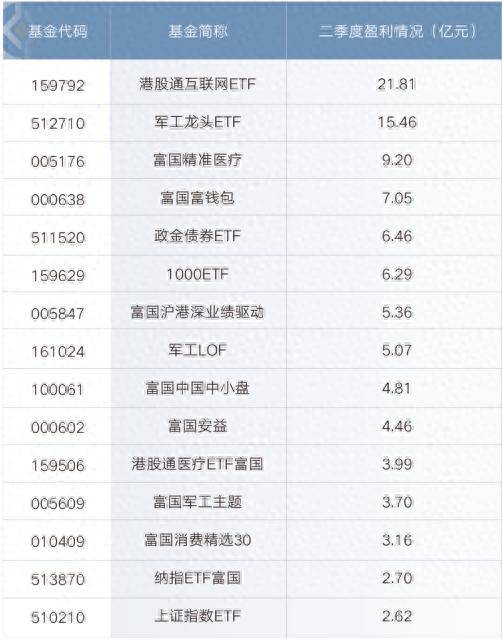
Core Insights - The public fund industry in China performed well in the first half of 2025, with a total profit of 639.1 billion yuan, indicating a return of the profit-making effect [1] - Among fund management companies, FuGuo Fund ranked fourth, generating 29.832 billion yuan in profits for investors in the first half of 2025 [1] - The second quarter saw a total profit of 386.3 billion yuan across public funds, with 11 fund managers exceeding 10 billion yuan in profits [1] Passive Index Funds - Passive index funds follow market trends to capture industry beta returns, focusing on a "riding the wave" strategy [2] Active Management - Active management funds rely on the fund manager's skills in stock selection, timing, and risk control [3] - FuGuo Fund's "Precision Medicine" managed by Zhao Wei earned 920 million yuan by focusing on the innovative drug sector [3] - Other notable funds include "Military Industry Theme" and "Consumer Select 30," each generating over 200 million yuan in profits [3] Fund Performance Data - The top-performing funds in Q2 include: - Hong Kong Internet ETF: 2.181 billion yuan - Military Industry Leader ETF: 1.546 billion yuan - FuGuo Precision Medicine: 920 million yuan - FuGuo Wealth: 705 million yuan - Government Bond ETF: 646 million yuan [4] Market Outlook - The Federal Reserve's monetary policy shift is a key variable for the market, with potential interest rate cuts depending on inflation and unemployment trends [9] - The innovative drug sector is expected to enter a phase of global value realization, with a focus on companies with licensing potential [11] - The military industry has shown signs of recovery, driven by geopolitical events and positive market expectations [18] - The consumer sector is being closely monitored for investment opportunities, particularly in emerging consumption areas [21]
纳指创收盘新高!苹果本周大涨超13%
Zhong Guo Zheng Quan Bao· 2025-08-09 00:26
Group 1 - The US stock market indices collectively rose, with the Nasdaq increasing nearly 1% and reaching a new closing high, driven by strong performance from large tech stocks and rising expectations regarding the Federal Reserve's monetary policy shift [1][2] - The Dow Jones Industrial Average rose by 0.47% to 44,175.61 points, the S&P 500 increased by 0.78% to 6,389.45 points, and the Nasdaq gained 0.98% to 21,450.02 points [2] - Major tech stocks saw significant gains, with Apple rising over 4%, Google and Tesla up more than 2%, and Nvidia increasing over 1% [3] Group 2 - Bank stocks experienced collective gains, with Bank of America rising over 2% and Citigroup, Morgan Stanley, and Wells Fargo all increasing by more than 1% [4] - Energy stocks also saw widespread increases, with Chevron, ConocoPhillips, and Occidental Petroleum all rising by more than 1% [5] Group 3 - In June, US imports fell sharply by 8.4% year-on-year, significantly exceeding expectations, attributed to tariff increases by the Trump administration [8] - The National Retail Federation (NRF) forecasts a 5.6% decline in total imports for the year 2025 compared to the previous year, warning that tariffs are driving up prices and reducing the variety of goods available [8]

美联储转向预期升温,支撑贵金属价格维持高位
Hua Tai Qi Huo· 2025-08-07 05:14
Report Industry Investment Rating - Gold: Cautiously bullish [8] - Silver: Cautiously bullish [8] - Arbitrage: Short the gold-silver ratio at high levels [9] - Options: On hold [9] Core Viewpoints - The main focus of precious metals is on the Fed's interest rate cut expectations and rhythm. Multiple Fed officials are open to a shift to loose monetary policy, strongly supporting precious metal prices. If economic growth data resonates with the July US non-farm payrolls data, it may accelerate the Fed's monetary policy shift to a looser stance and further push up gold prices [8]. - The trading logic of silver is generally in sync with that of gold, with future loose expectations on the macro level as the main line, and its pricing weight is higher than the supply-demand fundamentals of silver. With the logic of the gold-silver ratio returning, silver prices are expected to continue the upward trend [9]. Summary by Relevant Catalogs Strategy Summary - Macro: Fed officials' statements indicate that the expectation of a shift to loose monetary policy within the Fed is rising, which is expected to support precious metal prices. Geopolitical risk premium has a relatively low weight in precious metal pricing, and the short-term main line lies in the Fed's loose expectations and rhythm [1] Futures Quotes and Trading Volumes - On August 6, 2025, the Shanghai gold futures main contract opened at 782.80 yuan/gram and closed at 783.68 yuan/gram, a change of 0.15% from the previous trading day's close. The trading volume was 41,087 lots, and the open interest was 129,725 lots. The night session closed at 781.96 yuan/gram, down 0.22% from the afternoon close. The Shanghai silver futures main contract opened at 9,104.00 yuan/kg and closed at 9,182.00 yuan/kg, a change of 1.18% from the previous trading day's close. The trading volume was 372,060 lots, and the open interest was 373,376 lots. The night session closed at 9,180 yuan/kg, down 0.02% from the afternoon close [2] US Treasury Yield and Spread Monitoring - On August 6, 2025, the US 10-year Treasury yield closed at 4.22%, unchanged from the previous trading day. The spread between the 10-year and 2-year Treasury yields was 0.53%, up 3 basis points from the previous trading day [3] Position and Trading Volume Changes of Gold and Silver on the Shanghai Futures Exchange - On August 6, 2025, on the Au2508 contract, the long positions decreased by 249 lots compared to the previous day, and the short positions decreased by 336 lots. The total trading volume of Shanghai gold contracts was 239,517 lots, a change of -0.54% from the previous trading day. On the Ag2508 contract, the long positions decreased by 1,516 lots, and the short positions decreased by 1,708 lots. The total trading volume of silver contracts was 532,607 lots, a change of 17.04% from the previous trading day [4] Precious Metal ETF Position Tracking - The position of the gold ETF was 952.79 tons, down 3.15 tons from the previous trading day. The position of the silver ETF was 15,112.28 tons, up 67.8 tons from the previous trading day [5] Precious Metal Arbitrage Tracking - On August 6, 2025, the domestic premium of gold was -10.74 yuan/gram, and the domestic premium of silver was -706.17 yuan/kg. The price ratio of the main gold and silver contracts on the Shanghai Futures Exchange was about 85.35, a change of -1.02% from the previous trading day. The foreign gold-silver ratio was 90.05, a change of -0.41% from the previous trading day [6] Fundamentals - On August 6, 2025, the trading volume of gold on the Shanghai Gold Exchange's T+d market was 29,226 kg, a change of -14.53% from the previous trading day. The trading volume of silver was 231,594 kg, a change of -14.47% from the previous trading day. The gold delivery volume was 9,764 kg, and the silver delivery volume was 15,690 kg [7] Strategy - Gold: The Au2510 contract's oscillation range may be between 765 yuan/gram and 795 yuan/gram [8] - Silver: The Ag2510 contract's oscillation range may be between 8,950 yuan/kg and 9,450 yuan/kg [9]
南向资金再破200亿大关!港股央企红利ETF(513910)迎配置价值新机遇
Mei Ri Jing Ji Xin Wen· 2025-08-06 03:05
Group 1 - On August 5, southbound funds recorded a net inflow of HKD 23.426 billion, breaking the HKD 20 billion mark for the first time since July 25 [1] - The U.S. non-farm payroll data for July significantly underperformed expectations, indicating a substantial cooling in the labor market, which may lead to a shift in the Federal Reserve's monetary policy [1] - The Hong Kong Stock Exchange has optimized its IPO mechanism by lowering the minimum allocation ratio for book building to 40%, which is expected to enhance the efficiency of new stock issuances [1] Group 2 - In a declining interest rate environment, stable and high dividend income can provide continuous cash flow for insurance funds, aiding in their long-term stable operation [2] - For individual investors seeking stable cash flow, index investment tools such as Hong Kong Stock Connect financial ETFs and Hong Kong central enterprise dividend ETFs can be considered to diversify risks [2]
短期市场或进入震荡蓄势期,不改中期震荡慢牛格局
British Securities· 2025-08-05 01:38
Market Overview - The A-share market experienced a rebound after a period of adjustment, with overall trading volume continuing to shrink, indicating cautious sentiment among investors [1][9] - Despite signs of short-term adjustments, the overall downward space for the index is limited, suggesting a phase of consolidation rather than a significant decline [1][9] - The market is expected to maintain a "slow bull" pattern in the medium term, driven by ongoing policy support and improved liquidity conditions [1][9] Sector Analysis Military Industry - The military sector has shown significant growth, with a 25.27% increase in the second half of 2020 and a 16.30% increase in the first half of 2023, outperforming the broader market [6] - Continued government support for military modernization and geopolitical tensions are expected to drive further investment in this sector [6] - The forecast for the second half of 2025 suggests that investors should look for opportunities in aviation, defense information technology, and military materials, while being cautious of high valuations [6] Precious Metals - The precious metals sector has seen a notable price increase due to factors such as the onset of a Federal Reserve rate cut cycle, ongoing geopolitical tensions, and strong demand from central banks [7][8] - The outlook for gold prices remains positive, driven by expectations of rate cuts, geopolitical risks, and increased investment demand, although caution is advised against chasing prices after significant gains [8] Investment Strategy - Investors are advised to maintain rationality and strategic discipline, focusing on high-quality sectors and selecting stocks with solid fundamentals and reasonable valuations [2][10] - It is recommended to avoid stocks that have risen significantly but show questionable performance or negative expectations, optimizing portfolio structure during adjustments [2][10] - Aggressive investors may consider technology growth stocks that have corrected, while conservative investors should wait for market stabilization [2][10]
沪指站上3600点,短期上方的压力较大,后市密切关注成交量变化
British Securities· 2025-07-25 01:33
Core Views - The market index has reached a critical level at 3600 points, indicating a significant divide in market sentiment and trend [2][11] - Short-term fluctuations may occur due to profit-taking and external disturbances, but the medium-term upward trend remains intact supported by policy backing and industrial upgrades [3][12] - The A-share market is expected to exhibit a "slow bull" pattern in the medium term, with abundant structural opportunities requiring enhanced stock selection and timing skills [11][12] Market Overview - On Thursday, the Shanghai Composite Index closed at 3605.73 points, up 23.43 points, with a trading volume of 18,447 billion yuan, indicating active market participation [6][11] - The market showed mixed performance with sectors like Hainan Free Trade Zone and energy metals experiencing significant gains, while precious metals and banking sectors faced declines [7][8][11] Sector Analysis - The Hainan Free Trade Zone saw a surge due to the upcoming full island "closure" on December 18, which will significantly increase the proportion of zero-tariff imports [7] - The energy metals sector rose sharply following government announcements of new policies aimed at stabilizing growth in key industries, including steel and non-ferrous metals [8] - The securities sector has shown resilience, with expectations of improved performance driven by increased trading volumes and favorable economic conditions [9] Investment Strategy - Short-term strategies should focus on avoiding high-flying stocks and selectively reducing positions in sectors that have seen substantial gains, such as the Yarlung Tsangpo River hydropower concept [3][10] - Medium-term investments should target growth sectors with high elasticity, including AI infrastructure, innovative pharmaceuticals, and humanoid robotics, driven by both policy and technological advancements [3][12]