
资产配置

Search documents
二级债基进入万亿时代:以平衡之道,谋“固收+”长胜之基
2 1 Shi Ji Jing Ji Bao Dao· 2025-12-18 11:59
时值年末,公募市场在权益投资中的竞逐轰轰烈烈,但机会并非只留给了高风险投资者。股债混合、债 多股少的"固收+"产品,正在成为相对稳健、资产配置单一的投资者资产配置的"压舱石"。 数据显示,截至今年三季度末,全市场包含偏债混合基金、混合债券型一级/二级基金、可转债基金在 内的公募"固收+"基金,总规模达到2.42万亿元,较2024年底的1.67万亿元大幅增长45%,总规模创出历 史新高。 具体到细分类别,混合债券型二级基金的规模同期突破1.3万亿元,较二季度激增近5000亿元。今年以 来,全市场混合二级债基的总份额则从5575亿份增至1.07亿份,总规模从0.69亿元1.31万亿元,接近翻 倍,成为规模增速领先的"固收+"基金品类之一。 在机构观点看来,展望未来,"固收+"产品仍具备广阔的发展空间,长期配置价值凸显。不过个体产品 之间的风险收益特征和业绩表现也存在着较大差异。基金经理的资产配置理念与基金公司的投研实力及 产品布局,成为投资者参与"固收+"市场、甄选优质产品的核心考量。 "固收+"迎历史性规模扩容 当大多数投资者的目光聚焦于火热的权益市场时,一个"低调"的市场正在悄然扩容。 今年以来,"固收+"产 ...
信有新知 | 如何选出赚钱好基金,不再“靠运气”发财?
Sou Hu Cai Jing· 2025-12-18 11:57
近期,伴随着A股的上涨行情,基金市场一片火热。截至2025年7月,公募基金规模已突破35万亿元,参与者涵盖了从白领、中产到年轻群体的广泛层 面。随着银行理财净值化转型、房地产投资回报率下降,基金逐渐成为普通投资者的首选理财工具。 然而,基金热度越高,投资者的困惑也越大。为什么有人在基金投资中实现了可观收益,而更多人却"追高杀跌",长期亏损?为什么同样是股票基金,业 绩差距却能拉开数倍?为什么市场上常见的"爆款基金",往往在投资者入场后表现反而平平?这些问题的根源在于:多数普通投资者缺乏系统的投资方法 和风险认知。他们往往凭直觉、凭推荐来做决策,而非基于对基金经理、投资风格、资产配置等关键因素的理性分析。 中信出版集团出版的《手把手教你选出赚钱好基金》一书聚焦这一问题,为普通理财者提供一套"可操作、可落地"的基金投资指南,让投资真正成为普通 人可以学习和掌握的技能,而非"靠运气"的赌博。 认知重构:从"挣钱"到"赚钱" 对大多数人来说,理财的第一步往往始于一个朴素的愿望——如何更快攒到"第一桶金"。书签客在书中指出,这个阶段的核心任务并不是追求复杂的投资 技巧,而是通过开源节流形成基础积累。开源意味着在工作之余 ...


李蓓“等风来”
Hu Xiu· 2025-12-18 11:22
Core Viewpoint - The article discusses the response of Li Bei, founder of Hanxia Investment, to a critical piece published by Huxiu, highlighting the strong influence and performance of Li Bei in the private equity sector. The discussion revolves around the risks in current asset allocation strategies and the potential for investment opportunities in a changing economic landscape [1][2]. Group 1: Current Market Risks - Li Bei identifies significant risks in mainstream asset allocation, which is heavily concentrated in four strategies: quantitative enhancement, sci-tech funds, all-weather strategies, and overseas assets. Each of these strategies carries distinct risks, such as the impact of small-cap factors and the potential fallout from the AI bubble in the U.S. [2] - The current valuations of these strategies are considered high, and the crowded positions pose substantial risks, particularly if economic conditions shift [2][7]. Group 2: Investment Strategy - Hanxia's current portfolio is characterized by a "deep value" approach, focusing on industry leaders with an average PE of 8 times, PB of 0.8 times, and a dividend yield of 5%. Approximately 80% of the holdings exhibit strong cyclical characteristics [3][4]. - The portfolio also includes strategies to steepen the yield curve by buying medium- to short-term government bonds while shorting long-term bonds, which is expected to mitigate losses during prolonged deflation [5][6]. Group 3: Economic Outlook - Li Bei categorizes the future economic scenario into two possibilities: a reversal of deflation, which would negatively impact the mainstream strategies but benefit Hanxia's investments, and a continuation of deflation, where Hanxia may experience slight losses or gains while mainstream strategies continue to rise [6][10]. - The article notes that the current market's asset concentration poses a significant risk, as evidenced by past instances of severe sell-offs in crowded trades, such as in the renewable energy sector [7]. Group 4: Market Dynamics - The future market dynamics may not simply be a binary outcome of either technology growth or cyclical recovery. If AI technology continues to evolve and applications expand, the tech market may persist, while cyclical sectors could also gain recognition if their fundamentals improve [8]. - The article emphasizes that even in a recovering economic environment, both cyclical and tech sectors could thrive simultaneously, depending on market conditions and investor sentiment [8][10]. Group 5: Investment Philosophy - Li Bei's investment philosophy suggests that diversifying into Hanxia's products, which are inversely correlated with mainstream assets, can effectively reduce overall portfolio volatility. The low valuation and high dividend characteristics of Hanxia's holdings provide strong downside protection in volatile markets [9]. - However, this strategy relies heavily on accurate macroeconomic predictions, and if deflation persists longer than expected, the appeal of these cyclical assets may diminish for short-term investors [10].
保险行业2026年度投资策略:慢牛新周期,保险如何估值?
Changjiang Securities· 2025-12-18 08:28
Investment Rating - The report maintains a "Positive" investment rating for the insurance sector [11]. Core Insights - In the short term, investment yield is the dominant factor for valuation, while asset allocation ratio is the decisive factor for investment yield. In the medium to long term, the spread between the asset and liability sides of insurance is expected to improve due to policy and market changes, with sufficient long-term space in the industry leading to continuous improvement in ROE [3][9]. - Recommended stocks include China Life, New China Life, Ping An, and China Pacific Insurance as quality targets [3][9]. Summary by Sections 2025 Review - The insurance sector's performance was generally flat compared to the market, with the CSI 300 index rising by 15% and the Yangtze Insurance Index increasing by 14.5%, underperforming the market by 0.6 percentage points. Individual stocks like Ping An, New China Life, and China Pacific outperformed the market [6][23]. - The liability side is undergoing a transformation towards dividends, with new policy growth slightly slowing but value rates improving, driving new business value growth. The asset side performed well due to strong equity market performance, contributing to good total investment returns [6][23]. Investment Yield Analysis - The primary determinant of insurance companies' investment yield is asset allocation. As of Q3 2025, listed insurance companies had total investment assets exceeding 20 trillion yuan, indicating that investment yield is mainly influenced by asset allocation rather than significant and sustained alpha generation [6][39]. - Even in an extremely low-interest-rate environment, yields can remain above 2%, demonstrating that the risk of spread loss for listed insurance companies is minimal [6][39]. Pricing of the Insurance Sector - Over the past decade, expected investment yield has been the anchor for insurance industry valuation. The short-term valuation is primarily influenced by yield expectations, as the liability cost rate fluctuates less in the short term [7][71]. - The report emphasizes that the asset side, particularly equity assets, has a stronger influence on investment yield than the liability side, which has limited impact due to its long-term nature [7][71]. Future Demand and Market Dynamics - The report anticipates that insurance demand will remain high in 2026, driven by a significant amount of fixed deposits and wealth management products maturing. The comparative advantage of insurance products in terms of yield is expected to attract funds from fixed deposits without requiring an increase in risk appetite [8][84]. - The industry landscape is expected to continue improving, with leading listed insurance companies benefiting more from this trend [8][84].





蓓姐还是太懂了
Xin Lang Cai Jing· 2025-12-18 07:08
Group 1 - The article highlights the current asset allocation trends among high-net-worth individuals, focusing on four main areas: quantitative enhancement, science and technology innovation funds, all-weather strategies, and overseas assets [1][2][3][4][5] - Quantitative enhancement involves significant investments in small-cap stocks, with risks associated with size factors and non-linear factors [1][3] - Science and technology innovation funds face risks from domestic interest rate increases leading to style shifts and potential AI bubble bursts due to revised capital expenditure expectations in the U.S. [1][3] - All-weather strategies are at risk from rising interest rates causing losses in bond holdings and declining gold prices [1][3] - Overseas assets are influenced by the RMB exchange rate and U.S. AI developments [2][4] Group 2 - The article provides insights into the scale of various investment vehicles, noting that since September 2022, the total margin financing balance has increased by 1.1 trillion, primarily directed towards the TMT sector [3][21] - By the end of 2024, the total scale of private equity funds is projected to reach 5.21 trillion, with a significant increase of 1.8 trillion observed this year [3][21] - The total scale of ETFs is expected to surge from approximately 3.73 trillion at the beginning of 2025 to 5.74 trillion, marking a growth of over 2 trillion and a growth rate exceeding 53% [3][21] - The A500 ETF has seen a net inflow of 255 billion in the past week and 367 billion in the past month, indicating strong market interest [3][21] Group 3 - The performance of investment vehicles shows that quantitative private equity funds have achieved over 40% returns this year, marking the third consecutive year of outperforming subjective strategies [8][26] - Mixed equity funds have recorded a 32% return this year, rebounding after three years of underperformance [8][26] - Broad market indices have generally yielded returns above 20%, with the A500 ETF at 22% and the CSI 300 ETF at 18% [8][27] Group 4 - The global fund manager survey indicates a peak in macro optimism since August 2021, with the stock and commodity allocation ratio reaching its highest since February 2022 [9][27] - Cash levels among fund managers have dropped to a historical low of 3.3%, down from 3.7% [9][27] - The survey also reveals that 37% of managers view the AI bubble as the biggest tail risk, while 40% believe private credit is the most likely source of credit events [12][30] Group 5 - The article raises questions about whether the trends observed in 2024 can be extrapolated into 2025, particularly regarding crowded positions and potential trend reversals [15][34] - It discusses the implications of rising interest rates on real estate and the effectiveness of macro hedging as a strategy for style switching [15][34] - The narrative suggests that the current market dynamics, influenced by a weak dollar and AI industry expansion, have led to an "asset shortage" and "capital bull" scenario [15][33]
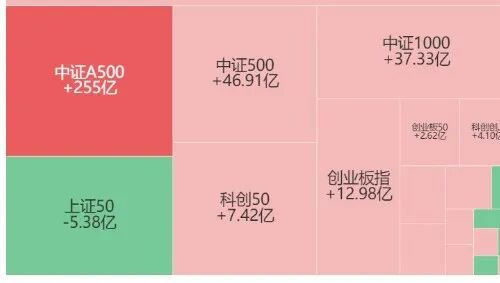
十年国债ETF(511260)近10日净流入超6.1亿元,债市压舱石配置价值凸显
Mei Ri Jing Ji Xin Wen· 2025-12-18 06:54
Core Viewpoint - The value of 30-year government bonds is becoming more apparent as they approach the after-tax adjusted mortgage rates, but the current risks indicate that ultra-long bonds should not be simply viewed as a duration strategy tool [1] Group 1: Market Environment - In the current bond market adjustment phase, the 10-year government bond serves as a stabilizing force, highlighting its robust characteristics [1] - The economic "K" structure is unlikely to ease in the short term, which remains a favorable environment for the bond market, although pessimistic sentiment has not fully dissipated [1] - The monetary policy is neutral to slightly bearish, suggesting that investors should shorten duration and await further entry signals [1] Group 2: Investment Performance - The 10-year government bond ETF (511260) tracks the Shanghai Stock Exchange 10-year government bond index, selecting bonds with a remaining maturity of 7 to 10 years listed on the exchange [1] - Since its inception, the 10-year government bond ETF has consistently achieved new net asset value highs, with historical performance remaining stable [1] - As of the end of Q3, the ETF reported a 1-year return of 4.17%, a 3-year return of 14.04%, a 5-year return of 23.39%, and a cumulative return of 35.77% since inception [1] - The ETF has maintained positive returns every year since its establishment, spanning seven complete calendar years from 2018 to 2024, positioning it as a potential asset allocation tool across market cycles [1]
中信保诚人寿总经理助理姜宏维:把握分红险核心机遇,以专业的确定性穿越市场周期
Jin Rong Jie· 2025-12-18 05:44
摘要:25年深耕分红险,中信保诚人寿的长期主义答卷 岁末年初的"开门红",历来是保险行业特有的传统盛事。随着利率持续下行,消费者财富管理需求也不断改变,兼具保证与增长属性的分红型产品成为市场 主流,传统的"开门红"战役正被赋予全新的时代内涵,不仅仅是一场年度业绩的冲刺赛,更是一家保险公司战略眼光、产品韧性、服务温度与长期价值观的 集中展现。 在2026年"开门红"战役全面打响之际,中信保诚人寿总经理助理姜宏维不仅深刻阐释了开门红对于公司的战略意义,更分享了当前保险业面临的机遇与挑 战,以及中信保诚人寿凭借"分红险"核心战略所构建的独特发展路径。 正如姜宏维所说:"在当前乃至未来相当长的时间里,我们可能都将处于一个相对低利率的环境。能够提供给客户相对安全、有一定收益和流动性的金融产 品并不多。而分红险,作为一种能较好地应对利率变动的产品,在市场上具有明显优势,是真正能够跨越周期的好产品。" 作为行业内最早聚焦分红险的险企之一,中信保诚人寿自2000年成立以来,便深耕于此,积累了长达25年、可完整追溯的分红数据。截至2024年底,公司分 红账户总规模超700亿元,成立以来累计向客户分配红利近76亿元,分红实现率长 ...

用专业构筑信任桥梁:公募渠道经理的日常
Zhong Guo Ji Jin Bao· 2025-12-18 05:02
Core Insights - The role of channel managers in public fund companies is not merely sales but involves comprehensive service throughout the banking collaboration process [2][4] - Channel managers serve as a vital link between fund companies, banks, and investors, ensuring effective communication of investment products and philosophies [1][2] Group 1: Role and Responsibilities - Channel managers focus on matching suitable products and asset allocation plans to different bank branches, enhancing the overall service experience [2] - Their responsibilities encompass pre-sale product training, addressing inquiries during sales, and providing market insights post-sale, ensuring a complete service cycle [2][3] - They aim to create a win-win situation for fund companies, banks, and investors by leveraging both the professional investment research capabilities of fund companies and the comprehensive financial services of banks [2] Group 2: Professional Development - The role of channel managers has evolved from product promoters to investment advisors, requiring a deeper understanding of macro markets, industry trends, and asset allocation logic [4] - They participate in internal selection and strategy meetings to align product offerings with client needs, thereby enhancing the variety of products available to investors [4] - Channel managers engage in continuous professional development, balancing their time between on-site training at bank branches and internal strategy discussions [4]
锚定2026资管方向,解锁量化与长期资金新机遇 ——第十九届HED中国峰会·深圳即将启幕
Xi Niu Cai Jing· 2025-12-18 03:52
二、分论坛:解码中国量化策略的下一增长曲线 在全球宏观格局深度演变、AI重构投研逻辑、新质生产力重塑产业格局的背景下,中国资管行业正站在"逻辑重塑"的十字路口。2026年1月15 日,由财视中国主办的第十九届HED中国峰会·深圳暨"第十九届介甫荣耀之夜"将于深圳盛大启幕,超过400位海内外金融机构掌舵人、顶尖投 资人与行业专家将齐聚一堂,共探2026年市场破局之道。 中国量化行业正站在一个鲜明的分水岭上,呈现出"量质齐升"与"竞争加剧"并行的新格局。规模上,百亿级量化私募数量已历史性地超越主观 多头同行;质量上,其超额收益能力日益稳健,2025年跑赢业绩基准的比例显著高于市场均值。但与此同时,赛道拥挤、AI技术竞赛加剧等挑 战也随之而来,出海寻求第二增长曲线已成为不少头部机构的共同选择——中资量化机构如何构建可持续的全球竞争力,成为行业亟待解答的 新课题。 针对这一背景,峰会特设分论坛"中国量化策略的下一阶段",集结量化领域"梦之队":千朔投资总经理丁志强、广金美好总经理罗山、大岩资 本总经理黄铂、优美利投资总经理贺金龙等重磅嘉宾,将围绕"量化股票策略的创新与前沿趋势""中资海外基金的生态构建"等核心议题深度 ...
ETF总规模达到5.78万亿元 较年初增长超2万亿元
Zheng Quan Ri Bao· 2025-12-17 22:36
Core Insights - The total scale of ETFs has significantly increased this year, reaching 5.78 trillion yuan as of December 15, with a growth of over 2 trillion yuan since the beginning of the year [1] Group 1: Institutional Investor Demand - The demand from institutional investors, such as insurance companies and pension funds, has notably increased, driving the growth of ETF scales [2] - ETFs are favored by institutional investors for their high transparency and liquidity, making them a primary choice for asset allocation [2] - Several ETFs linked to indices like AAA Sci-Tech Bonds and CSI 300 have seen scale increases of nearly 200 billion yuan each, with four indices exceeding 100 billion yuan in growth [2][3] Group 2: Market Trends and Investor Behavior - The increase in ETF scales is attributed to enhanced asset attractiveness and a shift in investor risk preferences towards high-rated credit bonds and large-cap blue-chip stocks [3] - The growth of cross-border index ETFs, such as those linked to Hong Kong stocks, reflects a diversification in market risk preferences and improved cross-border investment convenience [3] - The positive market sentiment and concentrated fund flows into high liquidity assets indicate strong investor confidence in core indices [4] Group 3: Performance of Leading Fund Companies - A total of 69 ETFs have grown by over 10 billion yuan this year, with five products exceeding 50 billion yuan in growth [4] - Leading fund companies, such as Huatai-PB and E Fund, have seen significant increases in ETF management scales, with 16 institutions managing over 100 billion yuan [4][5] - The competitive advantages of leading companies in research and strategy optimization have effectively attracted capital inflows into the ETF market [5]