
经济衰退

Search documents
申银万国期货首席点评:“国家队”入场稳市场
Shen Yin Wan Guo Qi Huo· 2025-04-08 06:39
报告日期:2025 年 4 月 8 日 申银万国期货研究所 首席点评:"国家队"入场稳市场 美国总统特朗普 7 日表示,不会暂停所谓的"对等关税"政策。中共中央、国务 院印发了《加快建设农业强国规划(2024-2035 年)》,以农业关键核心技术攻 关为引领,以产业急需为导向,加快以种业为重点的农业科技创新,推进重大农 业科技突破,以发展农业新质生产力推进农业强国建设。中国 3 月末外汇储备 32406.65 亿美元,环比增加 134.41 亿美元;黄金储备 7370 万盎司,环比增加 9 万盎司,连续 5 个月增加。国内商品期货夜盘,原油合约收跌 6.41%报 477.4 元 /桶。沪金收跌 0.5%报 713.02 元/克,沪银收涨 0.07%报 7668 元/千克。 重点品种:原油、贵金属、豆粕 原油:原油夜盘下跌 6.41%。关于美国新关税政策将暂停 90 天的传言在美国网 络传播,但是很快白宫很快予以否认,原油日内大幅波动。尽管美国对石油、天 然气和精炼产品的进口被豁免于新关税,但这些政策可能会刺激通胀、减缓经济 增长并加剧贸易争端,从而对油价构成压力。高盛慌忙再继续下调油价,预计 2026 年布伦 ...
建信期货铝日报-2025-04-08
Jian Xin Qi Huo· 2025-04-08 02:36
Industry Investment Rating - No relevant information provided Core Viewpoint - Affected by US reciprocal tariffs and China's counter - measures during the holiday, global risk assets tumbled, and domestic non - ferrous metals opened almost limit - down. However, supported by fundamentals, Shanghai aluminum rebounded. The trading logic has shifted from re - inflation to concerns about global economic slowdown or recession. Although the aluminum fundamentals are fair, due to the escalation of the tariff war and economic uncertainties, short - term operations should be cautious [8] Summary by Directory 1. Market Review and Operation Suggestions - Shanghai aluminum's main contract 2505 opened at 19,000 yuan/ton, then rebounded, with the highest intraday reaching 19,905 yuan/ton and closing at 19,685 yuan/ton, a decline of 3.67%. The total index positions increased by 1,486 to 487,716 lots. The spot market was cautious, with different premiums and discounts in different regions. The import loss narrowed to about - 1,300 yuan/ton. Alumina followed the decline but was relatively resilient. Considering the tariff war and economic uncertainties, short - term operations need to be cautious [8] 2. Industry News - India imposed anti - dumping duties of 479 - 721 US dollars/ton on Chinese aluminum foil no thicker than 80 microns for 5 years, with some products excluded [9][10] - Rio Tinto postponed the restart of Tiwai Point aluminum smelter until August 31 to ensure 50MW of winter power supply. The plant's installed capacity is 365,000 tons, and the current restart progress is about 70% [10] - Hydro will invest 1.56 billion US dollars to build a new wire casting workshop with an annual output of 110,000 tons at its Karmøy aluminum plant, scheduled to be put into operation in Q1 2028, responding to the demand for low - carbon aluminum wires in European energy infrastructure [10]
加密货币市场遭遇大幅抛售,超44万人爆仓
凤凰网财经· 2025-04-07 14:58
来源|证券时报 市场风险偏好急剧下降! 由特朗普关税挑起的"贸易战",让全球股市连续多日大跌。周一,美国股指期货继续暴跌,亚太股市也集体重挫。今日,加密货币也加入暴跌行列, 比特币大跌超10%,并跌破7.5万美元/枚,以太坊、XRP、Solana等跌幅均超过18%。 加密货币的快速下跌表明,美国总统特朗普所倡导的加密货币与其他任何风险资产一样,都会受到市场波动的影响。 Coinglass数据显示,过去24小时内,加密货币市场全网合约爆仓超13.6亿美元,爆仓人数超过44万人。有分析人士指出,加密货币通常是风险资产 的领先指标,预计美国股市今天开盘后将出现更剧烈的回调。 01 超44万人爆仓 周一,加密货币市场遭遇大幅抛售,突显出市场上明显的避险情绪。截至券商中国记者发稿,比特币跌破7.5万美元/枚,24小时内跌幅超过10%。 其他加密货币跌幅更大,以太坊跌近20%,XRP、狗狗币跌超20%,Solana跌超18%。 | 名称 : | 代码 = | 价格(USD) = | 成交量(24H) ; | 交易份额 : | 涨跌(24H) ; | | --- | --- | --- | --- | --- | --- ...
全球股市巨震,明天A股会怎么走?
Sou Hu Cai Jing· 2025-04-07 14:57
Market Overview - Global stock markets experienced significant declines, with Japan's market dropping over 7%, South Korea's over 5%, and Hong Kong's Hang Seng Index falling over 11%. The A-share market also saw a substantial drop, with the ChiNext index down over 12% and nearly 3,000 stocks hitting the daily limit down [1][2]. Economic Factors - The "reciprocal tariffs" issue in the U.S. is still unfolding, with a 10% minimum baseline tariff already in effect and a higher tariff set to take effect soon, posing a potential disaster for the global economy [1]. - Goldman Sachs has raised the probability of a U.S. economic recession, adjusting the GDP growth forecast for Q4 2025 from 1% to 0.5% and increasing the recession probability for the next 12 months from 35% to 45% [1][2]. Investment Behavior - There has been a rapid sell-off by hedge funds and ETFs, with over $40 billion in stocks sold last Friday, indicating a flight of "smart money" from the market [2]. - The market's initial belief that zero tariffs would resolve the situation has proven ineffective, as U.S. trade advisors indicate that even with zero tariffs, issues such as export subsidies from Vietnam remain [2]. Sector Performance - The agricultural planting sector showed resilience, with projected imports of soybeans, corn, and wheat from the U.S. for 2024 being 22.13 million tons, 20.719 million tons, and 1.3 million tons respectively, highlighting the importance of food security [3]. - Chicken-related stocks performed actively due to the suspension of imports from two U.S. poultry companies and four others, indicating a shift in market dynamics [3]. Market Sentiment - The sentiment in the A-share market is extremely negative, exacerbated by declines in global markets, leading to increased panic selling [4]. - The performance of Apple-related stocks and AI hardware sectors has been notably poor, reflecting broader market trends [4].
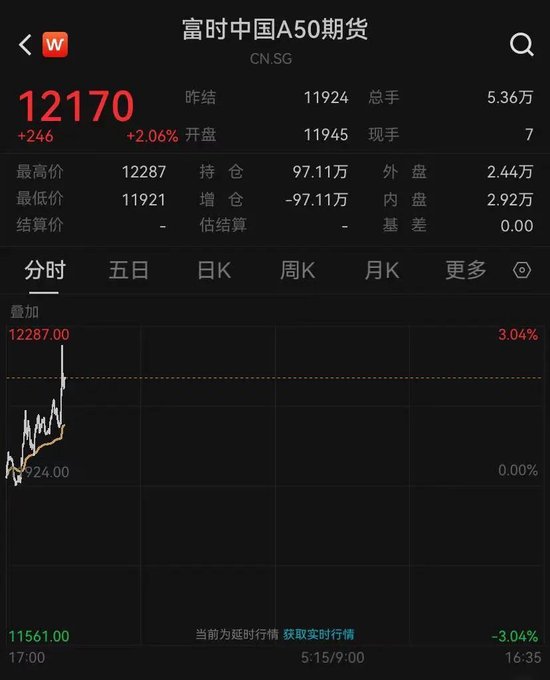
重要信号!A50突然拉涨
Shang Hai Zheng Quan Bao· 2025-04-07 12:02
炒股就看金麒麟分析师研报,权威,专业,及时,全面,助您挖掘潜力主题机会! 随着美国"对等关税"政策对全球资本市场的冲击蔓延,亚太多个市场率先行动。 4月7日,中央汇金公司公告称,中央汇金公司坚定看好中国资本市场发展前景,充分认可当前A股配置 价值,已再次增持了交易型开放式指数基金(ETF),未来将继续增持,坚决维护资本市场平稳运行。 市场表现方面,富时A50中国指数期货在4月7日17:00重开后走高,涨幅扩大至2%。此外,欧洲市场 主要股指跌幅收窄,德国DAX指数跌幅收窄至不足4%,此前一度跌10%。欧洲斯托克50指数跌幅收窄 至4%,英国富时100指数跌幅收窄至3.5%,法国CAC40指数跌幅收窄至3.7%。 | < W | 富时中国A50期货 | | | | | | | | --- | --- | --- | --- | --- | --- | --- | --- | | | CN.SG | | | | | | | | 12170 | 昨结 | | 11924 | 总手 | | | 5.36万 | | +246 | +2.06% 开盘 | | 11945 | 现手 | | | 7 | | 最高价 | 持 ...


衰退倒计时?家办资金正在撤离美国
3 6 Ke· 2025-04-07 11:01
Core Points - The article discusses the significant impact of President Trump's new tariff policy, which imposes at least a 10% tariff on all imported goods starting April 5, and higher tariffs on countries deemed as serious trade violators [1] - The policy is viewed as a major shift in international trade order since World War II, raising concerns among family offices and investors about its implications for the market and economy [1][11] Impact on Family Offices - Family offices are increasingly reconsidering their investments in the U.S. due to concerns over economic growth and policy uncertainty stemming from the new tariffs [11][19] - There is a noticeable trend of high-net-worth family office clients diversifying their portfolios away from the U.S. to mitigate risks associated with the trade war [11][20] - Some family offices are exploring investments in hard assets like gold and real estate, while others are raising cash to wait for market stabilization [19][20] Market Reactions - The aggressive tariff strategy has led to a significant market downturn, with the U.S. stock market experiencing its worst week since March 2020 [1] - Notable private equity firms have halted IPOs and acquisitions due to the uncertainty created by the tariffs, indicating a paralysis in the private equity sector [3][4] - Hedge funds are facing increased pressure and are considering stepping back from trading due to the chaotic market conditions, with some funds suffering significant losses [6][8] Economic Forecasts - Goldman Sachs has downgraded its U.S. economic growth outlook and increased the probability of a recession to 45%, citing tightening financial conditions and rising policy uncertainty [8][10] - The potential for tariffs to raise effective rates by 20 percentage points could lead to further revisions in economic forecasts, including the likelihood of a recession [10] - UBS estimates that the new tariffs could slow global economic growth by 50 to 100 basis points, with the most significant impacts felt in Thailand and Singapore [10] Investment Trends - There is a shift among ultra-high-net-worth investors towards European and Asian markets, driven by concerns over U.S. economic policies and the search for better growth opportunities [11][19] - Family offices are increasingly looking for international investments not only for diversification but also as a hedge against currency fluctuations and to access unique investment opportunities [11][19] - The trend of reallocating investments away from the U.S. is becoming more pronounced, with family offices seeking to capitalize on emerging opportunities in other regions [19][20]



“黑色星期一”来了,全球股市巨震!
华尔街见闻· 2025-04-07 03:09
Core Viewpoint - The article discusses the significant market turmoil triggered by aggressive tariff policies announced by the Trump administration, leading to a sharp decline in global stock markets and heightened investor anxiety [1][9][10]. Market Impact - The S&P 500 index experienced its largest two-day drop since March 2020, with over $5 trillion in market value lost in just two days [1]. - The Nasdaq Composite index fell into bear market territory, while the Dow Jones Industrial Average entered a correction phase [1]. - On Monday, S&P 500 futures dropped by as much as 5.4%, and Nasdaq 100 futures fell by 6.2% [1]. Asian Market Reaction - Major Asian indices suffered significant losses, with the Nikkei 225 and Topix indices both down over 5% [2]. - The Taiwan Weighted Index opened down 5.4% and later expanded its losses to 9.8% [3]. - The Hang Seng Index opened down 9.28%, with the Hang Seng Tech Index falling 11.15% [4]. Commodity and Currency Movements - WTI crude oil futures fell below $60 for the first time since April 2021, while copper prices dropped over 8% [5]. - Non-US currencies weakened, with the Australian dollar declining by 1% and the Japanese yen rising due to safe-haven demand [5]. Historical Context - The market's reaction has drawn comparisons to the "Black Monday" crash of 1987, with analysts warning of potential further turmoil [6][10]. - The recent declines are noted as the fourth largest "double-day drop" since World War II, following similar events in 1987, 2008, and during the COVID-19 pandemic [7][8]. Investor Sentiment - Market commentators express deep concern over the potential for a recession, with some suggesting that the current situation could lead to severe economic downturns if tariffs are not reconsidered [11][12]. - Investors are reportedly anxious, with many seeking to reduce risk exposure amid the uncertainty surrounding tariff impacts [15][16]. Government Response - In contrast to market fears, Trump administration officials have maintained a calm demeanor, asserting that the economy will prosper despite the turmoil [18][19]. - Treasury Secretary Mnuchin emphasized that the long-term market returns remain strong, despite recent volatility [19]. Economic Outlook - Analysts are increasingly worried about the implications of rising tariffs on economic growth, with predictions of a 60% chance of a global recession [24]. - The uncertainty surrounding tariff rates is causing businesses to struggle with planning and investment decisions [24].



国务院:对原产于美国的所有进口商品加征34%关税
Dong Zheng Qi Huo· 2025-04-07 01:14
1. Report Industry Investment Ratings - **Treasury Futures**: Bullish, suggesting active long - position layout [14] - **Foreign Exchange Futures (US Dollar Index)**: Short - term volatility, maintaining a short - term oscillation view [19] - **Gold**: Short - term callback, suggesting reducing positions and waiting for better allocation opportunities [21] - **US Stock Index Futures**: Cautious, suggesting careful control of positions due to ongoing adjustments [24] - **Stock Index Futures**: Suggesting reducing positions and waiting and seeing [27] - **Power Coal**: Stable price, with limited expected fluctuations in the short term [28] - **Iron Ore**: Cautious, suggesting reducing the holding period and avoiding external risks [30] - **Palm Oil**: Bearish in the short term, suggesting a short - selling mindset [34] - **Soybean Oil**: Suggesting attention to the 5 - 9 spread reverse arbitrage opportunity [34] - **Sugar**: Short - term bullish support from spot prices, but potential risks from the trade war [39] - **Cotton**: Short - term bearish, suggesting light - position and cautious operation [44] - **Rebar/Hot - Rolled Coil**: Suggesting light - position and using a rebound hedging strategy [47] - **Soybean Meal**: Bullish for domestic futures, bearish for CBOT soybeans, with different impacts on near - and far - month contracts [50] - **Nickel**: Suggesting looking for long - entry opportunities after the panic sentiment subsides [53] - **Copper**: Short - term pressure, suggesting attention to long - position opportunities after sentiment digestion and focusing on the Shanghai copper inter - period positive arbitrage strategy [57] - **Lithium Carbonate**: Suggesting holding previous short positions and not chasing short at the current level [59] - **Lead**: Short - term waiting, suggesting looking for long - entry opportunities at low levels in the medium term; holding the internal - external reverse arbitrage [61] - **Zinc**: Short - term waiting, suggesting looking for medium - term rebound short - selling opportunities; temporarily waiting for inter - period and internal - external arbitrage [64] - **Polysilicon**: Suggesting both long - entry at low levels for PS2506 and short - selling at high levels for PS2511; holding the PS2506 - PS2511 positive arbitrage [67] - **Industrial Silicon**: Suggesting short - selling at high levels after the rebound on the disk and the Si2511 - Si2512 reverse arbitrage [69] - **Carbon Emissions**: Short - term wide - range oscillation [71] - **Crude Oil**: Expected lower price fluctuation range in the second quarter [74] - **Bottle Chips**: Short - term processing fees in the low - level range [79] - **Caustic Soda**: Limited further downward space for the disk [80] - **Pulp**: Suggesting attention to the impact of Trump's tariff policy on the pulp supply chain [81] - **PVC**: Suggesting waiting and seeing due to non - prominent fundamental contradictions [83] - **Soda Ash**: Maintaining a medium - term view of short - selling at high levels [84] - **Float Glass**: Suggesting looking for long - entry opportunities at large pullbacks in the short term [86] - **Container Freight Index**: Short - term waiting, with near - month contracts in a weak - oscillation state [88] 2. Core Views The report focuses on the impact of the US tariff policy and China's counter - measures on various financial and commodity markets. The trade conflict has led to increased market volatility, risk aversion, and concerns about global economic recession. Different markets show different responses based on their own fundamentals and supply - demand relationships. For example, in the financial market, bond markets may rise, while the US dollar index shows short - term oscillations. In the commodity market, most products face price pressure due to the trade war, but some products are also affected by their own supply - demand factors, such as the potential increase in palm oil inventory and the impact of copper's macro - sentiment and inventory structure on its price. 3. Summary by Relevant Catalogs 3.1 Financial News and Comments 3.1.1 Macro Strategy (Treasury Futures) - News: China will impose a 34% tariff on all US - originated imported goods starting from April 10, 2025. The central bank conducted 2234 billion yuan of 7 - day reverse repurchase operations on April 3, with a net investment of 49 billion yuan [12][13] - Comment: The trade conflict may escalate, and the upward trend of the bond market is relatively certain. Long - term bonds may still have downward space after the holiday, and short - term bonds may rise if the monetary policy turns loose [13] - Investment Advice: Actively conduct long - position layout [14] 3.1.2 Macro Strategy (Foreign Exchange Futures - US Dollar Index) - News: US Treasury Secretary supports the tariff policy and denies that the US will fall into recession. The White House Chief Economic Advisor says the market crash is not Trump's strategy. The EU is ready to counter the US tariff measures [15][16][17] - Comment: White House officials believe the impact of tariffs on the economy is controllable. Short - term tariffs will continue to cause significant market fluctuations, and the US dollar index will maintain an oscillatory trend [18] - Investment Advice: Short - term oscillation of the US dollar [19] 3.1.3 Macro Strategy (Gold) - News: Fed Chairman Powell says monetary policy needs to remain cautious. The US March non - farm payrolls exceeded expectations. China imposed a 34% tariff on US - originated imported goods [20][21] - Comment: Gold prices fell by more than 2% on Friday. The US tariff policy and OPEC's production increase led to a decline in market risk appetite, and gold was affected by liquidity. The short - term financial market's risk - aversion sentiment persists, but gold's trade - related premium is limited [21] - Investment Advice: Short - term callback, reducing positions and waiting for better allocation opportunities [21] 3.1.4 Macro Strategy (US Stock Index Futures) - News: The US March non - farm employment increased by 228,000, higher than expected, but the unemployment rate rose to 4.2% [22] - Comment: The labor market remains resilient, but the market's reaction is muted due to tariff risks. The tariff policy has increased inflation risks, and the Fed may be more cautious. The market is worried about economic downturn [24] - Investment Advice: Cautious control of positions due to ongoing adjustments in the US stock market [24] 3.1.5 Macro Strategy (Stock Index Futures) - News: China's offline consumption heat index increased by 14.2% year - on - year in the first quarter. China will impose a 34% tariff on all US - originated imported goods [25][26] - Comment: Trump's tariff policy led to a global stock market crash. The A - share market will also face significant adjustments. In the short term, the fundamentals and risk appetite are unclear [26] - Investment Advice: Reducing positions and waiting and seeing [27] 3.2 Commodity News and Comments 3.2.1 Black Metals (Steam Coal) - News: Canadian coal shipments in the 13th week of 2025 increased by 6.52% year - on - year [28] - Comment: Short - term steam coal prices will remain stable. The decline in imported coal since March has slightly increased domestic coal demand, and the supply - demand contradiction has been alleviated. April is the off - season, and the power plant's inventory replenishment cycle has not arrived [28] - Investment Advice: Limited price changes in the short term [28] 3.2.2 Black Metals (Iron Ore) - News: An Australian mining company plans to produce 2 million tons of iron ore in Madagascar [29] - Comment: The trade conflict has intensified, and the SGX swap price has declined. The black - metal market may be under pressure, especially in the plate - related sectors. The iron ore price may be supported around $90 [29] - Investment Advice: Reducing the holding period and avoiding external risks [30] 3.2.3 Agricultural Products (Palm Oil/Soybean Oil/Rapeseed Oil) - News: Malaysian palm oil inventory may increase for the first time in six months in March. CBOT soybean oil fluctuated greatly last week [31][34] - Comment: Market institutions predict that Malaysian palm oil inventory will increase by 3% in March. Domestic palm oil is expected to open lower and maintain a low - level oscillation this week. Soybean oil prices may decline, but the decline of near - month contracts may be greater than that of far - month contracts [33][34] - Investment Advice: Short - selling palm oil in the short term; attention to the 5 - 9 spread reverse arbitrage opportunity for soybean oil [34] 3.2.4 Agricultural Products (Sugar) - News: Brazilian weather risks may support sugar prices. Brazilian sugarcane production is expected to decline. Guangxi's sugar production in the 24/25 season reached 646.08 million tons as of the end of March [35][36][37] - Comment: Domestic sugar mills' sales progress is fast, and spot prices are firm, providing short - term bullish support for the futures market. However, the trade war may bring risks to the sugar market [38][39] - Investment Advice: The current spot price supports the futures market, but the trade war may pose risks [39] 3.2.5 Agricultural Products (Cotton) - News: Xinjiang's spring weather is generally favorable for spring sowing. The US cancelled the tax - free treatment of small - value packages from China. The US cotton export in the week of March 21 - 27 increased week - on - week [40][41][42] - Comment: Although the US cotton weekly export volume increased, the next - year's export prospects face challenges due to the trade war. China's cotton textile exports are blocked, and the cotton market is under pressure [43][44] - Investment Advice: Short - term bearish, suggesting light - position and cautious operation [44] 3.2.6 Black Metals (Rebar/Hot - Rolled Coil) - News: The inventory of five major steel products decreased by 477,200 tons week - on - week as of April 3. The real - estate market in some hot cities was active in March [45][46] - Comment: Due to the tariff risk, the external market declined. The black - metal market's fundamental contradictions are not prominent, but the long - term demand for hot - rolled coils has risks. Steel prices may decline on Monday [46] - Investment Advice: Light - position operation and using a rebound hedging strategy [47] 3.2.7 Agricultural Products (Soybean Meal) - News: Brazil exported 14.68 million tons of soybeans in March. China will impose a 34% tariff on all US - originated imported goods, and the tariff on US soybeans will reach 47% [48][50] - Comment: The tariff on US soybeans will accelerate China's shift to Brazilian soybeans. The new round of Sino - US trade war is bullish for domestic soybean meal futures, especially for far - month contracts. The inventory of domestic soybean meal will increase in the second half of April [50] - Investment Advice: Bullish for domestic soybean meal futures, bearish for CBOT soybeans. The increase in domestic soybean arrivals will pressure the spot and basis of soybean meal [50] 3.2.8 Non - Ferrous Metals (Nickel) - News: The Shanghai nickel futures inventory decreased by 3669 tons in the week of April 4 [51] - Comment: Trump's tariff policy led to a decline in the nickel price. After the release of risk sentiment, the price may return to the previous level. The nickel ore market is tight, and the nickel - iron market is strong, but there is a risk of oversupply [52] - Investment Advice: Looking for long - entry opportunities after the panic sentiment subsides [53] 3.2.9 Non - Ferrous Metals (Copper) - News: US mining giants are exploring new technologies to extract copper from old mines. Zambia's copper production may increase to nearly 1 million tons in 2025. Southeast Copper's cathode copper production increased by 4.25% year - on - year in the first quarter [54][55][56] - Comment: The US tariff policy and counter - measures have led to concerns about global economic recession, suppressing copper prices. The domestic inventory is weakly destocking, and the inventory change may support copper prices in the future [57] - Investment Advice: Short - term pressure on copper prices, suggesting attention to long - position opportunities after sentiment digestion and focusing on the Shanghai copper inter - period positive arbitrage strategy [57] 3.2.10 Non - Ferrous Metals (Lithium Carbonate) - News: Lithium Americas reached a final investment decision on the Thacker Pass lithium mine [58] - Comment: The current fundamentals of lithium prices are bearish. Domestic salt - factory production remains high, demand is weak, and the ore price is falling. The warehouse receipt registration has increased [59] - Investment Advice: Holding previous short positions and not chasing short at the current level [59] 3.2.11 Non - Ferrous Metals (Lead) - News: MMG released its Q4 2024 report, and the LME0 - 3 lead was at a discount of $27.28 per ton on April 2 [60][61] - Comment: The US tariff mainly affects lead - acid battery exports. The lead price decline is due to market risk - aversion and concerns about future exports. The Shanghai lead may open at around 16,800 yuan, and it is recommended to wait for the macro - risk to clear and look for long - entry opportunities at low levels [61] - Investment Advice: Short - term waiting, looking for long - entry opportunities at low levels in the medium term; holding the internal - external reverse arbitrage [61] 3.2.12 Non - Ferrous Metals (Zinc) - News: The LME0 - 3 zinc was at a discount of $18.13 per ton on April 2. MMG released its Q4 2024 report, and an Australian silver - zinc mine is approaching restart [62][63] - Comment: The US tariff affects zinc through market risk - aversion and concerns about future consumption in related industries. The Shanghai zinc may open at around 22,500 yuan. The demand is in the process of turning from off - season to peak season, but the short - term price may still be under pressure [64] - Investment Advice: Short - term waiting, looking for medium - term rebound short - selling opportunities; temporarily waiting for inter - period and internal - external arbitrage [64] 3.2.13 Non - Ferrous Metals (Polysilicon) - News: China will impose a 34% tariff on all US - originated imported goods. The polysilicon production in April is expected to be about 1 million tons, and the silicon wafer supply will decrease due to the Myanmar earthquake [65] - Comment: The tariff has limited impact on the photovoltaic industry chain. In April, polysilicon may destock slightly, but the spot price may decline after the peak - demand period. The polysilicon warehouse receipt registration will start in April [66] - Investment Advice: Looking for long - entry at low levels for PS2506 and short - selling at high levels for PS2511; holding the PS2506 - PS2511 positive arbitrage [67] 3.2.14 Non - Ferrous Metals (Industrial Silicon) - News: Sichuan sample silicon enterprises are gradually resuming production [68] - Comment: Xinjiang's large - scale silicon plants have reduced production, and the southwest region is slowly resuming production. The demand for polysilicon and organic silicon is weak, and the export may decline. The supply - demand situation of industrial silicon is difficult to improve [68] - Investment Advice: Looking for short - selling at high levels after the rebound on the disk and the Si2511 - Si2512 reverse arbitrage [69] 3.2.15 Energy Chemicals (Carbon Emissions) - News: The EUA main contract closed at €63.82 per ton on April 4, down 3.39% from the previous day and 7.24% week - on - week [70] - Comment: The US tariff policy led to a decline in the European natural gas price and carbon price. The short - term carbon market needs to pay attention to the macro - environment. The EU's emissions decreased by 5% in 2024 [70] - Investment Advice: Short - term wide - range oscillation of the EU carbon price [71] 3.2.16 Energy Chemicals (Crude Oil) - News: The US oil rig count increased to 489 as of April 4. OPEC + decided to increase production by 411,000 barrels per day in May [72][73] - Comment: The US tariff policy and OPEC +'s production increase led to a significant decline in oil prices. The global trade friction has worsened the oil demand outlook, and the market is worried about OPEC +'s unity and the stability of the production - cut agreement [73] - Investment Advice: The oil price fluctuation range is expected to be lower in the second quarter [74
美股期货、黄金白银、比特币继续暴跌,超28万人爆仓
21世纪经济报道· 2025-04-07 00:17
Core Viewpoint - The article discusses the widespread panic in global financial markets due to "reciprocal tariffs," leading to a significant sell-off across various asset classes, with no clear winners in the market [1]. Market Performance - U.S. stock indices, crude oil futures, cryptocurrencies, and precious metals experienced severe declines, with the Nasdaq futures dropping over 5% and the S&P 500 futures down more than 4% [2]. - Crude oil futures fell by 10% last week and continued to decline, with WTI crude oil futures dropping below $60 per barrel for the first time since April 2021 [3]. - Spot gold and silver also saw declines, with gold down nearly 1.7% and silver dropping 3% in early trading [5]. Cryptocurrency Market - COMEX copper futures fell over 8%, while major cryptocurrencies like Bitcoin and Ethereum dropped more than 6% and 12%, respectively, leading to over 28,000 liquidations totaling $852 million in the past 24 hours [8][10]. Investor Sentiment - The VIX index surged by 40% on April 3 and then by 50% on April 4, reaching its highest level since April 2020, indicating extreme fear in the market [13]. - The S&P 500 index fell by 5.97%, marking its largest single-day drop since March 2020, while the Dow Jones Industrial Average also entered a correction phase [15]. Economic Implications - The article highlights concerns that rising tariffs will increase supply chain costs and weaken profitability, particularly for tech-heavy indices like the Nasdaq [17]. - Investors are selling off assets, including gold, to cover losses in other areas, reflecting a broader trend of panic selling similar to the sell-off during the COVID-19 pandemic [19]. Federal Reserve's Stance - The Federal Reserve's Chairman Jerome Powell indicated that the Fed would not rush to respond to the tariffs or market volatility, suggesting a cautious approach to monetary policy adjustments [24]. - Powell's comments have led to a shift in market expectations regarding interest rate cuts, with projections for four 25 basis point cuts being pushed from October to December [26]. Future Outlook - Some analysts are exploring potential "buying opportunities" in the aftermath of the market crash, while others express skepticism about the sustainability of a bull market given the ongoing trade tensions [28][29]. - The risk of economic recession is increasing, with predictions of a 60% chance of recession in the U.S. if the tariff policies persist [31].

申万宏源证券:美股大幅回撤是否预示着经济衰退将至
Zhi Tong Cai Jing· 2025-04-06 23:05
Group 1 - The core viewpoint of the articles discusses the relationship between the recent decline in the U.S. stock market and the potential for an economic recession, questioning whether the stock market downturn is indicative of an impending economic slowdown [1][3]. - Historical data suggests that bear markets in the U.S. stock market often precede economic recessions, with 11 out of 14 bear markets since 1929 correlating with economic downturns [1]. - The current bear market is characterized by significant declines in major indices, with the S&P 500 and Nasdaq down 17.4% and 22.3% respectively since February 19, indicating a potential shift towards recessionary conditions [1]. Group 2 - The "wealth effect" from the stock market primarily influences high-income households, as they contribute significantly to consumer spending, with the top 1% of income earners holding 45.6% of their assets in equities [2]. - The elasticity of consumption in response to stock market changes is estimated to be between 0.02 and 0.08, indicating that stock market fluctuations have a measurable but limited impact on overall consumer spending [2]. - The potential economic impact of a 20% decline in the stock market could reduce U.S. economic growth by up to 1 percentage point, with current estimates suggesting a drag of 0.4-0.5 percentage points due to recent market declines [3]. Group 3 - The recent stock market downturn is linked to fears stemming from tariff policies, particularly those enacted during the Trump administration, which may exacerbate economic vulnerabilities [3]. - The labor market remains a critical factor in assessing economic health, with unemployment rates serving as a key indicator for potential recession [3].
