
贸易战

Search documents
特朗普关税战,印度股市成了最大输家?
Hua Er Jie Jian Wen· 2025-08-21 07:47
Core Viewpoint - The article highlights the significant impact of escalating trade tensions, particularly the threat of a 50% tariff from the U.S., on India's economic growth and corporate profitability, marking India as one of the most affected players in the ongoing trade disputes [1]. Group 1: Economic Impact - Analysts have downgraded earnings forecasts for Indian companies, with a 1.2% reduction in projected earnings over the next 12 months, the largest decline in Asia [1]. - If the U.S. continues to impose a 50% tariff on Indian goods, it could lead to a 1 percentage point decrease in India's GDP growth rate, particularly affecting labor-intensive sectors like textiles [2]. - The Indian stock market's status has dramatically shifted from being the most favored in Asia to the least favored within just two months [1]. Group 2: Corporate Profitability - Indian corporate earnings growth has remained in single digits for five consecutive quarters, significantly below the expected growth range of 15%-25% from 2020-21 to 2023-24 [3]. - The latest earnings forecast downgrades are a direct response to disappointing financial results for the April to June quarter [3]. - Key sectors such as automotive, capital goods, food and beverages, and durable consumer goods have seen net profit forecasts reduced by 1% or more [4]. Group 3: Government Response - In response to trade pressures, the Indian government is considering a major tax reform aimed at stimulating domestic demand by simplifying the Goods and Services Tax (GST) structure [4]. - The proposed tax reform could contribute an estimated 0.35-0.45 percentage points to GDP growth by the fiscal year 2027 [5]. - Despite a projected average GDP growth of 8.8% for the fiscal years 2022-2024, the ongoing trade tensions pose significant challenges to this growth outlook [5].
美媒:涨价带来冲击 关税政策正在伤害美国工薪阶层
Zhong Guo Xin Wen Wang· 2025-08-21 07:05
Group 1 - The article highlights that the tariff policies implemented by the Trump administration have increased costs for American consumers, particularly affecting the working class [1][2] - It notes that since March, industries heavily impacted by rising tariff-related costs have seen significant declines in employment rates [1] - The article emphasizes that the costs associated with tariffs are being passed on to consumers, leading to higher prices for imported goods and domestic manufacturing components [1][2] Group 2 - The automotive industry is specifically mentioned, with tariffs on auto parts increasing from 2.5% to 25%, steel tariffs rising from zero to 50%, and finished vehicle tariffs also increasing from 2.5% to 25%, all contributing to rising costs [1] - The article argues that the burden of these tariff-related price increases will force consumers to adjust their spending, potentially reducing their quality of life [2][4] - It criticizes the Trump administration for ignoring the negative impact of tariffs on the working class, with past statements indicating a lack of concern for rising consumer prices [3]
安联贸易:2025全球应收账款与营运资金报告
Sou Hu Cai Jing· 2025-08-21 03:53
Core Insights - The report indicates that global working capital requirements (WCR) increased by 2 days to 78 days in 2024, marking the highest level since 2008, with no signs of relief at the beginning of 2025 [2][8][11] - Economic volatility, trade tensions, and tightening financial conditions are driving this increase, forcing companies to adapt to uncertainty and bear associated costs [2][8] - There are significant regional differences in working capital needs, with Western Europe experiencing a continuous increase of 4 days, while North America saw a decrease of 3 days [2][12] Regional Analysis - In Western Europe, companies face delayed receivables, with accounts receivable turnover days (DSO) increasing for the third consecutive year, leading to a reliance on trade credit, which is projected to reach approximately €11 billion [9][28] - North American companies have reduced their working capital needs by 3 days, primarily through inventory reduction and reallocating funds to shareholders, with stock buybacks expected to exceed $1 trillion in 2025 [2][8][29] - The Asia-Pacific region saw a slight increase of 2 days in working capital needs, with significant contributions from China and Singapore [27][12] Industry Trends - Almost all industries are experiencing an increase in DSO, particularly in transportation equipment (+11 days) and electronics (+4 days), leading to a general rebound in working capital needs [3][34] - Seven industries globally are witnessing increased working capital requirements across North America, Western Europe, and Asia-Pacific due to weak demand, while declines are more scattered [3][35] - The construction and commodities sectors are showing the most significant reversals in trends at the beginning of 2025 [3][34] Financial Dynamics - European companies are acting as "shadow banks," providing significant trade credit, which poses risks if economic growth slows or interest rates rise [9][28] - The report highlights that 35% of global companies have working capital needs exceeding 90 days, indicating a persistent challenge in cash flow management [11][18] - The report also notes that the average inventory turnover days (DIO) remain stable, with inventory still accounting for a significant portion of working capital needs [19][34]


听说要和中国打贸易战,在座的欧洲各国领导人,没一人敢抬头吱声
Sou Hu Cai Jing· 2025-08-21 03:53
Group 1 - The U.S. Treasury Secretary's proposal for a 200% tariff on China was met with silence and resistance from G7 allies, highlighting a lack of support for aggressive trade measures against China [3][5] - European leaders are heavily reliant on trade with China, with projected trade volume reaching €856 billion in 2024, making them hesitant to engage in a trade war [3][5] - The last trade war under the Trump administration resulted in significant losses for the EU, amounting to over €170 billion, which has made European leaders cautious about repeating such mistakes [3][5] Group 2 - The U.S. is attempting to pressure Europe into supporting sanctions against China, but European officials are prioritizing their economic relationships with China over U.S. demands [5][7] - The potential for secondary sanctions against countries purchasing Russian energy, including India and Turkey, raises concerns for Europe about future U.S. coercion in other energy partnerships [5][7] - Europe's reluctance to support U.S. sanctions is seen as a strategic decision to avoid economic self-harm in the context of U.S.-China tensions [7]
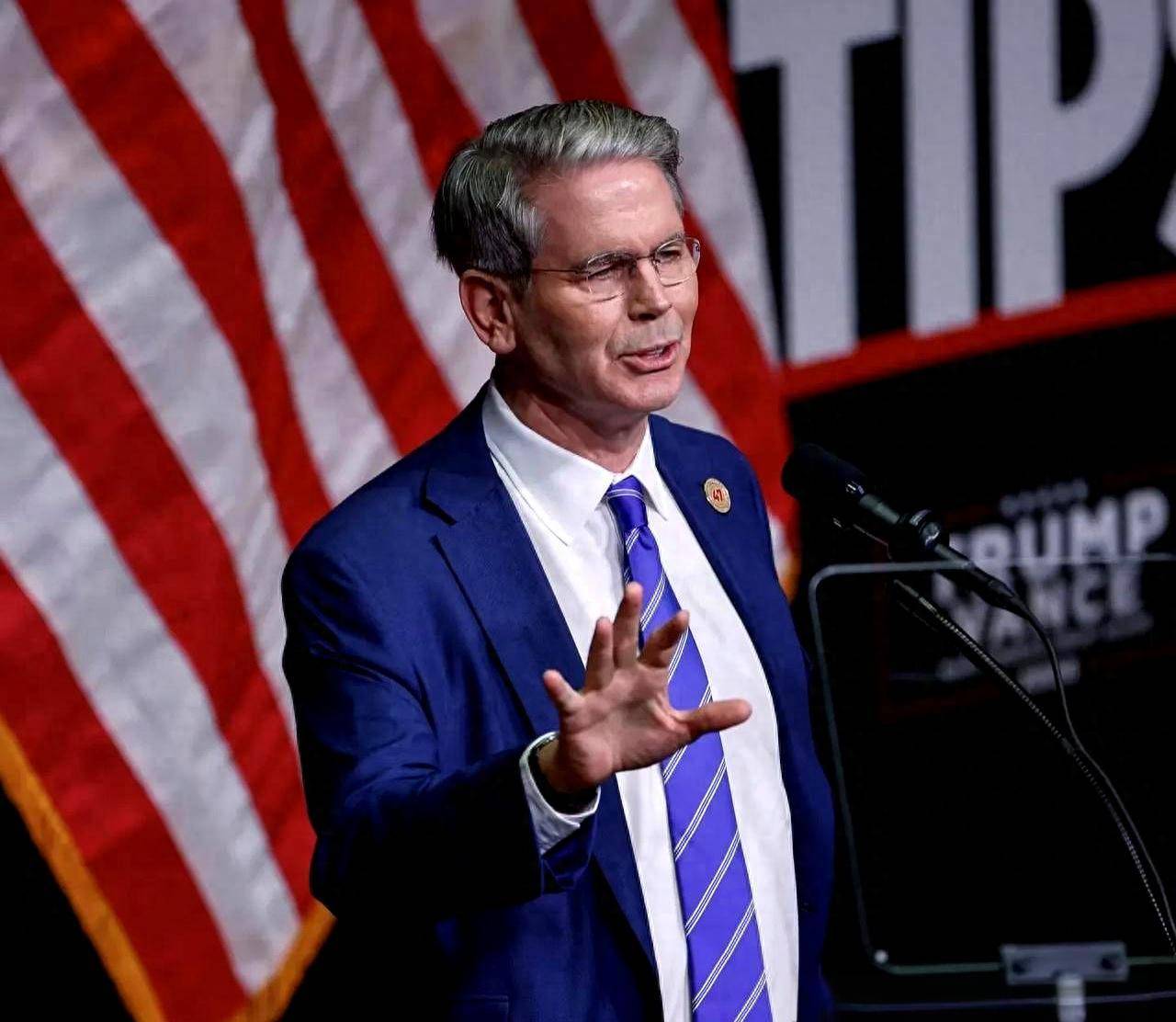
来者不善?美高官面不改色,替中方说好话,中国和印度,真的不一样
Sou Hu Cai Jing· 2025-08-21 02:46
Group 1 - The U.S. has imposed a 50% tariff on Indian exports, significantly impacting India's economy, as exports to the U.S. account for 20% of India's total exports, amounting to $87 billion annually [1][3] - India's largest footwear manufacturer has frozen plans for a new factory due to the high tariffs, indicating the severe impact on local businesses [1] - Fitch has warned that these tariffs could lower India's GDP growth forecast for FY2026, with Bloomberg predicting a potential 60% drop in Indian exports to the U.S. [1] Group 2 - In contrast, the U.S. has delayed imposing tariffs on China, recognizing the complexities of the trade relationship and the potential backlash on U.S. businesses [3][5] - The core issues between India and the U.S. revolve around agriculture and Russian oil, with India unwilling to compromise on agricultural market access due to its reliance on agriculture for 42% of its population [3][5] - China's response to tariffs is characterized by a strong countermeasure strategy, including adjusting tariffs and expanding domestic demand, showcasing its robust economic structure [5][7] Group 3 - India's manufacturing sector is struggling, with a goal of 25% GDP contribution by 2024, but currently only at 13%, indicating a weak industrial base [5][8] - The U.S. perceives India as vulnerable due to its reliance on exports and weak manufacturing capabilities, aiming to leverage this to counterbalance China [8] - China's strong countermeasure capabilities and significant role in international affairs make it a formidable opponent for the U.S., highlighting the importance of economic strength and a diversified industrial base [8]
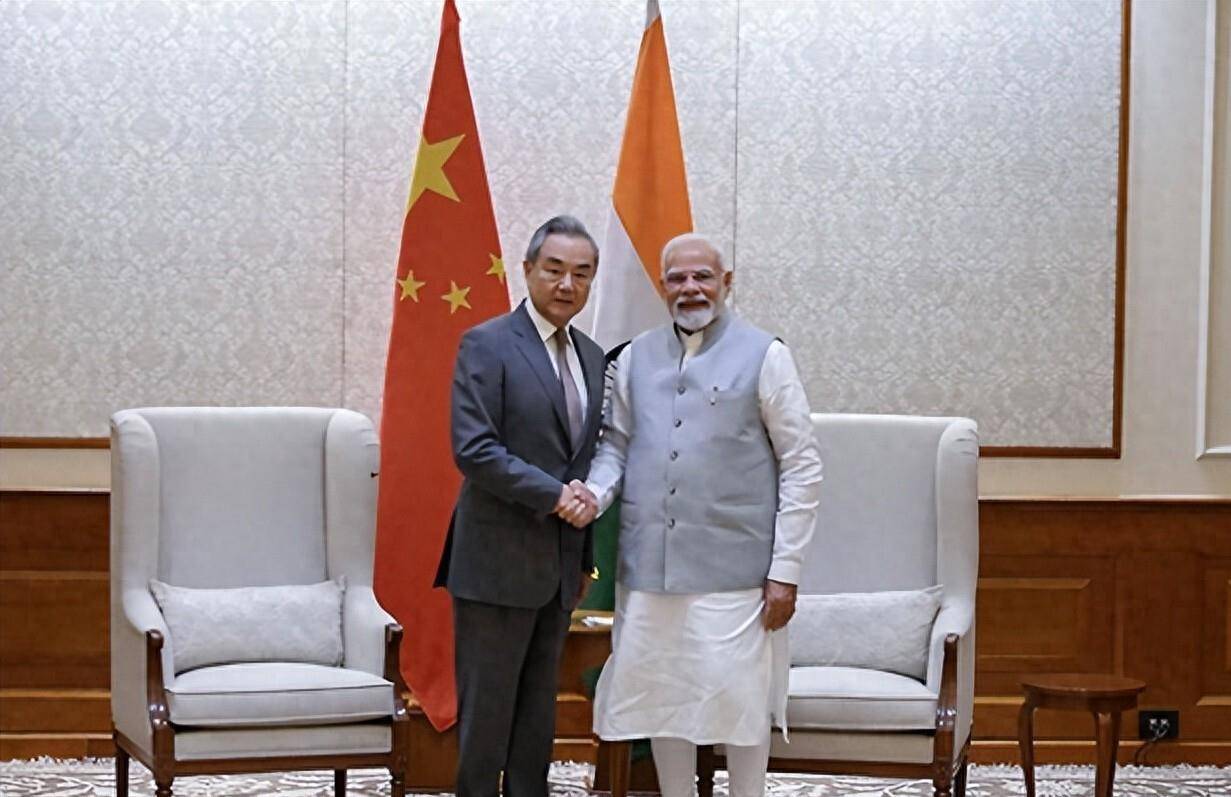
中方外长密见印度三高层,莫迪一句话让人意外,中印谈成20件大事
Sou Hu Cai Jing· 2025-08-21 02:16
Core Points - The visit of Chinese Foreign Minister Wang Yi to India in August 2025 marks a significant shift in Sino-Indian relations, breaking a three-year diplomatic freeze and signaling a potential strategic partnership rather than rivalry [1][3] - The backdrop of this visit is the U.S. imposing punitive tariffs of up to 50% on key Indian exports, which has severely impacted India's economy, leading to a capital outflow of $25 billion and a stock market loss of $1.2 trillion [3][9] - India is facing its most severe economic challenges in a decade, with GDP growth plummeting from 7.8% to 6.1%, making the ambitious goal of a $5 trillion economy seem increasingly unattainable [3][9] Group 1: Diplomatic Developments - Modi's personal reception of Wang Yi indicates a strategic pivot in India's foreign policy, emphasizing partnership over competition with China [1][3] - The two countries agreed on 20 cooperation outcomes, including the reopening of border trade markets and commitments to supply chains in critical sectors like rare earths and fertilizers [3][5] - Despite these agreements, China remains firm on core issues, particularly regarding territorial sovereignty, and has avoided specific financial commitments, instead using vague terms like "providing convenience" [5][7] Group 2: Economic Context - The U.S. trade war has forced India to seek alternatives, with the Modi government viewing the engagement with China as a potential lifeline amid economic distress [3][8] - The lack of concrete agreements, such as on rare earths, suggests that the cooperation may be more about political maneuvering than substantial economic benefits [9] - The strategic calculus for both nations involves leveraging their positions against U.S. pressures, with India attempting to use concessions on border issues to gain economic relief [8][9] Group 3: Geopolitical Implications - The visit is interpreted as a response to U.S. unilateralism, with both countries expressing a commitment to oppose such actions in their joint statements [5][7] - India's acknowledgment of the "One China" principle indicates a significant diplomatic concession, potentially limiting its leverage in future negotiations [5][7] - The fragile nature of the agreements reached suggests that they could easily unravel under future U.S. policy shifts, highlighting the precarious balance of power in the region [9]
美国不敢动中方,只因中方是美税收入最大来源,特朗普不想改变?
Sou Hu Cai Jing· 2025-08-21 00:30
Group 1: Impact on U.S. Economy - The U.S. Customs is under unprecedented pressure due to a significant increase in tariffs, with Chinese goods contributing $7.078 billion in tariffs in June 2025 alone, accounting for 65% of total U.S. tariff revenue for that month [1] - The average tariff rate on Chinese goods has surged to 40.3%, with a staggering 104% cumulative tax rate, resulting in 90% of the burden falling on U.S. consumers [1] - The U.S. retail market is experiencing price hikes, with microwave prices increasing by 28% and bicycles by 19%, leading to unsold inventory [1] Group 2: Corporate Responses - General Electric has cut its aviation engine production capacity by 15%, while Apple faces a 12% increase in supply chain costs, potentially raising the starting price of the iPhone 17 by $300 [2] - Chinese manufacturers are shifting their focus away from North American orders due to low profit margins, with one toy manufacturer stating that the profit on a pair of sneakers after tariffs is only $0.50 [4] - Tesla's Shanghai factory is adapting by shipping Model Y components to Mexico for assembly, allowing them to enter the U.S. market tariff-free [4] Group 3: Trade Dynamics and Future Outlook - The U.S. fiscal deficit has increased by 19% year-over-year, surpassing $1.63 trillion, with tariff revenues insufficient to cover even a fraction of the national debt interest [2] - The U.S. Customs system is on the brink of collapse due to a personnel shortage of 5,850, leading to significant cargo backlogs [8] - The upcoming resumption of U.S.-China trade talks is seen as a critical moment, with potential retaliatory tariffs from China looming over the U.S. [6]

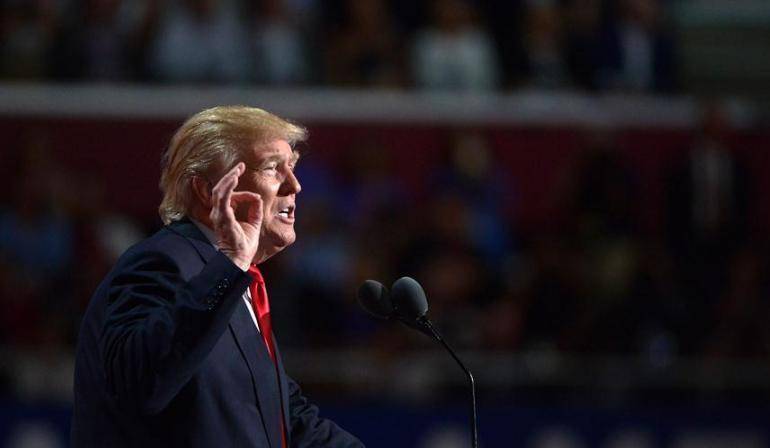
没能让中国妥协,36万亿的美债填不上,特朗普扭头就要准备“解决”掉债主
Sou Hu Cai Jing· 2025-08-20 16:52
Group 1 - The total U.S. national debt has surpassed $36 trillion, becoming the largest debt accumulation in world history, with increasing fiscal deficits making it difficult for the Trump administration to effectively address the economic crisis [3][4] - Public debt exceeds $28 trillion, with internal government debt over $7 trillion, and interest payments projected to reach $921 billion in 2024, accounting for 17% of the federal budget [4] - The debt-to-GDP ratio is expected to rise from 94% to 117%, indicating a persistent and worsening debt crisis that remains unresolved despite various policy efforts [4] Group 2 - Trump's tariff policies aimed at reducing trade deficits with China have not yielded the expected results, leading to a global economic ripple effect [5] - The trade war initiated by Trump, particularly against high-tech products, has prompted China to diversify its supply chains and retaliate with tariffs on U.S. agricultural and industrial goods [5][6] - Despite the ongoing trade conflict, Trump announced the removal of some tariffs in May 2025 to alleviate pressure on domestic businesses, yet the trade war remains at an impasse [6] Group 3 - The Federal Reserve, holding over $7.5 trillion in U.S. debt, is viewed by Trump as a significant adversary, with his attempts to reduce the Fed's holdings facing substantial political resistance [7] - Trump's public criticism of the Fed and its policies has not led to any significant changes, leaving the debt issue unresolved [7] Group 4 - China is adopting a long-term strategy to counter U.S. pressure, focusing on self-sufficiency and reducing reliance on foreign markets through domestic market development and innovation [8] - During the trade war, China has not rushed to compromise but instead has increased exports to other markets, effectively managing external pressures on its economy [8] Group 5 - The U.S. debt crisis poses a significant risk to its global economic standing, with Trump's strategies failing to produce the desired outcomes and potentially exacerbating the situation [9] - China's rise is reshaping the global economic landscape, as it continues to innovate and strengthen its competitive position despite U.S. trade pressures [9][10] Group 6 - The ongoing U.S.-China economic rivalry will be a key driver of global economic dynamics, with Trump's unilateral approaches proving ineffective in addressing fundamental issues [10] - The future trajectory of the global economy will be influenced by the strategic, technological, and trade-related competition between the two nations [10]
勇利投资(01145.HK)上半年收入438.1万美元 同比下降14%
Ge Long Hui· 2025-08-20 10:21
Core Viewpoint - Yongli Investment (01145.HK) reported a significant decline in revenue and a shift from profit to loss in the first half of 2025, primarily due to adverse market conditions in the shipping industry [1] Financial Performance - The company recorded revenue of $4.381 million in the first half of 2025, representing a year-on-year decrease of 14% [1] - The loss attributable to shareholders was $1.708 million, compared to a profit of $1.278 million in the same period last year [1] - Basic loss per share was $0.16, a decline from a basic earnings per share of $0.12 for the period ending June 30, 2024 [1] Market Conditions - The shipping business faced immense pressure, with charter rates for ultra-flexible dry bulk carriers plummeting by 34.1% year-on-year [1] - The decline in demand for goods was attributed to escalating trade tensions between the U.S. and other countries, as well as ongoing geopolitical conflicts in Ukraine and Palestine, leading to reduced demand and an oversupply of vessels [1] Strategic Response - To mitigate the cyclical impacts on the shipping business, the company strategically resumed its trading operations during the first half of 2025 [1]
勇利投资公布中期业绩 净亏损170.8万美元 同比盈转亏
Zhi Tong Cai Jing· 2025-08-20 10:20
Core Viewpoint - Yongli Investment (01145) reported a total revenue of $4.381 million for the first half of 2025, representing a year-on-year decrease of 13.59% and a net loss of $1.708 million, marking a shift from profit to loss compared to the previous year [1] Group 1: Financial Performance - The total revenue for the first half of 2025 was $4.381 million, down 13.59% year-on-year [1] - The company experienced a net loss of $1.708 million, compared to a profit in the previous year [1] - Earnings per share were reported at a loss of $0.16 [1] Group 2: Market Conditions - The market conditions for the shipping business faced significant pressure, with charter rates for ultra-flexible dry bulk carriers plummeting by 34.1% year-on-year [1] - The decline in demand for goods was attributed to escalating trade tensions between the U.S. and other countries, as well as ongoing geopolitical conflicts in Ukraine and Palestine [1] - The combined effects of weakened demand for goods and an oversupply of vessels contributed to the challenging market environment [1] Group 3: Strategic Response - To mitigate the cyclical impacts on the shipping business, the company strategically resumed its trading operations in the first half of 2025 [1]