
资产配置

Search documents
从“避险资产”到“配置核心” 高净值人群增持黄金趋势凸显
Zhong Guo Jing Ying Bao· 2025-12-11 08:20
最近发布的《瑞银2025年亿万富豪报告》指出,61%的亚太区亿万富豪计划增加对冲基金、发达市场股 票(50%)及黄金/贵金属(48%)的投资。 中经记者 郝亚娟 夏欣 上海、北京报道 黄金价格持续走强,也引发了高净值人群的关注。北京财富管理行业协会特约研究员、内蒙古财经大学 校外硕导杨海平接受《中国经营报》记者采访时分析,当前宏观经济背景下高净值人群增持黄金的核心 逻辑有四方面:宏观经济形势提升了黄金的投资价值,美债规模持续膨胀,全球去美元化趋势在持续演 进;全球主要央行择机增配黄金,为黄金价格提供了支撑;地缘政治的风险、金融市场风险交织变幻, 黄金的避险功能受到更多重视;全球经济增速放缓,贸易摩擦和地缘政治冲突冲击供应链,通胀压力较 大,黄金保值功能吸引力大增。 自2020年开始增加黄金配置 多项调研显示,黄金成为高净值人群资产配置的重要组成部分。胡润研究院今年发布的《中国高净值人 群品质生活报告》显示,在受访高净值群体的首选投资标的中,黄金以15.7%的占比超越A股(12%) 与基金(11.3%)。回顾2019—2025年高净值人群投资行为变化,2020年是一个重要的分水岭,黄金成 为首选投资标的并持续增 ...
机构资金暗战:散户如何不当炮灰?
Sou Hu Cai Jing· 2025-12-11 02:41
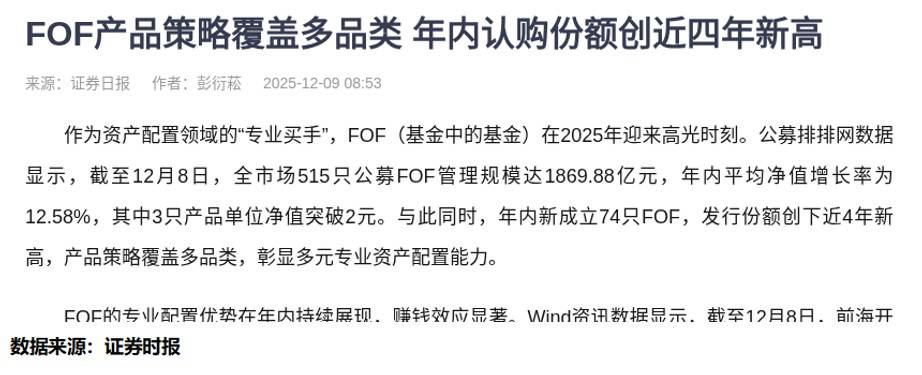
Group 1 - The core point of the article highlights the impressive growth of FOF funds, which have surpassed 186.9 billion, with several products doubling their returns, contrasting with the underperformance of over 60% of individual stocks against the market [1][3] - The article discusses the "Matthew Effect" in capital markets, where professional players benefit significantly while retail investors struggle to gain from market movements, often buying at peak points [3][5] - It emphasizes that the success of FOF products is attributed to their professional asset allocation capabilities, which allow them to capture institutional fund flows accurately, unlike ordinary investors who often make poor timing decisions [3][10] Group 2 - The article explains that market dynamics involve a constant "cat and mouse" game, where public funds are now primarily trading-oriented rather than strictly value-investing [5][10] - It points out that ordinary investors perceive volatility as risk, while institutions view it as an opportunity, highlighting a shift in fund structures due to external factors like a strong dollar affecting foreign capital inflow [5][9] - The article provides examples of poor investment decisions made by individuals who fail to track institutional fund movements, illustrating the importance of understanding market dynamics [7][9] Group 3 - The article suggests that the key to FOF success lies in establishing a scientific evaluation system, encouraging retail investors to rely on data rather than blindly following trends [10][11] - It concludes that the 186.9 billion FOF scale represents not just a profit effect but a strategic advantage of professional investors over retail investors, urging individuals to find their own perspective and tools for investment [10][11] - The article offers three key strategies for retail investors: recognizing genuine institutional behavior, distinguishing between allocation and trading funds, and identifying critical moments for short covering [11]

中金2026年展望 | 理财:存款搬家、资产配置新叙事
中金点睛· 2025-12-10 23:51
Core Viewpoint - The wealth management industry is expected to achieve unexpected growth in 2025, driven by deposit migration and the release of existing floating profits, while facing valuation adjustment pressures in 2026 [2] Group 1: Resident Risk Preference Insights - In 2026, residents are expected to show a slight increase in risk appetite, leading to a trend of more liquid deposits and asset management products [4] - The average decline in retail deposit rates in 2025 was approximately 30 basis points, with a significant slowdown in new fixed-term deposits, while demand for liquid deposits and wealth management products increased [4] - A total of 32 trillion yuan in fixed-term deposits will mature in 2026, with a repricing range of 70-170 basis points, indicating potential for further deposit migration [4][19] Group 2: Fund Flow from Excess Savings - From 2020 to 2025, an excess savings of 14.4 trillion yuan was generated, with a projected decrease in the savings rate to around 14.6% in 2025 [5][26] - A 1 percentage point decrease in the savings rate could release approximately 0.9 trillion yuan into wealth management, funds, insurance, and real estate [5][26] - The potential for an additional 2-4 trillion yuan in activated funds flowing into non-fixed deposit investments in 2026 is anticipated [5][26] Group 3: Wealth Management Asset Allocation Outlook - The wealth management industry is expected to see a growth rate of 8% in 2026, expanding by 2.6 trillion yuan to reach 36 trillion yuan, despite challenges from valuation adjustments [29] - Low-volatility fixed-income products will remain the core offering, while the growth of rights-based wealth management products is expected to accelerate [30][31] - The supply of long-term closed-end wealth management products is anticipated to increase due to the need for stable liabilities and the development of retirement financial products [36] Group 4: Market Impact and Fund Inflows - Wealth management institutions are projected to increase their equity asset allocation by 0.8 percentage points to 2.3% in 2026, potentially bringing nearly 1 trillion yuan in incremental funds to the capital market [6][39] - The demand for bond ETFs and rights-based funds is expected to grow rapidly, driven by external collaborations and the need for wealth management institutions to enhance returns [6][39] - The third phase of public fund fee reform may lead to increased allocation of bond ETFs by wealth management institutions, while short-term pure bond funds may face redemption pressures [6][39] Group 5: Supply-Side Reform Opportunities - The supply-side reform in wealth management is accelerating, with smaller banks exiting the wealth management business, creating opportunities for leading institutions to increase market share [49] - The market share of the top five wealth management institutions is expected to rise as regulatory tightening continues to limit the issuance of new wealth management licenses [49]

中国新贵崛起 另类投资占比翻倍,黄金成新晋标配资产
Jing Ji Guan Cha Bao· 2025-12-10 12:27
Core Insights - The UBS report indicates a structural shift in wealth creation and asset allocation among billionaires, with the number of billionaires projected to increase by 8.8% to 2,919 by 2025, and total wealth reaching a record $15.8 trillion, a 13% increase [1] - The Asia-Pacific region is expected to see a significant rebound, with the number of billionaires rising from 981 to 1,036, marking the highest growth globally [1] - A notable change in asset allocation among Chinese billionaires is observed, with alternative investments doubling from around 10% to over 20% of their portfolios [1][2] Wealth Distribution and Investment Trends - The report highlights a shift from concentrated wealth in publicly traded companies, particularly in technology and consumer sectors, to a more diversified asset allocation including alternative investments [2] - Infrastructure investments are becoming a key focus, with 35% of global billionaires indicating increased exposure, particularly among Chinese clients, as these assets provide stable cash flows of 5%-6% [2] - The trend of increasing gold investments is evident, with 32% of billionaires planning to increase their holdings in gold and precious metals, significantly higher than levels seen in 2022-2023 [2][3] Behavioral Changes and Wealth Management - The behavior of billionaires is influenced by national actions, with many closely monitoring central bank gold purchases, leading to a historical high in global official gold reserves [3] - Gold is increasingly viewed as a core defensive asset rather than a short-term speculative investment, integrated into family trusts and long-term wealth pools to hedge against currency devaluation and political uncertainty [3] - The profile of new Chinese billionaires is characterized by youth, entrepreneurial spirit, and a focus on wealth inheritance, with 60% planning to regularly update wills and trust structures [4] Future Wealth Transition - An estimated $135.3 billion wealth transfer is expected in mainland China over the next 15 years, prompting new billionaires to seek professional structures for investment, education, and philanthropy [5] - The shift from high-growth pursuits to building diversified portfolios signifies a transition from "wealth creators" to "wealth managers" among Chinese billionaires [5] - This transformation is closely linked to China's macroeconomic narrative, with billionaires' wealth rooted in industrial upgrades and technological innovation, reflecting the integration of the Chinese economy into the global landscape [5][6] Capital Flow and Global Investment Landscape - The changing investment strategies may reshape capital flows, directing more funds into alternative investments that support the real economy, innovative technologies, and global infrastructure [6] - As Chinese billionaires become active participants in shaping risk-return profiles through asset allocation, they are expected to play an increasingly critical role on the global wealth stage [6]
基金经理投资笔记 | 锚定盈利、聚焦中游、工具适配
Sou Hu Cai Jing· 2025-12-10 10:57
Core Viewpoint - The article emphasizes the importance of understanding economic cycles and adapting investment strategies accordingly, focusing on the interplay between risk and return, and the need for a dynamic asset allocation approach to navigate the evolving market landscape [1][2][3]. Group 1: Strategy Implementation - Investment strategies should be clearly planned at the end of each year, balancing proactive measures with responsive tactics to adapt to market changes [1]. - The essence of asset management strategies lies in seeking a dynamic balance among profitability, liquidity, and safety, transforming vague wealth goals into actionable frameworks [3]. Group 2: 2025 Strategy Review - The major shift in asset allocation for 2025 was driven by a change in risk premiums, transitioning from "conflict premium" to "repair premium" due to the stabilization of US-China trade tensions [4]. - AI+ technology is identified as a core driver of structural opportunities across various sectors, enhancing production efficiency and creating a viable industrial dividend chain [5]. - A supportive funding environment characterized by abundant liquidity has facilitated the concentration of capital in high-certainty and high-growth areas, enhancing the returns on quality assets [6]. Group 3: 2026 Asset Allocation Strategy - The risk premium for Chinese assets is expected to continue its downward trend, supported by the stabilization of external conflicts and the resonance of institutional reforms [10]. - The liquidity environment is anticipated to shift from abundance to structural adaptation, with a focus on high-certainty sectors, necessitating a refined asset selection approach [11]. - The correlation between inflation and profitability is expected to highlight the value of yield strategies, making fixed-income assets a key choice for stable returns [12]. - The focus of fiscal policy is projected to shift towards stability and social welfare, emphasizing structural opportunities over total economic growth [13]. - The narrative-driven trading approach is expected to weaken, with a shift towards profitability verification as the primary driver for industry selection [14]. Group 4: Key Conclusions for 2026 - The effective asset allocation strategy for 2026 is rooted in the interplay of declining risk premiums, rising profitability, and structural differentiation [16]. - The focus will be on midstream industries, which are expected to benefit from improved profitability and resilience against demand fluctuations [17]. - The use of tools like ETFs will remain crucial for efficiently capturing structural opportunities in specific sectors [17].
超4万人围观!广东投顾集体“充电”,解锁资产配置新技能
Nan Fang Du Shi Bao· 2025-12-10 05:53
廖卓指出,广州投资顾问学院作为全国首家买方投顾专业培训机构,两年以来收获业内高度认可。此次 协会联合学院推出的公益课程,旨在赋能从业人员成长,希望参训学员深耕细研、学以致用,以专业能 力践行使命,共同为广东资本市场高质量发展注入新动能。 朱晓昱表示,在低利率、净值化背景下,以买方投顾为牵引的财富管理转型已从"理念共识"全面迈 入"实践攻坚"。本次公益课经广泛调研,聚焦提升一线人员专业素养与实操能力。未来学院还将推出公 益投教活动,助力学员学有所获、业有所进,共同推动行业提质增效。 2025年以来,随着资本市场投资端改革深化和财富管理行业向买方投顾模式加速转型,以客户利益为核 心的资产配置能力成为行业竞争新焦点。 12月5日,广东证券期货业协会联合广州投资顾问学院主办的"买方投顾业务系列公益课程第一期——大 类资产配置及投资组合构建专题培训"在广州成功举办。广东证券期货业协会会长廖卓与广州投资顾问 学院董事长朱晓昱出席活动并致辞。本次课程采用"线下 + 线上"联动模式,线下会场参与人数超80人, 线上直播观看人次近4.49万,引起行业广泛关注。 买方投顾转型已从"理念共识"迈入"实践攻坚" 广东证券期货业协会会 ...
十年年化6.92%!中投公司净收益从何而来?
2 1 Shi Ji Jing Ji Bao Dao· 2025-12-10 05:42
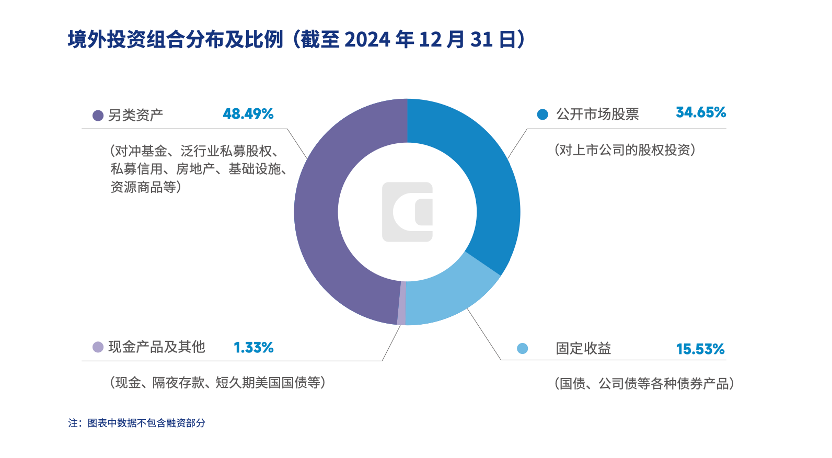
年报数据显示,截至2024年末,中投公司总资产达1.57万亿美元、净资产1.37万亿美元。十年对外投资年化净收益率达 6.92%,较上年提升35个基点,超十年业绩目标61个基点。中央汇金受托管理的国有金融资本达6.87万亿元人民币,较 年初增长6.44%。 2024年是中投公司承前启后的关键一年。年报披露,公司已按照治理程序顺利完成了主要管理人员交接。董事长张青 松在致辞中表示,新任领导班子将继续带领广大员工,守正创新履行职责使命,积极稳妥应对形势变化,稳中求进推 动改革发展。 业绩稳健增长穿越周期彰显投资实力 2007年9月,中国投资有限责任公司正式成立。其初始资金来源于财政部发行的1.55万亿元特别国债,用于向中国人民 银行购汇2000亿美元作为注册资本。中投公司的主要使命是实现国家外汇资金的多元化投资,因而也被认定为中国的 主权财富基金。 12月9日,中国投资有限责任公司(下称"中投公司") 正式发布经董事会批准的《2024年度年报》,全面披露了公司 截至 2024 年底的财务状况、经营业绩、境外投资布局及境内股权管理等核心信息。 中投公司年报披露,截至2024年12月31日,公司总资产达1.57万亿美 ...
华夏资本:以衍生品为矛,打造低利率时代的另类投资解决方案
Sou Hu Cai Jing· 2025-12-10 04:31
Core Viewpoint - The article discusses the evolution of the asset management industry in China, highlighting the differentiation between public and private funds, and how Huaxia Capital has carved out a unique niche by focusing on absolute returns through innovative derivative strategies [1][15]. Group 1: Market Context - The Chinese asset management industry is experiencing a shift towards high-quality development, with a clear distinction in the U.S. market between public funds offering standardized market beta and hedge funds focusing on absolute returns [1]. - Domestic public products are becoming increasingly beta-oriented, while many private funds remain focused on long positions in stocks, leading to intense competition and a lack of differentiation [1]. Group 2: Huaxia Capital's Strategy - Huaxia Capital has successfully developed a differentiated approach by leveraging a deep understanding of derivative tools, offering a multi-asset solution centered around three strategies: "strategy assurance," "stable income," and "aggressive appreciation" [1]. - Since entering the derivatives market in 2020, Huaxia Capital has issued products totaling over 100 billion yuan, establishing itself as a significant player in areas like "snowball" and "alternative fixed income+" [1]. Group 3: Snowball Strategy - The "Snowball" strategy converts market volatility into sustainable returns, relying on a sophisticated structure that generates income as long as the index does not fall below a predetermined "safety cushion" [2][3]. - As of November 30, 2025, Huaxia Capital has issued over 500 Snowball products, achieving a success rate of over 99% and an average return of 14% per product, generating a total of 2.45 billion yuan in profits for investors [3]. Group 4: Core Competencies - Huaxia Capital prioritizes the interests of its investors, proactively adjusting product structures to mitigate risks, especially during market fluctuations [4]. - The company has innovated a "joint distribution" model, allowing multiple brokers to sell the same product, significantly increasing fundraising efficiency [4]. - A refined online inquiry system has been established to enhance trading efficiency, allowing for better pricing and stronger relationships with trading partners [5]. Group 5: Product Lines - Huaxia Capital is expanding into on-exchange derivatives, focusing on two main product lines: income-generating strategies and tool-based strategies, with covered call strategies being a key offering [6]. - The company provides various tools to match different market views, including asymmetric index increases and protective strategies like the "Star and Satellite" strategy [7]. Group 6: Alternative Fixed Income+ - In response to challenges in traditional fixed income, Huaxia Capital has introduced an "alternative fixed income+" model that clarifies income structures and risk characteristics through the use of options [9]. - The alternative fixed income products are designed to provide effective asset allocation tools for investors with varying risk preferences, featuring customizable structures [9]. Group 7: Low-Volatility All-Weather FOF - The all-weather FOF aims to provide stable returns in a low-volatility environment, utilizing a diverse range of asset classes and investment tools [11]. - Huaxia Capital's unique approach includes a volatility control module that actively manages risk based on market conditions, enhancing the product's performance [12]. Group 8: Conclusion - Huaxia Capital's rapid growth is attributed to its innovative product line that meets the absolute return needs of high-net-worth clients, showcasing a proactive approach in asset allocation and strategy innovation [14][15]. - The company is positioned at the forefront of a trend in the Chinese private equity industry, moving away from homogeneous stock long positions towards a more diversified approach akin to mature overseas markets [15].

攒钱不如生钱:财富的增值密码
Sou Hu Cai Jing· 2025-12-10 03:11
Core Insights - The article emphasizes that merely saving money is insufficient in the face of inflation and rising living costs, advocating for effective money utilization to achieve wealth growth [1] Group 1: Risks of Pure Saving - Relying solely on saving money overlooks the impact of inflation, which often exceeds the interest rates of savings accounts, leading to a decline in real purchasing power [3] - Pure saving lacks long-term financial planning, resulting in inefficient use of funds and slower wealth growth compared to rising prices [3] - The opportunity cost of saving is significant, as funds could be invested in higher-return channels instead of being left idle in a bank [3] Group 2: Wealth Growth Strategies - The power of compound interest is highlighted as a key tool for wealth growth, with an example showing that investing 100,000 annually at an 8% return could yield 10 million after 30 years [3] - Proper asset allocation is crucial for wealth growth, recommending diversification across various asset types such as stocks, bonds, funds, and real estate to reduce risk and enhance returns [3] - Long-term investment is presented as a vital strategy, as quality assets tend to provide stable returns over time despite short-term market volatility [3] Group 3: Investment Approaches - Multi-channel investment is advised to effectively spread risk, suggesting allocations to stocks, bonds, funds, real estate, and entrepreneurial projects [4] - Regular fixed-amount investments can smooth out costs during market fluctuations, leading to stable returns over time [4] - Enhancing personal skills is identified as an important avenue for wealth growth, as increased professional capabilities can lead to higher income and more investment capital [4] Group 4: Financial Management - Managing debt wisely can enhance capital efficiency, with low-interest loans used to acquire high-yield assets demonstrating leverage benefits [4] - Establishing an emergency fund is essential for financial management, with recommendations for it to cover 6-12 months of living expenses to handle unexpected events [4] - Insurance planning is necessary to provide economic security for families, helping to mitigate significant financial risks [4] Group 5: Financial Goals and Learning - Setting clear financial goals is the starting point for financial freedom, with both short-term and long-term objectives guiding investment strategies [4] - Continuous learning and adaptation to changing financial markets are crucial for leveraging new investment tools and strategies effectively [4] - A positive mindset is essential for wealth growth, as maintaining calm and rationality during market fluctuations is key to adhering to sound financial principles [5]

2025投教新浪潮!金融业高质量发展与投资者教育创新传播活动来了!
Zhong Guo Ji Jin Bao· 2025-12-10 03:01
Core Insights - The financial industry is undergoing a transformation in investor education, shifting from simple knowledge dissemination to deeper "value empowerment" in the context of capital market reforms and digitalization [1][2] Group 1: Investor Education Initiatives - The "Financial Industry High-Quality Development and Investor Education Innovation Communication Activity" has been launched, involving over 150 major asset management institutions to collect high-quality educational materials [2] - The educational materials include short videos, long videos, in-depth articles, creative posters, and public welfare practices, showcasing the asset management industry's exploration and achievements in investor education [2] Group 2: Short Video Content - Short videos are becoming a key channel for investors to acquire knowledge, with various themes such as long-term investment concepts and asset allocation explained through engaging narratives and cultural references [3] - Examples include the series "Investment Road with Jingli" promoting long-term investment and "Asset Allocation Classroom" using traditional culture to explain key concepts [3] Group 3: Long Video Content - Long videos address the demand for in-depth content, providing comprehensive analyses of industries and investment logic, such as the competitive landscape of solid-state batteries and the evolution of intelligent robots [5] - These videos aim to guide investors from chasing short-term trends to understanding underlying investment logic [5] Group 4: In-Depth Articles - In-depth articles focus on building a cognitive moat for investors, covering strategies, market dynamics, and psychological aspects of investing [7] - Topics include quantitative investment strategies, asset allocation techniques, and the impact of macro policies on investment decisions [7] Group 5: Creative Posters - Creative posters serve as an important medium for investor education, utilizing visual elements to simplify complex concepts and convey investment philosophies [8] - Examples include posters that explain net asset values and investment principles through engaging designs and cultural references [8] Group 6: Public Welfare Practices - Financial institutions are expanding the boundaries of investor education through public welfare initiatives, such as educational programs targeting youth and rural communities [10] - These initiatives aim to enhance financial literacy and support sustainable development in various demographics [10]
