银发经济

Search documents
大消费景气展望:基数与大促后增速放缓,期待明年政策发力
2025-12-22 01:45
Summary of Conference Call Records Industry Overview - **Consumer Sector Outlook**: The consumer sector is expected to face challenges in the first half of 2026 due to the tapering of the trade-in policy, which may lead to a slowdown in durable goods consumption. However, service consumption is showing strong internal momentum, with growth expected in sectors like elderly care and home services, which may receive more policy support [1][4][5]. Key Points and Arguments - **Consumer Data Trends**: In November 2025, retail sales growth fell to 1.3%, the lowest of the year, primarily due to the early Double Eleven promotions, the impact of the trade-in policy, and weakened consumer confidence due to falling housing prices [2][3]. - **Trade-in Policy Impact**: The decline in the trade-in policy is anticipated to negatively affect consumer spending in early 2026, particularly in durable goods like home appliances and automobiles, which are expected to see continued low growth [3][21]. - **Service Consumption Growth**: Service retail growth has increased from 4.9% at the beginning of the year to 5.4%, with significant contributions from education and dining sectors [4]. - **Investment Recommendations**: Focus on the AI industry and emerging sectors like pet economy and trendy toys. Real estate is expected to recover by 2026-2027, benefiting related industries [1][6][7]. Important but Overlooked Content - **High-End Consumption and Travel Chain**: The service sector in 2026 will focus on high-end consumption and travel, with recommendations for companies in the duty-free, hotel, aviation, and dining sectors, such as China Duty Free Group and hotel chains like Jin Jiang and Huazhu [7]. - **Overseas Expansion Opportunities**: Companies like Anker Innovations and Huakai 100 are recommended for their potential in overseas markets, despite current low stock prices [9][10]. - **Alcohol and Beverage Sector**: The alcohol sector is currently in a low season, but some brands are seeing price recovery due to channel control measures. The soft drink market is also expected to show potential growth despite current sales being slow [11][12][13]. - **Food and Beverage Trends**: The snack sector is seeing positive demand ahead of the Spring Festival, with health-oriented products like konjac and oats showing significant growth. Companies like Wancheng and Yanjinpuzi are highlighted for investment [12]. - **Investment in New Consumption Areas**: The new consumption sector is showing upward trends, particularly in the vaping and AI glasses markets, with companies like Smoore and Kangnai Optical recommended for their growth potential [16]. Conclusion - The consumer sector is navigating a complex landscape with both challenges and opportunities. The focus on service consumption, emerging sectors, and strategic investments in high-potential companies will be crucial for navigating the anticipated economic conditions in 2026.
“十五五”红利点!构建康养生态,有这些着力点
券商中国· 2025-12-21 23:28
Core Viewpoint - The article emphasizes the importance of developing a high-quality elderly care system in response to population aging, highlighting the role of government and market collaboration in building a comprehensive elderly care ecosystem [2][3]. Group 1: Policy Guidance for Elderly Care Ecosystem - The current stage presents a significant opportunity in the elderly care industry, with a consensus on the need to establish a robust medical and elderly care ecosystem [3]. - The core of building an elderly care ecosystem involves integrating the elderly care industry with supply chains, services, and financial aspects to provide precise services for the elderly [3]. - Key stakeholders in the medical and elderly care sector include central enterprises, insurance companies, and small to medium enterprises, with insurance companies playing a pivotal role due to their financial strength and customer base [3][4]. Group 2: Development Strategies - The construction of a medical and elderly care ecosystem requires efforts in three areas: industrial ecosystem construction, government-enterprise ecosystem construction, and policy ecosystem construction [3][6]. - The industrial ecosystem should focus on market demand and align with government needs, with local governments playing a crucial role in providing inclusive elderly care services [3][4]. - The government can participate through state-owned assets and procurement services, emphasizing the importance of long-term care insurance and inclusive insurance [3][4]. Group 3: Role of Insurance Industry - The insurance industry is not just a payer but should act as a resource integrator, supervisor, and service provider within the elderly care ecosystem [5]. - Insurance companies can help clients plan for long-term health and elderly care expenses, leveraging their advantages in risk management and funding [5][6]. - The insurance sector's role includes promoting collaboration with medical institutions to enhance service efficiency and risk management [5]. Group 4: Policy Ecosystem Construction - The combination of financial and fiscal policies is crucial for developing the medical and elderly care ecosystem [6][7]. - Learning from the U.S. REITs model, there is potential for pension funds to invest in real estate that meets elderly care needs, contributing to stable returns [6]. - Local governments should take initiative by establishing guiding funds and collaborating with financial institutions to promote the development of the elderly care industry [7].


耐用消费产业行业研究:小米集团 AI+消费构筑新空间,泡泡玛特二三曲线快速发展
SINOLINK SECURITIES· 2025-12-21 13:27
Group 1: Investment Rating - The report does not explicitly state an investment rating for the industry or companies discussed [1]. Group 2: Core Insights - Xiaomi Group is advancing its AI capabilities with the MiMo-V2-Flash model, which optimizes inference costs and speeds, aiming to create a comprehensive ecosystem across devices, vehicles, and homes [1][10][12]. - The MiMo model serves as an AI ecosystem entry point, positioning Xiaomi as a unique player in the physical world, potentially enabling a competitive edge through a closed-loop commercial model [1][12]. - The report highlights the growth potential in the pet food sector, with Petty Co. set to launch products from its New Zealand factory in Q1 2026, which is expected to improve performance after previous capacity constraints [15][17]. - The silver economy is gaining attention, with government initiatives aimed at enhancing elderly care services and expanding the workforce in this sector [18][19]. - The AI and 3D printing industry is experiencing significant growth, with a notable increase in exports of 3D printers from China, indicating a robust market environment [21][22]. - The report notes the strong performance of Stanley products on Amazon, with significant year-over-year sales growth across multiple regions, indicating a successful market strategy [25][27]. Group 3: Summary by Sections Xiaomi Group - The MiMo-V2-Flash model is a key component of Xiaomi's AGI strategy, achieving a leading cost-performance ratio with optimized inference costs of 0.7 CNY per million tokens for input and 2.1 CNY for output [10][12]. - Xiaomi's integration of AI into its mobile operating system enhances cross-device collaboration and user experience, positioning the company for high-end market opportunities [13][14]. Pet Food Industry - Petty Co. is preparing to launch products from its New Zealand factory, which is expected to significantly boost sales starting in Q1 2026 [15][17]. - Honeycare, a brand under Youpai Co., has achieved top sales in its category on Amazon, indicating strong market performance [17]. Silver Economy - The government has outlined a plan to enhance elderly care services, aiming for a more comprehensive and diverse service model by 2027 [18][19]. AI and 3D Printing - China's 3D printer exports have surged, with a year-over-year increase of 89% in quantity and 136% in value, reflecting a thriving industry [21][22]. Stanley Products - Stanley's sales on Amazon have shown remarkable growth, with a 168.73% increase in the U.S. market, indicating effective product strategies and market penetration [25][27].

“一体双翼”绘就银龄幸福图景
Xin Lang Cai Jing· 2025-12-21 01:09
Core Insights - The article highlights the development of Ma'anshan Senior University, emphasizing its dual focus on hardware improvement and cultural construction to enhance the quality of elderly education [1][2]. Group 1: Infrastructure and Facilities - Ma'anshan Senior University has established a well-equipped campus with functional classrooms, two tennis courts, and four gateball courts, along with a reading room designed for elderly needs [2]. - The university has expanded since its establishment in 1986, now comprising three campuses and 18 teaching points, accommodating approximately 25,000 students annually [2]. - A new campus is set to open in 2026, which will be the first comprehensive elderly care complex in the province, capable of serving nearly 20,000 students simultaneously [2]. Group 2: Educational Programs and Curriculum - The university focuses on building a strong cultural foundation through various activities and courses, including psychology, drone photography, and traditional Chinese cooking [3]. - It has developed a range of specialized courses and has created high-quality teaching materials, such as textbooks on social dance and classical poetry for seniors [3]. - The introduction of short-term classes and small group teaching aims to meet the specific needs of elderly learners, transitioning from traditional entertainment-focused education to empowerment-oriented learning [3]. Group 3: Recognition and Achievements - The university has received multiple national awards, including being named a "National Demonstration Senior University" and a "National Advanced Senior University" [4]. - In 2024, it was recognized as one of the first "National Standard Demonstration Schools for Senior Universities" [4].
金融赋能幸福养老:从产品提供者到生态构建者
Bei Jing Ri Bao Ke Hu Duan· 2025-12-20 23:12
Core Insights - The aging population and increased health awareness are driving demand for health management, medical care, and elderly services, making the development of the elderly finance sector a strategic priority [1] - Financial institutions are transitioning from being "single product providers" to "resource integrators" and "elderly ecosystem builders," utilizing emotional empowerment, technological assistance, and ecological layout to enhance elderly care [1][8] Emotional Empowerment - Shanghai Rural Commercial Bank's "Heart Home" project extends its services beyond financial offerings to include cultural and community activities, establishing over 1,000 service stations across Shanghai [2] - The project aims to address social connectivity issues among the elderly and enhance service warmth through community engagement and social activities [2] Health Management and Social Needs - Postal Savings Bank of China's Shanghai branch is creating a new paradigm in elderly finance by integrating health management and social needs through initiatives like "Postal Savings - Ctrip Friendship Club" [3] - The bank's activities encourage social interaction among the elderly, fostering community bonds and trust [3] Technological Empowerment in Care Services - Financial institutions are addressing challenges in elderly care services through credit support and technological empowerment, as highlighted by the implementation of a long-term care insurance management system by Shanghai's Love Nursing Station [4] - The system enhances service quality by providing real-time monitoring of elderly care and streamlining administrative processes [4] Information Technology in Elderly Care - Shanghai Hongri Puhua Nursing Home is implementing a smart elderly care system to improve management efficiency and enhance the quality of life for residents [6] - The system allows for comprehensive electronic management of resident information and care records, facilitating better service delivery [6] National Elderly Service Network - China Pacific Insurance has established a national elderly service network with the opening of new community projects in Beijing and Sanya, enhancing operational capabilities across 15 community projects [6][7] - The insurance sector is increasingly involved in the elderly care ecosystem, with various companies adopting different asset strategies to support the silver economy [7] Future of Elderly Finance - The elderly finance sector is expected to become a mainstream business for financial institutions in the next 10 to 20 years, necessitating a shift towards resource integration and the creation of a "financial + elderly care + medical" closed loop [8]


更加聚焦群众急难愁盼和关心关切
Xin Lang Cai Jing· 2025-12-20 06:42
Group 1: Key Points on Social Welfare and Elderly Care - The meeting emphasized the importance of elderly care as a significant issue affecting families and the overall development of the capital [2] - The introduction of the Elderly Care Service Regulation aims to create a capital-specific elderly care service system, focusing on demand orientation and optimizing resource allocation [2] - A three-tier elderly care service network will be developed, promoting community-based and home-based care, while enhancing collaboration with social capital [2] Group 2: Key Points on Urban Development and City Sub-center - The planning and construction of the Beijing Urban Sub-center is a major strategic deployment by the central government, representing an important opportunity for the capital's development [3] - The meeting highlighted the need to implement the Urban Sub-center Regulation and enhance regional development capabilities while promoting coordinated development with surrounding areas [3] - Emphasis was placed on fostering key industries such as digital economy and modern finance, while maintaining a high investment scale to support urban infrastructure and public services [3] Group 3: Key Points on Agricultural Land Protection - The meeting recognized the critical importance of protecting arable land and ensuring food security, with a focus on implementing protective measures [4] - It was noted that high-standard farmland construction should be accelerated to enhance the quality and concentration of modern agricultural land [4] - The meeting called for strict enforcement of land protection responsibilities and the establishment of a balanced compensation system for land use [4]
人力资源社会保障部:促进高质量充分就业 健全社会保障体系
Ren Min Ri Bao· 2025-12-20 02:58
Core Viewpoint - The article emphasizes the importance of promoting high-quality and full employment and improving the social security system as strategic goals outlined in the 14th Five-Year Plan, highlighting the need for policy support and innovative reforms to address new challenges in employment and social security [1][5]. Employment Promotion - The 14th Five-Year period presents new challenges for employment, including a high supply of urban labor and structural employment issues due to rapid technological advancements [2][3]. - The government aims to implement an employment-first strategy, focusing on creating an employment-friendly development model and integrating high-quality employment into national economic planning [3]. - Structural employment issues will be addressed by developing a human resource demand forecasting mechanism and aligning training programs with industry needs [3]. Targeted Employment Strategies - Specific measures will be taken to promote employment among key groups, such as youth and migrant workers, by expanding job opportunities and providing support for entrepreneurship [3]. - The government will ensure that zero-employment families receive assistance and will focus on the employment of veterans and women [3]. Fair Employment Environment - A unified and regulated human resources market will be established to eliminate barriers to labor mobility and ensure equal employment rights for all workers [4]. Social Security System Optimization - The goal of optimizing the social security system is to align with China's modernization and the common prosperity of all citizens, addressing weaknesses in certain areas [5][6]. - A multi-tiered pension system will be developed, enhancing the basic pension insurance system and promoting enterprise annuities [6]. - The government will improve the mechanism for determining and adjusting benefits, focusing on low-income groups [6]. Protection for New Employment Forms - A new occupational injury protection system will be established, particularly for new employment forms, with pilot programs already expanded to 17 provinces [6]. - Efforts will be made to increase the participation rate of flexible workers and migrant workers in social insurance [7]. Investment in Human Resources - The government will focus on investing in human resources by enhancing talent development and training programs, particularly for young and skilled workers [8][9]. - A large-scale vocational skills training initiative will be launched to meet the needs of emerging industries and improve the overall skill level of the workforce [9]. - The government will also work on improving talent evaluation and compensation mechanisms to attract and retain skilled workers [9].
促进高质量充分就业 健全社会保障体系——访人力资源社会保障部党组书记、部长王晓萍(权威访谈·学习贯彻党的二十届四中全会精神)
Ren Min Ri Bao· 2025-12-19 22:09
Core Viewpoint - The article emphasizes the importance of employment as a fundamental aspect of people's livelihoods and its critical role in economic and social development, highlighting strategic deployments for promoting high-quality and sufficient employment as well as improving the social security system during the 14th Five-Year Plan period [1][2]. Employment Strategy - The employment landscape during the 14th Five-Year Plan period is characterized by both strategic opportunities and challenges, with a complex development environment. The government aims to enhance policy support, service supply, group assistance, and rights protection to effectively improve employment quality and achieve reasonable growth in employment quantity [2][3]. - The government will implement an employment-first strategy, integrating high-quality employment into national economic and social development planning, and promoting new growth drivers in digital, green, and silver economies [3][4]. Structural Employment Issues - There is a need to address structural employment contradictions by establishing a human resource demand forecasting mechanism and aligning training programs with industry needs. The government will focus on skill training in key sectors such as elderly care, advanced manufacturing, and modern services [3][4]. Targeted Employment Policies - The government will implement differentiated policies to promote employment for key groups, including youth, migrant workers, and those facing employment difficulties, ensuring dynamic support for zero-employment families [3][4]. Fair Employment Environment - A unified and standardized human resources market system will be established to eliminate barriers affecting labor mobility and ensure equal employment rights for workers [4]. Social Security System Optimization - The goal of optimizing and making the social security system more sustainable is to enhance public confidence in social welfare. This involves addressing shortcomings in various areas and ensuring the long-term stability of the social security system [5][6]. - The government will accelerate the development of a multi-tiered pension insurance system and improve the mechanisms for determining and adjusting benefits, with a focus on low-income groups [6][7]. Investment in Human Resources - The government will prioritize investment in human resources by enhancing talent development and training mechanisms, particularly for young scientific and technological talents, and implementing large-scale vocational skills training initiatives [8][9]. - Efforts will be made to improve the matching efficiency of human resources supply and demand, with a focus on creating a national employment information resource database and public service platform [10].
连亏多年 国际医学拟定增10亿“补血”突围
Zhong Guo Jing Ying Bao· 2025-12-19 20:15
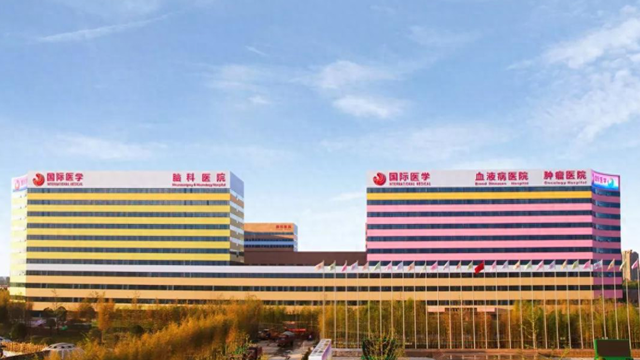
Core Viewpoint - International Medicine (000516.SZ) plans to raise up to 1.008 billion yuan through a private placement, focusing on three main areas: smart healthcare projects, proton therapy center phase II, and working capital supplementation [2][4] Group 1: Fundraising and Investment Focus - The fundraising will allocate 638 million yuan to smart healthcare projects, nearly 100 million yuan to the proton therapy center phase II, and 270 million yuan for working capital [2] - The smart healthcare project aims to utilize idle assets to "activate stock assets," responding to both policy demands and the need for asset revitalization [2][5] - The company intends to use 270 million yuan from the fundraising to meet operational funding needs and optimize its capital structure [2][5] Group 2: Financial Challenges - As of September 30, 2025, the company's debt-to-asset ratio reached 68.80%, significantly higher than the industry average, with a sharp decline in cash reserves from 1.52 billion yuan at the end of 2021 to 331 million yuan [4][7] - The company has substantial short-term borrowings of 995 million yuan and non-current liabilities due within a year totaling 905 million yuan, leading to a total of nearly 1.9 billion yuan in rigid debt due within a year [4] - The company has faced significant losses over the past four years, with cumulative losses reaching 2.621 billion yuan [7] Group 3: Market Opportunities and Strategic Adjustments - The company views the fundraising as a strategic adjustment to address market changes, financial pressures, and idle assets [3] - The smart healthcare project and proton therapy center phase II are seen as key initiatives to capitalize on the "silver economy" and high-end medical development opportunities [4][6] - The proton therapy center phase II aims to fill a market gap in the northwest region, where no proton therapy centers are currently operational [6] Group 4: Operational Efficiency and Cost Management - The company is attempting to improve operational efficiency through clinical pathway management and cost structure optimization [8][9] - As of the third quarter of 2025, the company reported a management expense ratio of 10.99%, a decrease from previous periods, indicating initial success in cost control [8] - The company plans to continue enhancing service quality and patient experience while exploring various specialized medical fields to build competitive advantages [9]

北京人寿总经理王修文:商业模式不能盲目定,要适合自己的才好
Xin Lang Cai Jing· 2025-12-19 11:55
Core Insights - The "2025 China Insurance Summit Forum" was held on December 17, focusing on the theme "'14th Five-Year Plan' Launch: Charting the Insurance Blueprint" [1][5] - The forum gathered nearly a hundred representatives from the "Top 108 in Chinese Insurance," along with experts and executives, to discuss high-quality development paths for the insurance industry during the "14th Five-Year Plan" period [1][5] Group 1: Industry Challenges and Opportunities - The life insurance sector is currently facing pressures such as product homogenization and the need for cost reduction and efficiency improvement [3][7] - Despite these challenges, the overall outlook for the life insurance industry is optimistic, with opportunities outweighing challenges [3][7] - Key growth areas identified include health insurance, particularly critical illness insurance with potential for dividends and the development of long-term care insurance [3][7] Group 2: Strategic Recommendations - The industry is encouraged to seize new opportunities presented by initiatives like "Healthy China," "Silver Economy," and "Integrated Reporting" [3][7] - Innovation is emphasized as crucial for breaking through current challenges, with a focus on enhancing products, services, and technology to improve quality and efficiency [3][7] - Sustainable business models should align with the company's inherent strengths, avoiding strategies that do not match the company's capabilities [3][7]