
人工智能泡沫

Search documents
达利欧:未来两年全球经济“岌岌可危”,不要因为AI估值过高就急于退出
美股IPO· 2025-12-09 00:55
Core Viewpoint - Dalio warns that the global economy will face dangers in the next one to two years due to the overlapping cycles of debt, political conflict, and geopolitical tensions [1][3] Group 1: Economic Risks - The global debt burden is beginning to exert pressure on specific market segments, with governments unable to raise taxes or cut welfare, leading to fiscal dilemmas [3] - Political polarization is intensifying, with the rise of left-wing and right-wing populism indicating irreconcilable divisions [3][4] Group 2: AI Bubble Concerns - Dalio acknowledges that the AI sector has entered a bubble phase, though he believes it is not as severe as the 1929 bubble [5] - Investors should not hastily exit AI investments solely due to high valuations but should focus on identifying substantial signals of bubble bursts [5][6] - The catalysts for bubble bursts typically arise from monetary tightening or forced asset sales to meet debt obligations [6] Group 3: Investment Strategies - Attention is drawn to the pressures in venture capital, private equity, and commercial real estate, where low-cost debt is facing challenges due to higher interest rates [7] Group 4: Middle East as an Emerging AI Hub - Dalio compares the rise of certain Middle Eastern countries to Silicon Valley, noting that the region is rapidly becoming a significant global AI center [8][9] - The UAE and neighboring countries are combining vast capital pools with global talent inflows, attracting investment managers and AI innovators [9] - Major projects worth hundreds of billions of dollars are being initiated in cloud computing, data centers, and other AI infrastructure, supported by sovereign wealth capital and global tech partners [9][10]


达利欧:未来两年全球经济“岌岌可危”,不要因为AI估值过高就急于退出
Hua Er Jie Jian Wen· 2025-12-08 20:27
Group 1: Economic Outlook - Dalio warns that the global economy will face dangerous situations in the next one to two years due to the overlapping cycles of debt, political conflict, and geopolitical tensions [1] - He highlights that the global debt burden is starting to exert pressure on specific market segments, with governments unable to raise taxes or cut benefits, leading to fiscal dilemmas [1] - Political polarization is intensifying, with the rise of left-wing and right-wing populism indicating irreconcilable divisions, especially as the 2026 U.S. midterm elections approach [1] Group 2: Investment Strategy - Dalio compares the current bubble to the 2000 tech bubble but notes it is not as severe as the 1929 crash, emphasizing that investors should not hastily exit AI investments solely due to high valuations [2] - He stresses the importance of identifying substantial signals of bubble bursts, which historically occur during periods of technological upheaval [2] Group 3: Market Pressures - The catalysts for bubble bursts often stem from monetary tightening or forced asset sales to meet debt obligations, with recent warnings from market figures about the AI bubble [3] - Dalio specifically points out the pressures in venture capital, private equity, and commercial real estate, where low-cost debt is facing challenges due to higher interest rates [3] Group 4: Middle East as an Emerging Hub - Dalio likens the rise of certain Middle Eastern countries to Silicon Valley, noting that the region is rapidly becoming one of the most influential AI centers globally [4] - He praises the UAE and neighboring countries for combining vast capital pools with global talent inflows, attracting investment managers and AI innovators [4] - Major projects worth hundreds of billions of dollars have been initiated in the UAE and Saudi Arabia to build cloud computing, data centers, and other AI infrastructure, supported by sovereign wealth capital and global tech partners [4]
专访|“北欧之眼”基金创始人拉斯·特维德:人工智能泡沫可能在未来两三年出现
Sou Hu Cai Jing· 2025-12-08 04:56
Group 1: AI Investment Trends - The global capital market is experiencing a new wave of technology investment centered around artificial intelligence (AI), reshaping growth structures with high capital expenditure in the tech sector acting as a fiscal stimulus amid pressures on traditional industries [1] - AI-related investments currently account for approximately 2% of global GDP, which is considered reasonable compared to historical bubbles like the 19th-century railway boom [5][8] - The current macroeconomic environment is favorable, with strong profit growth and declining interest rates, contrasting with the conditions leading up to the 2000 internet bubble [6] Group 2: AI Technology Development - AI is evolving towards "super intelligence" and "hyper intelligence," with the latter indicating a stage where AI can self-iterate and improve without human intervention [4] - The cost of AI processing is expected to decrease by about 90% annually, with computational efficiency doubling every 3 to 4 months, surpassing Moore's Law [4] - AI's self-improvement capabilities, which began to emerge between 2018 and 2020, are accelerating, indicating a potential for unprecedented technological expansion [5] Group 3: Market Dynamics and Risks - Concerns about "circular financing" among tech giants are viewed as healthy risk-sharing, as companies like Microsoft and Google have substantial cash flow to support their AI investments [6] - The current market situation shows a demand-supply imbalance, with core resources like chips from companies such as NVIDIA and AMD being in short supply [5] Group 4: Future of Work and Economic Implications - The rise of AI is creating a paradox for white-collar workers, where increased efficiency leads to higher workloads and pressure without corresponding wage increases [14] - The transition to a technology-driven economy may lead to a division into three distinct economic "worlds," with varying levels of technological integration and economic growth [16][17] - The importance of adapting to AI and shifting from traditional education to "just-in-time" learning is emphasized, as the rapid pace of technological change diminishes the value of conventional degrees [18][19][20]

资管市场速递:多只绩优基金进一步下调限购额度
Sou Hu Cai Jing· 2025-12-07 11:40
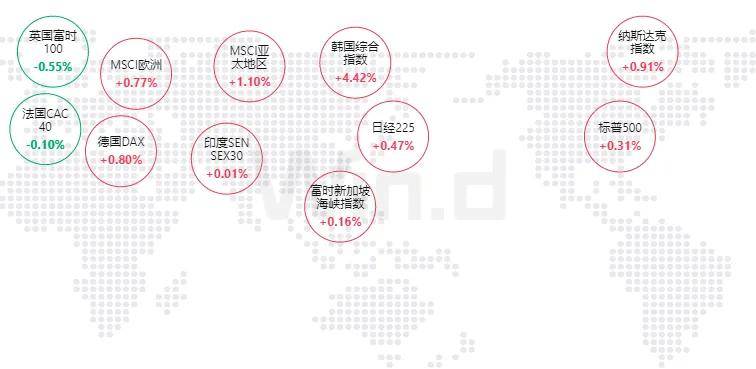
Group 1 - China's first national major scientific and technological infrastructure in the information and communication field, the Future Network Experimental Facility, has officially commenced operations, providing open experimental support for various sectors including industrial manufacturing, energy, education, and healthcare [1] - The State Administration for Market Regulation has released a national standard for food delivery platform service management, aiming to address issues like "ghost deliveries" and enhance the rights of delivery personnel, promoting innovation and healthy competition in the food delivery industry [1] - In November, the number of second-hand residential transactions in first-tier cities reached 49,000 units, marking a seven-month high with a significant month-on-month increase of 20%, and a total of 519,000 units sold in the first eleven months of the year, a year-on-year increase of approximately 5% [1] Group 2 - Multiple high-performing funds have further reduced their purchase limits, with 29 fund managers implementing purchase restrictions on 41 funds on December 4, with limits ranging from 100 yuan to 1.5 billion yuan, aimed at maintaining strategy capacity and reducing transaction costs [2] - In the U.S., the ADP employment report for November showed a decrease of 32,000 private sector jobs, the largest drop in two and a half years, leading to increased expectations for a Federal Reserve interest rate cut [2] - Global funds have continued to buy South Korean bonds, with overseas funds net purchasing $1.39 billion in South Korean bonds on November 28, marking the 20th consecutive day of net buying [2] Group 3 - Major global stock markets mostly rose in the past week, with the A-share indices in China collectively increasing, the Shenzhen Component Index rising by 1.26%, and the Hang Seng Index also showing a weekly increase of 0.87% [3] - In the U.S. market, the Dow Jones Industrial Average rose by 0.50%, the S&P 500 by 0.31%, and the Nasdaq by 0.91% during the week [4] - In Asia, the South Korean Composite Index led with a 4.42% increase, while the Nikkei 225 and the Straits Times Index also saw slight gains [4] Group 4 - Recent trends in government bond yields showed a mixed performance, with the 1-year Chinese government bond yield decreasing by 0.36 basis points to 1.40%, while the 10-year U.S. government bond yield increased by 12.00 basis points to 4.14% [8] - The majority of fund indices showed an upward trend, with the Wind All Fund Index rising by 0.46% and the Wind Stock Fund Total Index increasing by 0.88% [9] Group 5 - In the commodity market, precious metals showed divergence, with COMEX gold decreasing by 0.64% and COMEX silver increasing by 2.86% [11] - The U.S. dollar index fell by 0.46%, while the exchange rate of the dollar against the onshore and offshore Chinese yuan showed slight declines [12]
大空头Burry警告美股将重演“2000年”熊市:资本开支逼近顶峰,两年足够AI泡沫破灭!
Hua Er Jie Jian Wen· 2025-12-05 12:41
近日,以准确预测2008年次贷危机而闻名的"大空头"Michael Burry接受了一档播客节目的访谈。 在对话中,Michael Burry对当前美股市场的展望持极度悲观态度,认为未来几年可能会迎来一场类似 2000年的长期熊市。他判断,由于被动投资(指数基金)占据市场主导地位(超过50%),未来市场下 跌时将是"一体下跌",在美国很难靠多头仓位保护自己。 Burry将当前的AI投资热潮类比为2000年的"数据传输泡沫",指出两者都存在资本开支与股市见顶的时 滞。他押注Palantir在两年内会大幅下跌,看空的核心理由是其不合理的估值和不健康的财务结构,特 别是公司在收入不高的情况下,通过大量高成本的股权激励造就了多位亿万富翁,而历史上几乎没有赚 到过真正的利润。 以下为访谈亮点总结: 以下为访谈实录,部分内容有删减: 我认为现在股市的状况不妙,未来几年可能会很糟糕,可能会迎来一段类似 2000 年那 样的长期熊市。 现在,我认为整个市场会一体下跌,在美国很难靠持有多头仓位同时保护自己。 例如,Palantir 现在是 200 美元一股,而我认为它只值 30 美元甚至更低,我就会在执 行价 50 美元的位置 ...
2026年人工智能泡沫担忧或将考验亚洲强劲的股票交易储备
Xin Lang Cai Jing· 2025-12-05 09:16
Group 1 - Chinese and Indian companies are planning to attract investors through IPOs, which is expected to boost Asian stock capital market transactions next year [1][6] - The total amount of Asian stock capital market transactions has reached $267 billion this year, a 15% increase compared to 2024, marking the first annual growth since 2021 [6] - Hong Kong is projected to dominate Asian stock capital market transactions in 2025, with an expected transaction amount of $75 billion, more than three times last year's fundraising amount [6] Group 2 - Goldman Sachs indicates that the recovery of the Chinese economy and the continuous expansion of India are the two main engines driving Asian stock issuance this year [6][7] - Equirus Capital forecasts that India could raise up to $20 billion through IPOs by 2026, with over 300 companies having submitted listing applications in Hong Kong [2][6] Group 3 - Global investors are diversifying their portfolios and turning to non-U.S. assets due to uncertainties in U.S. trade and geopolitical policies, benefiting the Asian market [3][9] - The Hang Seng Index has risen nearly 30% this year, outperforming U.S. benchmark indices, while the Indian benchmark index has increased by approximately 10.8% [9] Group 4 - Concerns about a potential AI bubble have emerged following significant volatility in U.S. stock markets, raising questions about whether the current market is experiencing a speculative bubble [4][10] - Several Chinese AI companies are planning IPOs, with total transaction amounts potentially reaching several billion dollars, further intensifying valuation concerns [10] Group 5 - There is still a significant amount of AI technology and digital infrastructure assets in Asia that have not yet entered the public market, but there is no consensus on whether valuations are excessively high [5][10] - Investors are shifting towards high-quality, cash-generating companies while moving away from high-valuation growth companies as the market reassesses spending and profit prospects in the AI sector [11]

AI bubble to be short-lived, rebound stronger, NTT DATA chief says
Reuters· 2025-12-05 09:15
Core Insights - A potential artificial intelligence bubble is expected to deflate more rapidly than previous technology cycles, but this will lead to a stronger rebound as corporate adoption aligns with infrastructure spending [1] Group 1: Market Dynamics - The deflation of the AI bubble is anticipated to occur at a faster pace compared to past tech cycles [1] - Corporate adoption of AI technologies is projected to catch up with the current levels of infrastructure spending [1] Group 2: Future Outlook - The rebound following the deflation of the AI bubble is expected to be even stronger than previous recoveries [1]

沪铜产业日报-20251203
Rui Da Qi Huo· 2025-12-03 10:40
1. Report Industry Investment Rating - No information provided 2. Core View of the Report - The Shanghai copper main contract shows a volatile trend, with decreasing open interest, spot discount, and strengthening basis. In the fundamental raw material segment, copper concentrate processing fees remain in the negative range, and the continuous tight supply of raw materials still supports copper prices. On the supply side, after the previous concentrated maintenance, smelting capacity may be released again, but the tight supply of raw materials will limit the capacity to some extent, so the domestic refined copper supply will only increase slightly. On the demand side, the impact of the off - season for consumption is gradually emerging, and the relatively high copper prices will suppress downstream consumption. In this context, downstream purchasing sentiment may be more cautious. In terms of inventory, the overall social inventory remains at a medium - low level, but there may be some inventory accumulation due to the off - season. In terms of consumption, the year - end rush of domestic power infrastructure and the year - end sales push of the new energy vehicle industry support the demand to some extent. In the options market, the call - put ratio of at - the - money options is 1.27, up 0.0683 month - on - month, indicating a bullish sentiment in the options market with a slight decline in implied volatility. Technically, on the 60 - minute MACD, the two lines are above the 0 axis and the green bars are contracting. The overall view is to conduct light - position volatile trading and pay attention to controlling the rhythm and trading risks [2]. 3. Summary by Relevant Catalogs 3.1 Futures Market - The closing price of the Shanghai copper futures main contract is 89,210 yuan/ton, up 290 yuan; the LME 3 - month copper price is 11,253 US dollars/ton, down 10 US dollars; the open interest of the main contract is 223,984 lots, down 1,622 lots; the net position of the top 20 futures holders is - 34,929 lots, down 7,914 lots; the LME copper inventory is 161,800 tons, up 2,375 tons; the SHFE cathode copper inventory is 97,930 tons, down 12,673 tons; the SHFE cathode copper warrant is 28,969 tons, down 2,856 tons [2]. 3.2 Spot Market - The SMM 1 copper spot price is 88,980 yuan/ton, up 320 yuan; the Yangtze River Non - Ferrous Market 1 copper spot price is 89,085 yuan/ton, up 325 yuan; the Shanghai electrolytic copper CIF (bill of lading) price is 48.50 US dollars/ton, unchanged; the Yangshan copper average premium is 39 US dollars/ton, unchanged; the basis of the CU main contract is - 230 yuan/ton, up 30 yuan; the LME copper cash - 3 months spread is 69.18 US dollars/ton, up 0.08 US dollars; the monthly import volume of copper ore and concentrates is 245.15 million tons, down 13.56 million tons; the weekly TC of domestic copper smelters is - 42.75 US dollars/kiloton, down 0.43 US dollars [2]. 3.3 Upstream Situation - The price of copper concentrate in Jiangxi is 79,020 yuan/metal ton, down 440 yuan; the price of copper concentrate in Yunnan is 79,720 yuan/metal ton, down 440 yuan; the weekly processing fee for blister copper in the south is 1,300 yuan/ton, unchanged; the weekly processing fee for blister copper in the north is 900 yuan/ton, unchanged [2]. 3.4 Industry Situation - The monthly output of refined copper is 120.40 million tons, down 6.20 million tons; the monthly import volume of unwrought copper and copper products is 440,000 tons, down 50,000 tons; the weekly social copper inventory is 41.82 million tons, up 0.43 million tons; the price of 1 bright copper wire in Shanghai is 60,840 yuan/ton, down 350 yuan; the ex - factory price of 98% sulfuric acid of Jiangxi Copper is 870 yuan/ton, unchanged; the price of 2 copper (94 - 96%) in Shanghai is 74,550 yuan/ton, down 150 yuan [2]. 3.5 Downstream and Application - The monthly output of copper products is 200.40 million tons, down 22.80 million tons; the cumulative monthly investment in power grid infrastructure is 4,824 billion yuan, up 445.93 billion yuan; the cumulative monthly real estate development investment is 73,562.70 billion yuan, up 5,856.99 billion yuan; the monthly output of integrated circuits is 4,177,000 million pieces, down 194,236.10 million pieces [2]. 3.6 Options Situation - The 20 - day historical volatility of Shanghai copper is 10.96%, down 0.03%; the 40 - day historical volatility is 18.20%, down 0.09%; the at - the - money implied volatility is 17.45%, down 0.0114; the call - put ratio of at - the - money options is 1.27, up 0.0683 [2]. 3.7 Industry News - The National Development and Reform Commission Director Zheng Shanjie said in a signed article that the "15th Five - Year Plan" will prioritize the construction of a modern industrial system, focusing on optimizing traditional industries and developing emerging and future industries, and accelerating the development of strategic emerging industry clusters such as new energy, new materials, aerospace, and low - altitude economy; US President Trump plans to announce the next Fed Chair nominee in early 2026, and it is reported that he has "pre - selected" White House National Economic Council Director Hassett; the OECD predicts that the global economic growth rate will be 3.2% and 2.9% in the next two years, with the US economy growing 2% and 1.7% and the eurozone economy growing 1.3% and 1.2%; the UNCTAD predicts that the global economic growth will slow to 2.6% in 2025, lower than 2.9% in 2024, and emphasizes the impact of financial market volatility on global trade [2].
钢材&铁矿石日报:现实格局弱稳,钢矿震荡运行-20251203
Bao Cheng Qi Huo· 2025-12-03 09:49
1. Report Industry Investment Rating - No information provided regarding the report industry investment rating 2. Core Viewpoints of the Report - The main contract price of rebar oscillated with a 0% daily increase, and the shift of positions was completed. With an upcoming major meeting, optimistic expectations provided support for steel prices. However, the fundamentals of rebar did not improve under the situation of weak supply and demand. Steel prices were prone to pressure in the off - season. It is expected that steel prices will continue to oscillate, and attention should be paid to demand performance [5]. - The main contract price of hot - rolled coil oscillated with a 0.18% daily decline, and the shift of positions was almost completed. Benefiting from the warming market sentiment, the futures price of hot - rolled coil rose oscillatingly. However, the supply pressure remained, demand weakened, the fundamentals did not improve, and the upward driving force was not strong. It is expected that the trend will continue to oscillate, and attention should be paid to the production situation of steel mills [5]. - The main contract price of iron ore oscillated with a 0.19% daily decline. Short - term positive factors supported the ore price to return to a high level. However, the demand for iron ore continued to decline while the supply remained high. The fundamentals of the ore market were weak, and the upward driving force was not strong. It is expected that the ore price will maintain a high - level oscillation, and attention should be paid to the performance of steel products [5]. 3. Summary by Relevant Catalogs 3.1 Industry Dynamics - The OECD predicted that the global economic growth rates for this year and next year would be 3.2% and 2.9% respectively. The US economic growth rate would decline from 2.8% in 2024 to 2.0% in 2025 and further to 1.7% in 2026. The eurozone economy was expected to grow by 1.3% and 1.2% in 2025 and 2026 respectively. The impact of US tariffs on the global economy was becoming more apparent [7]. - As of December 3, among 14 car companies that released their new - energy vehicle sales data for November 2025, BYD, SAIC Group, and Geely Auto ranked in the top three in terms of monthly sales, with 480,200, 209,400, and 187,800 vehicles respectively. 11 car companies achieved year - on - year growth, and 11 also achieved month - on - month growth [8]. - On December 3, the first shipment of iron ore from the Simandou project, carrying 200,000 tons of high - grade iron ore, set sail for China. The project would gradually reach a total production capacity of 120 million tons per year [9]. 3.2 Spot Market - The spot prices of rebar in Shanghai, Tianjin, and the national average were 3,270, 3,220, and 3,331 respectively. The spot prices of hot - rolled coil in Shanghai, Tianjin, and the national average were 3,310, 3,240, and 3,333 respectively. The price of Tangshan billet was 2,990, and the price of Zhangjiagang heavy scrap was 2,080. The spread between hot - rolled coil and rebar was 40, and the spread between rebar and scrap was 1,190 [10]. - The price of 61.5% PB powder at Shandong ports was 797, and the price of Tangshan iron concentrate was 803. The sea freight from Australia was 12.24, and from Brazil was 25.30. The SGX swap price was 107.40, and the Platts index was 107.80 [10]. 3.3 Futures Market - The closing price of the rebar futures active contract was 3,169 with a 0.00% change, the highest price was 3,174, the lowest was 3,154, the trading volume was 750,667, the volume difference was 246,495, the open interest was 1,297,106, and the open - interest difference was 516,952 [12]. - The closing price of the hot - rolled coil futures active contract was 3,319 with a - 0.18% change, the highest price was 3,329, the lowest was 3,311, the trading volume was 234,619, the volume difference was - 14,970, the open interest was 542,502, and the open - interest difference was - 87,895 [12]. - The closing price of the iron ore futures active contract was 799.5 with a - 0.19% change, the highest price was 803.5, the lowest was 794.0, the trading volume was 169,490, the volume difference was 25,635, the open interest was 334,841, and the open - interest difference was - 23,770 [12]. 3.4 Relevant Charts - The report presented various charts related to steel and iron ore inventories, including weekly changes in rebar and hot - rolled coil inventories, total rebar and hot - rolled coil inventories (steel mills + social inventory), national 45 - port iron ore inventories, 247 steel mills' iron ore inventories, and domestic mine iron concentrate inventories [14][19][21]. - Charts about steel mill production were also included, such as the blast furnace operating rate and capacity utilization rate of 247 sample steel mills, the proportion of profitable steel mills among 247 steel mills, the operating rate of 87 independent electric furnaces, and the profit - loss situation of 75 building materials independent electric arc furnace steel mills [29][32]. 3.5 Market Outlook - For rebar, supply and demand weakened. The weekly output of rebar decreased by 18,800 tons, but the profit of short - process steel mills improved. Demand also weakened, with weekly apparent demand slightly decreasing. It is expected that steel prices will continue to oscillate, and attention should be paid to demand performance [38]. - For hot - rolled coil, the supply - demand pattern was weak, and inventory reduction was limited. The weekly output increased by 30,000 tons, and the inventory level was high. Demand weakened, with weekly apparent demand decreasing by 42,000 tons. It is expected that the price will continue to oscillate, and attention should be paid to steel mill production [38]. - For iron ore, the supply - demand pattern remained weak. The terminal consumption of ore continued to decline, and the profitability of steel mills did not improve. Domestic port arrivals decreased, while overseas shipments increased. It is expected that the ore price will maintain a high - level oscillation, and attention should be paid to the performance of steel products [39].
离岸人民币迈向14个月高位
Xin Hua Cai Jing· 2025-12-03 05:41
Core Points - Trump hinted at Hasset as the next Federal Reserve Chair, impacting the dollar index negatively [1] - The OECD forecasts global economic growth rates of 3.2% and 2.9% for the next two years, consistent with previous predictions [1][2] - The Chinese yuan has appreciated against the dollar, with the onshore yuan breaking the 7.07 mark and offshore yuan reaching a 14-month high [1] Group 1 - Trump's announcement regarding the next Federal Reserve Chair could influence market expectations and the dollar's performance [1] - The OECD's economic outlook indicates resilience in the global economy but highlights risks such as trade barriers and fiscal vulnerabilities [1][2] - The Chinese yuan's trading volume increased by 12.6% in November, although the average daily trading volume remains below October levels [2] Group 2 - The OECD predicts that developed economies will end the current rate-cutting cycle by the end of 2026, with the Fed expected to lower rates only twice before maintaining a range of 3.25% to 3.5% throughout 2027 [2] - Market conditions are expected to become more variable following the December FOMC meeting, influenced by weak U.S. employment data and speculation about the next Fed Chair [2] - The Australian and New Zealand Bank anticipates a moderate appreciation of the yuan against the dollar, projecting it to reach around 6.95 by the end of 2026 [2]