通胀预期
Search documents
澳联储声明全文:维持利率不变,上调通胀预期
Jin Shi Shu Ju· 2025-11-04 04:13
Core Viewpoint - The Reserve Bank of Australia (RBA) has decided to maintain the cash rate at 3.60%, citing recent inflation increases and uncertain economic prospects as key factors [1][2]. Inflation Trends - Recent inflation has risen, with core inflation increasing from 2.7% to 3.0% in the September quarter, exceeding previous expectations [3] - Overall inflation rose to 3.2% in the September quarter, influenced by the end of electricity subsidies in several states [3] - The RBA anticipates core inflation to rise above 3% in the coming quarters, before declining to 2.6% by 2027 [3] Domestic Economic Activity - Domestic economic activity is recovering, with private demand showing continued strength and a robust real estate market [4] - Employment growth has slowed, with the unemployment rate increasing from 4.3% in August to 4.5% in September, although job vacancies remain high [4] - There are uncertainties regarding the sustainability of private demand recovery and its potential impact on labor demand and inflation [4] Global Economic Context - Global economic uncertainties remain high, but short-term growth forecasts have been revised upwards by many institutions [5] - Trade policies and geopolitical risks continue to pose threats to global economic stability, potentially suppressing demand growth [5] Monetary Policy Outlook - The RBA emphasizes the importance of maintaining price stability and full employment, considering the current inflation pressures and labor market conditions [6] - The committee will closely monitor data and evolving risks to guide future decisions, focusing on global economic developments and domestic demand trends [7]
黄金4030下方继续看弱势
Jin Tou Wang· 2025-11-04 03:11
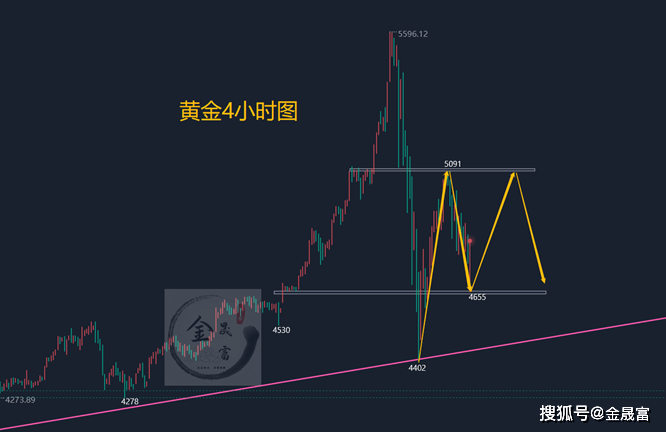
Group 1 - The current spot gold price is trading around $3981.04, with a recent drop of 0.49% and a trading range between $4004.99 and $3975.59, indicating a short-term sideways trend [1] - Federal Reserve policymakers are signaling caution regarding future interest rate paths amid a government shutdown and missing key economic data, with a focus on preventing inflation rebound risks [2][3] - Chicago Fed President Goolsbee highlighted persistent high inflation, with a core inflation rate annualized at 3.6%, and service prices nearing 4%, exceeding the Fed's 2% target [2] Group 2 - The Fed officials emphasize data dependency in their decision-making, with Cook noting the current policy remains moderately restrictive while balancing inflation control and labor market risks [3] - Daly stated that the two rate cuts earlier in the year have provided economic support, but reiterated that inflation must return to target levels [3] - The uncertainty surrounding the release of key employment data due to the government shutdown increases the likelihood of maintaining current interest rates in December [3] Group 3 - Recent gold trading has shown a high volatility pattern, with the market currently in an adjustment phase, suggesting that both long and short positions can yield profits if managed correctly [4] - The analysis indicates a bearish outlook for gold, with resistance at the 4022 MA10 level, and a recommendation to maintain short positions until a clear breakout occurs [4] - Short-term indicators suggest a bearish trend, with a focus on entering short positions around $4005, while monitoring the strength of the European session for potential trading signals [4]
美联储鹰鸽激辩!12月降息悬念升级,官员们到底在吵什么?
Jin Shi Shu Ju· 2025-11-04 02:34
Core Viewpoint - The Federal Reserve officials are expressing conflicting views on the current economic situation and the risks they face, particularly in light of the government shutdown affecting data releases. The debate highlights the potential for interest rate cuts in the upcoming December meeting, but no decisions are finalized yet [2][3]. Group 1: Economic Risks and Policy Debate - Federal Reserve Governor Cook described the current policy debate as a tug-of-war, emphasizing the high risks associated with both employment and inflation, suggesting a possibility of rate cuts in December [2][3]. - Cook noted that maintaining high interest rates could lead to a sharp deterioration in the labor market, although she acknowledged that the labor market remains solid at present [2]. - There is a concern that excessive rate cuts could lead to uncontrolled inflation expectations, but she pointed out that most long-term inflation expectations are currently low and stable [2][3]. Group 2: Diverging Opinions Among Officials - San Francisco Fed President Daly viewed the recent rate cut as insurance against a weakening labor market and remains open to further actions in December [2][3]. - The comments from Cook and Daly indicate a shift in sentiment within the Federal Reserve, suggesting that the likelihood of a rate cut in December is approximately double that of no cut, aligning with current market pricing [3]. - The recent policy meeting resulted in a 25 basis point cut to a range of 3.75%-4.00%, with notable dissent among members regarding the direction of monetary policy [3][4]. Group 3: Individual Perspectives on Rate Cuts - Fed Governor Milan reiterated his support for significant rate cuts, arguing that the current financial market conditions do not justify a tight monetary policy stance [4][5]. - Milan expressed a more optimistic view on inflation compared to his colleagues, suggesting that the Fed's policies are overly restrictive and increasing the risk of economic recession [5]. - Kansas City Fed President Schmidt opposed rate cuts, citing persistent high inflation as a concern, while other regional Fed presidents also expressed caution regarding further rate reductions [6].
决胜于“价”
Haitong Securities International· 2025-11-04 01:02
Group 1: Economic Stability and Pricing - The core of economic stability in China relies on maintaining stable prices, as the macroeconomic environment shows potential for growth but is characterized by structural differentiation and weak domestic demand that needs to be addressed in 2026 [9][41]. - Real estate remains crucial to the economy despite its reduced investment and sales volume, as the majority of household wealth is still tied to the real estate market, making housing price trends significant for macroeconomic stability [12][33]. - The relationship between rental yields and government bond rates does not guarantee housing price stability, indicating that other factors must be considered [16]. Group 2: Asset Restructuring and Pricing - Inflation expectations are critical for wealth management, as residents aim to preserve purchasing power and seek returns that outpace inflation [63]. - The historical context of Japan's 1990s shows that despite low nominal interest rates, actual rates remained high, influencing residents' investment strategies towards capital preservation [67][79]. - The growth of public funds in China indicates a shift in investment preferences, with significant increases in money market funds and a decline in bond funds, suggesting a cautious approach to risk [84]. Group 3: Global Repricing and Economic Shifts - The global economic landscape is undergoing a transformation, with changes in trust foundations affecting trade dynamics and export dependencies [156]. - China's export reliance varies across industries, with certain sectors showing higher dependency on international markets, which could influence future economic strategies [129]. - The restructuring of the global economic system emphasizes the need for adaptability in pricing strategies to navigate the evolving market conditions [156].
宏观与大宗商品周报-20251103
Guan Tong Qi Huo· 2025-11-03 11:33
Report Summary 1. Report Industry Investment Rating No information provided in the report. 2. Core Viewpoints - The market is in a volatile and differentiated state due to the end of the tariff issue and the weakening of the Fed's interest - rate cut expectation by Powell's hawkish remarks. Different assets show distinct performances [5][6][9]. - Gold prices have fallen from their highs recently but still have long - term upward support. Investors are advised to approach gold investment rationally [6]. - The gold tax new policy aims to regulate the market, guide resources, and serve the real economy by adjusting the behavior and motivation of market participants [73]. 3. Summary by Related Catalogs Macro Analysis - Global major stock markets are mixed, with the Nikkei leading the rise, the US stocks rising, and the A - shares under pressure. The BDI index has a small decline, the VIX index rises significantly, the US bond yield and the US dollar index increase together, and most non - US currencies weaken. Commodities mostly fall, with precious metals falling from highs, and copper and oil prices weak [5][9]. - In the domestic market, the bond market rises across the board with short - term bonds weaker than long - term ones, the stock index is mixed, and most commodity sectors fall. The Wind commodity index has a weekly decline of 1.96%, with 3 out of 10 commodity sector indexes rising and 7 falling. Coal, coking, steel, and minerals perform well, while precious metals and non - ferrous metals drag down the overall decline of commodities. Energy, grains, and non - metallic building materials sectors are almost flat, and the agricultural and sideline products and chemical sectors have relatively large declines [5][14]. - The Fed cut interest rates by 25bp in October as expected, but Powell's hawkish remarks weakened the December interest - rate cut expectation. The 10 - month domestic PMI data was lower than expected, which put pressure on the A - shares and commodities [6]. - Gold prices have fallen from historical highs to around $4000 per ounce. It is due to short - term technical adjustments and the weakening of risk - aversion sentiment, as well as the weakening of the Fed's interest - rate cut expectation and the rebound of the US dollar index. However, there is still long - term upward support for gold prices [6]. Big - Class Assets - Stock markets: Global major stock markets are mixed, with the Nikkei leading the rise, the US stocks rising, and the A - shares under pressure [5][9]. - Commodities: Commodities mostly fall, with precious metals falling from highs, and copper and oil prices weak [5][9]. - Others: The BDI index has a small decline, the VIX index rises significantly, the US bond yield and the US dollar index increase together, and most non - US currencies weaken [5][9]. Plate Express - Domestic bond market rises across the board with short - term bonds weaker than long - term ones, the stock index is mixed, and most commodity sectors fall. The Wind commodity index has a weekly decline of 1.96%, with 3 out of 10 commodity sector indexes rising and 7 falling [14]. - Coal, coking, steel, and minerals perform well, while precious metals and non - ferrous metals drag down the overall decline of commodities. Energy, grains, and non - metallic building materials sectors are almost flat, and the agricultural and sideline products and chemical sectors have relatively large declines [14]. Capital Flow - The overall capital in the commodity futures market slightly flows out last week. The agricultural and sideline products, non - ferrous metals, and non - metallic building materials sectors have obvious capital inflows, while the precious metals, energy, and oil and fat sectors have obvious capital outflows [16]. Variety Performance - Among domestic major commodity futures, the top - rising varieties are apples, iron ore, and coking coal, while the top - falling varieties are butadiene rubber, methanol, and palm [20]. Fluctuation Characteristics - The volatility of the international CRB commodity index slightly decreases, the volatility of the domestic Wind commodity index significantly increases, and the South China commodity index significantly reduces volatility. Most commodity futures sectors see a decline in volatility, with the non - metallic building materials, chemical, and coal, coking, steel, and minerals sectors significantly reducing volatility, and the precious metals sector having the most obvious upward volatility [24]. Data Tracking - International commodities: Most international commodities rise, with the BDI falling, the CRB rising slightly, soybeans and corn rising, copper rising, oil falling, gold falling, and silver rising, and the gold - silver ratio falling [26]. - Domestic data: The asphalt production rate seasonally declines, the real - estate sales are at a weak bottom, the freight rates show a differentiated rebound, and the short - term capital interest rate fluctuates at a low level [40]. Macro Logic - Stock index: The domestic four major stock indexes fall from highs and are mixed. The value stocks are weaker, and the growth - style stock indexes are stronger. The stock - index valuation is under pressure, and the risk premium ERP rebounds from a low level [30]. - Commodity price index: The commodity price index fluctuates at a high level, and the inflation expectation rebounds from a low level [32]. - US bond: The US bond yield significantly increases, with short - term bonds weaker than long - term ones. The term structure shows a bearish steepening, the term spread is stable, the real interest rate rebounds, and the gold price fluctuates and rebounds [47]. - "Fund Seesaw" Effect and Commodity Spread: Last week, the stock market rises first and then falls, the commodity market fluctuates, and the commodity - stock return difference rebounds from a bottom. The domestic - priced commodities are relatively resistant to decline, and the international - priced commodities are weaker, with the domestic - international commodity futures return difference hovering around the zero axis [39]. - US economic indicators: The US high - frequency "recession indicators" are differentiated, the weekly economic index weakens, and the 10Y - 3M US bond spread hovers around the zero axis [58]. Fed Interest - Rate Cut Expectation - The Fed cut interest rates by 25bp to 3.75 - 4% in October as expected. But due to the Fed officials' hawkish remarks, the expectation probability of a 25bp interest - rate cut to 3.5 - 3.75% in December drops to 59.3% from last week's 98.1%, and the probability of keeping the interest rate unchanged at 3.75 - 4% increases significantly [62]. World Gold Association Report - In the third quarter of 2025, the global gold demand reaches a record high of 1,313 tons, with a total demand value of $146 billion. The growth is mainly driven by investment demand, which surges to 537 tons, a 47% year - on - year increase, accounting for 55% of the total net demand in the third quarter [66]. - The demand for gold bars and coins increases by 17% year - on - year to 316 tons, with India and China making prominent contributions. The global gold jewelry demand is under pressure, with a 19% year - on - year decline. The global central banks accelerate gold purchases, with a net purchase of 220 tons in the third quarter, a 28% increase from the second quarter and a 10% increase year - on - year [67]. - In China, the retail gold investment and consumption demand in the third quarter is 152 tons, a 7% year - on - year decline and a 38% quarter - on - quarter decline. By value, it reaches 120.4 billion yuan, a 29% year - on - year increase. The sales of gold bars and coins increase by 19% year - on - year to 74 tons, a 36% quarter - on - quarter decline. The gold ETF in the Chinese market has an outflow of 3.8 billion yuan, and the total position decreases by 5.8 tons to 194 tons. The gold jewelry demand is 84 tons, a 21% quarter - on - quarter increase but an 18% year - on - year decline. By value, the gold jewelry consumption in the third quarter is 66.5 billion yuan, with significant increases both quarter - on - quarter and year - on - year [68]. Gold Tax New Policy - On November 1st, the Ministry of Finance and the State Tax Administration jointly issued the "Announcement on Tax Policies Related to Gold" (No. 11 in 2025). The policy aims to regulate the market, guide resources, and serve the real economy through precise tax policy adjustments [73]. - The policy suppresses speculation by implementing differentiated VAT management according to the use of gold after delivery. It encourages rational investment by increasing the tax cost of enterprise - client investment in gold. - It supports the real economy by allowing non - investment uses of gold (such as in jewelry production and industrial use) to have a complete and smooth VAT deduction chain. - It regulates the market by binding tax incentives to the Shanghai Gold Exchange and the Shanghai Futures Exchange, and preventing tax loopholes by strictly controlling the use declaration and change mechanism [74]. Fed Meeting - On October 30th, the Fed cut interest rates by 25bp to 3.75 - 4% as expected and decided to end the balance - sheet reduction (QT) on December 1st. There are internal differences within the Fed, with some advocating a larger - scale interest - rate cut and others opposing further cuts. The policy statement is adjusted to weaken concerns about employment decline and inflation. Powell emphasizes the uncertainty of the December interest - rate cut decision and the impact of the government shutdown on data [84]. - After Powell's hawkish remarks, the probability of a December interest - rate cut drops from 95% to 65%. The US stocks, US bonds, gold, and digital currencies fall sharply during the session, the US dollar rises, and finally, the Nasdaq rises, the Dow and the S&P 500 fall, the US bond yield rises significantly, and the gold price falls by 2.5% from the high point [88]. China - US Summit in Busan - On October 30th, the Chinese and US presidents held a meeting in Busan. The two sides reached consensus on several aspects in the economic and trade consultations, including the US canceling the 10% "fentanyl tariff" on Chinese goods, continuing to suspend the 24% reciprocal tariff for one year, and the two sides extending some tariff exclusion measures. The US will also suspend the implementation of some export - control rules, 301 investigation measures on China's maritime, logistics, and ship - building industries for one year, and the two sides will also cooperate on fentanyl anti - drug, expand agricultural product trade, and handle relevant enterprise cases [93][95]. October PMI Data - In October, the manufacturing PMI is 49.0%, a 0.8 - percentage - point decline from the previous month, indicating a decline in the manufacturing prosperity level. The non - manufacturing business activity index is 50.1%, a 0.1 - percentage - point increase from the previous month, entering the expansion range. The comprehensive PMI output index is 50.0%, a 0.6 - percentage - point decline from the previous month, indicating that the overall production and operation activities of Chinese enterprises are stable [98]. - By enterprise scale, the PMI of large, medium, and small enterprises is 49.9%, 48.7%, and 47.1% respectively, all lower than the critical point and showing a decline from the previous month [98]. - Among the 5 sub - indexes of the manufacturing PMI, the supplier delivery time index is at the critical point, while the production index, new order index, raw - material inventory index, and employment index are all below the critical point, indicating a slowdown in manufacturing production, a decline in market demand, a decrease in raw - material inventory, and a slight decline in employment [99]. This Week's Focus - Monday (November 3rd): Eurozone October manufacturing PMI final value, US October S&P Global manufacturing PMI final value, US October ISM manufacturing PMI. - Tuesday (November 4th): San Francisco Fed President Daly gives a speech, the Reserve Bank of Australia announces the interest - rate decision, European Central Bank President Lagarde gives a speech, US September JOLTs job openings. - Wednesday (November 5th): Eurozone October services PMI final value, the Swedish central bank announces the interest - rate decision, Eurozone September PPI monthly rate, US October ADP employment, US October S&P Global services PMI final value, US October ISM non - manufacturing PMI. - Thursday (November 6th): Eurozone September retail sales monthly rate, the Bank of England announces the interest - rate decision, Tesla holds its annual general meeting. - Friday (November 7th): New York Fed President Williams gives a speech, Cleveland Fed President Harmaek gives a speech at the New York Economic Club, Philadelphia Fed President Paulson gives a speech, St. Louis Fed President Musalem has a fireside chat on monetary policy, New York Fed President Williams gives a speech at the European Central Bank money - market meeting, US November University of Michigan consumer confidence index preliminary value. - Saturday (November 8th): US October New York Fed 1 - year inflation expectation.
国泰君安期货所长早读-20251103
Guo Tai Jun An Qi Huo· 2025-11-03 05:27
Report Industry Investment Rating No relevant content provided in the report. Core Viewpoints - The policy on gold taxation may accelerate investors to concentrate on exchange channels, and ordinary investors may prefer indirect participation in gold investment through bank - agents' exchange products [7]. - For lithium carbonate, in the short - term, the price is expected to enter a correction state, but the long - term outlook for next year remains positive. The resumption of production may restrict the upward space, and the price will fluctuate within a range [9][10][46]. - The price of natural rubber is expected to be sorted around 15,000. Due to weather disturbances, the downside space is limited, and investors can consider waiting for low - level long - entry opportunities [11]. - Methanol has significant fundamental pressure, with high domestic supply in the short - term and weak operation under the background of weak macro - drive and weak industrial chain fundamentals [12][14]. - For Treasury bond futures, after a short - term repair, they are expected to fluctuate with a downward bias. It is recommended to pay attention to basis regression strategies and configuration opportunities at medium - and long - term key points [15][17]. Summary by Related Catalogs Gold - Policy: The new gold tax policy from November 1, 2025, to December 31, 2027, may accelerate investors' concentration on exchange channels [7]. - Market: Many brand investment gold bars on major e - commerce platforms are out of stock or have price increases [7]. - Outlook: Pay attention to US bank risks, with a trend strength of 0 [20][27]. Lithium Carbonate - Supply: Mines are expected to resume production, and the current rising price further boosts the resumption information [9]. - Demand: The power sector is about to enter the off - season, and the decline in power demand cannot be offset by the limited increase in energy - storage demand [9]. - Price: Short - term price correction is expected, but long - term optimism remains for next year. The resumption of production restricts the upward space, and it will fluctuate within a range [9][10][46]. Natural Rubber - Supply: Overseas raw material price increases slow down, and rainfall in domestic and overseas production areas affects tapping operations and output release [11]. - Inventory: As of October 26, 2025, China's natural rubber social inventory decreased by 1.1 million tons, a decline of 1%, continuing the destocking state [11]. - Price: It is expected to be sorted around 15,000, and investors can consider low - level long - entry opportunities [11]. Methanol - Supply: In early November, with the concentrated resumption of production of devices, domestic daily production increased significantly, and import sources are still abundant in the short - term [12]. - Demand: The MTO industry has increased fundamental pressure, and profit compression restricts the upward space of methanol prices [14]. - Price: It is in a state of weak operation, and attention should be paid to whether the return of port goods to the inland can support prices [14]. Treasury Bond Futures - Market: The central bank's resumption of Treasury bond trading and the meeting of Sino - US leaders, along with weak macro - data, boost short - term bond market performance [15]. - Outlook: After short - term repair, it is expected to fluctuate with a downward bias. Attention should be paid to basis regression strategies and configuration opportunities at key points [15][17].
贵金属期货:黄金税收新政落地,意味着什么?
Sou Hu Cai Jing· 2025-11-03 01:53
Group 1: Monetary Policy and Economic Indicators - The Federal Reserve has lowered interest rates by 25 basis points to a range of 3.75%–4.00%, marking the second rate cut of the year, and plans to end balance sheet reduction by December 1, 2025, with all maturing U.S. Treasury securities being reinvested [1] - The breakeven inflation rate increased by 0.04% to 2.40%, while the U.S. September CPI rose by 3.02% year-on-year, up from 2.94%, indicating a rebound for five consecutive months [2] - The dollar index increased by 2.1% in October, influenced by hawkish statements from Fed Chairman Powell regarding future rate cuts [3] Group 2: Market Risks and Global Trends - The VIX index peaked in mid-October but significantly declined due to the easing of U.S.-China tariff risks, while geopolitical uncertainties remain high following the cancellation of a summit between Trump and Putin [3] - In 2024, global central banks have cumulatively purchased 1,044.63 tons of gold, marking the 17th consecutive quarter of net purchases, with a notable increase in global gold ETF holdings as of 2025 [3] Group 3: Gold and Silver Market Outlook - A new tax policy regarding gold transactions will take effect on November 1, 2025, which may initially pressure physical demand but could enhance the financial attributes of gold in the long term [4] - The short-term outlook for gold is cautiously bullish, with expectations of upward movement due to anticipated declines in real interest rates [5][6] - Silver prices are also expected to trend cautiously upward, sharing macroeconomic logic with gold amid expectations of lower future interest rates [7]
11月1日金价:大家要有心理准备,下周,金价或将迎来大风暴
Sou Hu Cai Jing· 2025-11-01 16:15
Core Viewpoint - The gold market is experiencing significant volatility, with international gold prices under pressure from a strong US dollar, while domestic prices in China are rising due to different market dynamics [3][5][8]. Group 1: Market Dynamics - On November 1, 2025, international spot gold opened at $4036.48 per ounce and closed at $4001.93, down $34.59, while domestic gold prices in China rose, with the Shanghai Futures Exchange gold contract closing at 921.84 yuan per gram, up 0.39% [3]. - The price difference between domestic and international gold has reached a historical high of 205 yuan per gram, with domestic prices significantly higher than international prices when converted to RMB [3]. - The recent fluctuations in gold prices are influenced by the Federal Reserve's policy changes, including a 25 basis point rate cut and the end of quantitative tightening, which theoretically supports gold prices [5][10]. Group 2: Geopolitical and Economic Factors - Ongoing geopolitical tensions, particularly in the Middle East, have not led to a significant increase in gold's safe-haven demand, as the market has partially absorbed these risks [5][8]. - The US dollar index has rebounded to 107.64, creating a "see-saw" effect with gold prices, as a stronger dollar typically suppresses gold [5][10]. Group 3: Technical Analysis - Technical indicators suggest that if gold prices fall below $3973 per ounce, there could be further downside potential to $3847 per ounce [9]. - The MACD indicator shows a bearish trend, with the RSI at 44.9, indicating continued short-term downward pressure on gold prices [5][9]. Group 4: Domestic Demand and Supply - China's central bank has increased its gold reserves for 16 consecutive months, reaching 2292 tons by October 2025, a 12% increase year-on-year, supporting domestic gold prices [5][10]. - The domestic gold market is experiencing strong demand, particularly in the context of traditional consumption peaks, although seasonal demand is expected to decline in the coming months [8][14]. Group 5: Investment Considerations - Investors are advised to be cautious of high premiums associated with gold jewelry and the potential pitfalls of leveraged trading in gold [12][14]. - The gold recycling market has seen prices fluctuate, with current recovery prices ranging from 888 to 913 yuan per gram, reflecting market volatility [7][14].
【UNforex财经事件】金价突破4000美元 全球贸易缓和点燃市场信心
Sou Hu Cai Jing· 2025-10-31 03:43
Group 1 - The core viewpoint is that gold has regained its status as a preferred safe-haven asset amid rising global economic uncertainty, with prices surpassing $4000, reflecting strong market demand for safety [1][2] - Multiple factors are driving the rise in gold prices, including increased global economic risks, a weakening dollar, and heightened inflation expectations [1] - The recent meeting between Chinese and U.S. leaders has generated optimism in the market, particularly regarding trade discussions and potential tariff reductions, which could positively impact global economic activity [1] Group 2 - Despite short-term optimism from trade discussions, gold prices remain strong, supported by ongoing global economic uncertainty and the interplay of loose monetary policies and geopolitical risks [2] - The current market sentiment indicates that gold may experience fluctuations at high levels, with a solid support base as long as risk appetite does not significantly improve [2] - Investors are advised to remain cautious and monitor Federal Reserve policy developments and the progress of U.S.-China negotiations, as these factors could influence gold price movements [2]
特朗普赚大了,达成协议签下9000亿美元订单,但消费信心却三连降
Sou Hu Cai Jing· 2025-10-30 18:22
Group 1: Economic Pressure on South Korea and Japan - Trump is demanding a total of $900 billion from Japan and South Korea, with Japan expected to contribute $550 billion and South Korea $350 billion, framing it as a "prepayment" rather than investment or cooperation [1][12] - South Korean President Lee Jae-myung expressed concerns that the pressure for such large investments could lead to systemic risks reminiscent of the 1997 financial crisis, as the country lacks robust foreign exchange reserves and economic growth [3] - Japan's investment list includes major companies like SoftBank and Hitachi, focusing on energy and AI, with most investments backed by government institutions [3] Group 2: Declining Consumer Confidence in the U.S. - U.S. consumer confidence index fell to 94.6 in October 2025, marking the lowest level since April of the same year, with short-term expectations dropping to 71.5, indicating potential economic recession [3][14] - A significant 43% of U.S. respondents reported that high prices are affecting their living standards, an increase of 4 percentage points from July [3] - The retail sales growth in April 2025 slowed to 0.1%, a stark decline from 1.7% in March, reflecting the impact of declining consumer confidence [5] Group 3: Impact of Tariff Policies - Trump's tariff policies are identified as a major factor contributing to the decline in consumer confidence, with the U.S. trade deficit widening by 22.1% to $103.6 billion in July [5] - The Atlanta Federal Reserve revised the U.S. GDP growth forecast for Q3 down to 2.2% due to the economic impact of tariffs [5] - The frequency of the term "tariff" mentioned in earnings calls has reached a ten-year high, indicating growing concern among companies about economic uncertainty [6] Group 4: Inflation and Economic Outlook - Inflation expectations among U.S. consumers rose to 4.9% for the next year, significantly above the Federal Reserve's comfort zone [8] - The average tariff rate is projected to increase from 10% to approximately 15%, further straining consumer prices [8] - The U.S. CPI rose by 2.7% year-on-year, with core CPI nearing a 3.1% annualized growth rate, impacting the quality of life for middle and low-income families [11] Group 5: Employment and Consumer Behavior - The U.S. job market shows signs of structural weakness, with only 22,000 non-farm jobs added in August, below market expectations [8] - There is a notable shift in consumer behavior, with more Americans opting for personal loans over high-interest credit card debt, as personal loan issuance surged by 18% year-on-year [9] - Retailers are facing tough decisions, with companies like Walmart and Target adapting differently to rising costs due to tariffs, impacting their profit margins [15]