反内卷政策

Search documents
供应略显宽松,工业硅偏弱震荡
Tong Guan Jin Yuan Qi Huo· 2025-10-13 02:44
Report Summary 1. Report Industry Investment Rating No investment rating information is provided in the report. 2. Core Views of the Report - Macroeconomically, there is a risk of tariff escalation between China and the US, and global market risk - aversion drags down the sentiment of the domestic industrial products market. However, China's economic long - term trend of steady improvement remains unchanged, with the 9 - month manufacturing PMI approaching the boom - bust line, a significant rebound in industrial enterprise profit growth, and continuous support from expansionary fiscal and moderately loose monetary policies. The photovoltaic supply - side reform will be further deepened [3][49]. - On the supply side, the operating rate in Xinjiang has steadily risen to 70%, the output in Sichuan and Yunnan during the wet season is higher than the same period in previous years, and the new capacity investment in Gansu and Inner Mongolia has slowed down. The supply side shows a steady recovery, and social inventory fluctuates at a high level [3][49]. - On the demand side, polysilicon production is increasing, and the production plan for October is still rising month - on - month. Silicon wafer manufacturers' production plans are waiting for the implementation of the component export tax - rebate policy. Battery prices are rising, but new orders are shrinking. Component price increases are stagnant due to the slowdown in photovoltaic installations. Some leading enterprises have pre - arranged for the recycling of retired crystalline silicon components. In traditional industries, the operating rate of silicone has declined due to the incomplete recovery of terminal demand, and the aluminum alloy output has slightly increased due to the rebound in processing fees. Overall, the supply - demand structure of industrial silicon will reach a new balance in October, and the futures price is expected to remain stable and fluctuate [3][49]. 3. Summary by Relevant Catalogs 2025 September Industrial Silicon Market Review - **Industrial silicon futures price fluctuated within a range**: In September 2025, the main 2511 contract of industrial silicon futures fluctuated between 8215 - 9325 yuan/ton, with the price center remaining flat compared to the previous month. The improvement in industrial enterprise profit growth, the implementation of anti - involution policies, and the improvement in the production profit of photovoltaic upstream and mid - stream enterprises supported the price, but the decline in polysilicon prices dragged down market sentiment. By the end of September, the national furnace - opening number increased to 311, with a month - on - month increase of 23. From the demand side, polysilicon enterprises' production cuts were less than expected, silicon wafer price support was limited, photovoltaic battery supply - demand was in a tight balance, and component price increases were stagnant. As of September 30, the main 2511 contract closed at 8640 yuan/ton, with a monthly increase of 2.98% [8]. - **The spot market fluctuated**: In September, the average production cost of industrial silicon was 9095.49 yuan/ton, remaining flat month - on - month. The social inventory was high, and the traditional industries' demand was weak. The anti - involution policy was expected to suppress the medium - term demand for industrial silicon. By the end of September, the prices of mainstream grades such as 553, 441, 421, and 3303 showed different degrees of increase. It is expected that in October, the prices of domestic mainstream grades will mainly fluctuate upwards [9][10][12]. Macroeconomic Analysis - In September, the central bank emphasized moderately loose monetary policy, strengthened counter - cyclical adjustment, and created a suitable monetary and financial environment for economic recovery. The RMB exchange rate was basically stable, and the financial market operated smoothly. China's September official manufacturing PMI rose to 49.8, and the industrial enterprise profit in August increased by 20.4% year - on - year. The equipment manufacturing industry played a significant role in driving profit growth, and some traditional industries turned losses into profits. China's economic long - term trend of steady improvement remained unchanged [14][16]. Fundamental Analysis - **Northern production slowly recovered, and the capacity in Sichuan and Yunnan was strongly released during the wet season**: In September, the operating rate of silicon enterprises in Xinjiang rose to about 70%, and the capacity in the southwest was strongly released due to the decline in electricity prices during the wet season. The new production increments in Inner Mongolia and Gansu were limited. The national industrial silicon output in September was 42.1 tons, with a year - on - year decrease of 7.3%. As of September 26, the national furnace - opening rate rose to 39.1%. Overall, the supply side was relatively loose [18][19][20]. - **Exports maintained stable growth in August**: From January to August, the cumulative export volume of industrial silicon was 49.1 tons, with a year - on - year increase of 18%. The export volume in August was 7.66 tons, with a year - on - year increase of 18%. The export destinations were mainly in Southeast Asia. It is expected that the export volume in October will recover to about 8 tons [24]. - **The social inventory fluctuated at a high level in September**: As of September 30, the national industrial silicon social inventory rose to 54.5 tons, with a month - on - month increase of 0.4 tons. The warehouse receipt inventory at the Guangzhou Futures Exchange continued to rise. It is expected that the social inventory will slightly increase in October [29]. - **Polysilicon production cuts were less than expected, and silicon enterprises' production profit turned losses into profits**: In September, the polysilicon output was 12.5 tons, with a month - on - month increase of 16.7%. The cumulative output from January to September was 81.13 tons, with a year - on - year decrease of 33.2%. The ex - factory price of polysilicon dense material was 51 yuan/kg. In October, the production is expected to increase by 0.3 tons month - on - month. For silicon wafers, the production plan is waiting for the component export tax - rebate policy. For batteries, the price increased, but new orders decreased. For components, the price increase was limited. The recycling of retired photovoltaic components has broad prospects [32]. - **The operating rate of silicone declined, and the DMC spot price slightly increased**: In September, the output of silicone DMC was 20.88 tons, with a month - on - month decrease of 4.9%. The average operating rate of silicone monomer enterprises dropped to 72.84%. The DMC spot price rose to 11050 yuan/ton, with a monthly increase of 13.3%. It is expected that the DMC price will slightly increase in October [35]. - **The aluminum alloy output slightly increased, and the aluminum rod processing fee stabilized and rebounded**: From January to August, the aluminum alloy output was 1232.4 tons, with a year - on - year increase of 15.3%. The output in August was 163.5 tons, with a year - on - year increase of 15.2%. The average processing fee of 6063 aluminum rods in August was 206 yuan/ton. It is expected that the aluminum alloy output will slightly decline in October [36]. Market Outlook - Macroeconomically, China's economic long - term trend of steady improvement remains unchanged. On the supply side, the supply is steadily recovering, and social inventory fluctuates at a high level. On the demand side, the demand structure is being adjusted, and the overall supply - demand will reach a new balance. It is expected that the industrial silicon futures price will remain stable and fluctuate in October, and attention should be paid to the implementation of anti - involution policies [49][51].
建信期货工业硅日报-20251013
Jian Xin Qi Huo· 2025-10-13 02:38
工业硅日报 油) 021-60635738 lijie@ccb.ccbfutures.com 期货从业资格号:F3031215 021-60635737 renjunchi@ccb.ccbfutures.com 期货从业资格号:F3037892 硅)028-8663 0631 penghaozhou@ccb.ccbfutures.com 期货从业资格号:F3065843 021-60635740 pengjinglin@ccb.ccbfutures.com 期货从业资格号:F3075681 021-60635570 liuyouran@ccb.ccbfutures.com 期货从业资格号:F03094925 研究员:冯泽仁(玻璃纯碱) 021-60635727 fengzeren@ccb.ccbfutures.com 期货从业资格号:F03134307 行业 一、行情回顾与展望 市场表现:工业硅期货价格震荡运行。Si2511 收盘价 8686 元/吨,涨幅 0.46%, 成交量 225514 手,持仓量 167035 手,净减 9528 手。 后市展望(仅供参考):工业硅供应端再度大幅增产,供需失衡未有改善。 ...
文字早评2025/10/13:宏观金融类-20251013
Wu Kuang Qi Huo· 2025-10-13 02:33
Report Industry Investment Rating No relevant content provided. Core Viewpoints of the Report - After a period of continuous rise, high - level hot sectors such as AI have recently shown divergence, with funds shifting between high - and low - valued stocks and rapid rotation. Market risk appetite has decreased. Although short - term indices face uncertainty due to Sino - US tariff concerns, in the long - run, the policy support for the capital market remains unchanged, and the mid - to long - term strategy is to go long on dips [4]. - In the fourth quarter, the supply - demand pattern of the bond market may improve. With the current market in a situation of weak domestic demand recovery and improved inflation expectations, the bond market is expected to remain volatile. Attention should be paid to the stock - bond seesaw effect. If the stock market cools down and the allocation power gradually increases, the bond market is expected to recover [8]. - For precious metals, it is recommended to go long on dips, especially pay attention to the rising opportunities of silver prices [10]. - For most metals and non - metals, the impact of Trump's tariff threat on China is uncertain. Some metals are affected by short - term market sentiment, while in the long - run, their prices are supported by fundamentals. For example, copper and aluminum prices may rebound if the trade situation is only a short - term shock [13][15]. - For black building materials, although the new tariff statement may impact the commodity market, the overall macro - environment is gradually turning loose. The short - term weak reality is difficult to reverse, and attention should be paid to policy strength as the Fourth Plenary Session approaches [33]. - For energy chemicals, most products are affected by supply - demand fundamentals and macro - factors. Some products are recommended to wait and see, while others suggest short - term trading strategies based on market conditions [56][58]. - For agricultural products, factors such as supply - demand relationships, seasonal characteristics, and trade policies affect prices. For example, the pig price is expected to be stable in the north and decline in the south, and the soybean price is expected to fluctuate in a range [77][83]. Summary by Related Catalogs Macro - financial Stock Index - **Market News**: China responded to the US threat of imposing tariffs on China. The Nasdaq Golden Dragon China Index fell 6.1%, and most popular Chinese concept stocks declined. The Ministry of Industry and Information Technology plans to strengthen technological research on high - end computing chips, and Shanghai aims to develop emerging industries [2]. - **Strategy**: After continuous rises, high - level hot sectors have shown divergence. Sino - US tariff concerns have disturbed the market in the short - term, but the policy support for the capital market remains unchanged in the long - run, suggesting a long - on - dips strategy [4]. Treasury Bond - **Market News**: Bond prices declined on Friday. Trump announced additional tariffs on Chinese imports and export controls on software. The central bank conducted reverse repurchase operations and had a net withdrawal of funds [5]. - **Strategy**: The recent Sino - US trade dispute has reduced risk appetite, which is beneficial for the bond market's recovery. However, the uncertainty of tariff progress remains high. In the fourth quarter, attention should be paid to the fundamentals and institutional allocation power. The bond market is expected to remain volatile [8]. Precious Metals - **Market News**: Gold prices rose, and silver prices showed mixed performance. The uncertainty of US trade and economic policies has increased the demand for gold. The shortage of London silver spot is expected to continue [9]. - **Strategy**: It is recommended to go long on precious metals on dips, especially focus on silver. The reference operating ranges for Shanghai gold and silver are provided [10]. Non - ferrous Metals Copper - **Market News**: Trump's tariff threat led to a sharp decline in copper prices after a short - term rise. LME copper inventory decreased, and domestic inventory increased [12]. - **Strategy**: The tariff threat is uncertain. Fundamentally, copper supply is expected to tighten, and if the trade situation is a short - term shock, there may be buying opportunities after the price decline [13]. Aluminum - **Market News**: The Sino - US trade situation caused aluminum prices to decline after a rise. Inventory increased slightly, and the market trading was dull [14]. - **Strategy**: If the tariff threat is short - term, market sentiment may recover. The supply - demand relationship of aluminum is expected to support the price, and the price is expected to fluctuate within a certain range [15]. Zinc - **Market News**: Zinc prices showed a slight decline. Domestic inventory increased slightly, and the export window opened [16][17]. - **Strategy**: Domestic zinc production was normal during the holiday. The low level of registered LME zinc warrants poses a structural risk. Short - term, Shanghai zinc is expected to oscillate at a low level with increased risk volatility [18]. Lead - **Market News**: Lead prices rose slightly. LME lead inventory decreased significantly, and domestic inventory decreased [19]. - **Strategy**: Similar to zinc, short - term, Shanghai lead is expected to oscillate at a low level with increased risk volatility due to the trade situation and market sentiment [19]. Nickel - **Market News**: Nickel prices were affected by the Sino - US trade friction. The cost of nickel ore and nickel iron remained stable, and the price of MHP was high [20]. - **Strategy**: Short - term, the trade friction may reduce market risk appetite, but the impact on nickel prices is relatively small. In the long - run, factors such as US easing expectations and domestic policies will support nickel prices. It is recommended to wait and see in the short - term and go long on dips if the price drops significantly [21]. Tin - **Market News**: Tin prices declined due to the Sino - US trade friction. The supply of tin ore is tight, and the demand in some downstream industries is in the peak season [22]. - **Strategy**: Short - term, the trade friction may reduce market risk appetite, but the tin market is in a tight supply - demand balance. It is recommended to wait and see, and the price is expected to remain high and volatile [23]. Carbonate Lithium - **Market News**: The spot price of carbonate lithium was stable, and the price of lithium concentrate decreased slightly [24]. - **Strategy**: The demand for lithium batteries has led to a reduction in social inventory, but the expected supply increase restricts the upside space of lithium prices. Attention should be paid to macro - environment changes and supply - demand expectations [25]. Alumina - **Market News**: The alumina index declined, and the spot price in Shandong decreased. The overseas price increased, and the import window is approaching closure [26][27]. - **Strategy**: The price of ore has short - term support but may be under pressure after the rainy season. The over - capacity situation in the alumina smelting industry is difficult to change in the short - term. It is recommended to wait and see, and pay attention to supply - side policies and Fed monetary policy [28]. Stainless Steel - **Market News**: Stainless steel prices rose, and the social inventory decreased. The prices of raw materials remained stable [29]. - **Strategy**: The stainless steel market is caught between cost support and weak demand. If the price of nickel iron continues to rise, stainless steel prices may rise in a volatile manner [29]. Cast Aluminum Alloy - **Market News**: Aluminum alloy prices followed the trend of aluminum prices, rising first and then falling. The cost support was relatively strong, and the inventory situation was mixed [30]. - **Strategy**: The cost of aluminum has decreased, and the delivery pressure of near - month contracts is relatively high. However, with the improvement of downstream consumption and the reduction of raw material supply, the price is expected to have support [31]. Black Building Materials Steel - **Market News**: The prices of rebar and hot - rolled coil showed different trends. The inventory of rebar increased, and the demand was weak during the National Day holiday [33]. - **Strategy**: The tariff policy may impact the steel market through the overall commodity sentiment. The short - term weak demand situation is difficult to reverse, and attention should be paid to policy strength as the Fourth Plenary Session approaches [33]. Iron Ore - **Market News**: Iron ore prices rose slightly. The supply of overseas mines was stable, and the demand for iron ore was affected by the production of steel mills [34][35]. - **Strategy**: The supply of iron ore may decline slightly, and the demand is affected by the production of steel mills. The new tariff statement may impact the price, and different trading strategies should be adopted according to the development of the trade situation [37]. Glass and Soda Ash - **Glass**: - **Market News**: Glass prices rose, and the inventory increased. The buying enthusiasm of downstream customers was relatively high [38]. - **Strategy**: It is recommended to be bullish in the short - term and pay attention to policy trends [38]. - **Soda Ash**: - **Market News**: Soda ash prices declined slightly, and the inventory decreased. The market trading was stable [39]. - **Strategy**: The domestic soda ash market is expected to remain stable in the short - term [39]. Manganese Silicon and Ferrosilicon - **Market News**: The prices of manganese silicon and ferrosilicon declined slightly. The market was affected by Trump's tariff statement [40]. - **Strategy**: The black building materials sector may first decline and then rebound. Manganese silicon and ferrosilicon are expected to follow the trend of the black building materials sector, and it is recommended to look for opportunities to go long on dips [43][44]. Industrial Silicon and Polysilicon - **Industrial Silicon**: - **Market News**: Industrial silicon prices rose slightly. The supply and demand situation was relatively stable, and the cost support was relatively strong [45]. - **Strategy**: The short - term price is expected to oscillate. In the long - run, the price is expected to rise due to factors such as reduced supply in the southwest region and increased cost [48]. - **Polysilicon**: - **Market News**: Polysilicon prices declined. The supply was relatively high, and the demand was weak [49]. - **Strategy**: The short - term price is under pressure due to high inventory and weak demand. In the long - run, the supply - demand pattern may improve after the maintenance of leading manufacturers in November [50]. Energy Chemicals Rubber - **Market News**: Rubber prices declined due to the US tariff statement. The weather in Thailand may affect rubber production, and the tire开工率 decreased during the National Day holiday [52][54]. - **Strategy**: It is recommended to wait and see or operate short - term according to the trend. A hedging strategy of buying RU2601 and selling RU2511 is suggested [56]. Crude Oil - **Market News**: Crude oil prices declined, and the inventory of refined oil products showed different trends [57]. - **Strategy**: It is recommended to wait and see in the short - term and adopt a range - trading strategy of going long on dips and shorting on rallies [58]. Methanol and Urea - **Market News**: The prices of methanol and urea showed similar trends. The supply was relatively high, and the demand was weak during the holiday [59][60]. - **Strategy**: It is recommended to wait and see as the short - term fundamental situation is weak, but the downside space is limited [59][60]. Pure Benzene and Styrene - **Market News**: The prices of pure benzene and styrene declined. The supply of pure benzene was relatively wide, and the inventory of styrene increased [61]. - **Strategy**: The BZN spread has room for upward repair. The price of styrene may stop falling with the arrival of the seasonal peak season [62]. PVC - **Market News**: PVC prices declined. The supply was relatively high, and the demand was weak. The inventory increased [63]. - **Strategy**: The domestic supply - demand situation is weak, and it is recommended to go short on rallies in the medium - term [64]. Ethylene Glycol - **Market News**: Ethylene glycol prices declined. The supply was relatively high, and the inventory increased [65]. - **Strategy**: It is recommended to go short on rallies as the supply is expected to increase in the fourth quarter and the valuation is relatively high [66]. PTA - **Market News**: PTA prices declined. The supply was affected by device maintenance, and the demand was relatively stable [67][68]. - **Strategy**: It is recommended to wait and see as the supply is in a de - stocking pattern, but the processing fee space is limited, and the demand terminal shows signs of weakness [69]. p - Xylene - **Market News**: p - Xylene prices declined. The supply was relatively high, and the inventory increased [70]. - **Strategy**: It is recommended to wait and see as the p - Xylene market is in a situation of high supply and low demand, and the valuation is relatively low [71]. Polyethylene (PE) - **Market News**: PE prices declined. The upstream开工率 increased, and the inventory decreased [72]. - **Strategy**: The price of PE is expected to oscillate upward as the cost support exists, the inventory is decreasing, and the demand is expected to increase in the seasonal peak season [73]. Polypropylene (PP) - **Market News**: PP prices declined. The upstream开工率 decreased slightly, and the inventory situation was mixed [74]. - **Strategy**: The supply - demand situation is weak, and the inventory pressure is relatively high. The price is affected by factors such as planned production capacity and seasonal demand [75]. Agricultural Products Pig - **Market News**: Pig prices declined in most regions. The supply was relatively abundant, and the demand was relatively weak [77]. - **Strategy**: The supply pressure in the fourth quarter is relatively large, but the risk for the Spring Festival has been partially released. It is recommended to reduce short positions and pay attention to positive spreads opportunities [78]. Egg - **Market News**: Egg prices were stable. The supply was relatively large, and the demand was affected by the economic environment [79]. - **Strategy**: It is recommended to be bearish on the near - term and wait for opportunities to go short after the price rebounds in the medium - term [81]. Soybean Meal and Rapeseed Meal - **Market News**: CBOT soybean prices declined, and domestic soybean meal prices rose. The supply of soybeans was relatively high [82]. - **Strategy**: The domestic supply pressure is relatively large. In the medium - term, it is recommended to go short on rallies, and in the short - term, the price is expected to fluctuate in a range [83]. Edible Oils - **Market News**: The export volume of Malaysian palm oil increased in October. The price of domestic edible oils declined due to the decline of crude oil prices and weak market sentiment [84]. - **Strategy**: It is recommended to wait and see in the short - term and go long on dips in the medium - term as the supply - demand situation is expected to tighten [85]. Sugar - **Market News**: Sugar prices declined. The production of sugar in Brazil increased in the first half of September [88]. - **Strategy**: It is recommended to go short on rallies in the fourth quarter as the supply of sugar is expected to increase [89]. Cotton - **Market News**: Cotton prices rose slightly. The Sino - US trade conflict resumed, and the demand in the "Golden September and Silver October" season was weak [90]. - **Strategy**: The short - term cotton price is expected to decline due to weak fundamentals and macro - negative factors [91].
大越期货玻璃周报-20251013
Da Yue Qi Huo· 2025-10-13 02:00
1. Report Industry Investment Rating No relevant content provided. 2. Core View of the Report - The glass futures continued to decline last week, with the main contract FG2601 closing 0.25% lower than before the National Day holiday at 1,207 yuan/ton. The spot price of Hebei Shahe white glass large sheets was 1,148 yuan/ton, down 0.69% from before the holiday. The glass fundamentals are neutral to weak, and it is expected to fluctuate weakly in the short term [2][3]. 3. Summary by Relevant Catalogs Glass Futures and Spot Market Weekly Review - The main contract FG2601 of glass futures closed at 1,207 yuan/ton last week, down 0.25% from before the National Day holiday. The spot price of Hebei Shahe white glass large sheets was 1,148 yuan/ton, down 0.69% from before the holiday. The main contract basis increased by 9.26% [2][3][7]. Influencing Factors Summary - **Positive Factors**: Under the influence of the "anti-involution" policy, there is an expectation of capacity clearance in the float glass industry [4]. - **Negative Factors**: The terminal demand in the real estate sector remains weak, with the number of orders from glass deep-processing enterprises at a historical low. The capital repayment in the deep-processing industry is not optimistic, and traders and processors are cautious, mainly digesting the original sheet inventory. The "anti-involution" market sentiment has faded [5]. Fundamental Analysis - **Supply**: The number of operating float glass production lines in the country was 225 last week, with an operating rate of 76.01% and a daily melting volume of 161,300 tons. The supply has stabilized at a low level [2]. - **Demand**: Some mid - and downstream players have carried out phased speculative restocking, driving a slight reduction in factory inventories. However, the recovery of the terminal real estate market is weak, and the orders of downstream deep - processing factories are weak. The traditional peak demand season is lackluster [2]. - **Inventory**: As of October 9, the inventory of national float glass enterprises was 62.824 million weight boxes, up 5.84% from the previous week, and the inventory is at a relatively high level in the same period [2]. Supply - Demand Balance Sheet - The annual supply - demand balance sheet of float glass from 2017 to 2024E shows changes in production, consumption, and net import ratios over the years. For example, in 2024E, the production was 5,510 million tons, the consumption was 5,310 million tons, and the net import ratio was - 0.90% [42].
大越期货玻璃早报-20251013
Da Yue Qi Huo· 2025-10-13 01:28
Report Industry Investment Rating No relevant content provided. Report's Core View - The glass market is expected to be mainly in a weak and volatile state in the short term due to macro - level negatives and a weak fundamental situation. The supply has decreased to a relatively low level for the same period, with increased supply - side disturbances recently, but the terminal demand recovery is weak [2]. Summary by Relevant Catalogs Daily View - **Fundamentals**: Sino - US trade friction may intensify. "Anti - involution" and environmental protection policies in the Shahe area have boosted sentiment, but there are many supply - side disturbances. Downstream deep - processing orders are generally weak, and real - estate terminal demand is sluggish [2]. - **Basis**: The spot price of float glass in Hebei Shahe is 1148 yuan/ton, the closing price of FG2601 is 1207 yuan/ton, and the basis is - 59 yuan, with futures at a premium to the spot [2]. - **Inventory**: The inventory of national float glass enterprises is 62.824 million weight boxes, an increase of 5.84% from the previous week, and the inventory is above the 5 - year average [2]. - **Disk**: The price is running below the 20 - day line, and the 20 - day line is upward [2]. - **Main Position**: The main position is net short, and short positions are increasing [2]. - **Expectation**: Due to macro - level negatives and a weak glass fundamental situation, it is expected to be mainly in a weak and volatile state in the short term [2]. Influence Factor Summary - **Positive Factors**: Under the influence of the "anti - involution" policy, there is an expectation of capacity clearance in the float glass industry. Some production lines in the Shahe area are undergoing "coal - to - gas" conversion, increasing supply - side disturbances [4]. - **Negative Factors**: Real - estate terminal demand remains weak, and the number of orders from glass deep - processing enterprises is at a historical low for the same period. The capital collection in the deep - processing industry is not optimistic, and traders and processors are cautious, mainly digesting the inventory of raw sheets [5]. Main Logic - The glass supply has declined to a relatively low level for the same period, with more supply - side disturbances recently, but the terminal demand recovery is weak, so it is expected to be mainly in a volatile state [6]. Glass Futures Market | Indicator | Previous Value | Current Value | Change Rate | | --- | --- | --- | --- | | Main Contract Closing Price (yuan/ton) | 1218 | 1207 | - 0.90% | | Shahe Safety Large - Plate Spot Price (yuan/ton) | 1156 | 1148 | - 0.69% | | Main Basis (yuan/ton) | - 62 | - 54 | - 4.84% | [7] Glass Spot Market The market price of 5mm white glass large plates in Hebei Shahe, the spot benchmark, is 1148 yuan/ton, a decrease of 8 yuan/ton from the previous day [12]. Cost - Side of Fundamentals - **Glass Production Profit**: No specific profit data provided, only the data sources (Longzhong and Steel Union) are mentioned [15][20]. Supply - Side of Fundamentals - **Glass Production Lines and Output**: The number of national float glass production lines in operation is 225, with an operating rate of 76.01%. The daily melting capacity of float glass is 161,300 tons, and the production capacity is at the lowest level for the same period in history and is stabilizing and rebounding [23][25]. Demand - Side of Fundamentals - **Float Glass Monthly Consumption**: In August 2025, the apparent consumption of float glass was 4.8602 million tons [29]. - **Housing Sales, New Construction, Construction, and Completion Area**: No specific data provided, only the data source (Wind) is mentioned [36][38]. - **Downstream Processor's Operation and Order Situation**: No specific data provided, only the data source (Longzhong) is mentioned [42]. Inventory of Fundamentals The inventory of national float glass enterprises is 62.824 million weight boxes, an increase of 5.84% from the previous week, and the inventory is above the 5 - year average [45]. Supply - Demand Balance Sheet of Fundamentals | Year | Production | Calculation | Other | Japan | Apparent Supply | Consumption | Maintenance | Production Growth Rate | Consumption Growth Rate | Net Import Ratio | | --- | --- | --- | --- | --- | --- | --- | --- | --- | --- | --- | | 2017 | 5354 | 21 | 112 | - 91 | 5263 | 5229 | 34 | | | - 1.734 | | 2018 | 5162 | 22 | 86 | - 64 | 5098 | 5091 | 7 | - 3.59% | - 2.64% | - 1.26% | | 2019 | 5052 | 40 | 65 | - 25 | 5027 | 5061 | - 34 | - 2.13% | - 0.59% | - 0.50% | | 2020 | 5000 | 56 | 42 | 14 | 5014 | 5064 | - 50 | - 1.03% | 0.06% | 0.289 | | 2021 | 5494 | 52 | 39 | 13 | 5507 | 5412 | 95 | 9.88% | 6.87% | 0.244 | | 2022 | 5463 | 23 | 68 | - 45 | 5418 | 5327 | | - 0.56% | - 1.57% | - 0.834 | | 2023 | 5301 | 20 | 69 | - 49 | 5252 | 5372 | - 120 | - 2.97% | 0.84% | - 0.934 | | 2024E | 5510 | 20 | 69 | - 49 | 5461 | 5310 | 151 | 3.94% | - 1.15% | - 0.90% | [46]
旗滨集团20251010
2025-10-13 01:00
Summary of Qibin Group Conference Call Industry Overview - The float glass industry is currently facing a weak peak season, with most companies operating at breakeven or experiencing cash flow losses, particularly in high-cost regions and gas-dependent enterprises [2][4][8] - Policy interventions and environmental inspections may accelerate the market clearing on the supply side, potentially leading to price recovery within 1-3 months [2][4] Company Insights - Qibin Group's core competitiveness lies in its extreme cost advantages in float glass and photovoltaic glass, achieved through self-sufficient silica sand resources and lean management practices [2][5] - The company is replicating its float glass model in the photovoltaic glass sector, with new capacities of 1,200 tons large-scale pool kilns, supported by upstream mineral and pipeline gas resources [2][5][11] - Qibin Group's float glass business has undergone rapid expansion (2011-2015), internal optimization (2016-2018), and a strategic restart of expansion (2019-present), currently holding the highest gross margin in the industry [2][6] Financial Performance - Float glass price fluctuations are primarily due to supply-demand mismatches, with rigid supply and linear demand changes [7] - As of early 2024, profits have hovered around breakeven, with high pipeline gas costs weakening profitability [7][8] - The company’s gross margin per box is approximately 13.4 yuan, significantly higher than the industry average of around 0.7 yuan [8] Market Dynamics - The fourth quarter is expected to see increased expectations for anti-involution policies and environmental production limits, which may disrupt supply [8] - The introduction of stricter energy consumption standards and green building methods is expected to lead to the exit of inefficient capacities, forming a dynamic balance in the market [3][8] Future Outlook - Qibin Group is experiencing a recovery point in profitability within the photovoltaic glass sector after a period of industry losses [10] - The company plans to enhance the scale effect of its photovoltaic glass business, optimize operational efficiency, and explore new markets in pharmaceutical glass and electronic glass [12] - The company’s long-term competitive edge is its extreme cost control capability, ensuring its leading position in the existing market and providing stable growth in new markets [12] Key Takeaways - Qibin Group is well-positioned to benefit from policy-driven price recovery and has a robust strategy to replicate its success in float glass to photovoltaic glass [4][10] - The company’s strategic focus on resource layout, energy cost control, and advanced production technology positions it favorably against competitors [11][12]

两部门出手维护重点领域价格秩序 三方面监管措施治理企业无序竞争
Chang Jiang Shang Bao· 2025-10-12 23:45
Core Viewpoint - The announcement by the National Development and Reform Commission and the State Administration for Market Regulation aims to address disorderly price competition, which negatively impacts industry development, product innovation, and quality safety [1][2]. Group 1: Policy Measures - The announcement outlines multiple measures to guide enterprises in lawful and compliant operations, emphasizing the need for a fair market price order [1][2]. - It highlights the importance of coordinating price policies with industrial policies to effectively manage disorderly price competition [2]. - Industry associations are encouraged to adhere to price laws and promote self-discipline within the industry to maintain fair competition [3]. Group 2: Industry Impact - The document notes that disorderly competition in certain industries could lead to adverse effects on economic health, including the potential for "bad money to drive out good" [1]. - Recent statistics indicate a turnaround in industrial profits, with a shift from a 1.7% year-on-year decline in the first seven months of 2025 to a 0.9% increase, suggesting improved industry conditions [4]. - The announcement is part of a broader effort to reshape the industrial ecosystem and promote high-quality development across various sectors [4][5]. Group 3: Future Directions - Future efforts will focus on enhancing policy communication, encouraging compliance among operators, and improving product quality and service levels [5]. - There will be a close monitoring of market price trends and industry competition to identify and address issues of disorderly price competition promptly [5].
中方港口费反制航运造船再迎历史机会,滞港效率损失油散运费受益,关注中国制造船舶是否豁免
Shenwan Hongyuan Securities· 2025-10-12 11:51
Investment Rating - The report does not explicitly state an investment rating for the industry Core Views - The shipping and shipbuilding industry is poised for historical opportunities due to China's countermeasures against the U.S. shipping fees, which may lead to non-linear price increases in the short term and a reduction in available vessels in the medium term [19][20] - The report highlights the potential for a surge in shipbuilding orders if U.S. investments in Chinese shipbuilding are exempted from tariffs, and the implications of U.S.-China negotiations on the industry [19][20] Summary by Sections 1. Industry Market Performance - The transportation index increased by 1.09%, outperforming the CSI 300 index by 1.60 percentage points, with the road freight sector showing the highest increase of 3.04% [4][5] - Shipping data indicates that the coastal dry bulk freight index in China remained stable, while the Shanghai export container freight index rose by 4.12% [4][5] 2. Sub-industry Weekly Insights - The shipping and shipbuilding sector is expected to benefit from China's recent regulatory changes, which impose special port fees on U.S. vessels, potentially leading to increased operational costs for U.S. shipping companies [20][21] - The report identifies key companies to watch, including China Shipping and China State Shipbuilding, as they may benefit from these developments [19] 3. High Dividend Stocks in Transportation - The report lists high dividend stocks in the transportation sector, including China Shipping (603167.SH) with a projected dividend yield of 10.92% and Daqin Railway (601006.SH) with a yield of 3.75% [17] - The report emphasizes the importance of dividend yields as a factor for investment decisions in the transportation sector [17] 4. ETF Size Changes - The report provides data on the changes in the size of various ETFs related to the transportation sector, indicating a general trend of growth in assets under management [13][14] 5. Potential Investment Opportunities - The report suggests that the shipping sector, particularly oil tankers and dry bulk carriers, may present significant investment opportunities due to the ongoing geopolitical tensions and regulatory changes [19][20] - Companies such as China Shipping and China State Shipbuilding are highlighted as potential beneficiaries of these market dynamics [19]





布局顺周期!朱少醒、杨锐文等最新动向
Zhong Guo Zheng Quan Bao· 2025-10-12 00:55
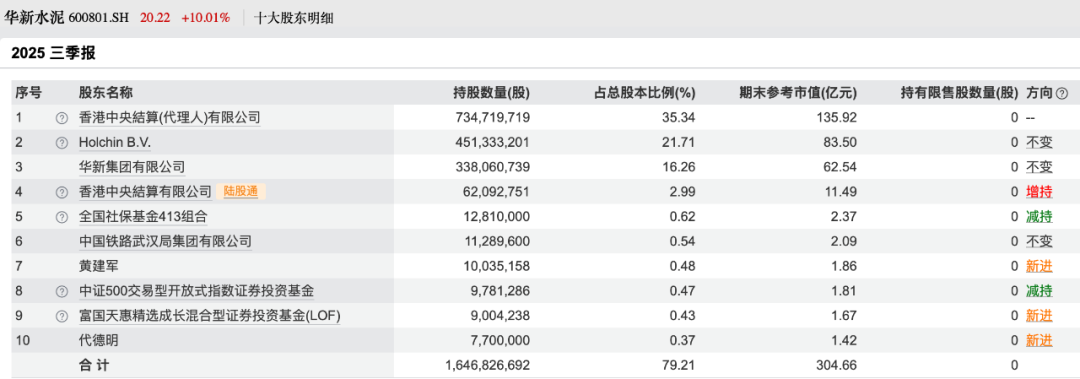
Group 1 - The cyclical sectors have shown strong performance recently, attracting widespread attention from investors [2][6] - In Q3, notable fund manager Zhu Shaoxing's fund increased its holdings in cement leader Huaxin Cement, while glass leader Qibin Group also saw increased holdings from well-known fund managers Yang Ruiwen and Zheng Chengran [2][3] - The rebound in the commodity market is primarily driven by expectations surrounding the "anti-involution" policy, particularly after clear capacity control policies were established in the building materials industry, restoring market confidence [2][6] Group 2 - As of September 30, Zhu Shaoxing's fund, Fu Guo Tian Hui LOF, entered the top ten shareholders of Huaxin Cement with a holding of 9.78 million shares, up from only 500,000 shares at the end of June [3] - Other fund managers have also shown significant positions in Huaxin Cement, with multiple funds holding over one million shares as of June 30 [3][4] - Qibin Group has also seen increased holdings, with Zheng Chengran's fund entering the top ten shareholders with 31.82 million shares as of September 25, having no holdings at the end of June [4] Group 3 - The current commodity market is in a phase of "strong expectations, weak realities," with ongoing discussions about potential policy implementations that could impact various sectors [6] - The real estate market shows signs of stabilization, which may gradually improve the fundamentals of the industry, particularly in traditional building materials like cement and coatings [6] - The technology sector has experienced a pullback, while cyclical sectors such as building materials and public utilities have remained active, leading to discussions about a potential style shift in the market [6]


布局顺周期!朱少醒、杨锐文等,最新动向
Zhong Guo Zheng Quan Bao· 2025-10-12 00:37
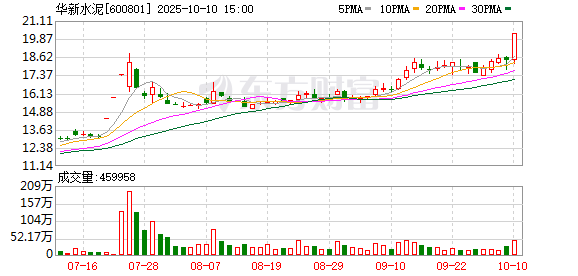
Group 1: Investment Activity - Notable fund manager Zhu Shaoxing's "Dumeng Fund" Fu Guo Tian Hui LOF increased its stake in cement leader Huaxin Cement, holding 9.781 million shares as of September 30, up from 500,000 shares at the end of June [2][3] - Glass leader Qibin Group also saw increased holdings from well-known fund managers, with Zheng Chengran's fund entering the top ten shareholders with 31.82 million shares [4] Group 2: Market Trends - The recent rebound in the commodity market is primarily driven by expectations surrounding the "anti-involution" policy, particularly in the building materials sector where capacity control policies have been clarified [5][6] - The current commodity market is characterized by a "strong expectation, weak reality" dynamic, indicating potential for future policy developments to impact market sentiment [5][6] Group 3: Sector Performance - The construction materials sector, including cement and glass, has shown significant performance, with Huaxin Cement's stock price increasing over 70% since July and Qibin Group's stock rising over 42% [2][4] - The real estate sector is showing signs of stabilization, which may positively influence the performance of traditional building materials like cement and coatings [5][6]